
Introduction
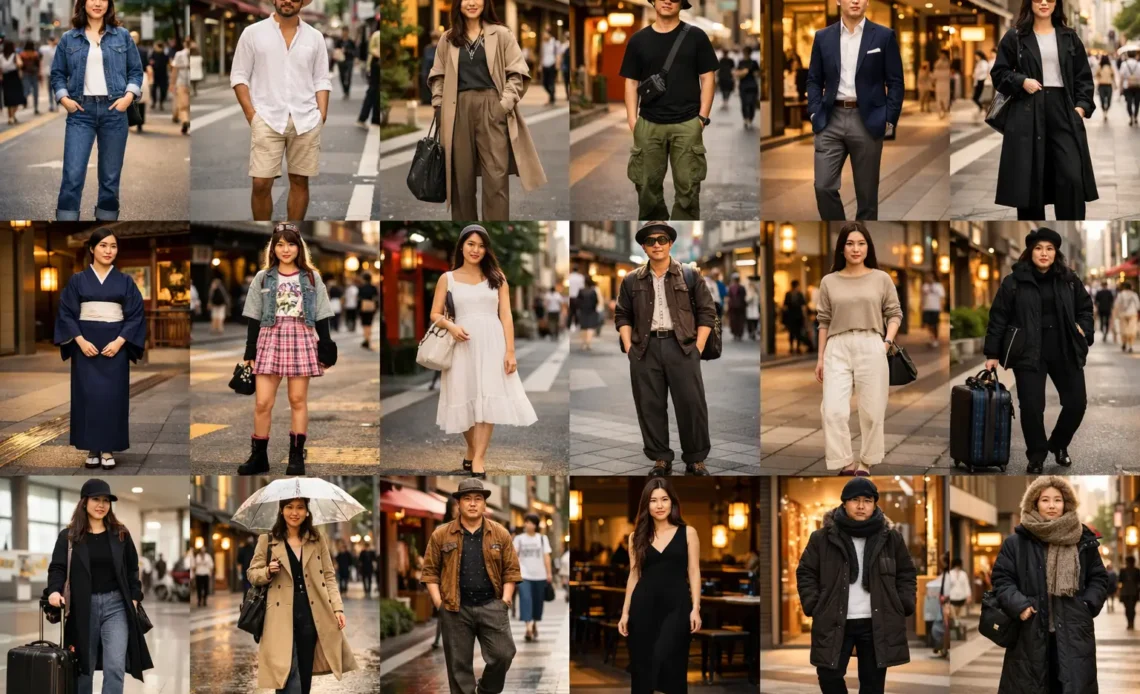
Tokyo is one of the most fashion-conscious cities on the planet, a place where personal style is taken seriously at every level of daily life, from the salaryman stepping onto the Yamanote Line to the teenager expressing an entire visual identity on a Harajuku side street. What makes dressing for Tokyo genuinely interesting as a visitor is that the city does not require you to choose between looking good and being practical. The two exist comfortably together here, and in many ways that balance is exactly what Tokyo fashion has always been about.
The city pulls you through enormous distances on foot. You will climb temple steps, navigate packed train carriages, queue outside ramen restaurants, and wander through six distinct neighborhoods before dinner. Your outfits need to perform across all of these settings without asking you to carry a spare change of clothes. This guide presents 16 Tokyo outfits that are genuinely stylish and genuinely practical in equal measure, organized by setting, season, and occasion so that every day of your trip has a clear and confident starting point.
The Classic Denim and Sneaker Exploration Outfit
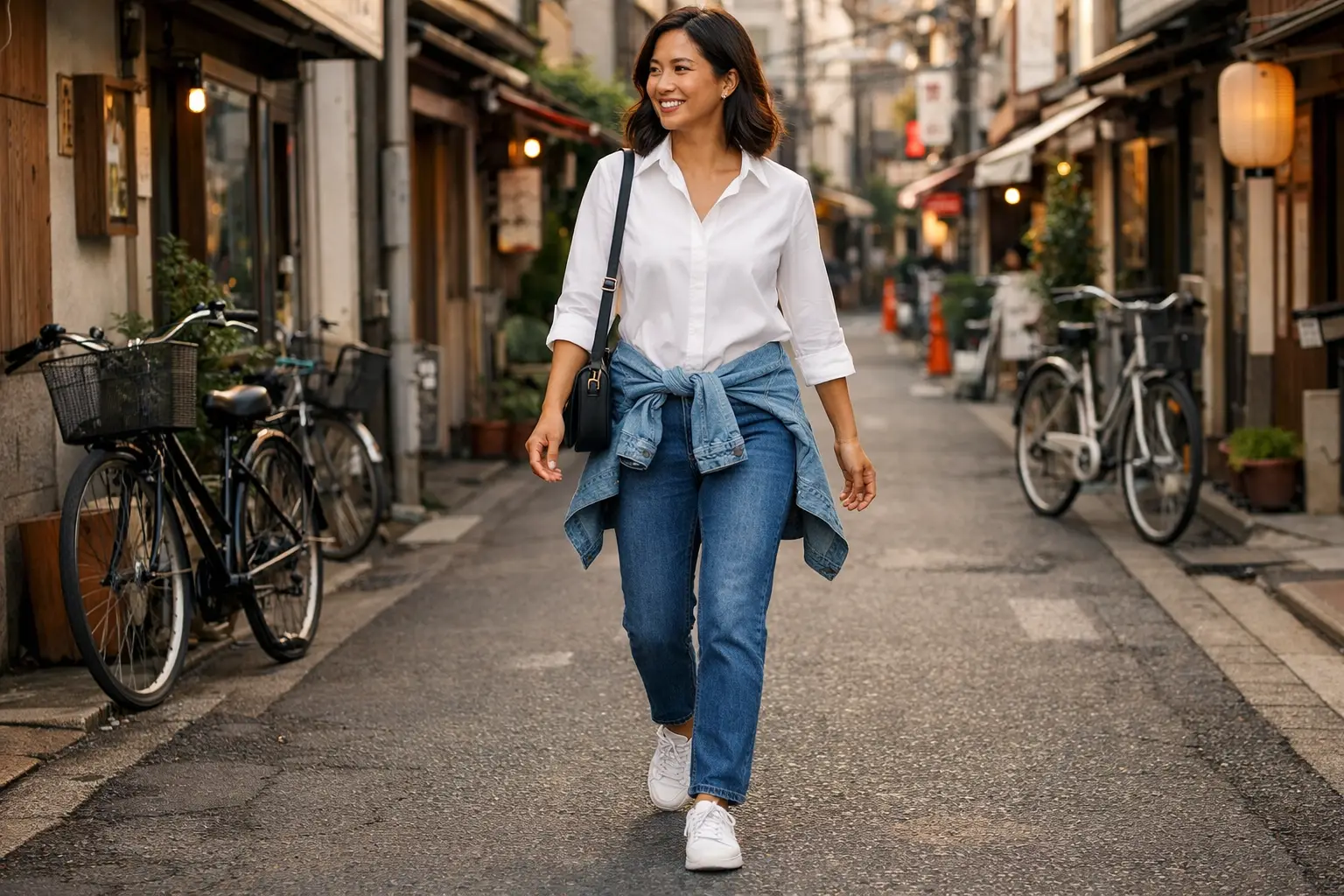
For casual sightseeing days spent covering significant ground through neighborhoods like Shimokitazawa or Yanaka, a well-fitted pair of straight-leg or slim jeans paired with clean white leather sneakers is the most universally reliable Tokyo outfit available. Jeans and sneakers are a must for exploring the city, as they are practical for walking long distances and exploring neighborhoods. Keep a shirt loose for flexibility, either a crisp white button-down worn untucked or a quality fitted tee in a neutral tone, and layer a light jacket that can be tied at the waist when the afternoon warms. The key is that the jeans should be neat and relatively new in appearance. Jeans are also good but they should be on the new side to meet the standard of neatness that Tokyo streets naturally demand.
The Linen Outfit for Hot and Humid Summer Days
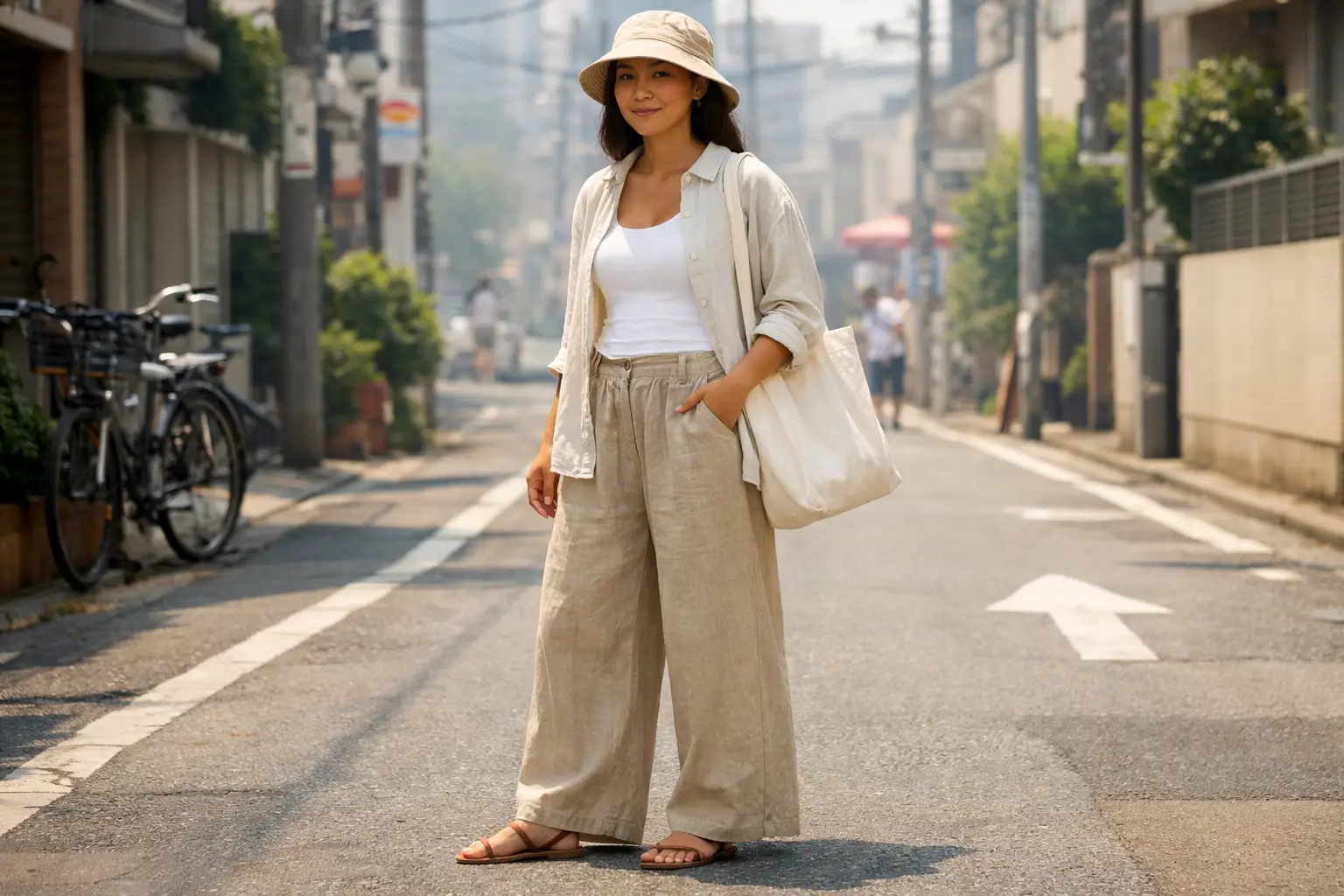
Tokyo summers are genuinely demanding on clothing. Japan’s summer is notoriously hot and humid, and you want to go for light, quick-drying and breathable fabrics. A linen outfit answers this challenge better than any other fabric combination. Wide-leg linen trousers in a neutral sand or white tone paired with a loose linen button-down shirt worn open over a fitted tank creates an outfit that breathes throughout the day and still reads as polished and intentional. When going to places like shrines, linen pants keep you cool or a midi skirt for something more feminine, paired with a blouse and closed-toe flats. A compact foldable sun hat and a reusable tote complete the look functionally without disrupting its clean aesthetic.
The Trench Coat Layered Outfit for Spring and Autumn
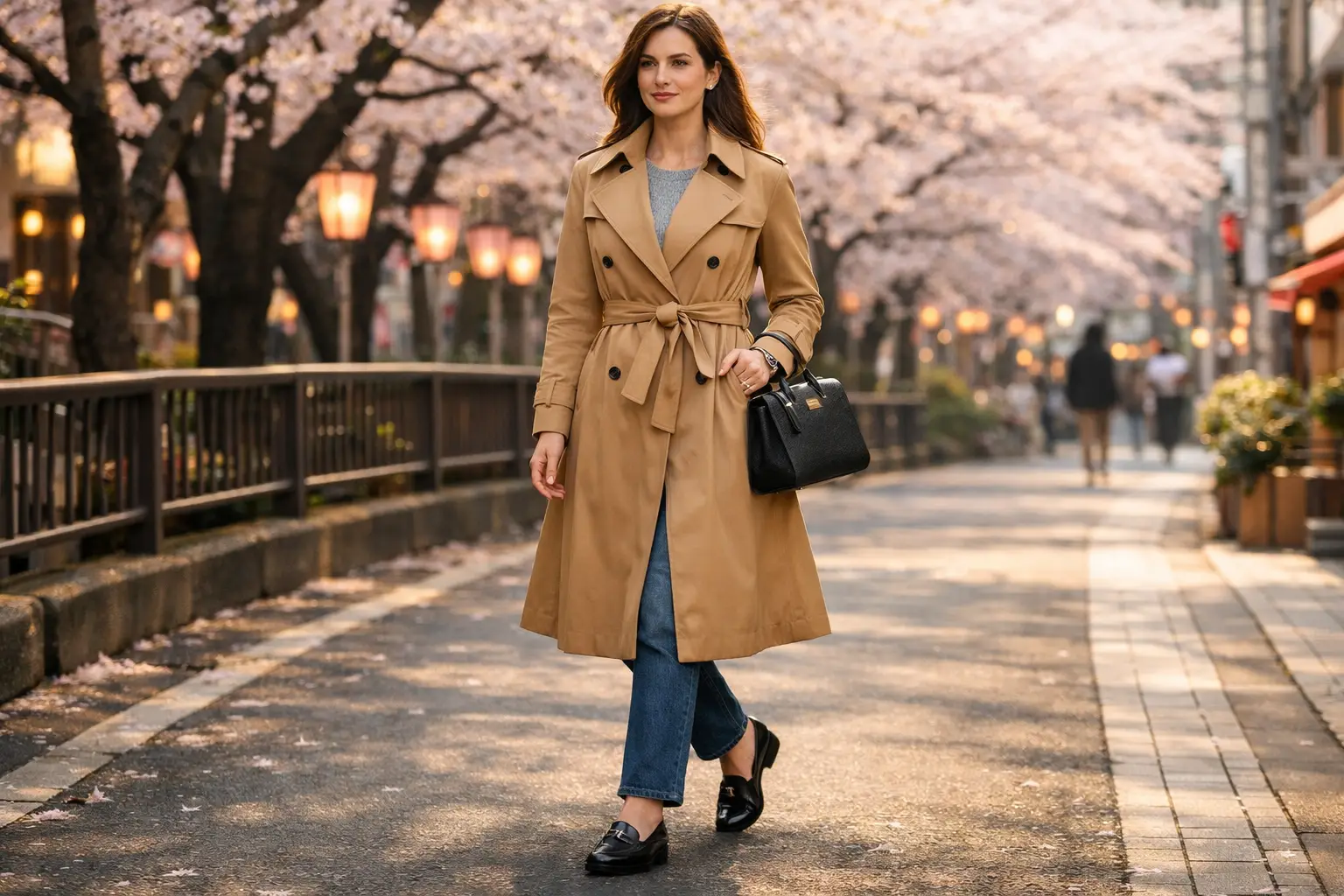
The trench coat is the single most useful outer layer a Tokyo visitor can own. One thing you should always have with you is a light cardigan or jacket, as air conditioning inside shops, hotels and restaurants can sometimes be quite strong and unpredictable. A camel trench coat layered over a grey knit and straight-leg jeans with black leather loafers creates an outfit that moves seamlessly between the cooler morning air and the warmer afternoon, and from outdoor sightseeing to indoor dining without any adjustment. A camel trench layered over a grey V-neck and straight-leg jeans is the definition of smart casual, and black leather loafers elevate the denim instantly, making it suitable for city exploring, train travel days, or even casual dinner reservations.
The Smart Casual Outfit for Ginza and Upscale Districts
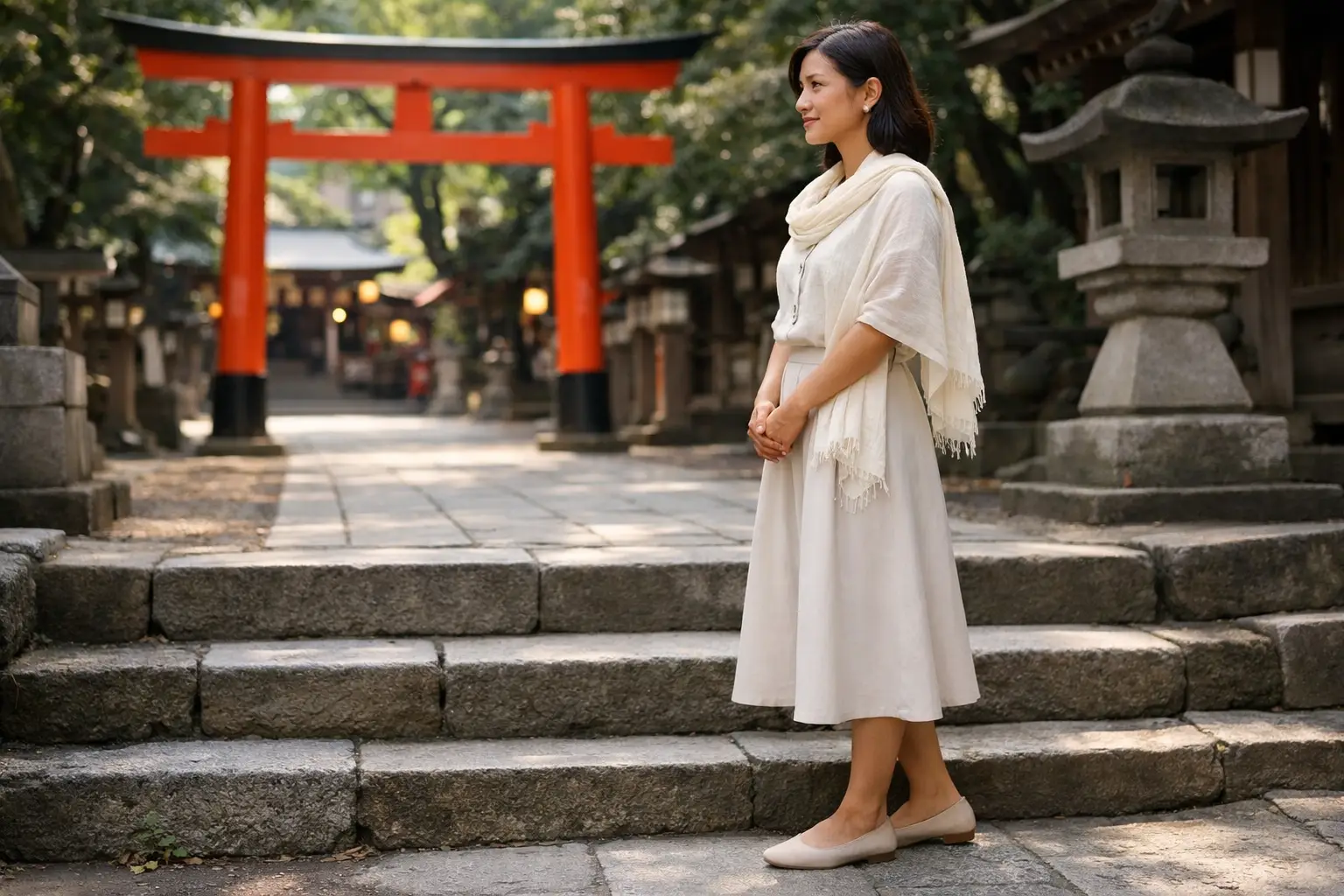
Tokyo’s upscale shopping districts demand a step up from the casual exploration outfit. Tokyo’s fashion is elevated, so when doing some shopping in Shibuya or Ginza, dress the part with a tailored jumpsuit and ankle boots. Alternatively, wide-leg tailored trousers in a neutral tone paired with a neatly tucked-in knit top, a structured leather bag, and loafers or clean leather sneakers creates the quietly polished look that Ginza’s atmosphere naturally calls for. Tokyo’s stylish female professionals embrace fashion that blends quiet confidence with thoughtful comfort, featuring wide-leg trousers paired with neatly tucked-in knits, minimalist wrap tops, and soft-structured blazers. The principle is refined simplicity rather than overt formality.
The Temple and Shrine Visit Outfit
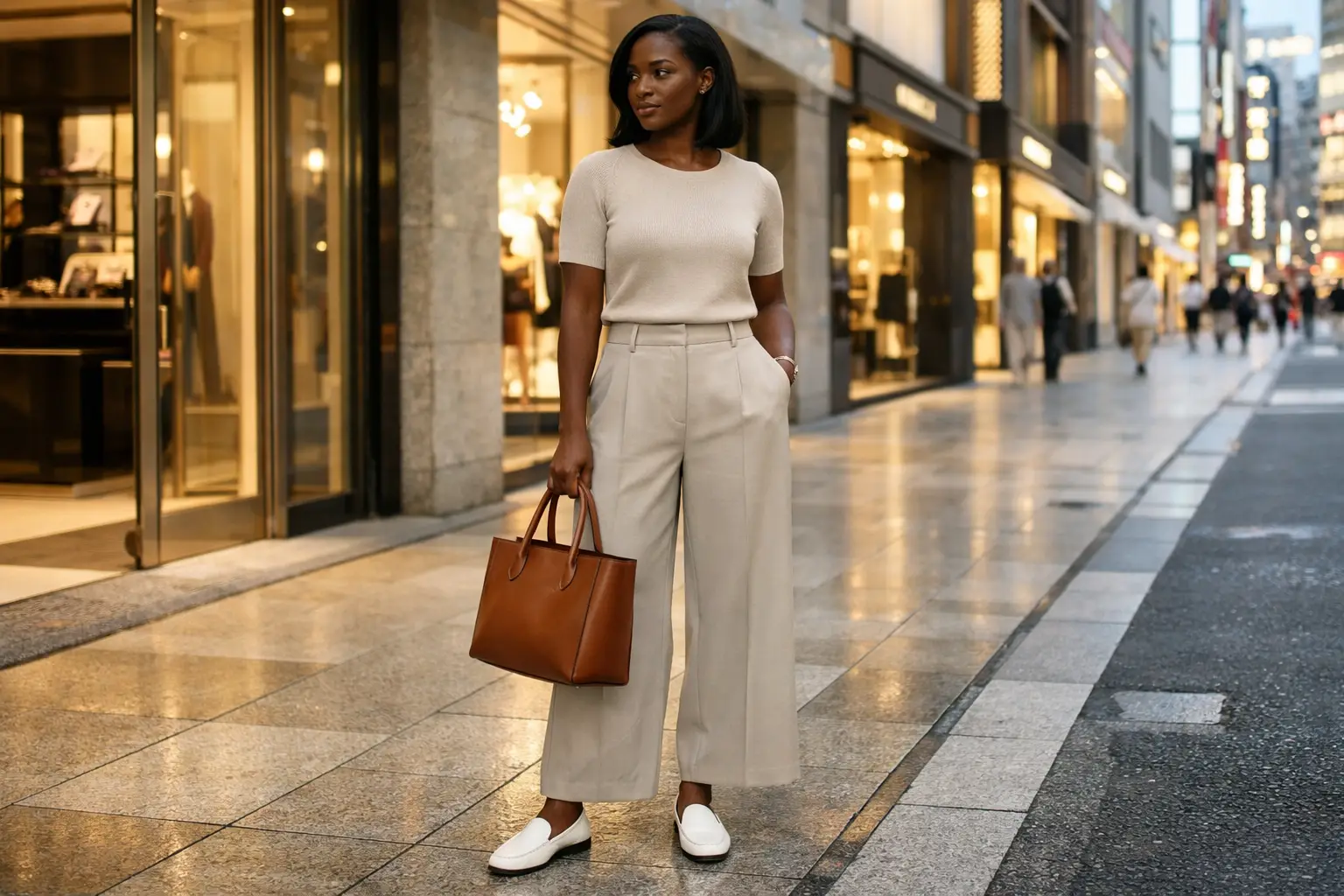
Visiting Asakusa, Meiji Shrine, or any of Tokyo’s significant religious sites requires a specific approach to dressing. Respect modesty particularly when visiting temples or shrines, and revealing clothing in cultural or public settings should be avoided. A midi skirt or relaxed linen trousers paired with a modest blouse and a lightweight scarf that can double as a shawl creates a respectful and genuinely elegant outfit for these settings. Shoes that can be easily removed are essential as many restaurants, temples, and traditional venues require footwear removal, so practical shoes are fundamental. Closed-toe flats or loafers that slip on and off without effort make the frequent shoe removal of temple visits entirely stress-free.
The Harajuku Street Style Outfit
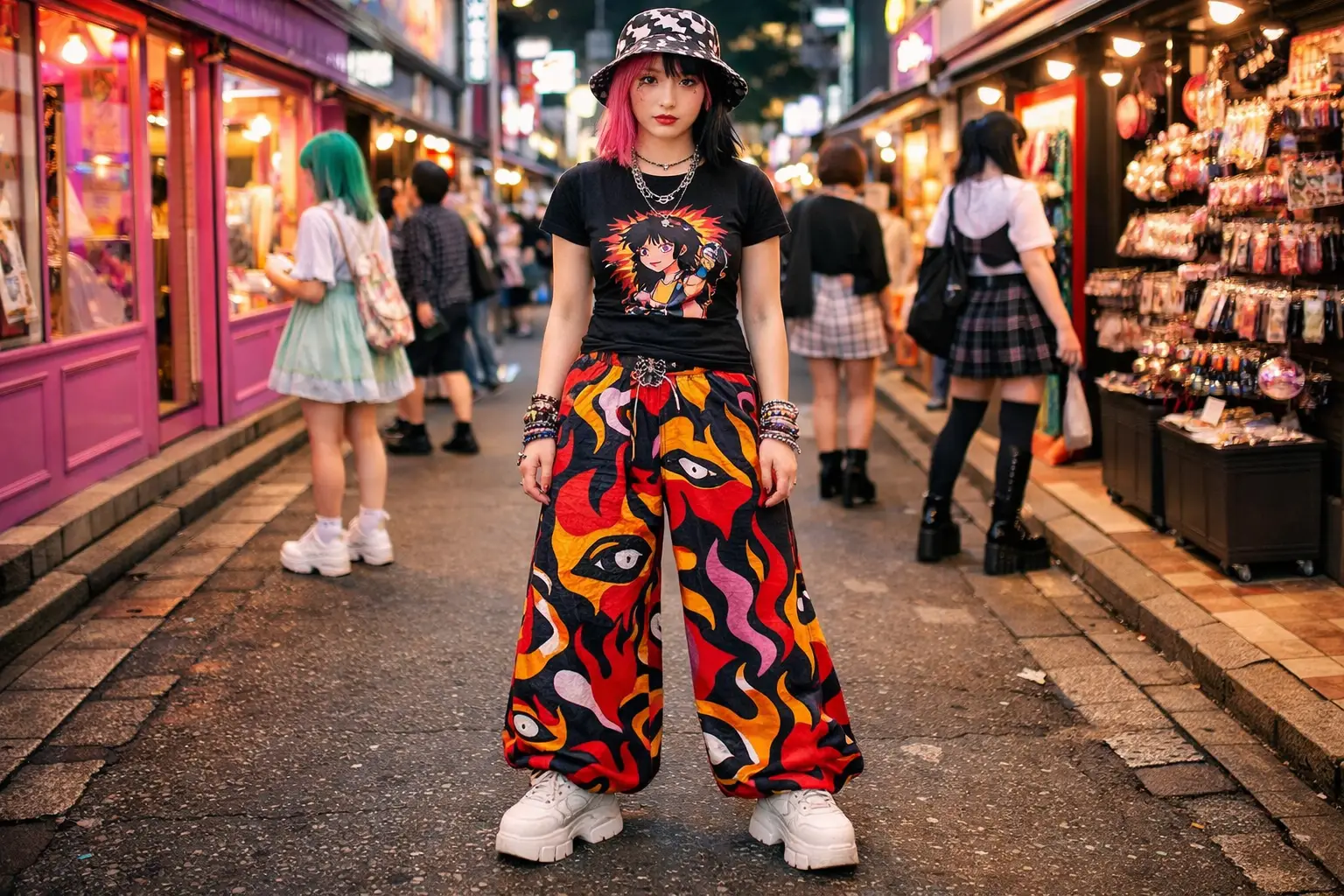
Harajuku is where Tokyo’s most experimental and expressive fashion culture lives, and it is one of the few neighborhoods where a more individualistic, bold outfit reads as genuinely appropriate rather than out of place. Wide-leg statement trousers in a printed or textured fabric paired with a fitted graphic tee, chunky platform sneakers, and layered accessories create an outfit with the kind of visual personality that Harajuku’s energy rewards. If checking out more artsy neighborhoods that like more individualistic fashion, wear some wide-legged pants and a vintage blouse, topped off with a bucket hat and sneakers for cafe hopping. The Harajuku outfit is the one Tokyo context where individual expression takes complete priority over conservative neatness.
The Cargo Pants Urban Explorer Outfit
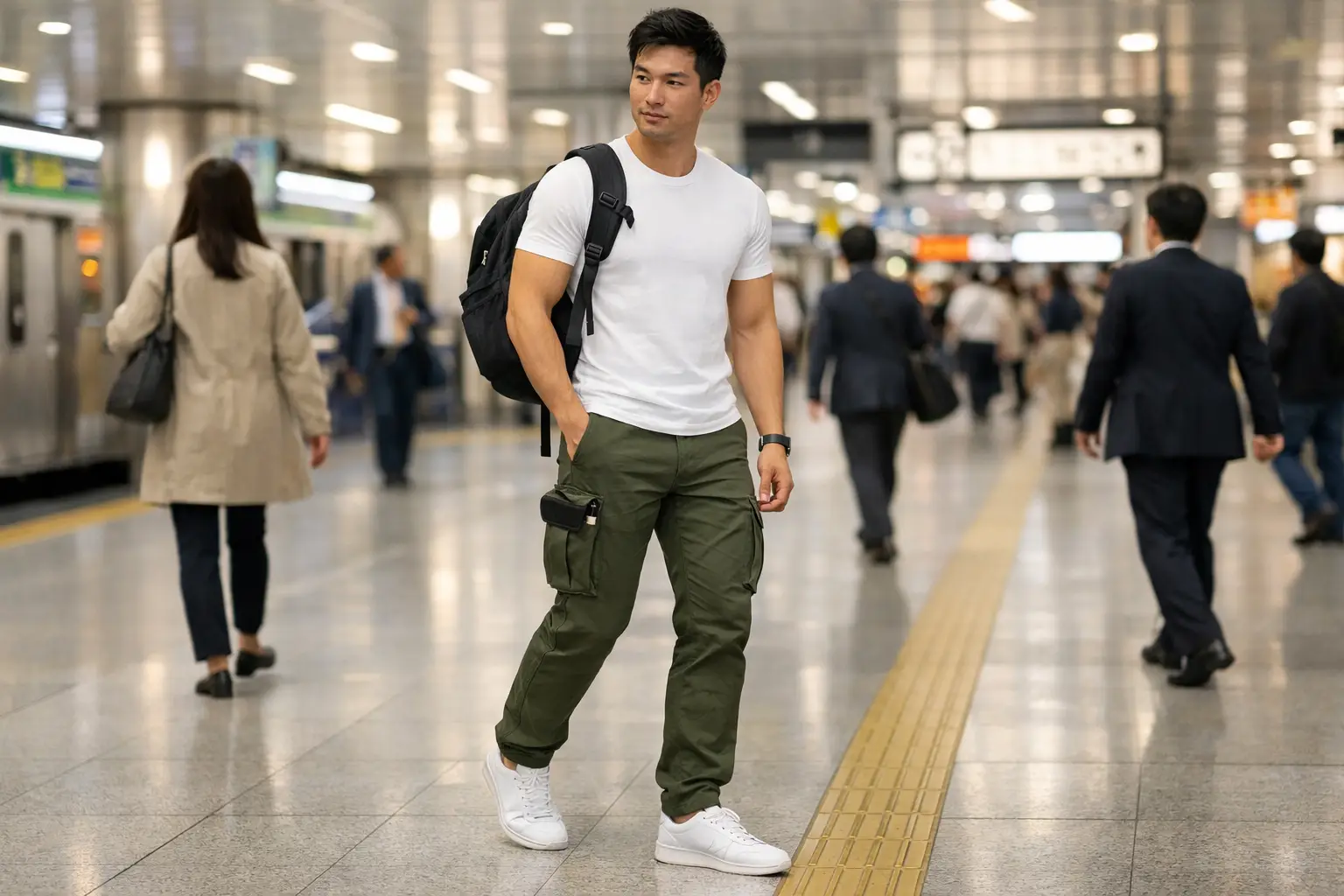
Cargo pants are among the most functionally valuable garments for exploring Tokyo’s dense urban environment. Cargo pants are perfect for exploring Tokyo’s urban landscape, injecting street style into your ensemble, with the numerous pockets providing ample space for carrying essentials like your phone, wallet, and any trinkets you pick up. A tailored slim-cut cargo trouser in olive, charcoal, or black paired with a fitted top and clean sneakers creates an outfit that balances the practical utility of the cargo design with enough visual structure to suit most Tokyo settings from morning sightseeing through a casual evening meal. The pockets eliminate the need for a bag on days when you want to travel light.
The Monochromatic All-Black Tokyo Outfit
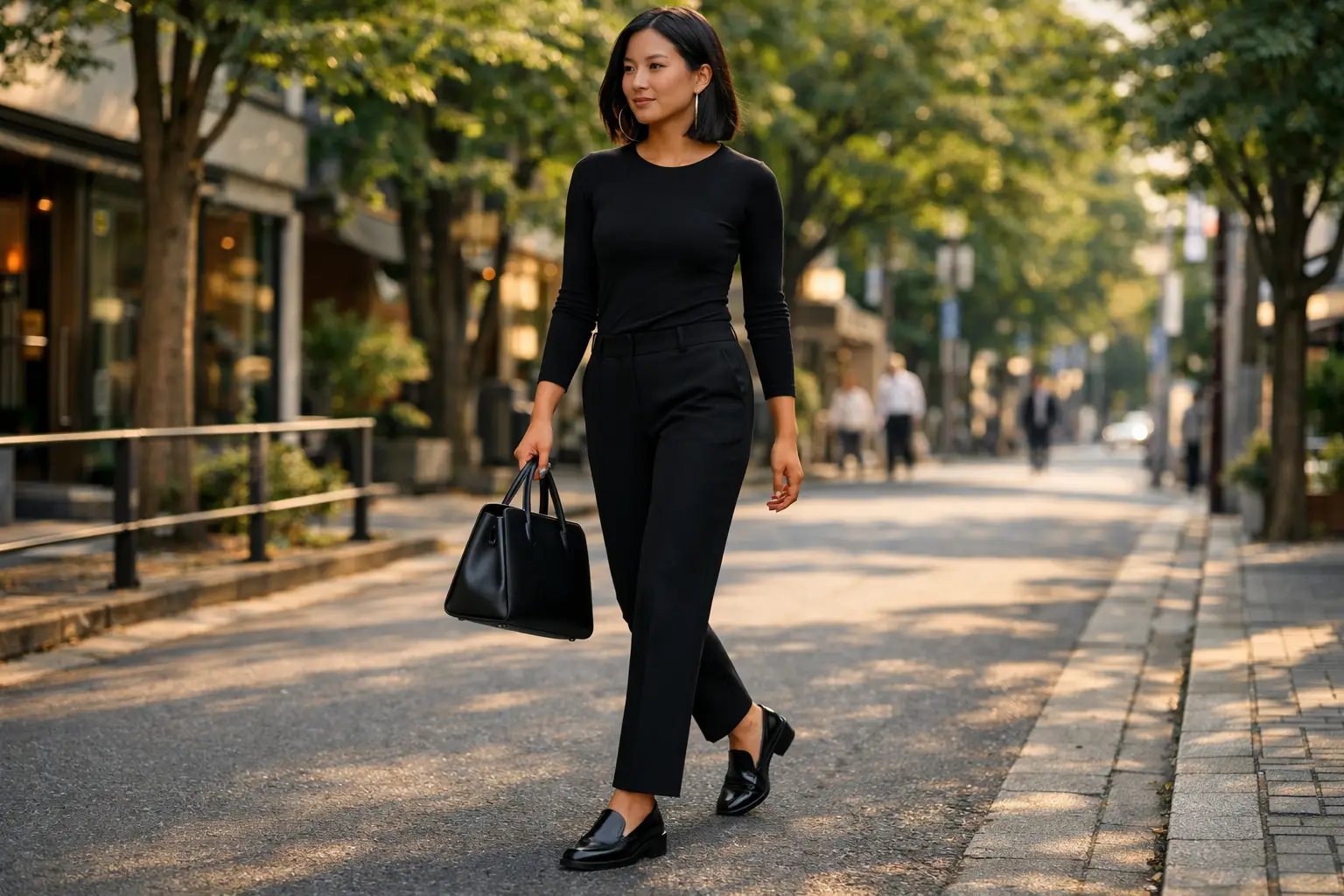
All-black outfits are among the most naturally Tokyo-compatible options a visitor can choose. The city’s fashion culture consistently gravitates toward clean, minimal color palettes, and a head-to-toe black outfit in quality fabrics reads as intentionally stylish rather than simply basic. Black straight-leg trousers, a black fitted long-sleeve top, and black leather loafers or ankle boots create a complete monochromatic outfit that suits every Tokyo neighborhood from Daikanyama to Shinjuku. For men navigating Tokyo’s vibrant scene, tapered trousers, breathable overshirts, and clean-lined sneakers are perfect for seamlessly transitioning from daytime exploration to informal evening settings. A structured black bag and minimal jewelry complete the composition without disrupting its clean character.
The Business Casual Outfit for Professional Districts
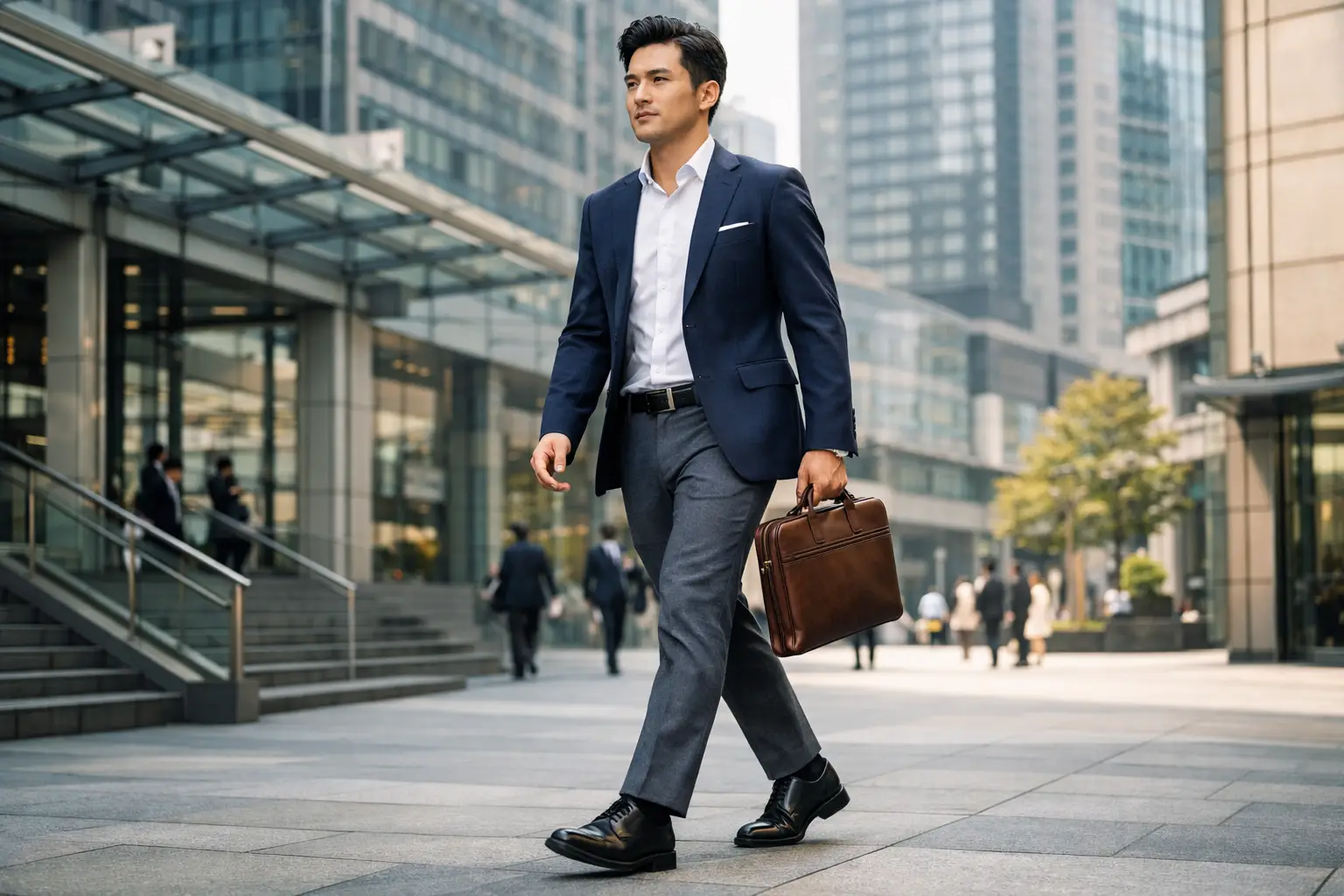
Tokyo’s professional districts, particularly around Marunouchi and Shinjuku, have a distinct energy that rewards a business-casual approach. Business-casual elements like button-down shirts, blazers, and popped collars achieve a sophisticated smart look, with loafers and oxfords typically accompanying such outfits. A blazer worn over a tucked-in blouse or a quality fitted tee with tailored trousers and loafers creates an outfit with enough structure for professional settings while remaining comfortable for significant walking. The emphasis is on garments that feel effortlessly comfortable yet present a polished professional appearance, making your Tokyo day stylishly adaptable.
The Cotton Dress and Flat Sandal Summer Outfit
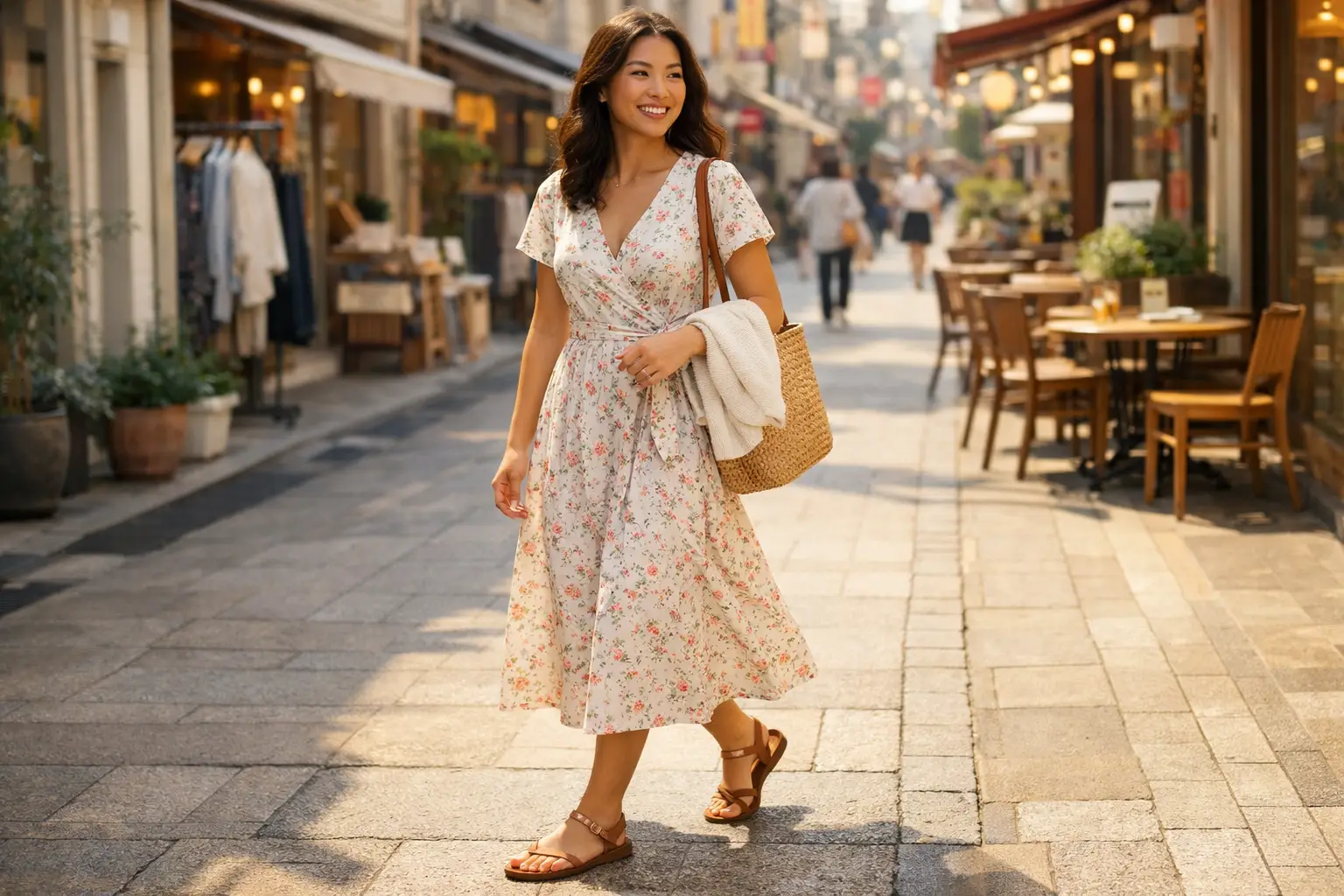
For warm spring and summer days of lighter activity, a cotton midi dress or a relaxed wrap dress paired with flat leather sandals creates a genuinely effortless Tokyo outfit. Think light cotton dresses and sneakers, and a sunhat and sunglasses for outdoor exploration when staying cool and protected from UV rays is essential. The dress length matters in Tokyo where modesty is appreciated in most public settings, making a midi or knee-length dress the most appropriate choice for a day that moves between shopping streets, cafes, and perhaps an afternoon shrine visit. A lightweight cardigan carried in a tote bag handles the aggressive air conditioning that characterizes nearly every indoor space in the city.
The Shimokitazawa Vintage-Inspired Outfit
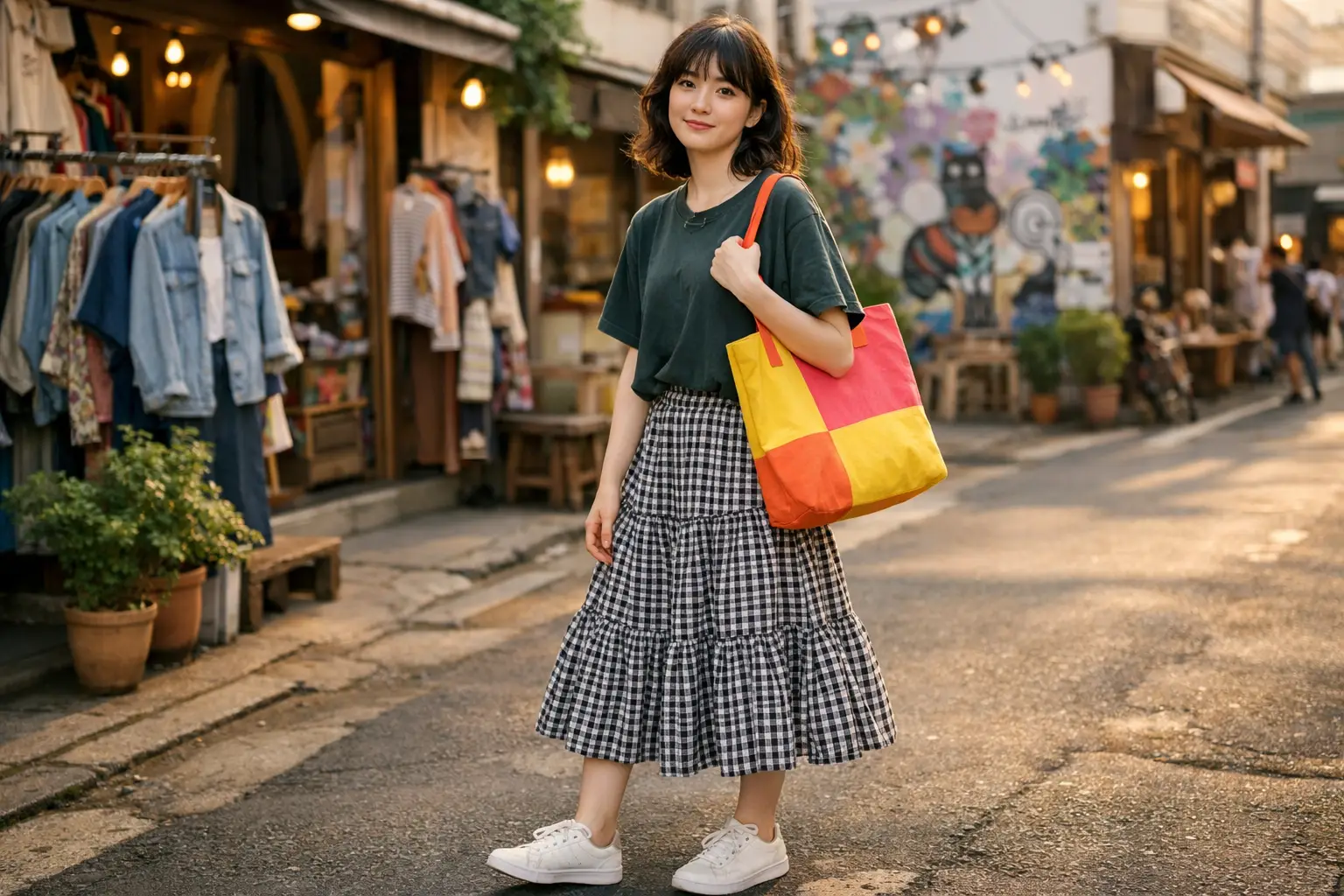
Shimokitazawa is Tokyo’s most beloved bohemian neighborhood, famous for its vintage clothing stores, independent coffee shops, and creative community. The outfit for this neighborhood should reflect its artsy, individually expressive character. An oversized dark green t-shirt paired with a tiered gingham midi skirt feels comfortable yet interesting, with sneakers making it practical for walking through markets, and a bright-colored tote bag adding personality. It is relaxed but still thoughtfully styled. Vintage-inspired pieces worn with contemporary basics create exactly the kind of contrast that Shimokitazawa’s visual identity celebrates.
The Minimalist Quiet Luxury Tokyo Outfit
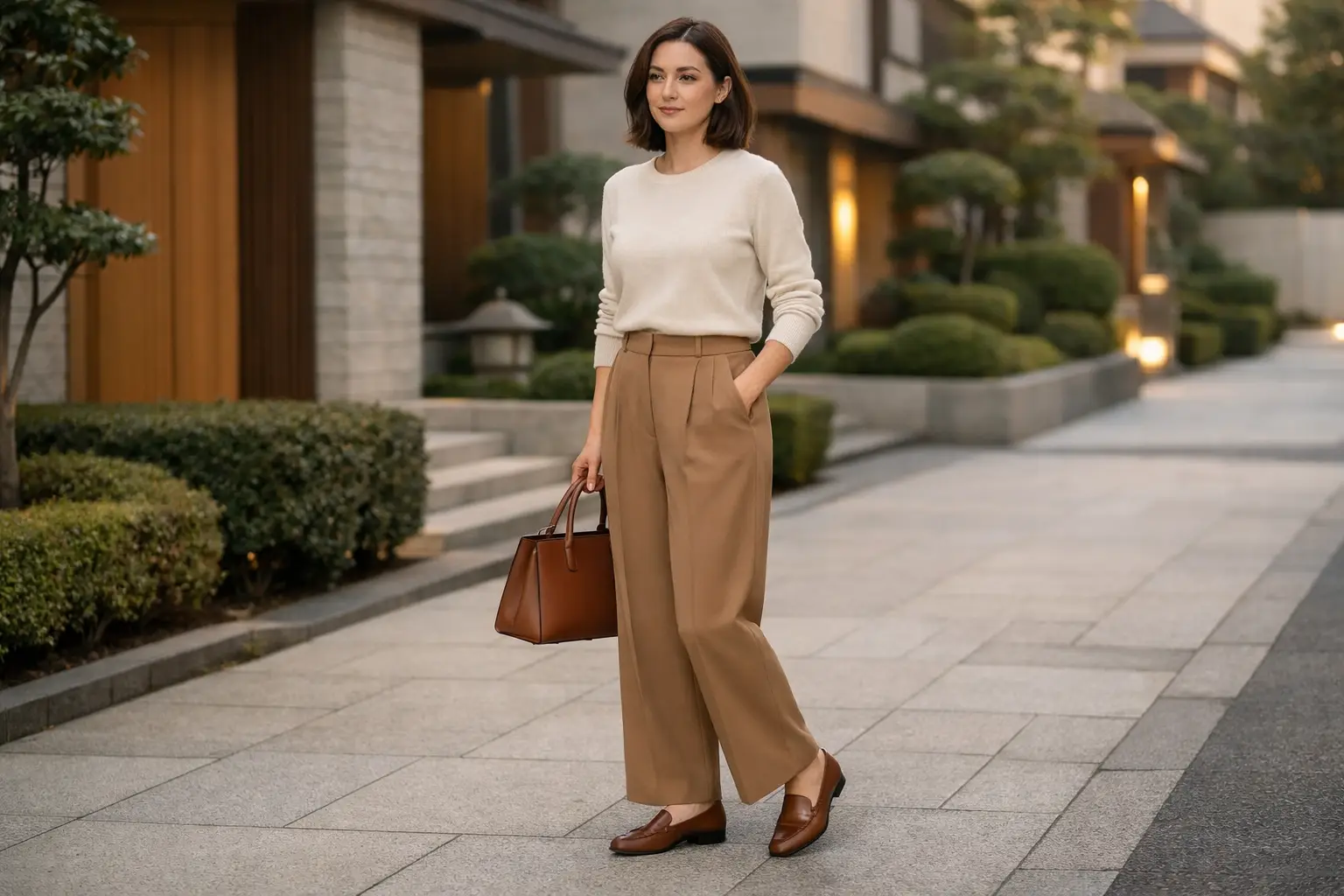
Tokyo’s fashion culture has a deep appreciation for the kind of quiet luxury aesthetic that prioritizes quality fabric, clean silhouette, and minimal branding over obvious logos or statement pieces. A cashmere or fine-knit sweater in a neutral tone tucked into high-waisted wide-leg trousers, clean leather loafers, and a single structured leather bag creates an outfit with the understated elegance that Tokyo’s more refined neighborhoods consistently reward. Subtle elegance is appreciated in refined settings, and overly loud or flashy outfits in formal or quiet neighborhoods are best avoided. The investment is in fabric quality and fit rather than brand visibility.
The Layered Airport and Transit Outfit for Tokyo Arrival
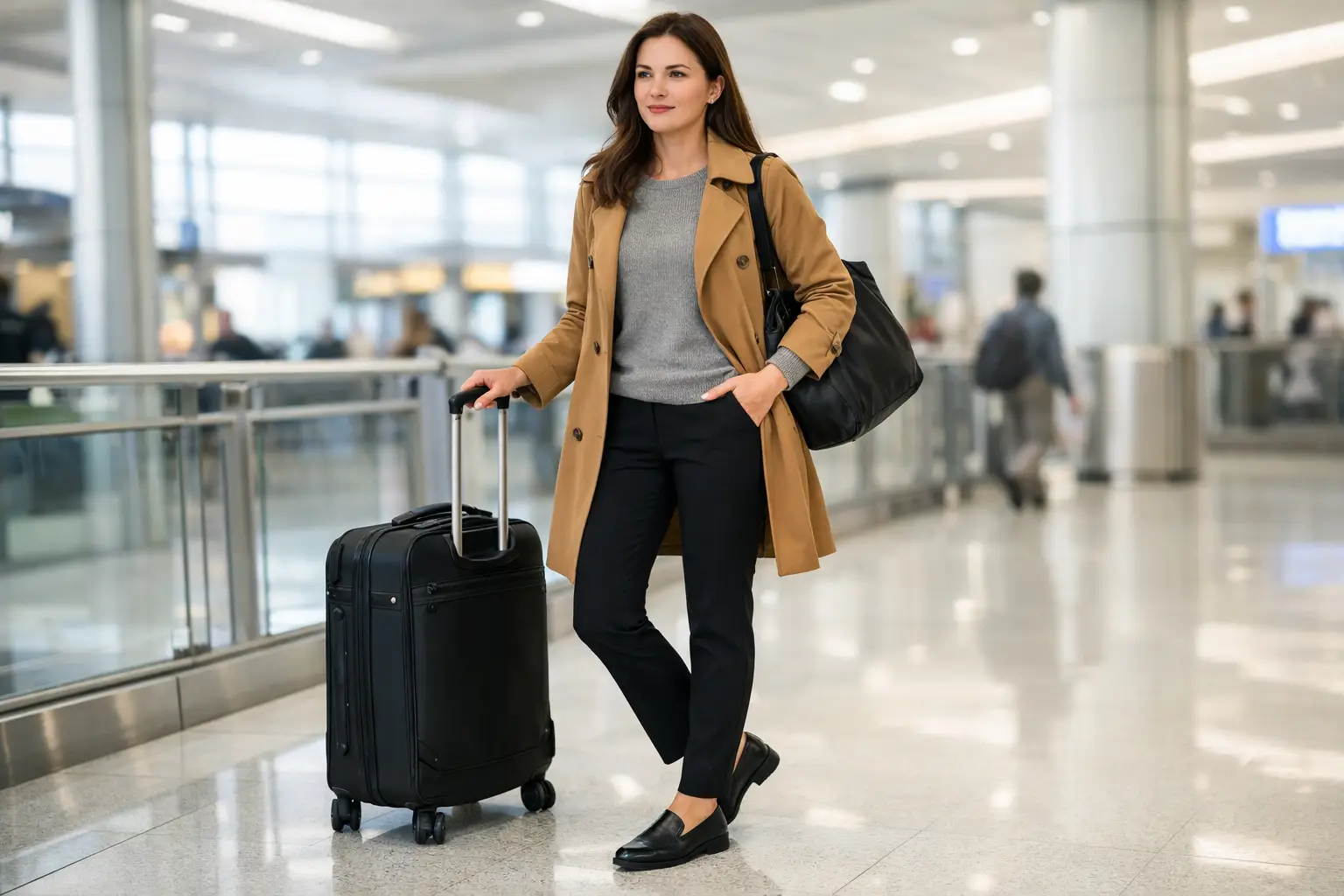
The outfit for arriving in Tokyo after a long international flight needs to balance maximum comfort during transit with enough polish to make a confident first impression on arrival. For airports and train rides, prioritize functional adaptable clothing with easy layers, starting with a layered tee, throwing a cardigan over it that is easy to take on and off, with casual trousers and a pair of slip-on shoes. A pair of pull-on trousers in a ponte or stretch woven fabric that look tailored from a distance, layered with a fine-knit sweater and a packable coat or trench, with slip-on loafers that navigate security without requiring unlacing, creates the ideal arrival outfit that transitions immediately into a polished first day without requiring a hotel room change.
The Rainy Day Tokyo Outfit
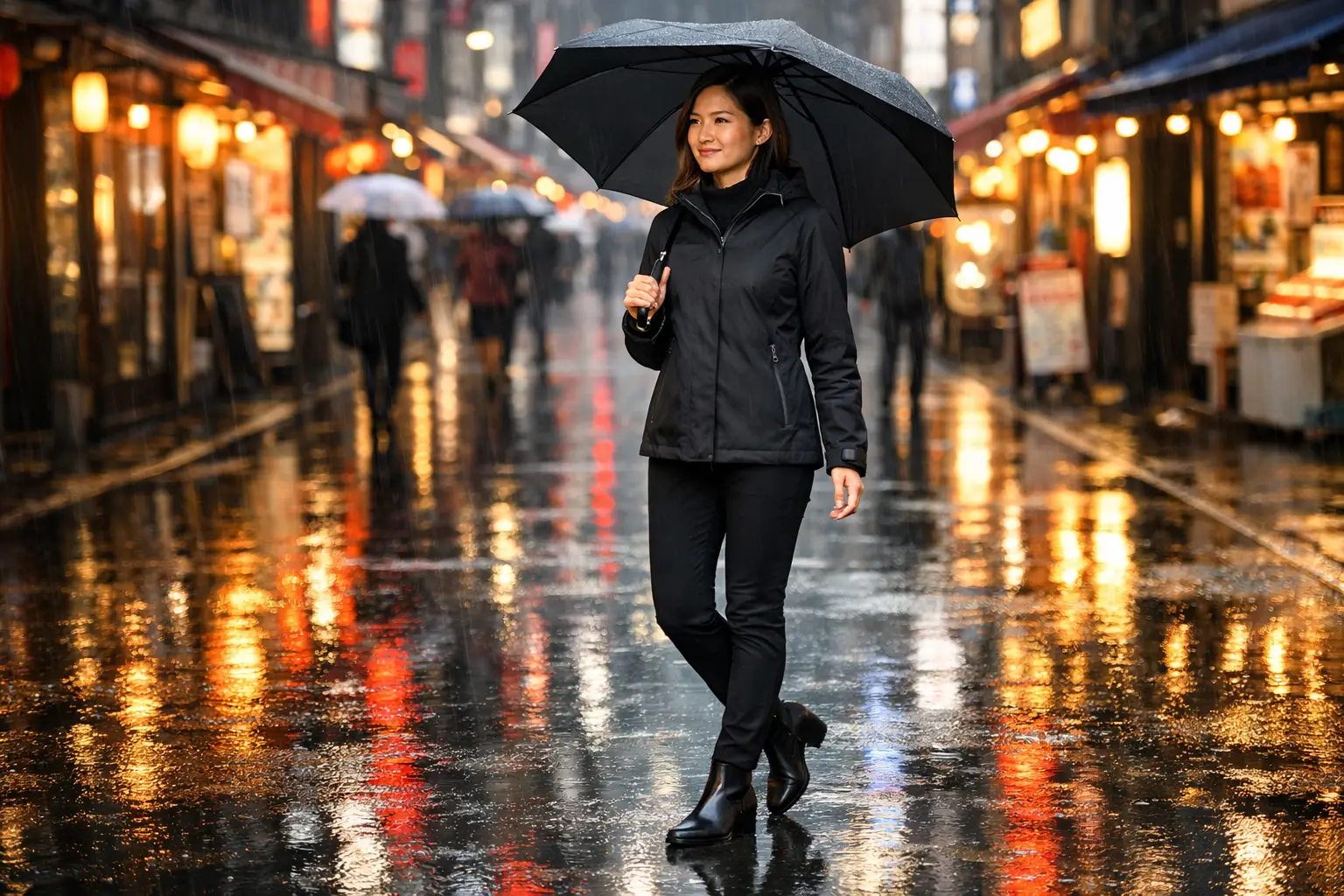
Tokyo experiences frequent rain throughout the year and particularly during the June and July rainy season. A small foldable umbrella in your bag can be a lifesaver, as sudden rain showers are not uncommon. The rainy day Tokyo outfit prioritizes quick-dry fabrics and water-resistant outer layers. A waterproof or water-resistant jacket in a clean minimal design, dark slim trousers that hide damp splashes, and a pair of leather or rubber-soled ankle boots that handle wet pavement comfortably create an outfit that functions in rain without abandoning the neatness standard that Tokyo streets expect. Avoiding light-colored fabrics on predicted rainy days and carrying a compact quality umbrella rather than a large tourist-style one respects both the practical and the aesthetic demands of the situation.
The Evening Dinner and Nightlife Tokyo Outfit
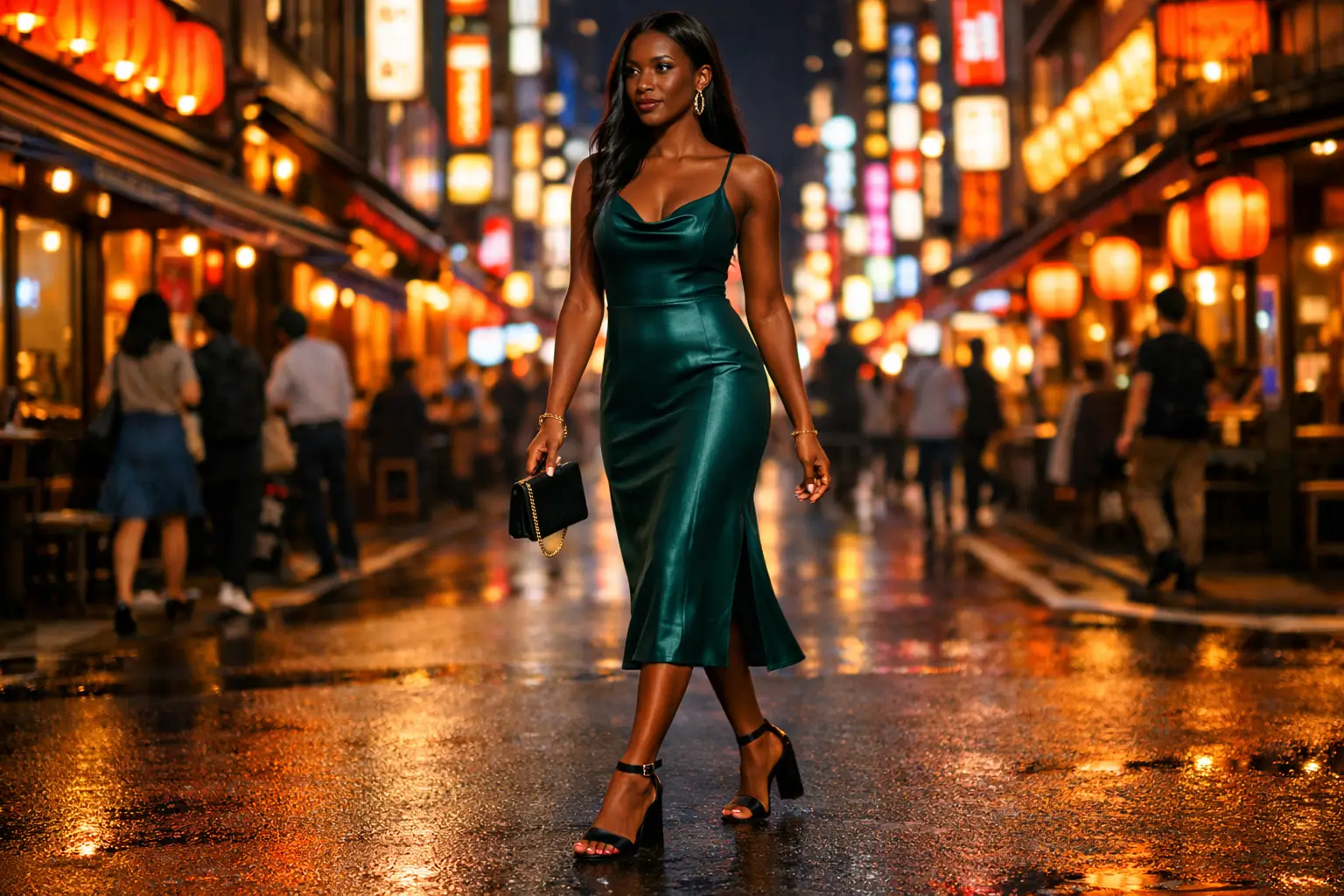
Tokyo evenings create an opportunity to express a more polished personal style, particularly for restaurant reservations, cocktail bars in Roppongi, or rooftop venues in Shinjuku. When there is a reservation at a special restaurant, switching things up with slightly dressier looks works beautifully, with kitten heels, elegant flats, or a low block heel paired with a more polished outfit such as a chic dress, a sleek two-piece set, or tailored trousers and a blouse. A slip dress or structured midi dress with heeled mules or block-heeled sandals creates a genuinely evening-appropriate look that still allows comfortable movement through Tokyo’s busy evening streets and subway stations. You are going to feel very out of place walking into a smart Tokyo restaurant wearing shorts, with a clean pair of slacks or khakis being a better option.
The Winter Layered Tokyo Outfit
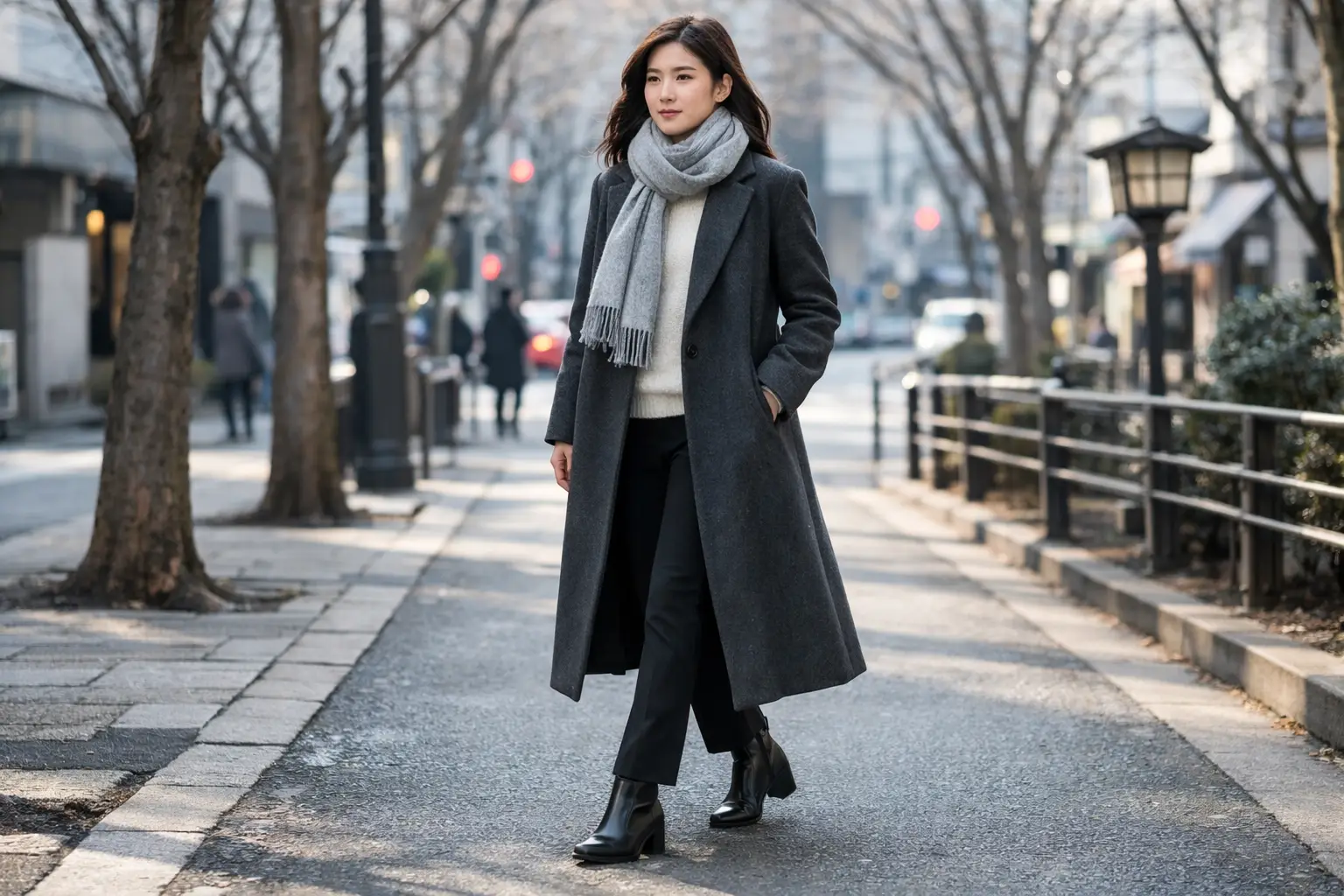
Tokyo winters are genuinely cold, requiring proper layering rather than simply adding a light cardigan. In most places you are likely to visit, Japan’s winter is similar to that of Washington DC or Paris, cold but not that cold, and rain is more likely than snow, so dress like you would for winter in those cities. A thermal base layer worn under a quality knit sweater, layered under a structured wool coat or longline overcoat, with straight-leg trousers and ankle boots creates a winter Tokyo outfit that handles the cold with genuine warmth while maintaining the polished, intentional appearance that the city’s streets naturally inspire. Avoiding clunky boots is advisable, especially when you will be taking off and putting on your shoes frequently at traditional spots. A merino wool scarf and leather gloves complete the cold-weather composition without adding excessive bulk.
What to Keep in Mind When Building Your Tokyo Wardrobe
Dressing for Tokyo is ultimately about respecting the relationship between personal expression and situational awareness. Locals value neatness and put-together outfits, so even casual looks often feel polished, and while Tokyo is very fashionable, it is never about being overdressed but about looking effortless and feeling comfortable in your own style.The most important single principle is choosing pieces that mix with multiple others across the trip rather than packing individual complete outfits for each day. Dirty or worn-out footwear should be avoided as attention to detail matters greatly in Japan, particularly concerning shoes. Clean, well-maintained footwear in a style appropriate to each day’s activities is among the single most important elements of any Tokyo outfit, and it is the detail most immediately noticed by locals.
Conclusion
Tokyo rewards visitors who dress with intention. The 16 outfits in this guide cover every major setting and season the city presents, from the temple steps of Asakusa to the vintage stores of Shimokitazawa to the rooftop bars of Shinjuku, and each one balances the practical demands of a city that requires significant daily walking with the stylistic standards of a place that genuinely values personal presentation. At the end of the day, what to wear during a trip to Japan comes down to balance, comfort, modesty, and a little personal style. When your outfit feels easy, you enjoy the experience more, and that is what travel style should really be about. Pack with intention, choose versatility over volume, and let the city’s own extraordinary fashion energy inspire the rest.
You may also like this: Spring Travel Outfits: 15 Design ideas That Feel Good All Day
Frequently Asked Questions
Is Tokyo a fashionable city and do locals judge tourists for what they wear?
Tokyo is genuinely one of the most fashion-conscious cities in the world, and locals do pay attention to personal presentation. However, judgment is far less the concern than simply feeling confident and comfortable in the environment. The most important thing is neatness and cleanliness rather than following any specific trend. A clean, well-maintained outfit that suits the setting you are visiting is all Tokyo requires of any visitor.
Can I wear shorts in Tokyo?
Shorts are acceptable for casual sightseeing on hot summer days but should be neat, clean, and at an appropriate length. Board shorts, cut-off denim, or athletic shorts feel out of place in most Tokyo settings beyond the beach. For restaurant visits, shopping in upscale districts, or any evening occasion, trousers or a dress or skirt are significantly more appropriate and will make the experience more comfortable.
What shoes work best for Tokyo?
Comfortable walking shoes that are clean and in good condition are the primary requirement. White leather sneakers, loafers, ballet flats, and leather sandals are all excellent choices depending on the season and occasion. Easy slip-on styles are particularly practical for the frequent shoe removal required at temples, traditional restaurants, and some cultural venues.
What should I wear to visit temples and shrines in Tokyo?
Modest clothing that covers the shoulders and knees is the most respectful approach for temple and shrine visits. Linen trousers, midi skirts, blouses, and light cardigans are all appropriate. A lightweight scarf that can be draped over the shoulders as a shawl is a practical addition to any temple visit outfit, particularly during warmer months when sleeveless tops are otherwise comfortable.
How should I dress for Tokyo’s different seasons?
Spring calls for light layers and a trench coat for variable temperatures. Summer requires breathable fabrics like linen and cotton with sun protection. Autumn is ideal for the transitional trench coat and layered knit combinations. Winter needs a proper warm coat, thermal layers, and ankle boots. Checking the specific weather forecast for your travel dates and packing accordingly within these seasonal frameworks produces the most comfortable and practical result.