
Introduction
There are places on this planet that stop you mid-step and make you genuinely question what you are looking at. Not because they are beautiful in the ordinary sense, but because they look like something a film set designer invented, or a painter imagined, or a physicist calculated but nobody expected to actually find. The world contains landscapes so extraordinary that they consistently register as impossible even when you are standing inside them.
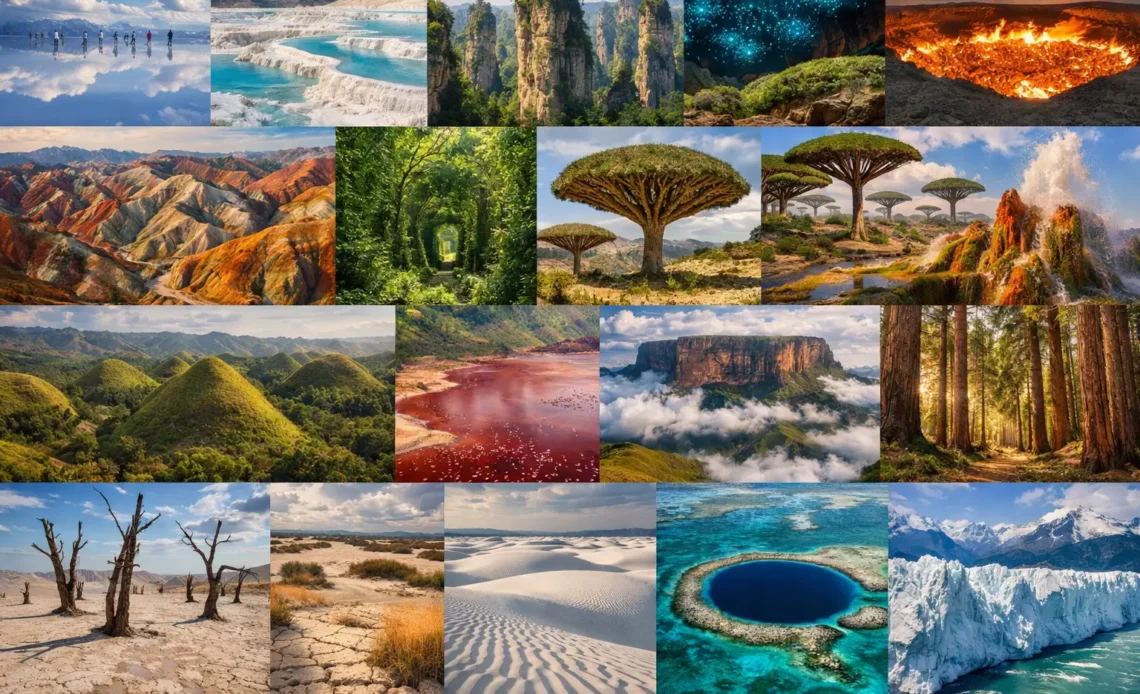
Exploring unreal places on earth can feel like stepping into a dream where natural beauty defies expectation and ordinary landscapes transform into surreal wonders. From technicolour mountains to geothermal marvels, these extraordinary destinations blur the line between reality and imagination. The 18 places in this guide are not simply beautiful destinations. They are the specific locations on Earth where the natural world decided to do something so completely outside the expected range that every photograph taken there looks edited and every visitor description sounds exaggerated. None of it is. Every single one of these places is entirely real and entirely accessible.
Salar de Uyuni Bolivia
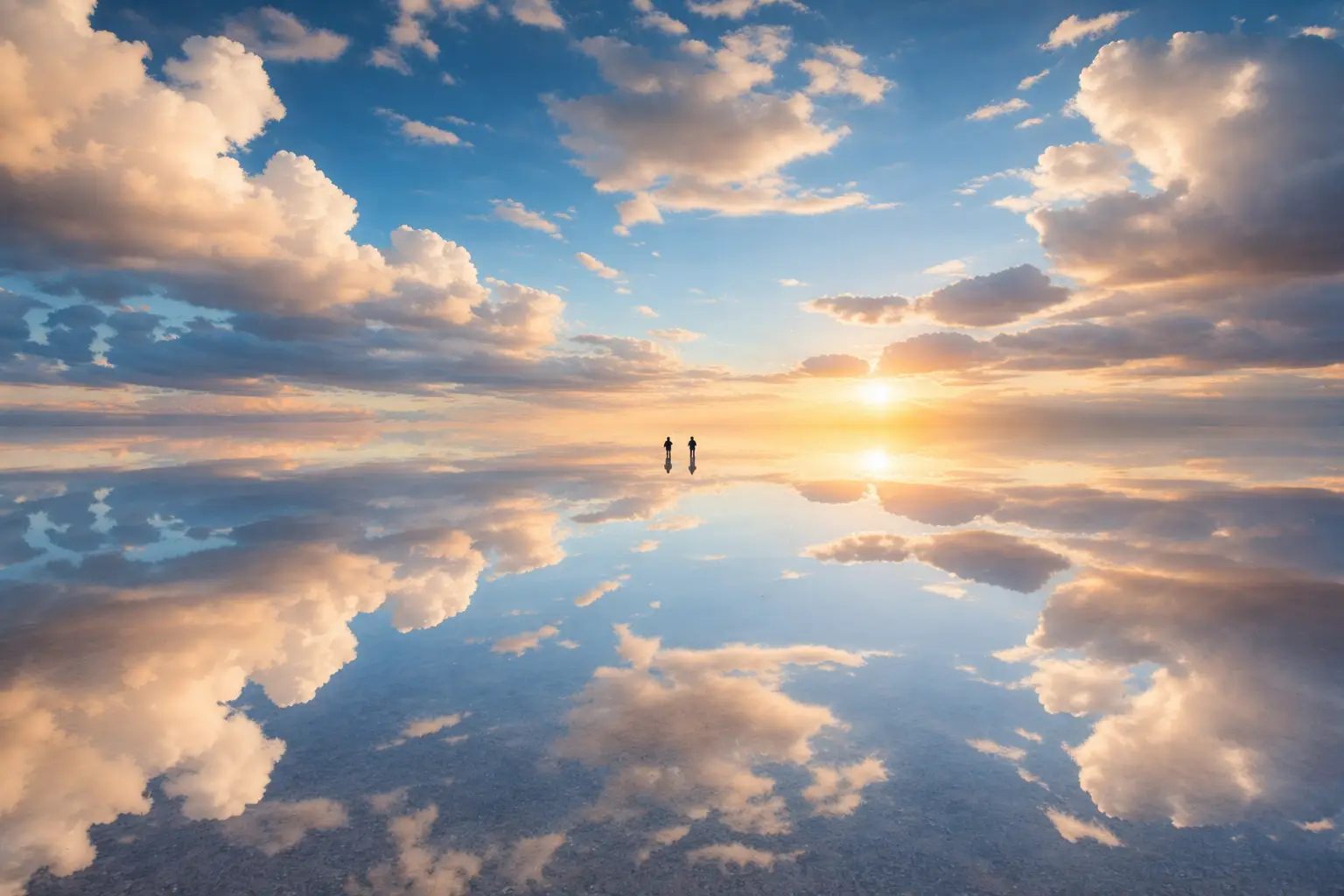
Salar de Uyuni in Bolivia is one of the most unreal places on earth that don’t feel real. As the world’s largest salt flat, it stretches endlessly with a white, salt-crusted surface for most of the year. During the rainy season, however, a thin layer of water transforms it into a vast natural mirror, reflecting the sky so perfectly that it feels like walking on clouds. The salt crust creates a stunning mirror effect after rainfall, while the Incahuasi Island stands in its center, surrounded by ancient coral formations. Standing on the Salar during the wet season, the horizon disappears entirely. The sky is below you. The ground is above you. Every photograph taken here looks like it was taken in outer space.
Pamukkale Turkey
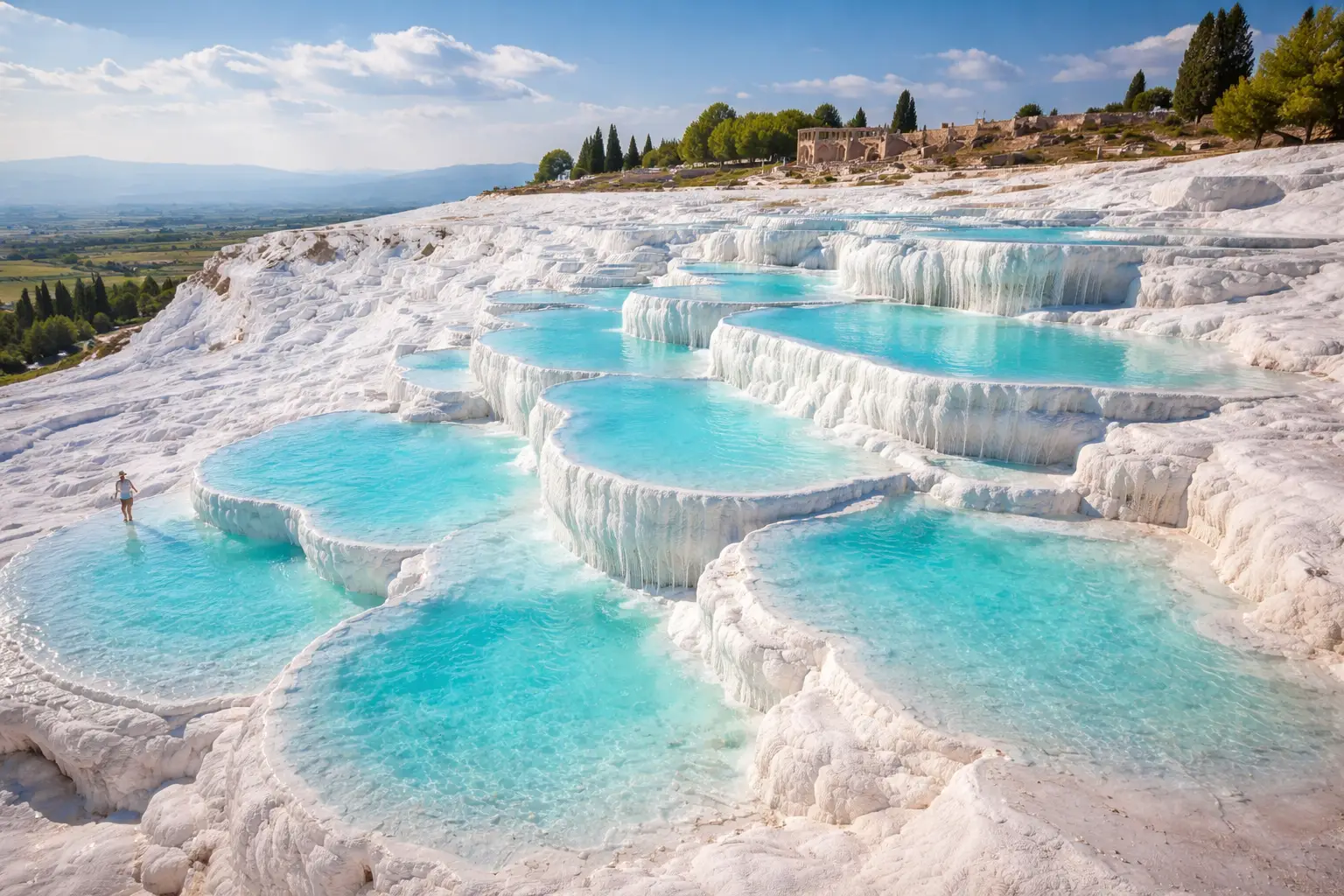
The cascading pools of Pamukkale, resembling frozen waterfalls, give an impression of a surreal snowscape, while the vibrant blue thermal waters that fill the terraces provide a striking contrast against the stark white landscape. Walking barefoot on the terraces, as the warm water caresses your skin, creates a sensation that feels almost extraterrestrial. This surreal landscape appears as one of the places on Earth that don’t feel real due to the contrast between the brilliant white terraces and the surrounding lush greenery. The sun’s reflection off the pools and their unique formation create an ethereal appearance often described as otherworldly. The ancient city of Hierapolis sits directly above the white terraces, adding a layer of historical impossibility to the geological one.
Zhangjiajie National Forest Park China
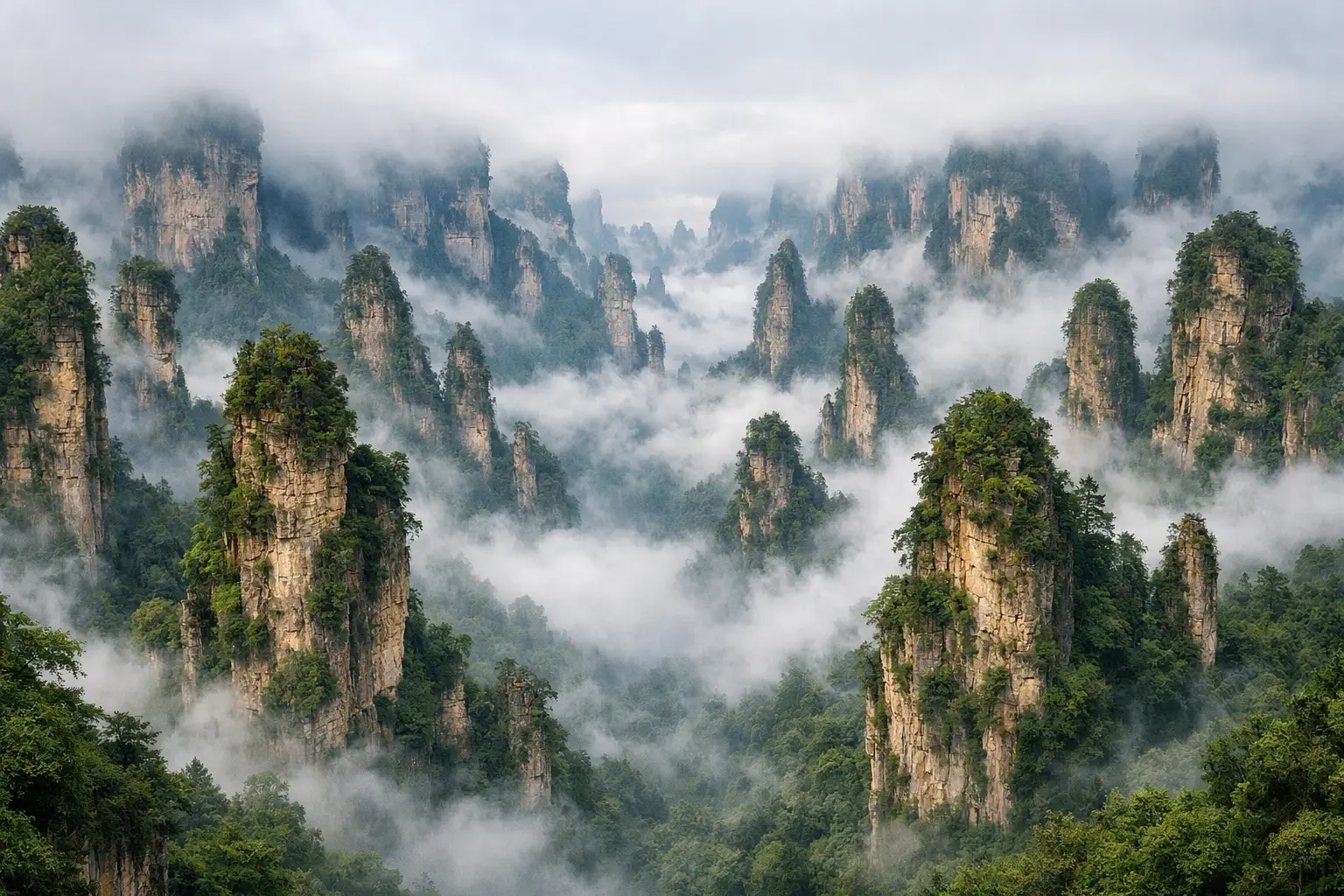
Zhangjiajie National Forest Park, located in the Hunan Province of China, is a UNESCO World Heritage Site known for its towering sandstone pillars covered in lush greenery. These magnificent pillars, rising from the forest floor like ancient sentinels, served as inspiration for the floating Hallelujah Mountains in the movie Avatar. Exploring this breathtaking landscape, with mist-shrouded peaks disappearing into the heavens, gives a sense of being in a mythical realm, far removed from our earthly existence. On foggy mornings, the upper sections of the pillars disappear into low cloud and the bases float in a sea of white mist, making the Avatar comparison not just understandable but genuinely accurate.
Waitomo Glowworm Caves New Zealand
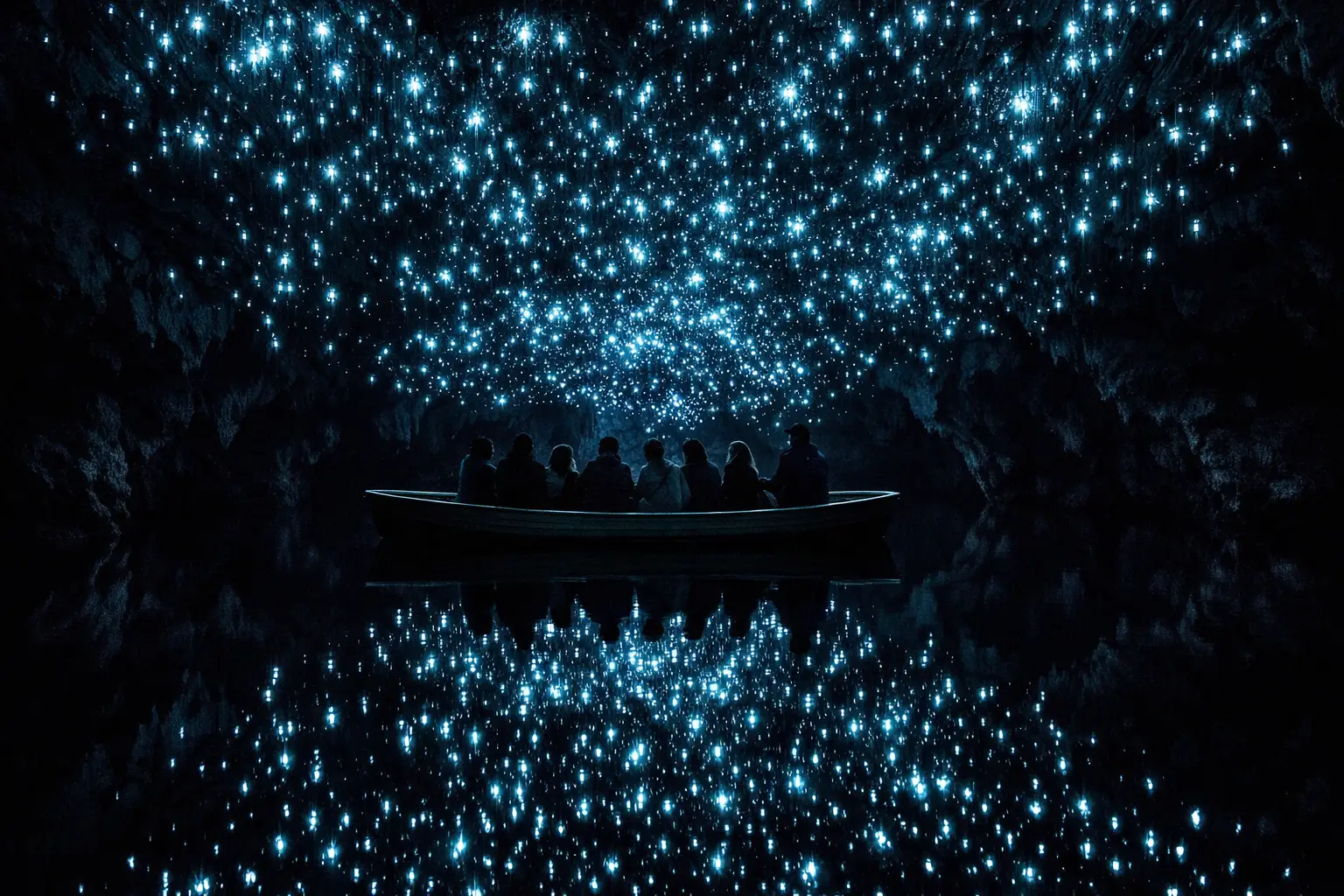
The Waitomo Glowworm Caves is a popular tourist attraction in the North Island of New Zealand. It’s famous for its Arachnocampa luminosa, which is a species of fungus gnat that’s native to New Zealand. Hanging from the cave’s ceiling, the thousands of glowworms use bioluminescent silk to catch prey. Step into a hidden world beneath the surface where thousands of bioluminescent glow worms light up the darkness like a starry sky. The Waipu Glow Worm Cave offers a magical underground experience that feels more like a dream than reality. Floating silently on a boat through the underground river while the cave ceiling glows blue-white above you is one of the most consistently described otherworldly experiences available anywhere on Earth.
The Door to Hell Turkmenistan
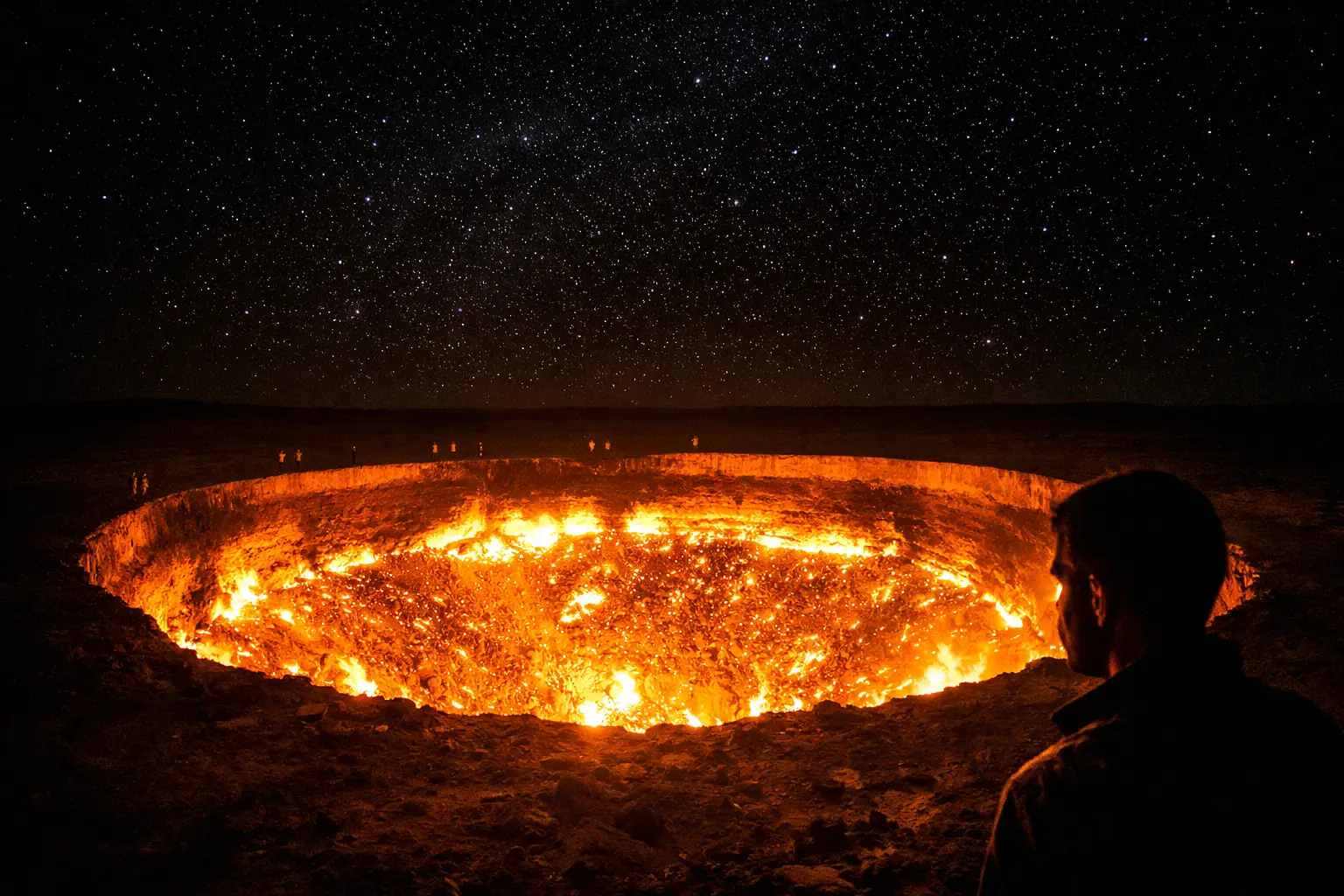
Gate of Hell is one of the mind-blowing places on earth that does not seem real at all when you visit. It is located in Turkmenistan and it is a burning pool in the Karakum Desert that looks exactly how you would expect a burning pool to look. The crater has been burning continuously since Soviet geologists accidentally ignited it in 1971 while drilling for natural gas, and it has not stopped since. Standing at the edge of a forty-meter-wide burning crater in the middle of the Karakum Desert at night, with flames visible from miles away and the temperature at the rim reaching levels that make extended standing physically impossible, is an experience that no photograph fully communicates.
Socotra Island Yemen
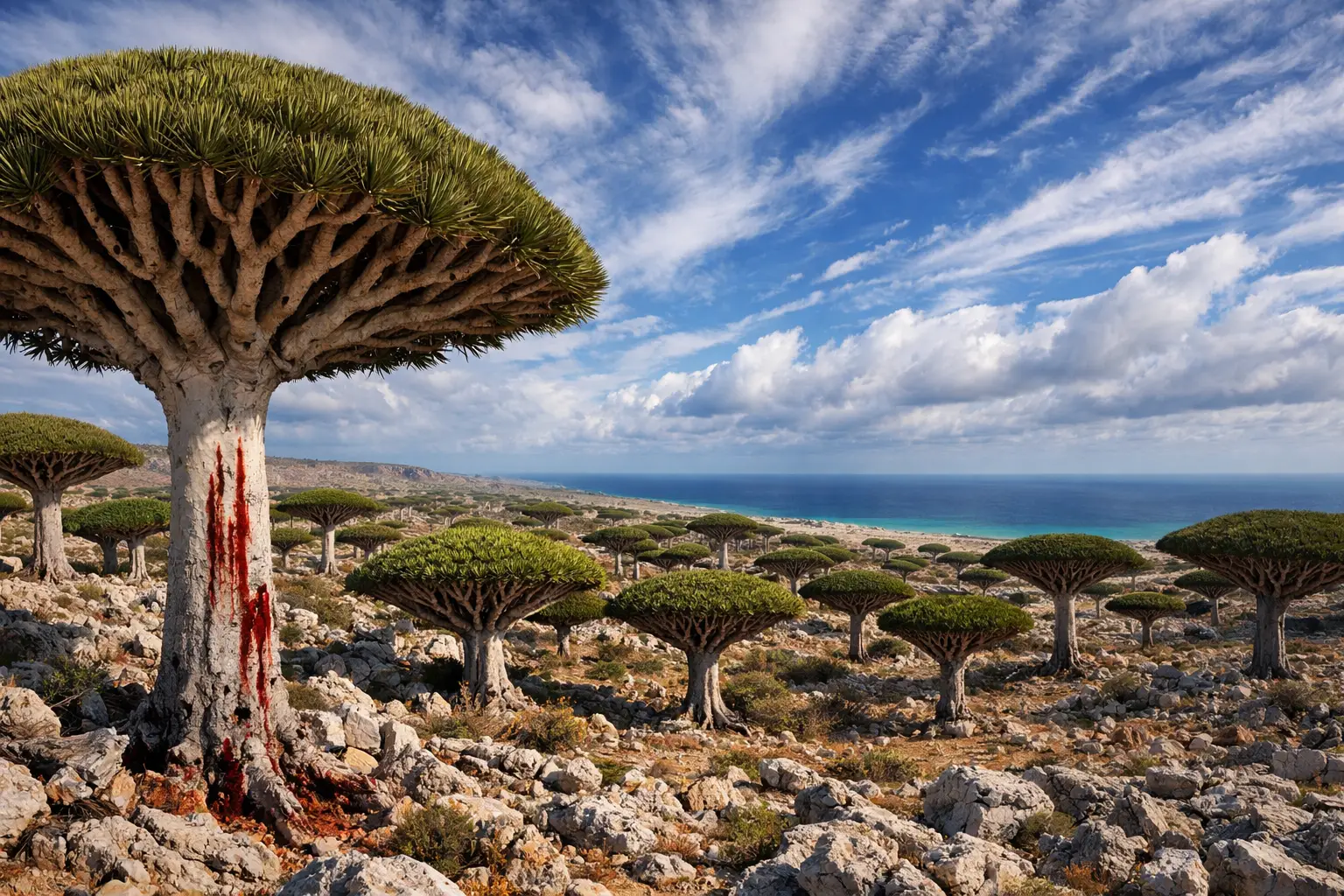
Socotra Island has gained popularity as a tourist destination, offering opportunities for hiking, diving, and exploring its stunning landscapes. Socotra is home to the Dragon Blood Tree, an umbrella-shaped tree with deep red sap that grows in dense clusters across the rocky plateau of this isolated island in the Arabian Sea. The world is full of unreal places on earth, and extraordinary destinations that blur the line between reality and imagination. Socotra has been so isolated for so long that thirty percent of its plant life exists nowhere else on Earth. Walking through a forest of Dragon Blood Trees feels not like visiting a different country but like visiting a different planet entirely.
Fly Ranch Geyser Nevada USA
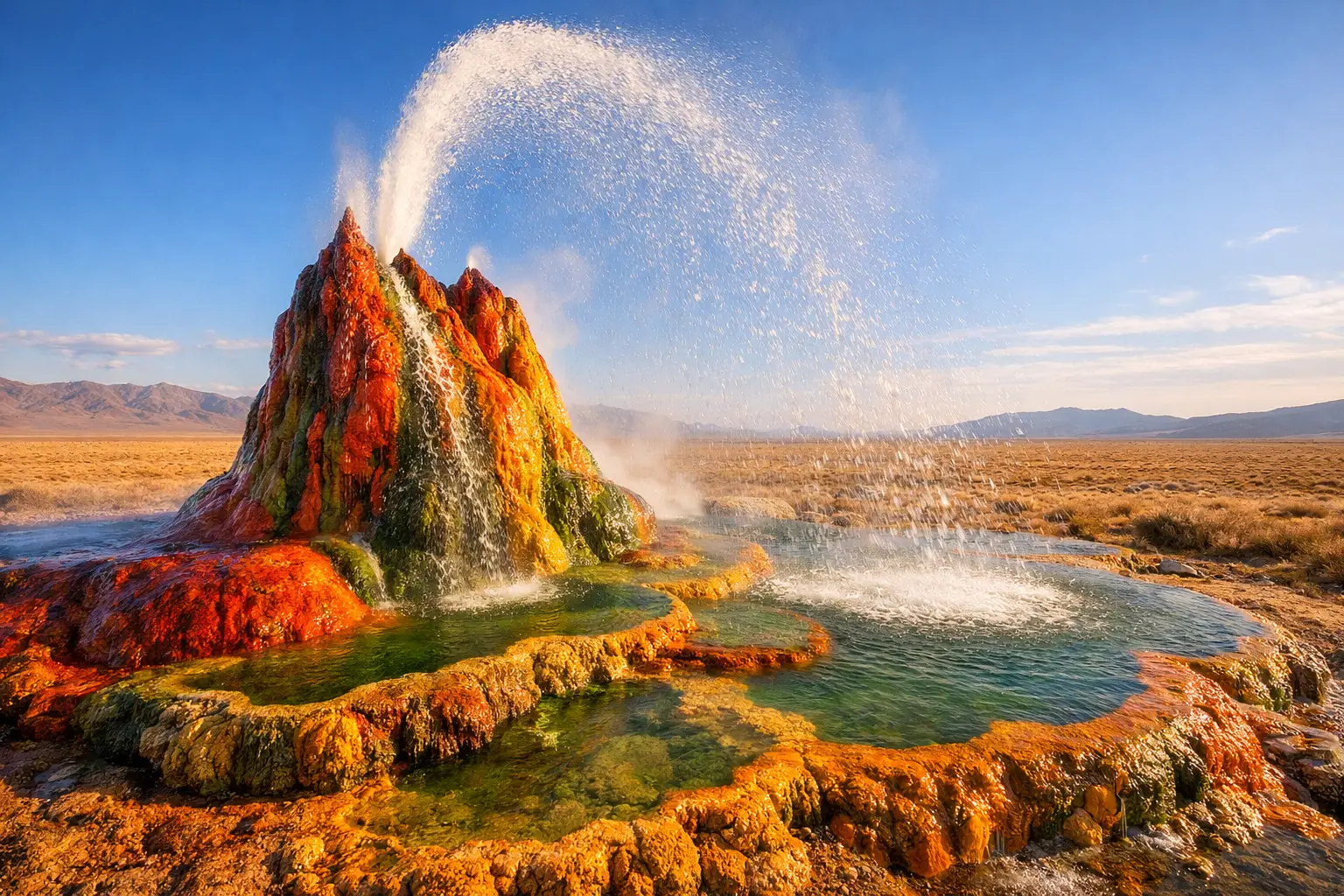
Fly Ranch Geyser in Northern Nevada stands out among the most unreal places on earth, thanks to its surreal spire formations rising from the desert floor. These geysers weren’t formed by nature alone. Early 20th-century drilling accidentally tapped into geothermal waters, leaving underground pressure to build until hot springs burst through the surface. The continuously erupting geyser has deposited minerals over decades into terraced mounds of vivid red, orange, and green that glow in the Nevada desert sun with a color intensity that looks digitally enhanced in every photograph taken of it. The Fly Geyser sits on private land belonging to Burning Man organizers and requires a guided tour to visit.
Kolmanskop Ghost Town Namibia
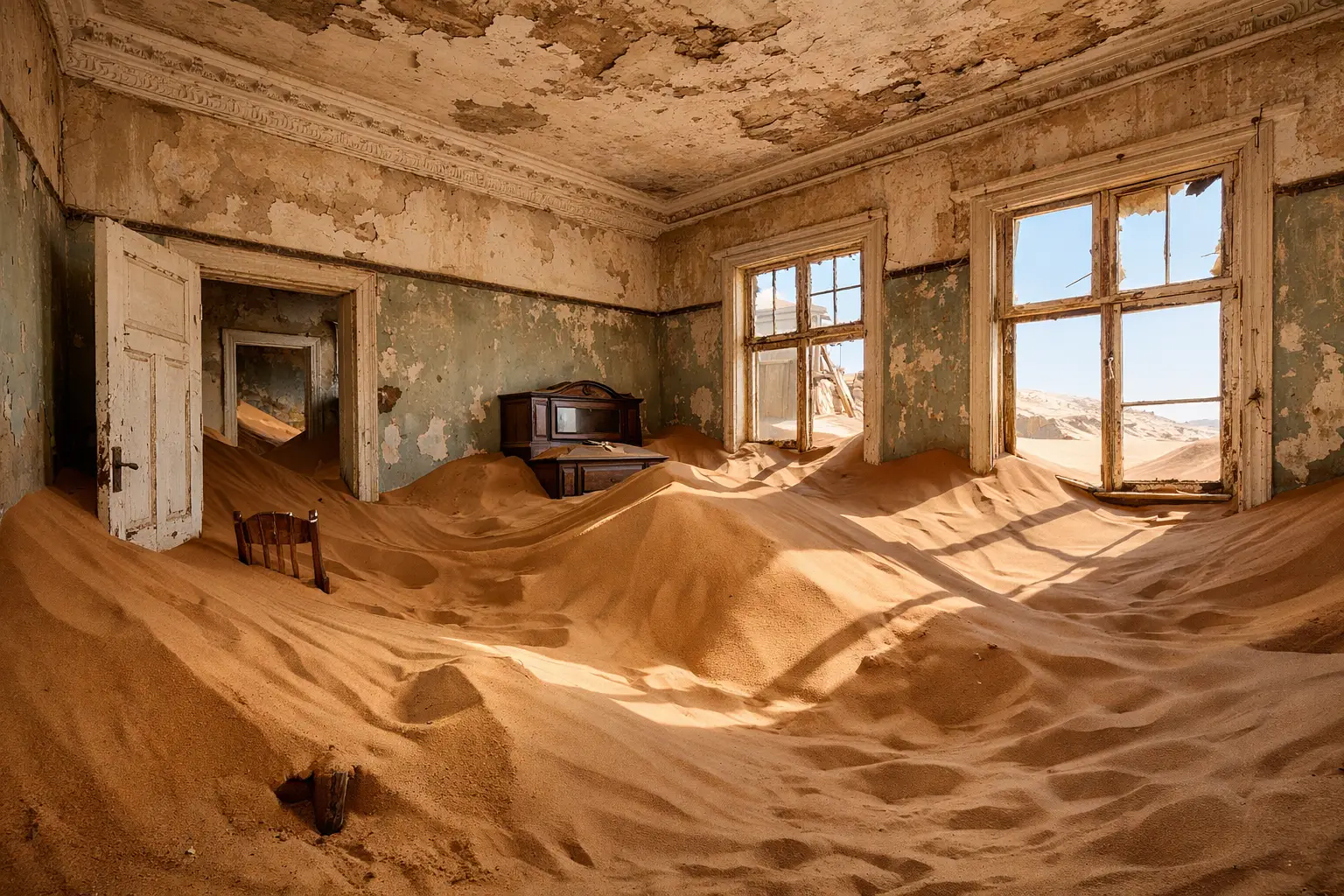
Kolmanskop is one of the most haunting, unreal places on earth that don’t feel real, where an early 20th-century diamond mining town now lies slowly swallowed by the shifting sands of the Namib Desert. Once a thriving settlement, its empty buildings with sand drifts filling living rooms and hallways create surreal scenes that attract photographers and curious travelers alike. Visiting requires a permit, available from the ticket office or through organised tours. The combination of perfectly preserved German colonial architecture and the advancing Namib sand dunes that have filled every room to waist height creates a visual collision between human history and geological inevitability that looks surreal in a way that no fictional set designer could have planned.
Zhangye Rainbow Mountains China
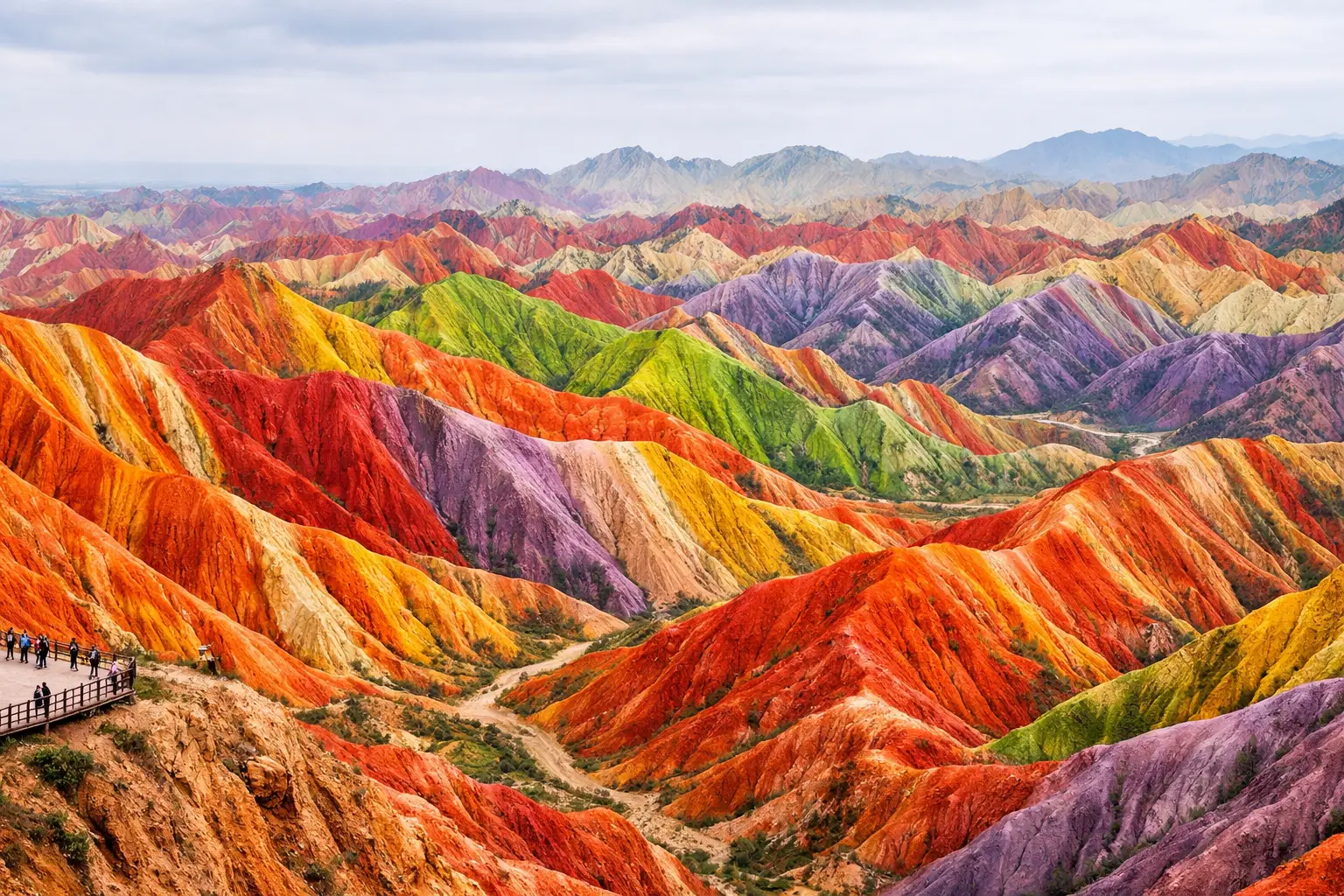
Mother Nature truly flaunts her beauty at Zhangye National Geopark in China. The landscape displays many striking colors, so it’s no surprise visitors often call the park China’s rainbow mountains. The colorful landforms grew from 24 million years worth of mineral deposits and the accumulation of sandstone. Although the site looks like a painting, Earth has created it naturally. Chinese media outlets often vote Zhangye National Geopark as the most beautiful landform in the country. The colors are not subtle. They are deep crimson, vivid orange, electric yellow, and bright green, arranged in dramatic flowing bands across entire mountainsides in a pattern that looks like someone painted the landscape with a broad brush.
The Tunnel of Love Ukraine
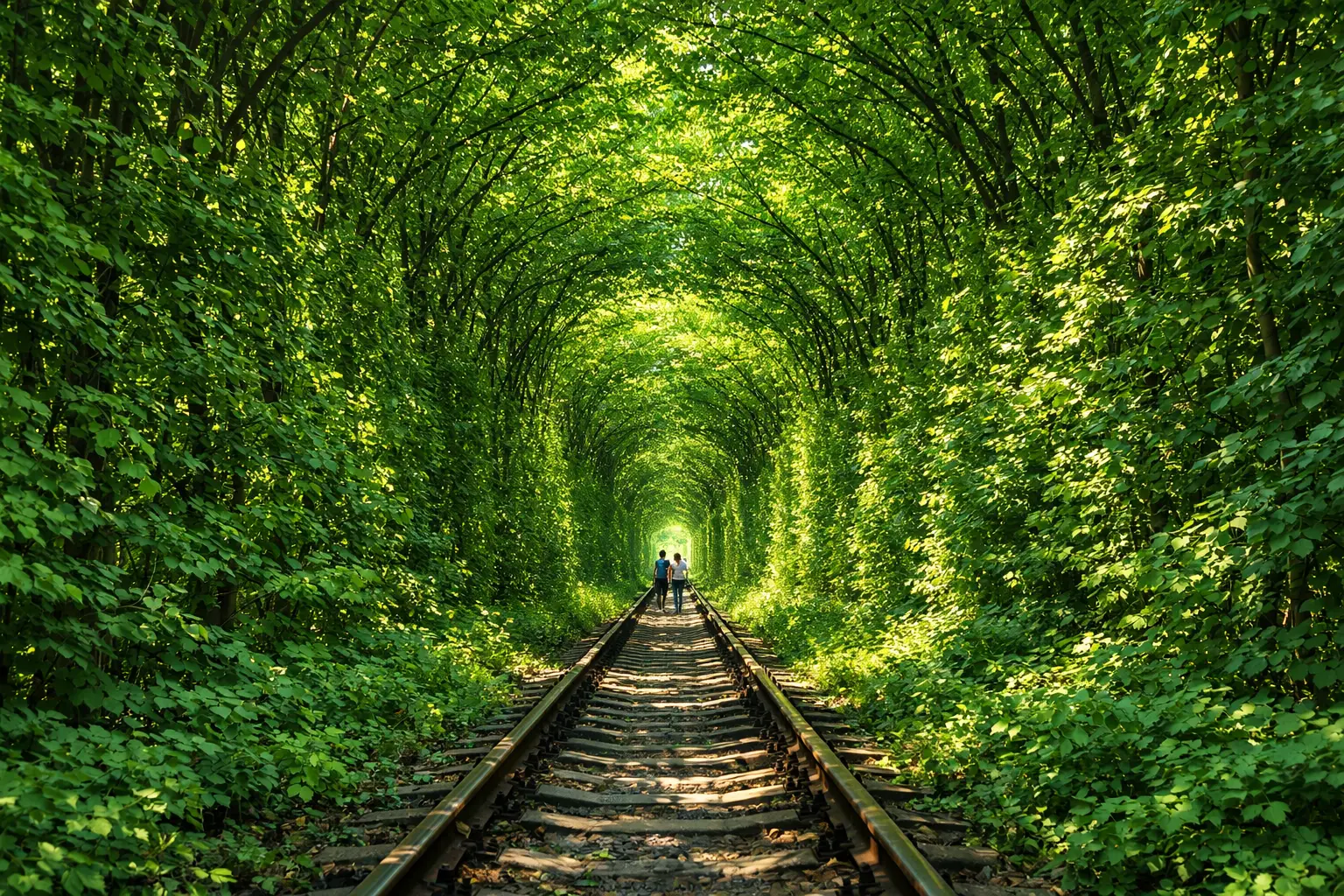
The Tunnel of Love, located in the village of Klevan, Ukraine, is one of the most unreal places on earth that don’t feel real. This naturally formed tunnel is created by arching trees that line an active railway track, leaving just enough space for a train to pass through. Stretching for around three kilometres, the dark green corridor feels cinematic and surreal. Over time, it has become a popular destination for photographers and lovebirds, drawn by its romantic atmosphere and fairytale appearance. The blend of nature, motion, and symmetry makes it feel otherworldly. In summer the tunnel is a dense green cathedral of arching branches. In autumn it turns gold and copper. In winter it becomes a pale skeletal corridor of bare branches that looks like a scene from a fairy tale illustration.
Mount Roraima Venezuela
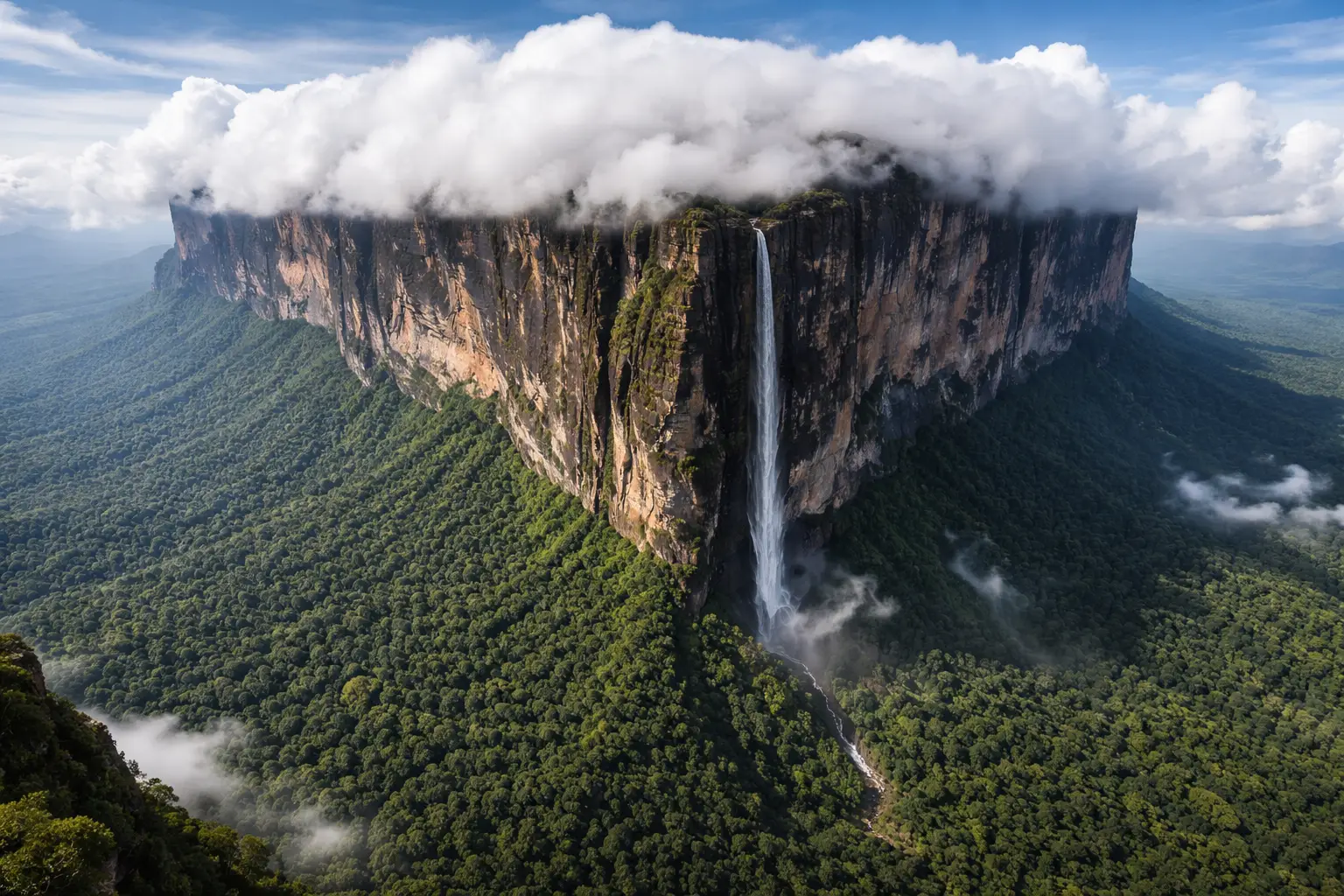
Mount Roraima offers an adventure seekers’ paradise with minimal facilities due to its remote location. Trekkers and climbers are drawn to its breathtaking landscapes, with trails leading to the summit, revealing stunning vistas. The journey includes traversing rivers, caves, and lush landscapes, while camping atop the plateau is a surreal experience under the stars. After your hike, you can marvel at unique flora, such as carnivorous plants and orchids, witness awe-inspiring waterfalls and encounter diverse wildlife. Mount Roraima is a tepui, a flat-topped sandstone mountain that rises two thousand eight hundred meters from the surrounding jungle with sheer vertical walls on every side. The plateau summit collects its own weather system, its own ecosystem, and its own species of plants and animals found nowhere else on Earth.
Chocolate Hills Philippines
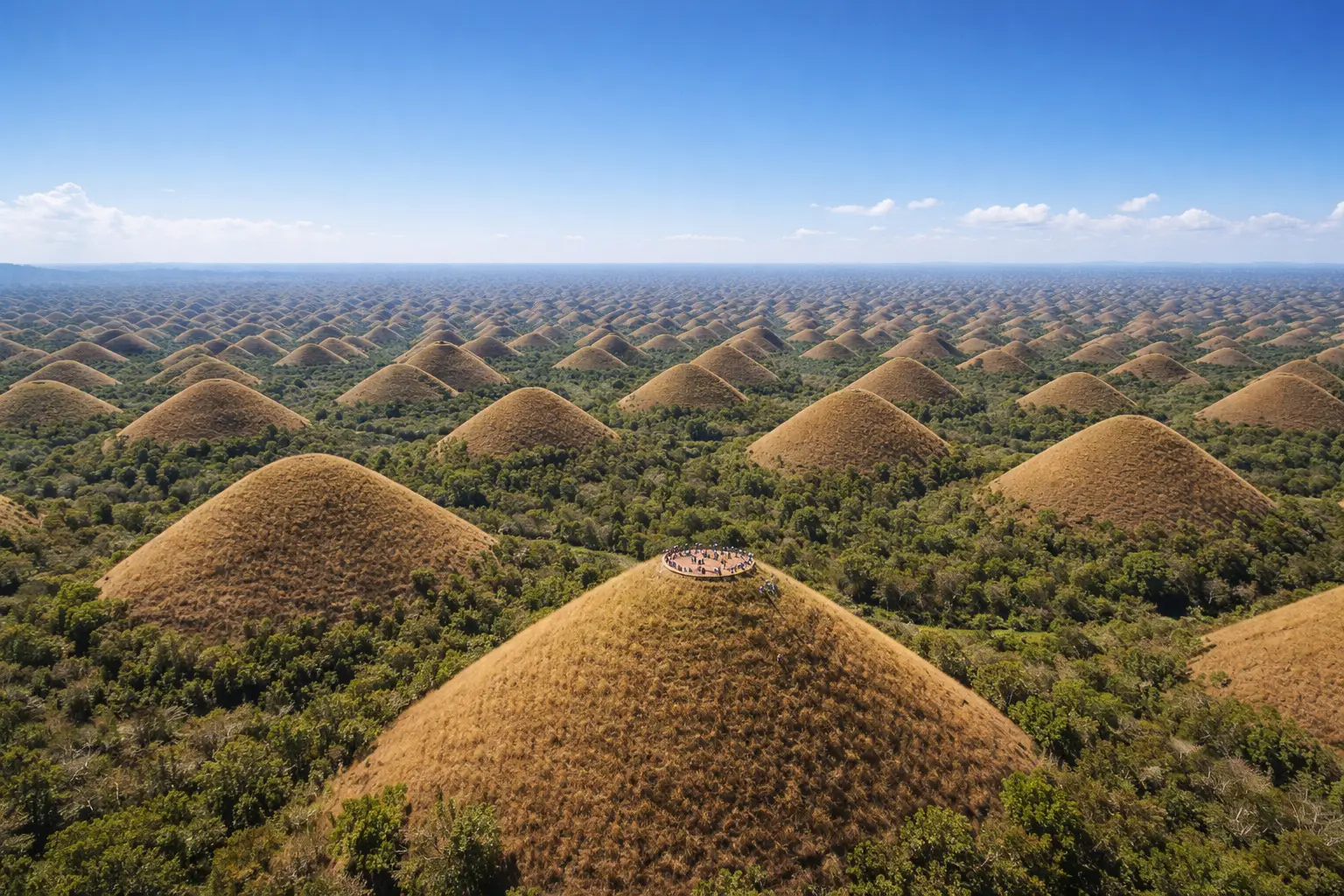
Rolling across the island of Bohol, these perfectly rounded hills turn brown in the dry season, resembling giant scoops of cocoa powder. The Chocolate Hills are both a natural marvel and a visual illusion, too uniform to seem real, yet entirely natural. There are over 1,700 of these hills, and every single one of them is nearly perfectly conical in a way that appears manufactured. The geological explanation involves marine limestone slowly eroded by rainwater over millions of years, but the result is a landscape that looks like a film set built to represent an alien planet that happens to look exactly like chocolate.
Lake Natron Tanzania
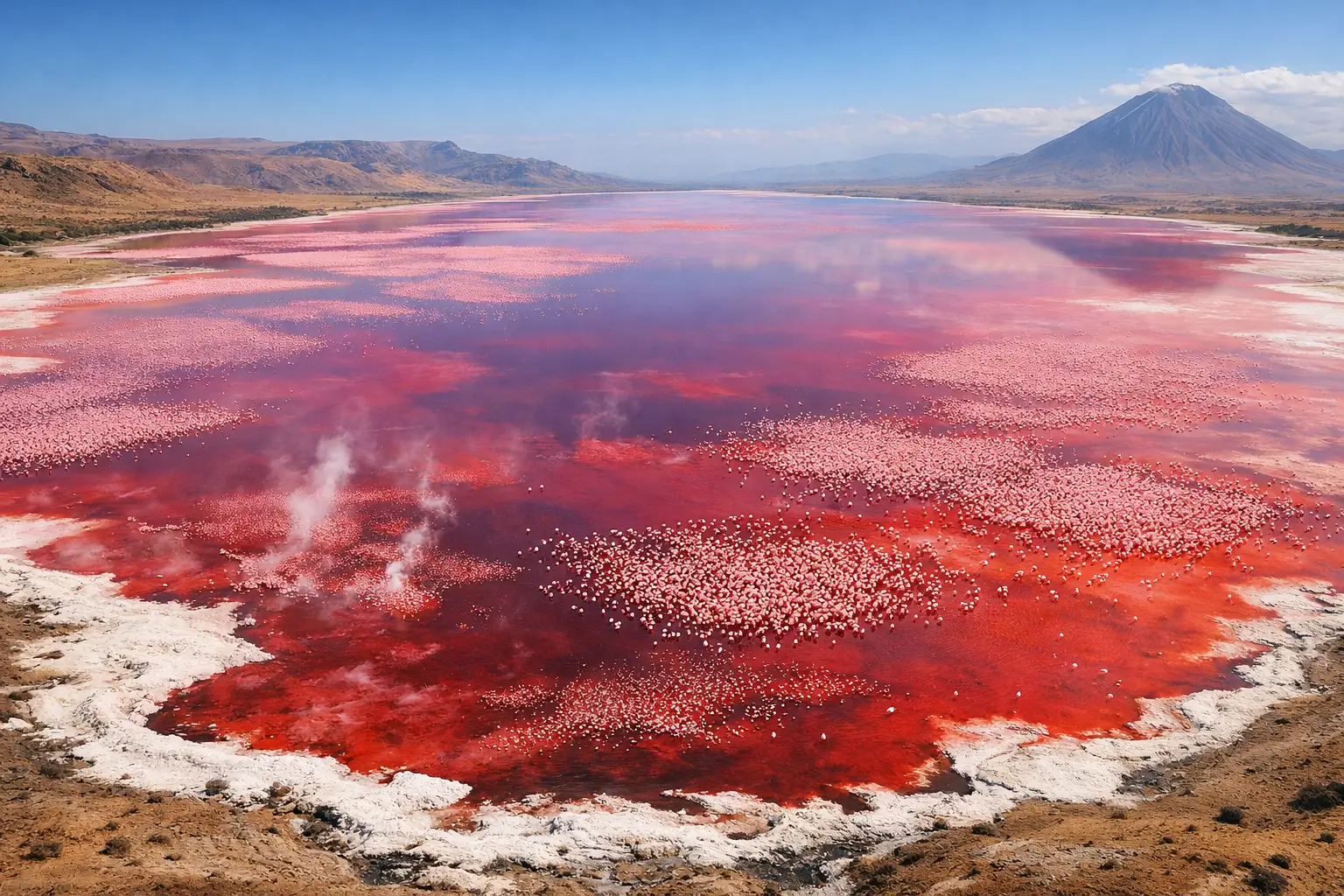
Lake Natron is a burning red color due to its alkaline water with pH levels as high as 10.5. Lake Natron in northern Tanzania is one of the most hostile environments on Earth for most living things, with temperatures reaching sixty degrees Celsius and alkalinity high enough to calcify animals that die in the water. Yet the lake turns a vivid blood red and deep crimson each year when salt-loving microorganisms bloom in the hot shallow water. The flamingos that nest here by the millions do so because the extreme alkalinity keeps predators away, creating the contradiction of enormous life thriving in a lake that kills almost everything.
White Sands National Monument New Mexico USA
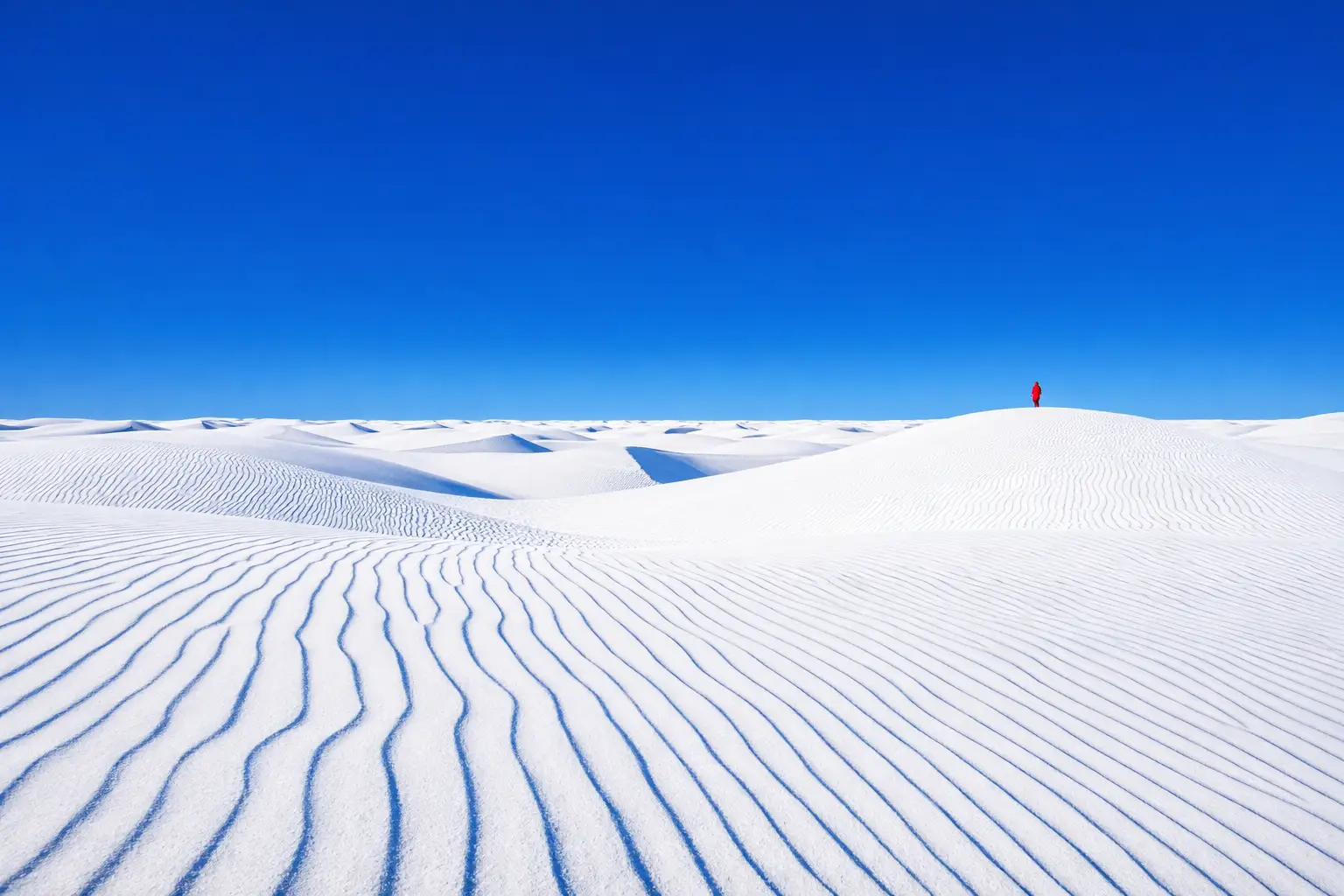
In New Mexico, one of their top destinations is known for its unbelievable white sand. As the biggest gypsum deposit in the world, White Sands National Monument is a calm region in the Chihuahuan Desert. White Sands National Monument has wave-like dunes that glisten and cover 275 square miles. The park is open to the public, but the field of dunes is protected land.The gypsum sand does not absorb heat the way quartz sand does, which means the dunes stay cool enough to walk on barefoot in full summer sun while looking brilliantly white in every direction. The effect of standing inside a landscape of pure white dunes under a deep blue New Mexico sky is total sensory dislocation.
Sequoia National Park California USA
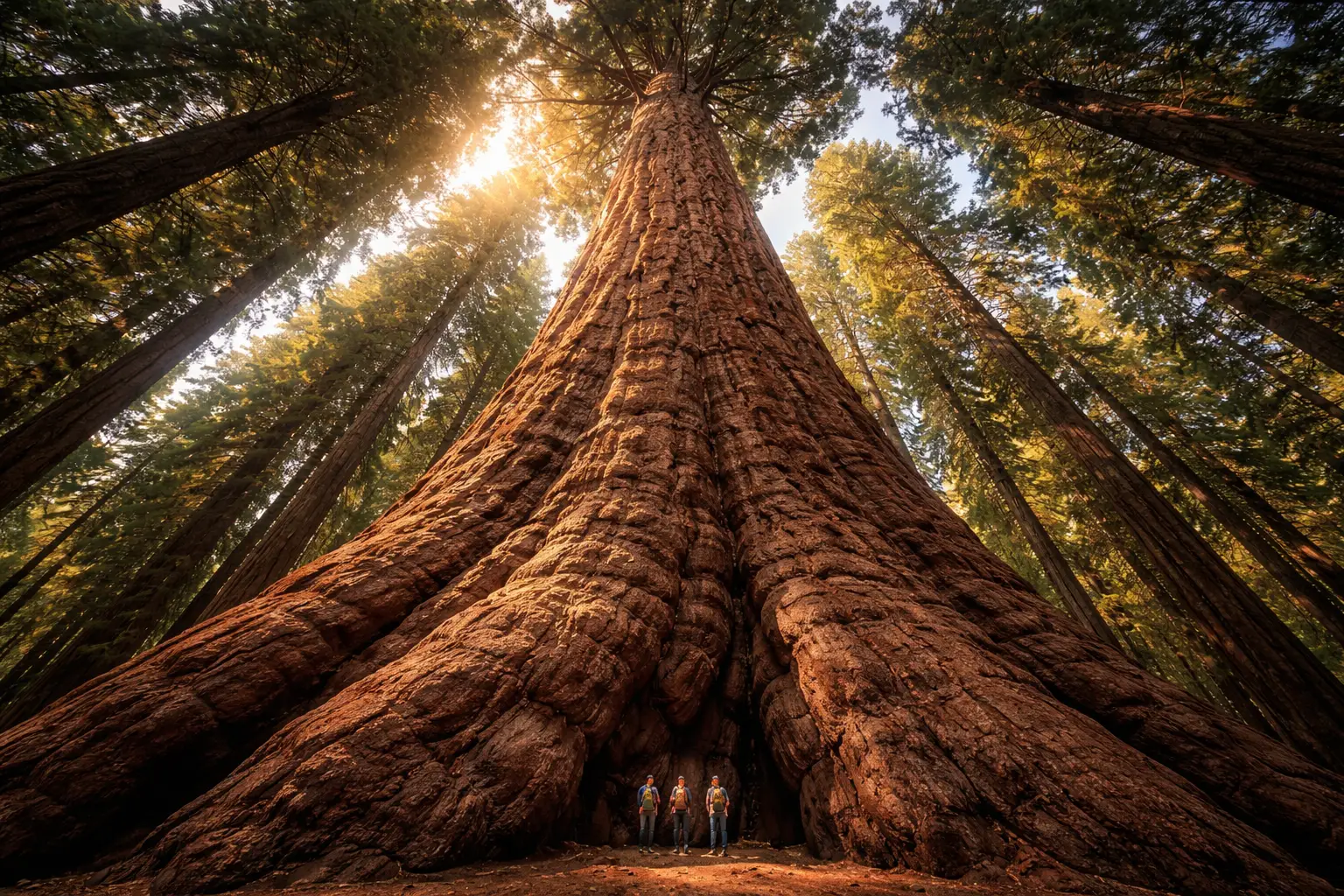
The sheer magnitude of the trees at Sequoia National Park will make you feel as though you have left Earth and entered the realm of the giants. These are the world’s largest trees, with the greatest of them all, General Sherman, rising to an eye-watering height of 275 feet. Standing at the base of General Sherman and attempting to look up to the top produces a specific vertigo that nothing else in nature creates. The trees are so large that the human brain genuinely struggles to process them as trees rather than as cliff faces or building facades. Every photograph of a person standing beside a sequoia looks like the person has been artificially reduced in scale.
Namib-Naukluft National Park Namibia
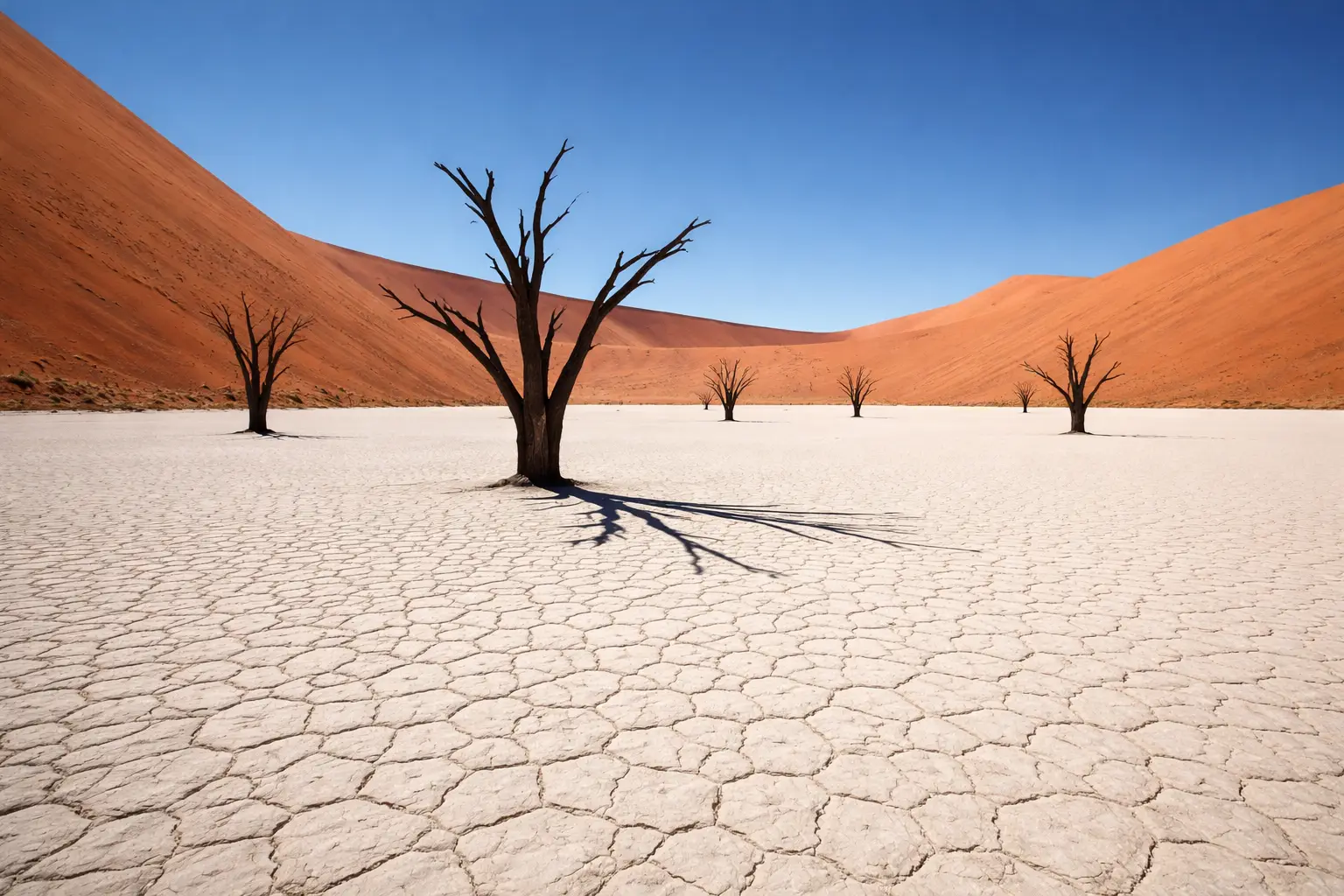
The surreal landscape of Namib-Naukluft National Park is the largest game park in Africa. Some of the most striking elements of the area are the trees and sand dunes. The skeletal trees and red sand dunes create illusions you will not believe are real. Iron in the sand oxidized over time, creating the orange and red colors of the dunes. Some dunes reach heights of up to 1,000 feet. The specific area known as Deadvlei presents dead camel thorn trees standing in a white clay pan surrounded by orange sand dunes, the trees preserved for centuries by the extreme aridity, creating a scene that looks precisely like a painting of a post-apocalyptic landscape rather than a naturally occurring one.
Great Blue Hole Belize
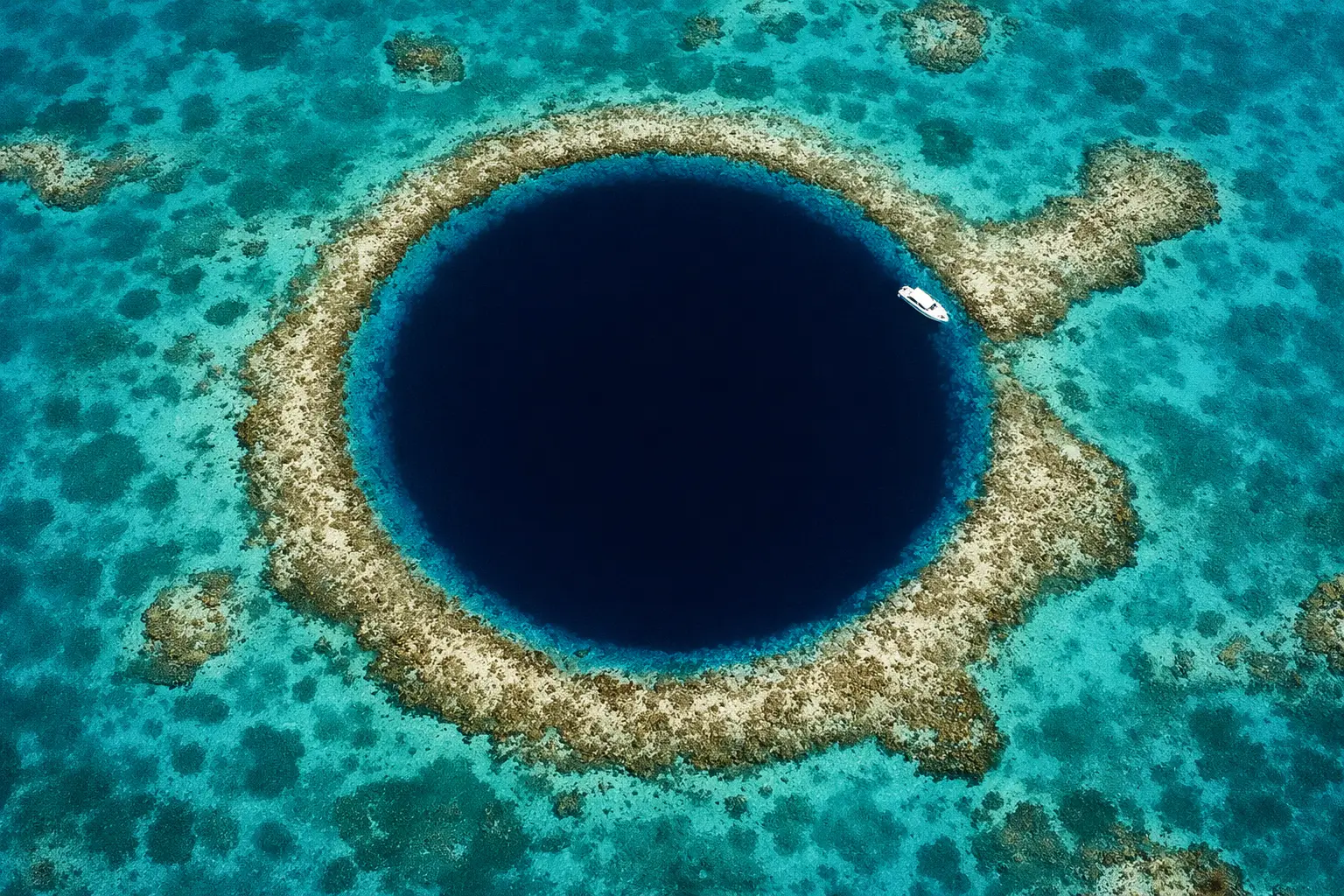
It is located off the coast of Belize and is one of the massive underwater sinkholes that is a perfect destination for scuba divers. The Great Blue Hole is a marine sinkhole three hundred meters wide and over one hundred and twenty meters deep, and its extraordinary depth makes the water inside it a deep navy blue that contrasts dramatically against the surrounding shallow turquoise Caribbean reef. From the air, it looks like a perfectly circular portal cut through the ocean floor. Underwater, the walls drop away into darkness while stalactites formed during ice ages when the cave was above sea level still hang from the ceiling.
Patagonia Perito Moreno Glacier Argentina
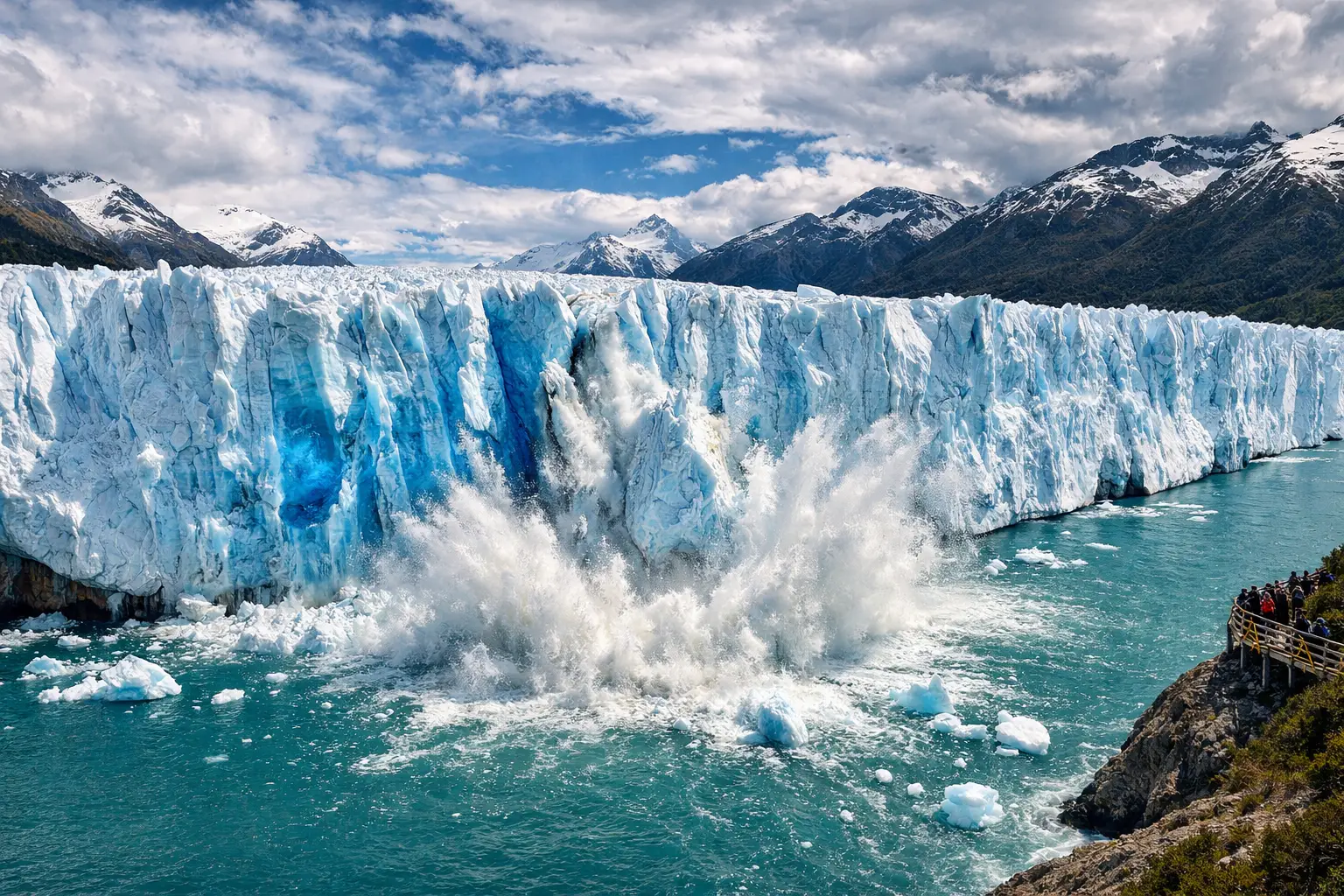
You can find this unbelievable place in Patagonia’s region in Southern Argentina as it is a massive glacier that has already been explored by various tourists. In the daytime, you can go to this stunning place and get up close to the glacier landscapes. Also, you can hike on the ice and take boat tours on your own to enjoy your experience to the fullest. The Perito Moreno Glacier is one of the few glaciers on Earth that is still advancing rather than retreating, and it does so with audible drama. The glacier periodically dams the Lago Argentino, builds pressure, and then ruptures in a spectacle of collapsing ice that draws visitors from around the world specifically to witness the sound and scale of ice collapsing into the lake below.
Planning Your Visit to Places That Do Not Feel Real
The most important practical advice for visiting any of these destinations is to research the specific access requirements before traveling. Whether seeking breathtaking views, geological phenomena, or unique cultural experiences, the world is full of unreal places on earth, each offering unforgettable moments that inspire awe, curiosity, and a deeper appreciation for the planet’s diverse wonders. Several of these locations require permits, guided tours, or specific seasonal timing to access at their most extraordinary. Salar de Uyuni requires the rainy season for the mirror effect, the Waitomo Caves require a booked tour, the Fly Ranch Geyser requires advance reservation, and Kolmanskop requires a photography permit.
Conclusion
The Earth contains more genuinely surreal and visually impossible landscapes than most travelers ever discover, and the eighteen destinations in this guide represent only the most consistently extraordinary among them. From the mirror-flat salt surface of Bolivia to the Dragon Blood forests of Socotra, from the bioluminescent ceiling of New Zealand to the burning crater of Turkmenistan, every place in this guide exists in the specific category of real destinations that cannot be accurately described and must be personally witnessed to be genuinely believed. Add these to the list, plan the access correctly, and prepare to question your own perception of what the natural world is capable of producing.
You may also like this: 20 Portillo, Chile Ideas: Stunning Views You Must See
Frequently Asked Questions
What is the most surreal place on Earth that does not feel real?
Salar de Uyuni in Bolivia is one of the most unreal places on earth that don’t feel real. As the world’s largest salt flat, it stretches endlessly with a white, salt-crusted surface for most of the year. During the rainy season, a thin layer of water transforms it into a vast natural mirror, reflecting the sky so perfectly that it feels like walking on clouds. The Salar de Uyuni during the wet season is the single most consistently cited surreal natural destination on Earth because the mirror effect completely eliminates the visible horizon and creates the impression of standing inside the sky.
Are the Waitomo Glowworm Caves open to visitors?
Yes. The Waitomo Glowworm Caves on the North Island of New Zealand are one of the most visited tourist attractions in the country and offer multiple tour options including boat tours through the underground river beneath the glowing cave ceiling. Booking in advance is strongly recommended during peak summer months. The cave temperature stays at a consistent fourteen degrees Celsius year-round, making warm layers necessary regardless of the outside season.
Can you walk on the terraces at Pamukkale Turkey?
Yes, but access is strictly managed to protect the white calcium terraces from damage. Shoes must be removed before stepping onto the terraces, and only specific pathways are open to visitors at any given time. Pamukkale offers rejuvenating dips in its thermal pools, renowned for their healing properties, and the Cleopatra Antique Pool allows visitors to swim amidst ancient artifacts. The combination of the white terraces, the blue thermal pools, and the ancient ruins of Hierapolis directly above makes Pamukkale one of the most layered and extraordinary single-site visits available anywhere in Turkey.
Is it safe to visit the Door to Hell in Turkmenistan?
The Darvaza gas crater known as the Door to Hell is accessible to visitors and tours from the Turkmenistan capital Ashgabat operate regularly to the site. The crater itself is not fenced and visitors can approach the rim, though the heat at the edge is significant and extended proximity is uncomfortable. Overnight camping near the crater to watch the flames against the night sky is the most consistently recommended way to experience the full visual impact of the site.
What is the best time to visit Salar de Uyuni for the mirror effect?
The mirror effect at Salar de Uyuni occurs during the Bolivian rainy season from December through April, when a thin layer of rainwater covers the salt flat and creates the perfect reflective surface. January and February typically produce the most consistent and complete mirror conditions. The dry season from May through November produces the brilliant white salt surface photography but not the sky reflection. Tour operators in the nearby town of Uyuni offer both dawn and sunset mirror-effect tours that time the visit to coincide with the best light conditions for photography.
1 Comment