
Introduction
Travel has a specific way of dismantling every healthy habit you have built at home. The airport food court arrives before you have had breakfast. The hotel minibar appears at 11pm. The restaurant menu has nothing that resembles what you would normally choose. And somewhere between the delayed flight and the jet lag, the clean eating commitment you packed alongside your passport quietly disappears.
Traveling definitely takes us out of our normal routine, so keeping healthy habits such as eating and exercising can become tricky. I have been traveling consistently for years and I have made every mistake available to the traveling clean eater. I have relied on airport vending machines, ordered room service out of exhaustion, and told myself that the holiday justified every food choice for ten straight days. What I have learned from all of those experiences is that clean eating while traveling is not about perfection. It is about having a practical system that works in real travel conditions. The 18 strategies in this guide are the ones I actually use, not the idealized version of what I plan to do before I leave home.
Research Your Destination Before You Pack a Single Bag
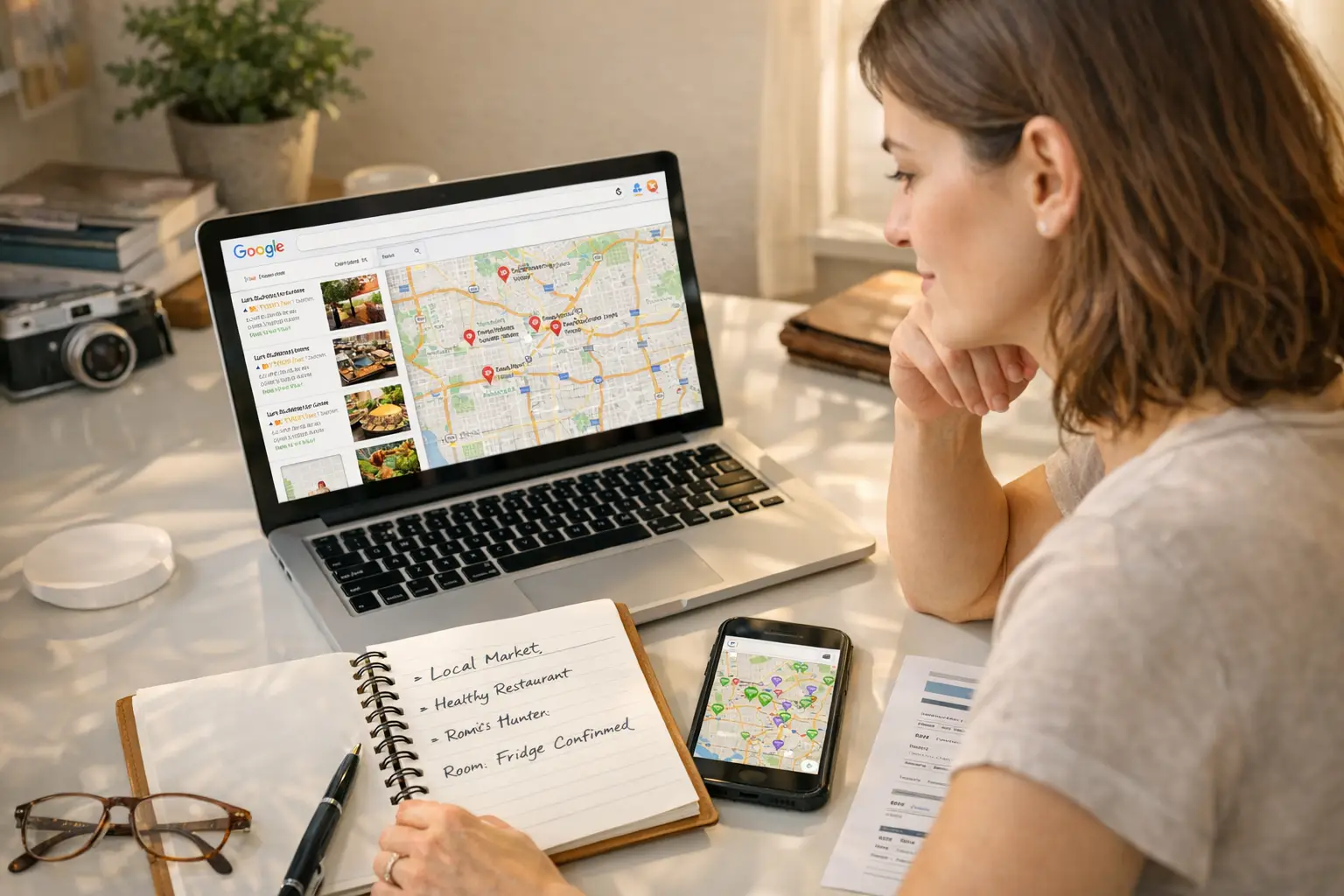
The single most effective clean eating while traveling strategy I have ever implemented costs nothing and requires only thirty minutes before any trip. Before I book a restaurant or pack a snack, I research the food environment at my destination. By planning ahead and knowing your options, you can take a break from your stressful routine but not from healthy eating. I look for the nearest grocery store or local market to my accommodation. I identify two or three restaurants within walking distance that have menu options I can work with. I check whether the hotel room has a refrigerator for storing fresh food. Use apps like Yelp or HappyCow to find local restaurants and eateries once you land at your destination. This thirty minutes of advance research eliminates the overwhelmed and hungry arrival scenario that leads to the worst food decisions of any trip.
Pack Your Own Snacks Before You Leave Home
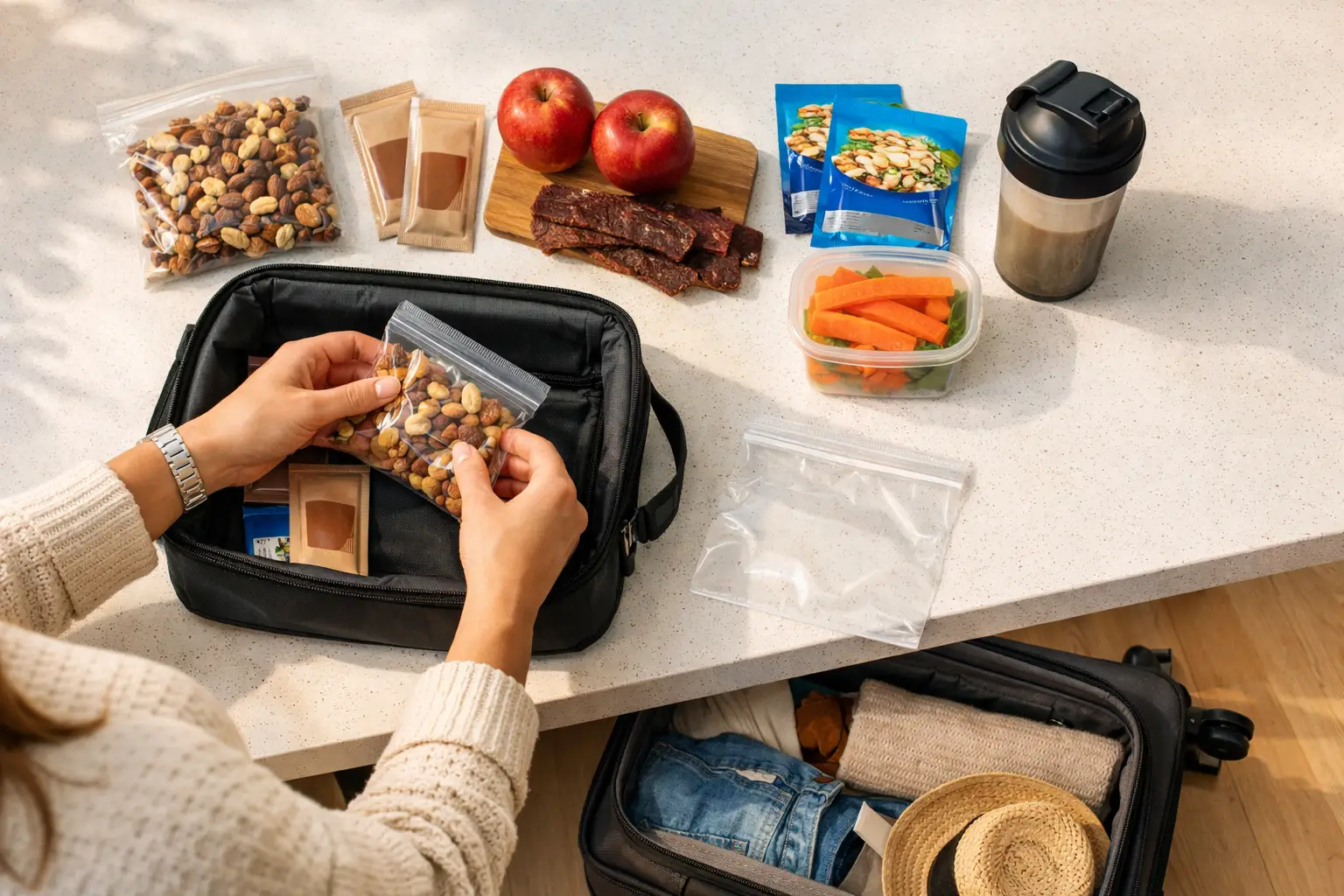
Take your own snacks for a road trip or plane ride. This will keep you from stopping at convenience stores or vending machines for packaged foods, or having only cookies or chips to select on the plane. Trail mix, homemade granola, popcorn, pretzels, chopped raw vegetables, hummus, apples, plums, and pears make great travel snacks. Packing my own snacks is the strategy that has the highest return on investment of anything in this guide because it solves the single most common clean eating failure point in travel: the hungry and desperate snack purchase. Anything else goes in my carry-on: nuts, beef jerky, apples, individual packets of nut butter, individual cans of tuna or chicken salad, protein shakes, and a blender bottle. I pack enough for the journey plus the first day at the destination before I have had time to find a grocery store.
Prioritize Protein at Every Meal on the Road
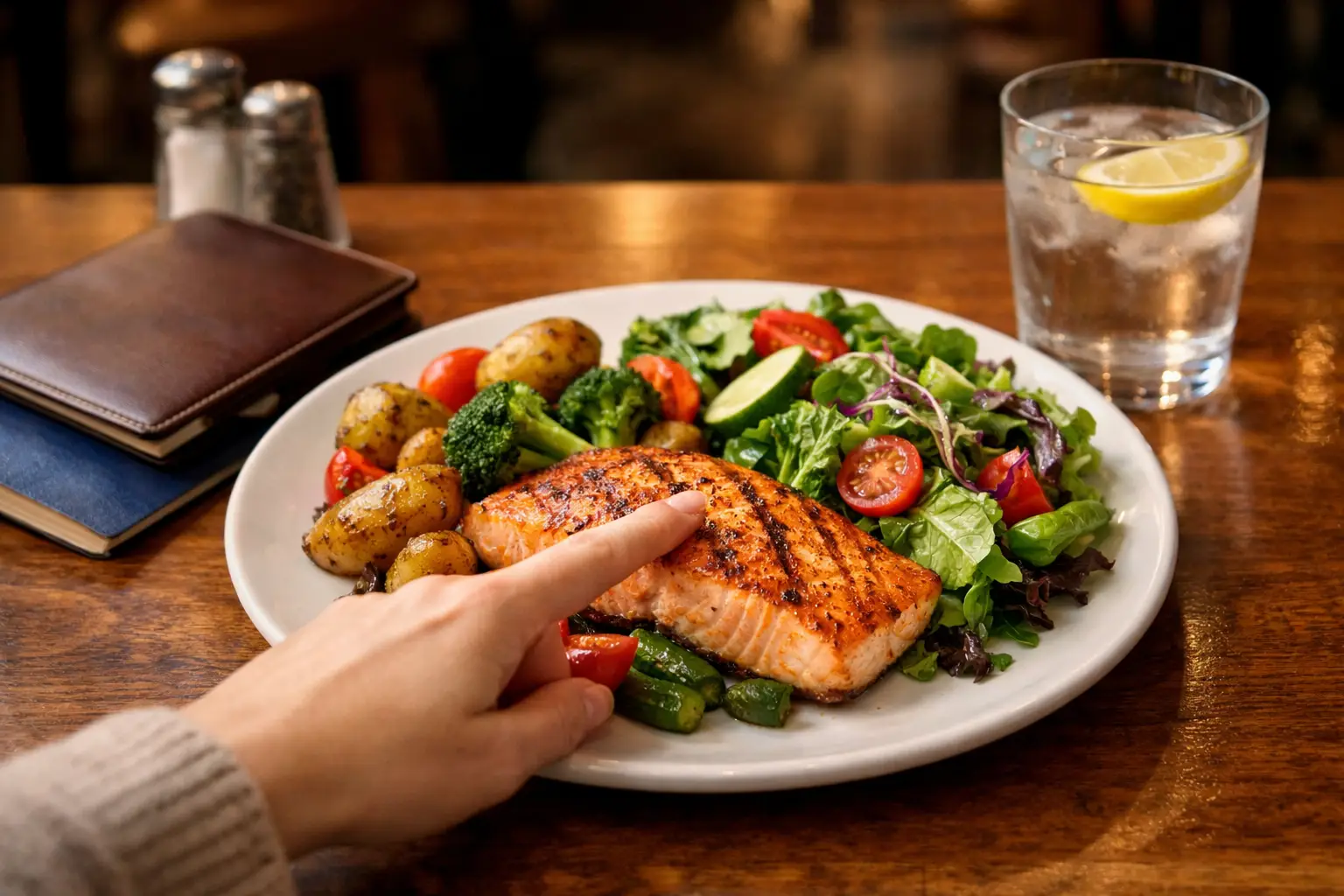
Order protein first. Build meals around simple protein plus fat. But ask for it to be cooked in butter rather than oil. The single most practical clean eating guidance I follow at every restaurant while traveling is the protein-first rule. Before I look at the rest of the menu, I find the protein options and build from there. For on-the-go snacks, pair grains with protein, healthy fats, or fiber to stay full for longer. Mixed snacks digest more slowly than grains alone, which may support weight management and blood sugar. Choosing a grilled protein with vegetables rather than a carbohydrate-heavy convenience option keeps my blood sugar stable, my energy consistent, and my appetite satisfied in a way that makes the next clean eating decision significantly easier than it would be after a blood sugar crash.
Hydrate Before You Travel and Throughout the Journey
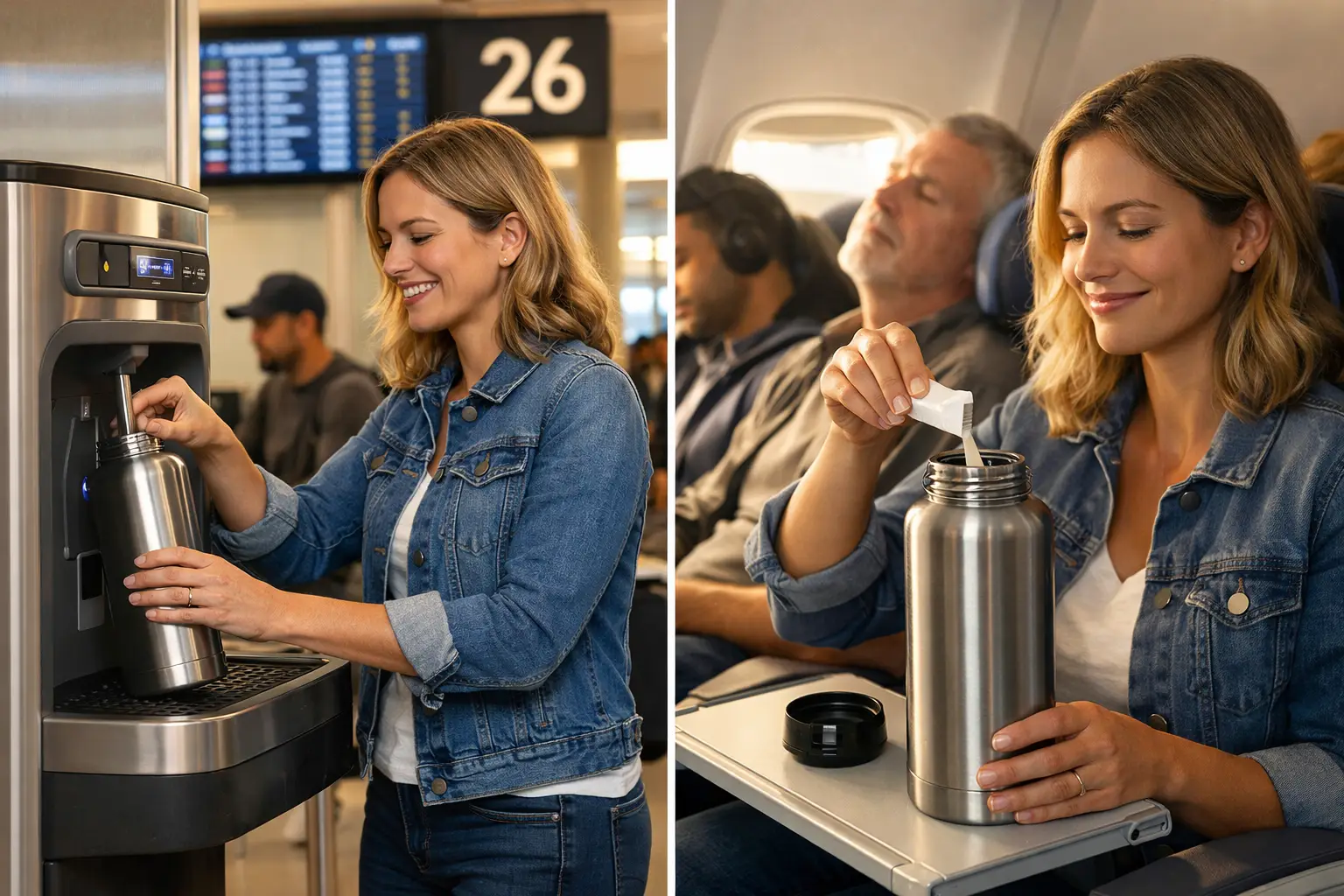
Hydrate before traveling. Flying dehydrates you fast and dehydration alone can cause bloat. I drink sixteen ounces of water before I arrive at the airport, carry a reusable water bottle through security to refill at the gate, and aim for at least eight ounces per hour of flight time. Be safe with water. Water is regulated and tested throughout the U.S., but when in doubt, stick with sealed bottled beverages if you have any concerns about the local water supply. Dehydration while traveling mimics hunger, which is why so many travelers reach for food when what their body actually needs is water. Staying ahead of the dehydration curve eliminates a significant percentage of the unnecessary snacking that undermines clean eating on travel days specifically.
Visit a Local Market or Grocery Store on Arrival Day
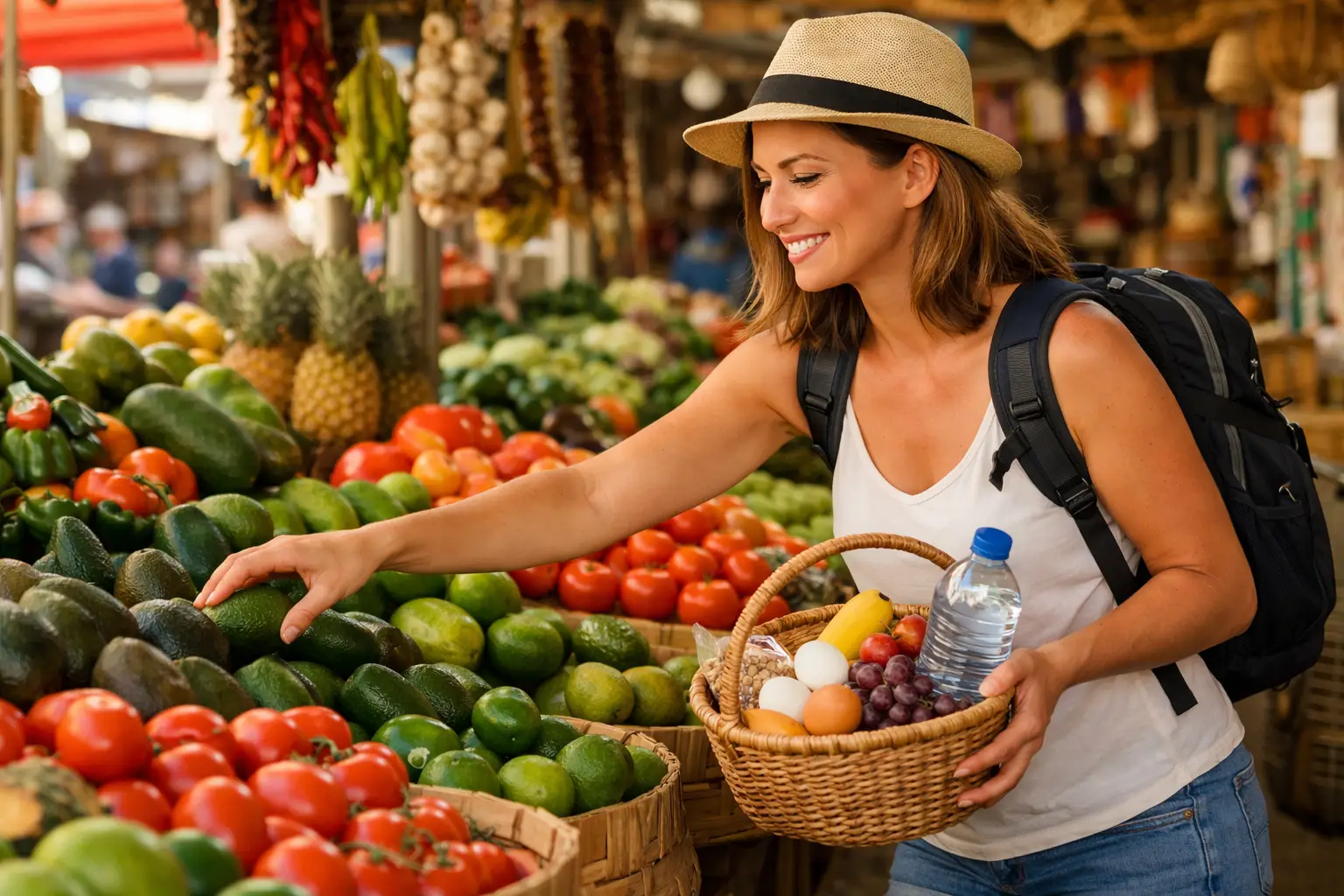
One of my non-negotiable clean eating while traveling habits is visiting a local grocery store or market within the first few hours of arriving at any destination. Look for a local grocery store or market that sells fresh produce, versus relying on chain restaurants familiar from home. I buy fresh fruit for mornings, a container of nuts and seeds for between-meal moments, some form of protein such as boiled eggs or individual tuna packets, and a large bottle of water. This single grocery run costs very little and instantly eliminates the desperate hunger scenario that causes the worst travel food decisions. Seek out local restaurants that use local products. The less distance your food has traveled, the more nutrients it typically retains.
Choose Sit-Down Restaurants Over Fast Food Every Time
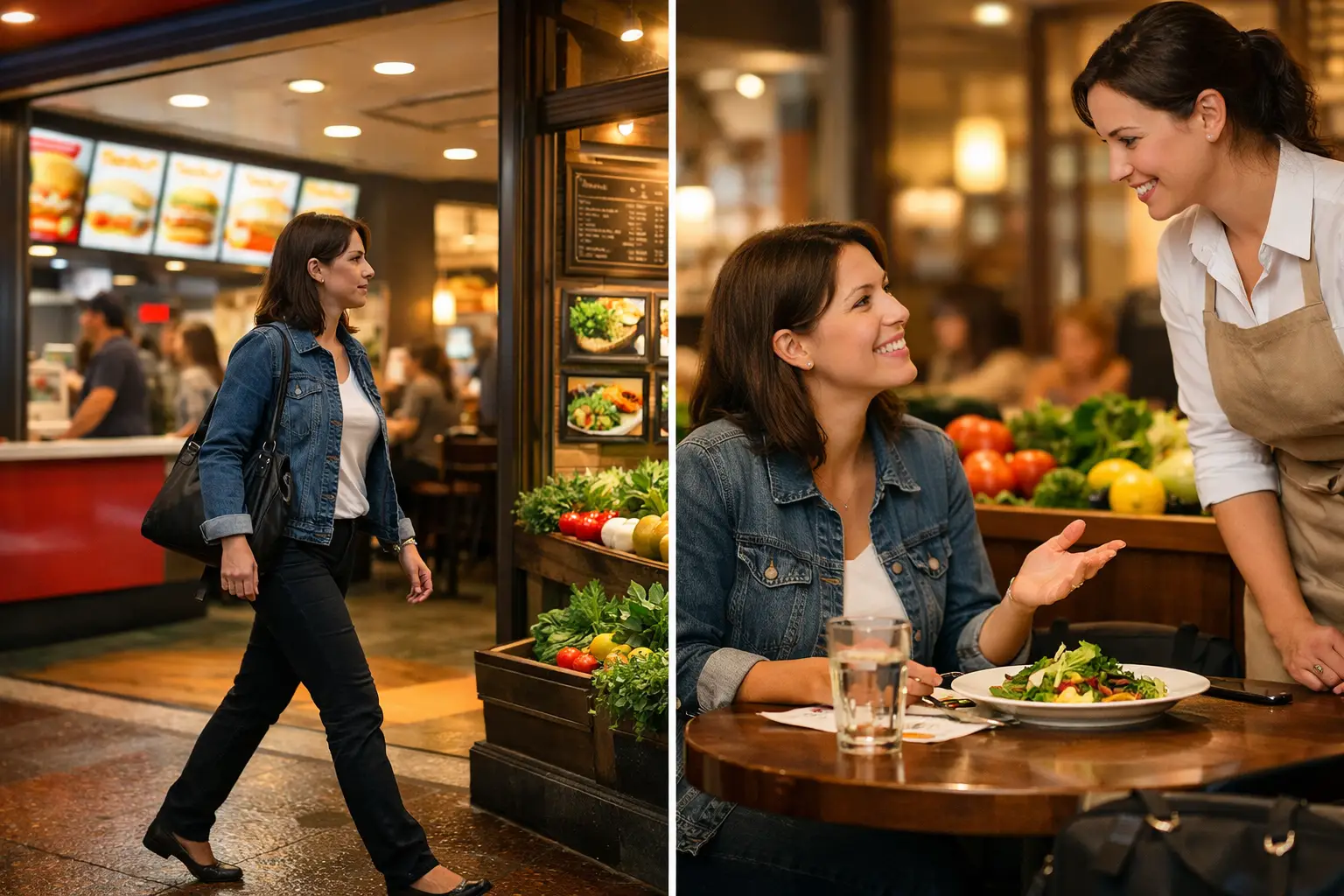
Choose sit-down restaurants instead of fast food establishments during your travels. This might take extra time, but you will have a better opportunity to ask your server how foods are prepared and add special requests for healthier meals. The difference between a sit-down restaurant and a fast food option for clean eating while traveling is not primarily about cost or convenience. It is about control. At a sit-down restaurant, I can ask how a dish is prepared, request dressings on the side, substitute a salad for fries, and choose grilled over fried. Ask how food is prepared and make requests for dressings on the side and grilled items instead of fried. Ask for substitutions like a side salad instead of French fries. These modifications collectively transform a restaurant meal from a clean eating obstacle into a genuinely supportive meal.
Use the Half Plate Vegetables Rule at Every Restaurant
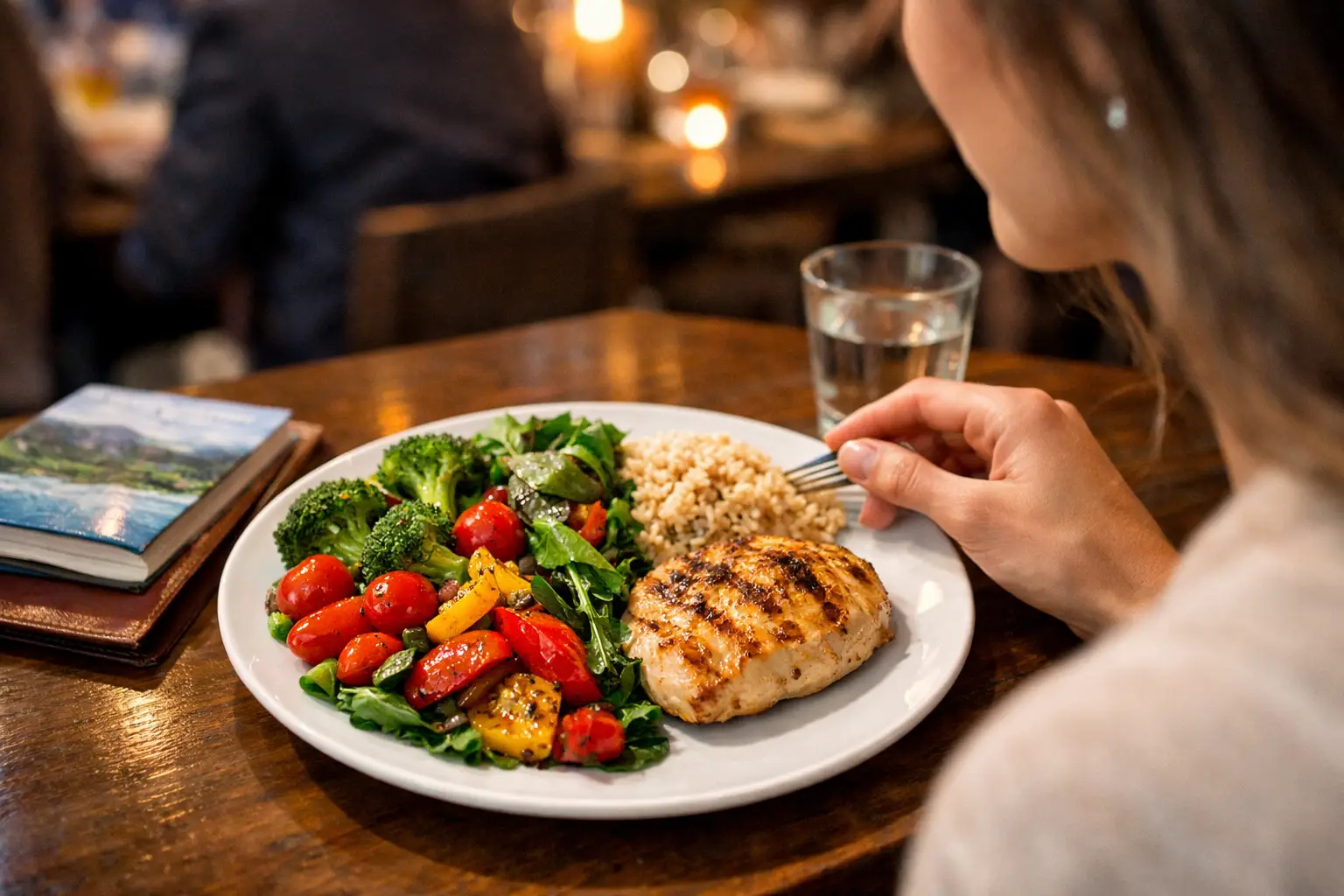
Use a salad-sized plate instead of a dinner-sized plate and prioritize anything green. Fill it half full with veggies, leafy greens, or roasted veggies if possible. Choose a palm size of protein and about a thumb size of healthy fat. If there is any room left on the plate, enjoy a taste of whatever you want. The half plate vegetables rule is the most practical and most immediately applicable clean eating guideline I follow at every restaurant meal while traveling because it requires no menu knowledge and no special requests. I simply look at my plate when it arrives and ensure that approximately half of it is occupied by vegetables before I eat anything else. This single habit controls portion size, increases fiber and nutrient intake, and leaves the appropriate amount of space for the protein and fat that complete the clean meal.
Skip the Airport Food and Eat Before You Fly
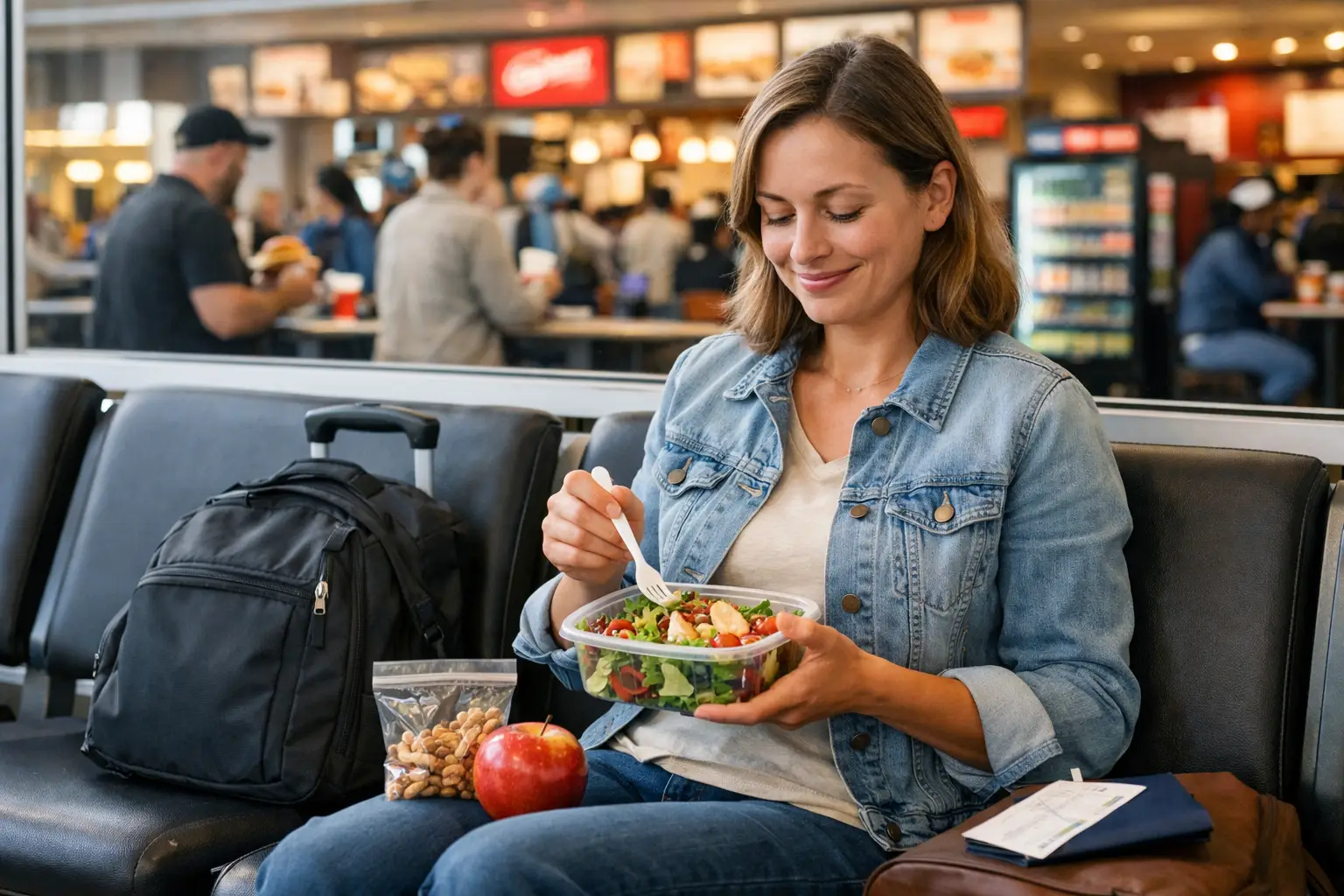
Skipping airport food is often cleaner than forcing a healthy-looking option. Eat before you travel if you can or fast. Skipping airport food is often cleaner than forcing a healthy-looking option. The airport food environment is specifically designed to make clean eating as difficult as possible: high prices, limited options, heavy processing, and the specific psychological vulnerability of the stressed and rushed traveler. My strategy is to eat a complete and genuinely satisfying clean meal before I leave for the airport, pack enough snacks to cover the journey, and make peace with the fact that airport food is an obstacle to be avoided rather than a challenge to be navigated healthily.
Walk After Every Meal to Support Digestion

Walk after meals. A five to ten minute walk helps digestion and lowers your blood sugar. The post-meal walk is the most underestimated clean eating support strategy available while traveling because it directly addresses the specific physiological mechanism that makes overeating and blood sugar dysregulation most common after travel meals. Walking for five to ten minutes after every meal during travel improves digestion, lowers post-meal blood sugar, and prevents the uncomfortable bloating that frequent travelers associate with eating on the road. It also has the practical benefit of making the next meal decision cleaner because stable blood sugar produces better food choices than a spike-and-crash cycle.
Allow Yourself One Planned Treat Per Day

I allow for one treat. You can plan it out or spontaneously use it if something really tickles your fancy. This is a great approach because that treat then becomes the highlight of your trip. Instead of returning from your trip feeling bloated, guilty, and heavier by a few pounds, you can return feeling great and with the memory of that one special treat that you enjoyed thoroughly, guilt-free. The one planned treat strategy is the most psychologically sustainable clean eating approach for travel because it eliminates the deprivation mindset that causes binge eating. Knowing that I have one guilt-free treat available each day removes the specific urgency that makes every indulgent food option feel like a now-or-never decision. I choose my one treat deliberately and enjoy it completely, which produces a genuinely better travel food experience than either rigid restriction or complete abandon.
Meal Prep a Cooler for Road Trips
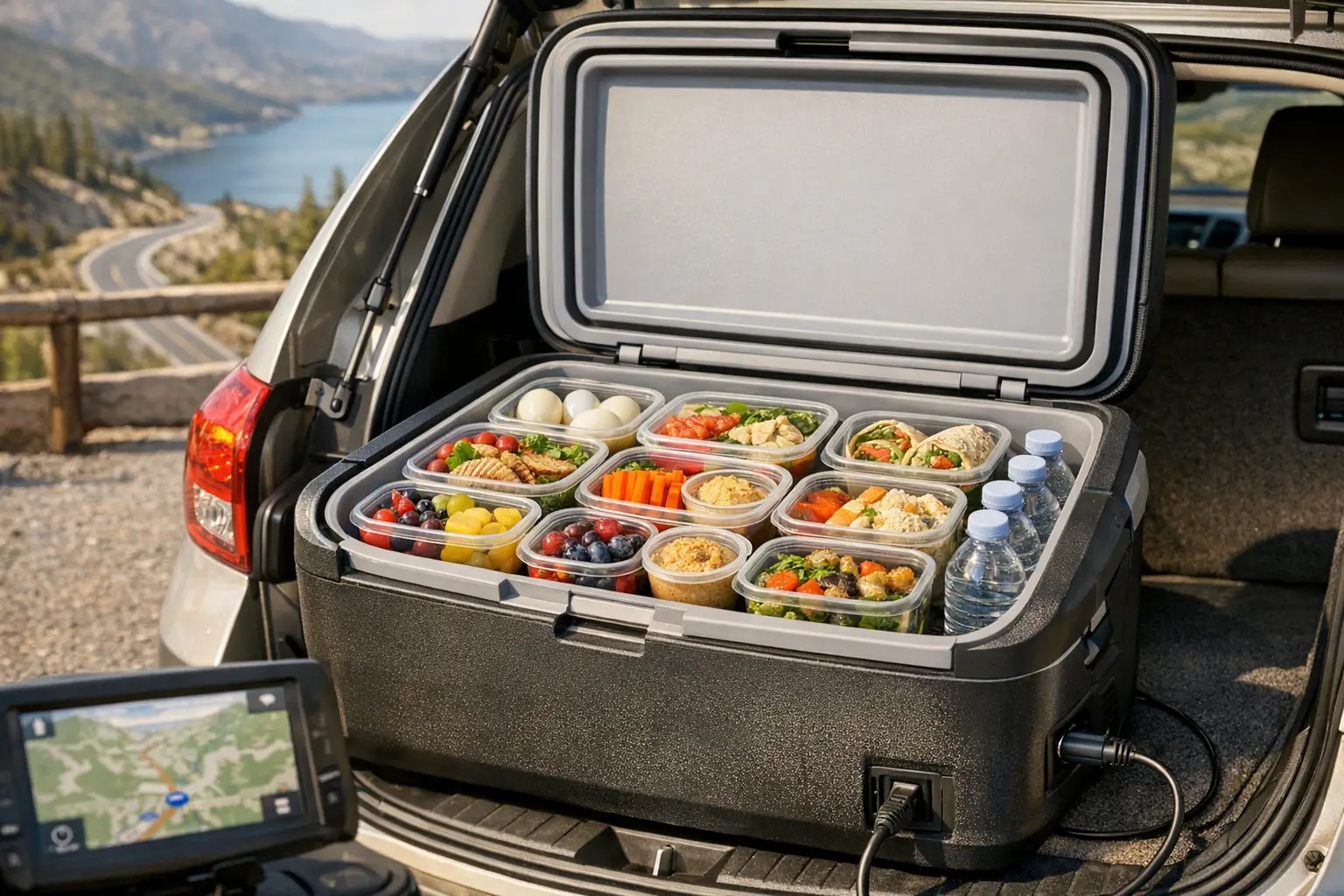
I purchased a car cooler that plugs into the power source in my car. I meal prep and bring lunch, dinner, snacks, and drinks for each day of a trip. So all I have to do is open up the cooler and grab my food. For flights, I bring a lunch box that has the insulation that you can freeze, and pack small containers of salad with protein, salad dressing, boiled eggs, carrot sticks, hummus, etc. Road trips are the clean eating scenario where advance preparation produces the most dramatic difference between a healthy trip and an unhealthy one. A plugged-in car cooler stocked with prepped meals eliminates every fast food temptation along the route because the decision has already been made before the hungry moment arrives. Skipping meals can backfire by causing overeating or a reliance on convenience food. Prep grab-and-go options and pack nonperishable snacks.
Limit Alcohol to One Drink Per Social Occasion

Alcohol is the most consistent saboteur of clean eating while traveling because it both adds significant empty calories directly and reduces the inhibition that supports clean food choices in the hours that follow. My personal strategy is a one-drink maximum at any social occasion during travel, chosen deliberately and sipped slowly rather than reflexively ordered as a default. Replacing subsequent drinks with sparkling water and lime maintains the social participation of having a drink in hand without the caloric and decision-making consequences of multiple drinks. Choose zero-calorie beverages whenever possible.
Request Simple Preparation at Every Restaurant
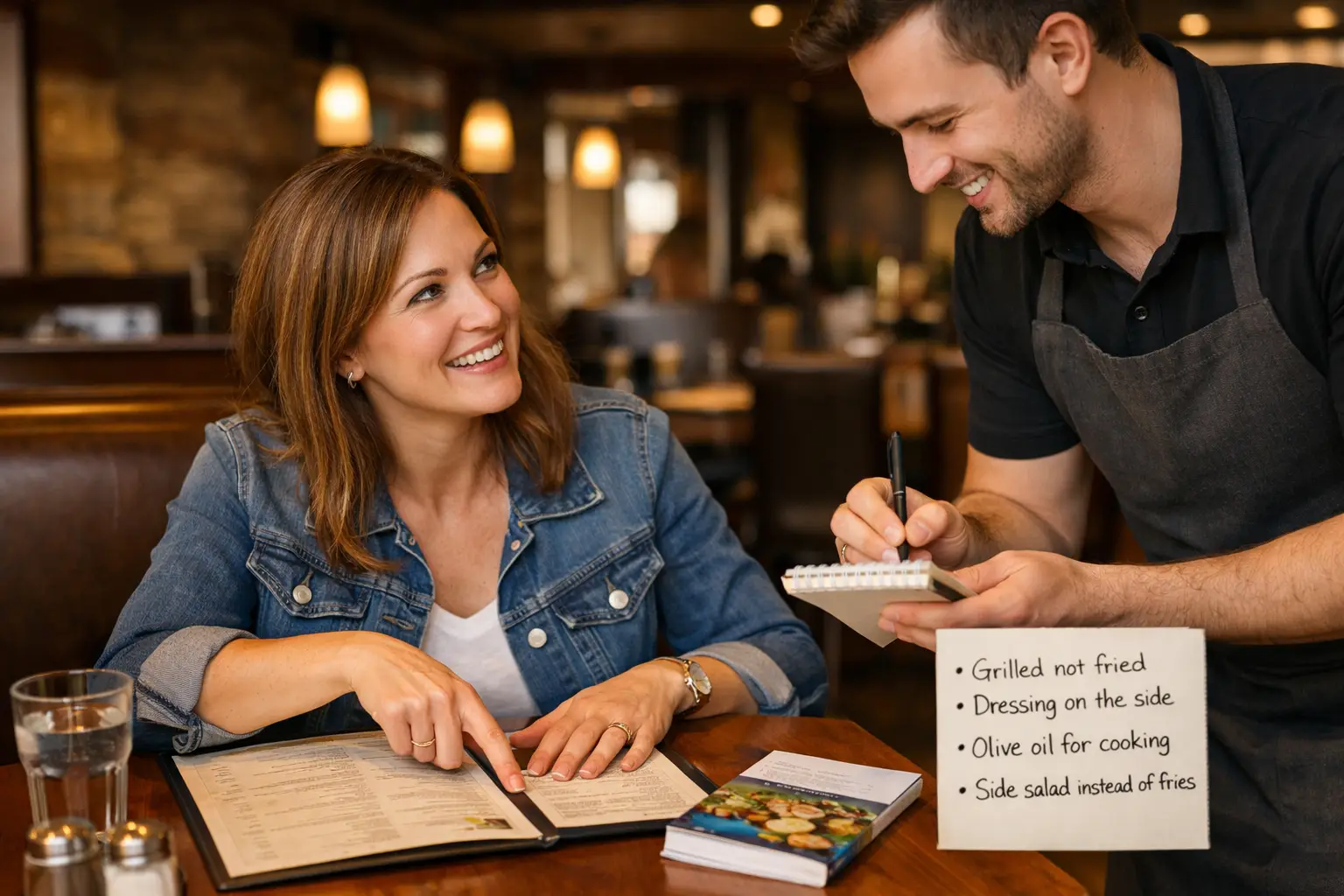
Select healthy choices such as salmon, grilled meats, fresh salads, broth-based soups, and wraps or sandwiches without sauces as your entrees, instead of deep-fried foods and entrees with heavy cream sauces. The most consistently effective restaurant strategy for clean eating while traveling is the simple preparation request: asking for everything grilled rather than fried, sauces and dressings on the side rather than applied to the dish, and olive oil used in cooking rather than seed oils. Pass on the processed rolls and unfamiliar non-butter spreads. Start with a side salad or broth-based soup. Look for protein and vegetable options. Most restaurants accommodate these requests without any difficulty, and the cumulative impact of making these modifications at every meal over a week of travel is genuinely significant.
Share Meals to Manage Restaurant Portion Sizes
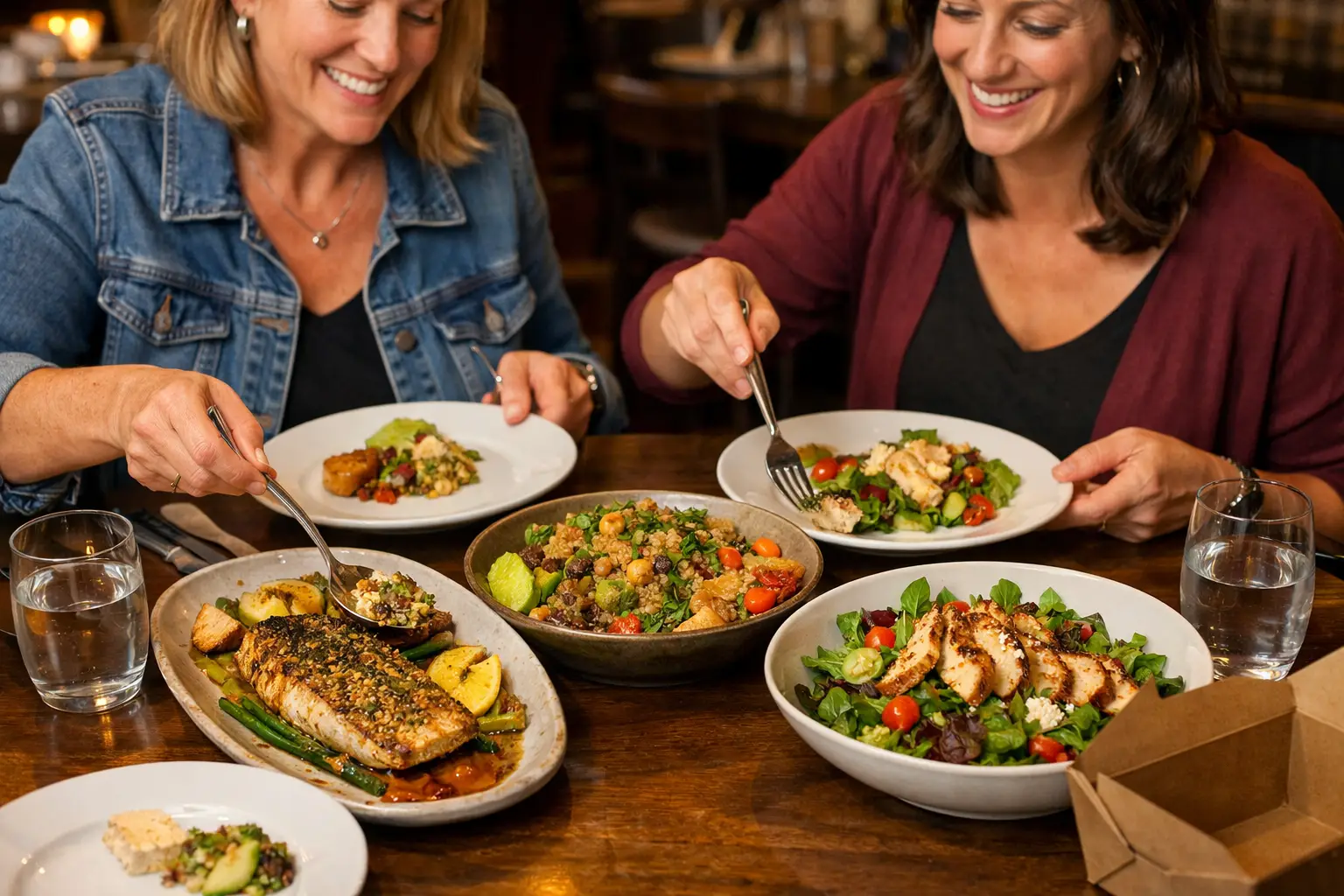
Share your meals around the table. Serving sizes at standard restaurants can easily feed two people. If you have a party of four, consider selecting only two to three entrees and sharing them. Restaurant portion sizes in most countries are calibrated for appetite rather than nutrition, which means a single restaurant entree often contains enough food for two clean eating servings. My strategy when dining with companions is to share entrees wherever possible, which halves the portion size, reduces the cost, and creates a more varied and interesting dining experience than ordering individual plates. Box part of your meal to prevent over-consuming calories. When dining alone, I request a takeaway container at the start of the meal and box half of the entree before beginning to eat.
Clean Your Produce Before Eating It on the Road
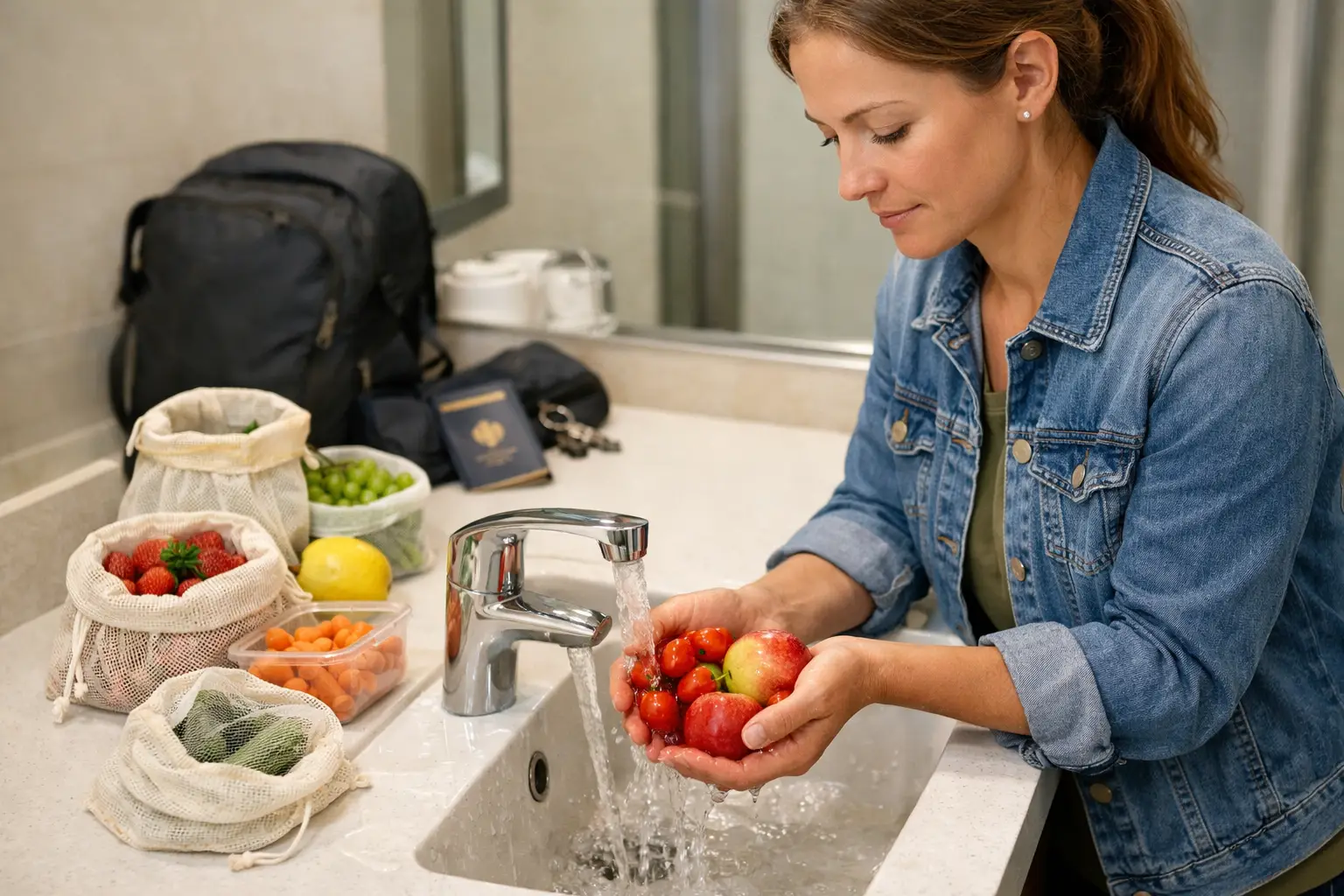
Clean your produce. Rinse all fresh produce under running tap water before packing it in a cooler, including produce with peel-away skins or rinds. Keep cold food cold. Place cold food in coolers with frozen gel packs or ice. Food safety is the clean eating dimension that most travel nutrition guides overlook entirely, and it is particularly important when eating fresh produce purchased from markets and grocery stores in unfamiliar locations. I carry small reusable produce bags and always rinse fresh fruit and vegetables before consuming them. Keep hot food hot and remember the two-hour rule. If you buy cold or hot food at the airport or train station, eat it within two hours of purchasing. After that, bacteria multiply.
Manage Jet Lag by Keeping Regular Meal Times
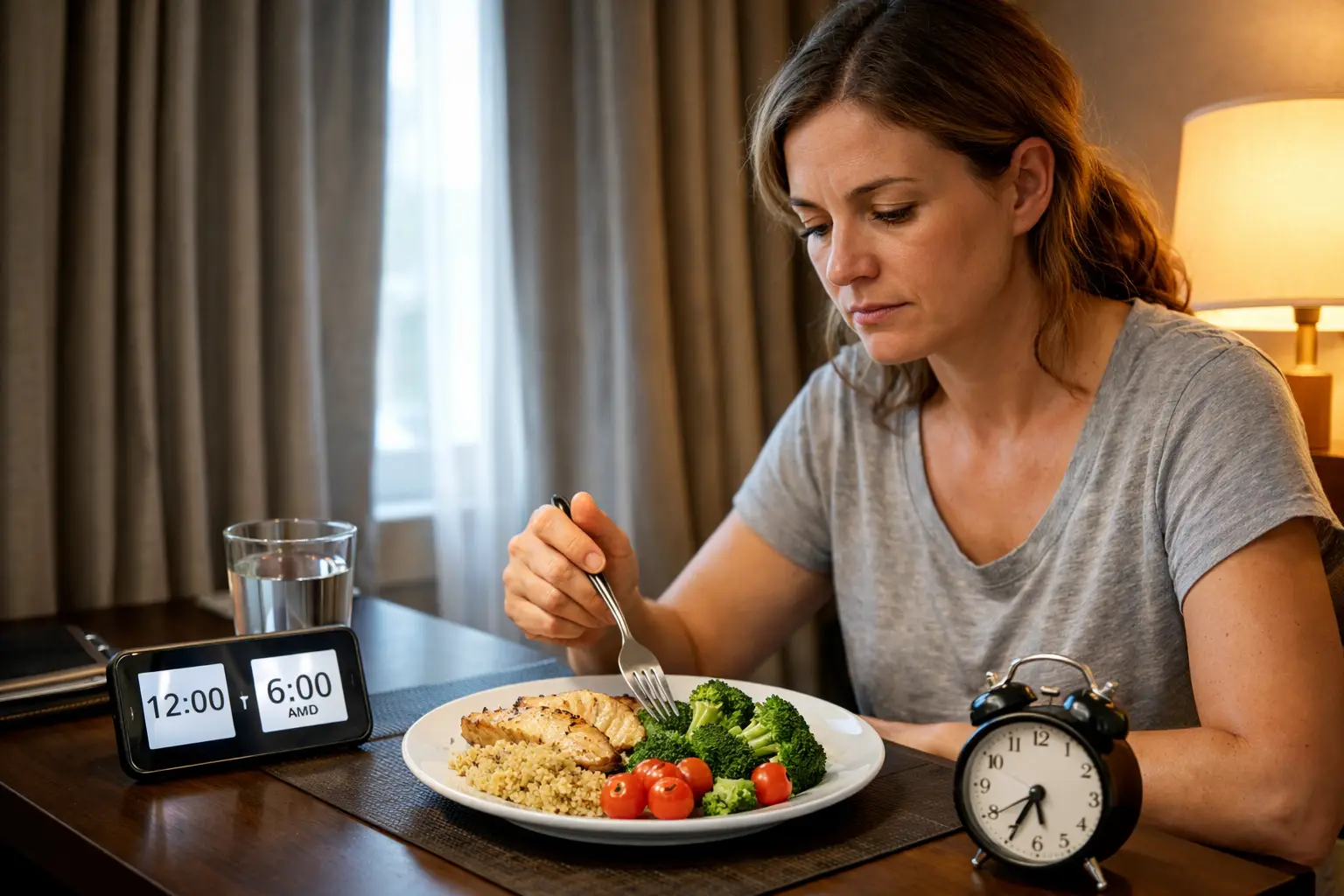
Jet lag disrupts the clean eating while traveling commitment more comprehensively than almost any other travel factor because it disrupts the hunger hormone cycle that normally regulates appetite and food timing at home. When crossing multiple time zones, I maintain my home meal schedule for the first twenty-four hours rather than immediately adjusting to the new time zone’s meal culture, then gradually shift meal timing by one to two hours per day until I am aligned with the local schedule. This approach prevents the disoriented middle-of-the-night eating and the skipped meals followed by overconsumption pattern that jet lag typically produces. Skipping meals can backfire by causing overeating or a reliance on convenience food.
Use Food Finding Apps to Locate Clean Eating Options
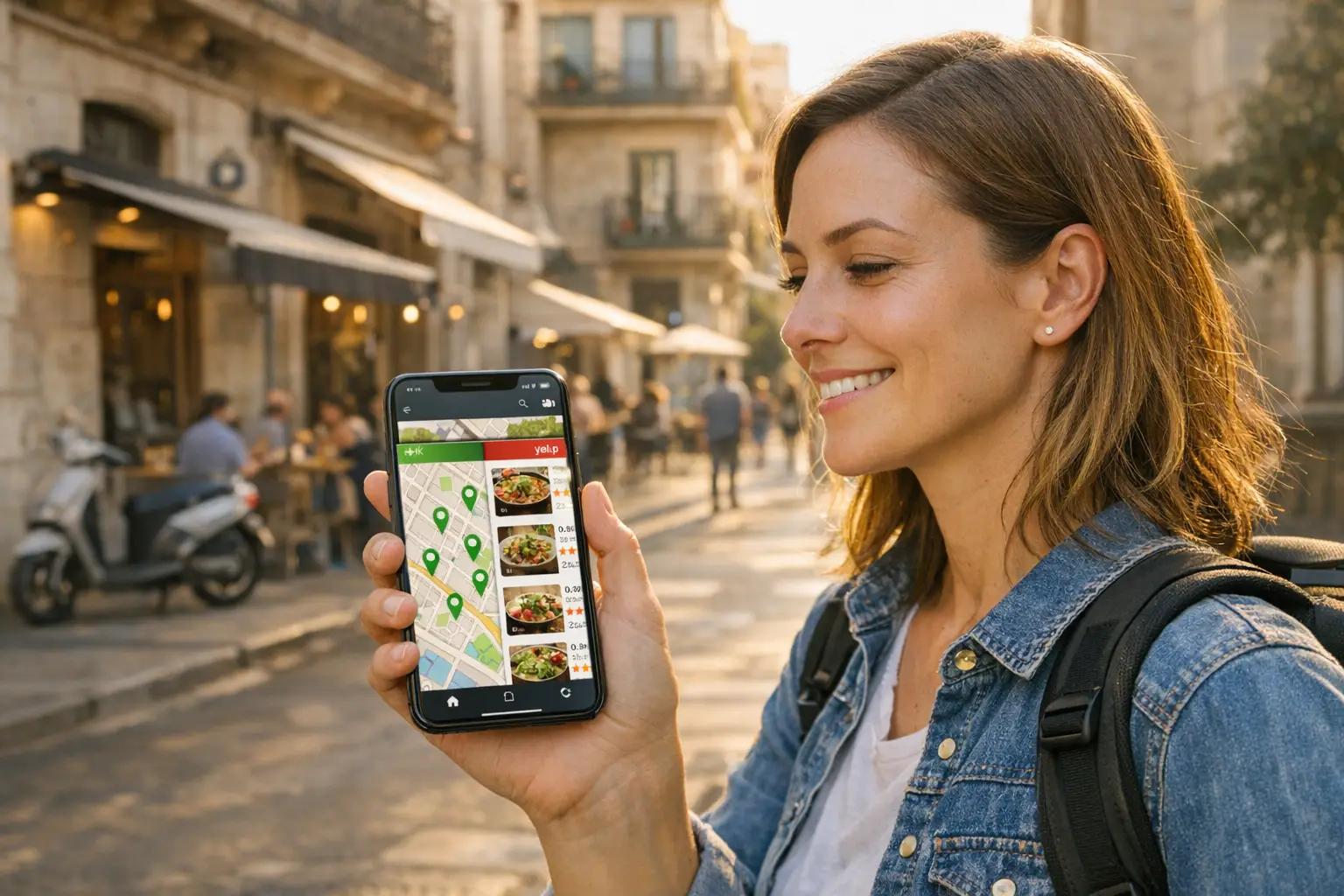
Use apps like Yelp or HappyCow to find local restaurants and eateries. Once you land at your destination, use smart strategies to avoid extra calories. The most practically useful technology upgrade for clean eating while traveling is a curated set of food-finding apps that locate genuinely healthy and clean eating-aligned restaurants wherever you are in the world. HappyCow identifies plant-based and whole food restaurants globally. Yelp filter searches for specific dietary requirements in most major cities. Google Maps restaurant searches filtered by distance and rating produce a reliable shortlist of sit-down restaurants within walking distance of any accommodation. Using these apps proactively rather than reactively ensures that the hungry and tired arrival moment always has a clean eating solution already identified.
Follow the 80-20 Rule and Enjoy the Culture of Food

The most important and most liberating clean eating while traveling philosophy I have adopted after years of travel is the 80-20 rule: eat clean and intentionally eighty percent of the time and allow the remaining twenty percent to be genuinely flexible, culturally curious, and completely guilt-free. Trying new foods on vacation is a must, so keep in mind that the occasional splurge is not going to be detrimental to your overall diet. Food is one of the most immediate and most deeply human ways of experiencing a new place, and a clean eating commitment that prevents you from tasting the local cuisine of the place you traveled to experience is a clean eating commitment that has become a liability rather than an asset. The 80-20 rule keeps the commitment meaningful without making it miserable.
Building Your Personal Clean Eating Travel System
The 18 strategies in this guide work most effectively when combined into a personal system rather than applied individually on a case-by-case basis. The research before departure ensures options are available on arrival. The packed snacks eliminate the desperate airport food moment. The protein-first restaurant rule and the half-plate vegetables habit apply at every meal without requiring special knowledge of any specific restaurant. The one planned treat prevents deprivation-driven abandonment. And the 80-20 philosophy provides the psychological flexibility that makes the entire system sustainable over weeks and months of continuous travel rather than just a single well-planned trip.
Conclusion
Clean eating while traveling is not about bringing your kitchen with you or refusing every culturally significant food you encounter on the road. It is about having a practical and genuinely usable system that makes the clean choice slightly more available than the convenient one at every decision point the travel day presents. The key is to fill up on healthy foods and make smart dining choices throughout your trip. By planning ahead and knowing your options, you can take a break from your stressful routine but not from healthy eating. The 18 strategies in this guide have been tested across every type of travel scenario from cross-country road trips to international long-haul flights to week-long resort stays, and every one of them works in real travel conditions rather than only in the idealized pre-departure plan.
You can may also like this: 16 Après-Ski Outfits Ideas That Turn Heads on the slopes.
Frequently Asked Questions
How do you eat clean while traveling?
By planning ahead and knowing your options, you can take a break from your stressful routine but not from healthy eating. Take your own snacks for a road trip or plane ride. Choose sit-down restaurants instead of fast food establishments. Select healthy choices such as salmon, grilled meats, fresh salads, and broth-based soups instead of deep-fried foods and entrees with heavy cream sauces. The most consistently effective approach to clean eating while traveling combines pre-departure preparation including packed snacks and restaurant research with a set of simple in-the-moment rules including the protein-first meal-building strategy and the half-plate vegetables habit that apply at every meal regardless of the restaurant or destination.
What are the best clean snacks to pack for travel?
Nuts, beef jerky, apples, individual packets of nut butter, individual cans of tuna or chicken salad, protein shakes, and a blender bottle. For flights, pack small containers of salad with protein, salad dressing, boiled eggs, carrot sticks, and hummus. Trail mix, homemade granola, popcorn, pretzels, chopped raw vegetables, hummus, apples, plums, and pears make great travel snacks. The best travel snacks combine protein with healthy fat or fiber to produce sustained satiety rather than the blood sugar spike and crash that pure carbohydrate snacks produce, which is the most common cause of overeating in the hours following a poor snack choice.
How do you handle restaurant eating while following a clean eating plan?
Ask how food is prepared and make requests for dressings on the side and grilled items instead of fried. Ask for substitutions like a side salad instead of French fries. Swap cheese for extra veggies. Box part of your meal to prevent over-consuming calories. Start with a side salad or broth-based soup. Look for protein and vegetable options. The most important restaurant clean eating habit is asking questions and making requests confidently. Most restaurants accommodate simple preparation modifications without any difficulty, and the cumulative impact of consistently requesting grilled rather than fried and sauces on the side rather than applied is significant over the course of a full trip.
Is it realistic to eat clean one hundred percent of the time while traveling?
Trying new foods on vacation is a must, so keep in mind that the occasional splurge is not going to be detrimental to your overall diet. There is a time and a place for healthy eating. It is important to figure out where to cut yourself some slack and where to practice discipline. Instead of returning from your trip feeling bloated, guilty, and heavier by a few pounds, you can return feeling great and with the memory of that one special treat that you enjoyed thoroughly, guilt-free. The 80-20 approach to clean eating while traveling is more realistic and more sustainable than a one hundred percent commitment, and it produces better long-term results because it eliminates the deprivation cycle that leads to complete dietary abandon.
How do you stay hydrated while traveling?
Hydrate before traveling. Flying dehydrates you fast and dehydration alone can cause bloat. Clean electrolytes or some salt in your water help maintain hydration levels during long flights. When in doubt about local water quality, stick with sealed bottled beverages. Be safe with water regardless of whether you are traveling domestically or internationally. Carrying a reusable water bottle through airport security to refill at the gate, aiming for eight ounces per hour of flight time, and adding a clean electrolyte supplement to water during long-haul travel collectively prevent the dehydration that mimics hunger and leads to unnecessary snacking throughout the journey.