
Introduction
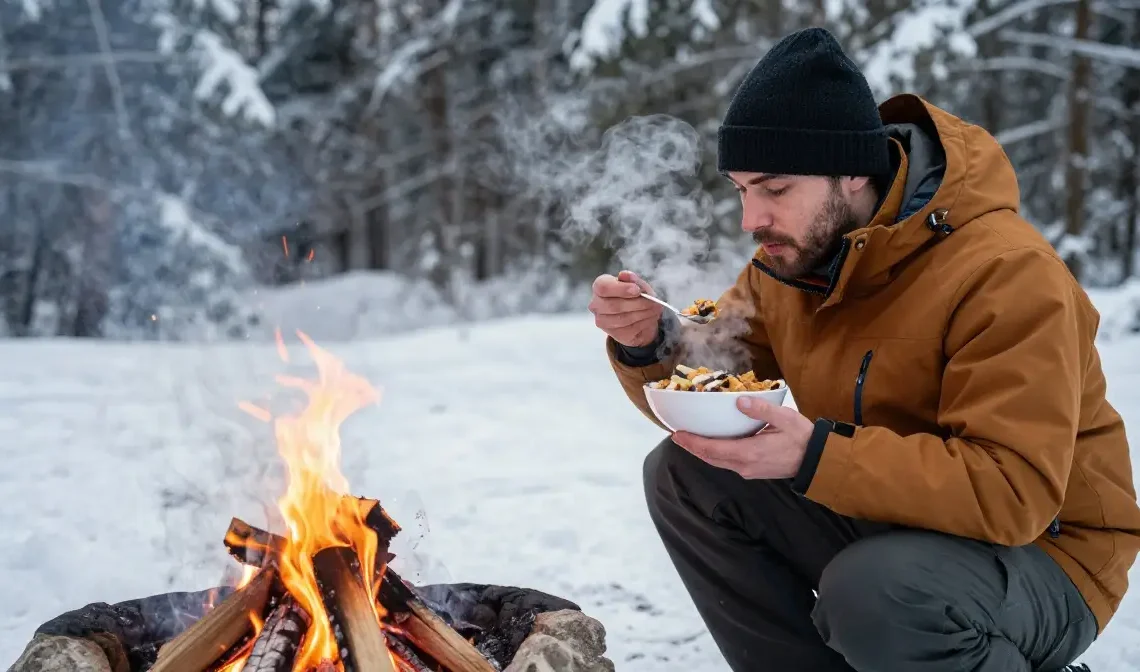
There is something about eating outside in winter that hits differently than any other camping experience. The cold air around you makes every hot meal feel twice as satisfying. A bowl of chili that would be ordinary at home becomes genuinely comforting when you are sitting beside a campfire with snow on the ground and frost on the trees.
But winter camping food comes with real challenges that summer camping does not. Your water can freeze before it boils. Your stove performs differently in low temperatures. Your body burns significantly more calories just staying warm, which means the light snacks that worked in July leave you genuinely hungry by 7 PM in January. And when your fingers are cold, complicated recipes feel impossible.
These 22 easy winter camping meals solve all of those problems. They are warm, filling, practical, and actually achievable when you are wearing gloves and working with a camp stove in below-freezing conditions. Whether you are a beginner heading out for your first cold weather trip or an experienced winter backpacker looking for fresh ideas, this list covers breakfast through dinner and every snack in between.
Classic Campfire Chili
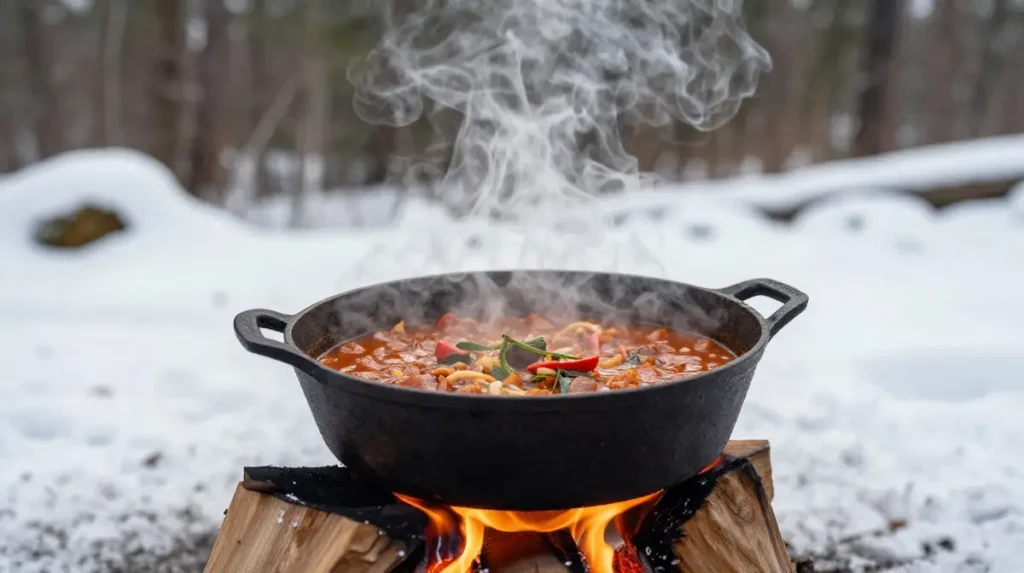
Chili is one of the best easy winter camping meals you can make because it is almost impossible to get wrong and gets better the longer it sits. At home before your trip, combine canned beans, canned tomatoes, canned chicken or beef, and a spice kit with chili powder, garlic powder, cayenne pepper, and cumin into a zip-lock bag or container. At camp, heat olive oil in a cast iron skillet or Dutch oven over your campfire grill grate, add everything together, and let it simmer for 15 to 20 minutes. Serve with crackers or whole grain bread. It is one pot, high calorie, and deeply warming after a cold day outdoors.
Instant Oatmeal With Toppings for Breakfast
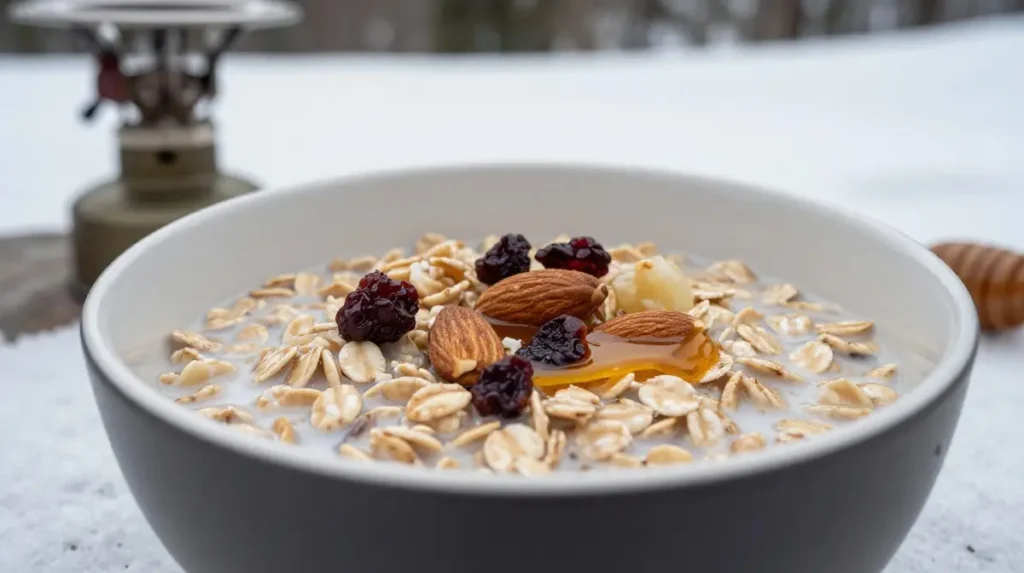
Instant oatmeal is the foundation of almost every successful winter camping breakfast ideas list and for good reason. It is lightweight, cooks in under three minutes with just boiling water, and delivers real sustained energy for a cold morning. The key to making it satisfying rather than boring is the toppings. Pack brown sugar, cinnamon, dried fruit, almonds, and a few honey packets separately. Add nut butter for extra calories and protein. A single serving of oatmeal with full toppings can reach 600 calories, which is exactly what your body needs before a long cold weather hike.
Ramen Noodle Upgrade Bowl
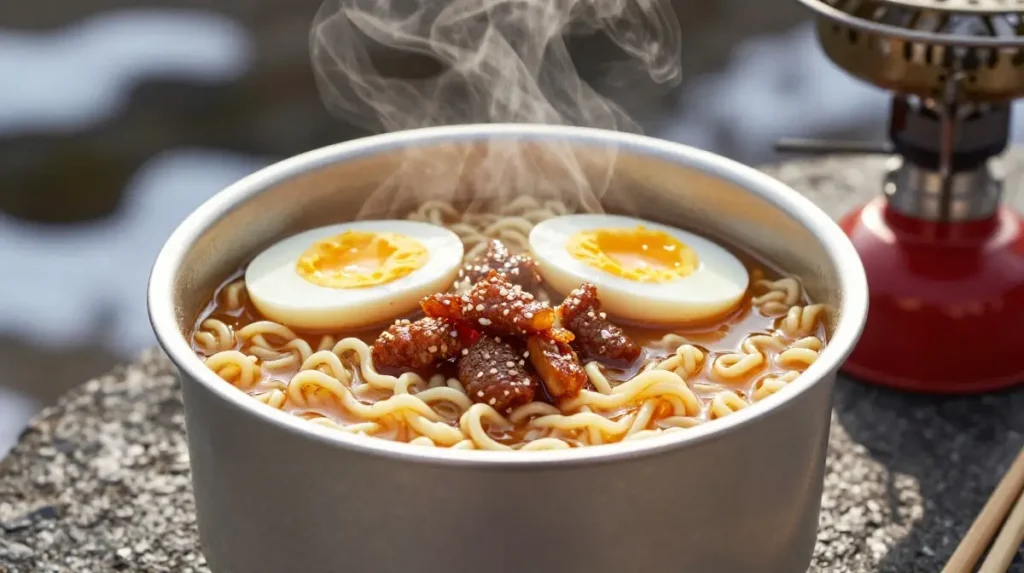
Basic camping ramen gets a bad reputation but a ramen noodle bowl with the right additions is one of the most satisfying easy winter camping meals available. Cook the ramen as directed using your backpacking stove, then add soy sauce packets, hot sauce, beef jerky pieces, a soft boiled egg if you brought one, and a handful of dried vegetables. The result is a genuinely filling, high-sodium meal that replaces electrolytes lost during cold weather activity. The whole thing takes less than 10 minutes from start to finish.
One Pot Beef Stew
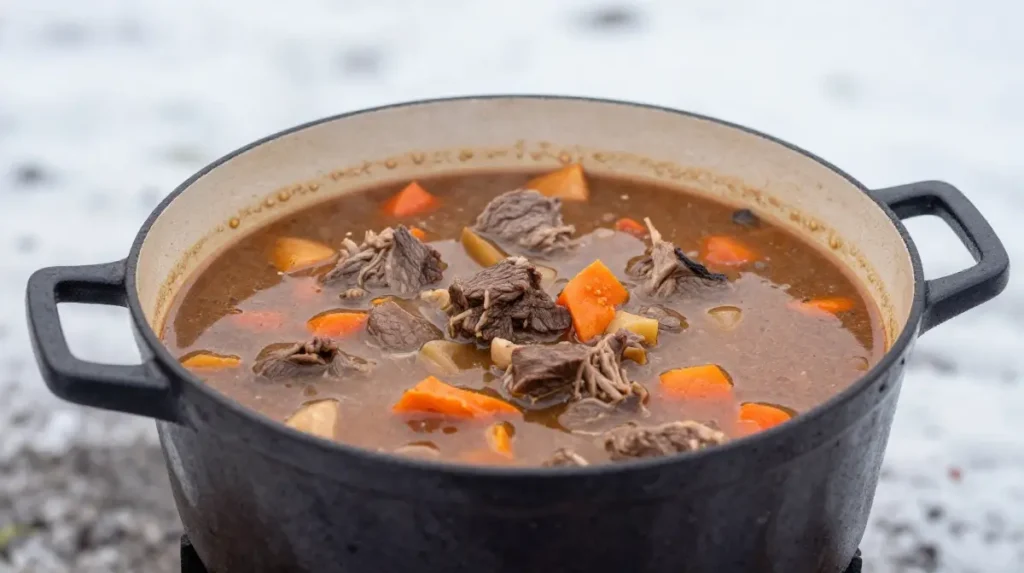
Beef stew is the ultimate hearty winter camping recipe and works beautifully in a Dutch oven over a campfire. Before your trip, cut vegetables and meat into small pieces and pre-season everything at home. At camp, heat coconut oil or olive oil in the Dutch oven, brown the meat briefly, add bouillon cubes dissolved in hot water, toss in the vegetables, and let everything cook together for 30 to 40 minutes with the lid on. The result is a thick, rich stew that warms you from the inside out and provides serious calories for a cold night.
Thermos Cooking Lentil Soup
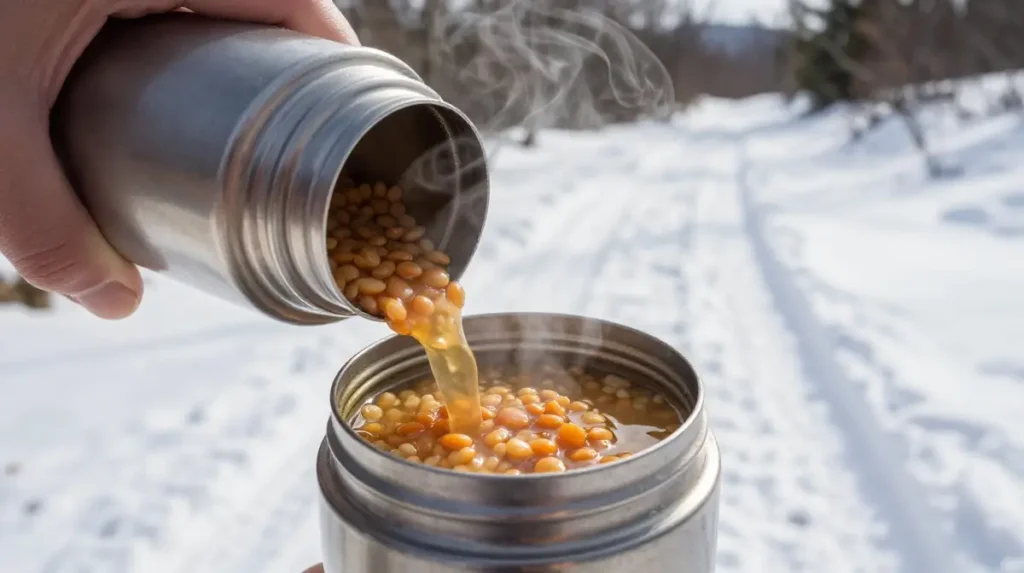
Thermos cooking is one of the most underused techniques in winter backpacking meals planning. Bring lentils, bouillon cubes, garlic powder, and salt and pepper to a boil on your camp stove in the morning. Pour everything into a well-insulated thermos and seal it tightly. By lunchtime, the retained heat has fully cooked the lentils inside the thermos without using any additional fuel. Open it at midday and you have a hot, protein-rich lentil soup ready to eat with zero additional cooking required at camp.
Bacon and Egg Breakfast Skillet
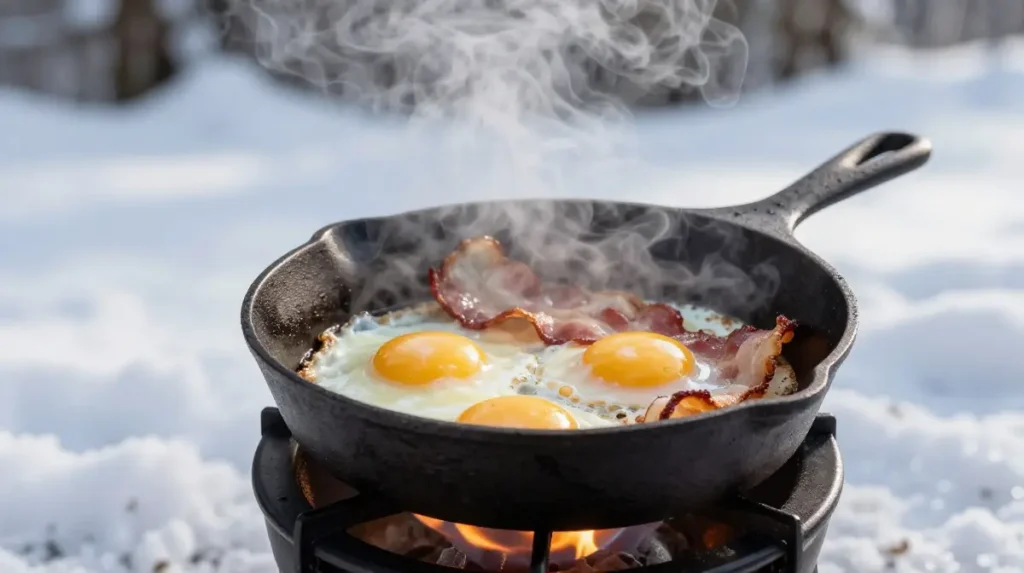
A bacon and egg camping breakfast in winter feels indulgent but is actually one of the most practical high calorie winter camping food options available. Cook bacon strips first in a cast iron skillet over your camp stove or campfire grill grate, remove them, and cook your eggs in the remaining fat. Add salt and pepper, wrap everything in a tortilla, and you have a breakfast burrito that delivers significant fat and protein to fuel a cold morning. The high fat content of bacon is particularly useful in winter camping because fat is the most calorie-dense fuel source available.
Instant Mashed Potatoes With Toppings
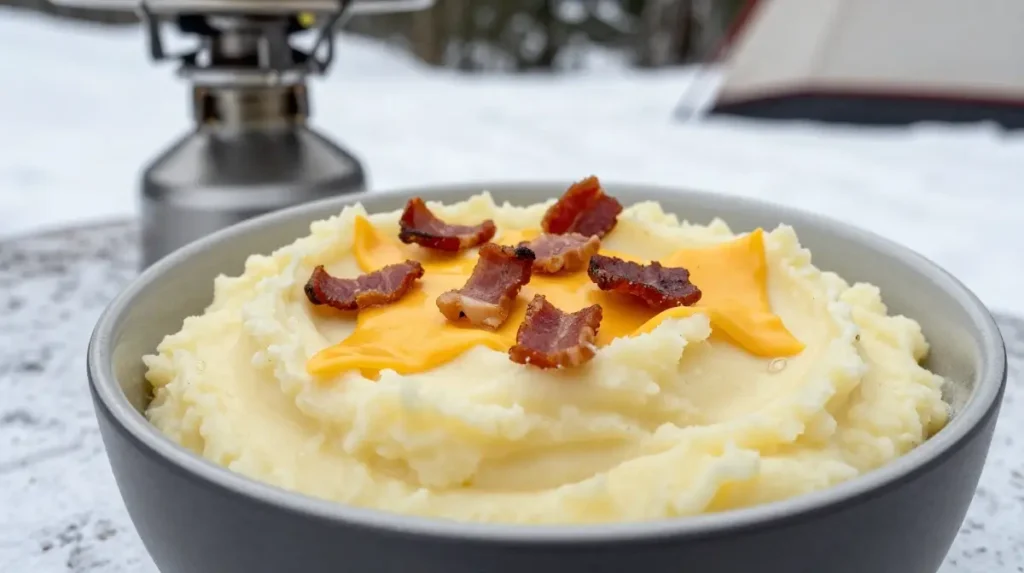
Instant mashed potatoes are one of the most underappreciated camping meals in winter because they are hot, filling, starchy, and cook in under five minutes with just boiling water. The trick is treating them as a base rather than a meal on their own. Mix in hard cheese, crumbled bacon, canned chicken, powdered milk for creaminess, and hot sauce for flavor. The result is a genuinely satisfying bowl that provides enough calories and warmth to carry you through a cold evening comfortably.
Campfire Foil Packet Sweet Potatoes
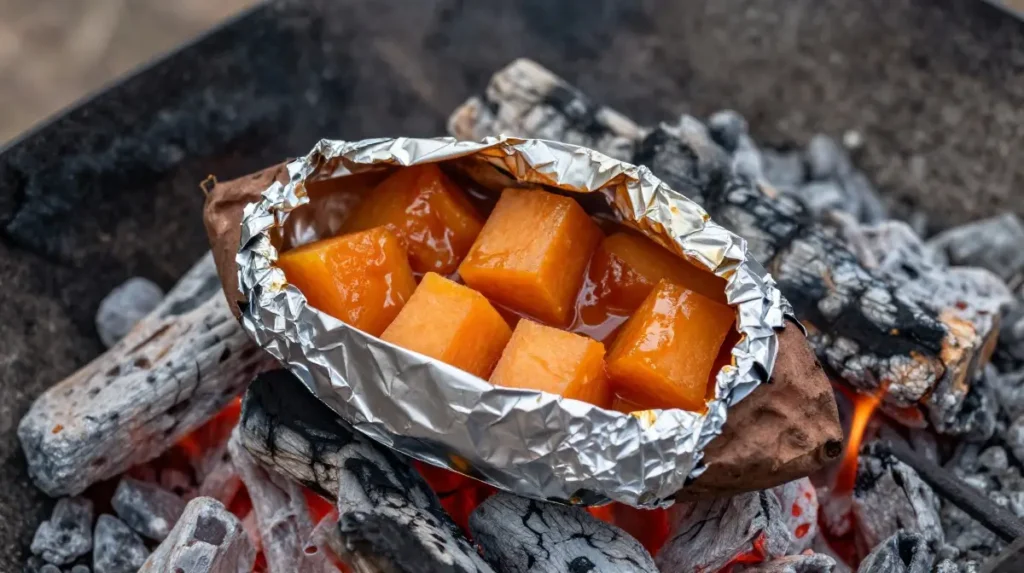
Foil packet camping meals are some of the easiest cold weather camping meals you can prepare because the foil does all the work. Slice sweet potatoes into cubes at home before your trip, toss them in olive oil, cinnamon, brown sugar, and a pinch of salt, wrap tightly in heavy-duty foil, and pack them in your cooler or bear canister. At camp, place the sealed foil packets directly in the coals of your campfire for 25 to 30 minutes. The sweet potatoes emerge soft, caramelized, and genuinely warming, with complex carbohydrates that provide steady energy through the cold.
Campfire Mac and cheese
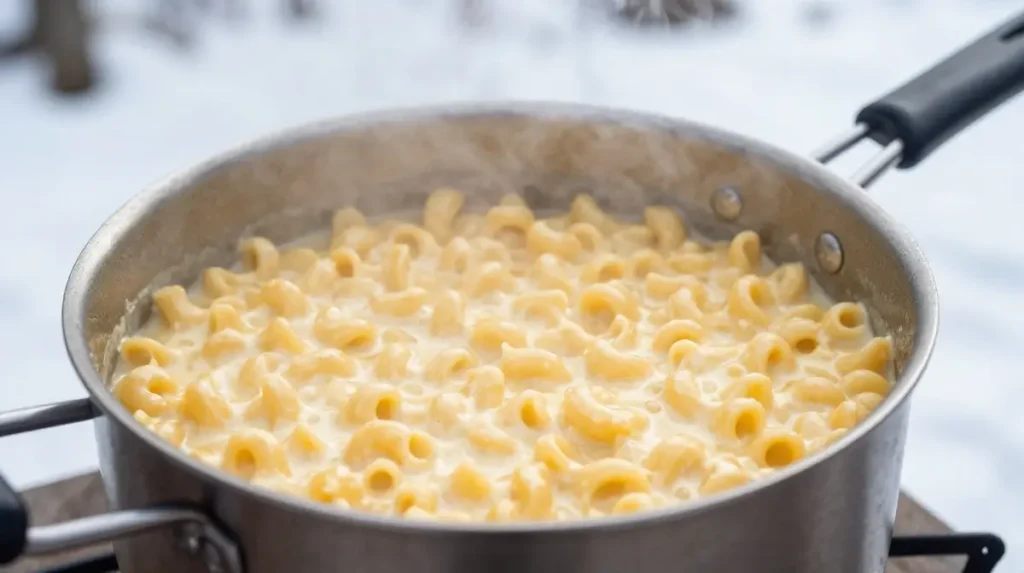
Camping mac and cheese is a winter camping classic for good reason. It is one of the most filling camping meals in winter that requires minimal effort and almost no skill. Cook pasta in your snow melting pot using melted snow or filtered water, drain most of the water, and stir in hard cheese, powdered milk, butter or olive oil, and salt and pepper. The whole process takes 15 minutes and produces a creamy, calorie-dense meal that satisfies even after the most demanding cold weather day. Add canned tuna or canned chicken to turn it into a complete protein meal.
Hot Cocoa With Dark Chocolate
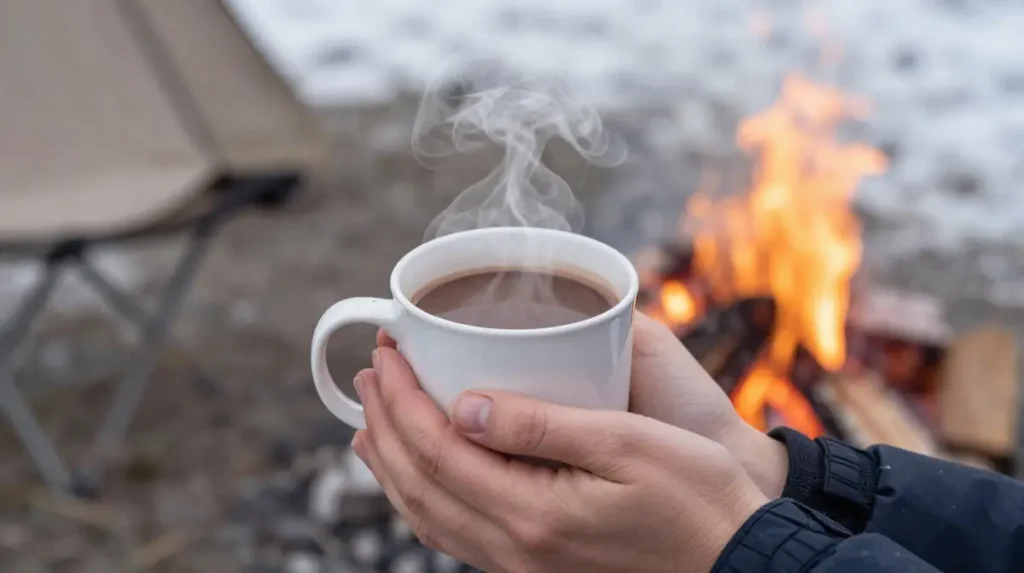
No easy winter camping meals list is complete without addressing hot drinks, and hot cocoa is the most important one. Mix hot cocoa powder with powdered milk and brown sugar in a zip-lock bag before your trip so you have an instant mix ready at camp. Heat water on your propane stove, pour it over the mix, and stir in a square of dark chocolate for extra richness and fat calories. Dark chocolate also contains a small amount of caffeine, making hot cocoa a genuinely functional warming drink rather than just a comfort treat.
Dehydrated Vegetable Soup With Rice Packets
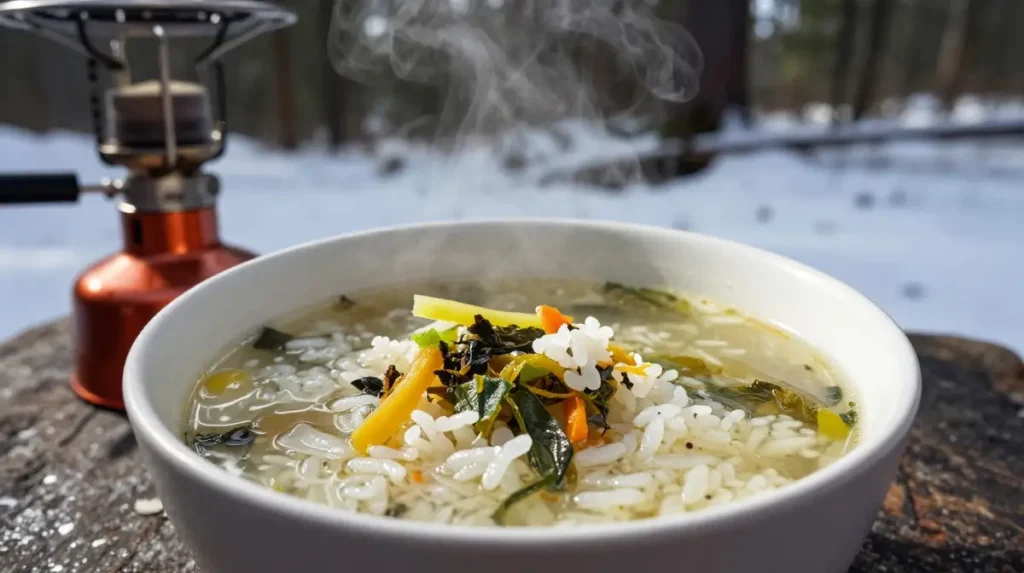
A dehydrated vegetable soup base combined with precooked rice packets makes one of the most lightweight and easy cold weather camping meals available for backpackers. At home, combine dehydrated vegetables, instant soup packets, bouillon cubes, and your spice kit in a bag. At camp, boil water, add everything together with a rice packet, and let it rehydrate for five minutes. The result is a hot, vegetable-forward soup with enough carbohydrates from the rice to keep your energy levels stable through a cold afternoon.
Peanut Butter and Honey Tortilla Roll
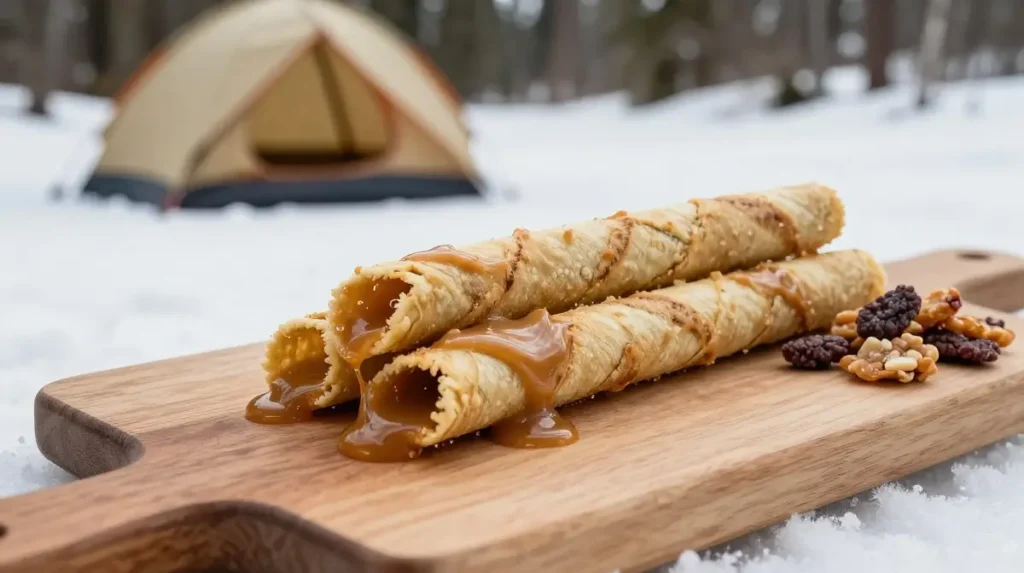
Not every meal needs to be cooked, and the peanut butter and honey tortilla is the best no cook winter camping meal for a quick lunch when stopping to cook is impractical. Spread a generous layer of peanut butter across a tortilla, drizzle honey packets over it, add a handful of granola or trail mix for crunch, and roll it tightly. It delivers nut butter fat, simple sugar energy, and complex carbohydrates in one package that takes 90 seconds to assemble. The high fat content of peanut butter is particularly valuable for maintaining body warmth in cold weather.
Campfire Chicken and Rice
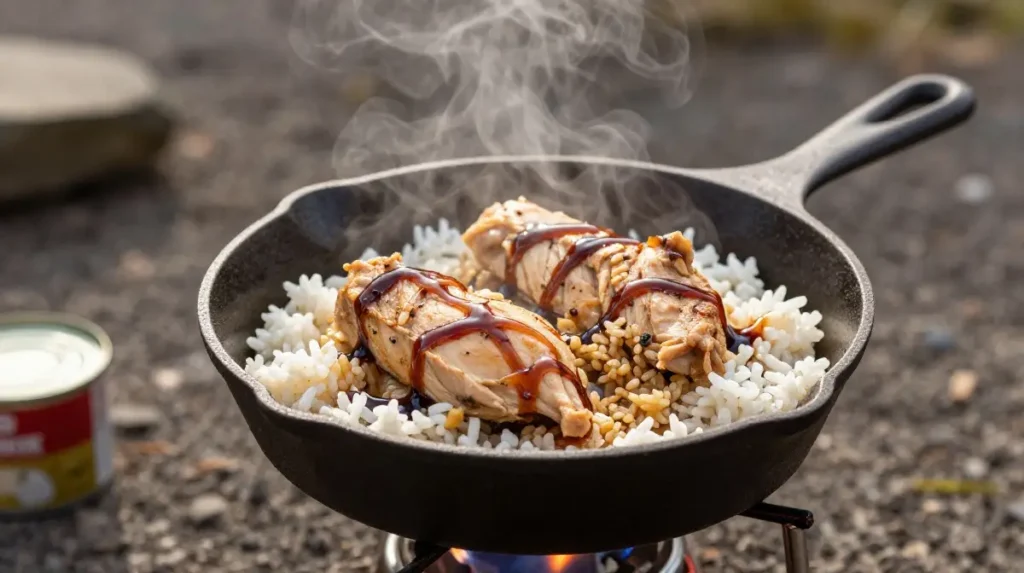
Canned chicken and instant rice packets combine into one of the most filling camping meals in winter with almost no cooking skill required. Heat olive oil in a cast iron skillet, add canned chicken and let it crisp slightly, then stir in a cooked rice packet, soy sauce packets, garlic powder, and any dried vegetables you packed. The whole dish takes under 10 minutes and produces a genuinely satisfying high-protein meal. It is also one of the better budget winter camping food options because canned chicken and rice packets are among the most affordable camp food staples available.
Trail Mix With Dark Chocolate and Jerky
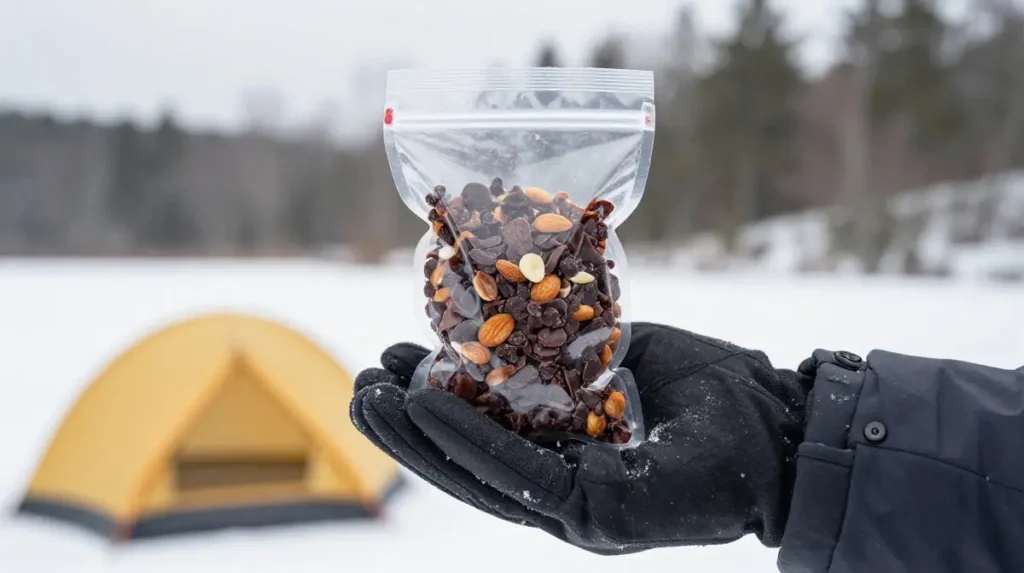
A properly assembled trail mix is the most important high energy trail snack for winter camping because it requires no cooking, no water, and no preparation at camp. Build your mix at home from almonds, cashews, dried fruit, dark chocolate pieces, beef jerky pieces, and granola bars broken into chunks. Portion it into daily bags before your trip. Eat it continuously throughout the day rather than waiting for meal times, because in cold weather your body needs a constant supply of calories to maintain its temperature between major meals.
Dutch Oven Campfire Stew With Canned Beans
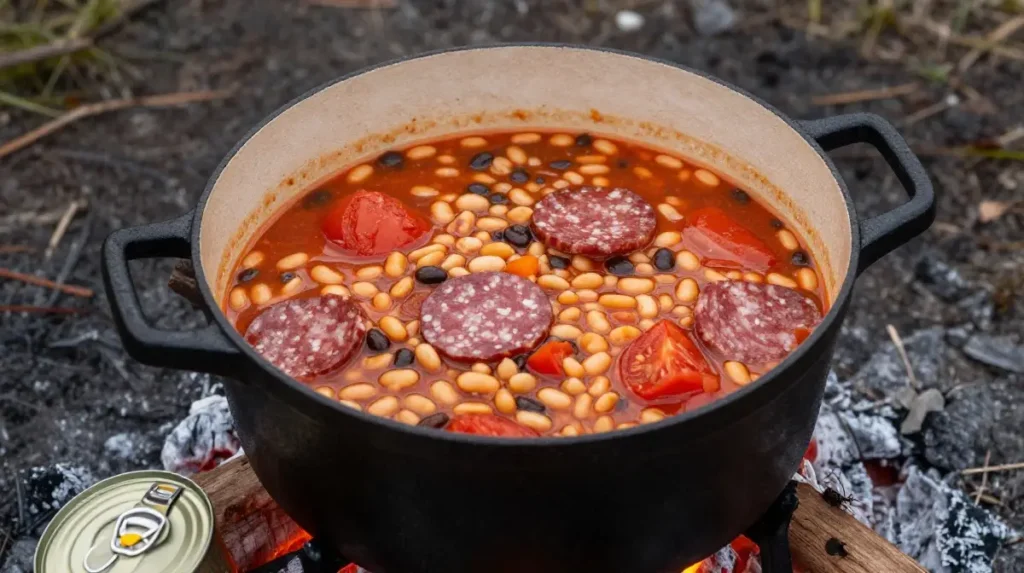
Canned beans are one of the most underrated camping food options for winter because they are already cooked, high in protein and fiber, and heat up in minutes. In a Dutch oven over your campfire, combine canned beans, canned tomatoes, bouillon cubes, canned chicken or salami slices, cayenne pepper, garlic powder, and a splash of olive oil. Simmer for 15 minutes, stirring occasionally. This campfire stew recipe is one of the easiest one pot winter camping meals on this list and produces enough volume to feed two to four people from a single Dutch oven.
Instant Coffee With Butter
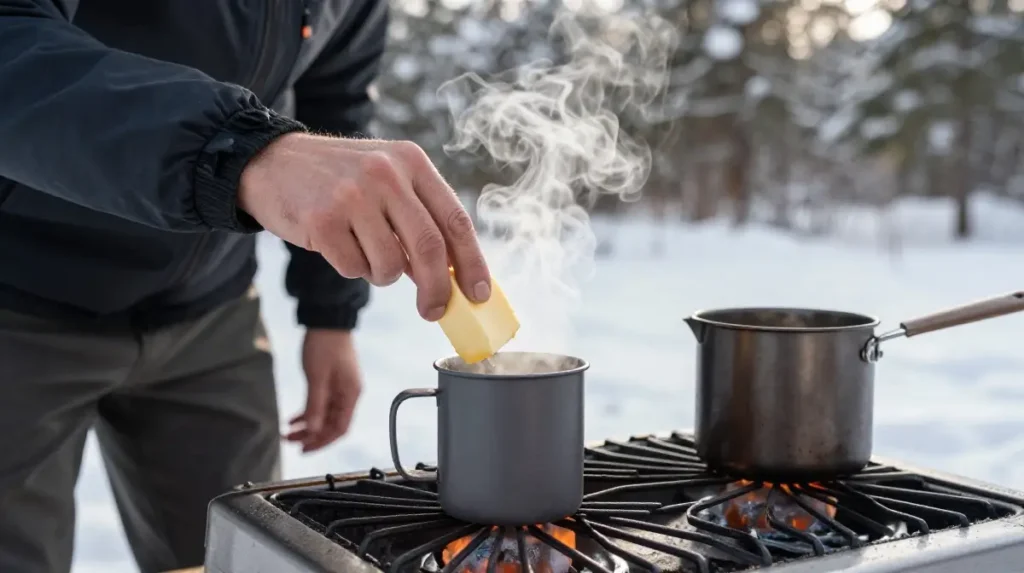
Butter coffee sounds unusual but it is one of the most effective warming winter camp recipes for a cold morning start. Brew your instant coffee using hot water from your camp stove, then stir in a small pat of butter or a spoonful of coconut oil and a drizzle of honey. The fat from the butter slows the absorption of caffeine, providing a steadier and longer energy release than black coffee alone. It also adds meaningful calories to your morning before you start cooking breakfast, which matters significantly in cold weather when your body starts burning fuel the moment you leave your sleeping bag.
Camping Pasta With Salami and Olive Oil
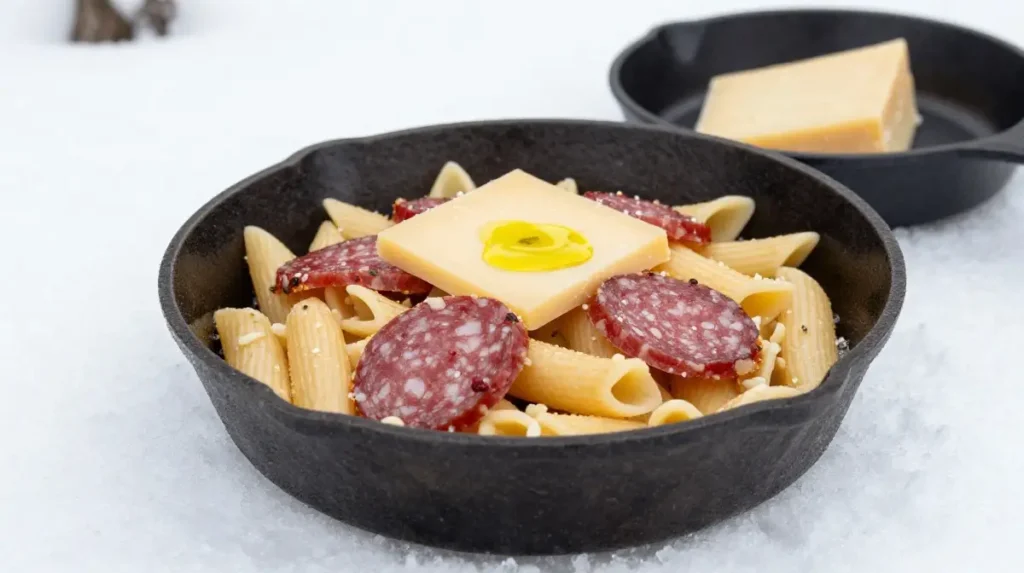
Pasta is one of the best camping pasta recipes for winter because it is lightweight, cooks quickly, provides significant carbohydrates, and pairs well with ingredients that do not require refrigeration. Cook pasta in a snow melting pot until just done, drain most of the water, and toss immediately with olive oil, sliced salami, hard cheese, garlic powder, and hot sauce. The olive oil coats the pasta and prevents it from clumping while adding healthy fat calories that keep you warm through a cold evening. This entire meal takes under 15 minutes from water to bowl.
Freeze Dried Meals for Backup
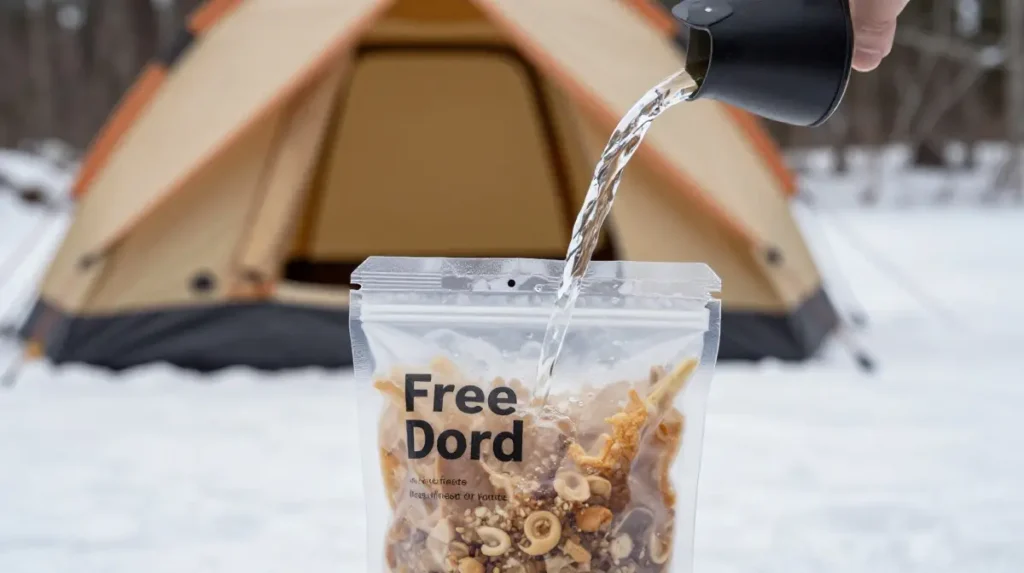
Every serious winter camping food checklist should include at least two freeze dried meals as backup options for days when conditions make cooking genuinely difficult. Freeze dried meals only require boiling water poured directly into the pouch, which means they work even when you are too cold or too tired to cook properly. They are more expensive than most camp cooking options but provide a reliable safety net for situations where a hot meal matters more than anything else. Keep them in an insulated food container to prevent the water from cooling too quickly during rehydration.
Egg and Vegetable Foil Packet Breakfast
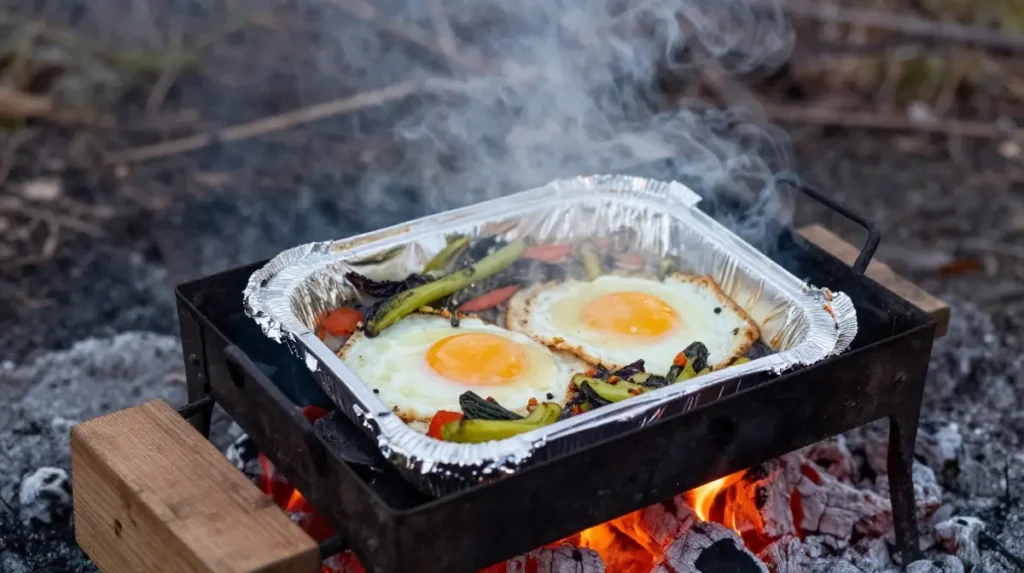
Crack two eggs into a foil packet lined with a small amount of olive oil, add diced vegetables from home, season with salt and pepper and hot sauce, and seal the packet tightly. Place directly onto campfire coals for eight to ten minutes. The eggs cook inside the sealed foil, steaming gently in their own moisture along with the vegetables. This camping egg breakfast approach requires zero cleanup and zero additional cooking equipment beyond the foil and the campfire itself, making it one of the most practical cold weather camping meals for beginners.
Hot Sandwich on the Camp Stove
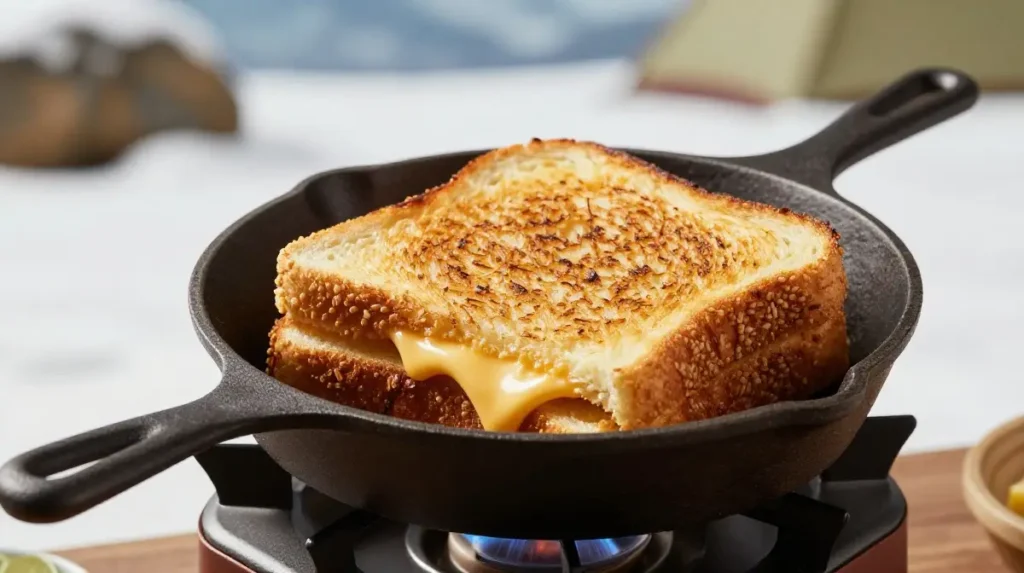
A hot camping sandwich takes a cold lunch option and turns it into a genuinely warming meal using just a cast iron skillet or camp stove pan. Butter two slices of whole grain bread, fill with hard cheese, salami, and a drizzle of hot sauce, and press it flat into a heated skillet for two to three minutes per side. The bread crisps, the cheese melts, and the whole thing takes under seven minutes. It is one of the simplest warm camping meals for winter that feels satisfying without requiring any significant cooking skill or specialized gear.
Spiced Herbal Tea With Honey
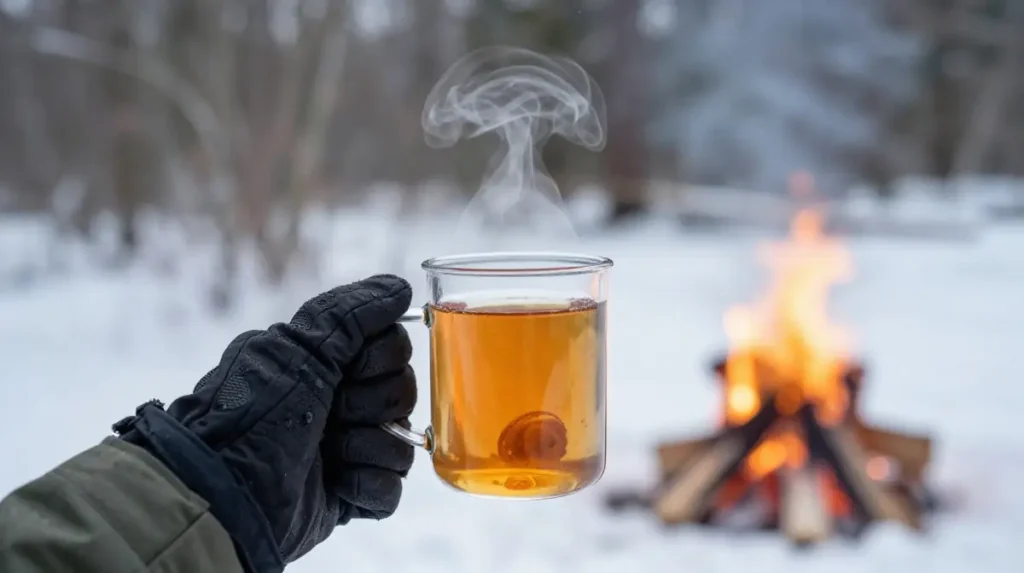
Staying hydrated in winter camping is harder than in summer because the cold air suppresses your sense of thirst and drinking cold water becomes unappealing. Herbal tea solves both problems at once. Pack a variety of herbal tea bags, honey packets, and cinnamon sticks in your spice kit. Brew a cup on your canister stove or white gas stove whenever you stop moving and feel your body temperature dropping. The warm liquid raises your core temperature, the honey provides quick simple sugar energy, and the habit of stopping for tea creates natural rest breaks that prevent overexertion in cold conditions.
Overnight Oats in an Insulated Container
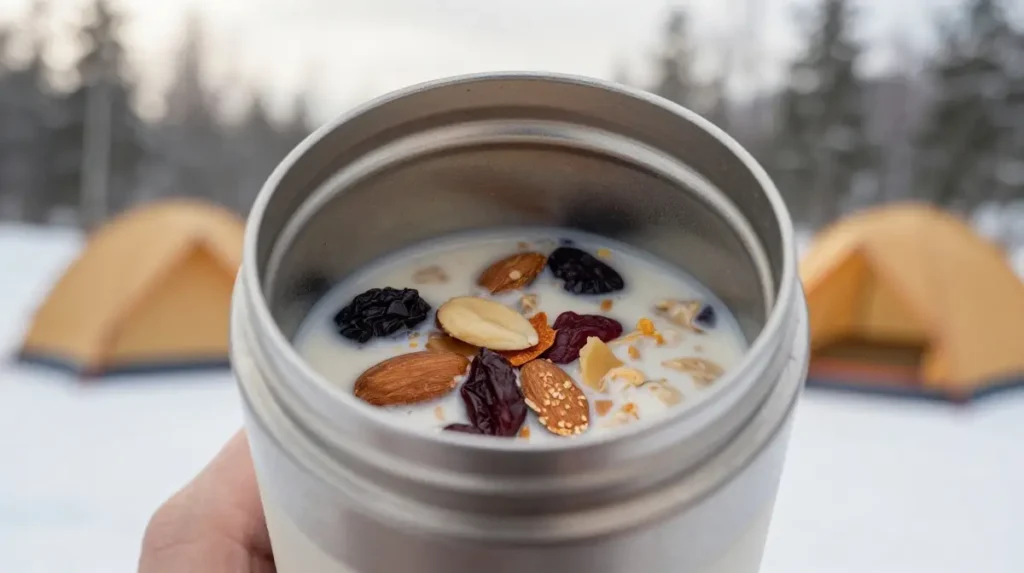
Overnight oats prepared in an insulated food container the night before give you a ready-to-eat breakfast the following morning with zero morning cooking required. Before sleeping, combine rolled oats, powdered milk, brown sugar, cinnamon, dried fruit, and almonds in a thermos with warm water. Seal it and let it sit overnight. In the morning, open the thermos and eat directly from it. The oats will have absorbed all the liquid and softened completely. This is one of the most time-saving winter camping breakfast ideas for campers who want to start moving early without waiting for water to boil.
Quick Reference Table: Easy Winter Camping Meals by Category
| Meal | Category | Cook Time | Equipment Needed | Calorie Level |
|---|---|---|---|---|
| Campfire chili | Dinner | 20 minutes | Dutch oven or cast iron skillet | Very high |
| Instant oatmeal with toppings | Breakfast | 5 minutes | Camp stove, pot | High |
| Thermos lentil soup | Lunch | 5 minutes active | Camp stove, thermos | Moderate |
| Ramen upgrade bowl | Dinner | 10 minutes | Backpacking stove, pot | High |
| Peanut butter honey tortilla | Lunch | 2 minutes | No cooking needed | High |
| Foil packet sweet potatoes | Dinner | 30 minutes | Campfire, foil | Moderate |
| Overnight oats in thermos | Breakfast | 2 minutes prep | Thermos only | High |
Conclusion
Winter camping food does not need to be complicated to be good. The best easy winter camping meals share a few common traits: they are hot, they are calorie-dense, they cook quickly in cold conditions, and they use ingredients that travel well without refrigeration.
The 22 ideas in this guide cover every meal of the day from a quick thermos breakfast to a slow Dutch oven dinner by the fire. Some are designed for the most minimal possible effort on difficult weather days. Others are genuinely satisfying camp cooking experiences that make the whole winter trip feel more rewarding.
Pick five or six meals that match your gear, your group size, and your skill level, and build your winter camping food checklist around them. Pack more calories than you think you need, keep your water from freezing, and always have a freeze dried backup in your bear canister for emergencies. Do all of that and the food side of your winter camping trip will be one of the best parts of the experience rather than the most stressful.
You can may also like this: 22 1 Day Disneyland Itinerary Ideas for Quick Visit Plan
FAQs
How many calories do you need per day for winter camping
Most people need between 3,000 and 5,000 calories per day during active winter camping, compared to 2,000 to 2,500 for a typical non-camping day. Your body burns significantly more energy maintaining its temperature in cold conditions, especially when hiking or carrying a heavy pack.
What foods should you avoid bringing winter camping
Avoid foods with high water content that freeze solid in cold temperatures, such as fresh fruit, leafy vegetables, and canned goods in very cold conditions. Also avoid foods that become hard and unpleasant to eat when cold, such as energy bars with high chocolate content that turn rock solid below freezing.
How do you keep camp stoves working in below-freezing temperatures
Keep your fuel canister warm by storing it inside your sleeping bag overnight and warming it in your hands or against your body before use. White gas stoves and propane stoves perform better in extreme cold than standard isobutane canister stoves. Keep the stove sheltered from wind when cooking.
Can you melt snow for drinking water when winter camping
Yes, but it requires significant fuel and time. Always start with a small amount of liquid water in the bottom of your snow melting pot before adding snow, as melting snow in a completely dry pot can scorch the bottom of the pot and ruin the taste of the water. Use a water filter even with melted snow.
What is the easiest meal to make on a first winter camping trip
Instant oatmeal for breakfast and ramen with add-ins for dinner are the two most beginner-friendly easy winter camping meals because both require nothing more than boiling water, take under 10 minutes, and can be eaten directly from the pot to minimize cleanup in cold conditions.
1 Comment