
Introduction
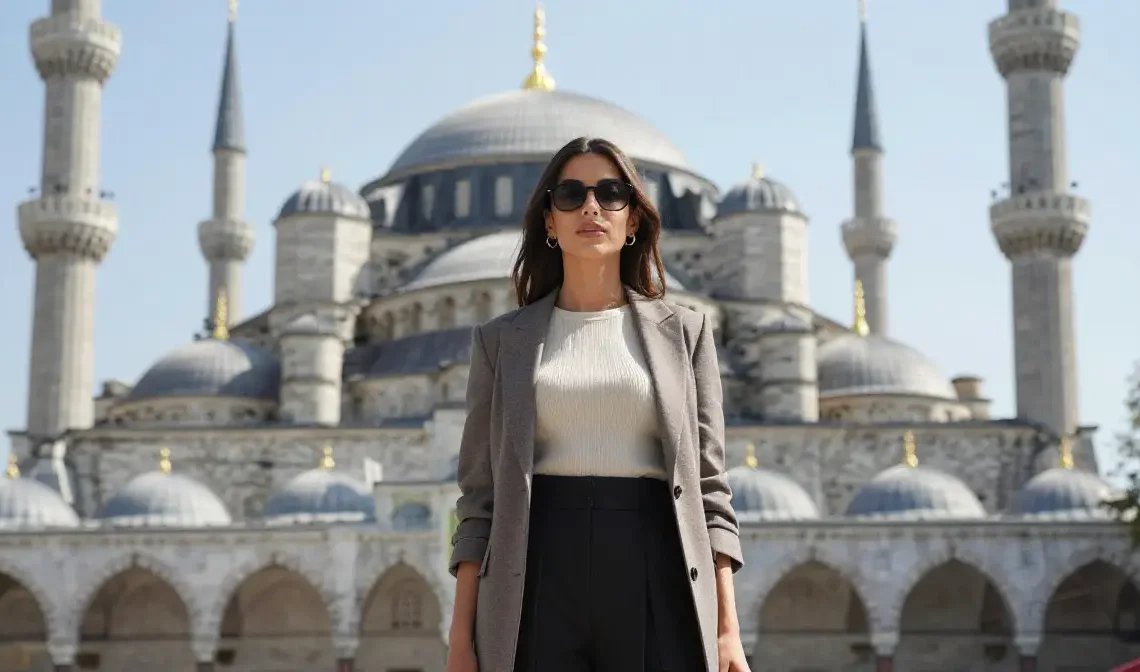
Packing for Turkey feels straightforward until you actually start. You need something modest for the Blue Mosque in the morning, comfortable walking shoes for Ephesus ruins by afternoon, and a put-together dinner outfit for a Bosphorus rooftop by evening — all from one carry-on.
Turkey covers an enormous range of climates, cultures, and dress expectations. Istanbul is a cosmopolitan city where modern fashion sits alongside conservative tradition. Cappadocia mornings are cold even in summer. The Aegean coast is beach-relaxed. Konya and Bursa are more conservative than the tourist trail suggests. One outfit approach does not cover all of it.
This guide gives you 22 outfits to wear when traveling Turkey — practical, stylish, and genuinely useful across every region and season. Whether you are visiting mosques, exploring Ephesus ruins, riding a Cappadocia hot air balloon, shopping the Grand Bazaar, or sitting down for dinner along the Bosphorus strait, you will find real outfit ideas here that actually work.
Why Dressing Right Matters When Traveling Turkey
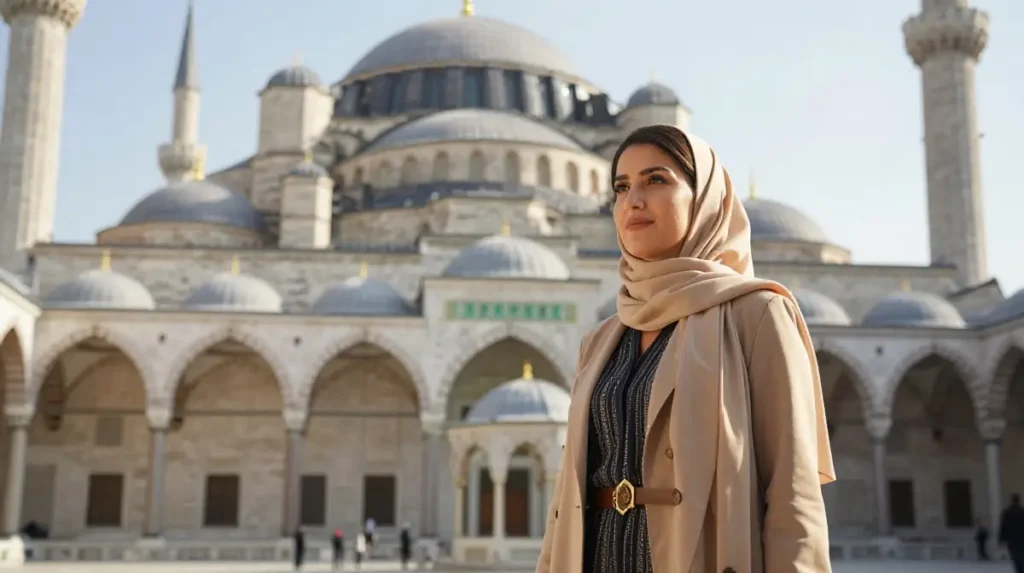
Turkey is a Muslim majority country with a wide spectrum of cultural attitudes toward dress. In resort towns like Bodrum and Antalya, Western clothing is completely normal. In cities like Konya, Bursa, and Trabzon, conservative dress is the everyday norm and visitors who ignore this draw unwanted attention.
Dressing appropriately is not about restriction — it is about moving comfortably through every part of the country without friction. A tourist in a tiny mini skirt at a mosque entrance creates an awkward situation for everyone, including themselves. The same person in a midi skirt with a scarf tucked in their bag moves through Istanbul, Cappadocia, and the coast without a single problem.
Turkey dress code for tourists comes down to three simple principles: cover your shoulders at religious sites, keep your knees covered in conservative areas, and always carry a scarf. Everything else is personal style
Turkey Dress Code for Tourists — The Basic Rules
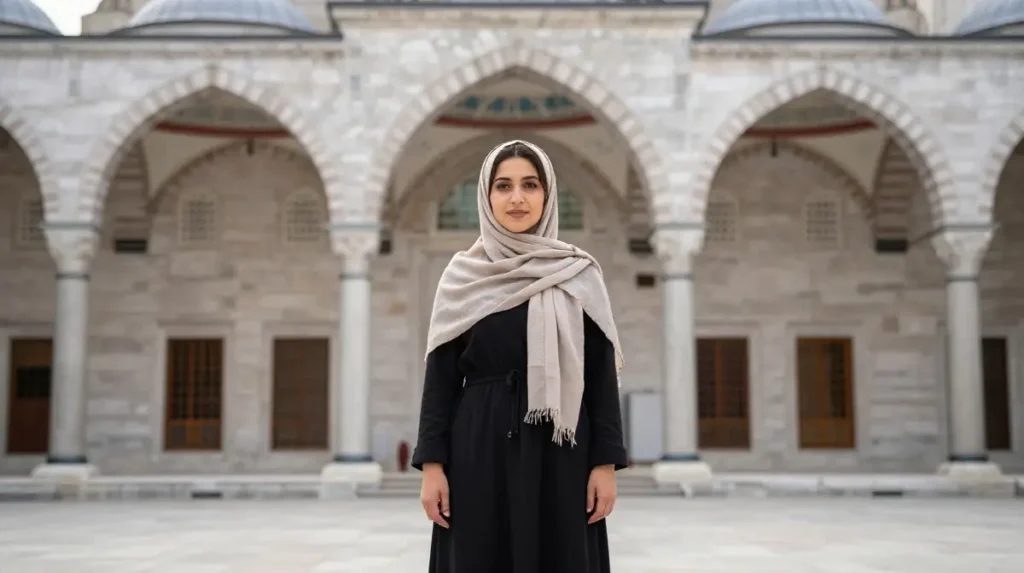
The formal rules only apply at active mosques and certain religious sites. At the Blue Mosque, Hagia Sophia, and Topkapi Palace, women must cover their hair, shoulders, and legs. Men must cover their legs if wearing shorts. Shoes are removed at mosque entrances — slip-on flats save significant time here.
Outside religious sites, the dress code is informal but worth understanding. In Istanbul’s tourist neighborhoods like Sultanahmet and Beyoglu, anything goes. In local residential neighborhoods, markets, and bus stations, modest outfits for Turkey attract less attention and more respect. In smaller inland cities, conservative dress is simply the local norm.
During Ramadan season, dressing more modestly across the board — even in tourist areas — is a genuine sign of cultural awareness. It costs you nothing and is appreciated. A loose blouse and midi skirt instead of a crop top and shorts is all it takes.
The One Item Every Turkey Traveler Must Pack
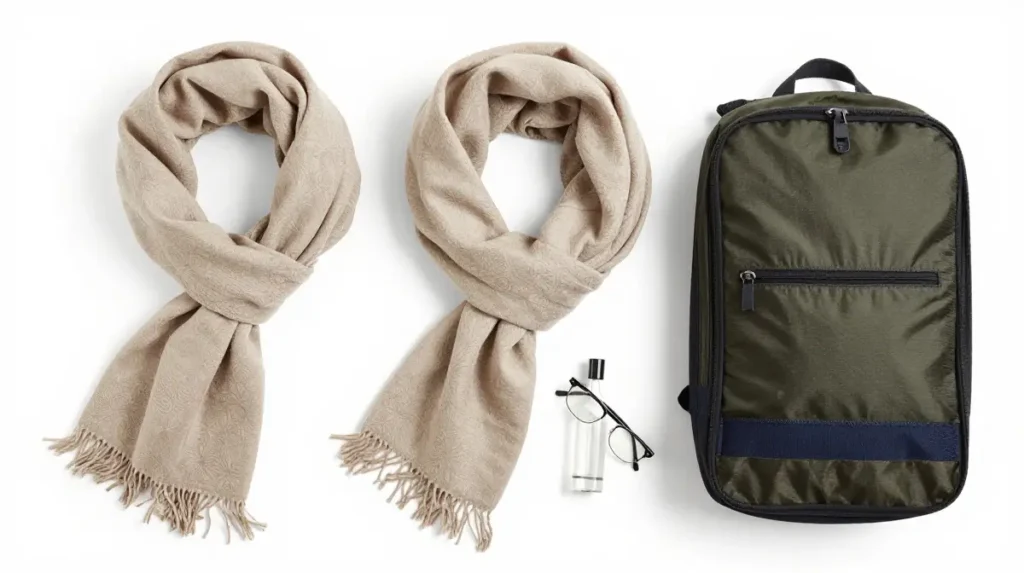
Every Turkey packing list clothes guide agrees on one item — a large, lightweight scarf. This single piece solves more outfit problems than any other item you can carry.
At mosque visits, it covers hair and shoulders instantly. On cool Cappadocia mornings, it adds a layer without bulk. At the beach, it works as a cover-up. In air-conditioned restaurants and buses, it keeps you warm. On dusty Ephesus ruins walks, it protects your neck from sun. One scarf does all of that.
Choose a cotton or linen scarf large enough to wrap around your head and shoulders. Neutral colors — beige, navy blue, olive green — coordinate with every outfit in your capsule wardrobe. Avoid very delicate fabrics that snag easily or very dark colors that absorb heat in summer. Keep it in your crossbody bag every single day so it is always accessible when you need it.
Turkey Summer Outfits for Hot Weather Days
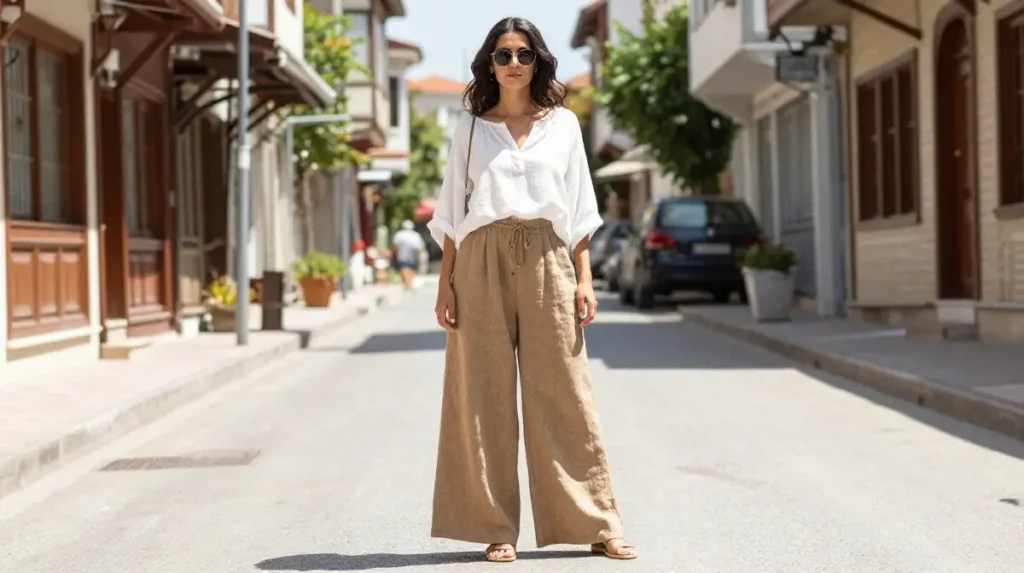
Summer along the Aegean coast and Mediterranean coast is genuinely intense. Bodrum and Antalya regularly exceed 35 degrees Celsius, and direct sun at Ephesus ruins or Pamukkale thermal pools feels even hotter. The wrong fabric choice ruins a full day of sightseeing.
Linen outfits travel best in Turkish summer heat. A linen shirt with wide leg pants in a neutral color — beige, white linen, olive green — stays cool, covers appropriately for cultural sites, and photographs well against Turkish architecture. For women, a loose cotton dress or midi skirt with a lightweight blouse covers the basics without adding heat.
SPF clothing, a sun hat — straw hat or wide brim style — and sunglasses are essential rather than optional in a Turkish summer. A refillable water bottle and a small crossbody bag rather than a heavy tote keep you mobile and comfortable across long sightseeing days.
Turkey Winter Outfits for Cold City Visits
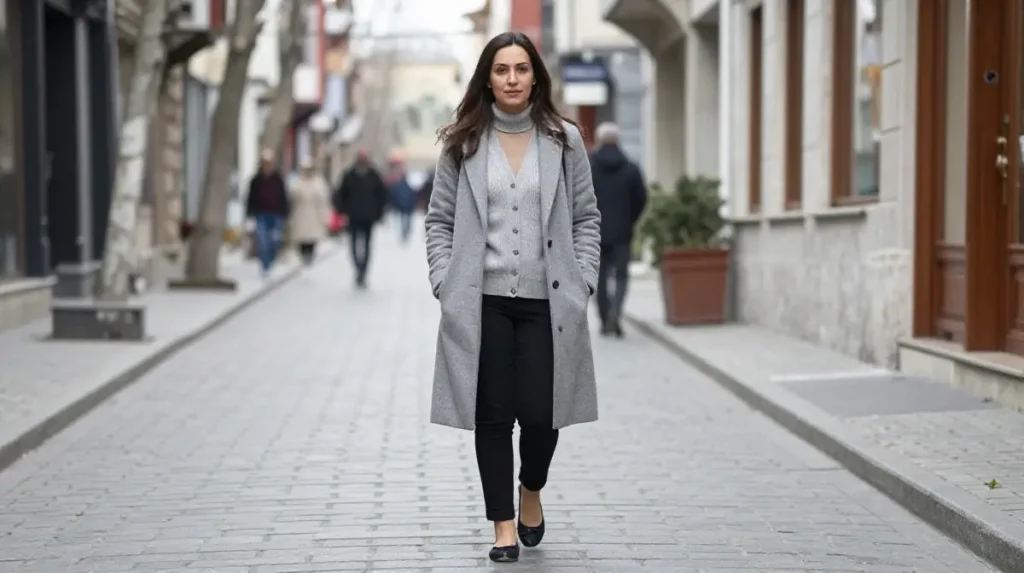
Istanbul in January is genuinely cold. Temperatures drop below five degrees and the wind off the Bosphorus makes it feel colder. Ankara gets real snow. Many visitors are surprised because they associate Turkey with warmth — the interior and northwest of the country tell a different story in winter.
A layering outfits approach works best. Start with a thermal base layer, add a light jacket or denim jacket, and carry a heavier coat for evenings and early mornings. Leggings under wider trousers add warmth without bulk. Flat shoes with grip handle wet Istanbul cobblestones far better than sandals or heeled boots.
The Aegean and Mediterranean coasts are milder — Izmir and Bodrum in February sit around fifteen degrees and need only a light jacket most days. If your Turkey winter trip covers multiple regions, pack for both the cold interior and the mild coast within the same capsule wardrobe.
Turkey Spring and Fall Transitional Outfits
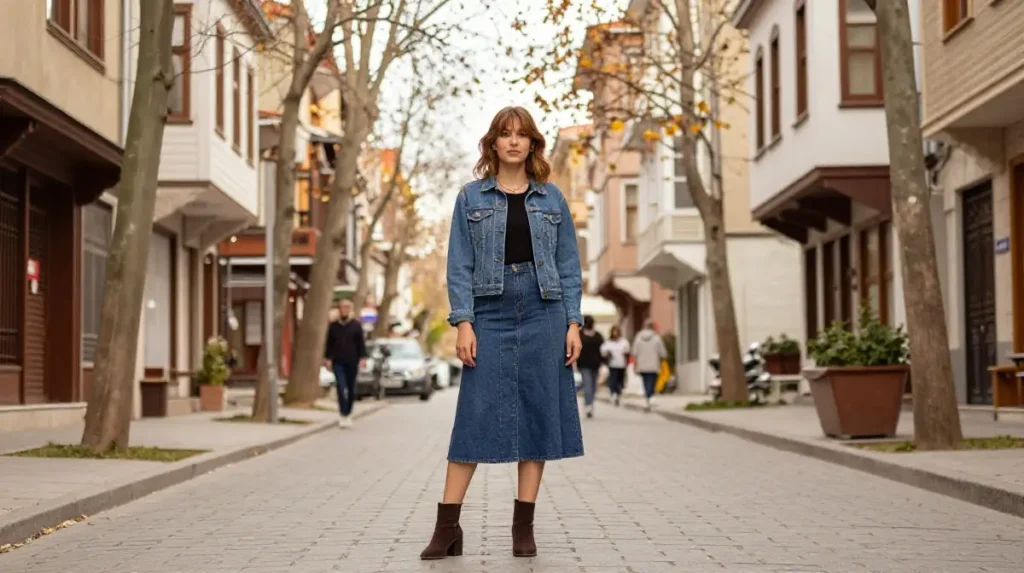
Spring and autumn are the most comfortable seasons for traveling Turkey and the easiest to pack for. Temperatures sit between fifteen and twenty-five degrees in most regions, and the weather changes enough between morning and evening to reward light layering without heavy coats.
A denim jacket or light cardigan over a loose cotton blouse, paired with wide leg pants or a midi skirt, handles spring weather across Istanbul, Cappadocia, and the coast. In autumn, the same combination with slightly warmer layers for evenings covers most situations. Both seasons see occasional rain in Istanbul — a packable rain layer takes up almost no space and solves a wet day instantly.
Spring is also wildflower season across Cappadocia and the Anatolian plateau. Earthy tones — burnt orange, olive green, dusty pink, beige — feel visually connected to the landscape and photograph beautifully against the region’s rock formations and blooms.
What to Wear in Istanbul for Sightseeing
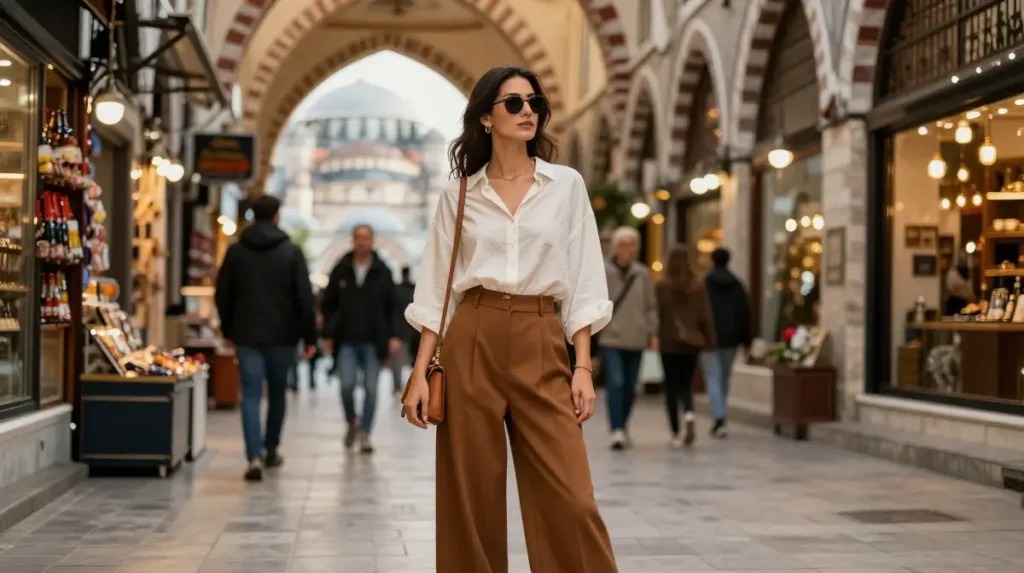
Istanbul sightseeing involves enormous amounts of walking across very different contexts in the same day. A morning at the Spice Bazaar, an afternoon at the Blue Mosque, and an evening along the Bosphorus strait each have their own character — your outfit needs to transition across all three without a wardrobe change.
For women, wide leg pants in a neutral color paired with a loose blouse and flat walking shoes covers every Istanbul scenario. Add a crossbody bag for security in busy market areas. Tuck your scarf in the bag for mosque visits and pull it out when needed. For men, chinos and a collared linen shirt with clean sneakers or loafers work all day — smart enough for evening without being uncomfortable during six hours of walking.
Turkey neutral color outfits work best in Istanbul. Beige, olive green, navy blue, and white linen coordinate easily, photograph well against the city’s architecture, and look considered rather than tourist-obvious.
Cappadocia Outfits for Balloon Rides and Valley Walks
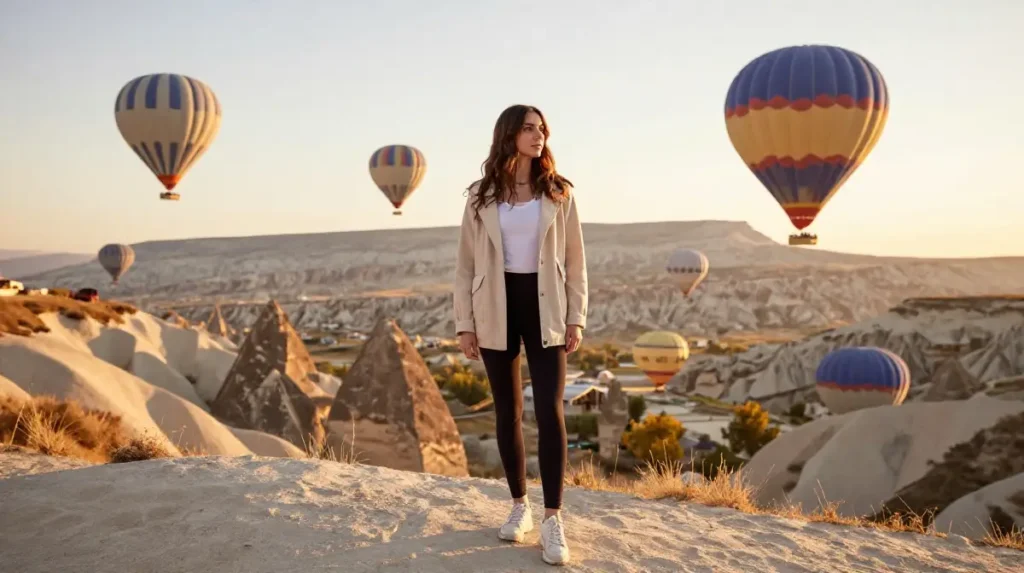
Cappadocia has specific outfit requirements that most travel guides skip entirely. Early mornings for Cappadocia hot air balloon rides are genuinely cold — temperatures at sunrise in the valleys can be ten degrees lower than midday. Your Turkey outfit for balloon ride needs layers that come off easily as the day warms up.
Start with leggings or slim trousers, add a long sleeve base layer, and carry a light jacket that packs into itself. Wear comfortable sneakers rather than sandals — the launch and landing sites are uneven terrain. A baseball cap keeps sun and dust away during the flight. Skip heavy bags — a small crossbody or jacket pockets hold everything you need in the air.
For valley walks and cave hotel exploration, the boho aesthetic suits the landscape naturally. A flowing midi skirt in earthy tones, a loose cotton blouse, and flat sandals photographs beautifully against the fairy chimney rock formations. Bring a light cardigan — cave interiors stay cool regardless of outside temperature.
Turkey Beach and Coastal Outfits for Women
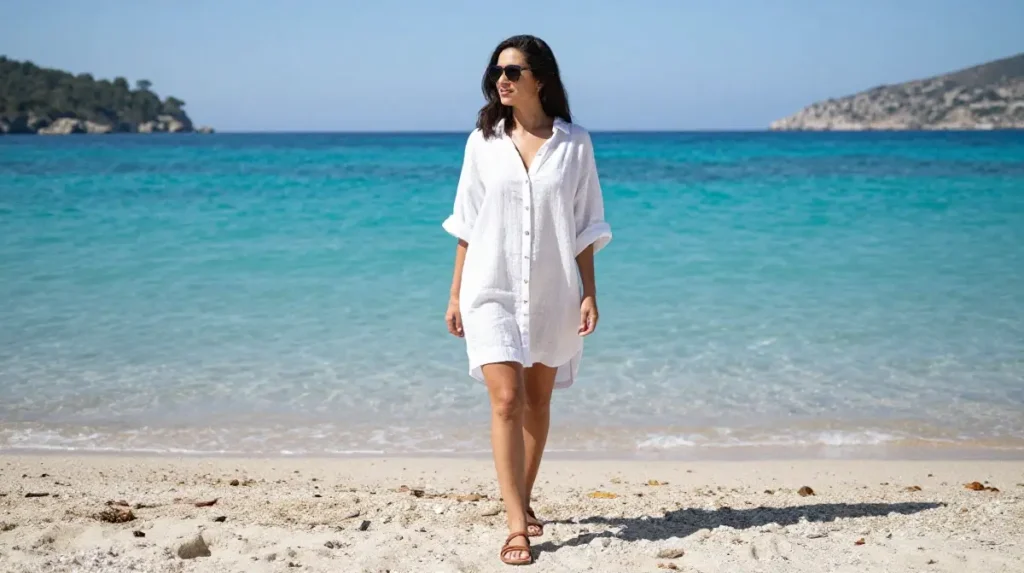
The Turkish Riviera — Bodrum, Antalya, and the Aegean coast — is relaxed about beach attire in designated resort areas and on private beaches. Swimsuits and bikinis are completely appropriate on resort beaches and hotel pools.
Away from resort areas and on public beaches, modest swimwear and a cover-up are more appropriate. A cotton dress or linen trousers over a swimsuit moves easily between the beach and nearby restaurants or local markets without a full outfit change. A tote bag large enough for a towel, sunscreen, and water handles beach days better than a small crossbody.
For a Turkey outfit for boat tour, quick-dry linen shorts or lightweight pants paired with a simple top work practically. Bring a light layer for the return journey — sea breezes cool quickly after sunset. Flat sandals with grip are safer on boat decks than flip flops or wedges.
What to Wear Visiting Mosques in Turkey
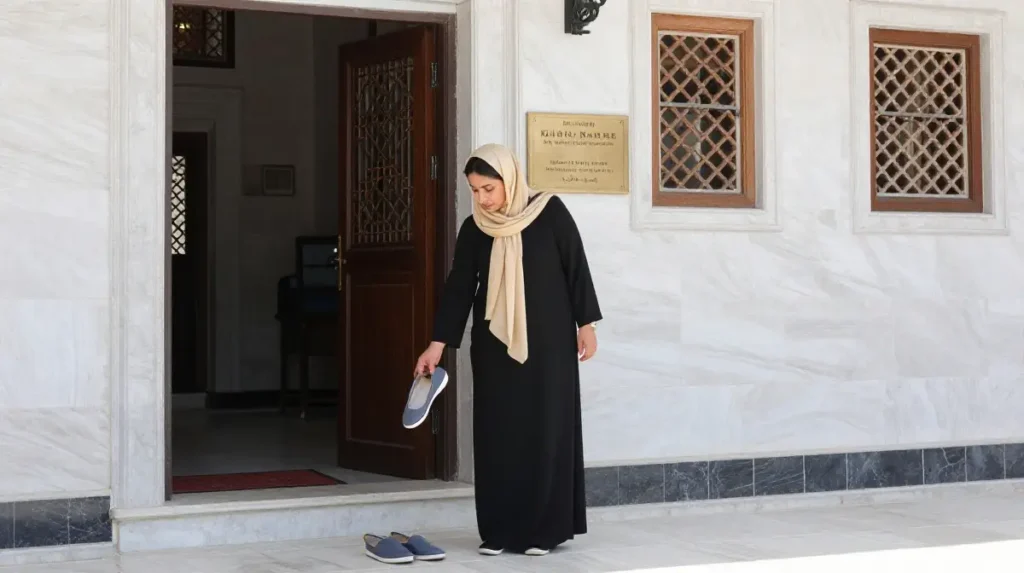
Mosque visits require specific preparation beyond general modesty. At the Blue Mosque, Hagia Sophia, and other active mosques, shoes are removed at the entrance. Women must cover hair, shoulders, and legs. Men must cover legs if wearing shorts.
Slip-on flat shoes make the shoe removal process fast and easy — laced sneakers at a busy mosque entrance with a queue behind you creates unnecessary stress. A maxi dress or midi skirt that already covers the legs removes the need for a separate wrap at the entrance. Keep your headscarf accessible in your bag rather than packed at the bottom.
Many mosques provide loaner scarves at the entrance, but quality and availability are inconsistent. Carrying your own is always more reliable. If you are visiting multiple mosques in one day — a common Istanbul itinerary — your own scarf saves time and feels more comfortable than a borrowed one.
Turkey Evening and Dinner Outfits
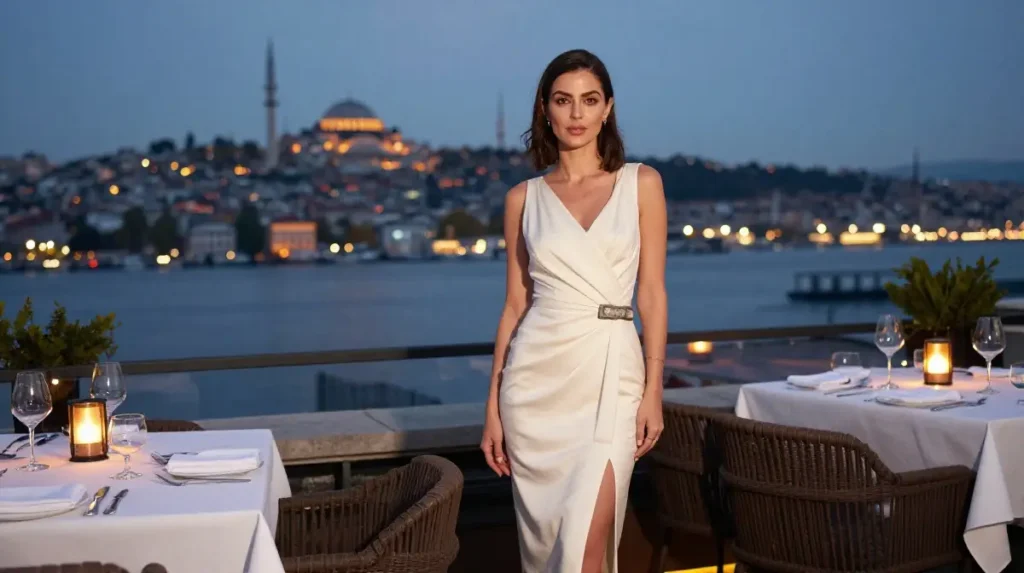
Turkey evenings — particularly in Istanbul, Bodrum, and Antalya — range from casual waterfront restaurants to rooftop dining with views of the Bosphorus strait. Most venues are smart casual at most, which means you do not need formal clothing in your bag.
For women, a simple knit top or relaxed blouse paired with slim trousers or a midi skirt works for most Turkey evening outfits. A lightweight layer for the walk home handles cool evenings without needing a heavy coat. For men, chinos or dark jeans with a collared shirt covers everything from a casual kebab restaurant to a rooftop dinner.
Footwear matters more than most people plan for. Clean flat shoes or simple loafers make a casual outfit feel intentional. Avoid arriving at a Bosphorus rooftop restaurant in dusty sneakers from a day of sightseeing — a quick change of shoes transforms the same outfit completely.
Comfortable Walking Outfits for Turkey Sightseeing
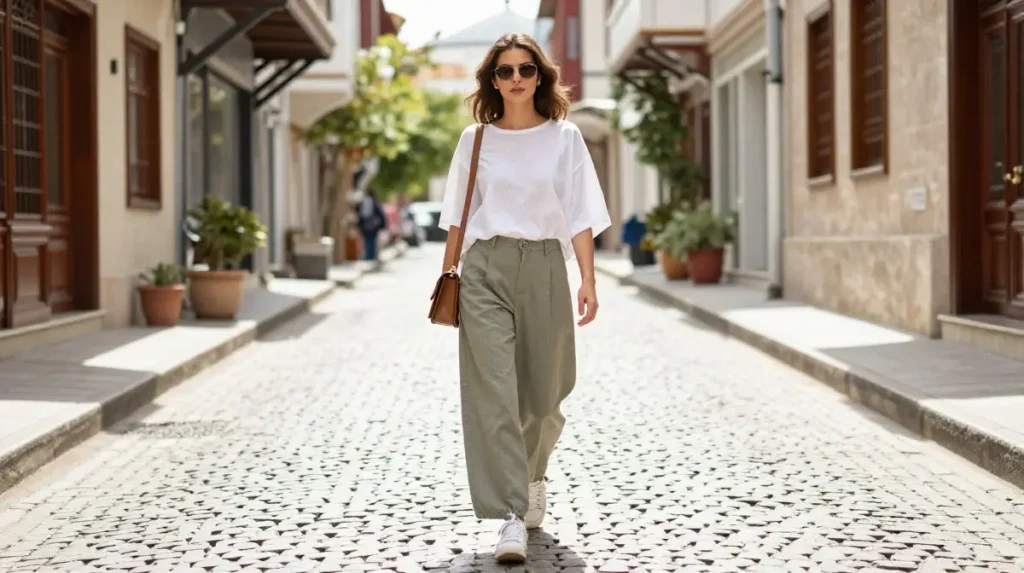
Turkey sightseeing involves between eight and fifteen kilometers of walking on an average day — across cobblestone streets in Istanbul, rocky paths at Ephesus ruins, dusty valleys in Cappadocia, and marble terraces at Pamukkale. Comfortable walking outfits Turkey need to handle all of it.
The foundation is footwear. Worn-in walking shoes or well-cushioned sneakers are non-negotiable for full sightseeing days. New shoes, sandals without support, or fashion trainers cause pain that affects the entire day. Bring a second pair of socks to change into at midday — a small habit that makes a real difference on a long walk.
For clothing, moisture-wicking fabric or natural linen keeps you comfortable in heat. Wide leg pants or loose trousers move freely across uneven terrain without restricting your stride. A lightweight tote bag or daypack distributes the weight of water, snacks, and a spare layer better than a heavy handbag on one shoulder
Modest Travel Outfits That Still Look Stylish
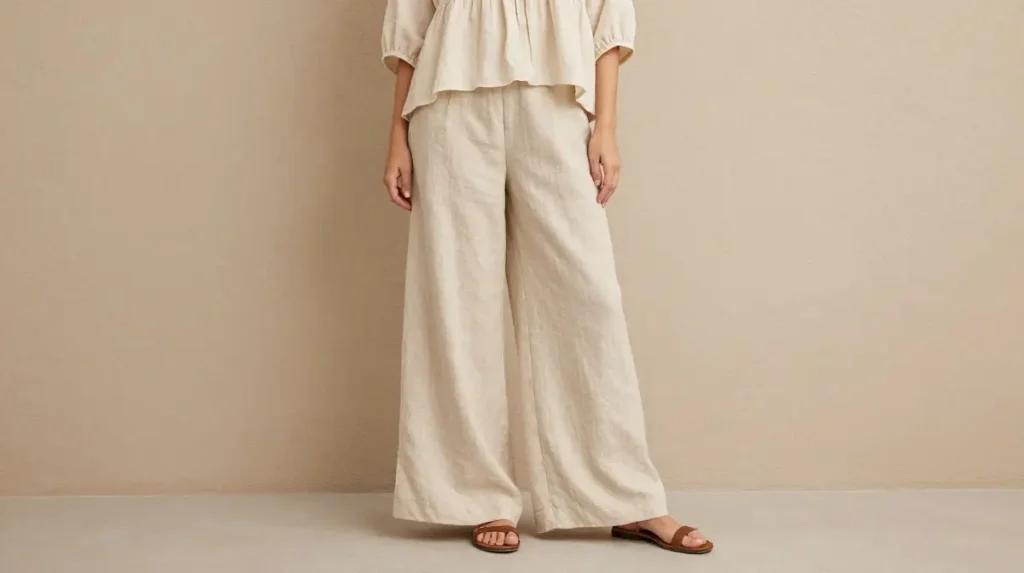
Modest dressing in Turkey does not mean sacrificing style. The best modest outfits for Turkey are built on relaxed silhouettes, quality fabrics, and a considered color palette — all of which photograph well and feel comfortable across a long travel day.
A wide leg linen trouser in beige or olive green paired with a loose silk-touch blouse and flat sandals is modest, stylish, and appropriate from mosque visits to bazaar shopping to evening dining. A maxi dress in a solid neutral color with a denim jacket covers shoulders, legs, and the transition from day to evening without any additional pieces.
The key is choosing pieces that feel like your own style rather than a costume. Modest does not mean shapeless or dull — it means thoughtful. A well-fitted midi skirt and a tucked linen shirt reads more confident and stylish than an ill-fitting maxi dress chosen purely for coverage.
Turkey Outfits for Pamukkale and Ephesus
Pamukkale thermal pools require barefoot walking across white calcium terraces. Wear slip-on sandals that come off in seconds, and bring a swimsuit if you plan to wade in the pools. A light cover-up or cotton dress works for moving between the pools and the viewing areas without a full change.
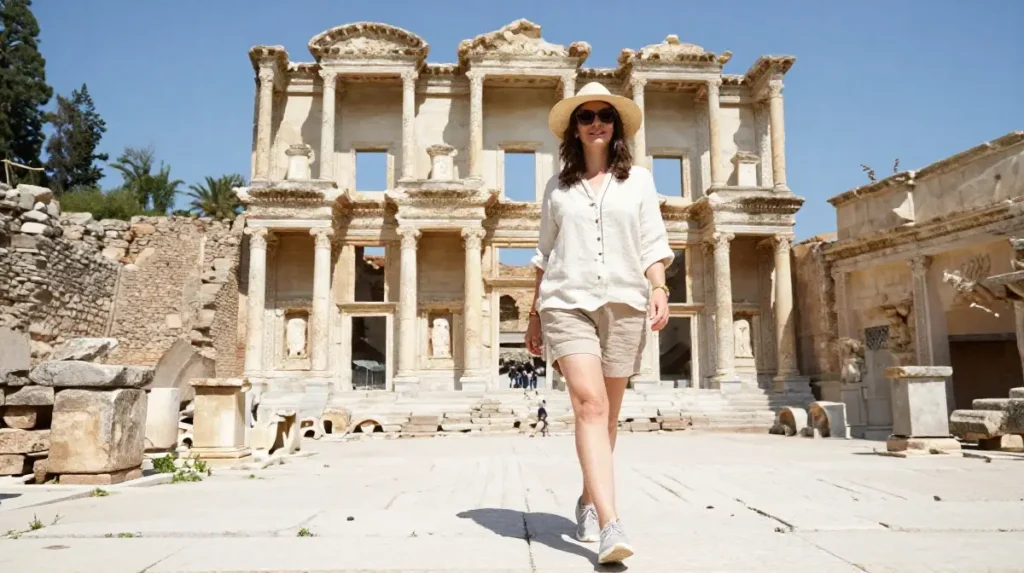
Ephesus ruins involve several hours of walking on ancient stone surfaces under direct sun. Comfortable walking shoes with grip are essential — sandals without ankle support will cause real pain within the first hour. A wide brim hat, sunglasses, and a refillable water bottle are not optional at Ephesus in summer heat.
Both sites involve significant outdoor walking in exposed areas. Lightweight breathable fabrics in neutral colors keep you comfortable without overheating. A long sleeve cotton top provides sun protection without the expense of dedicated SPF clothing if you prefer a simpler approach to sun safety.
Bodrum and Antalya Beach Resort Outfits
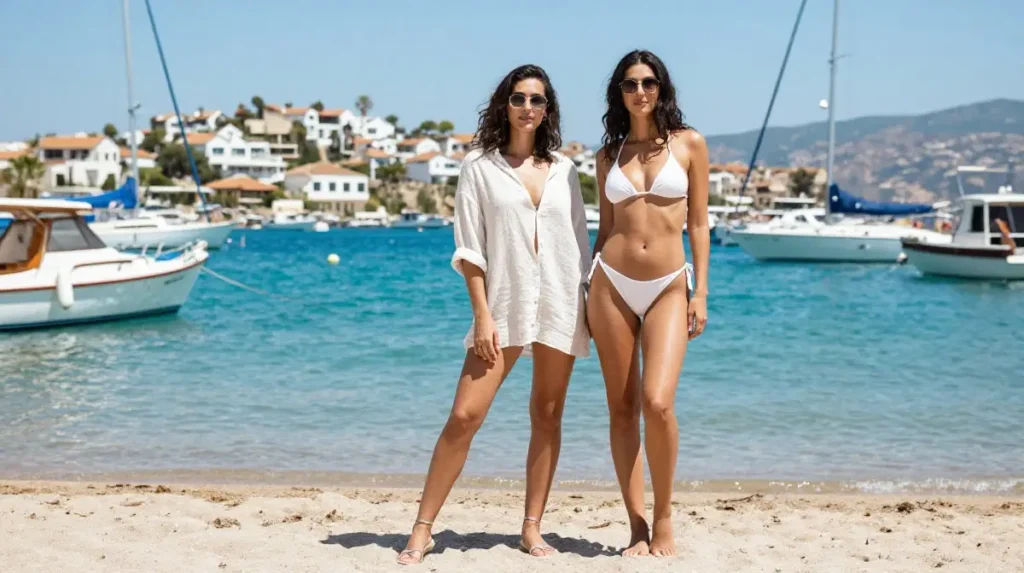
Bodrum and Antalya are Turkey’s most resort-oriented coastal cities and have a noticeably more relaxed attitude toward dress than the rest of the country. In the resort strips, marina areas, and hotel zones, standard Western beach attire is completely normal.
A swimsuit or bikini with a lightweight linen cover-up handles beach days, poolside mornings, and casual waterfront lunches without any changes. For evening in Bodrum’s marina area, a simple sundress or linen wide leg pants with a strappy top reads perfectly for the relaxed upscale atmosphere. Flat sandals or espadrilles suit the coastal setting better than sneakers.
Away from the resort zone — in Bodrum’s old town or Antalya’s historic Kaleici district — slightly more modest clothing is appropriate. The same linen trousers and loose blouse combination that works in Istanbul transitions easily to these areas without any additional packing.
Turkey Outfit for Boat Tour and Bosphorus Cruise
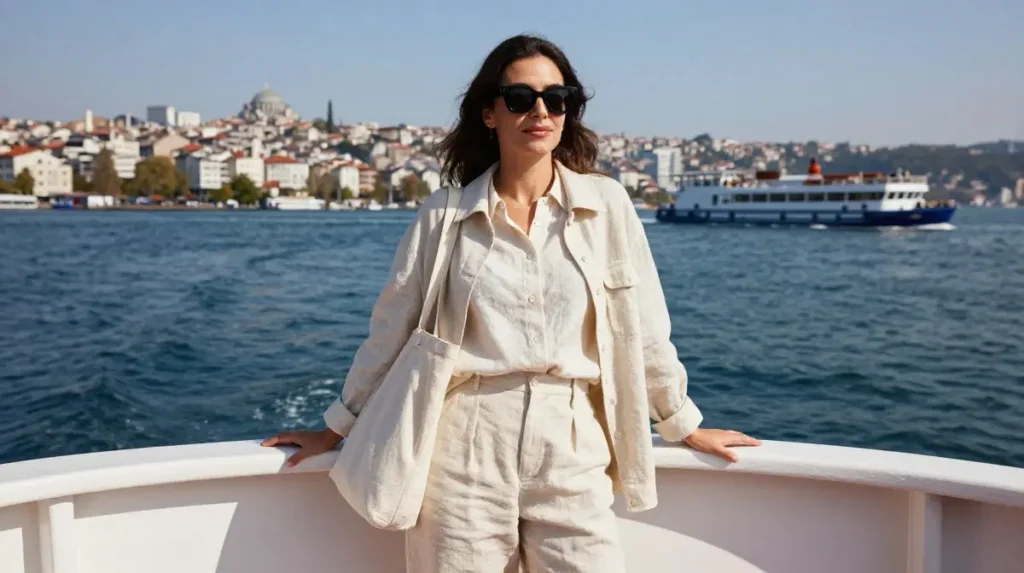
Boat tours along the Turkish Riviera and Bosphorus cruises in Istanbul both require specific outfit planning that most travelers overlook. Sun exposure on the water is more intense than on land — reflected light from the water doubles UV exposure. A long sleeve linen top or SPF clothing makes a full day on the water significantly more comfortable.
For a Turkish Riviera boat tour, quick-dry linen shorts or lightweight pants work practically alongside a simple top. Flat shoes or water sandals with grip are essential — boat decks get wet and slippery. Bring a light jacket in your tote bag for the return journey when temperatures drop after sunset even in summer.
For a Bosphorus cruise in Istanbul, the experience tends to be shorter and more sightseeing-focused. The same city outfit you wore exploring Istanbul works fine on the boat — just add a light cardigan for the breeze off the water and keep sunglasses and a hat accessible.
What Shoes to Wear in Turkey
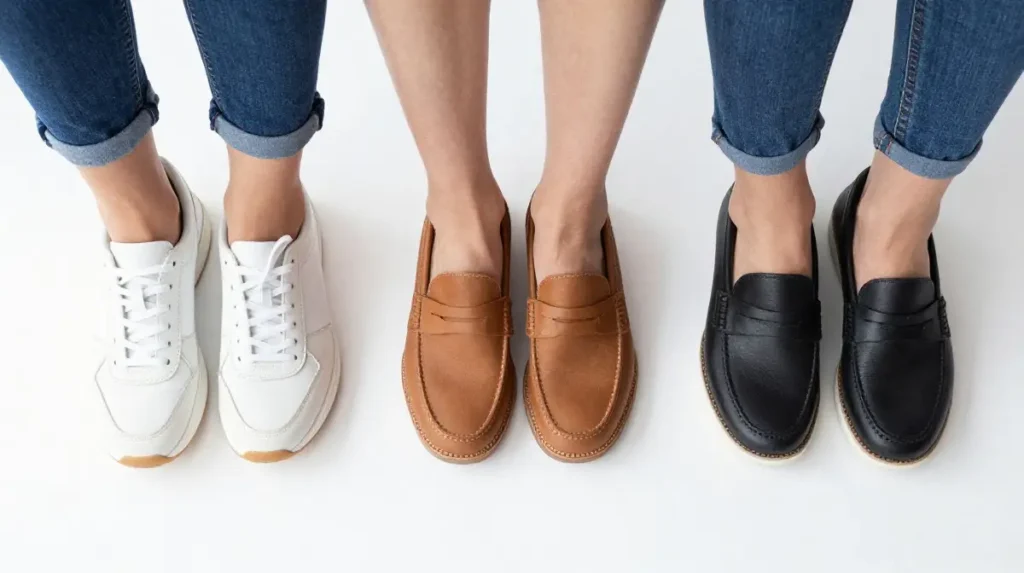
Footwear planning is one of the most underestimated parts of a Turkey packing list. The country demands a wide variety of terrains from the same pair of feet — cobblestone streets, ancient stone ruins, sandy beaches, boat decks, mosque entrances, and rocky valleys.
Three pairs cover most trips: comfortable walking shoes or well-worn sneakers for sightseeing days, slip-on flat shoes or loafers for mosque visits and evening dining, and sandals for beach days and coastal towns. More than three pairs adds weight without adding meaningful versatility.
Turkey shoes for travel should prioritize grip and comfort over appearance. The most common mistake is packing sandals as the primary walking shoe. They work for casual days but fail completely at Ephesus, Cappadocia valleys, and Istanbul’s steeper streets. Worn-in walking shoes that feel comfortable for eight hours standing are the single most important footwear decision you make before this trip.
Turkey Outfit Colors and Fabrics That Work Best
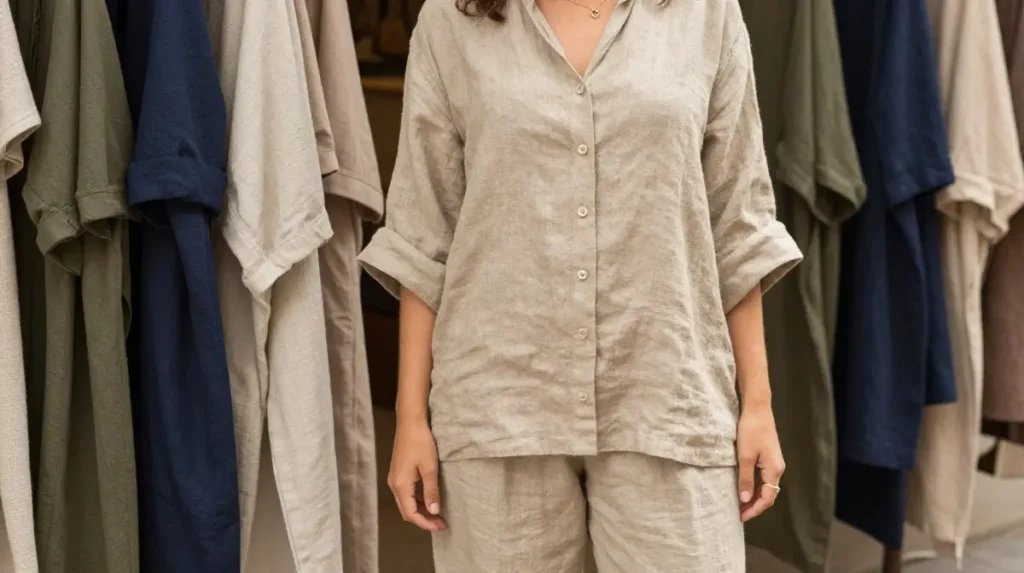
Fabric choice affects comfort more than style in Turkey. Linen and cotton breathe naturally in summer heat, pack without heavy creasing, and dry quickly after washing — essential for trips longer than seven days. Synthetic fabrics trap heat and feel uncomfortable by midday in coastal summer temperatures.
Neutral colors and earth tones dominate the most successful Turkey travel wardrobes. Beige, olive green, navy blue, white linen, camel, and dusty pink coordinate easily with each other, show dust and dirt less obviously than bright whites, photograph beautifully against Turkish architecture and landscapes, and feel appropriate across both casual and cultural settings.
Avoid very light colors for full sightseeing days — dust at Ephesus and Cappadocia shows immediately on pale fabrics. Avoid very dark colors in summer heat — they absorb significantly more sun. Mid-tone neutrals are the practical sweet spot for both comfort and appearance across a full Turkey trip.
Turkey Travel Capsule Wardrobe — Mix and Match Guide
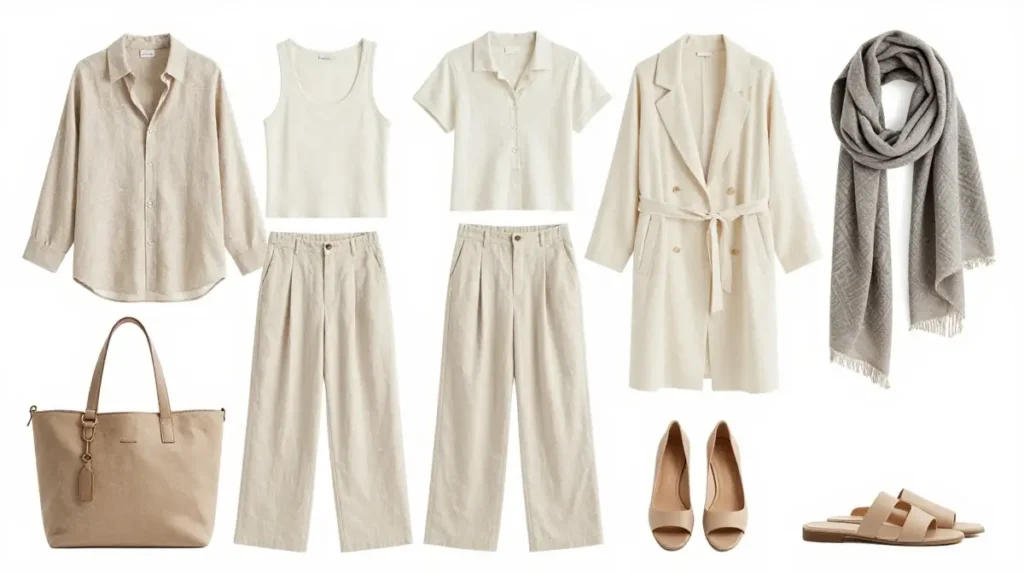
A Turkey travel capsule wardrobe built around ten versatile pieces gives you more outfit combinations than a suitcase packed with twenty single-use items. The principle is simple — everything coordinates with everything else, so you never pack something that only works with one other item.
Core pieces for women: two pairs of wide leg pants or linen trousers in different neutral tones, two midi skirts, three to four loose tops in coordinating colors, one cardigan, one denim jacket or light jacket, a scarf, walking shoes, flat sandals, slip-on flats, a crossbody bag, and a tote bag. That foundation covers every scenario in this guide with room for personal additions.
For men: two pairs of chinos or linen trousers, one pair of shorts for coastal days, three to four collared shirts and casual tops, one light jacket, walking shoes, sandals, and clean loafers. Turkey mix and match outfits built this way mean you never stand in front of your suitcase confused about what to wear — every piece works with every other piece.
Turkey Packing List — 7 to 10 Day Essentials
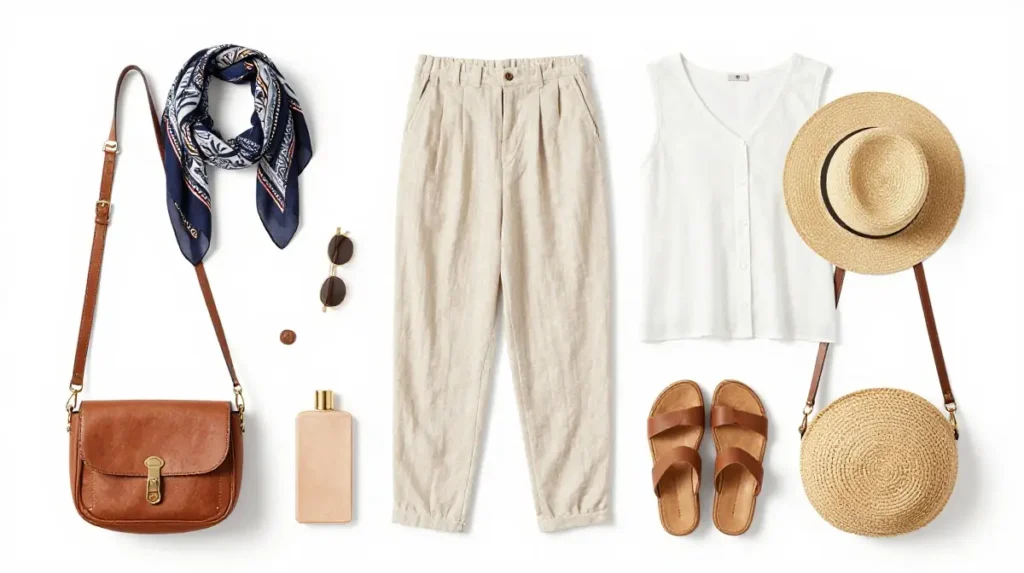
A practical Turkey 7 day packing list covers these items without overpacking: two pairs of wide leg pants or linen trousers, two midi skirts or cotton dresses for women, three to four lightweight tops in neutral colors, one cardigan or light jacket, one warmer layer for cooler regions or evenings, a large lightweight scarf, comfortable walking shoes, flat sandals, slip-on flats, a crossbody bag, a tote bag, sunglasses, and a sun hat or straw hat.
Travel packing cubes keep everything organized and make finding items easy without unpacking the whole bag. Roll linen and cotton pieces rather than folding them to minimize creasing and save space. Keep your scarf and a spare top accessible at the top of your bag for quick changes between sites.
For a Turkey 10 day packing list, add one extra casual outfit, a smarter evening option if your itinerary includes upscale dining, and a swimsuit with cover-up for coastal stays. The capsule wardrobe principle keeps even a ten-day trip manageable in a single carry-on if you choose pieces that genuinely coordinate.
Common Turkey Tourist Outfit Mistakes to Avoid
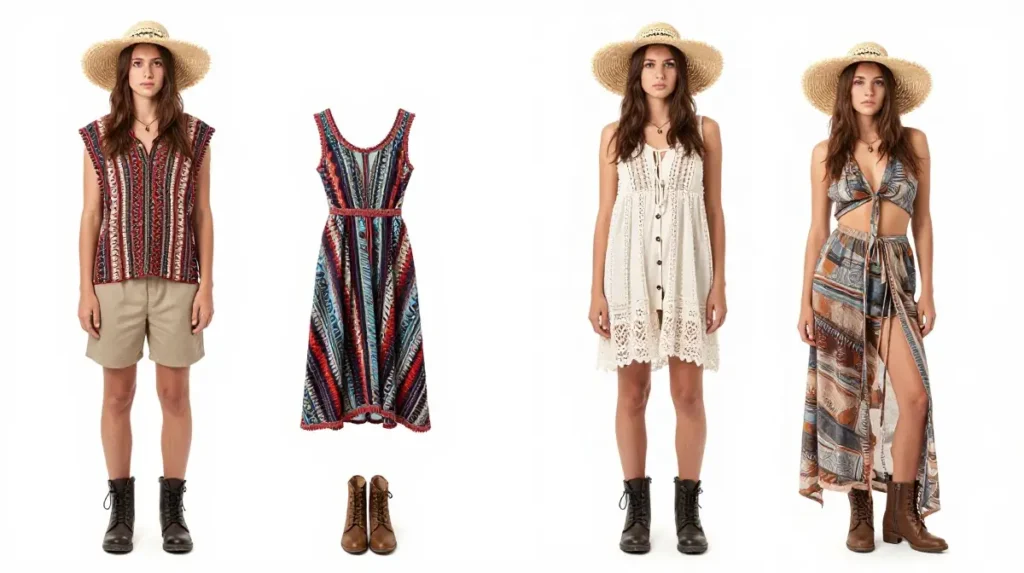
Very short shorts and sleeveless tops at religious sites is the most common and avoidable mistake. It creates problems at mosque entrances, draws attention in conservative areas, and is simply unnecessary when lightweight modest alternatives are just as comfortable in the heat. The solution is to wear longer pieces as your default and keep revealing items for beach days only.
Bringing only sandals is the second most frequent regret. Istanbul cobblestones, Cappadocia valleys, and Ephesus ruins all demand proper walking shoes. Sandals work for coastal towns and casual evenings but fail on a full active sightseeing day. Sore feet by noon ruins the afternoon regardless of how good the itinerary looks.
Overpacking is the third mistake. Turkey travel wardrobe essentials are versatile neutrals that mix together — not a different outfit for every activity. Ten coordinated pieces serve a ten-day trip better than twenty mismatched items. Leave space in your bag for local market shopping — the Grand Bazaar and Spice Bazaar are too good to come home empty-handed.
Budget Friendly Turkey Travel Outfit Ideas
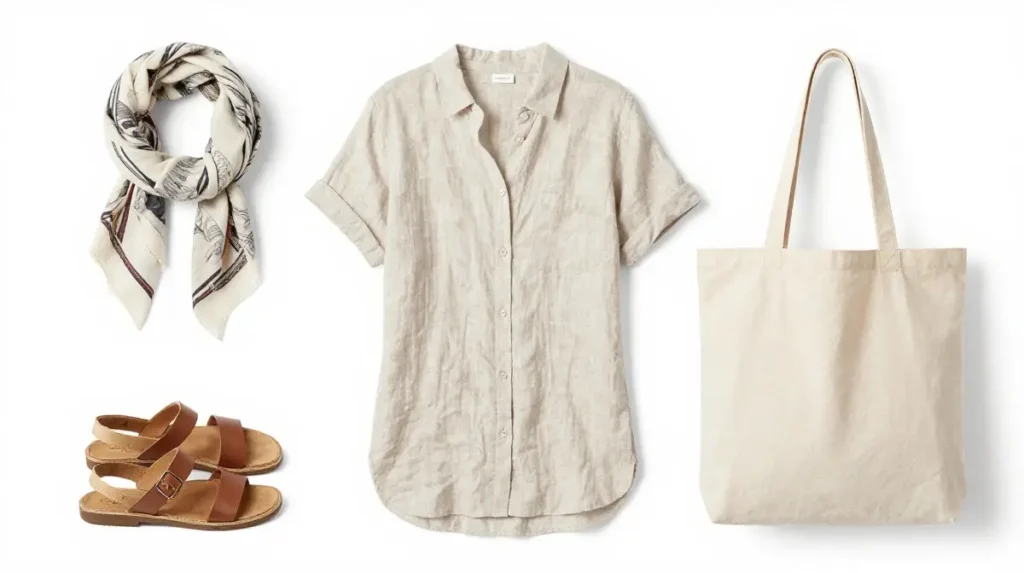
Looking good in Turkey does not require expensive wardrobe purchases. Most of the best Turkey travel outfits are built from basics that many people already own — wide leg pants, loose cotton tops, a simple midi skirt, a denim jacket, and a large scarf. If you do not have these, high street stores carry all of them at accessible prices.
Turkey budget travel outfits work on the same capsule principle as higher-budget wardrobes — neutral colors, natural fabrics, pieces that coordinate. A ten-piece wardrobe from a budget high street retailer in linen and cotton performs just as well in Istanbul heat as a designer equivalent. Fabric and fit matter more than brand.
Local market shopping in Turkey is also genuinely affordable. The Grand Bazaar and covered markets in most Turkish cities sell lightweight scarves, cotton tops, and linen trousers at prices that make buying something locally a practical option if you realize mid-trip that you packed the wrong things.
CONCLUSION
Dressing well for Turkey comes down to a few reliable principles that apply regardless of your personal style, budget, or itinerary. Breathable fabrics handle the heat. Neutral colors coordinate across every outfit. Modest cuts work at religious sites and casual settings without switching outfits. One good scarf solves every situation it does not already cover.
The visitors who enjoy Turkey most are the ones who packed thoughtfully rather than heavily — a small capsule wardrobe of versatile pieces that moves easily between Istanbul’s historic neighborhoods, Cappadocia’s valleys, the coastal beaches, and an evening Bosphorus dinner. When your outfit is comfortable, appropriate, and genuinely yours, you stop thinking about what you are wearing and start actually experiencing one of the most remarkable countries in the world.
You can may also like this: 22 Easy Winter Camping Meals Ideas for Warm Outdoor Food
FAQS
Do I have to cover my hair everywhere in Turkey
No. Hair covering is only required when entering active mosques. Outside of mosque visits, there is no general requirement for women to cover their hair anywhere in Turkey, including in conservative cities like Konya and Bursa. Carrying a scarf in your crossbody bag gives you instant coverage when needed without affecting the rest of your day. In resort areas like Bodrum and Antalya, headscarves are rarely seen on tourists outside religious sites.
Can I wear shorts in Turkey
Shorts are acceptable in coastal resort areas, on beaches, and in casual parts of major cities. They are not appropriate at mosque visits, cultural sites, or in more conservative inland regions. Lightweight linen trousers or wide leg pants are a better default for sightseeing days because they work everywhere without requiring a change. Keep shorts specifically for beach days and resort areas where they genuinely suit the setting.
What shoes are best for Turkey travel
Comfortable walking shoes or well-worn sneakers are essential for Istanbul, Ephesus, and Cappadocia where uneven terrain and long walking distances are standard. Slip-on flat shoes speed up mosque visits where shoes are removed at entrances. Sandals work well for coastal and beach days. Avoid bringing only sandals — you need at least one proper walking shoe to cover active sightseeing days comfortably.
What colors work best for Turkey travel outfits
Neutral colors and earth tones — beige, olive green, navy blue, white linen, and camel — are the most practical choices. They coordinate easily with each other, photograph well against Turkish architecture and landscapes, and feel appropriate across both casual and cultural settings. A capsule wardrobe built in neutral tones gives you more outfit combinations from fewer pieces than a mixed color selection.
Is Turkey safe for solo female travelers in terms of dress
Turkey is generally safe for solo female travelers and modest dress plays a practical role in moving comfortably through all parts of the country. Loose covered outfits attract less unwanted attention in busy tourist areas and cultural sites. This does not mean dressing restrictively — it means choosing pieces that are both modest and genuinely your own style. Most solo female travelers find that a neutral capsule wardrobe with a scarf, wide leg pants, and loose tops lets them move freely and confidently across every region of Turkey
1 Comment