
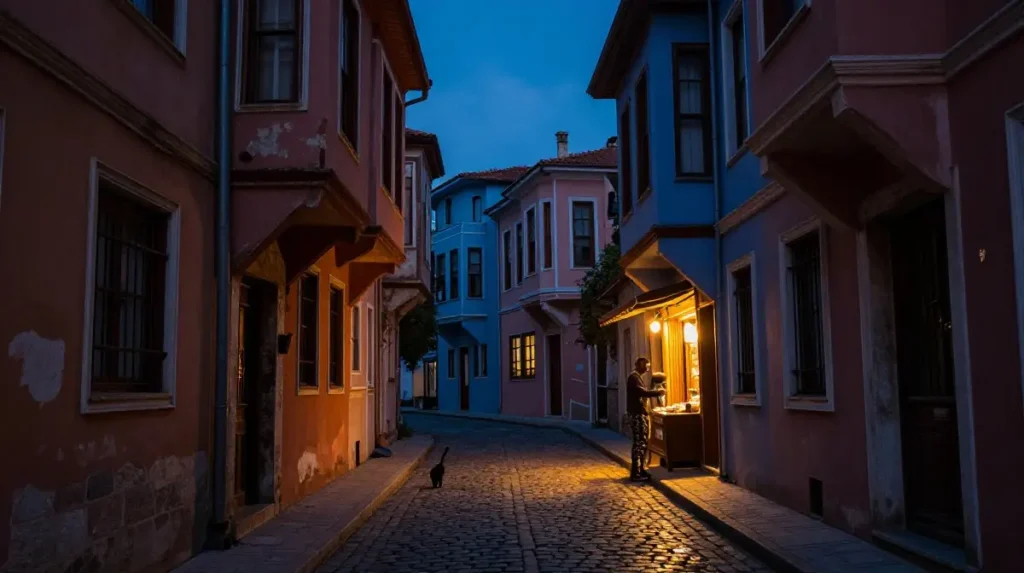
The country that exists beyond the postcard circuit is something genuinely different. It’s a civilization layered so densely — Hittite beneath Greek beneath Roman beneath Byzantine beneath Ottoman beneath modern — that every square kilometer of this land carries more human history than most entire countries can claim. Turkey travel rewards the curious in ways that few destinations anywhere in the world can match and it punishes the incurious with a pleasant but fundamentally shallow experience.
Istanbul — The City That Exists Between Two Worlds and Belongs to Neither
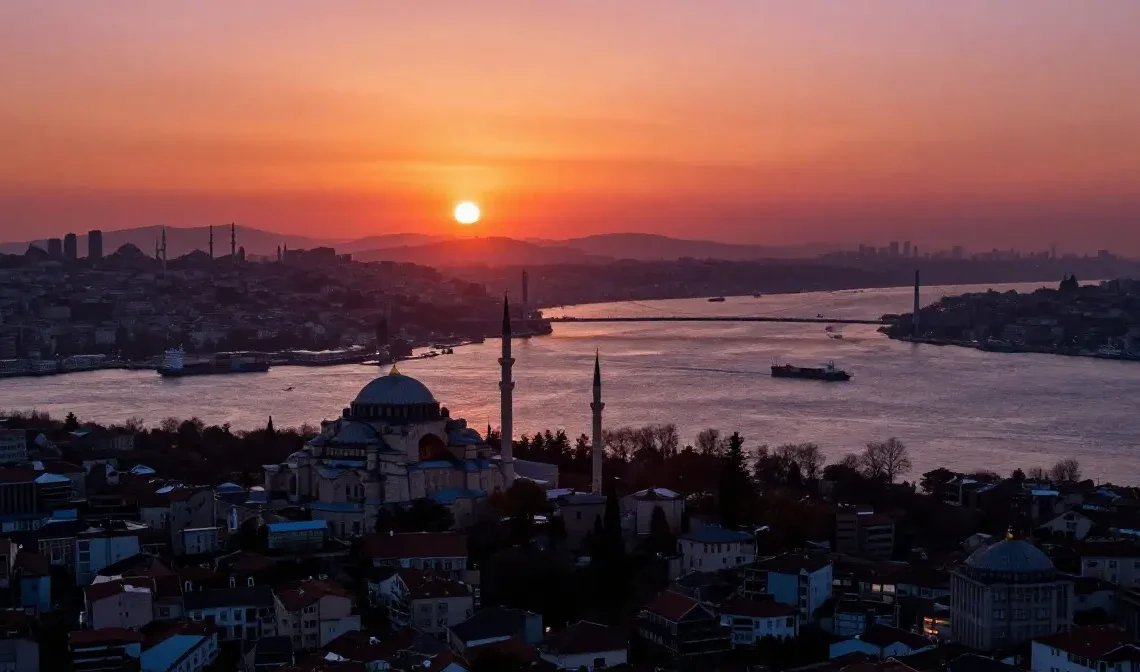
No city on earth carries Istanbul’s particular weight. It sits physically across two continents and that geography isn’t just cartographic — it’s psychological. The Istanbul travel experience hits differently from the moment the Bosphorus appears below your plane. Europe is behind you. Asia is ahead. And Istanbul belongs entirely to itself.
Turkish cultural immersion travel begins the instant you step into Sultanahmet and feel centuries pressing against you from every direction. The Blue Mosque Istanbul and Hagia Sophia Istanbul stand within walking distance of each other — one built to surpass the other, both succeeding on terms the original architects never imagined. Turkey travel photography spots don’t get more dramatic than this skyline at golden hour when minarets catch the last light above the Bosphorus.
Cappadocia’s Surreal Landscape Will Rewire the Way You See the Earth
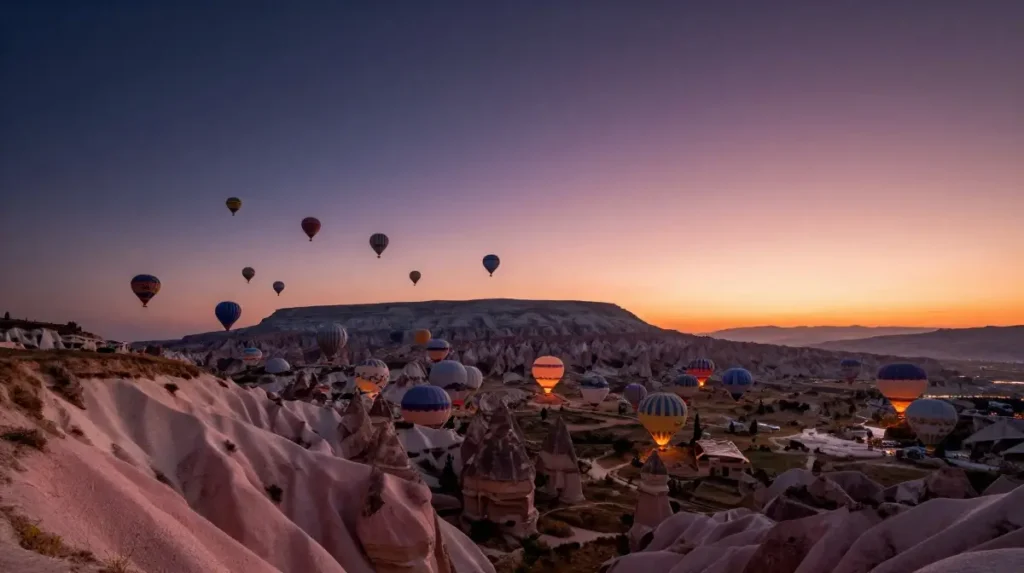
Cappadocia Turkey looks like a planet that forgot to finish forming. Volcanic eruptions millions of years ago deposited thick ash that compressed into soft rock — tuff — and wind and water carved that rock into towers, cones and chimneys that early Christians later hollowed into entire underground cities. Nothing prepares you for seeing it in person. Photographs genuinely fail this landscape.
Goreme National Park sits at the center of the region and contains fairy chimneys, rock-cut churches with Byzantine frescoes still intact and cave hotels carved directly into the geological formations. Turkey travel hidden gems exist throughout Cappadocia beyond Goreme — the Ihlara Valley, the underground cities of Derinkuyu and Kaymakli, the pottery town of Avanos where artisans use clay from the Red River using techniques unchanged for millennia. Cappadocia balloon travel experience is the defining moment of any visit here.
Turkey Travel Unlocks a Civilization Trail 10,000 Years in the Making
Few countries carry human history as densely as Turkey does. Anatolian heritage tourism covers more civilizational layers than most travelers can process in a single trip — Hittites, Phrygians, Lydians, Greeks, Romans, Byzantines, Seljuks, Ottomans and the modern Turkish Republic all left permanent marks on this landscape. You’re not visiting one history here. You’re visiting a dozen stacked on top of each other.
Turkey UNESCO sites travel currently includes 21 designated World Heritage sites with more under consideration — a density of recognized significance that places Turkey among the top heritage destinations globally. Troy ancient site Turkey, Ani ruins Turkey and Aspendos Roman Theatre represent just three nodes in a civilization trail that stretches from the Aegean coast to the Armenian border. Turkey travel history isn’t background context here — it’s the primary attraction.
The Aegean Coast Holds Ruins So Perfect They Feel Like Staged Illusions
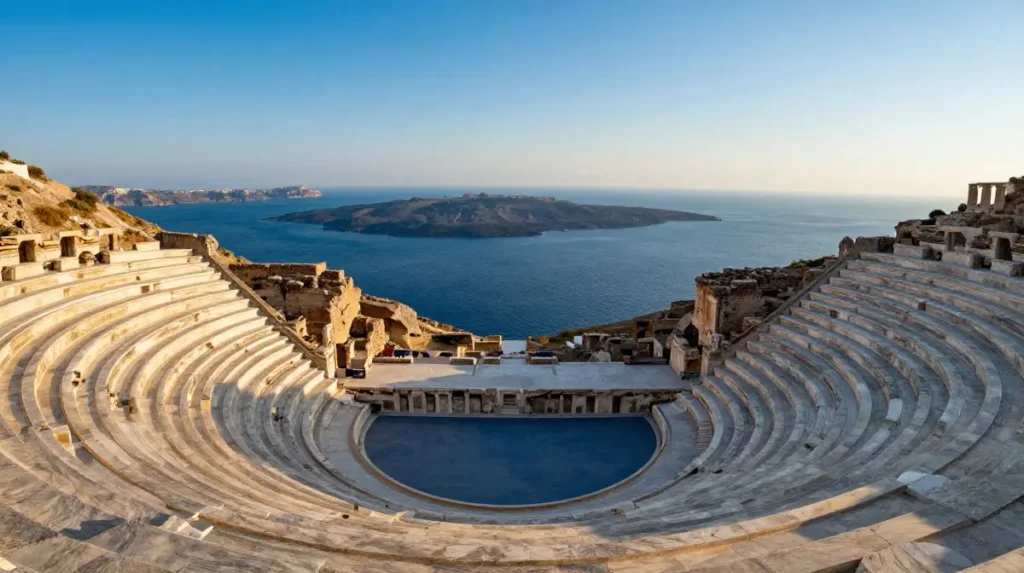
The Aegean coast travel Turkey route between Izmir and Bodrum contains an archaeological density that Northern European travelers find genuinely disorienting. Ancient Greek and Roman cities don’t sit in isolated museum contexts here — they emerge from hillsides, appear above beaches and interrupt agricultural land with columns and carved stone that locals have simply built their lives around for generations.
Izmir Turkey tourism serves as the natural gateway to this coastal archaeological corridor. Ephesus ancient city is the obvious centerpiece but the broader region contains Priene, Miletus, Didyma and dozens of lesser-known sites where you’ll walk among extraordinary ruins without another tourist in sight. Turkey travel aegean islands offer day-trip access to Greek islands from Bodrum and Cesme adding an international maritime dimension to the coastal Turkey travel itinerary.
Pamukkale’s Cotton Castle — Nature’s Architecture at Its Most Theatrical
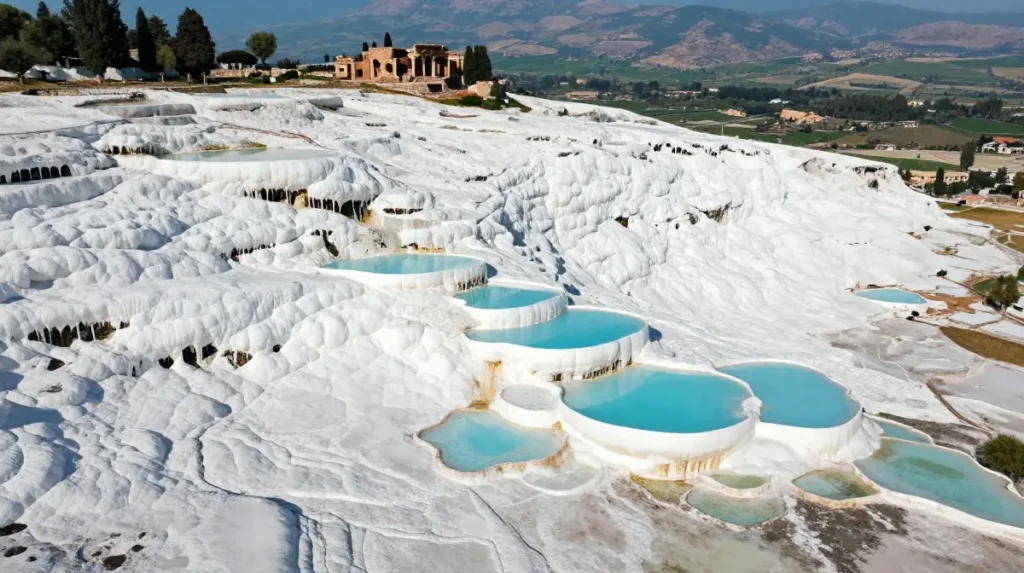
Pamukkale thermal pools create one of the genuinely impossible-looking landscapes on earth. Calcium-rich thermal water has been cascading down this hillside for millennia depositing white travertine terraces that pool at every level — the effect from a distance is a frozen white waterfall covering an entire hillside. Pamukkale thermal travel rewards visitors who arrive early before midday crowds drain the visual magic from the scene.
The hilltop behind the terraces contains ancient ruins Turkey tourism at its most dramatically situated — Hierapolis, a Greco-Roman spa city whose inhabitants came here for the same thermal waters visitors enjoy today. The necropolis at Hierapolis is one of the best-preserved in the ancient world. Turkey travel pamukkale visit combines natural wonder with archaeological substance in a way few destinations anywhere manage — nature and history occupying the same spectacular stage simultaneously.
The Grand Bazaar Is a Living City Hidden Inside Istanbul’s Oldest Walls
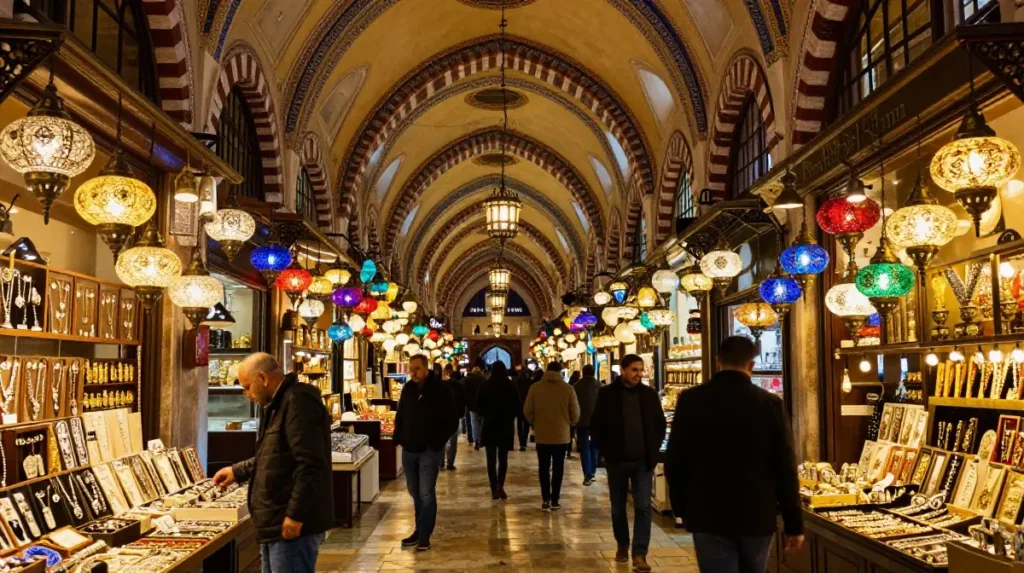
Grand Bazaar Istanbul contains 61 covered streets, more than 4,000 shops and approximately 250,000 visitors on a busy day — making it one of the most visited attractions on earth and one of the most overwhelming first-time experiences in any city. But overwhelming and unrewarding are very different things. Navigate beyond the tourist perimeter and the Bazaar reveals itself as a genuine working market where Istanbullus shop alongside visitors.
Turkish bazaar culture tourism requires a particular approach — slow down, accept tea when offered, wander without agenda. The best Turkish carpet tradition tourism experiences happen in smaller shops away from the main corridors where dealers with genuine expertise will unroll pieces and explain provenance without pressure to buy. Turkey travel cultural experiences reach their most concentrated form inside these walls where commerce, culture, history and social life have coexisted continuously since 1461.
Turkey Travel Through the Lens of Food — a Cuisine That Refuses to Be Simplified
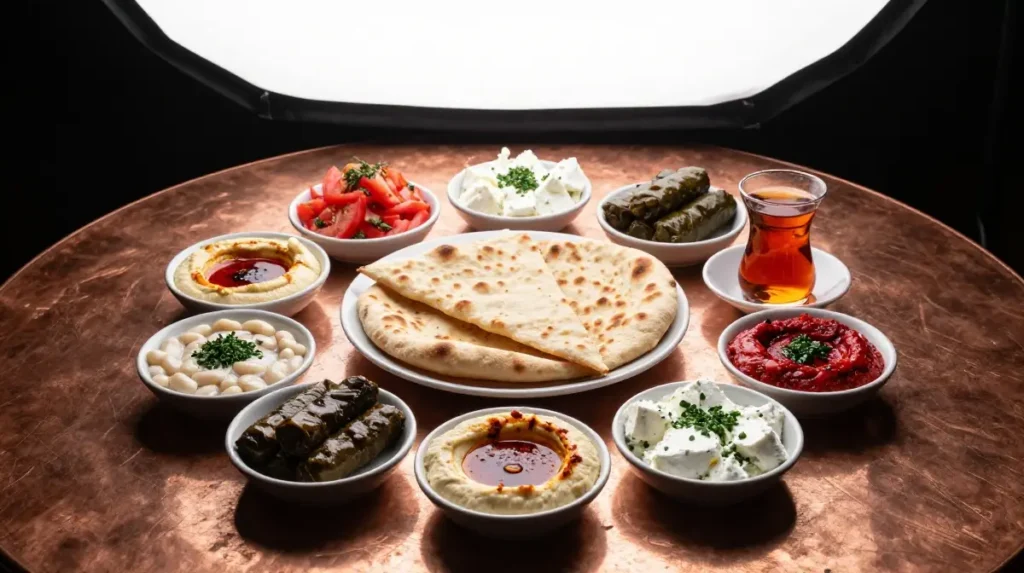
Turkish cuisine travel discovery confronts you with a culinary tradition that absorbed influences from Central Asia, the Middle East, the Mediterranean, the Balkans and the Caucasus across centuries of empire — then synthesized them into something entirely its own. Turkish food isn’t fusion. It’s the original. Every dish carries a geography and a history that rewards curiosity beyond the menu description.
Turkey travel food and cuisine stretches far beyond kebab — a word that covers dozens of distinct preparations varying dramatically by region. Southeastern Turkey near Gaziantep produces what many food scholars consider the finest cuisine in the country — baklava with local pistachios, liver kebab, katmer flatbread and dishes carrying Arab, Kurdish and Ottoman influences simultaneously. Turkey travel halal food options are universally available and the broader food culture makes Turkey genuinely exceptional for travelers with diverse dietary requirements. Turkish tea culture travel is embedded in every social interaction — refusing tea is the only genuine cultural misstep a visitor can make.
Bodrum and the Turkish Riviera — Where Ancient Harbors Meet Modern Luxury
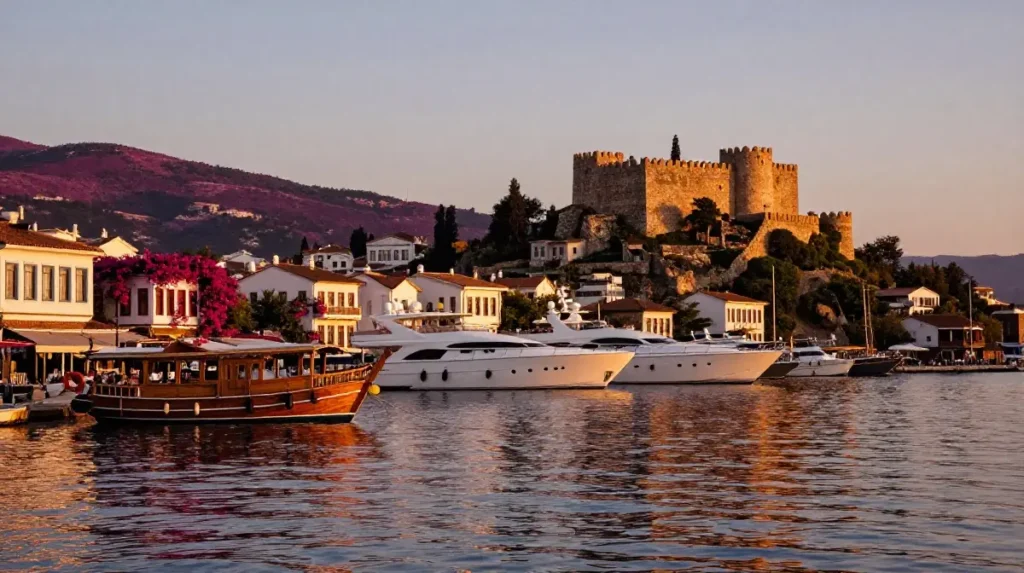
Bodrum Turkey travel occupies a unique position in the Turkish tourism landscape — simultaneously one of the country’s most ancient sites and its most glamorous contemporary resort destination. The town wraps around a natural harbor dominated by the 15th-century Castle of St. Peter and the site of the ancient Mausoleum of Halicarnassus — one of the Seven Wonders of the ancient world — sits just streets away from beach clubs playing electronic music until dawn.
you may also like this:22 Hawaii Vacation Ideas for Your Dream Island Getaway
Turkey travel luxury experiences reach their peak expression along the Bodrum Peninsula where boutique hotels carved into cliffsides, private gulet sailing charters and Michelin-caliber restaurants serve a clientele that includes European royalty, tech billionaires and Turkish cultural figures simultaneously. Marmaris Turkey coast and Alanya Turkey travel offer similar Mediterranean intensity at different price points — the Turkish Riviera accommodates every budget without sacrificing the quality of light, water and landscape that makes this coastline extraordinary.
Hagia Sophia and the Weight of a Building That Changed Human History
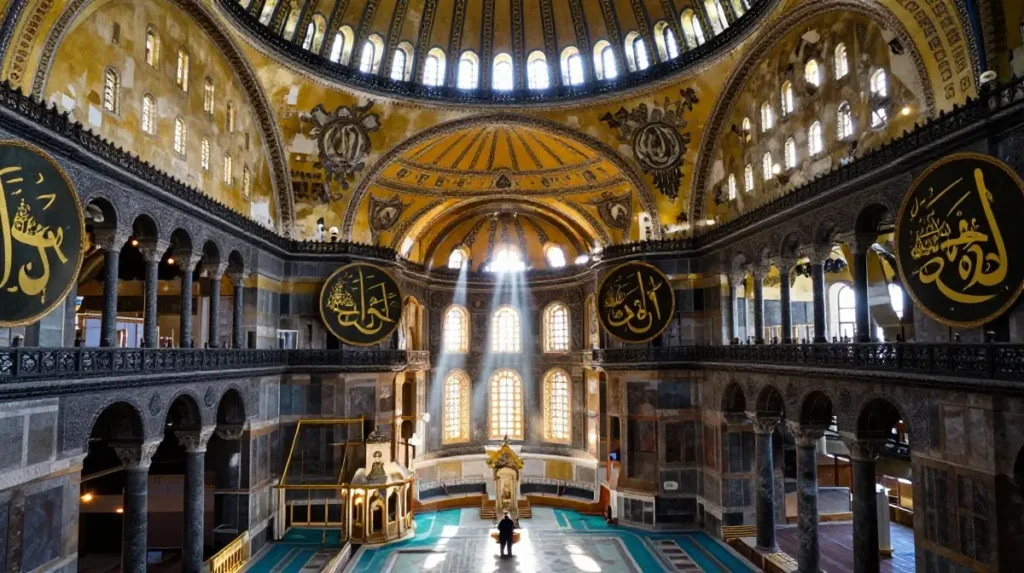
Hagia Sophia Istanbul is not simply a beautiful building. It’s an argument in stone and mosaic about the nature of heaven, power and human ambition — an argument that has been reformulated by every civilization that has controlled it since Emperor Justinian completed the original structure in 537 AD. Standing beneath its central dome you feel the weight of fifteen centuries of contested meaning pressing down from above.
Byzantine heritage Turkey tourism finds its defining monument here — the engineering achievement of the dome alone would be extraordinary but the layers of political and religious transformation visible in the building’s fabric make it genuinely irreplaceable as a historical document. Turkey UNESCO sites travel includes Hagia Sophia within the Historic Areas of Istanbul designation and Turkish architecture travel finds no more complex or significant single structure anywhere in the country. Arrive at opening time. The experience before crowds arrive is categorically different.
Ephesus Walks You Through a Roman City Frozen at Its Peak Moment
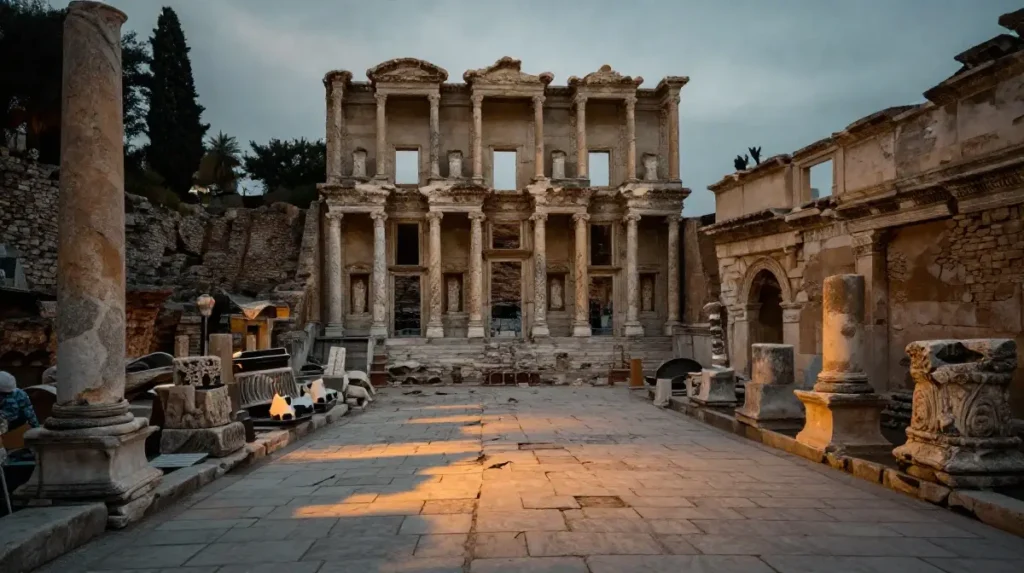
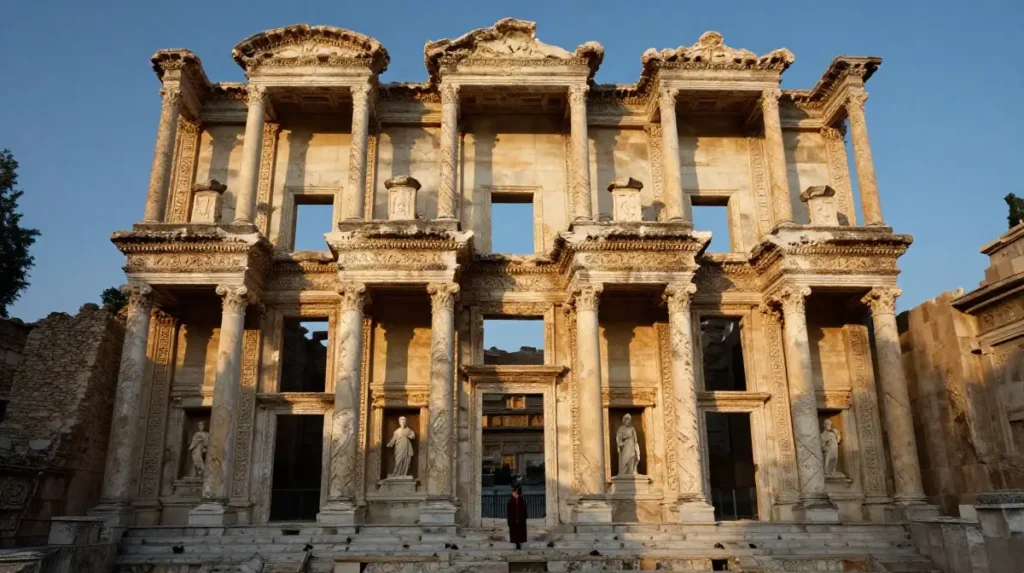
Ephesus ancient city was once the second largest city in the Roman Empire with a population approaching 250,000 people at its peak. Walking the marble-paved Curetes Street today — flanked by restored colonnades, temple facades and the extraordinary Library of Celsus at the lower end — you’re not imagining what a Roman city looked like. You’re standing in one that never fully disappeared.
Ephesus archaeological travel rewards preparation — understanding what you’re looking at transforms the experience from impressive ruins into a legible urban environment. The Terrace Houses above the main street contain some of the finest surviving Roman domestic interiors anywhere in the world — mosaic floors, frescoed walls and heating systems intact beneath protective roofing. Turkey travel ephesus ruins combined with a visit to the adjacent Izmir Turkey tourism museum where key artifacts are displayed creates the most complete Ephesus experience available.
The Hammam Ritual — a Turkish Bath That Rewires Your Relationship With Time
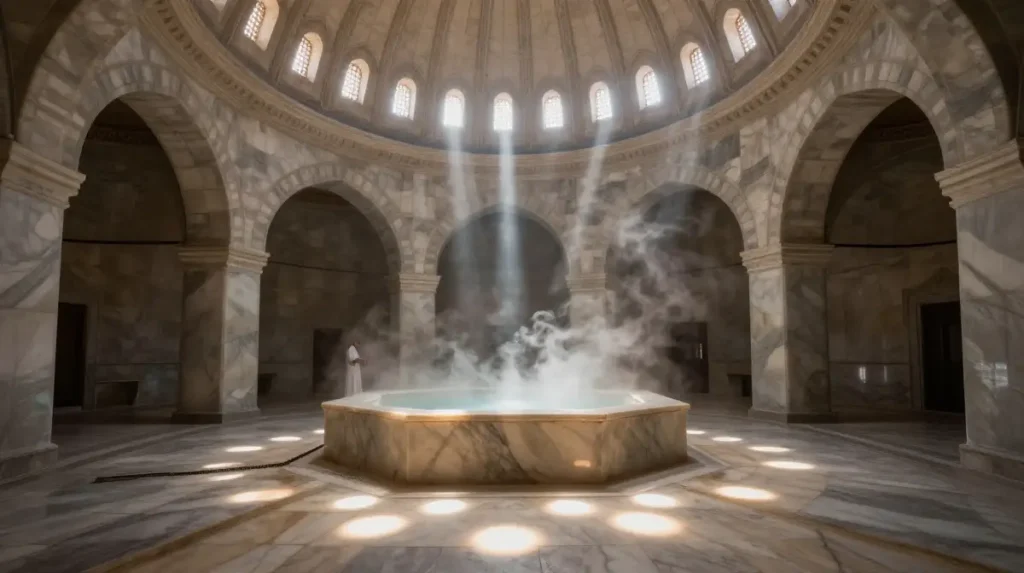
Turkish bath hammam experience operates outside normal tourist time. You arrive, surrender your clothes and your schedule simultaneously and enter a marble world where the only agenda is heat, water and the particular kind of bodily attention that Ottoman culture elevated into a social institution. A traditional hammam session takes approximately 90 minutes. It will feel like four hours in the best possible way.
Historic Istanbul travel experience includes several hammams operating continuously since the 16th century — Cagaloglu Hamami and Cemberlitas Hamami both served Ottoman sultans and serve visitors today within structures of extraordinary architectural beauty. The ritual follows a fixed sequence — steam room, marble slab heat absorption, vigorous kese exfoliation scrub, foam massage, cool water rinse. Turkish cultural immersion travel doesn’t get more viscerally authentic than lying on a 500-year-old marble platform while a tellak works tension from your shoulders with practiced efficiency.
Cappadocia at Sunrise From a Hot Air Balloon — Forty Minutes of Pure Transcendence
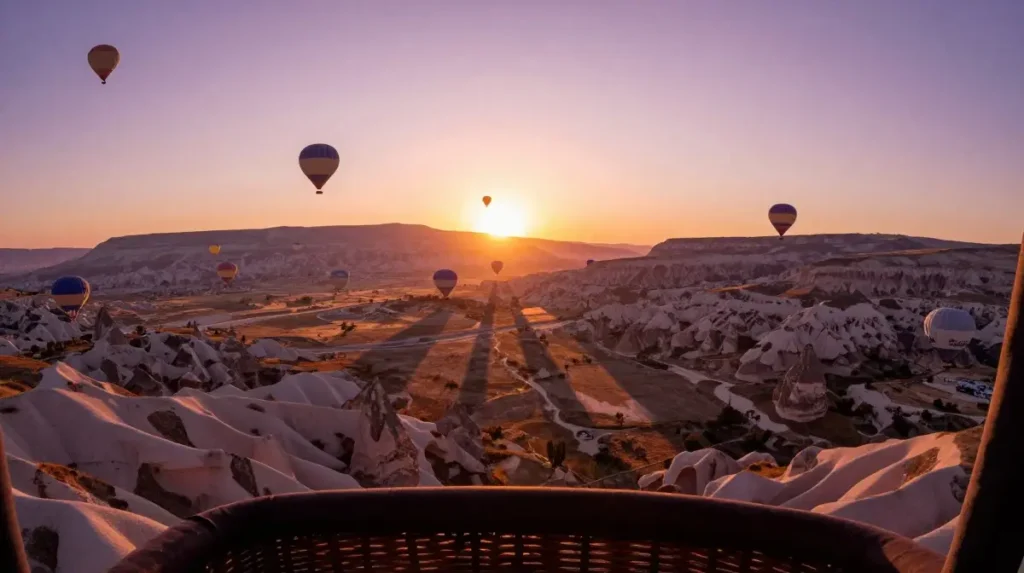
Cappadocia balloon travel experience is one of the few tourist activities anywhere in the world that genuinely delivers beyond its reputation. At 5:30 AM your balloon inflates on the plateau. By 6:00 AM you’re rising above the fairy chimneys as the sun clears the volcanic horizon and floods the valley with amber light. No photograph taken from the ground — or from another balloon — captures what you see from inside that basket.
Roughly 150 balloons launch from Goreme National Park on clear mornings creating a visual spectacle that is itself extraordinary from below before you even ascend. Flights run approximately 45 to 60 minutes and reputable operators maintain rigorous safety standards — turkey travel safety tips in Cappadocia always include booking only with licensed operators who carry full insurance and employ CAA or equivalent certified pilots. This experience books weeks ahead during peak season. Reserve before anything else in your turkey travel itinerary 2 weeks plan.
Hidden Turkey — Eleven Destinations That Exist Beyond the Tourist Trail
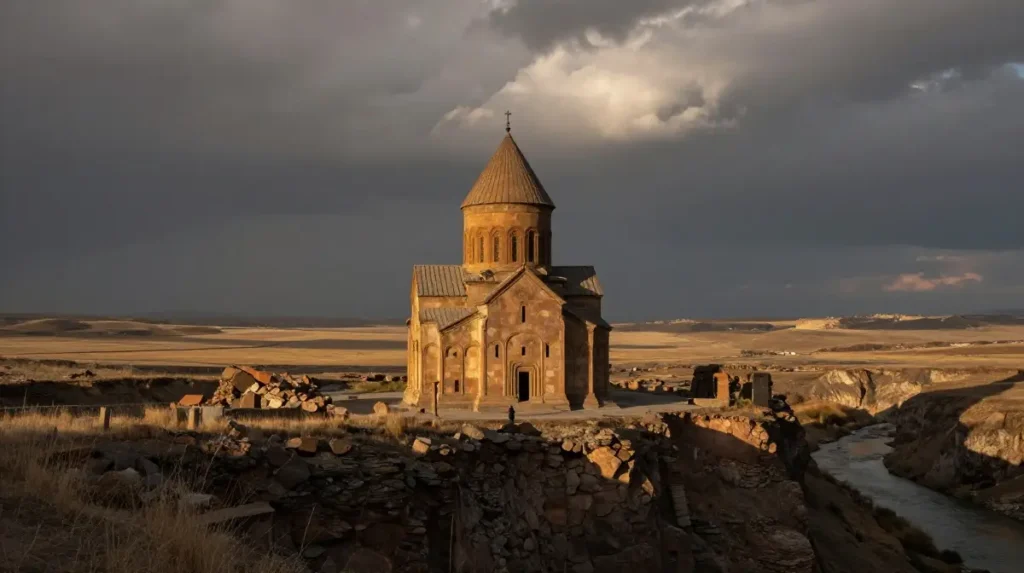
Turkey travel hidden gems reward the traveler willing to move beyond the Istanbul-Cappadocia-Pamukkale triangle. Ani ruins Turkey near the Armenian border contain the ghost of a medieval Armenian capital — cathedral ruins, palace fragments and defensive walls spread across a high plateau with zero tourist infrastructure and zero crowds. The silence there is extraordinary. Sumela Monastery Turkey clings to a vertical cliff face in the Pontic Mountains above Trabzon — a Byzantine monastery founded in 386 AD that seems to defy gravity as much as architectural logic.
Konya Turkey tourism offers a profound encounter with Sufi mysticism at the Mevlana Museum where the tomb of Rumi draws Muslim pilgrims and curious travelers in equal numbers. Lake Van Turkey in the far east contains an Armenian church island that has survived everything history threw at this region. Fethiye Turkey travel, Kas, Sirince, Safranbolu and Mardin complete a list of destinations where turkey travel best time to visit considerations shift — some suit spring, others reward autumn — but all deliver experiences the postcard version of Turkey never mentions.
| Hidden Destination | Region | Best Season | Primary Draw |
|---|---|---|---|
| Ani Ruins | Eastern Turkey | Spring/Summer | Medieval ghost capital |
| Sumela Monastery | Black Sea | Summer | Byzantine cliff monastery |
| Mardin | Southeast | Spring/Autumn | Ancient stone city |
| Safranbolu | Central North | Any season | Ottoman town UNESCO |
| Lake Van | Eastern Turkey | Summer | Armenian island church |
| Kas | Mediterranean | Spring/Autumn | Lycian ruins, diving |
| Sirince | Aegean | Spring | Wine village above Ephesus |
| Konya | Central Anatolia | Any season | Rumi tomb, Sufi culture |
The Black Sea Coast Keeps a Turkey That Most Travelers Never Reach
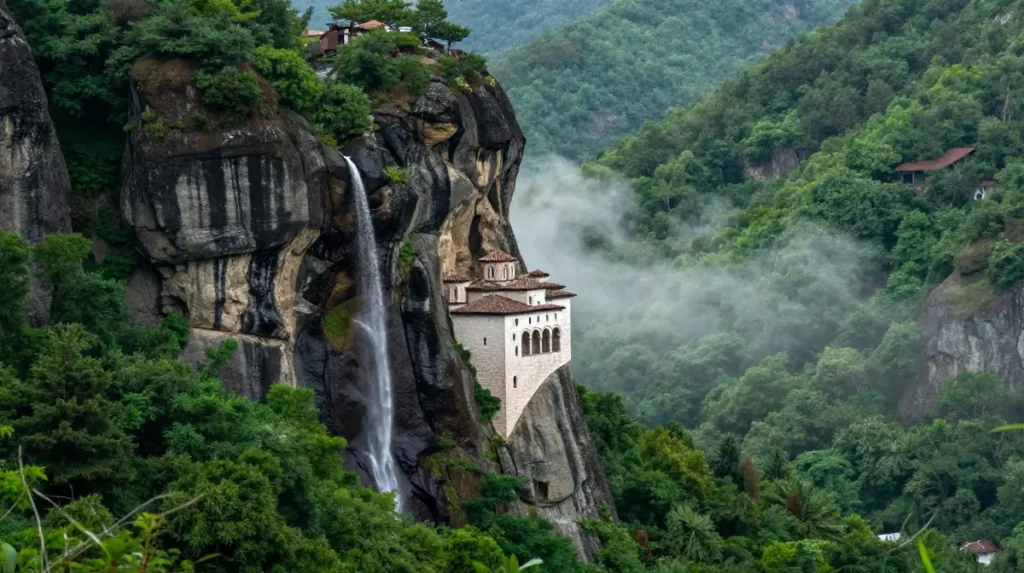
Black Sea Turkey tourism offers a version of the country that operates on entirely different atmospheric terms from the sun-bleached Aegean or Mediterranean coasts. This region is lush, dramatically green, frequently mist-covered and dotted with wooden villages, tea plantations and hazelnut orchards that produce a significant percentage of the world’s supply. Trabzon Turkey tourism serves as the regional capital and entry point.
Turkish mountain travel experience reaches its most spectacular expression in the Kackar Mountains above the Black Sea coast — a trekking terrain of alpine lakes, glacial valleys and traditional yayla summer pastures where nomadic herding culture survives largely intact. Turkey travel hiking trails in this region rival anything in the Alps for raw landscape drama with a fraction of the visitor numbers. Turkey travel adventure seekers who reach the Black Sea coast invariably describe it as their most surprising Turkish discovery — a country within a country operating by its own rules.
Turkish Hospitality — the Cultural Code That Transforms Every Interaction
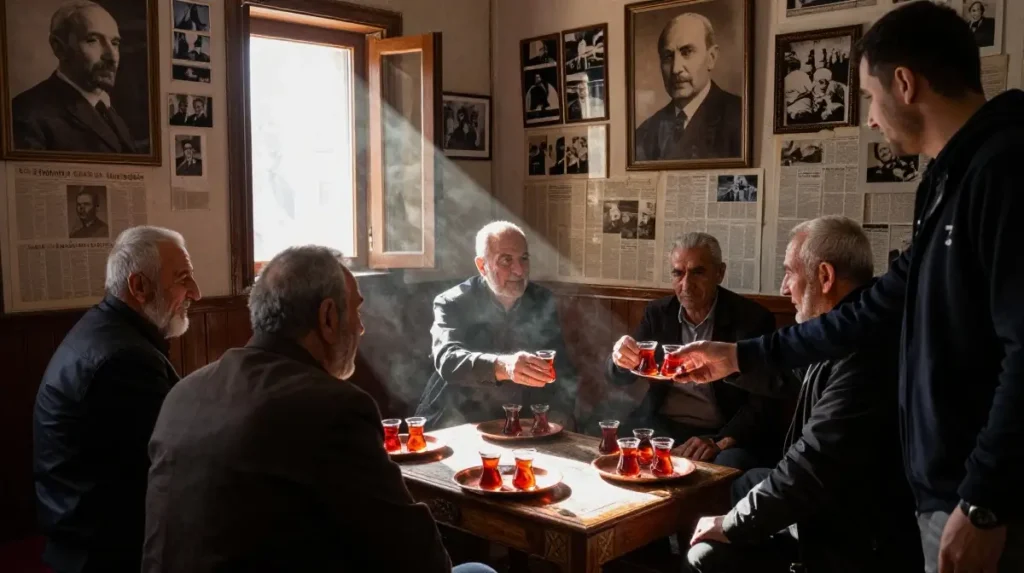
Turkish hospitality experience isn’t a tourism industry construct — it’s a deeply embedded cultural obligation that predates the republic, the Ottoman Empire and Islam itself. The Anatolian tradition of misafirperver — literally guest-friendship — means that a stranger asking directions may find themselves invited for tea, lunch or occasionally a spare bedroom before the conversation concludes. This isn’t performance. It’s infrastructure.
Turkey travel cultural experiences shift fundamentally when you understand that hospitality here carries reciprocal weight — accepting tea, accepting an invitation, accepting a small gift creates a human connection that transforms a transaction into a relationship. Turkey travel tipping culture is modest by American standards — 10 percent in restaurants is generous — but the genuine currency of interaction is time and attention. Slow down. Accept the tea. Turkish tea culture travel begins with understanding that the glass is never just a drink — it’s an opening statement in a conversation worth having.
Mount Nemrut and the Stone Heads That Sit Alone Above the Clouds
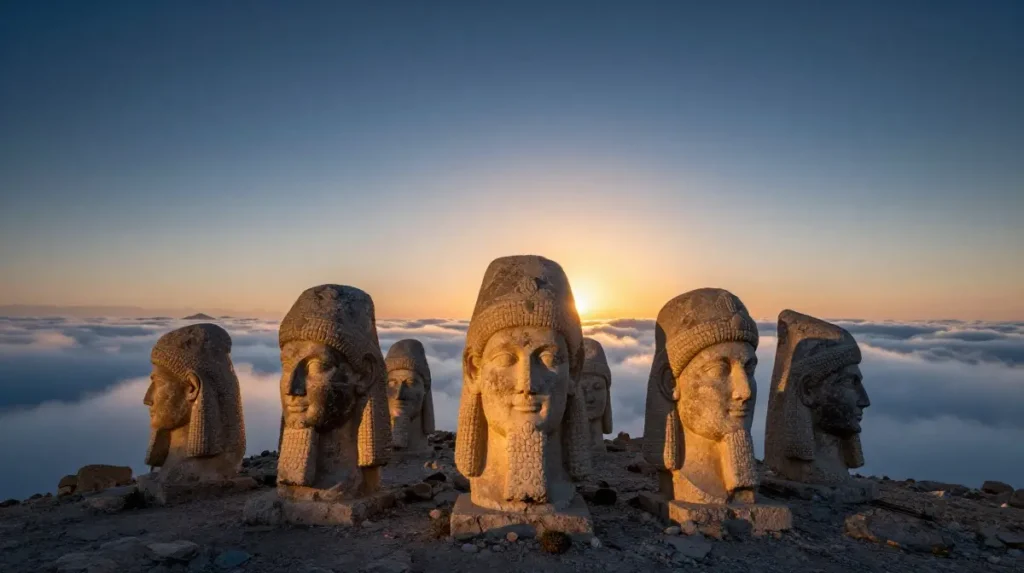
Mount Nemrut Turkey carries one of antiquity’s most audacious artistic statements. King Antiochus I of the Commagene Kingdom had colossal stone heads of gods and himself — each standing roughly two meters tall — placed on the summit of a 2,134-meter mountain in southeastern Anatolia around 62 BC. Earthquakes toppled the heads from their bodies centuries ago and they now sit scattered across the summit plateau with an accidental surrealism that no artist could have planned.
Visiting requires either a brutal predawn ascent or an overnight stay at a nearby pension to reach the east terrace for sunrise — when golden light first hits those ancient faces the atmosphere tips into something genuinely sacred. Turkey travel photography spots don’t get more cinematically otherworldly than Nemrut at dawn. Anatolian heritage tourism reaches one of its most remote and rewarding expressions here — a monument that required extraordinary ambition to build and requires genuine effort to visit, which keeps the experience intimate in ways that more accessible sites simply cannot.
Fethiye and the Blue Lagoon — the Coastline Turkey Saved for Last
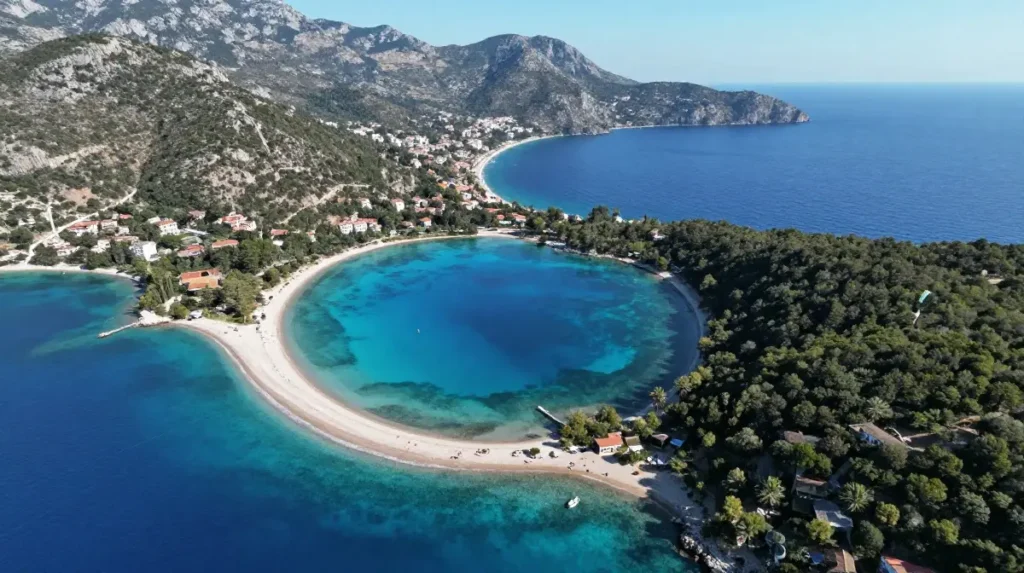
Fethiye Turkey travel anchors the Turquoise Coast’s most spectacular stretch — a rugged Mediterranean shoreline where Lycian rock tombs carved into vertical cliff faces overlook a harbor town that manages to be simultaneously ancient and genuinely livable. The Old Town’s market, the medieval fortress above it and the tombs illuminated at night create a layered atmosphere unlike any other Turkish coastal destination.
Mediterranean Turkey tourism finds its most photogenic expression at Oludeniz — the Blue Lagoon — where a protected natural harbor of impossible turquoise water sits beneath the Babadag mountain from which paragliders launch continuously throughout the day creating a visual spectacle above the beach. Turkey travel mediterranean coast extends eastward from Fethiye through Kas, Kalkan and Antalya along a road that delivers constant drama. Antalya Turkey coast terminates this western Mediterranean run with a walled Roman old town sitting directly above a working harbor — ancient infrastructure repurposed into restaurants and boutique hotels without losing its structural integrity.
Planning Turkey Travel Without Losing the Magic to Logistics
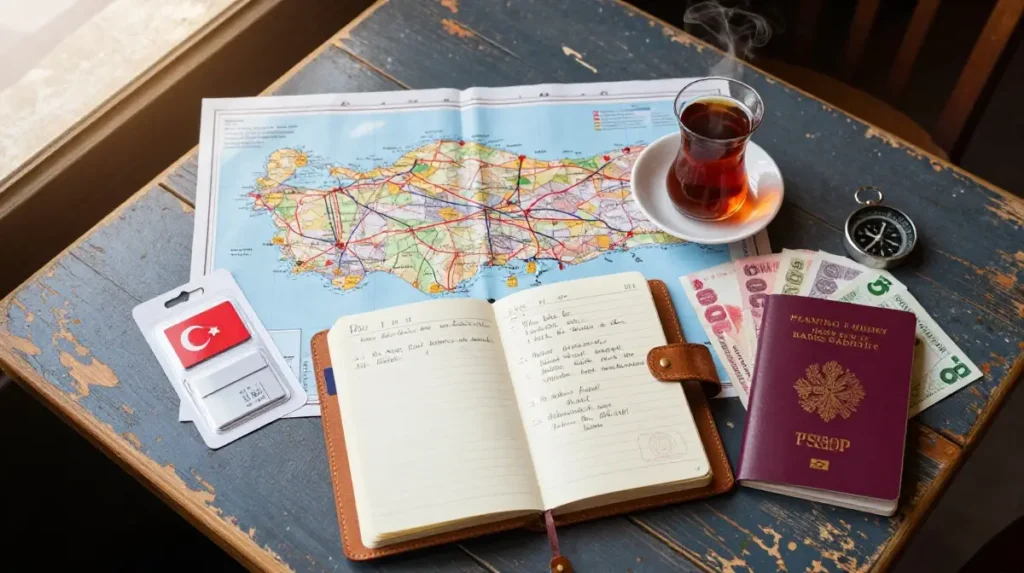
Turkey travel planning rewards a specific approach — identify three or four anchor destinations, book only the first night’s accommodation in each location, then allow the trip to breathe around those fixed points. Over-scheduling Turkey is a genuine risk. The country rewards spontaneity and the best experiences typically emerge from unplanned conversations rather than itinerary compliance.
Turkey travel transportation guide starts with Turkish Airlines’ domestic network which connects Istanbul to approximately 50 Turkish cities with surprising frequency and affordability. Intercity buses operated by companies like Flixbus Turkey and Metro Turizm offer comfortable overnight travel between major destinations at extremely competitive prices. Turkey travel airport transfers from Istanbul’s new airport into the city require either the metro line or pre-booked transfer — avoid unlicensed taxi approaches aggressively. Turkey travel sim card options purchased at the airport on arrival provide the most cost-effective data access for navigation and translation throughout the trip.
| Transport Method | Best For | Approximate Cost | Booking Required |
|---|---|---|---|
| Domestic flight | Long distances fast | $30-80 USD | Yes in advance |
| Intercity bus | Overnight routes | $10-25 USD | Day before |
| Rental car | Coastal and rural areas | $25-60 USD/day | Yes in advance |
| Istanbul metro | City navigation | $0.50 USD per trip | No |
| Dolmus minibus | Local routes | $1-3 USD | No |
| Ferry Bosphorus | Istanbul crossings | $1 USD | No |
The Turkish Lira Reality — Traveling Richly on an Honest Budget
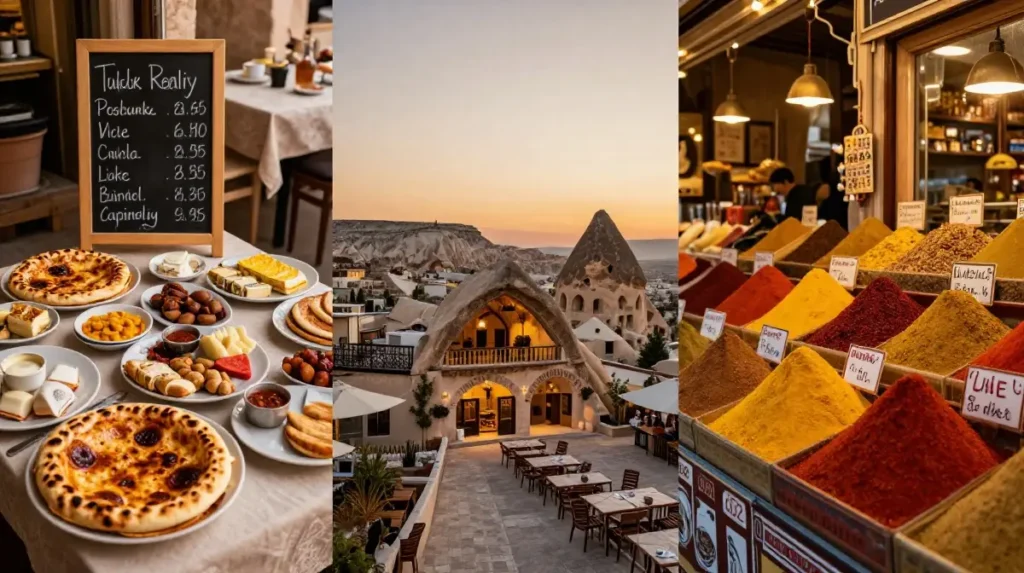
Turkey travel lira exchange rate creates one of the most favorable value environments for American travelers anywhere in the world currently. The lira’s sustained depreciation against the dollar has made Turkey extraordinarily affordable by Western standards without diminishing the quality of accommodation, food or experience available. A dinner that would cost $80 in New York costs $15 in Istanbul at equivalent quality. That differential compounds across an entire trip into substantial savings.
Turkey travel budget planning for a comfortable mid-range American traveler currently runs approximately $60 to $100 USD per day covering accommodation, food, local transport and entry fees. Turkey travel luxury experiences at genuinely world-class boutique hotels in Cappadocia and Istanbul run $150 to $400 per night — prices that would be considered mid-range in comparable Western European cities. Turkey travel health insurance remains essential regardless of budget level — Turkey travel medical facilities in major cities are excellent but costs without coverage accumulate quickly. Always carry Turkey travel emergency numbers — tourist police in major destinations are accessible and English-speaking.
Safety Culture and Street Sense — Traveling Turkey With Confidence
Turkey travel safety 2025 presents a profile that differs meaningfully from media representations. Violent crime against tourists is genuinely rare. The primary risks most travelers encounter are turkey travel scam awareness situations — inflated taxi fares, carpet shop pressure tactics, restaurant menu-switching and the famous shoe-shine drop-and-demand routine in tourist areas of Istanbul. These are nuisances not dangers and simple awareness neutralizes most of them completely.
Turkey travel safety tips that genuinely matter include using the Istanbul metro over street taxis whenever possible, downloading the BiTaksi app for metered taxi bookings, keeping digital copies of your passport accessible and registering your trip with the US Embassy. Turkey travel earthquake zones awareness is relevant — Turkey sits on active fault lines and the 2023 earthquake caused devastating damage in southeastern provinces. Turkey travel water safety across the country recommends bottled or filtered water for drinking — tap water is treated but mineral content varies significantly by region. Turkey travel wifi availability is excellent in cities and tourist areas — most accommodation provides reliable connection.
Istanbul’s Neighborhoods Beyond the Postcard — Where Real Life Happens
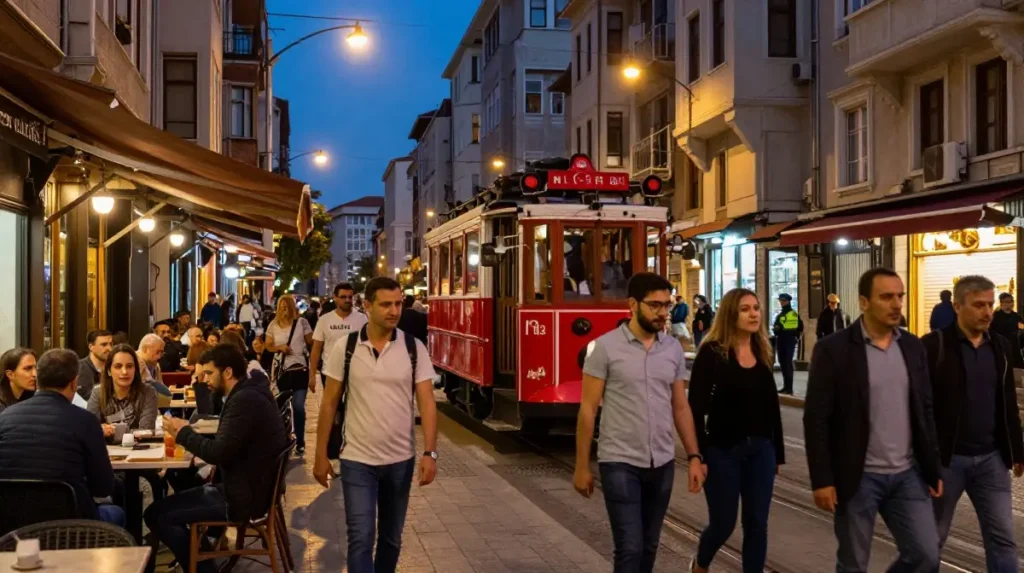
Sultanahmet contains Istanbul’s monuments but it doesn’t contain Istanbul’s soul. Cross the Golden Horn to Beyoglu and the city changes register entirely — Istiklal Avenue’s grand 19th-century European architecture frames a pedestrian boulevard of bookshops, music venues, restaurants and the historic Tunel funicular. Further into Beyoglu the neighborhoods of Cihangir, Galata and Karakoy carry a creative density that rivals any European capital’s most interesting districts.
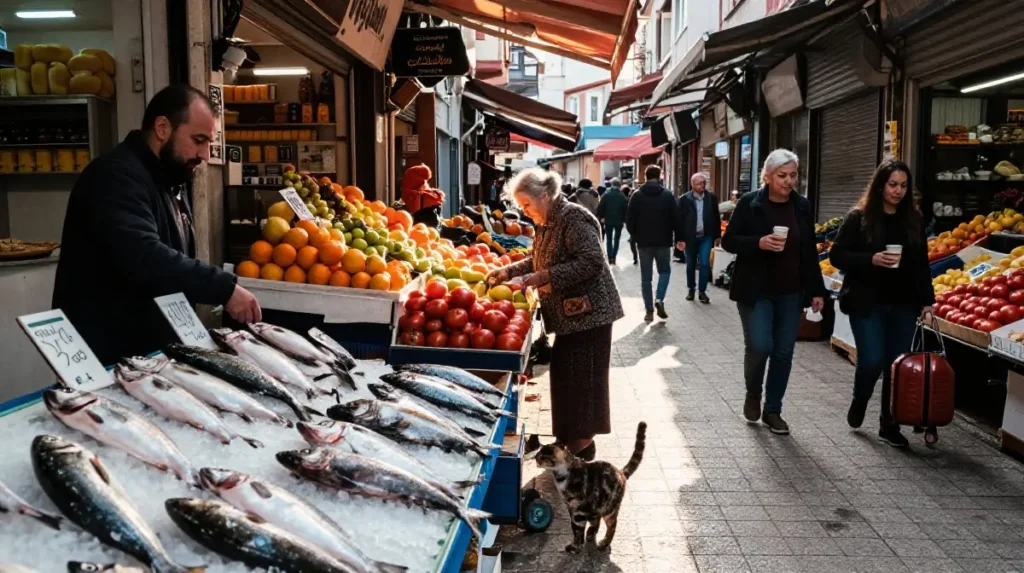
Turkey travel istanbul guide for travelers who want genuine neighborhood immersion should include Kadikoy on the Asian side — reached by a 20-minute Bosphorus ferry for approximately $1 — where a thriving food market, independent coffee culture and a predominantly young local population create an atmosphere entirely unlike the tourist zones across the water. Bosphorus travel experience by ferry rather than tourist boat is both cheaper and more authentic — regular commuter ferries crossing between Europe and Asia carry locals going about their daily lives with you as an invisible participant. Turkish architecture travel finds extraordinary Ottoman and Byzantine structures embedded throughout these neighborhoods with zero signage and zero queues.
The Silk Road Legacy — Following Ancient Trade Routes Through Modern Turkey
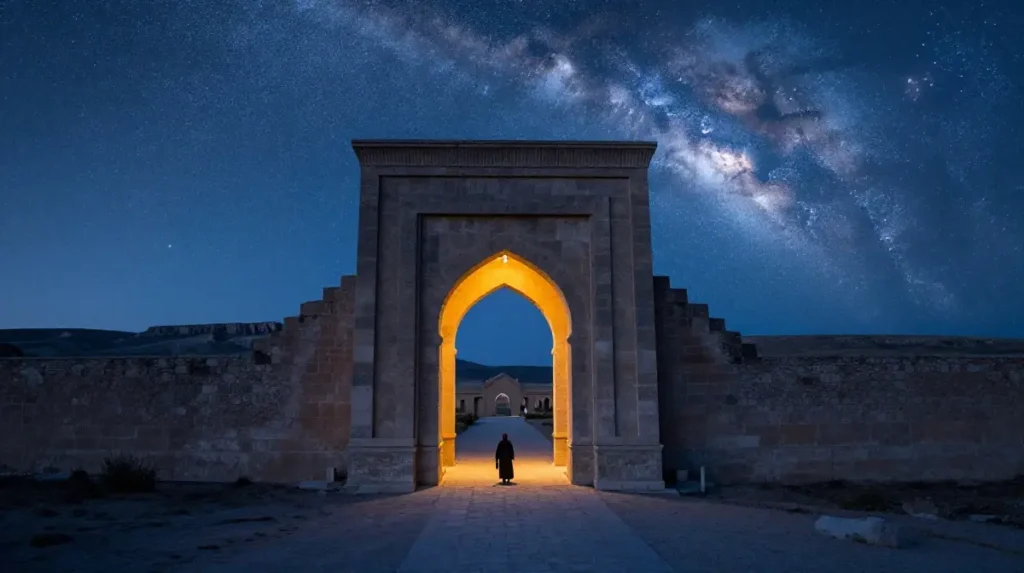
Silk Road Turkey travel traces one of history’s most consequential commercial networks across a landscape that still carries physical evidence of that trade — caravanserais built to shelter merchants and their goods at one-day intervals appear throughout central Anatolia, many in extraordinary states of preservation. The Sultanhani Caravanserai near Aksaray is the largest Seljuk caravanserai surviving anywhere and receives a fraction of the visitors its historical significance deserves.
Konya Turkey tourism sits on the historic Silk Road corridor and beyond its Sufi significance offers Seljuk architecture of remarkable quality — the Ince Minare Museum and Karatay Museum contain tilework and stonework that influenced architectural traditions across the Islamic world for centuries. Ankara Turkey visit as the modern capital anchors central Anatolia practically while the Museum of Anatolian Civilizations there presents the archaeological sequence of this entire region in the finest dedicated museum collection in the country. Turkey travel itinerary 2 weeks that includes a central Anatolian Silk Road component delivers a Turkey almost no American traveler has encountered — and remembers longest of all.
Frequently Asked Questions
Can you drink tap water in Turkey
Turkey travel water safety recommendations suggest bottled or filtered water for drinking throughout the country. Tap water is treated and technically safe in major cities but mineral content and occasional infrastructure variations make bottled water the universally recommended choice. Bottled water costs approximately $0.30 USD per liter and is available everywhere.
What is the dress code for visiting mosques in Turkey
Turkey travel dress code mosques requires covered shoulders and knees for both men and women and head scarves for women inside prayer halls. Shoes are removed at the entrance — carried or placed in the provided bags. Free scarves and leg coverings are available at major mosques for visitors who arrive underprepared. Dress respectfully and the experience of entering an active place of worship is extraordinary.
How do you get around Turkey between major destinations
Turkey travel transportation guide recommends domestic flights for long distances like Istanbul to eastern Turkey and comfortable intercity buses for medium distances. Turkey travel local transport within cities relies on metro systems in Istanbul and Ankara, dolmus shared minibuses everywhere and ferries across the Bosphorus. Turkey travel airport transfers from Istanbul airport use the metro line to Gayrettepe or pre-booked licensed transfers.
What currency does Turkey use and how should travelers handle money
Turkey uses the Turkish lira. Turkey travel lira exchange rate moves constantly — withdraw lira from ATMs upon arrival for the best rates rather than exchanging at airport currency booths. Major credit cards are accepted widely in tourist areas and cities. Carry small lira denominations for markets, dolmus transport and small restaurants. Notify your bank before departure to prevent card blocks.
Are there any travel restrictions or entry requirements for Turkey
Turkey travel entry requirements for Americans currently require a valid e-Visa obtained before arrival, a passport valid six months beyond departure and standard customs declarations. Turkey travel health insurance is strongly recommended but not legally required for entry. Check the US State Department’s Turkey travel advisory page within two weeks of departure for any updates to current requirements.