
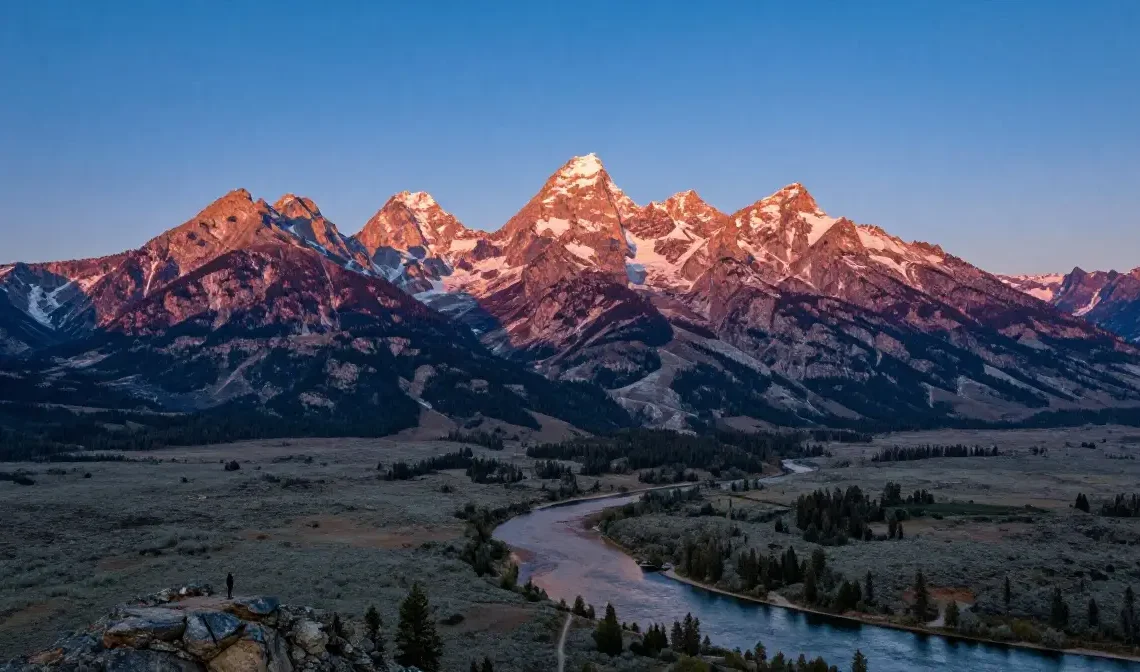
Most American states offer a vacation. Wyoming offers a reckoning. The landscape here doesn’t just impress you — it recalibrates something deep in your chest. Wyoming travel isn’t about checking boxes on a tourist map. It’s about standing in a place so vast and so quietly powerful that your everyday problems genuinely stop mattering for a while.
Why Wyoming Hits Differently Than Every Other State You Have Ever Visited
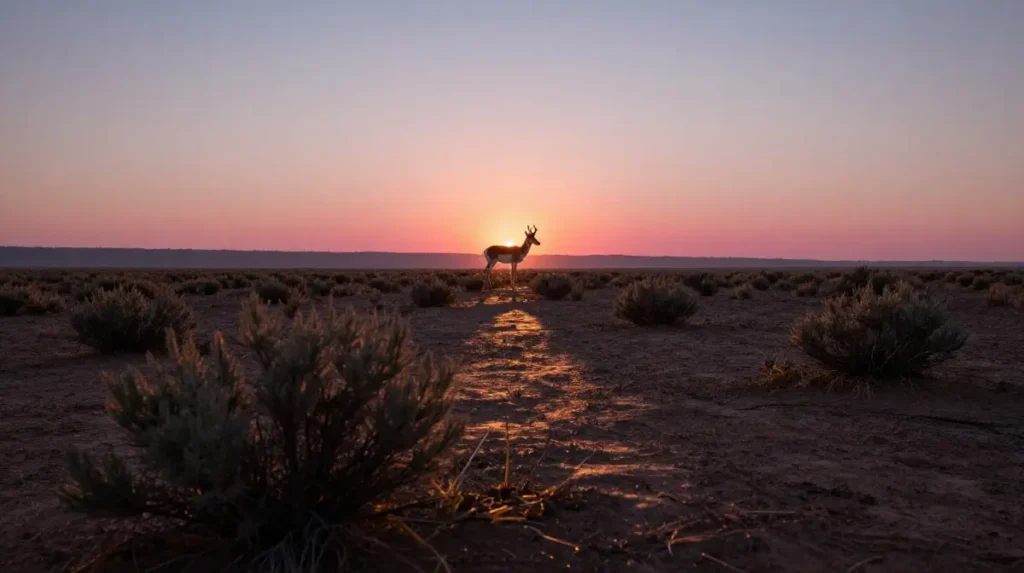
What is wyoming known for tourism comes down to one irreducible truth: scale. Not just physical scale — though the horizon here stretches further than your eyes know how to process — but emotional scale. Wyoming hands you silence, wildness and raw geological drama simultaneously. No other continental US state delivers that specific combination in such concentrated form.
Wyoming tourist attractions span geological wonders, wildlife corridors, frontier history and some of the most technically demanding outdoor terrain in North America. But beyond the attractions themselves lies something harder to quantify. Wyoming operates on its own rhythm. Towns here still feel genuinely western rather than western-themed. Cowboy culture travel experience in Wyoming isn’t a performance put on for tourists — it’s the actual fabric of daily life in communities like Cody, Pinedale and Dubois. That authenticity is increasingly rare and increasingly valuable to modern travelers seeking something real.
Wyoming Travel Planning: Exactly How Many Days You Actually Need Here
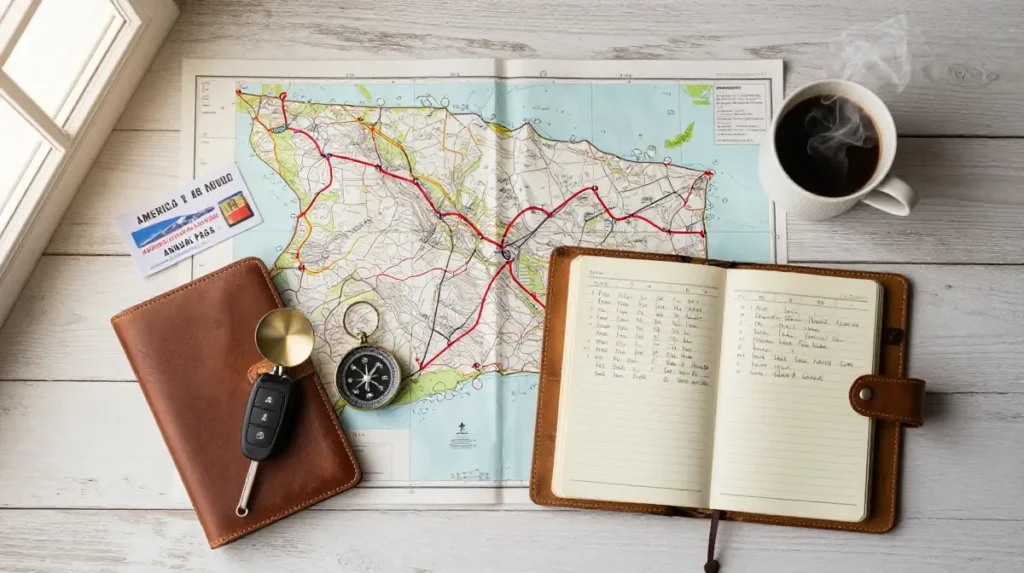
How many days do you need in wyoming depends entirely on your goals but the honest minimum for any meaningful experience is seven days. A rushed four-day trip barely scratches the surface of one corner of the state. Wyoming trip planning requires accepting that Wyoming doesn’t compress well — distances between major attractions routinely exceed two to three hours of driving and that’s on clear roads in favorable conditions.
A well-structured wyoming travel guide itinerary for seven to ten days typically divides time between the northwest corner — Yellowstone National Park wyoming and Grand Teton National Park — and at least one additional region such as Cody Wyoming tourism or the Wind River Range hiking corridor. What to do in wyoming for a week at minimum should include one national park deep dive, one significant wildlife viewing session, one genuine wilderness experience and at least one evening in a small Wyoming town where locals actually eat dinner. That combination gives you the full dimensional picture of what this state genuinely is.
| Trip Length | What You Can Realistically Cover |
|---|---|
| 4 days | Yellowstone highlights only |
| 7 days | Yellowstone plus Grand Teton plus Jackson |
| 10 days | Northwest Wyoming plus one additional region |
| 14 days | Full state cross-section with breathing room |
The Best Time to Visit Wyoming and Why Every Season Tells a Different Story
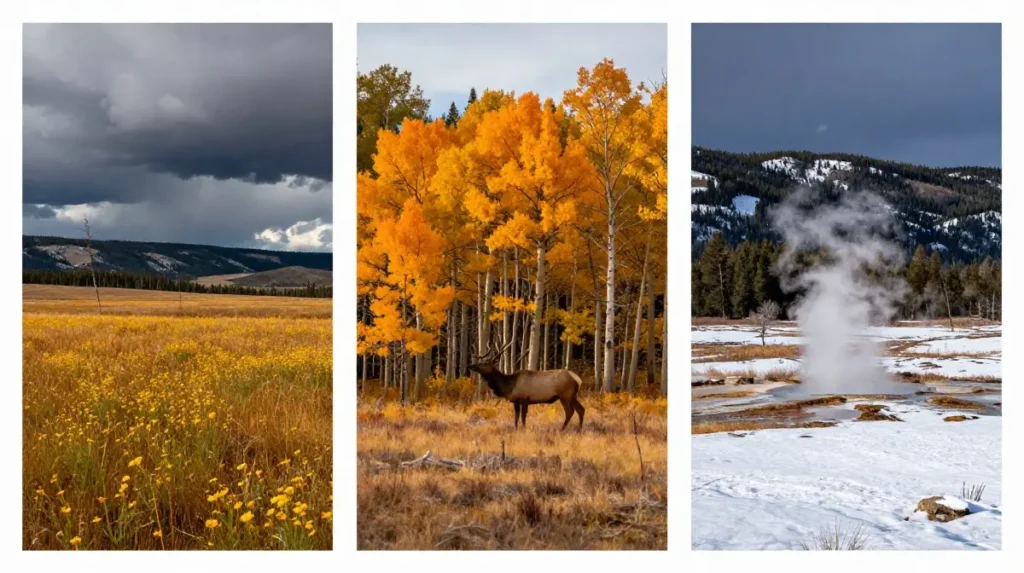
Best time of year to visit wyoming produces fierce debate among experienced travelers and for good reason — every season offers something genuinely distinct and genuinely compelling. Summer from June through August delivers peak accessibility with all park roads open, maximum wildlife activity and long daylight hours stretching past 9pm. However summer also brings the crowds — Yellowstone National Park wyoming receives over 4 million visitors annually and July concentrates a disproportionate share of them.
Visiting wyoming in summer rewards early risers and patient planners who secure reservations months in advance. September and early October represent the sweet spot that experienced Wyoming travelers guard jealously — elk rut season fills the valleys with haunting bugling calls, aspen groves turn molten gold and visitor numbers drop sharply after Labor Day. Wyoming winter travel from December through February transforms the landscape into something otherworldly — Yellowstone’s geothermal features steam dramatically against subzero air and snowcoach tours access areas completely closed to summer visitors. How cold does wyoming get in winter varies dramatically by elevation but temperatures regularly drop to minus 20 Fahrenheit in northern Wyoming so preparation isn’t optional.
Yellowstone National Park: What Nobody Warns You Before Your First Visit
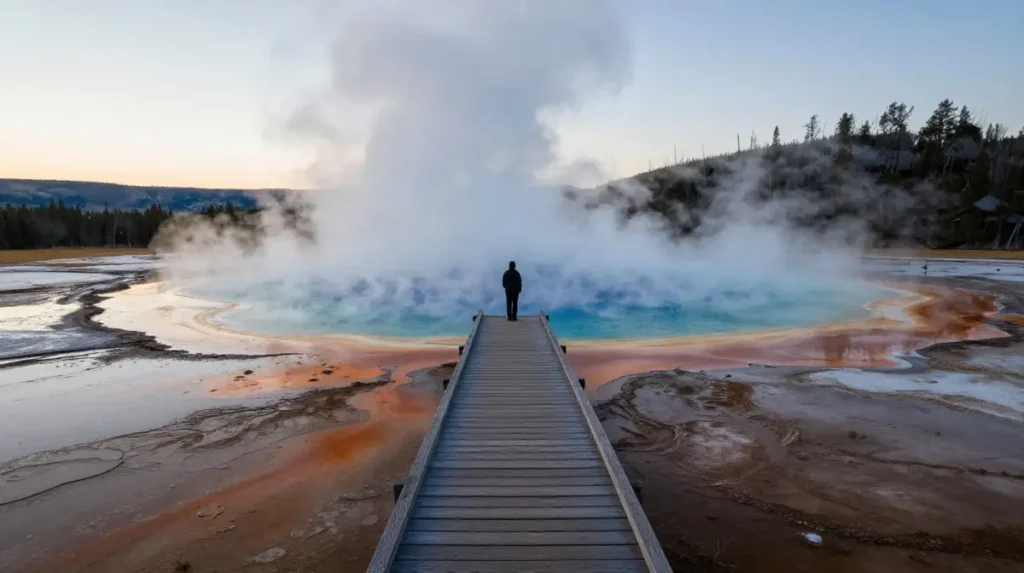
Yellowstone geysers tourism has existed since 1872 making Yellowstone the world’s first designated national park — a fact that still carries genuine weight. But first-time visitors consistently arrive underprepared for the park’s sheer size. Yellowstone covers 2.2 million acres across three states and contains more geothermal features than the entire rest of the planet combined. Old Faithful geyser wyoming erupts approximately every 90 minutes but it represents a fraction of the thermal activity happening simultaneously across the park at any given moment.
Wyoming permit requirements hiking in Yellowstone apply to all overnight backcountry trips and must be secured in advance — walk-up permits exist but vanish quickly during peak season. Wyoming entrance fees national parks currently stand at $35 per vehicle for a seven-day Yellowstone pass as of 2024 or $80 for an America the Beautiful annual pass covering all federal lands. Wyoming bear safety wilderness protocols are non-negotiable inside Yellowstone — bear spray is mandatory equipment for any trail beyond the developed boardwalk areas and understanding how to use it before you need it is not a suggestion. The park hosts approximately 700 grizzly bears and encounters happen every season.
| Yellowstone Fast Facts | Data |
|---|---|
| Established | 1872 |
| Total area | 2.2 million acres |
| Annual visitors | 4+ million |
| Geothermal features | 10,000+ |
| Grizzly bear population | ~700 |
| Entrance fee per vehicle | $35 for 7 days |
Grand Teton National Park: The Mountain Views That Make Grown Adults Cry
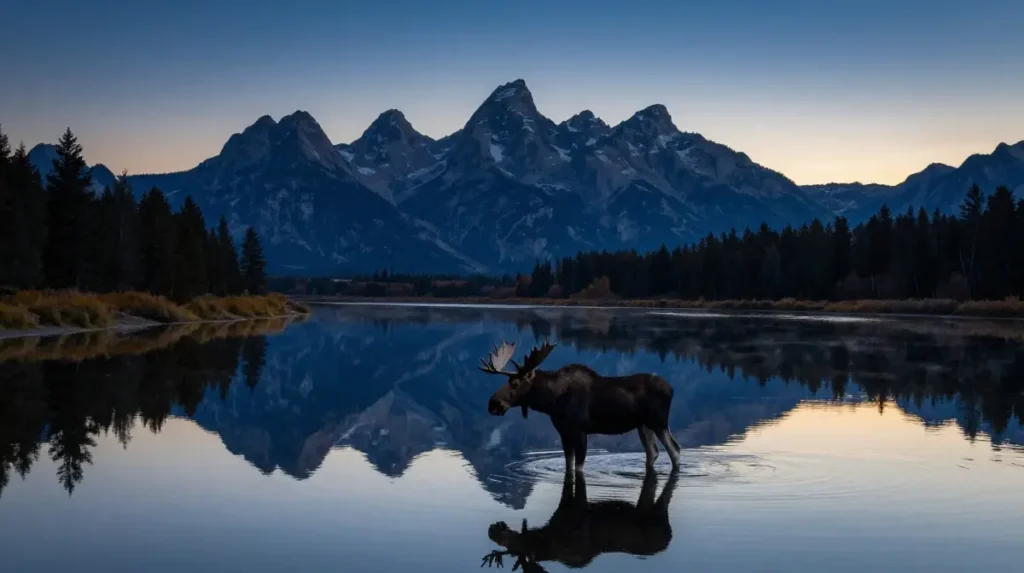
Grand teton sightseeing delivers what many landscape photographers consider the most technically perfect mountain composition in North America. The Teton Range rises abruptly from the valley floor without foothills — a geological anomaly caused by fault-block uplift that creates a visual drama unlike any other American mountain range. At dawn, when alpenglow paints the granite peaks in shades of rose and amber, Grand Teton National Park earns every superlative ever written about it.
Snake River float trips through Grand Teton offer one of the finest wildlife observation experiences in the American West — moose wade through riverside willows, osprey dive for cutthroat trout and the Tetons frame every bend of the river with impossible beauty. National Elk Refuge Jackson adjacent to the park hosts one of the largest elk herds in North America — approximately 11,000 animals winter here annually creating one of the most remarkable bison and elk wildlife safari usa experiences available anywhere in the lower 48 states. Wyoming camping reservation system for Grand Teton fills up by January for summer dates so booking in October or November for the following summer is genuinely necessary planning for serious visitors.
Jackson Hole Wyoming: Where Rugged Wilderness Meets Unexpected Luxury
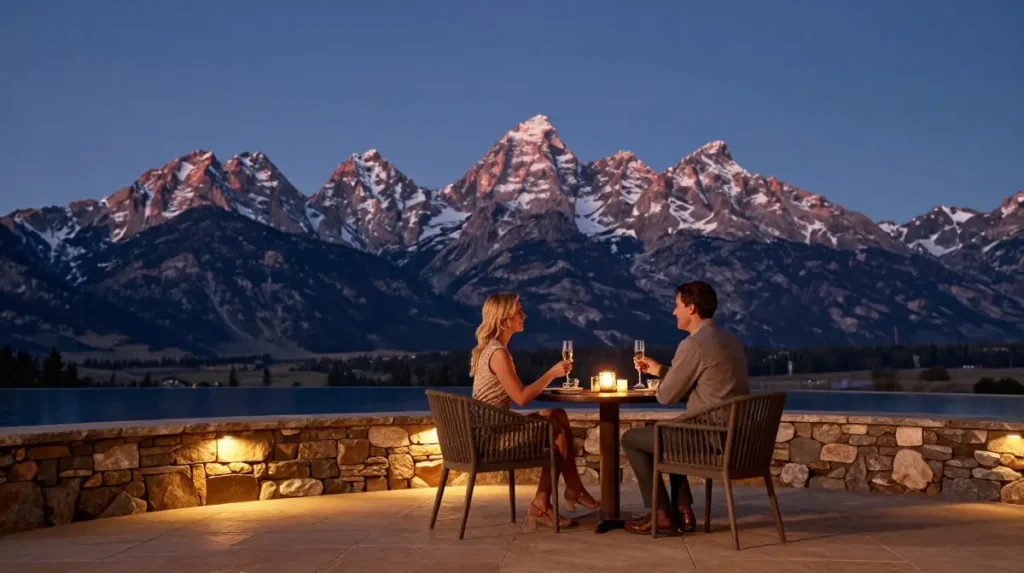
Jackson Hole Wyoming operates as the most surprising town in Wyoming — a genuine working western community that has somehow also become one of America’s most sophisticated travel destinations. The town square with its iconic elk antler arches sits three blocks from a Four Seasons resort and a Michelin-recognized restaurant. That combination shouldn’t work as well as it does but Jackson pulls it off with remarkable authenticity.
you may also like this:22 Yellowstone Aesthetic Ideas for Stunning Nature Inspiration
Jackson hole ski resort travel draws visitors from November through April with over 4,000 acres of skiable terrain and a vertical drop of 4,139 feet — the greatest continuous vertical in the US ski industry. Summer transforms the same mountains into world-class hiking and mountain biking terrain. What is the best city to stay in wyoming for access to both national parks simultaneously has one clear answer: Jackson. It sits 55 miles south of Yellowstone’s south entrance and shares its northern boundary with Grand Teton making it the undisputed base camp for northwestern Wyoming exploration. How far is yellowstone from jackson wyoming — the drive from Jackson town square to the Yellowstone south entrance typically runs 65 miles and takes approximately one hour and fifteen minutes under normal road conditions.
Devils Tower and Eastern Wyoming: The Half of the State Most Tourists Miss
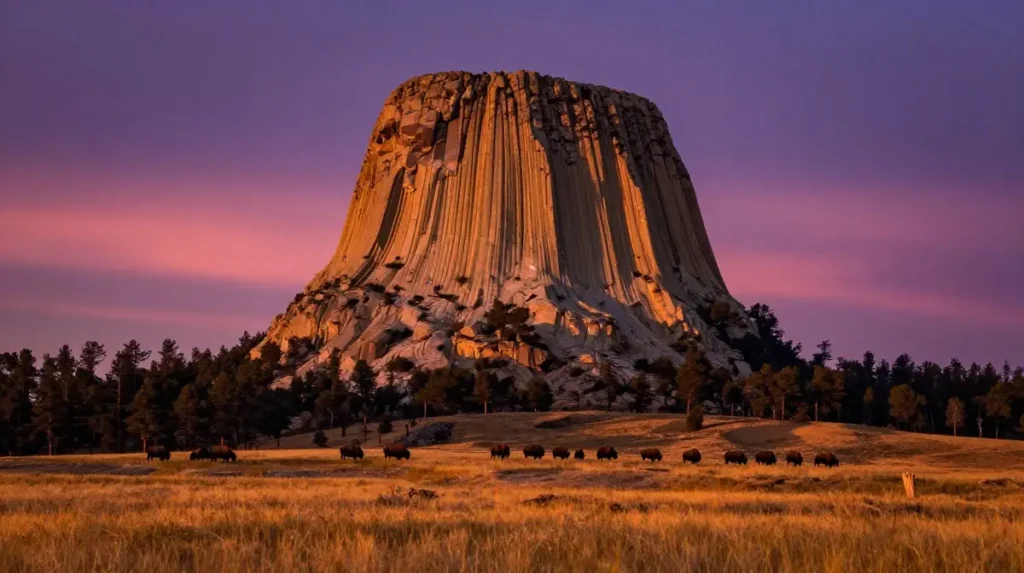
Devils Tower National Monument rises 867 feet above the surrounding Belle Fourche River valley like a declaration from the earth itself. The igneous monolith — formed by magma that cooled underground and was gradually exposed by erosion — draws rock climbers, geology enthusiasts and anyone who remembers it from Close Encounters of the Third Kind. Eastern Wyoming receives a fraction of the tourism that the northwest corner generates yet delivers experiences that are genuinely irreplaceable.
Wyoming ghost towns exploration concentrates heavily in eastern Wyoming where mining and railroad boom towns were abandoned as quickly as they were built. South Pass City, a remarkably preserved gold rush settlement from the 1860s, operates as a living history site with original structures still standing. Fossil Butte National Monument in southwestern Wyoming preserves one of the finest freshwater fossil deposits on earth — 50-million-year-old fish, turtles, crocodilians and palm leaves embedded in limestone that was once the floor of a subtropical lake. Wyoming hidden gems like these reward travelers willing to drive past the obvious attractions and explore the quieter middle sections of this genuinely enormous state.
Wyoming Road Trip Routes That Cover Maximum Beauty with Minimum Backtracking
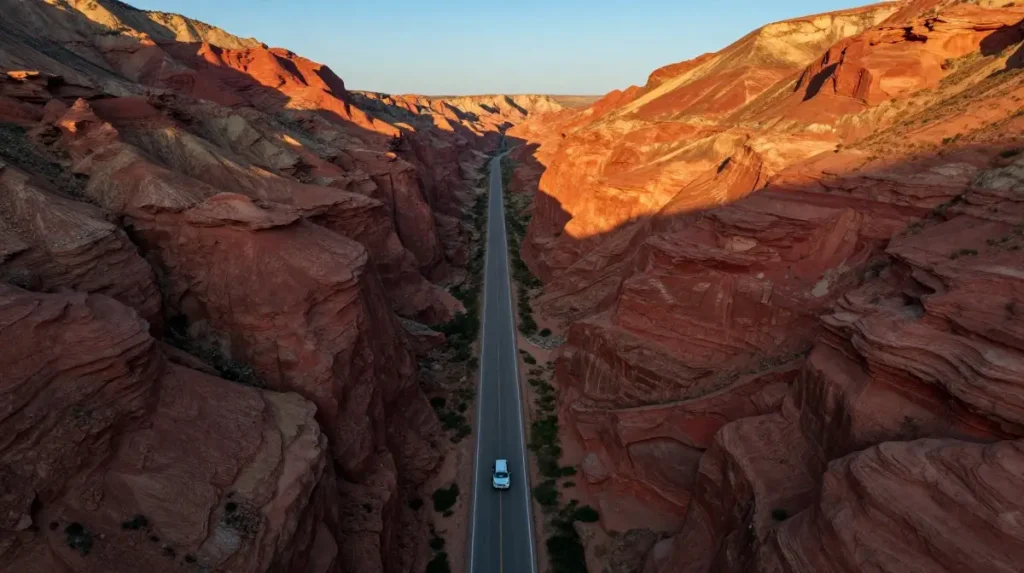
How to plan a wyoming road trip efficiently requires understanding Wyoming’s geography before plotting a single mile. The state is roughly rectangular and its major attractions cluster in the northwest corner with significant secondary destinations scattered across the north-central and southeastern regions. Wyoming scenic drives along US-26 through the Wind River Canyon and US-14A over the Bighorn Mountains rank among the most dramatic highway corridors in the American West.
Wyoming road trip planning works best as a loop rather than an out-and-back route. Enter via Cody from the east, traverse Yellowstone west to east, drop south through Grand Teton to Jackson, push southeast along the Wyoming Range and exit via Cheyenne or Laramie. That loop covers approximately 800 miles and touches the state’s greatest concentrations of scenery without retracing any significant road sections. Rocky mountain road trip purists add a detour through the Wind River Range hiking corridor between Dubois and Pinedale — a stretch of highway that delivers elk meadows, indigenous cultural sites and mountain vistas that rival anything in the national parks at a fraction of the visitor density.
| Road Trip Route | Miles | Highlights | Days Needed |
|---|---|---|---|
| Northwest Loop | 400 | Yellowstone, Grand Teton, Jackson | 5–7 |
| Full State Loop | 800 | All major regions | 10–14 |
| Eastern Wyoming | 350 | Devils Tower, ghost towns, Bighorns | 3–4 |
| Wind River Corridor | 200 | Wilderness, wildlife, indigenous sites | 2–3 |
Wildlife Watching in Wyoming: Where When and How to See the Real Thing
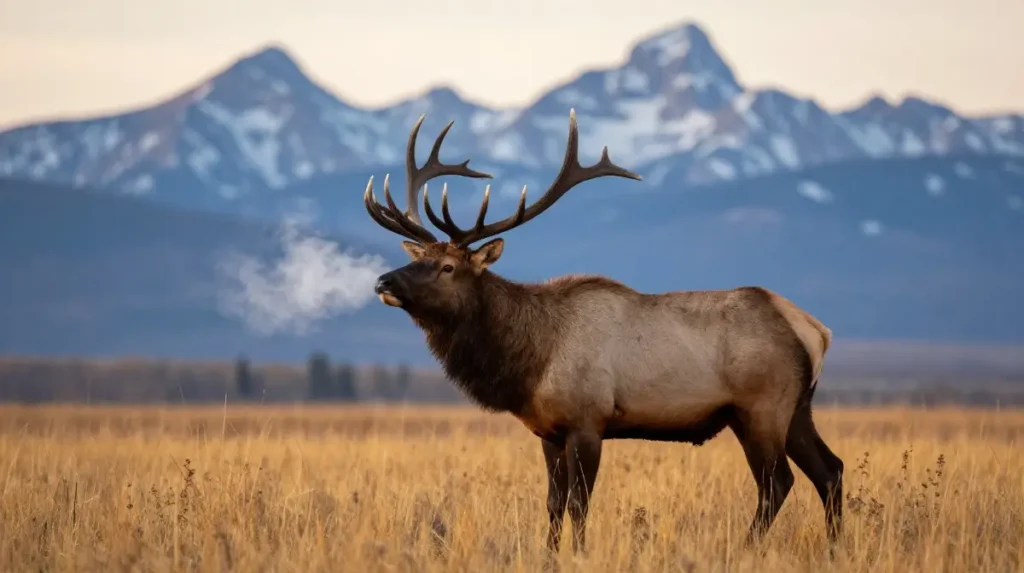
What wildlife can you see in wyoming is a question with a genuinely staggering answer. Wyoming hosts grizzly bears, black bears, gray wolves, bison, elk, moose, pronghorn antelope, bighorn sheep, mountain goats, bald eagles and trumpeter swans all within accessible viewing distance for prepared visitors. No other state in the lower 48 offers that breadth of megafauna in such concentrated geographic proximity.
Wyoming wolf watching opportunities concentrate in the Lamar Valley of Yellowstone — often called the Serengeti of North America — where wolf packs move through open grasslands at dawn and dusk in patterns that wildlife biologists have tracked for decades. Bison and elk wildlife safari usa experiences peak during September and October when elk rut transforms the valleys into an acoustic landscape of bugling males and the bison rut of July and August produces dramatic confrontations between massive bulls. Wyoming wildlife viewing etiquette requires maintaining a minimum of 100 yards from bears and wolves and 25 yards from all other wildlife — violations result in significant fines and genuinely endanger both animals and observers simultaneously.
Wyoming Hiking Trails Ranked from Casual Strolls to Serious Backcountry
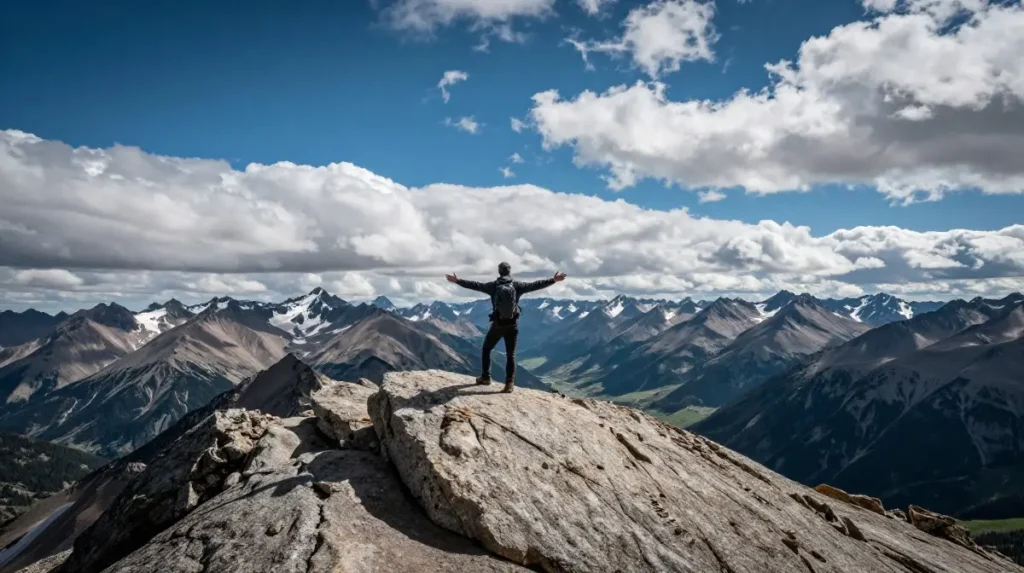
Are there good hiking trails in wyoming — the answer is yes at a scale that would take multiple lifetimes to fully explore. Wyoming contains roughly 15,000 miles of maintained trails across national parks, national forests and wilderness areas. Wyoming outdoor adventures on foot range from the completely accessible Grand Prismatic Spring overlook boardwalk in Yellowstone to the technically demanding Cirque of the Towers approach in the Wind River Range hiking wilderness requiring navigation, wilderness permits and multi-day self-sufficiency.
Wyoming permit requirements hiking for day hikes in national parks require no permits but overnight backcountry trips require advance reservation through each park’s individual permit system. High altitude travel experiences in Wyoming’s mountain terrain regularly exceed 10,000 feet elevation — the Wind River Range hiking peaks crown above 13,000 feet. Wyoming altitude sickness prevention requires gradual acclimatization especially for visitors arriving from low-elevation cities — spending your first day below 7,000 feet before ascending reduces risk substantially. Headache, nausea and fatigue appearing within 24 hours of arrival at elevation are warning signs that demand descent not willpower.
Wyoming Travel in Winter: What the Crowds Miss and You Absolutely Should Not
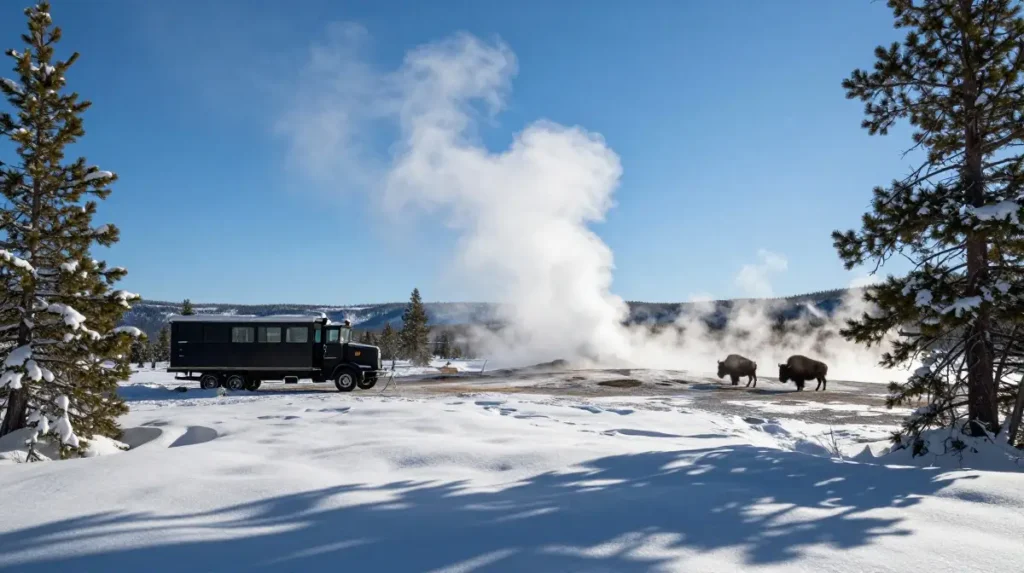
Wyoming winter travel delivers experiences that summer simply cannot replicate. Yellowstone in February is a fundamentally different place than Yellowstone in July — steam from thermal features creates ethereal fog banks across snow-covered meadows and the near-total absence of crowds allows you to hear the geysers erupt in genuine silence. Snowcoach tours operate from December through March accessing the park interior in ways no summer vehicle can.
Wyoming snowfall monthly average varies dramatically by location — Jackson receives an average of 450 inches of snow annually at higher elevations while Cheyenne in the southeastern corner averages a comparatively modest 57 inches. Wyoming road conditions winter driving demand serious vehicle preparation — all-wheel or four-wheel drive, quality winter tires and emergency supplies are non-negotiable rather than optional. How cold does wyoming get in winter in practical terms: plan for minus 10 to minus 30 Fahrenheit in northern Wyoming from December through February. Layer aggressively, protect exposed skin and don’t underestimate wind chill across exposed terrain.
Cheyenne Cody and Laramie: Wyoming Cities That Deserve More Than a Gas Stop
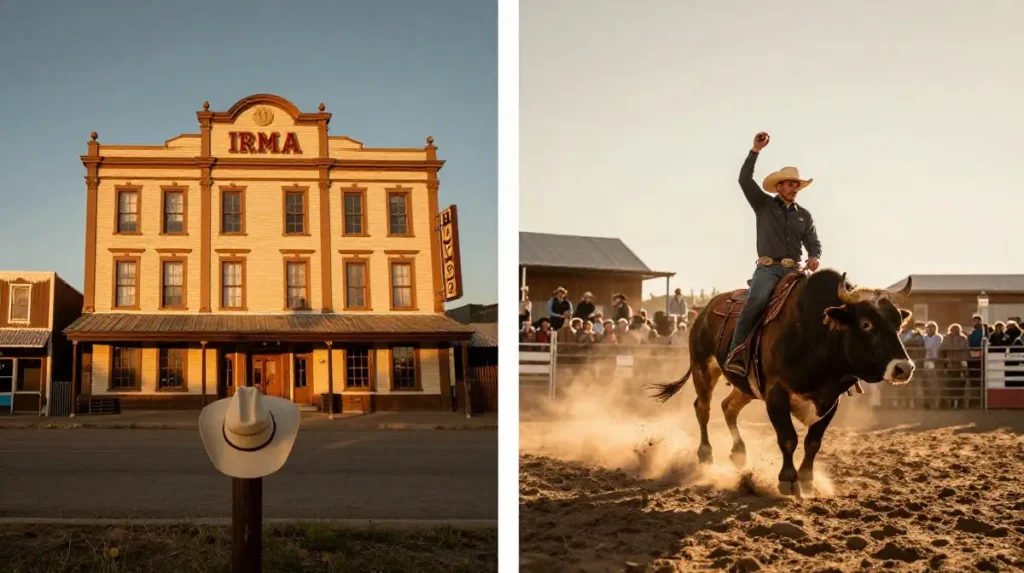
Laramie Wyoming attractions center on the University of Wyoming campus, the Wyoming Territorial Prison State Historic Site and a genuinely vibrant downtown arts scene that surprises most visitors expecting a sleepy college town. Laramie sits at 7,165 feet elevation and serves as an excellent acclimatization stop for visitors heading toward higher mountain terrain in the days ahead.
Cody Wyoming tourism delivers what may be the single richest western heritage experience in the American West. The Buffalo Bill Center of the West — a complex of five interconnected museums — houses the most comprehensive collection of Plains Indian art, western firearms and frontier history artifacts in existence. Cheyenne Frontier Days festival runs for ten days each July and is the world’s largest outdoor rodeo drawing 200,000 visitors annually to a genuine working western celebration that has operated continuously since 1897. Wyoming State Museum Cheyenne provides essential context for understanding the state’s geological, cultural and political history before venturing deeper into the landscape itself.
Wyoming Hot Springs and Geothermal Wonders Beyond Old Faithful
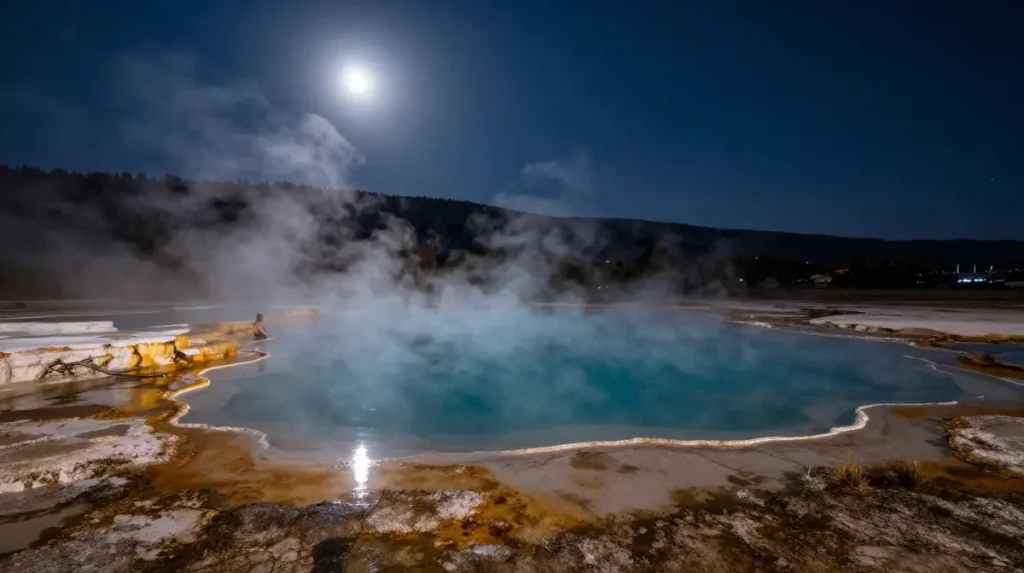
Wyoming hot springs natural pools extend far beyond Yellowstone’s famous thermal features into accessible soaking destinations across the state. Hot Springs State Park thermopolis in central Wyoming holds the world’s largest mineral hot springs — a superlative that the town of Thermopolis wears proudly and justifiably. The state-operated bathhouse there offers free soaking to all visitors — a genuinely rare public amenity in American outdoor recreation.
Geothermal landscape tourism in Wyoming rewards curious travelers who venture beyond the Grand Prismatic Spring and Old Faithful boardwalk loops. Norris Geyser Basin in Yellowstone contains the park’s hottest and most volatile thermal features — temperatures beneath Norris exceed 459 degrees Fahrenheit just 1,000 feet below the surface. Wyoming hot springs natural pools at Astoria Hot Springs near Jackson and Granite Hot Springs in the Bridger-Teton National Forest offer backcountry soaking experiences accessible by forest road. Wyoming hidden gems in the geothermal category include the Fountain Paint Pot trail in Yellowstone’s lower geyser basin — a short 1.6-mile loop that passes through four distinct thermal feature types in a single accessible walk.
Fly Fishing Stargazing and Ghost Towns: Wyoming’s Most Underrated Experiences
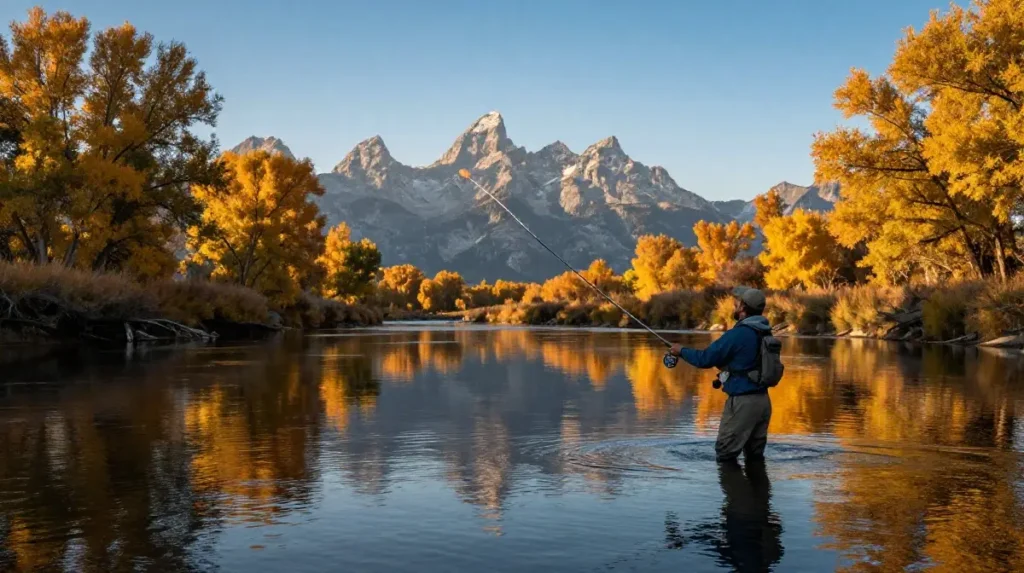
Fly fishing wyoming rivers ranks among the finest freshwater fishing experiences in North America. The Snake River, Green River, North Platte River and dozens of backcountry streams hold wild cutthroat, brown and rainbow trout in populations that most states can only dream about. Wyoming fly fishing license requirements include a nonresident fishing license costing $14 per day or $92 for a full season as of 2024 — genuinely accessible pricing for world-class water.
Wyoming stargazing dark sky locations exist across much of the state’s rural interior where light pollution is virtually nonexistent. The Bighorn National Forest and the Red Desert in southern Wyoming both offer International Dark Sky designation quality viewing even without formal certification. Wyoming ghost towns exploration in the South Pass area, Carbon County and the Big Horn Basin reveal remarkably intact remnants of the state’s mining and railroad heritage — some with original building interiors still visible through weathered windows. Off the beaten path usa travel enthusiasts consistently rank Wyoming’s ghost town corridor among the most evocative heritage landscapes in the entire American West.
Where to Stay in Wyoming from Backcountry Campsites to Five Star Lodges
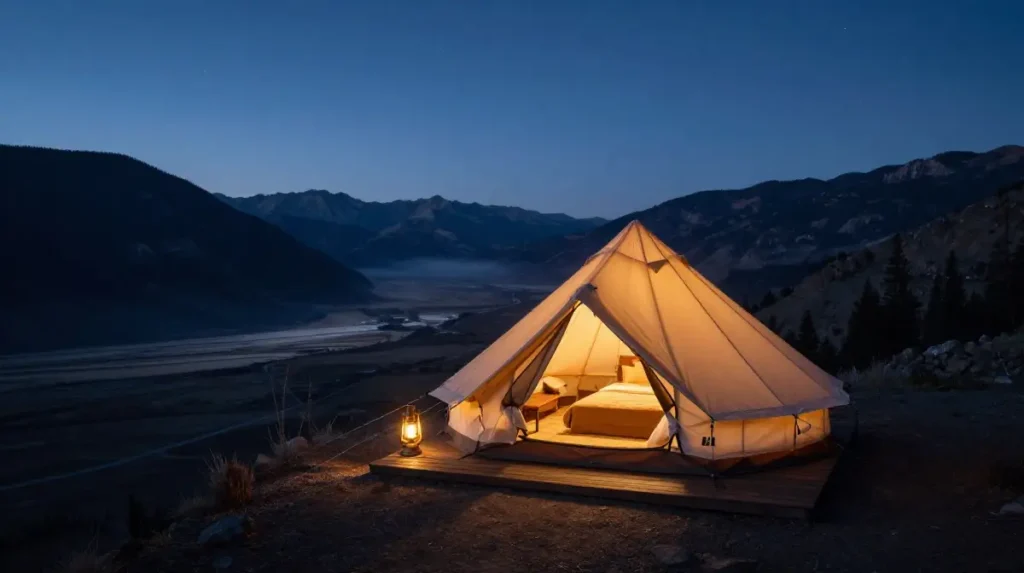
Wyoming camping destinations range from fully developed campgrounds with hookups at Yellowstone’s Madison Campground to completely primitive dispersed camping throughout the Bighorn National Forest requiring only a topo map and wilderness competence. Wyoming camping reservation system through Recreation.gov opens six months in advance for national park sites and fills for peak summer dates within hours of opening — set a calendar reminder and book the moment reservations go live.
Remote wilderness camping usa experiences in Wyoming’s backcountry require bear canisters, Leave No Trace discipline and reliable navigation since wyoming cell service remote areas coverage drops to zero across vast stretches of the Wind River Range hiking corridor and Flaming Gorge National Recreation Area. Luxury accommodation anchors exist at both ends of Wyoming’s tourism corridor — the Amangani resort in Jackson commands $1,500 to $3,000 per night and delivers genuinely world-class service with Teton views from every room. What is the best city to stay in wyoming for pure accommodation quality and park access remains Jackson but Cody’s Irma Hotel — built by Buffalo Bill Cody in 1902 — offers irreplaceable frontier atmosphere at dramatically more accessible price points.
| Accommodation Type | Price Range | Best For |
|---|---|---|
| Primitive camping | Free–$10/night | Adventure travelers |
| National park campgrounds | $20–$35/night | Families, car campers |
| Budget motels | $80–$150/night | Road trippers |
| Mid-range lodges | $150–$350/night | Comfort seekers |
| Luxury resorts | $500–$3,000/night | Premium experience |
Wyoming Food Culture: What the State Actually Eats and Where to Find It
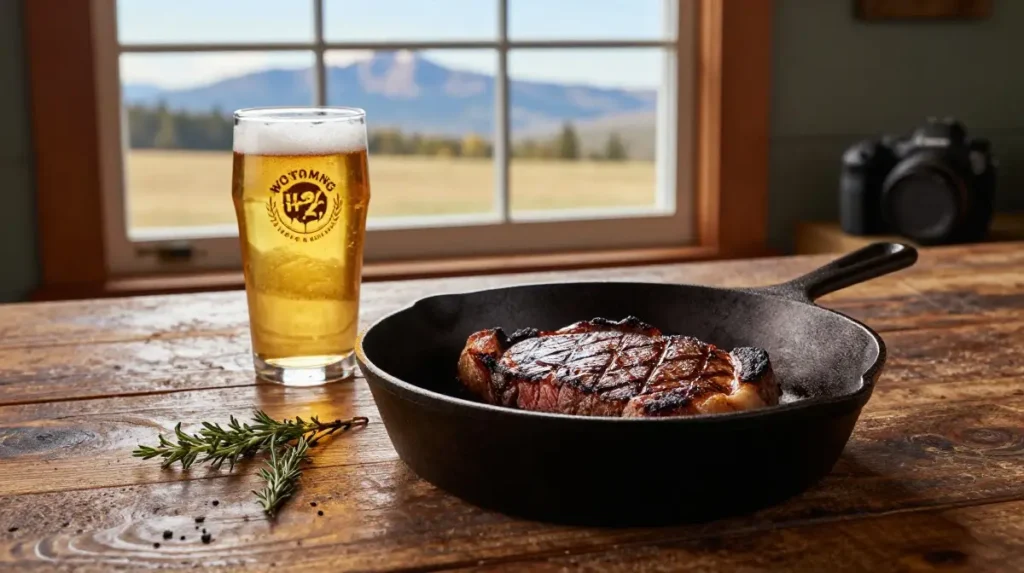
Wyoming’s food culture reflects its character — straightforward, protein-forward and deeply unpretentious. Bison burgers, elk steaks, locally ranched beef and Wyoming-grown trout appear on menus from Jackson fine dining rooms to roadside diners in tiny ranch towns with populations under 200 people. Frontier state tourism has always meant honest food served in honest portions and Wyoming maintains that tradition with notable consistency.
Jackson has developed a legitimate culinary scene that surprises visitors expecting only cowboy fare. The Handle Bar at the Four Seasons serves craft cocktails alongside elk tartare. Bin22 operates as a wine shop by day and intimate restaurant by night with a menu that changes based on seasonal availability. Outside Jackson however Wyoming dining stays gloriously simple — the Irma Hotel dining room in Cody serves prime rib that has anchored the menu since 1902 and the Silver Spur Cafe in Dubois delivers homemade pie that justifies the 45-minute detour from the main highway without any argument whatsoever.
Getting Around Wyoming Without Losing Your Mind or Your Itinerary
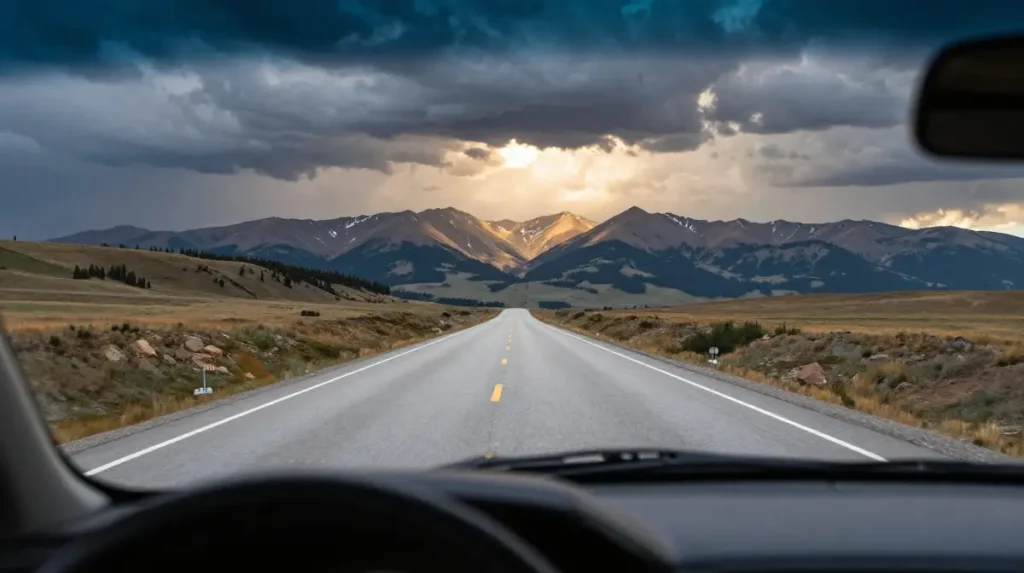
How to get around wyoming without a car is technically possible but practically very difficult. Wyoming has essentially no intercity public transportation infrastructure — no Amtrak service, minimal bus connections between cities and taxi or rideshare availability limited to Jackson and Cheyenne. Renting a vehicle is the only realistic strategy for accessing the majority of wyoming tourist attractions across the state’s vast geography.
Wyoming road trip logistics require understanding that distances are long and gas stations are sparse in rural areas. Fill your tank whenever you drop below half in remote regions — the next station may be 60 to 90 miles away. Wyoming road conditions winter driving add significant time to all journeys from October through April — budget 30 percent additional travel time for any winter route planning. Wyoming cell service remote areas coverage means downloading offline maps through Google Maps or Maps.me before departing from any populated area is essential planning rather than optional preparation.
Wyoming Safety Guide: Bears Altitude Weather and Everything Else to Respect
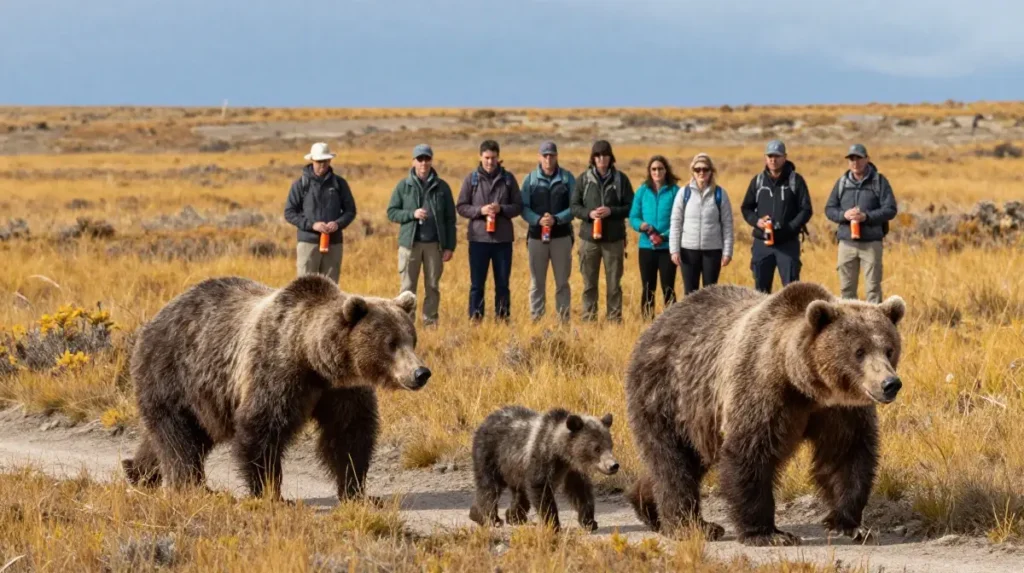
Wyoming bear safety wilderness requires more than casual awareness. Wyoming hosts the largest recovered grizzly bear population outside Alaska in the lower 48 states — approximately 1,000 animals in the Greater Yellowstone Ecosystem. Carry bear spray on every trail beyond developed areas, travel in groups of three or more, make noise on blind corners and store all food in bear-proof containers or vehicle trunks every single night without exception.
Wyoming altitude sickness prevention begins before you leave home — hydrate aggressively in the days before arrival, limit alcohol during your first 48 hours at elevation and ascend gradually when possible. Wyoming wildfire season travel impact affects late summer travel significantly — August sees the highest fire probability and smoke can severely limit visibility and air quality across large portions of the state during active fire years. Wyoming elevation effects on travelers are underestimated by most first-time visitors — even moderate exertion at 8,000 feet feels dramatically harder than the same activity at sea level and heart rate elevation of 20 to 30 percent above normal is typical during initial acclimatization.
Wyoming with Kids: How to Plan a Family Trip That Nobody Wants to Leave
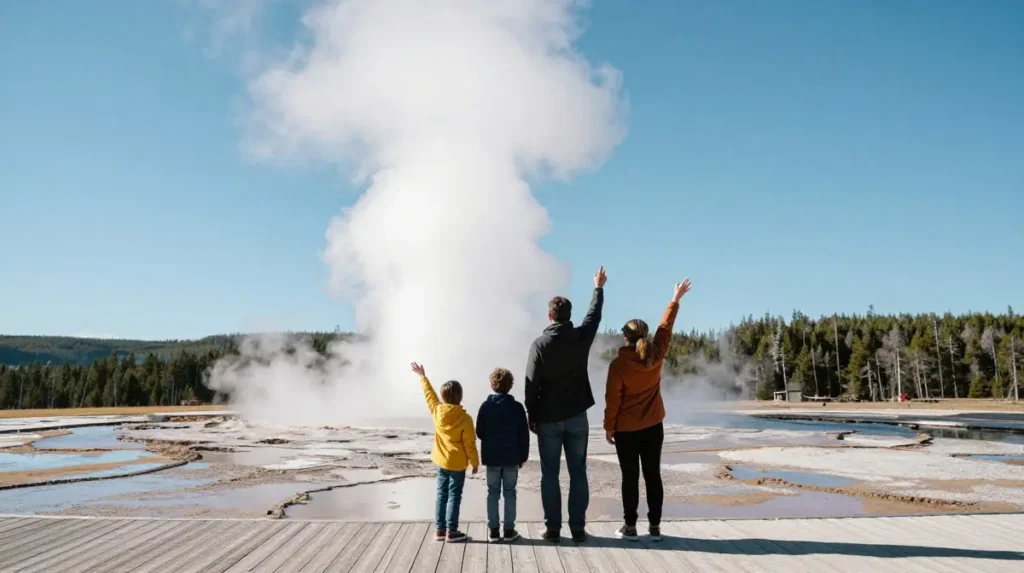
Is wyoming good for family vacations — emphatically yes when planned correctly. Wyoming offers the rare combination of genuine educational depth and visceral physical excitement that simultaneously satisfies both children and adults. Wyoming family vacation itineraries built around Yellowstone’s geysers and wildlife consistently rank among the most memorable trips American families report taking according to travel satisfaction surveys.
Wyoming national parks provide Junior Ranger programs at both Yellowstone and Grand Teton that engage children with age-appropriate activities, educational materials and the opportunity to earn an official Junior Ranger badge from park rangers. Wyoming outdoor adventures accessible to families with children include the easy Yellowstone Lake shoreline walk, the Menor’s Ferry historic district in Grand Teton and Snake River float trips operated by licensed outfitters specifically for family groups. Wyoming camping destinations at Colter Bay Village in Grand Teton offer a fully developed campground with shower facilities, a marina and immediate access to both lake and mountain environments making it one of the finest family base camps in the American West.
Wyoming Budget Breakdown: What a Real Trip Costs from Gas to Gear
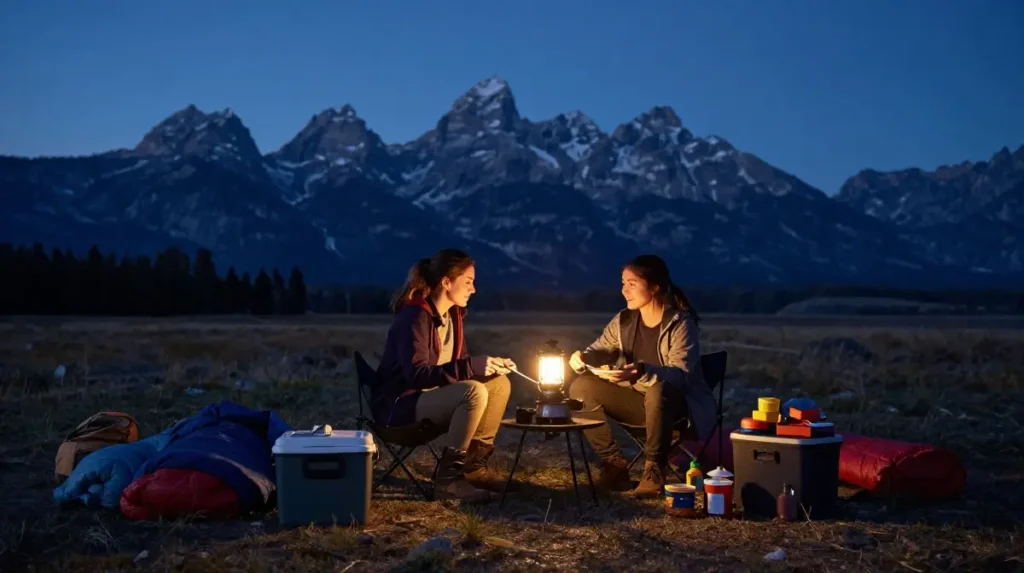
What is the cheapest way to visit wyoming starts with the America the Beautiful annual pass at $80 — it covers entrance fees for both Yellowstone and Grand Teton plus every other federal land in the country for 12 months. Wyoming entrance fees national parks without the pass run $35 per vehicle per park so the annual pass pays for itself in one visit to two parks. Budget travelers who camp every night can realistically explore Wyoming for $75 to $100 per day inclusive of camping, food, gas and activities.
Wyoming budget breakdown for a mid-range seven-day trip for two adults typically runs $2,000 to $3,500 total including flights to Jackson or Cody, rental vehicle, accommodation split between camping and budget motels, meals and activity fees. Wyoming travel tips for budget optimization include eating breakfast and lunch from grocery store provisions and reserving restaurant spending for dinner only — that single habit saves $40 to $60 per day for two people without meaningfully diminishing the travel experience. Wyoming hunting season travel impact affects accommodation pricing in October when hunting season draws visitors — book early or adjust dates slightly to access better pricing during this peak period.
| Expense Category | Budget | Mid-Range | Premium |
|---|---|---|---|
| Accommodation/night | $20–$35 camping | $120–$200 motel | $400–$3,000 resort |
| Food/day for 2 | $40–$60 | $80–$120 | $150–$300 |
| Gas/day | $30–$50 | $40–$60 | $50–$80 |
| Activities/day | $0–$20 | $30–$80 | $100–$300 |
| Total/day for 2 | $90–$165 | $270–$460 | $700–$3,680 |
Wyoming Indigenous Heritage and Frontier History You Owe It to Yourself to Learn
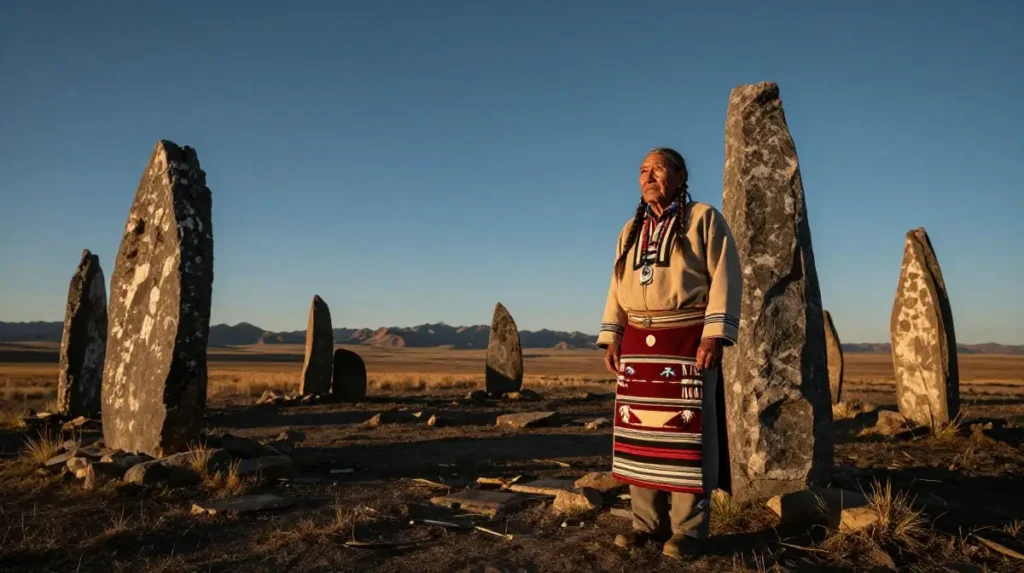
Wyoming indigenous culture heritage sites represent some of the most significant and most consistently overlooked cultural landscapes in the American West. The Wind River Indian Reservation — home to the Eastern Shoshone and Northern Arapaho nations — covers 2.2 million acres of central Wyoming and holds cultural significance extending back thousands of years before European contact. American frontier heritage sites in Wyoming cannot be honestly understood without engaging with the indigenous history that preceded and fundamentally shaped the frontier period.
Wyoming indigenous culture heritage sites include the Medicine Wheel National Historic Landmark in the Bighorn National Forest — a stone structure approximately 75 feet in diameter constructed by indigenous peoples at least 300 years ago and still used for ceremonial purposes by multiple Native nations today. The Wyoming State Museum Cheyenne dedicates significant exhibition space to both indigenous and frontier history with collections that contextualize the state’s complex cultural heritage honestly. Cowboy culture travel experience in Wyoming reaches deeper meaning when understood alongside the stories of the Shoshone, Arapaho, Crow and Lakota peoples whose relationships with this landscape stretch back 13,000 years before the first cattle drive ever crossed a Wyoming valley.
What to Pack for Wyoming: The Honest List Based on Real Conditions Not Guesses
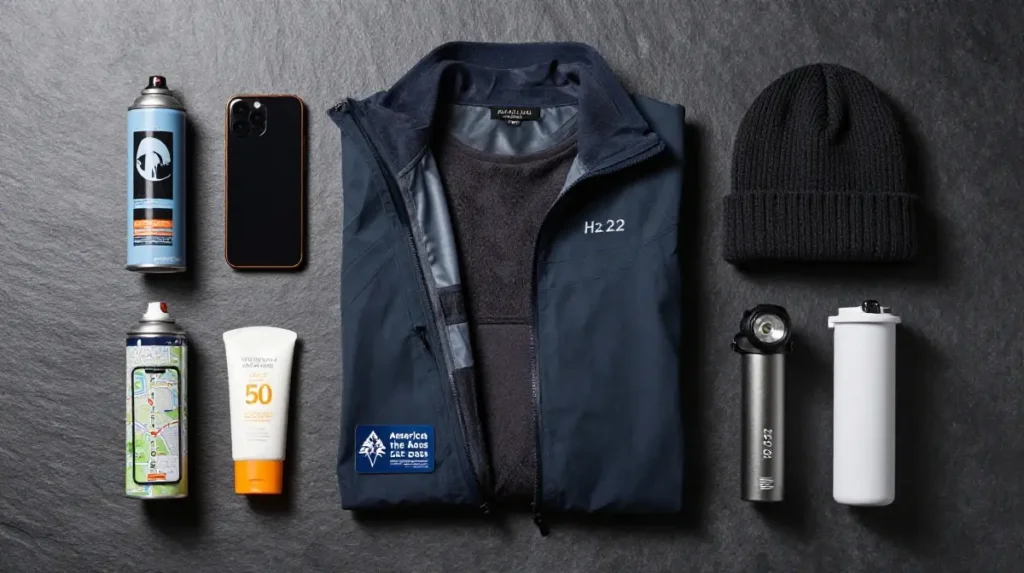
What should I pack for a wyoming trip differs significantly from packing for most American destinations because Wyoming’s weather changes dramatically within single days and the consequences of being underprepared in remote terrain are genuinely serious. Summer mornings at elevation start cold — 35 to 45 Fahrenheit is common above 8,000 feet in July — and afternoon thunderstorms arrive with remarkable speed and intensity across exposed terrain.
Wyoming travel tips from experienced visitors consistently emphasize layering systems over single heavy garments — a moisture-wicking base layer, insulating mid-layer and waterproof shell that packs small covers the full range of Wyoming summer conditions in one manageable kit. Bear spray — a 10-ounce canister of EPA-registered capsaicin deterrent — is non-negotiable for any trail hiking beyond developed boardwalk areas and must be carried accessible not buried in a pack. Wyoming elevation effects on travelers make quality sunscreen at SPF 50 or higher essential even on overcast days — UV radiation increases approximately 4 percent per 1,000 feet of elevation gain and Wyoming’s high-altitude landscape significantly amplifies burn risk compared to sea-level destinations.
FAQ Section
Q1. What is the best time of year to visit Wyoming for good weather?
Late June through early September delivers the most reliably accessible weather with all roads open and full park services operating. September offers the additional advantage of dramatically reduced crowds, spectacular fall foliage and elk rut season. Avoid the peak July Fourth week if crowds concern you — that specific window sees maximum visitor density across all Wyoming national parks simultaneously.
Q2. Do I need a permit to hike in Yellowstone or Grand Teton?
Day hikes require no permits in either park. Overnight backcountry camping requires advance reservation permits through each park’s individual permit system — Yellowstone through the park’s backcountry office and Grand Teton through Recreation.gov. Wyoming permit requirements hiking for backcountry in both parks open in January for the following summer season and fill quickly for peak dates.
Q3. How far is Jackson Hole from Yellowstone National Park?
How far is yellowstone from jackson wyoming — the south entrance of Yellowstone sits approximately 57 miles north of Jackson town square. Under normal summer conditions the drive takes about one hour and fifteen minutes via US-191 and US-89. Add 30 to 45 minutes for the inevitable wildlife traffic stops inside Grand Teton National Park which you traverse en route.
Q4. Is Wyoming safe for solo travelers and families?
Wyoming is statistically one of the safest states in the country for travel. The primary risks are environmental rather than criminal — wildlife encounters, altitude effects, extreme weather and remote terrain require preparation and respect. Solo travelers should always file a trip plan with someone reliable before entering backcountry areas and carry satellite communication devices where wyoming cell service remote areas coverage is absent.
Q5. What wildlife is most commonly seen in Wyoming?
Bison are the most reliably spotted large animal in Wyoming — herds of hundreds move through Yellowstone’s Hayden and Lamar Valleys daily. Pronghorn antelope are visible across open rangeland throughout the state. Elk, mule deer and moose appear regularly near water sources particularly at dawn and dusk. Wyoming wolf watching opportunities in Lamar Valley offer the best chance of wolf sightings in the lower 48 states with experienced wolf watchers stationed daily during peak viewing seasons.
Conclusion
Wyoming doesn’t care whether you’re ready for it. It simply exists — massive, unhurried and completely indifferent to your schedule. That’s precisely what makes wyoming travel so profoundly restorative for people who spend their lives inside calendars and notifications and the low hum of constant connectivity. Out here the landscape sets the agenda and your only job is to show up prepared enough to receive what it offers.
Plan carefully, pack honestly, book early and then surrender to the rhythm of a place that has been doing this for millions of years before any visitor arrived with an itinerary. The american west travel destinations don’t get more genuine than this. Wyoming rewards preparation with experiences that genuinely don’t exist anywhere else on earth. Go. Stay longer than you planned. Come back.
2 Comments