
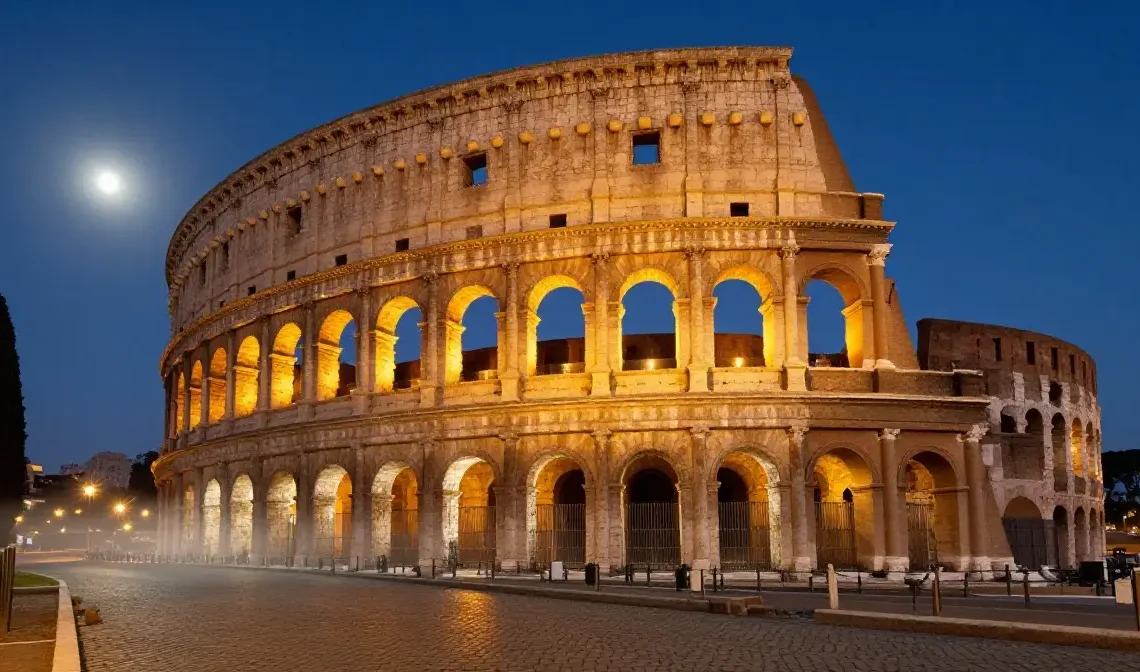
Some buildings exist. Others endure. And then there is the Roman Colosseum — a structure so commanding, so saturated with human drama, that standing before it feels less like tourism and more like confrontation. Two thousand years of war, weather, earthquake, and neglect haven’t diminished it. If anything, the damage makes it more honest. This guide takes you inside every layer of the monument — its construction, its spectacles, its secrets, and its survival — so you arrive not just as a visitor but as someone who genuinely understands what they’re looking at.
Why the Roman Colosseum Still Leaves the World Speechless After 2000 Years
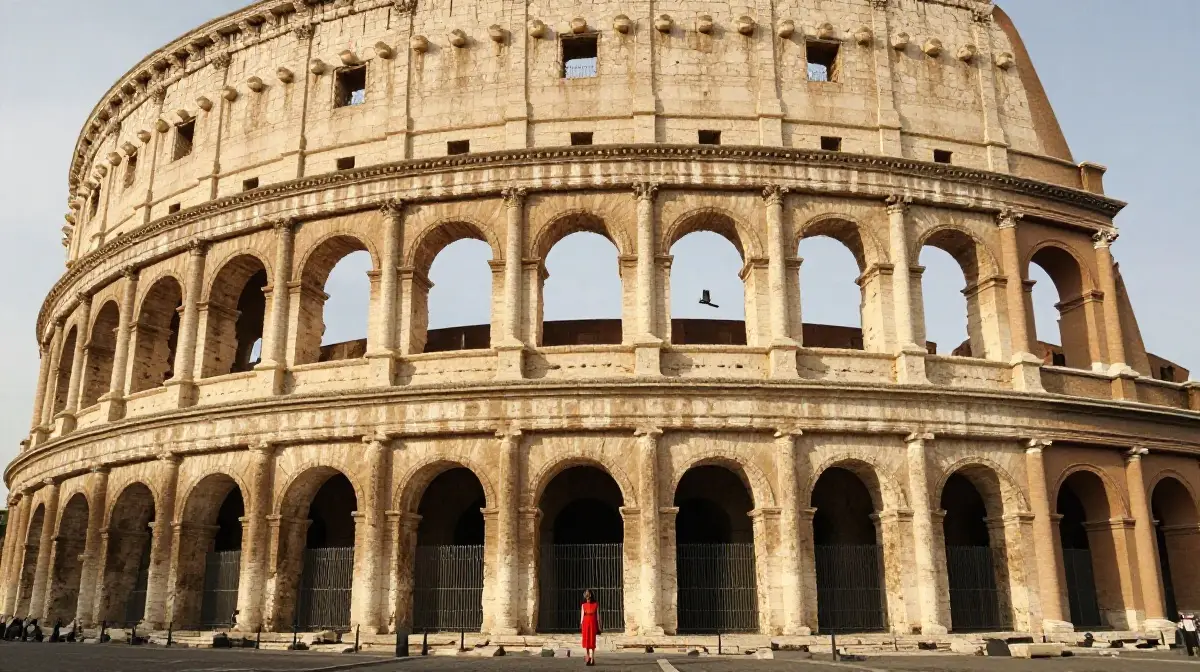
Nothing quite prepares you for the scale. The roman colosseum rises 157 feet from street level across an elliptical footprint 620 feet long and 512 feet wide. It held between 50,000 and 80,000 spectators. That’s more than many modern NFL stadiums. It is a roman engineering marvel executed without power tools, without steel, and without modern mathematics — and it still stands.
Designated a UNESCO World Heritage Site in 1980 and voted one of the New Seven Wonders of the World in 2007, the structure draws over 7 million visitors annually — making it the most visited paid monument on earth. It represents classical roman civilization at its most ambitious and its most brutal simultaneously. That contradiction is precisely what makes it impossible to look away from. The roman colosseum history embedded in every cracked stone is a mirror held up to the full complexity of human civilization.
Emperor Vespasian’s Master Plan That Changed Roman Architecture Forever
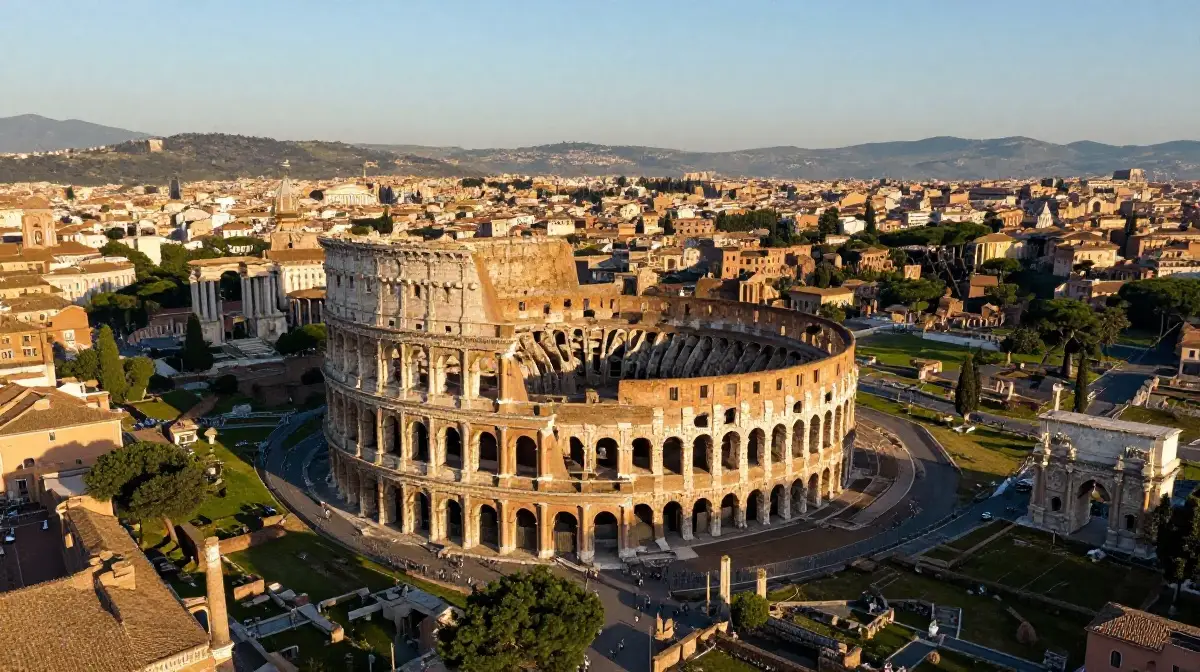
Emperor Vespasian didn’t just commission a stadium. He made a political statement. The site he chose for the flavian amphitheatre was the artificial lake of Nero’s Golden House Domus Aurea — the lavish private palace that Nero had built after the great fire of 64 AD, seizing enormous tracts of central Rome for personal use. By draining that lake and building a public arena in its place, Vespasian symbolically returned Rome to its people.
Construction began around 70 AD under the Flavian dynasty and the political messaging was deliberate at every level. The arena’s location adjacent to the Forum Romanum and within sight of the Palatine Hill — Rome’s most prestigious residential district — announced imperial confidence without a single word. Emperor Titus, Vespasian’s son, completed and inaugurated the structure in 80 AD with 100 days of games. Why was the colosseum built in rome is therefore both a practical and a profoundly political answer: to consolidate Flavian power through public generosity on an unprecedented architectural scale.
How 100,000 Workers Built an Engineering Marvel in Under a Decade
The colosseum construction timeline is staggering. A structure of this scale — requiring an estimated 100,000 cubic metres of travertine limestone construction material alone — rose from foundation to finished upper tiers in approximately eight to ten years. Roman engineers accomplished this through an extraordinarily sophisticated system of prefabricated elements, standardised arch modules, and parallel construction teams working simultaneously on multiple sections.
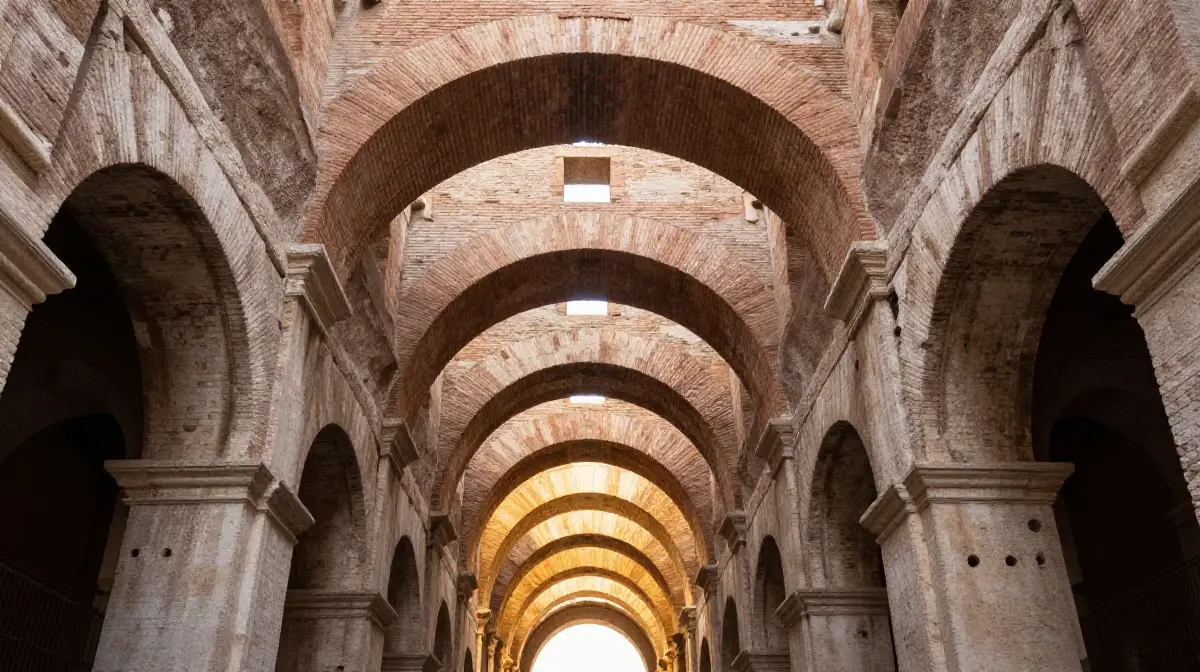
How was the roman colosseum built is a question that reveals Roman engineering at its most ingenious. The foundation alone consumed 6 million bricks and required the excavation of an elliptical trench up to 40 feet deep. The structural arch system employed throughout the building — 80 radial arches at each of the four levels — allowed massive weight loads to distribute outward and downward through the piers rather than compressing inward. Roman concrete durability was achieved through a volcanic ash mixture called pozzolana, which actually strengthens when exposed to water rather than deteriorating — a property modern materials scientists are still studying today.
| Construction Fact | Figure |
|---|---|
| Construction Period | 70–80 AD (approx. 10 years) |
| Travertine Stone Used | 100,000 cubic metres |
| Iron Clamps Holding Stone | 300 tons |
| Foundation Depth | Up to 40 feet |
| Number of Radial Arches Per Level | 80 |
| Estimated Workforce | 60,000–100,000 workers |
Travertine Marble Concrete and Genius — the Materials Behind the Monument
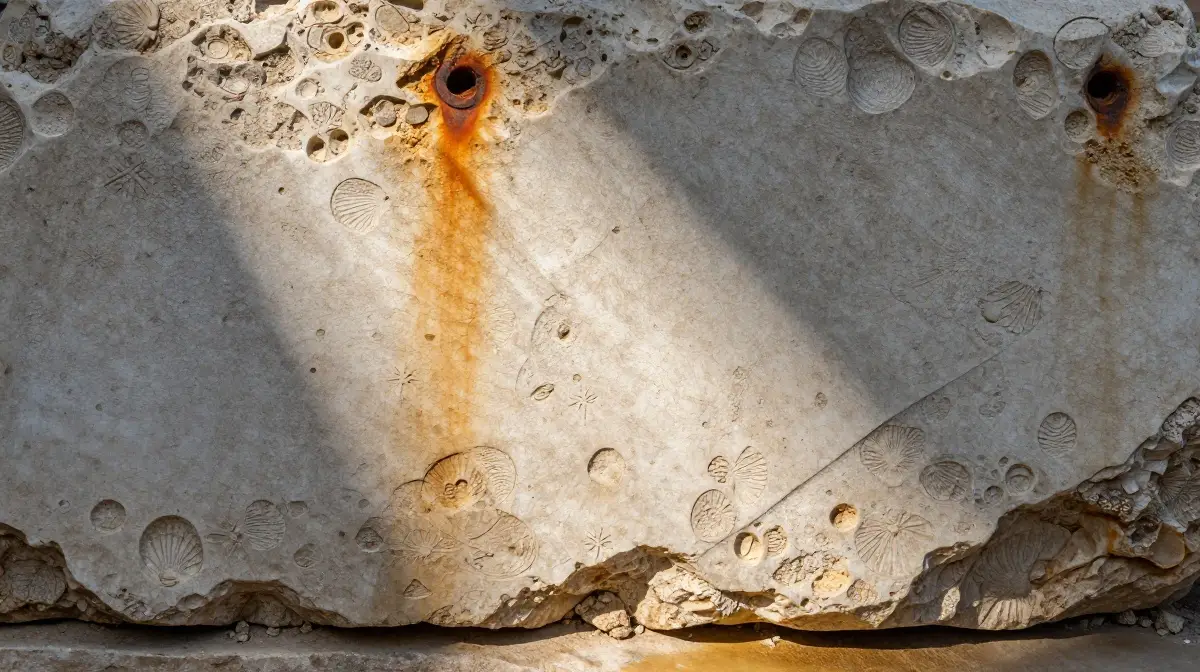
What materials were used to build the colosseum is a question with a layered answer — literally. The exterior visible shell is travertine limestone construction quarried from Tivoli, 20 miles east of Rome, transported on wagons and river barges in a logistical operation that itself constitutes an engineering achievement. The interior structure uses concrete opus incertum — irregular stones set in Roman volcanic concrete — for the barrel-vaulted corridors and supporting piers.
Different materials served different structural purposes. Brick faced the interior walls where precise shaping mattered. Tuff volcanic stone filled intermediate sections where weight reduction was prioritised. What materials were used to build the colosseum therefore isn’t one answer but a hierarchy of materials deployed with precision according to structural load, aesthetic requirement, and cost. Marble surfaced the seating and decorative elements — almost none of which survives today. The marble was stripped during the medieval period and burned in lime kilns to produce building material for newer Roman structures. Ancient roman amphitheatre design had never before achieved this level of material sophistication at this scale.
What Actually Happened Inside the Colosseum on a Roman Game Day
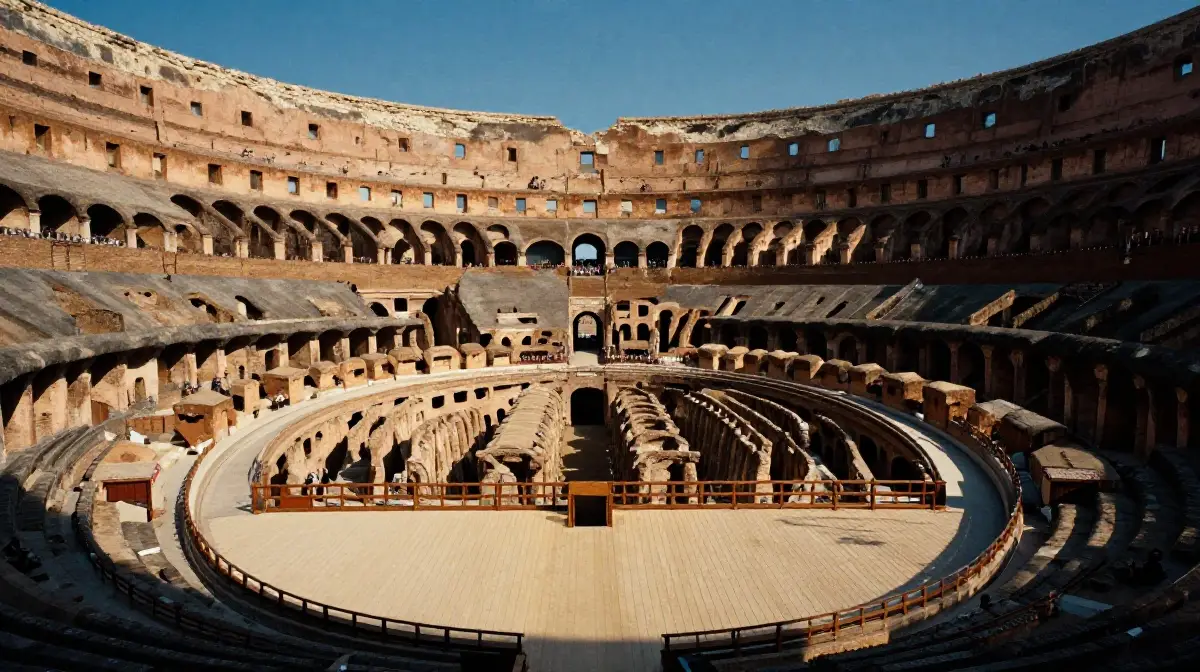
Game days at the colosseum arena floor were not simple afternoon entertainments. They were full-day civic spectacles running from dawn until dusk, structured in three distinct acts. Morning brought the venationes — wild animal hunts and beast fights. Midday featured public executions of criminals and prisoners of war, sometimes staged as mythological re-enactments. Afternoon delivered the headlining colosseum gladiator fights that the crowd had waited all day to witness.
What happened inside the colosseum involved a scale of theatrical production that modern entertainment struggles to match. The colosseum arena floor — covered in arena sand latin etymology from the Latin word harena meaning sand, which absorbed blood and improved footing — could be reconfigured between events. Trapdoors and hydraulic lifting platforms in the hypogeum underground chambers below raised animals, scenery, and gladiators directly onto the arena surface. Accounts from Cassius Dio describe the inaugural games under Emperor Titus involving 9,000 animals killed over 100 days. Roman public spectacle operated at a scale designed to make the emperor’s generosity feel literally impossible to repay.
Gladiators Unveiled — Who Really Fought and Died on That Arena Sand
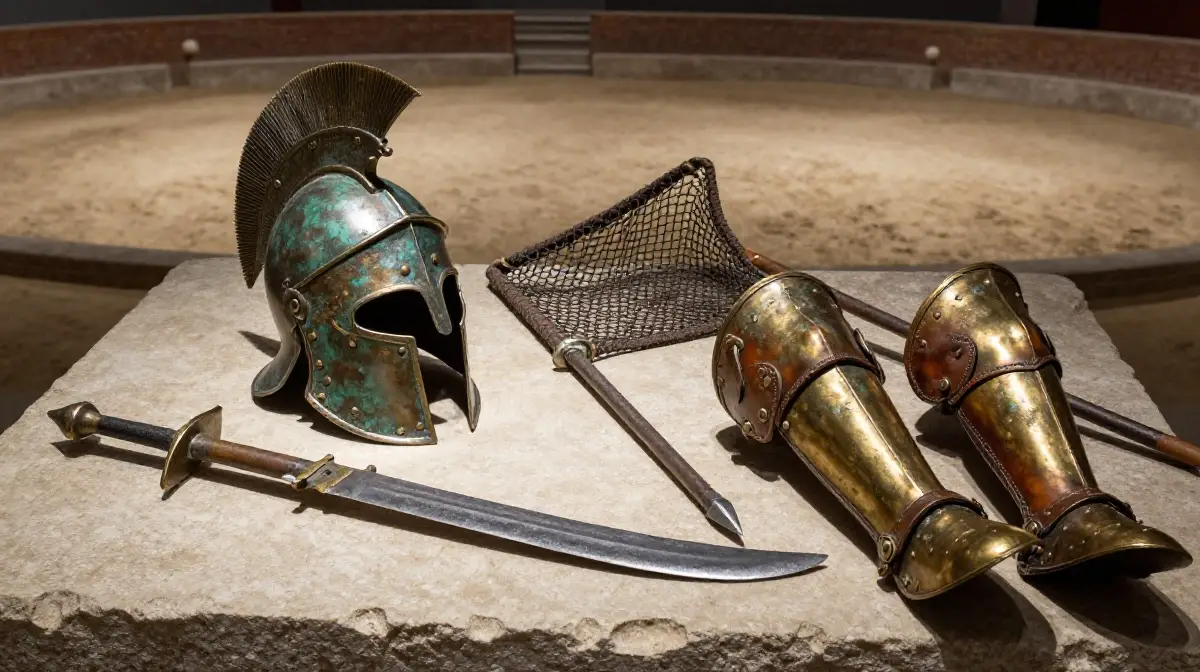
The popular image of gladiators as condemned slaves fighting to the death every match is largely a myth. Most gladiators were trained professionals — some volunteers — who lived in gladiatorial schools called ludi, ate carefully managed diets, received medical treatment, and fought perhaps two to three times per year. They were expensive investments. Killing them carelessly made no financial sense.
How many people died in the colosseum over its operational history is genuinely unknown but estimates range from 400,000 to over 1 million humans and potentially 1 million animals across the venue’s roughly 400 years of active use. Roman gladiatorial combat had elaborate rules, weight classes of a sort, and specialised fighter types — the Retiarius fought with a net and trident, the Secutor wore heavy armour, the Murmillo carried a short sword and rectangular shield. The crowd voted on whether a fallen fighter lived or died by turning thumbs. The editor — the games’ sponsor — made the final call. Gladiator arena history was never as simple as Hollywood suggests and considerably more complex than most visitors realise.
| Gladiator Type | Weapons | Armour Style | Opponent |
|---|---|---|---|
| Retiarius | Net and trident | Minimal — one shoulder guard | Secutor |
| Secutor | Short sword | Full helmet, large shield | Retiarius |
| Murmillo | Gladius sword | Fish-crested helmet | Thraex |
| Thraex | Curved sica blade | Small shield, greaves | Murmillo |
| Andabatae | Sword | Blind helmet — no eye holes | Each other |
The Hypogeum — The Terrifying Underground World Beneath the Arena Floor
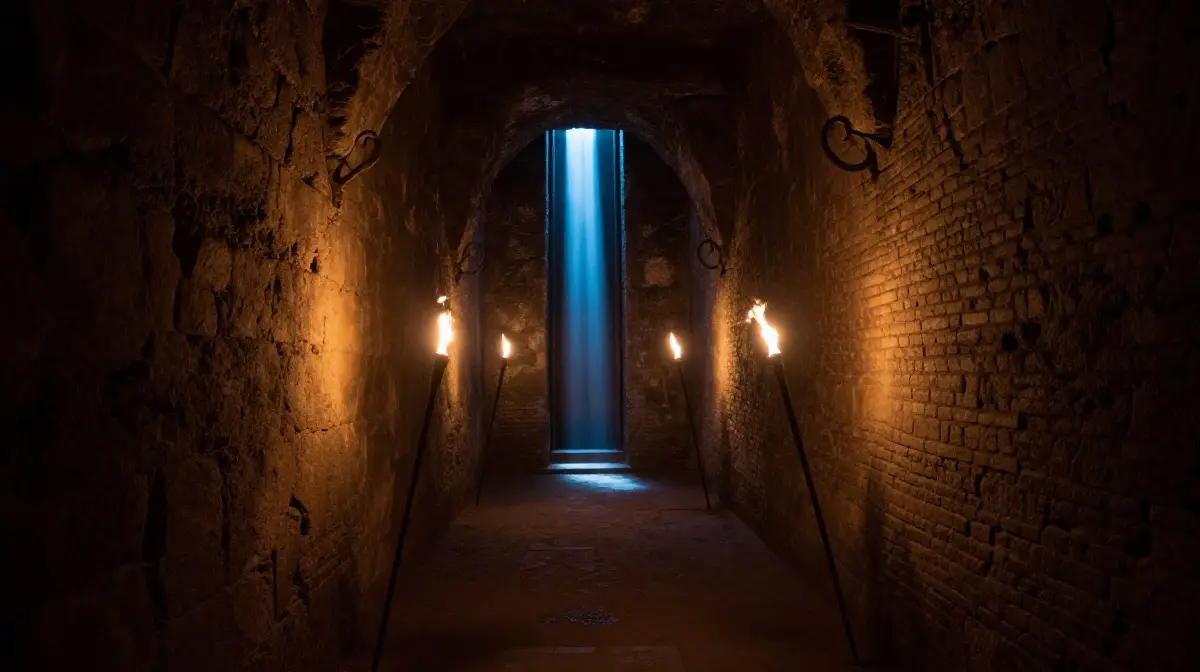
What is beneath the colosseum floor is one of the most dramatic answers in all of archaeology. The hypogeum underground chambers — added by Emperor Domitian after the original inauguration — constitute a two-level subterranean network of corridors, cages, winches, and elevator shafts running directly beneath the arena surface. This underground city of terror housed the animals, gladiators, stagehands, and mechanical equipment that powered the spectacle above.
you may also like this:22 Wyoming Travel Ideas for Unforgettable Outdoor Adventures
The colosseum underground network contained 32 animal pens, each connected to vertical shaft elevators operated by counterweight systems. A lion in a cage below the arena floor could be raised to surface level and released through a trapdoor in under 30 seconds. What is beneath the colosseum floor also included the carceres — holding cells for condemned prisoners — and the elaborate machinery of Roman theatrical production. The hypogeum is now partially accessible on guided tours and represents perhaps the most viscerally affecting part of any colosseum visitor guide experience. Standing in those stone corridors, you feel the weight of what happened above you with uncomfortable immediacy.
Wild Animal Hunts That Transformed the Colosseum Into a Living Jungle
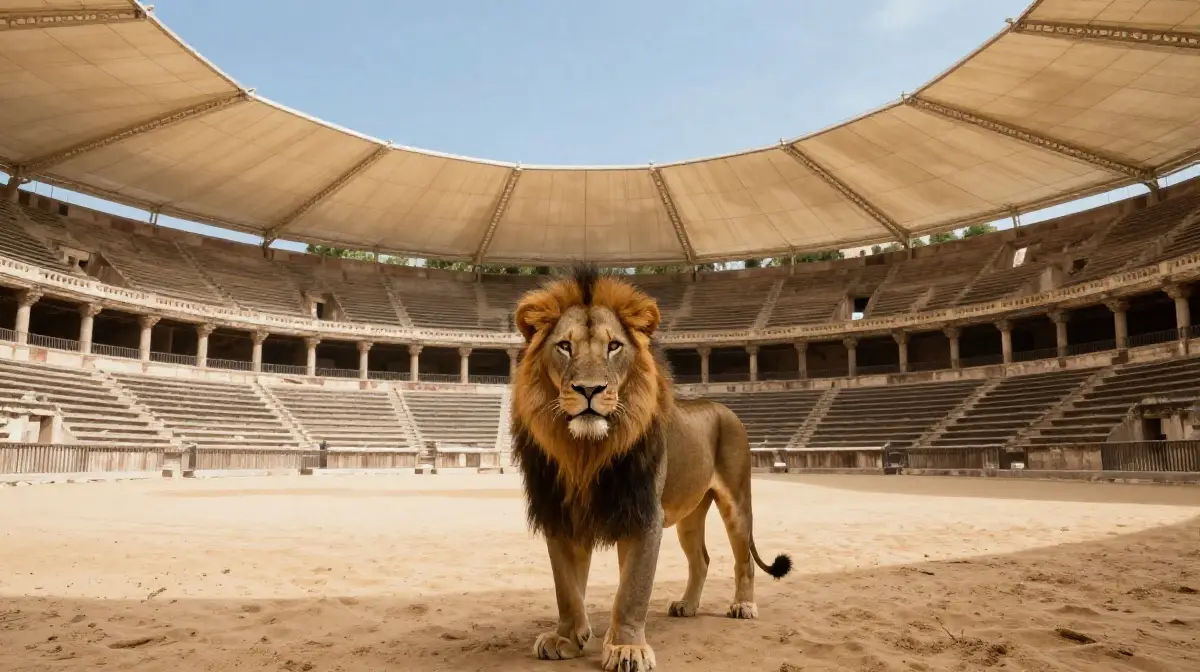
The venationes — staged animal hunts — required a supply chain of exotic wildlife that stretched across three continents. North African lions and leopards. Syrian bears. Nile hippopotami. Indian elephants. Ostriches, crocodiles, rhinoceroses. What animals were used in colosseum games represents a catalogue of nearly every large dangerous species known to the ancient Mediterranean world. Procuring them required dedicated imperial hunting operations, diplomatic negotiations with foreign rulers, and a continent-spanning transportation network.
The environmental consequences were catastrophic. Scholars believe the roman colosseum games directly contributed to the local extinction of the North African elephant, the Barbary lion, and the hippopotamus from the Nile delta. Entire regional populations of large predators were decimated over two centuries of imperial games. The morning venationes sometimes involved elaborate stage sets — trees, rocks, artificial mountains — constructed overnight on the colosseum arena floor to create a simulated natural environment. Ancient roman entertainment at the Colosseum was immersive theatre on a scale that modern productions can only approximate. The audience watched lions chase deer through a constructed forest, 50,000 feet above the very machinery that made the illusion possible.
How the Velarium Shade System Solved a Problem Modern Stadiums Still Face
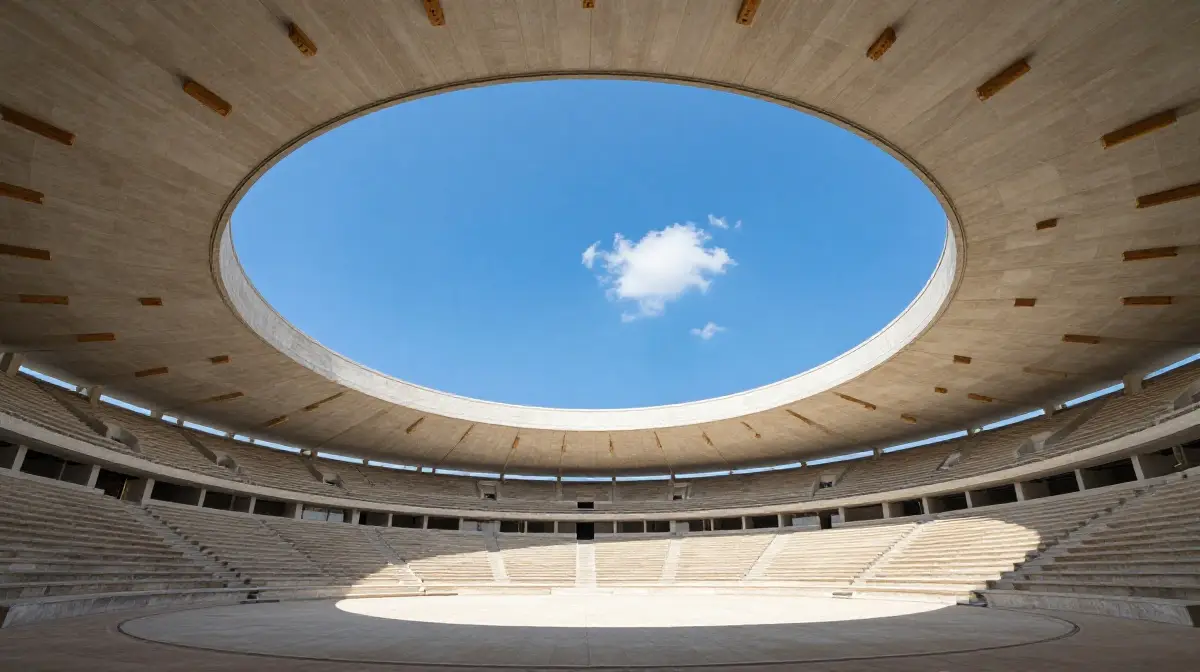
On hot Roman afternoons, 50,000 people sitting in direct Mediterranean sunlight for eight hours would have been impossible to manage. The Romans solved this with the velarium awning system — a retractable canvas shade canopy that covered the upper two-thirds of the seating area and was operated by a dedicated crew of sailors from the Roman naval base at Misenum. Sailors were chosen specifically because they understood large-scale rope and sail management.
How tall is the roman colosseum matters here: the fourth and highest exterior wall ring — 157 feet up — contained 240 wooden mast brackets from which the canvas panels were suspended and rigged. The velarium awning system didn’t cover the arena itself, only the audience seating. This maintained adequate airflow for the fighters and animals below while protecting spectators from direct sun exposure. Modern retractable stadium roofs in venues like AT&T Stadium in Dallas and Allegiant Stadium in Las Vegas solve the same fundamental problem using aluminium and electric motors. The Roman version used hemp rope, Capuan canvas, and sailors. Both work. The 2,000-year-old version arguably required more genius.
The Seating Hierarchy That Exposed Every Roman’s Place in Society
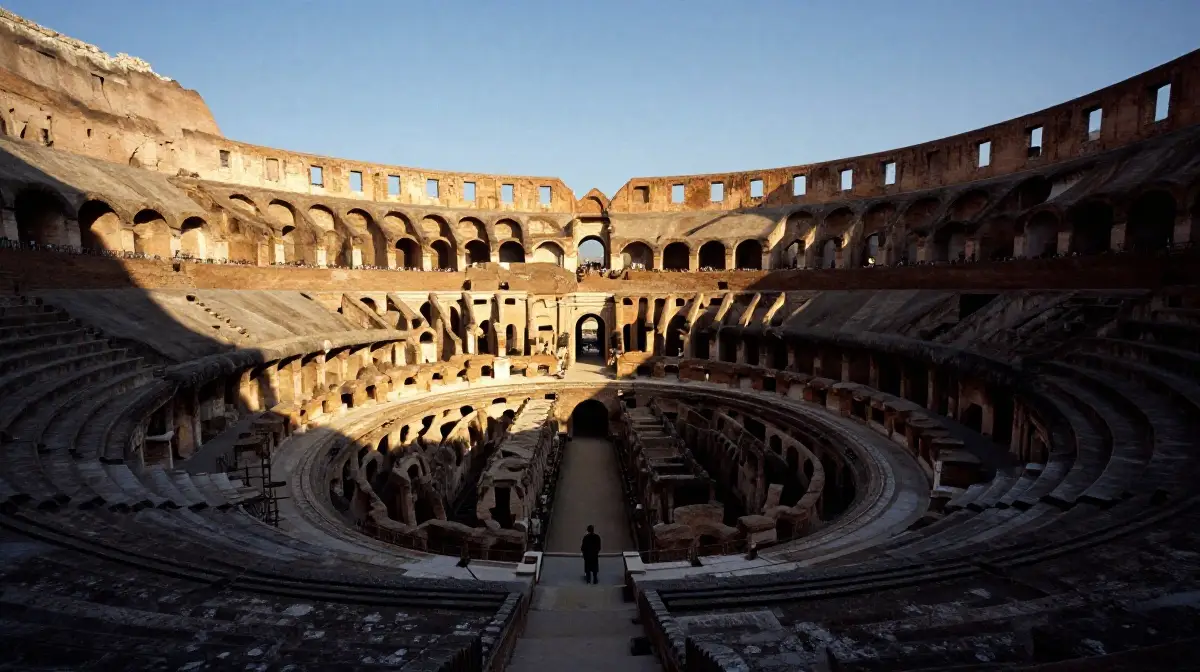
The colosseum seating sections were a physical map of Roman social order. The cavea seating tiers divided the audience into four horizontal zones — each assigned by social rank with the rigidity of law. The podium wall gladiator protection at the very bottom seated senators, magistrates, and the Vestal Virgins, closest to the action and separated from the arena by a high wall. The imperial loge emperor seating — the pulvinar — occupied the prime southern position on the podium level.
Above the senators sat the equestrian class. Above them, ordinary Roman male citizens. The upper tiers — the highest and least comfortable seats — were assigned to women, slaves, and foreigners. The cavea seating tiers system meant that your physical elevation in the building directly mirrored your social elevation in Roman society. You literally looked down on those below you. Roman colosseum capacity estimates range from 50,000 to 80,000 depending on how tightly the upper wooden tiers were packed. The vomitoria entry passages — the arched exit corridors that gave the building its crowd-flow efficiency — could empty the entire structure in under 10 minutes. A figure that shames many modern venues.
How Earthquakes Vandals and Time Ate Away at an Eternal Monument
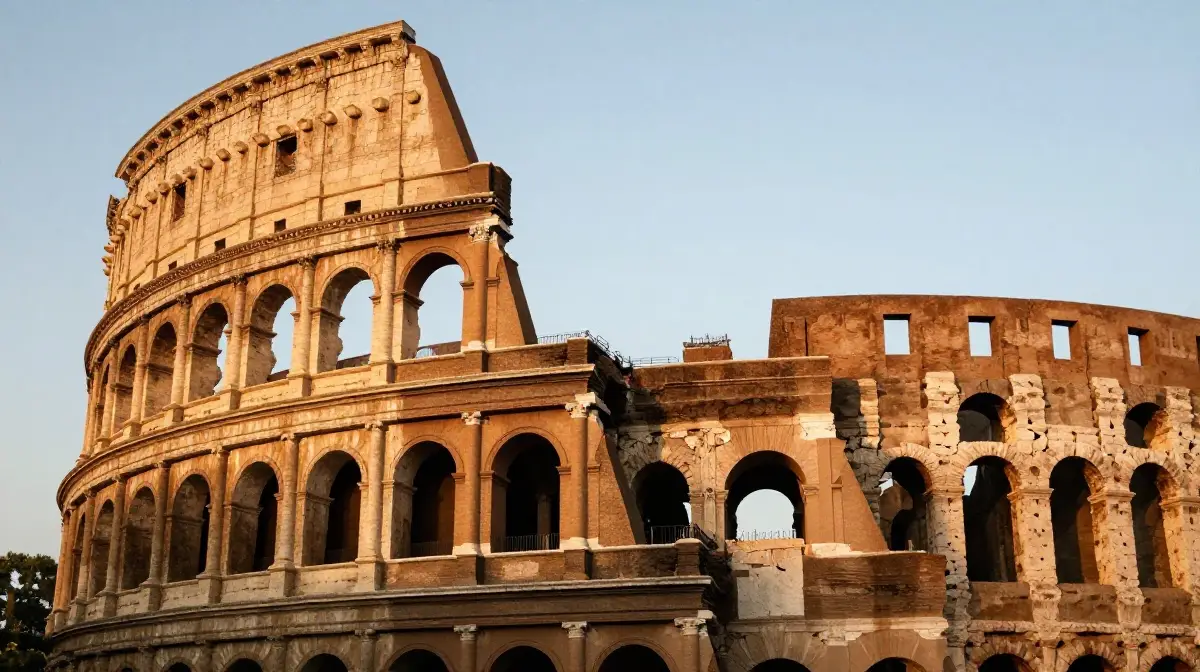
The roman colosseum you see today is roughly two-thirds of the original structure. What destroyed parts of the roman colosseum involves multiple agents operating across fifteen centuries. A series of major earthquakes — particularly in 847 AD and 1349 AD — collapsed significant sections of the south outer wall, sending thousands of tons of travertine cascading into the surrounding streets. The 1349 earthquake alone triggered the collapse of the entire southern exterior ring.
Seismic damage repair remains an ongoing concern. The cardinal points orientation of the building — aligned precisely to the four cardinal directions — means that the north side, which sits on more stable geological substrate, survived far better than the south side, which rests on softer alluvial soil deposited by the ancient course of the Tiber. Medieval and Renaissance Romans systematically quarried the fallen stone for building material — the travertine limestone construction blocks that once faced the exterior walls now appear in the foundations of St. Peter’s Basilica, Palazzo Venezia, and dozens of other Roman landmarks. The building was essentially a licensed quarry for 400 years. What destroyed parts of the roman colosseum is therefore not one catastrophe but a slow accumulation of natural disaster, human opportunism, and institutional neglect across the entirety of the medieval period.
The Colosseum’s Dark Role in Christian Martyrdom and Religious History
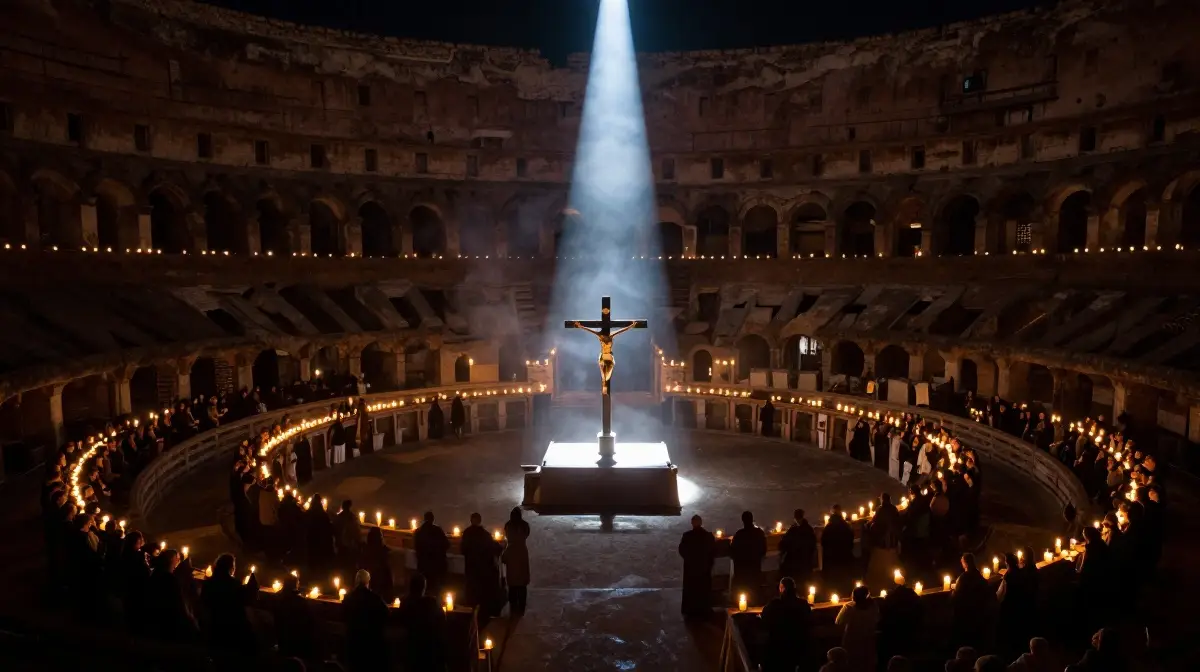
The association between the roman colosseum and Christian martyrdom is powerful but historically contested. The Church has venerated the site as sacred ground since at least the 16th century and a Stations of the Cross ceremony is held inside the structure on Good Friday each year. Pope Benedict XIV declared it a sacred site in 1749 specifically to halt the ongoing quarrying of its stones. The consecration effectively saved what remained.
However, how many people died in the colosseum as specifically Christian martyrs is a question that modern historians approach with scepticism. Ancient sources describing mass Christian executions within the flavian amphitheatre are limited and often unreliable. The primary evidence for widespread Christian martyrdom comes from later hagiographic texts rather than contemporary Roman records. What is certain is that the site hosted public executions of criminals and prisoners — some of whom were certainly Christians — and that the ancient world heritage site status the building holds today owes as much to its religious consecration as to its archaeological significance. The cross erected in the arena center was removed during a 2000 restoration but the Good Friday ceremony continues.
Emperor Domitian’s Controversial Changes That Divided Roman Opinion
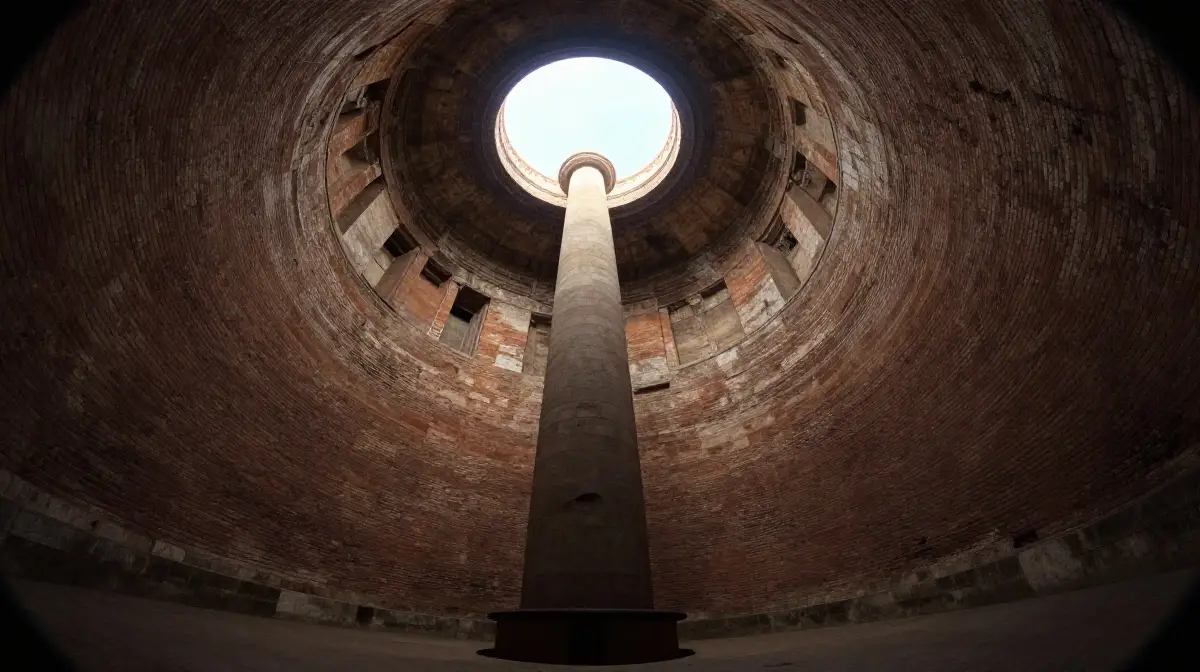
Emperor Domitian, who ruled from 81 to 96 AD, inherited a completed Colosseum from his brother Emperor Titus and proceeded to fundamentally alter its subterranean infrastructure. His addition of the hypogeum underground chambers was the single most consequential architectural modification in the building’s history — but it came at a cost. The hypogeum’s construction eliminated the possibility of the naumachia — staged naval battles using the flooded arena — that had been a celebrated feature of the original Titian inaugurations.
Domitian also added a fifth seating tier in wood above the stone cavea, increased the roman colosseum capacity to its maximum, and introduced new fighter categories including female gladiators and dwarf combatants — spectacles that drew criticism from writers like Cassius Dio and Suetonius as emblematic of his erratic governance. Emperor Domitian’s relationship with the Flavian dynasty legacy was complicated: he genuinely expanded and improved Rome’s infrastructure while simultaneously earning a reputation as a paranoid authoritarian. His modifications to the ancient roman amphitheatre are a perfect architectural expression of that contradiction — brilliant engineering choices driven partly by showmanship and partly by a desire to distinguish his reign from his predecessors’.
How the Flavian Amphitheatre Became the Blueprint for Every Modern Stadium
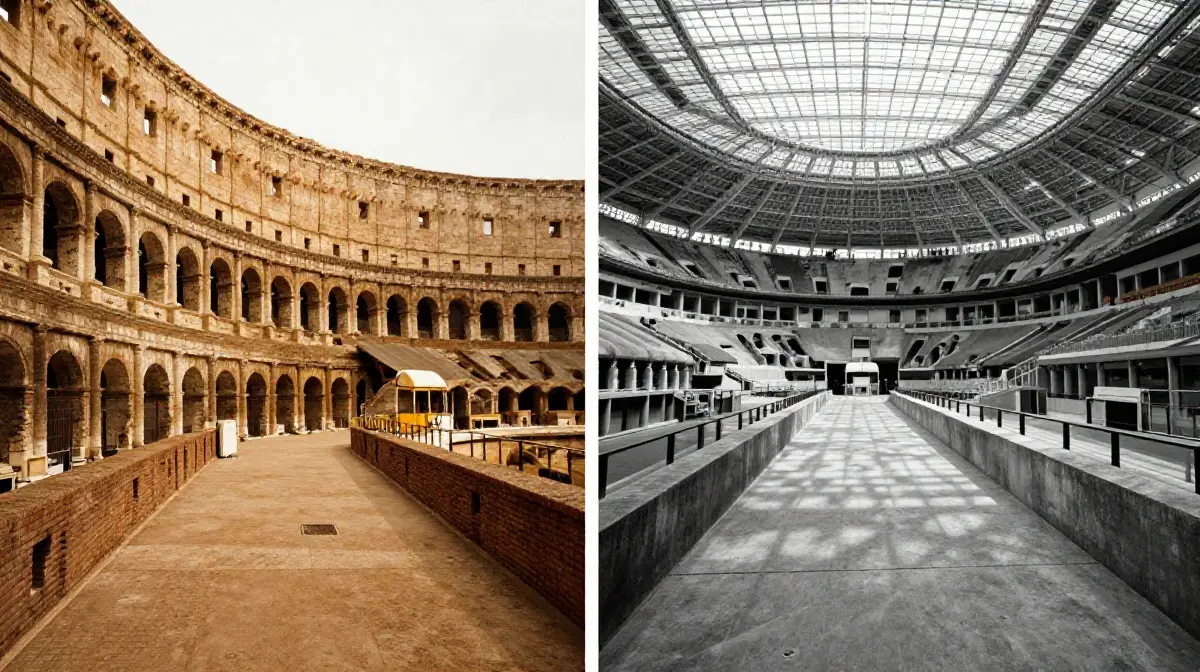
Every sports venue you’ve ever sat in owes a structural debt to the flavian amphitheatre. The elliptical plan maximising sightlines from every seat. The vomitoria entry passages allowing rapid crowd ingress and egress. The tiered cavea seating tiers elevating rear seats for unobstructed views. The structural arch system distributing loads across a continuous perimeter rather than relying on a few massive support columns. Every single one of these innovations appears in every major stadium built in the last 150 years.
Ancient stadium design at the Colosseum level was so comprehensively effective that Roman engineers essentially solved the stadium problem in one building. The roman colosseum facts most architects find astonishing relate to sightline geometry: every seat in the original structure had a clear view of the entire arena floor with a maximum viewing angle deviation of less than 15 degrees from optimal. Modern stadium designers use computational software to achieve results the Romans calculated with geometry and accumulated practical knowledge. How many arches does the colosseum have is the structural question that reveals the system’s elegance: 80 arches per level across four levels — 320 total — each carrying load with mathematical efficiency across two millennia.
What Archaeologists Keep Discovering Beneath Rome’s Most Famous Ruin
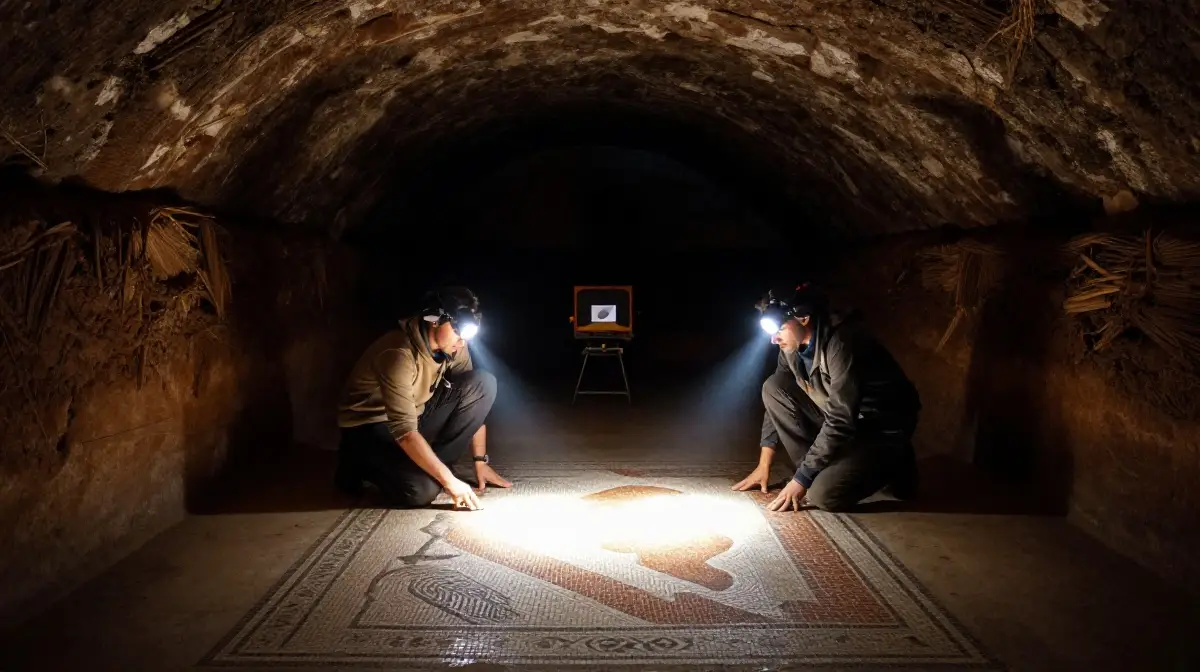
Archaeological investigation of the roman colosseum is genuinely ongoing. A major 2021 excavation beneath the hypogeum underground chambers revealed a previously unknown third subterranean level — deeper than any previously mapped passage — containing drainage infrastructure and what appear to be additional animal holding areas. The discovery revised upward estimates of the facility’s operational complexity.
What is beneath the colosseum floor continues to surprise researchers equipped with ground-penetrating radar and 3D photogrammetry tools unavailable to earlier generations of archaeologists. Recent scanning has revealed the original positions of the 36 trap doors in the arena surface, the precise routing of the hydraulic water systems that may have enabled rapid arena flooding, and the foundations of the Nero Golden House Domus Aurea structures that the Colosseum was built atop. The Forum Romanum immediately to the northwest has yielded complementary discoveries — inscriptions naming specific gladiators, financial records of game costs, and audience seating assignments — that together build an increasingly detailed picture of daily operations. Roman colosseum history is not a closed chapter. It’s an active investigation.
The Restoration War — Who’s Saving the Colosseum and What It Costs
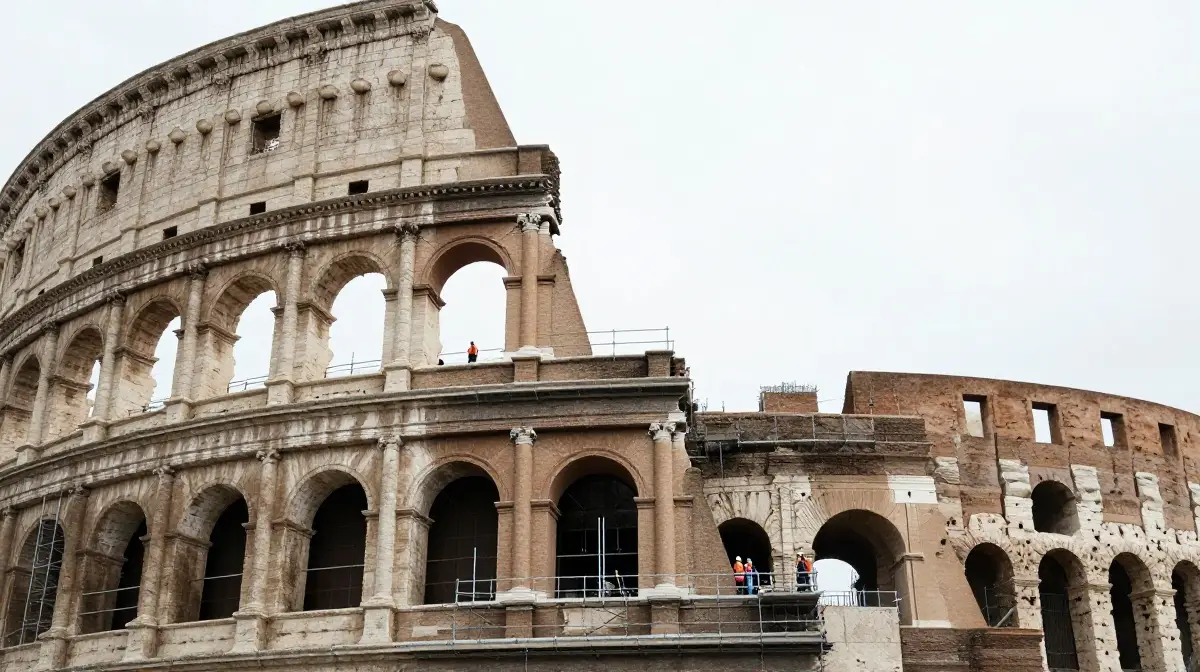
The colosseum restoration project is one of the most expensive and logistically complex heritage conservation efforts in the world. A €25 million restoration program funded by luxury brand Tod’s between 2013 and 2016 cleaned and stabilised the exterior travertine facade — removing over a century of accumulated pollution, biological growth, and atmospheric deposits. The restoration scaffolding program required custom engineering to avoid damaging the original stone while providing worker access to all four exterior levels.
The most ambitious element of current restoration involves rebuilding the arena floor. A new retractable wooden arena surface — the first since the original floor was removed in the 19th century to expose the hypogeum underground chambers — is scheduled for completion by 2025 at a cost of €18.5 million. The project is funded by the Italian Ministry of Culture and managed by the Colosseum Archaeological Park authority. What is the colosseum used for today includes concerts, cultural events, and special exhibitions — all of which the new floor will enable on a scale previously impossible. The colosseum restoration project represents a philosophical as much as practical decision: should the building be preserved as a ruin or restored toward its operational appearance? The floor project firmly answers: somewhere deliberate between both.
How to Visit the Roman Colosseum Without Wasting a Single Hour
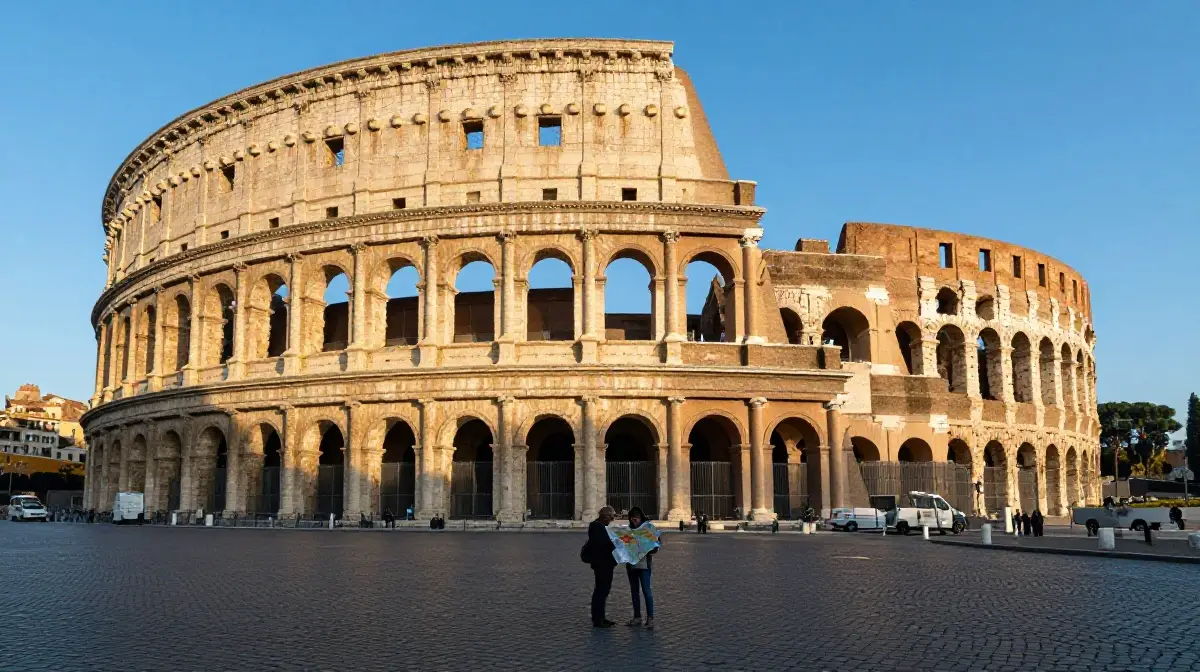
How to visit the colosseum without crowds begins with one non-negotiable rule: book online in advance. Walk-up ticket purchases are possible but the queues — particularly between April and October — routinely exceed two hours. The official booking portal is coopculture.it and tickets include timed-entry access to the Colosseum, Forum Romanum, and Palatine Hill on a single combined pass. The combination ticket is valid for two consecutive days.
Best time to visit the colosseum in rome is either first thing in the morning — booking the earliest available entry slot at 9 AM — or the final entry slot two hours before colosseum opening hours close at 7 PM in summer. Midday visits between 11 AM and 3 PM deliver maximum crowd density and maximum heat simultaneously. Colosseo metro station on Line B deposits you 200 metres from the entrance in approximately 15 minutes from Termini station. The colosseum visitor guide experience is dramatically enhanced by the audio guide or a licensed human guide — the visual complexity of the site rewards explanation that the bare stone cannot provide independently.
| Visit Time | Crowd Level | Temperature | Recommended For |
|---|---|---|---|
| 9:00 AM opening | Low | Cool | Best overall experience |
| 10:00–11:00 AM | Moderate | Comfortable | Good with pre-booked tickets |
| 11:00 AM–3:00 PM | Very High | Hot | Avoid if possible |
| 3:00–5:00 PM | Moderate | Warm | Acceptable with booking |
| Last entry (5–6 PM) | Low | Cooling | Excellent light for photography |
Skip the Line Secrets and Ticket Strategies Every Visitor Needs to Know
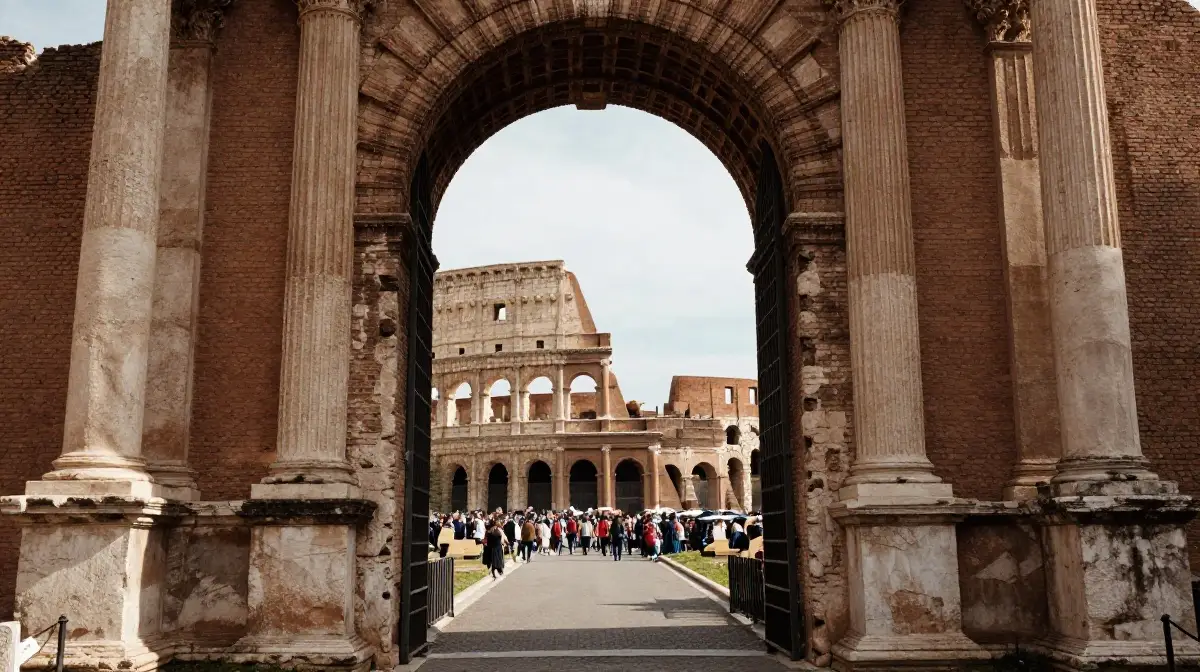
Colosseum tickets and tours exist in several tiers and understanding the difference saves both money and frustration. The standard combined ticket covers the exterior and interior ground and first level. The underground hypogeum access and the arena floor access each require upgraded tickets booked separately — and both sell out weeks ahead during peak season. If experiencing the colosseum underground is your priority, book those specific add-on tickets the moment your travel dates are confirmed.
Several legitimate strategies minimise queue time. The Forum Romanum entrance on Via Sacra processes the same combined ticket and typically has no queue whatsoever — you enter the archaeological site there, explore freely, and use a separate gate to access the Colosseum from the Roman Forum side with dramatically shorter internal queues. Licensed tour operators with group allocations can also provide guaranteed timed access as part of guided packages. The colosseum opening hours vary by season — typically 9 AM to 4:30 PM in winter and 9 AM to 7 PM in summer — and the published closing time means last entry, not last exit. Colosseum tickets and tours purchased through third-party resellers at marked-up prices offer no access advantages over direct booking and should be avoided entirely.
The Best Viewpoints and Hidden Angles Most Tourists Never Find
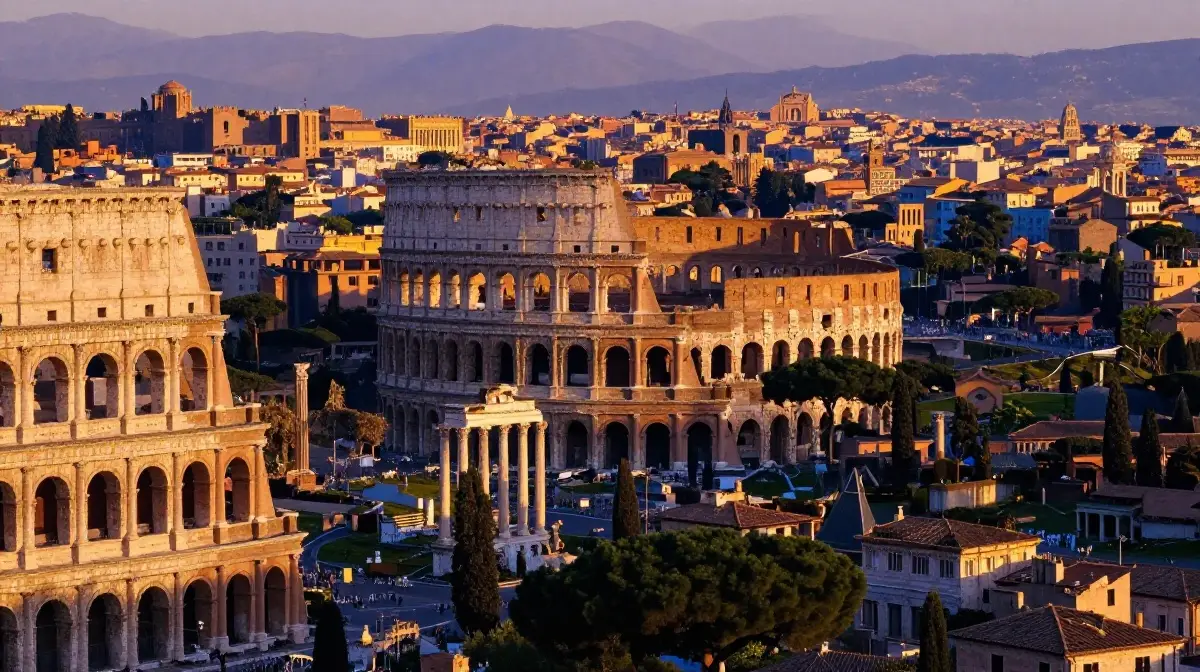
The classic Colosseum photograph — the full exterior ellipse shot — is taken from Via Sacra looking northwest, usually in early morning before the tour groups arrive. But the most cinematically powerful interior view is from the second-level gallery looking across the exposed hypogeum underground chambers toward the surviving south wall. That perspective — the arena floor gone, the underground grid fully visible, the sky open above — communicates the building’s layered complexity better than any external shot.
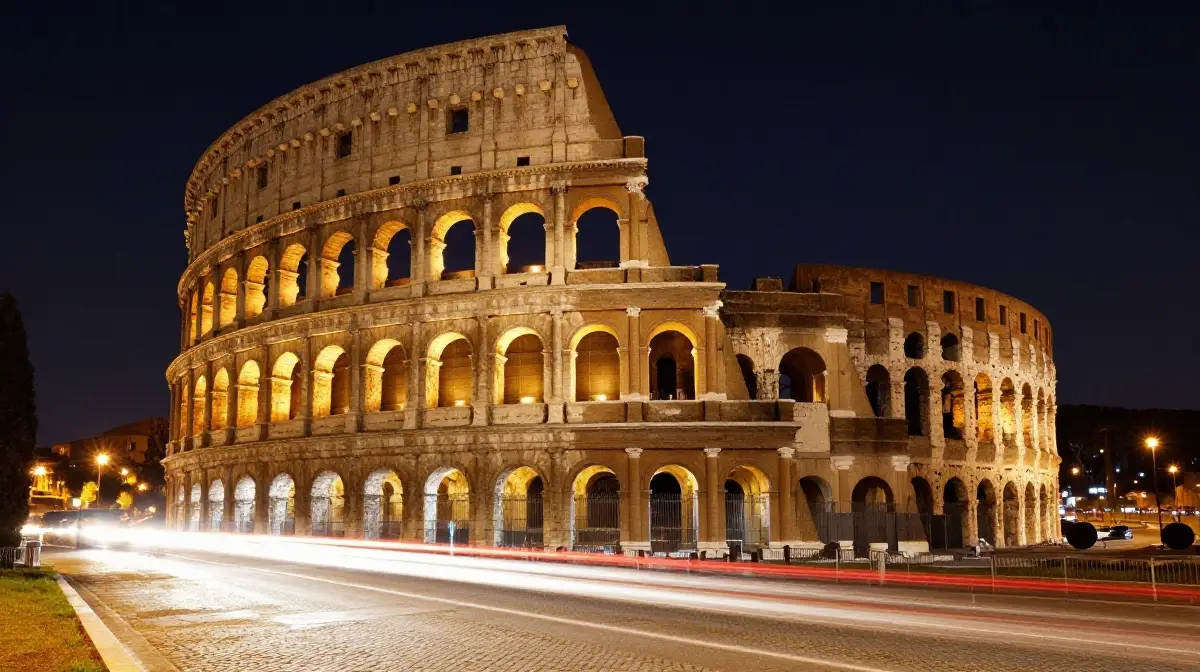
The Palatine Hill above the Forum Romanum provides a dramatically underused elevated perspective looking directly down onto the Colosseum exterior from the southwest — a viewpoint that conveys the building’s elliptical geometry and its relationship to the surrounding ancient urban fabric with a clarity impossible from street level. The Colosseo metro station exit at night delivers perhaps the most emotionally affecting first glimpse — the exterior illuminated amber-gold against a black sky, traffic flowing around it, the modern city arranged as a respectful distance around something it cannot diminish. Best time to visit the colosseum in rome for photography purposes is indisputably the golden hour after 6 PM in summer when the travertine glows and the crowds thin simultaneously.
What the Colosseum Looked Like in Its Original Fully Intact Glory
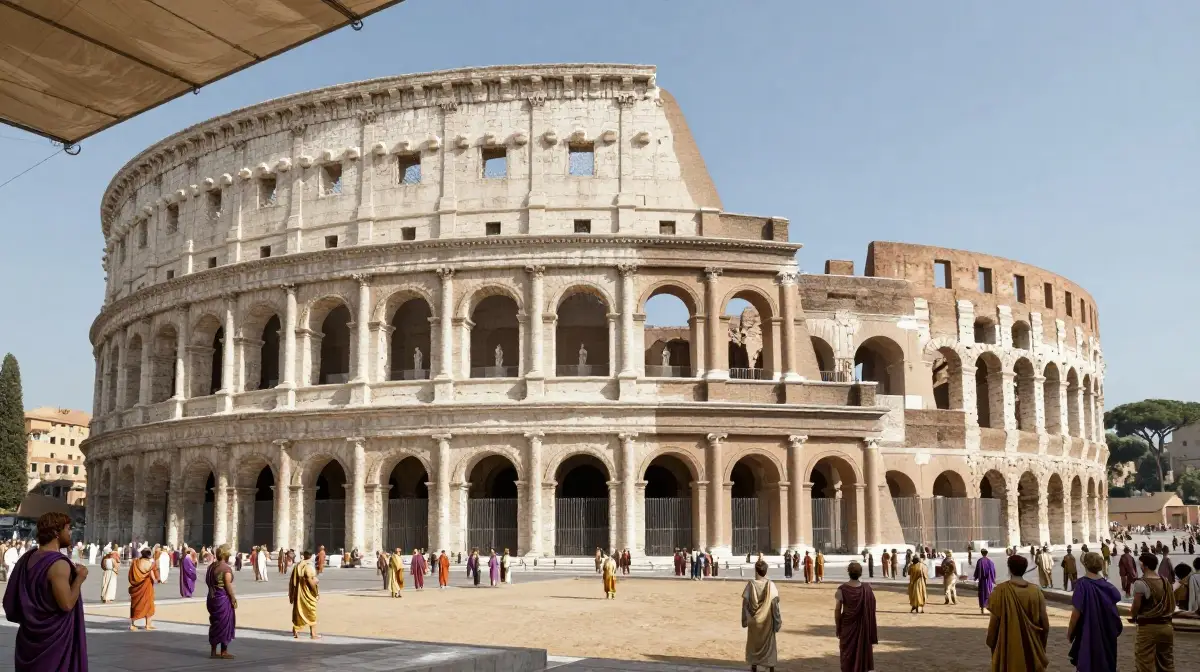
The damaged, weathered structure you visit today bears only partial resemblance to the roman colosseum at its 80 AD inauguration. The exterior was entirely faced in travertine limestone construction blocks fitted together without mortar — held by the 300 tons of iron clamps whose removal during the medieval period left the characteristic pockmarked holes visible across the entire facade today. Marble stucco covered interior surfaces. Painted frescoes decorated the upper corridors. Bronze shields and gilded decorations filled the decorative roundels between the fourth-floor windows.
The ancient roman amphitheatre in its original state would have been almost blinding in direct sunlight — a gleaming white marble and travertine structure surrounded by marble paving, festooned with statuary in every arch of the ground and second levels. How tall is the roman colosseum at completion was 157 feet on its intact northern side — the southern exterior wall collapse has permanently removed that full-height impression from the surviving structure. The four exterior levels displayed the three classical architectural orders in sequence: Doric on the ground floor, Ionic on the second, Corinthian on the third, with Corinthian pilasters on the fourth level enclosing the mast brackets. It was an architecture textbook in stone, displaying Greek refinement in service of Roman power.
How the Colosseum Survived While the Roman Empire Around It Crumbled
The Roman Empire formally ended in the West in 476 AD when Odoacer deposed the last emperor Romulus Augustulus. The roman colosseum outlasted that ending by fourteen centuries and is still standing. How? Several overlapping factors. Its sheer mass made demolition impractical. Its utility — as a quarry, as a fortress, as a cemetery, as a Christian shrine — gave successive generations reasons to maintain rather than destroy it.
Between the 6th and 13th centuries the structure served as a fortified residence for the powerful Frangipane and Annibaldi noble families who built towers and walls within and atop the ancient fabric. The iconic italian heritage site status it holds today was formalised only gradually — Pope Sixtus V proposed demolishing it entirely in the late 16th century to build a wool factory before his death ended the plan. What is the colosseum used for today as a monument and cultural venue represents the culmination of a survival story spanning every century of Western history since antiquity. The roman colosseum endured not because anyone systematically preserved it but because it was simply too large, too useful, and eventually too sacred to destroy.
The Colosseum at Night — Why After Dark Is When the Magic Really Hits
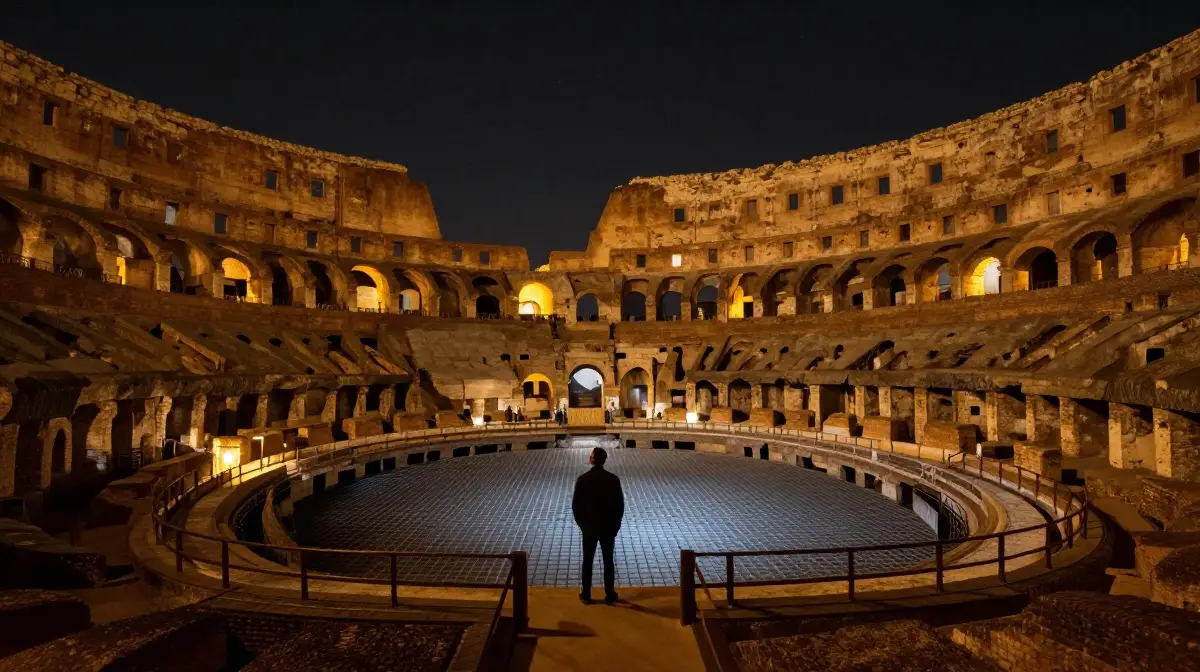
After the last tourists depart and the city’s ambient noise settles to a lower register, something shifts around the roman colosseum that daylight cannot replicate. The exterior illumination — warm amber uplighting installed in the early 2000s — transforms the damaged travertine facade into something that reads less as ruin and more as ember. The missing south wall becomes a feature rather than a wound. The exposed interior arches glow from within. The surrounding Forum Romanum and Palatine Hill recede into darkness and the structure floats, apparently weightless, above the ancient city.
Night tours of the colosseum underground and arena level are available on specific dates through the official booking portal and represent among the most atmospheric heritage experiences available anywhere in Rome Italy. The colosseum opening hours for night tours typically run from 8 PM to 11 PM between April and October. Groups are small — maximum 25 people — and the reduced visitor density means you stand in the hypogeum underground chambers in near silence. What happened inside the colosseum at night during the Roman period is itself a fascinating question — ancient sources describe torchlit spectacles under the velarium awning system on special occasions, the arena lit by thousands of oil lamps. Standing in that space after dark, the distance between then and now collapses in a way that no daylight visit quite achieves.
Frequently Asked Questions
How many people died in the colosseum over its history?
Precise figures are impossible to verify from surviving records. Scholarly estimates suggest between 400,000 and 1 million human deaths across the building’s roughly 400 years of active spectacle use, with potentially a comparable number of animals killed. The roman colosseum facts relating to mortality are necessarily approximate given the fragmentary nature of ancient Roman records.
What is the colosseum used for today?
The roman colosseum functions as an archaeological monument and visitor attraction managed by the Colosseum Archaeological Park under the Italian Ministry of Culture. It hosts occasional cultural events, the annual Good Friday Stations of the Cross ceremony, and — pending completion of the new retractable arena floor — will host live performances and exhibitions. Over 7 million visitors per year make it the world’s most visited paid monument.
How long did it take to build the colosseum?
How long did it take to build the colosseum from foundation to completed inauguration was approximately eight to ten years — construction began around 70 AD under Emperor Vespasian and the inaugural games were held in 80 AD under Emperor Titus. Additional modifications by Emperor Domitian continued into the 90s AD.
How many arches does the colosseum have?
The flavian amphitheatre contains 80 arched openings at each of its three lower levels — 240 arched openings in the exterior facade alone plus additional interior arches throughout the radial and annular vaulted corridor system. How many arches does the colosseum have in total across all structural elements exceeds 1,000 individual arched forms.
What is the best time to visit the colosseum in rome?
Best time to visit the colosseum in rome for minimal crowds and optimal conditions is early morning at opening time between October and March. April through September deliver the longest colosseum opening hours but also the heaviest visitor volumes. Book the first available entry slot and arrive 15 minutes early regardless of season.
How to visit the colosseum without crowds?
How to visit the colosseum without crowds requires three strategies: book the earliest or latest available timed entry slot, consider visiting on a weekday rather than weekend, and enter via the Forum Romanum gate on Via Sacra rather than the main Colosseum entrance — the queue differential is often dramatic. Night tours offer the ultimate low-crowd experience.
Is the colosseum underground accessible to all visitors?
The colosseum underground requires a separate upgraded ticket beyond the standard combined entry. Access involves stairs and uneven stone surfaces making it unsuitable for visitors with significant mobility limitations. The underground experience is bookable through coopculture.it and sells out weeks in advance during peak season — prioritise this booking if it’s a priority for your visit.
Conclusion
The roman colosseum is not just a ruin. It’s a living argument about what civilisation means — its capacity for breathtaking engineering genius and breathtaking cruelty coexisting in the same elliptical space, the same travertine stone, the same structural arch carrying the weight of both. Walking through its vomitoria entry passages, standing above its hypogeum underground chambers, reading the social geography encoded in its cavea seating tiers — all of it delivers a quality of historical encounter that no museum exhibit can replicate.
Visit it with full knowledge. Understand what those arena sands absorbed. Understand what those structural arch system calculations achieved. Understand that the building survived not through careful preservation but through sheer irreducibility — nobody could quite bring themselves to finish the demolition. That survival is its own kind of testimony. The roman colosseum stood through the fall of empires, the rise of the Church, the Renaissance, the World Wars, and the age of mass tourism. It will almost certainly outlast things we haven’t yet thought of. Some buildings exist. This one endures.
1 Comment