
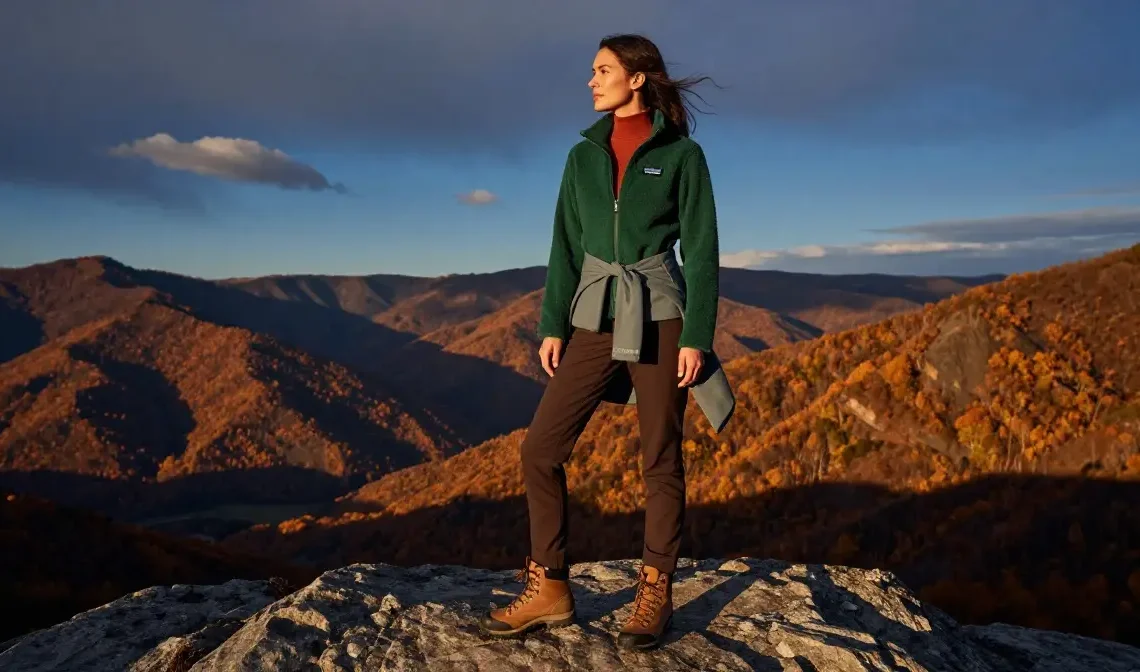
Fall in the mountains is one of the most visually intoxicating environments on earth and one of the most technically demanding to dress for. The temperature at the trailhead might read 48 degrees Fahrenheit at 7 AM and spike to 67 by noon before dropping back to 44 as the sun dips behind the ridge. Rain arrives without announcement. Wind hits at elevation with a force that makes a light jacket feel like tissue paper. A fall mountain outfit done right doesn’t just look good in photographs — it keeps you warm, dry, safe, and moving comfortably across every condition the mountain decides to throw at you that day. This guide covers all 23 looks, layers, and strategies that make that possible.
The Brutal Truth About Dressing for Fall Mountains Nobody Warns You About
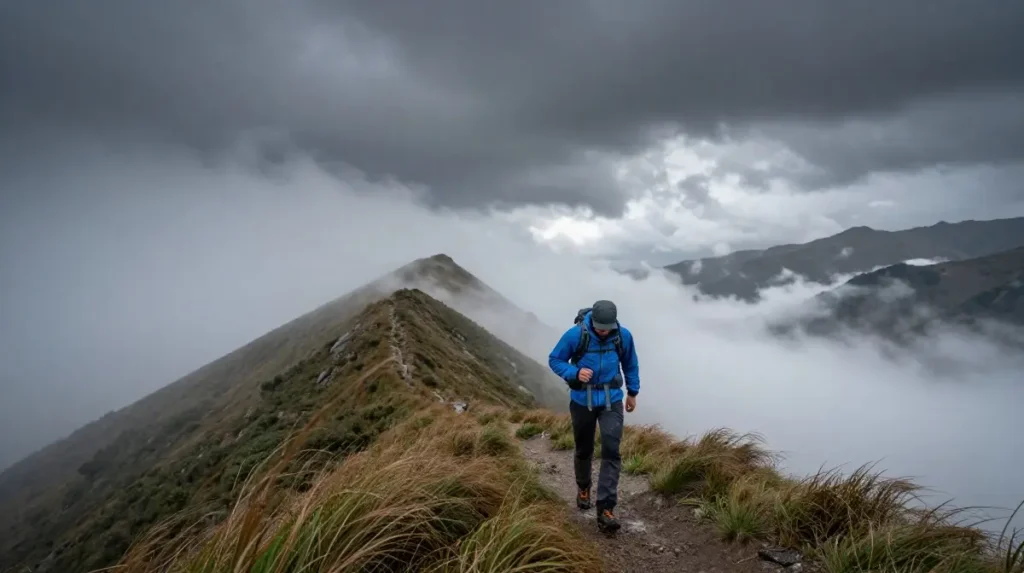
Mountain weather in autumn operates on its own schedule and it doesn’t consult your itinerary. Temperature swings of 25 to 30 degrees between trailhead and summit are common across most American ranges from the Rockies to the Appalachians. That range isn’t an edge case — it’s the standard. How to dress for unpredictable fall mountain weather is therefore not a question of choosing one outfit but of building a system that adapts fluidly as conditions shift throughout the day.
The second truth most outdoor guides bury: cotton kills. This isn’t dramatic hyperbole. Cotton absorbs moisture — sweat, rain, morning mist — and holds it against your skin, dropping your core temperature rapidly when the wind picks up. Cold weather hiking clothing that works is built entirely on synthetic or natural performance fibers. Cozy trail style ideas can still be your aesthetic but the fabric beneath that aesthetic must be technical. Understanding this one principle before you pack separates genuinely prepared mountain travelers from people who end up miserable by mile three.
Fall Mountain Outfit Layers That Actually Keep You Warm When It Matters
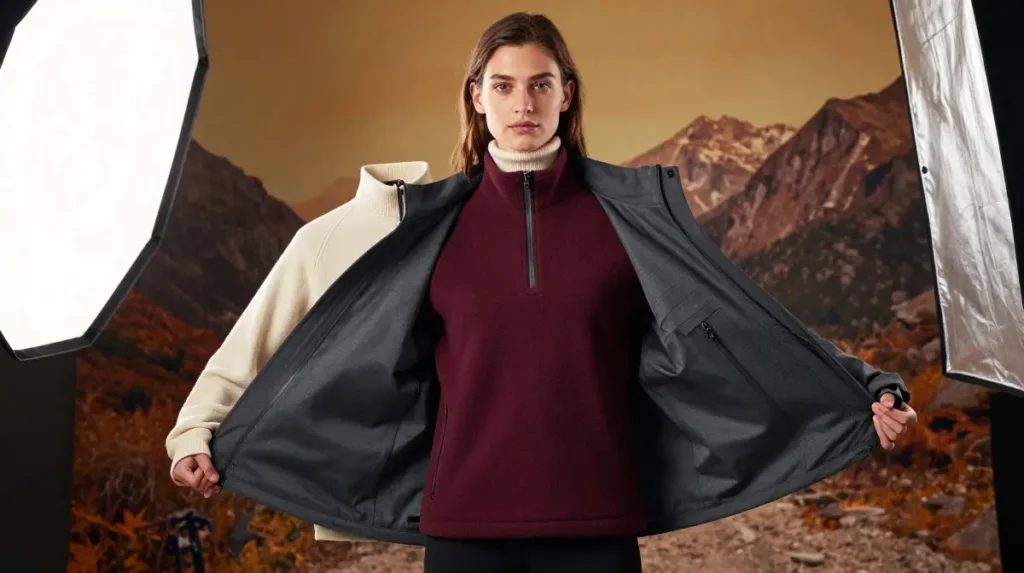
The three-layer system isn’t a suggestion — it’s the engineering blueprint behind every functional fall mountain outfit. Layer one manages moisture by pulling sweat away from your skin. Layer two traps heat by creating an insulating air pocket between your body and the environment. Layer three blocks wind and rain while allowing the moisture from layers one and two to escape outward. Remove any one of these layers and the entire system degrades. Add all three and you have a best layering system for fall mountain hike that handles virtually everything autumn throws at you.
Fall layering outfit for mountains works best when each layer is chosen with the next layer in mind. A bulky base layer defeats a slim midlayer’s fit. A stiff outer shell defeats a stretchy midlayer’s range of motion. The system should nest together smoothly — each layer thinner and more compressible than the one outside it. Autumn outdoor adventure style photographers will tell you the three-layer system also photographs beautifully because the combination of textures — smooth base, textured fleece, technical shell — creates visual depth that a single-layer outfit simply cannot achieve.
| Layer | Function | Material | Example Item |
|---|---|---|---|
| Base Layer | Moisture management | Merino wool or synthetic | Smartwool base layer |
| Midlayer | Thermal insulation | Fleece or down | Patagonia fleece jacket |
| Outer Shell | Wind and rain protection | Softshell or hardshell | Arc’teryx softshell jacket |
The Base Layer Mistake That Ruins Every Cold Mountain Morning Instantly
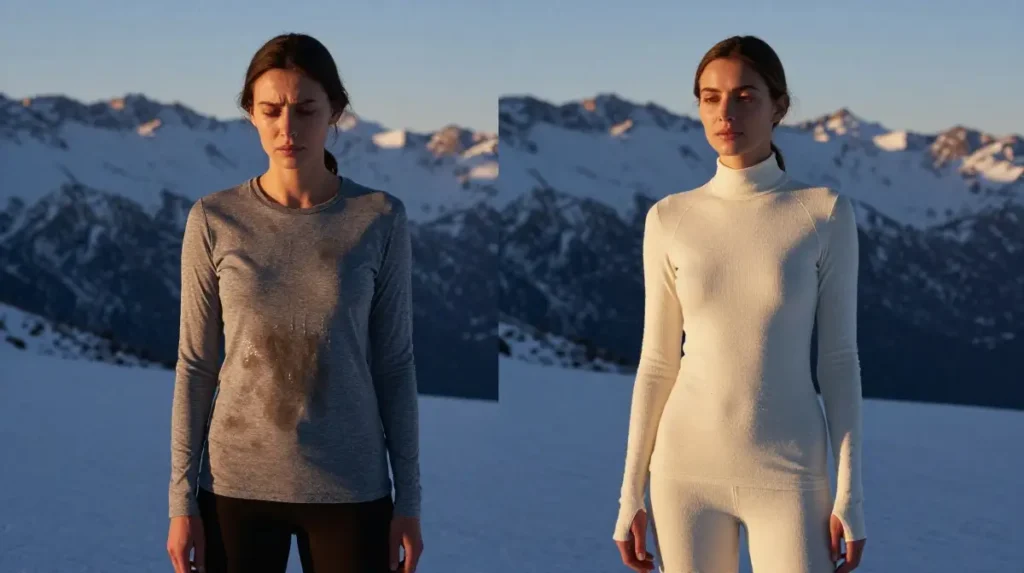
Wearing cotton as a base layer on a fall mountain hike is the single most common mistake made by otherwise well-prepared outdoor enthusiasts. A cotton t-shirt feels comfortable at the trailhead but becomes a liability within 20 minutes of sustained uphill movement. Sweat saturates cotton fibers completely. That saturated fabric then conducts heat away from your body at a rate up to 25 times faster than dry fabric. The result is rapid chill — precisely the outcome you were trying to prevent.
The moisture wicking base layer you choose instead should prioritize two properties above all others: moisture transfer speed and odor resistance. Smartwool base layer products built from merino wool temperature regulation fiber achieve both simultaneously — wicking sweat outward while naturally resisting the bacterial growth that causes odor during multi-day trips. Synthetic alternatives like polyester and nylon wick slightly faster but accumulate odor more readily. For a fall mountain trip outfit ideas packing scenario where you’re carrying limited clothing, Icebreaker merino wool layer options justify their higher price point through multi-day wearability that synthetic alternatives simply don’t match.
Fleece Midlayers That Work as Hard as They Look on the Trail
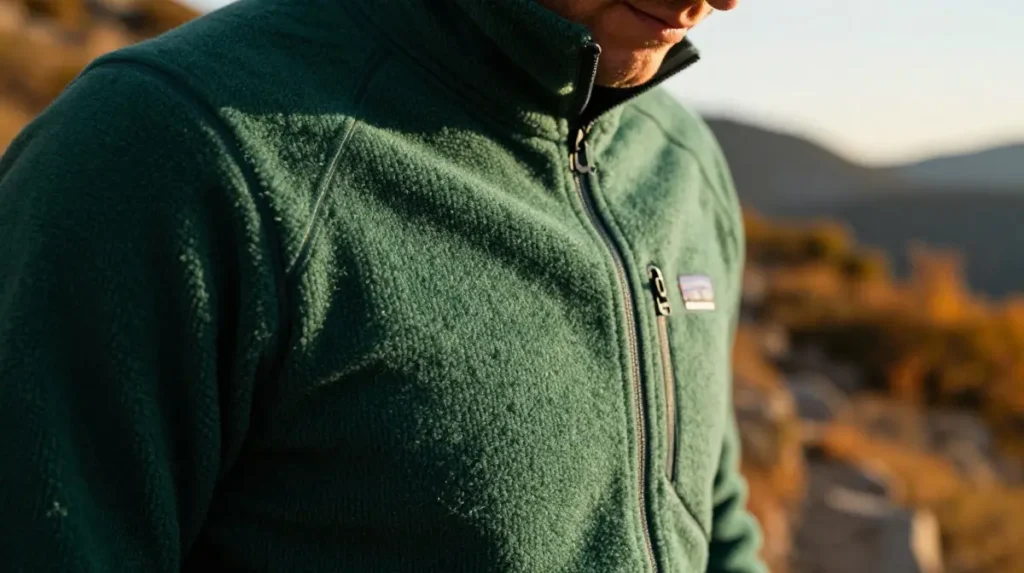
Fleece earned its reputation in outdoor circles during the 1980s and it hasn’t relinquished that position despite decades of competing midlayer technologies. The reason is simple: fleece insulates effectively even when partially damp, dries rapidly, packs to a compressible volume, and moves freely with the body across a full range of athletic motion. Thermal insulation midlayer performance from a quality fleece piece outperforms most alternatives at equivalent price points — and the aesthetic value on a fall mountain trail is genuinely significant.
The Patagonia fleece jacket remains the benchmark in the midlayer category not by accident but by consistent material and construction quality. A 100-weight fleece handles active hiking in cool but not cold temperatures. A 200-weight adds meaningful warmth for static rest breaks and cold-start mornings. Mountain fall fashion ideas that consistently photograph well pair a fitted 200-weight fleece with a slim technical base layer beneath and a packable shell stuffed in the hip belt pocket for deployment at elevation or in rain. This combination delivers cozy mountain outfit fall aesthetics with genuine technical performance underneath.
Outer Shells That Handle Sudden Storms Without Sacrificing Your Aesthetic
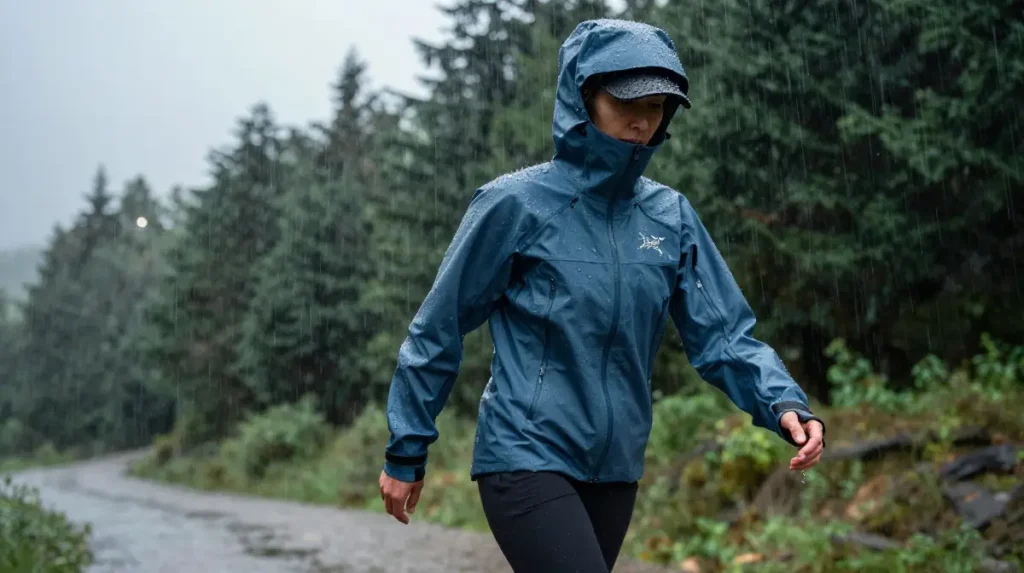
The outer shell is where technical performance and visual identity converge most dramatically in any fall mountain outfit. A shell jacket’s job is to block wind, shed rain, and permit the moisture vapor from your exertion to escape outward — a property called breathability that varies enormously between products. Wind resistant outer shell construction ranges from basic nylon windbreakers offering minimal rain resistance to fully seam-sealed hardshell jackets that handle prolonged heavy precipitation without compromise.
Arc’teryx softshell jacket construction demonstrates the middle ground that most fall hikers actually need — a technical fabric breathability rating high enough to handle sustained aerobic activity, a DWR treated outer face that sheds light to moderate rain, and a stretch panel construction that moves naturally during scrambling and steep trail sections. How to stay warm in mountains during fall without overheating on the uphill is the outer shell’s real challenge and softshell fabrics solve it more elegantly than hardshells for most autumn conditions. Save the fully waterproof hardshell for trips where sustained heavy rain is genuinely forecast rather than merely possible.
Hiking Boots That Grip Wet Leaves and Still Look Good Doing It
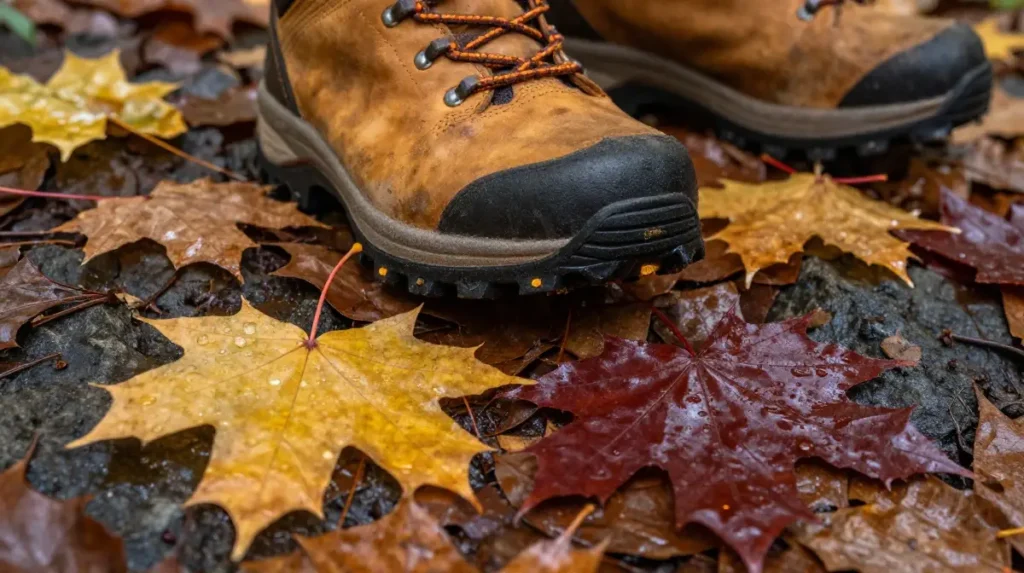
Wet autumn leaves on a trail surface create a traction challenge that hikers systematically underestimate. A leaf-covered root section on a descent in October is functionally similar to ice in terms of grip coefficient — and standard trail runners with shallow lug patterns fail this condition comprehensively. Waterproof hiking boot traction on fall trails requires a lug depth of at least four millimeters, a rubber compound formulated for multi-surface grip, and an ankle support structure that handles the lateral instability of leaf-obscured terrain.
Danner hiking boots and Columbia hiking boots both address this condition directly in their fall trail lineup — Danner through their Vibram outsole technology and Columbia through their Omni-Grip rubber compound. What shoes to wear for fall mountain hiking is a question that resolves differently depending on trail type: maintained rocky trails favor a low-cut trail runner with aggressive lugs, while off-trail scrambling and loose leaf-covered paths demand the ankle encapsulation and sole stiffness of a full hiking boot. Trail ready traction sole geometry on quality boots channels mud and leaf debris away from the contact surface to maintain grip throughout the descent — a detail cheap hiking shoes universally compromise on.
Trail Leggings Versus Hiking Pants — the Debate Fall Finally Settles
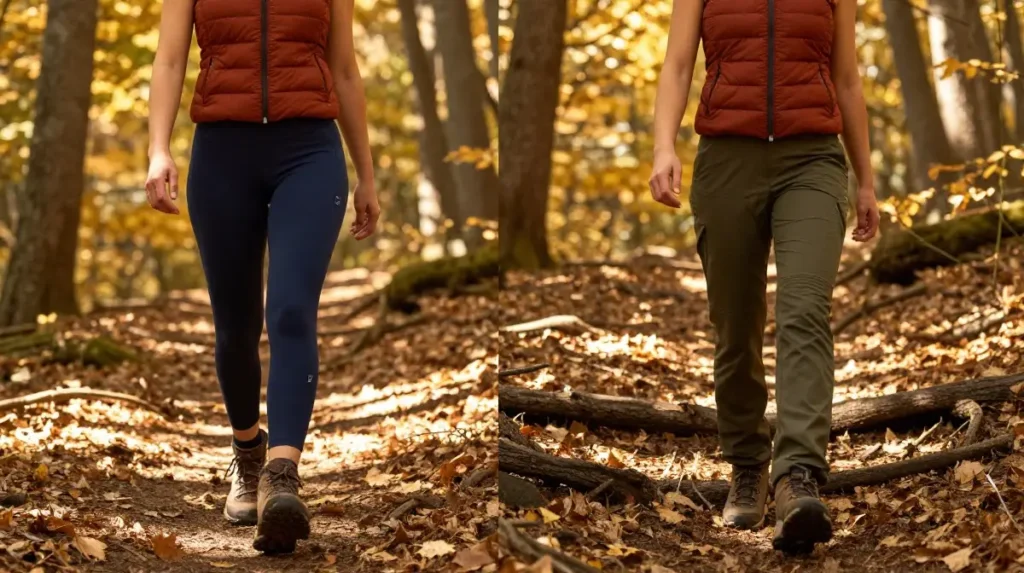
The leggings versus pants debate in mountain hiking circles has produced more heated opinions than almost any other gear question and fall finally provides enough environmental context to settle it definitively. Trail leggings excel in three conditions: maintained trails with no significant bushwhacking, temperatures above 45 degrees Fahrenheit at the coldest point of the day, and hiking styles that prioritize freedom of movement over abrasion protection. Hiking pants win in every other scenario.
you may also like this:22 Wyoming Travel Ideas for Unforgettable Outdoor Adventures
Lululemon trail leggings and comparable technical legging options deliver fleece lined legging warmth in autumn conditions that standard athletic leggings cannot match — the fleece interior layer adds meaningful thermal value without the bulk of a pant leg. prAna hiking pants and Kuhl outdoor pants offer the articulated knee construction and abrasion-resistant fabric panels that make them genuinely superior for scrambling, bushwhacking, and any terrain where leg contact with rock or vegetation is likely. Fall mountain outfit ideas for women that appear most frequently on Pinterest halloween mantle boards — wrong article, but the point stands on REI’s fall lookbooks and outdoor brand campaigns — consistently feature leggings for aesthetic shots and pants for action shots because each garment type performs best in its specific context.
The Puffer Vest Moment Every Fall Mountain Trip Deserves to Have
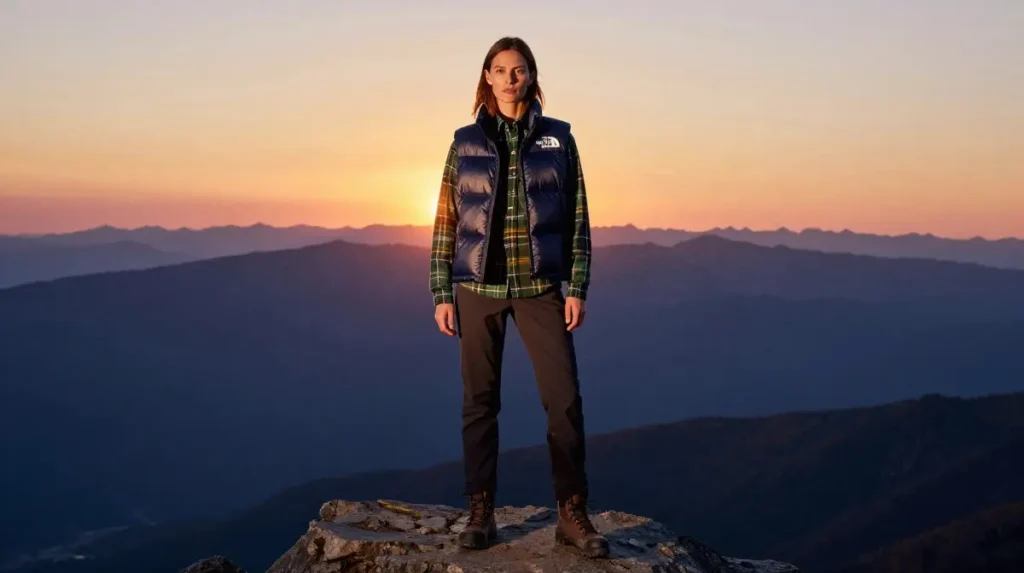
The puffer vest occupies a specific meteorological niche that makes it indispensable for fall mountain travel: the 45 to 55 degree Fahrenheit temperature range where a full jacket feels too hot for active hiking but without insulation the wind chill becomes genuinely uncomfortable. A vest insulates your core — where your vital organs and your body’s primary heat generation machinery live — while leaving your arms free for full range of movement without the heat accumulation a full-sleeved jacket creates.
The North Face puffer vest in a packable down or synthetic fill construction represents the packable down vest layering approach at its most practical. The compressed pack size — roughly equivalent to a softball when stuffed into its own pocket — makes it an effortless addition to any pack without meaningful weight penalty. Fall mountain trip outfit ideas built around a vest as the outermost insulation layer rather than a full jacket photograph extraordinarily well because the silhouette is clean, the layering visible, and the flannel or fleece midlayer beneath adds textural interest. Mountain lodge outfit autumn aesthetics specifically rely on this vest-over-flannel combination as a signature look.
Flannel Shirts Done Right — the Fall Staple Stylists Actually Approve Of
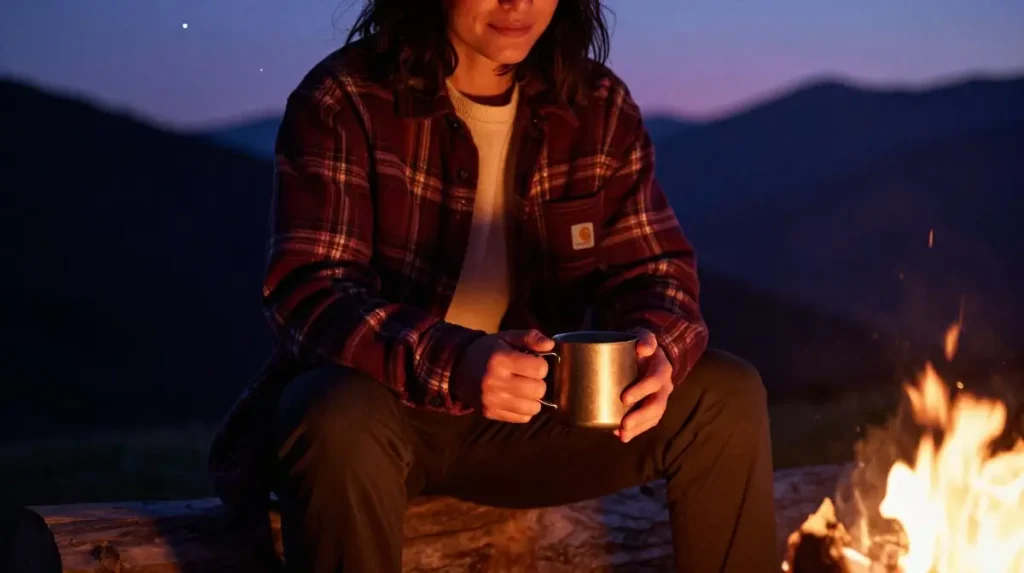
Flannel’s reputation in outdoor style has cycled from utilitarian workwear to ironic hipster reference to genuine style staple over the past three decades and it currently sits firmly in legitimate territory — embraced by outdoor brands, fashion editorials, and working hikers alike for reasons that go beyond nostalgia. A quality flannel shirt functions effectively as a light midlayer, an overshirt in mild conditions, and a camp layer for evening fire-side sitting. Its versatility within a mountain weekend wardrobe ideas packing list is genuinely difficult to match.
Carhartt flannel shirt construction uses a heavier flannel weight than fashion alternatives — the fabric has real thermal substance rather than the decorative weight that fashion flannels offer. Fall foliage hike outfit styling with flannel works best when the shirt is treated as an outer layer over a technical base rather than as a fashion piece worn directly against skin. Open over a fitted technical base layer with the sleeves rolled to the forearm, a quality flannel in autumn forest tones — deep burgundy plaid, forest green plaid, rich ochre — creates the rugged outdoor chic style that REI fall hiking gear catalogs have built entire campaigns around. Don’t buy cotton flannel for mountain use. Wool flannel or flannel-weight synthetic blends perform dramatically better in the field.
Merino Wool — the Quiet Secret Behind Every Great Mountain Outfit
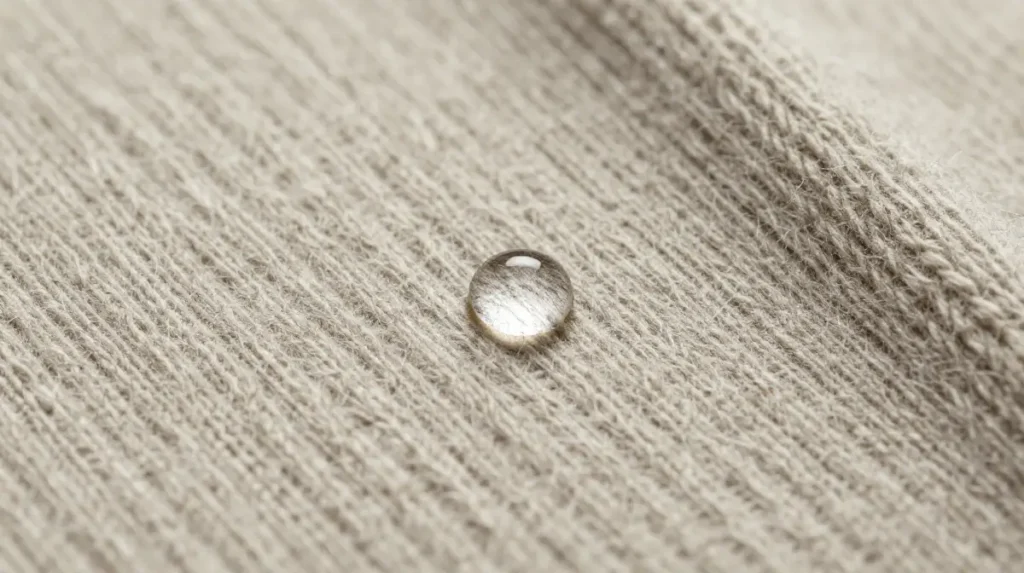
Merino wool is the most technically sophisticated natural fiber available for outdoor apparel and it remains underappreciated outside serious hiking circles despite decades of evidence for its superiority. The fiber’s fine diameter — 17 to 19 microns in premium grades — means it lacks the coarseness that makes standard wool itchy against skin. It regulates temperature bidirectionally: insulating when cold, releasing heat when warm. It resists odor through natural antimicrobial properties. It manages moisture better than any synthetic fiber at equivalent weight. And it wears beautifully.
Icebreaker merino wool layer and Smartwool base layer products built from New Zealand merino have demonstrated across thousands of field applications that a single quality merino piece genuinely replaces multiple synthetic alternatives in a packing scenario. Merino wool temperature regulation is the property most relevant to fall mountain hiking outfit planning — the fiber’s active temperature management means a merino base layer feels appropriate across a 30-degree temperature swing without becoming clammy when you sweat or frigid when you stop. Mountain camping outfit fall scenarios where you’re wearing the same base layer for two to three consecutive days without access to laundry reveal merino’s greatest competitive advantage: it remains genuinely wearable where synthetic alternatives become unwearable within 36 hours.
Fall Mountain Outfit Ideas Women Are Pinning Obsessively Right Now
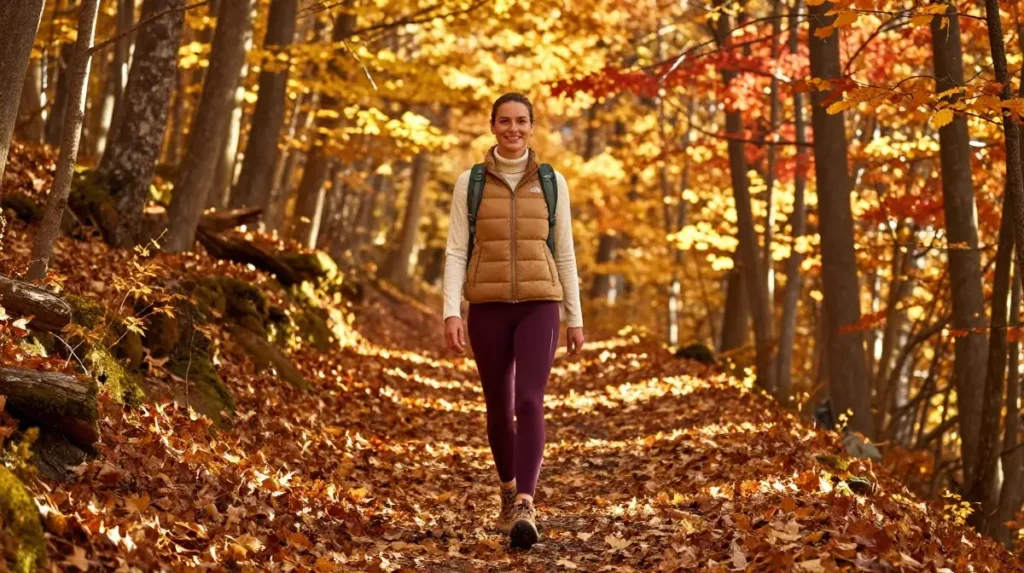
The visual landscape of women’s fall mountain outfit content has shifted dramatically in the past two years away from purely technical gear photography toward a more editorial, lifestyle-driven aesthetic that merges genuine outdoor function with fashion-forward styling. The most-saved looks on Pinterest right now share three consistent characteristics: a strong color story rooted in autumn tones, visible layering that communicates warmth and coziness, and footwear that reads as both trail-capable and visually interesting.
Fall mountain outfit ideas for women currently dominating social saves pair Lululemon trail leggings in earthy tones with a fitted merino base layer, a textured fleece or knit midlayer in rust or burgundy, and either a Patagonia fleece jacket or The North Face puffer vest as the outer insulation. Stylish fall mountain outfit for Instagram photos composition almost always includes a natural backdrop element — fall foliage, a mountain lake reflection, or a rocky overlook — that anchors the outfit in genuine environmental context rather than a posed studio-adjacent look. Fjallraven Kanken backpack accessories in complementary colors complete these compositions consistently because the bag’s graphic simplicity doesn’t compete with the outfit’s texture story.
Footwear Formulas That Solve Mud Rain and Rocky Terrain Simultaneously
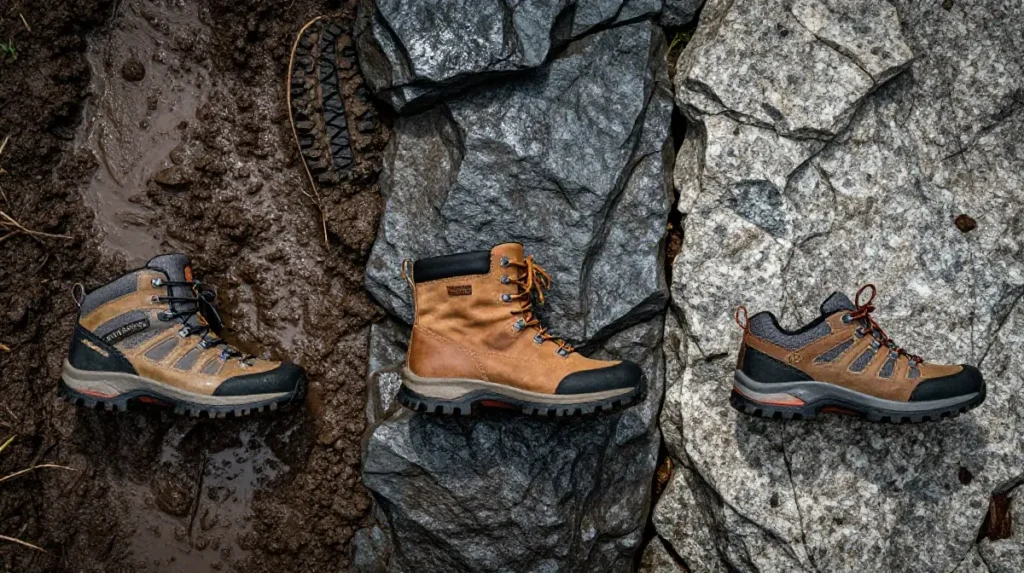
Fall mountain terrain presents three footwear challenges simultaneously: mud adhesion on wet trail sections, rain penetration through extended precipitation, and impact absorption on rocky descent surfaces. No single footwear category addresses all three with equal excellence but the right selection matrix based on your specific terrain type gets you very close. Understanding the trade-offs between trail runners, hiking shoes, and full hiking boots is the first step toward a footwear decision you won’t regret four miles from the trailhead.
Merrell hiking shoes in their moab series address all three challenges with a Gore-Tex membrane for waterproofing, a Vibram outsole for rock traction, and a midsole foam density calibrated for sustained trail use rather than road running comfort. Hunter rain boots occupy a different niche entirely — appropriate for casual flat trail walks and farm-road style mountain paths but not for technical trail hiking where ankle support and traction geometry matter. Gaiters ankle mud protection add significant functional value to any fall mountain footwear choice by sealing the gap between boot top and pant hem, preventing the mud and water ingress that soaks hiking socks within minutes on wet trail sections. Pair gaiter use with any quality waterproof hiking boot and your feet stay substantially drier through conditions that would otherwise compromise comfort entirely.
The Sock Strategy That Separates Blissful Hikers From Miserable Ones
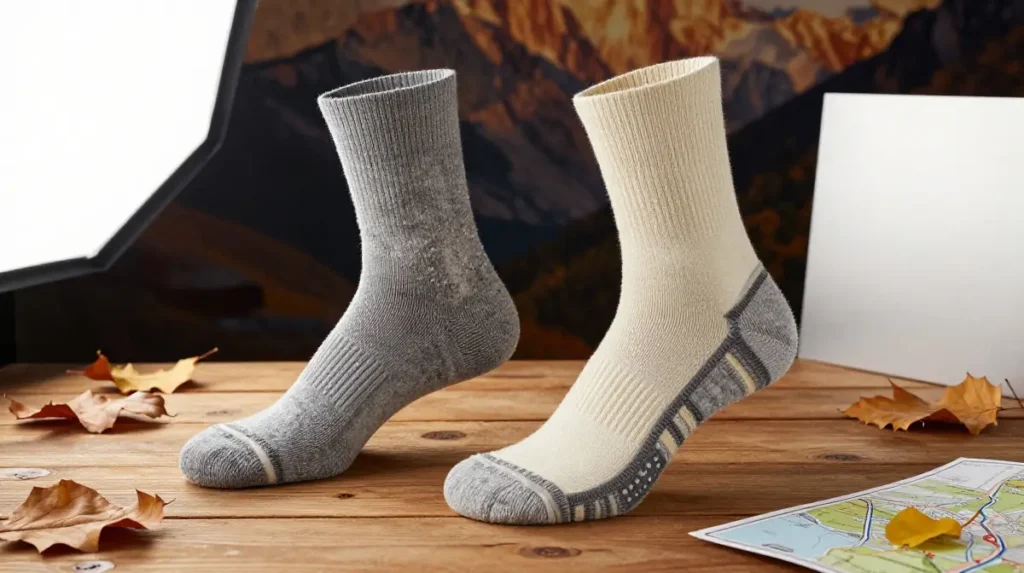
Hiking socks are the most underinvested category in most people’s outdoor kit and the source of more trail misery than almost any other single gear choice. A blister that forms at mile two ruins the remaining eight miles comprehensively regardless of how excellent your boots, layers, or trail conditions are. Blister prevention hiking sock construction addresses this through two mechanisms: friction reduction via fiber smoothness and moisture management via wicking speed. Both mechanisms require technical fiber — neither cotton nor standard wool delivers either adequately.
Compression sock circulation hiking benefits extend beyond simple comfort — compression architecture in quality hiking socks actively supports venous return blood flow from the foot upward, reducing the foot swelling that tightens boot fit and creates hot spots over long trail days. Smartwool base layer brand’s hiking sock range applies identical merino fiber principles to foot coverage, delivering merino wool temperature regulation at the sock level that maintains foot comfort across the same temperature swings that make base layer fiber choice so critical. Carry a spare pair of hiking socks in your day pack on any fall mountain hike exceeding six miles. A dry sock change at a midpoint rest break genuinely transforms the second half of a long trail day.
Accessories That Pull a Fall Mountain Look Together Without the Bulk
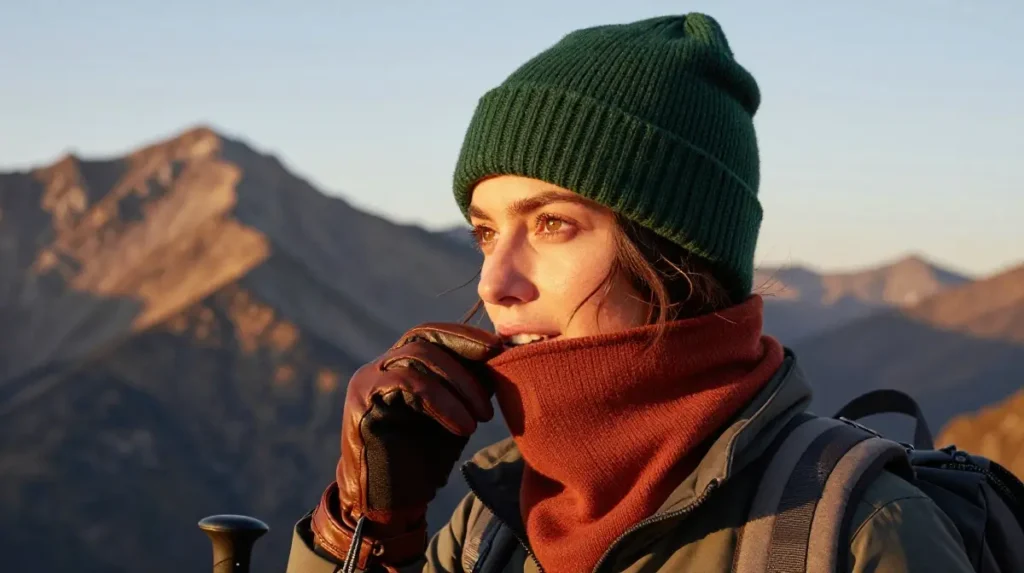
Accessories on a fall mountain trail serve dual purposes — functional protection and visual completion of the outfit’s aesthetic narrative. The challenge is selecting pieces that add genuine utility without the bulk penalty that undermines the layered system’s mobility and packability. Every accessory should earn its place in the pack by delivering function, not merely aesthetics.
A lightweight merino wool beanie weighing under two ounces packs flat in any hip belt pocket and adds meaningful head warmth during rest stops and cold-start mornings. Trekking pole grip adjustment quality matters more than most hikers acknowledge — foam grip surfaces absorb sweat during steep ascents while cork grips contour to hand shape over time, both superior to rubber grips for sustained use. Fjallraven Kanken backpack serves the accessory-as-statement role for lighter day trips while more technical hip belt packs distribute weight better for longer mountain days. A lightweight neck gaiter in merino or thin fleece crosses the function-fashion boundary as elegantly as any single piece in the mountain getaway outfit ideas toolkit — worn as a neck layer, pulled up as a face cover in wind, or doubled as a thin headband for ear protection.
Color Palettes That Make Fall Mountain Photos Look Magazine Worthy
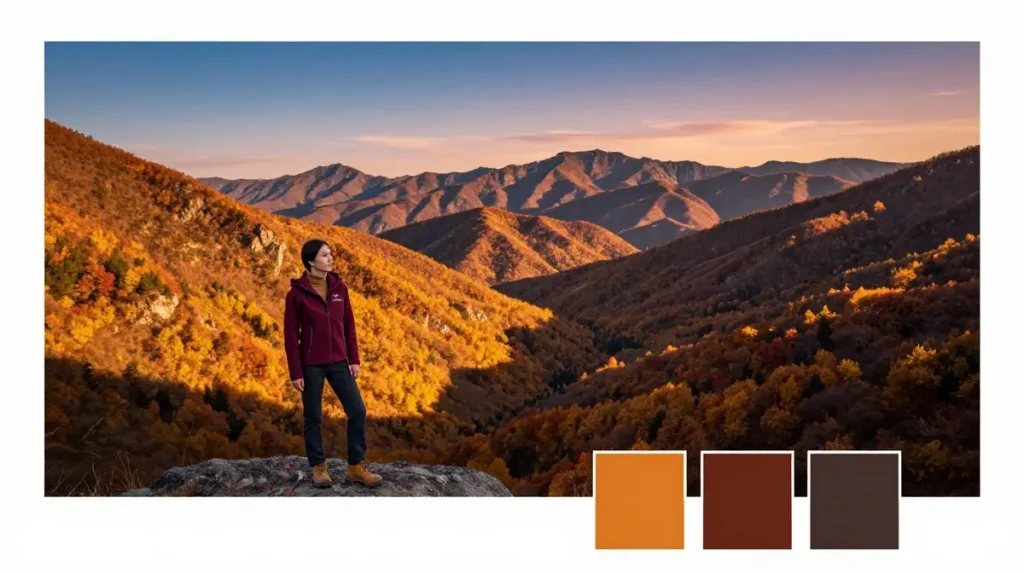
Color in a fall mountain outfit context performs a dual function: it integrates with or contrasts against the natural environment depending on the visual story you want to tell. The most photographically successful fall mountain outfits work deliberately with the autumn color palette rather than competing against it — and autumn’s palette is already extraordinary. Rust, ochre, burnt sienna, forest green, and deep burgundy all read as native to the mountain fall environment while still making the human subject visible against the landscape.
Fall foliage photography outfit color strategies that consistently produce magazine-quality results use the rule of three tones: one neutral anchor color (charcoal, cream, or deep navy), one earth tone midground (rust, olive, or camel), and one accent that pops against the foliage (deep burgundy, cobalt, or forest green). Fall nature photography outfit composition benefits from avoiding bright orange — not because it’s aesthetically wrong but because it disappears into autumn foliage from a distance, making the subject hard to read in landscape-scale photography. UPF sun protection layer lightweight long-sleeve tops in warm camel or deep forest green serve the dual function of sun protection on exposed ridgelines and color-accurate outfit completion for mid-hike photography sessions.
Packing a Fall Mountain Capsule Wardrobe in One Carry-On Bag
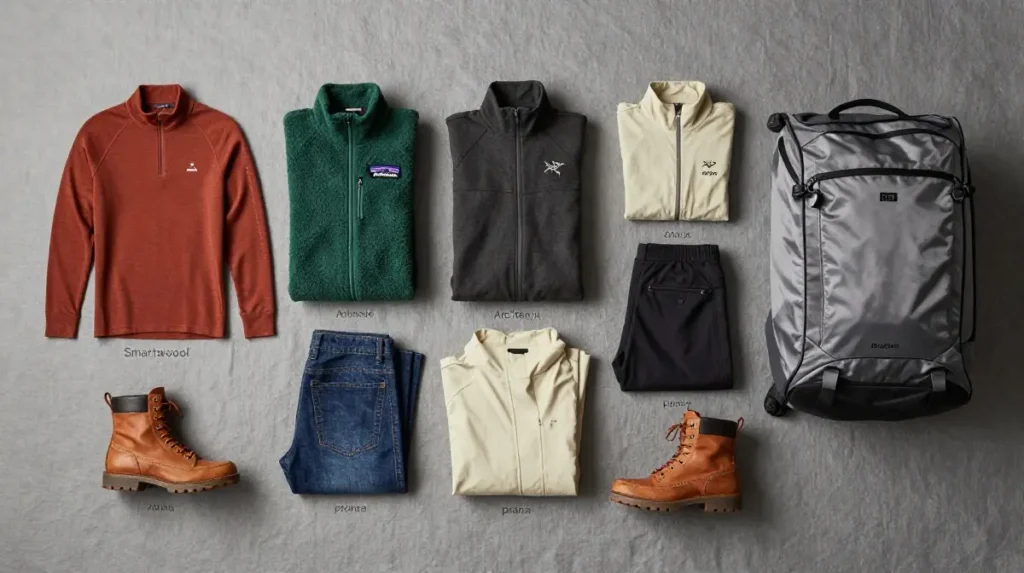
The discipline of packing a functional fall mountain wardrobe into a single carry-on sized bag — a constraint increasingly relevant for fly-to-destination hiking trips — demands ruthless prioritization of versatility over specialization. Every piece must work with at least two other pieces in the kit. No item earns a place by serving only one function. The reward for this discipline is a bag that weighs under 25 pounds including footwear and contains genuinely everything you need for a five-day mountain trip.
What to pack for a fall mountain trip outfit in carry-on format starts with the two most volume-consuming pieces: one pair of Danner hiking boots worn on travel day to preserve bag space, and one Arc’teryx softshell jacket stuffed into its own pocket as a bag compression element. The remaining kit fits within approximately 18 liters of clothing volume: two Smartwool base layer sets, one Patagonia fleece jacket, one Carhartt flannel shirt as camp layer and casual hiking midlayer, two pairs of prAna hiking pants, three pairs of merino hiking socks, one The North Face puffer vest, one merino beanie, one neck gaiter, and one pair of lightweight camp sandals. Mountain weekend wardrobe ideas built on this framework require zero outfit repetition while maintaining complete technical capability for every condition the mountains might present.
Couple Outfit Coordination for Fall Mountains That Doesn’t Look Forced
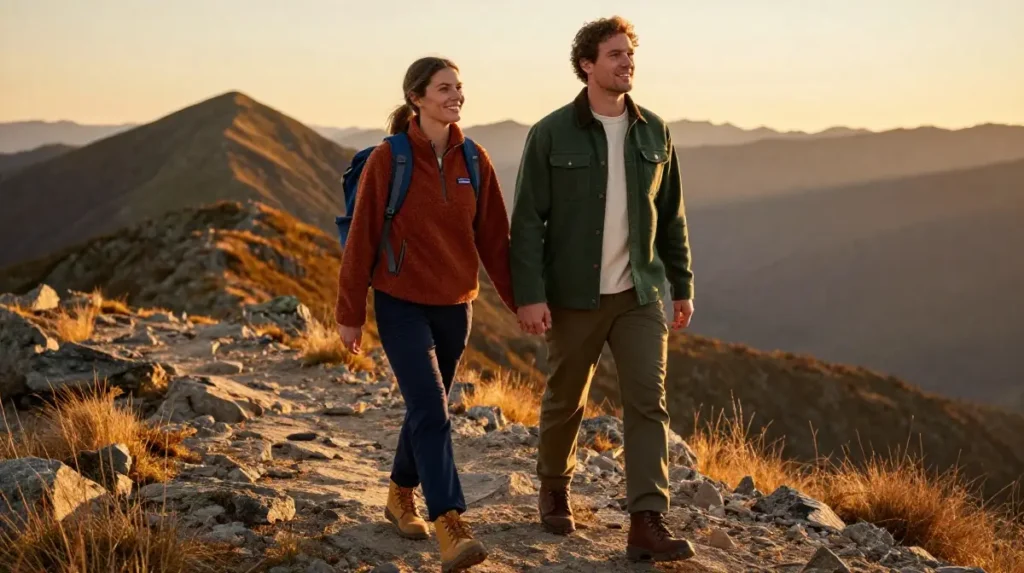
Couple outfit coordination for mountain photography walks a narrow aesthetic line — too matched and it reads as costume rather than genuine style, too disconnected and the photographs feel like two separate people who happened to share a trail. The formula that works consistently is color family coordination without identical pieces: both partners drawing from the same autumn color palette while wearing different garments, silhouettes, and textures within that palette.
Fall mountain outfit ideas for couples that succeed visually pair complementary tones rather than matching ones — rust and camel, forest green and deep burgundy, charcoal and cream. If one partner wears a Patagonia fleece jacket in deep burgundy, the other might wear a Carhartt flannel shirt with burgundy accent plaid rather than an identical jacket. Autumn outdoor adventure style coordination also extends to footwear — both partners in quality hiking boots from different brands and colors reads as genuinely coordinated without the costume quality of identical pairs. Stylish fall mountain outfit for Instagram photos content from couples consistently outperforms solo content in engagement metrics precisely because the color coordination creates visual relationships within the frame that hold the viewer’s attention longer.
Petite and Plus Size Fall Mountain Outfit Strategies That Actually Deliver
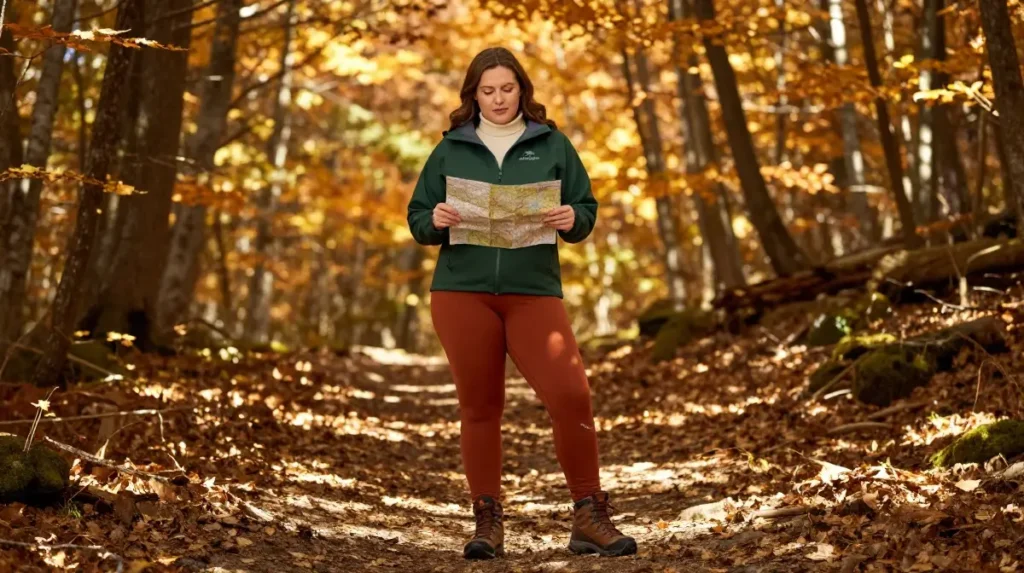
Body diversity in outdoor apparel has been genuinely underserved for decades and the gap between what the industry offers and what petite and plus size hikers actually need has historically been significant. The good news for fall 2024 is that major technical outdoor brands have expanded their size offerings substantially — and understanding how to navigate those offerings makes fall mountain outfit ideas for petite women and plus size hikers as strong as any standard-size kit.
Fall mountain outfit for cold weather hiking in petite sizing benefits most from brands that offer dedicated petite lengths rather than simply proportionally scaled versions — REI fall hiking gear house brand Co-op offers petite inseam options in hiking pants that maintain the articulated knee position correctly relative to shorter leg proportions. Plus size hikers should specifically seek technical fabrics with technical fabric breathability rating appropriate for the exertion level of their planned activity — many budget outdoor brands cut costs precisely in breathability and moisture management, the two performance properties most critical for comfort during sustained mountain hiking. Lululemon trail leggings offer genuine size inclusivity to 3X with technical fiber that performs equivalently across the full size range.
Rainy Day Mountain Looks That Refuse to Sacrifice Function or Style
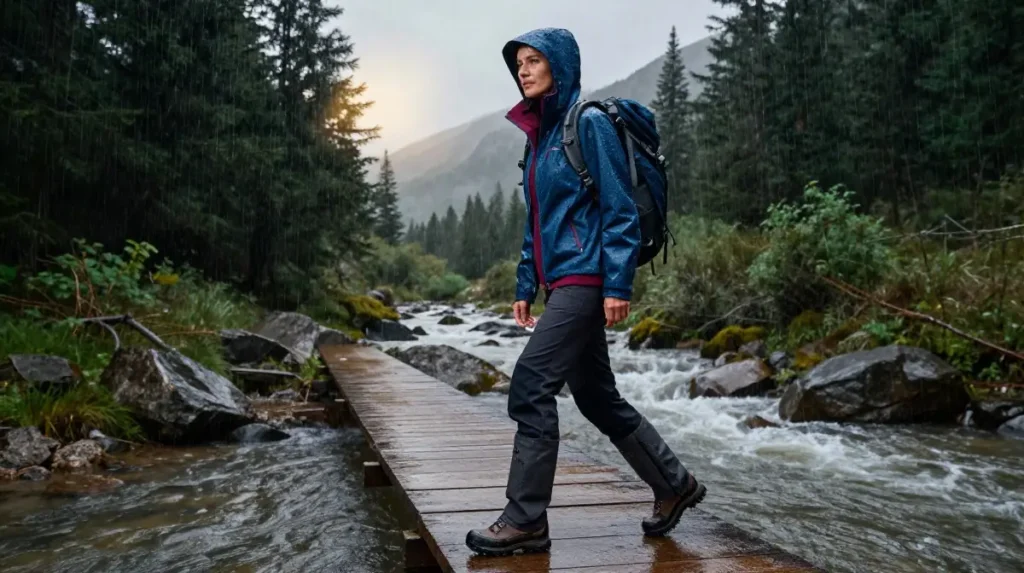
Rain on a fall mountain trail is not an edge case to plan around — it’s a baseline condition to plan for. The American mountain ranges most popular for fall hiking receive significant precipitation in October and November precisely because autumn’s cooling temperatures and moisture-laden air masses interact at elevation to produce regular rainfall. A fall mountain outfit for a weekend getaway that doesn’t include a genuine rain strategy is incomplete regardless of how beautiful the other elements are.
Quick dry fabric trail performance matters enormously in rain conditions because the speed at which your outer shell and pant legs shed and dry determines how long rain remains a comfort issue rather than a safety issue. Hunter rain boots serve specific terrain types adequately but technical trail scenarios demand the ankle support and traction of purpose-built waterproof hiking boots. Rainy day fall mountain outfit casual day trip ideas that maintain visual appeal while performing technically combine a fully seam-sealed rain shell in a rich autumn color — deep forest green, slate blue, or burgundy — over a textured fleece midlayer that remains visible at the collar and cuff openings, creating deliberate layering detail that reads as styled rather than purely functional even in full rain kit.
The Golden Hour Outfit Formula for Fall Mountain Photography Sessions
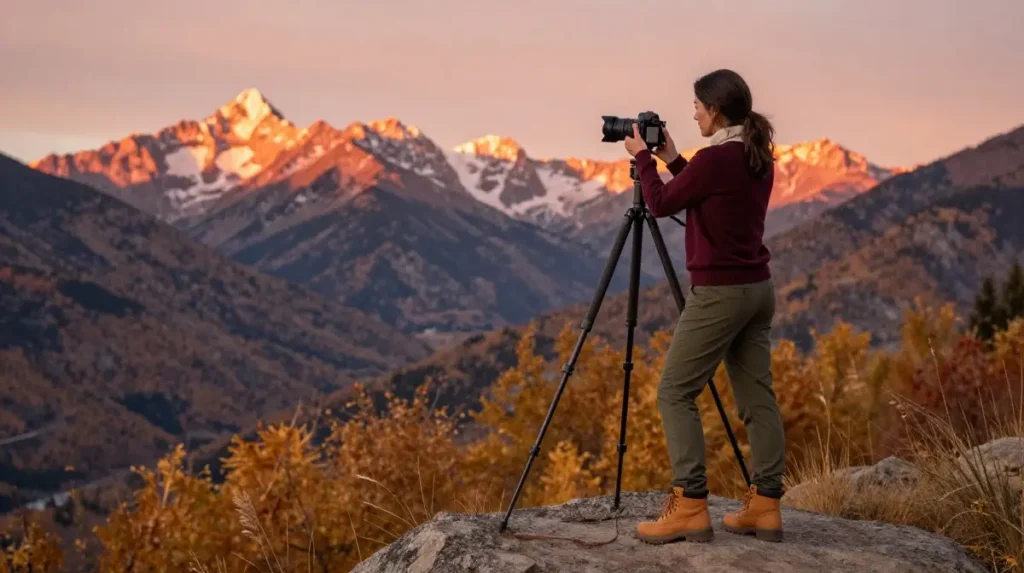
Golden hour in mountain fall environments — the 30 to 45 minutes following sunrise and preceding sunset — produces light that transforms adequate photography into extraordinary photography. The warm directional light rakes across the landscape at a low angle, igniting autumn foliage from within, carving dimensional shadows into rocky terrain, and illuminating human subjects with the kind of flattering wrap-around warmth that midday overhead light can never achieve. Your outfit for golden hour photography deserves specific planning beyond what you’d wear for a purely functional day hike.
Cute fall mountain outfit for photo shoot planning at golden hour prioritizes texture over color because warm directional light reveals and celebrates texture in fabric surfaces — fleece pile, flannel weave, merino ribbing — in ways that flat overhead light obscures. Fall foliage photography outfit color choices for golden hour specifically should include at least one piece in warm amber, rust, or deep burgundy because these tones resonate harmonically with the warm light quality rather than fighting it. Alpine fashion autumn women editorial photography from professional outdoor brands consistently schedules golden hour as the primary shooting window and outfits the subjects in textured, warm-toned pieces precisely because the light-outfit interaction at that hour produces imagery that no artificial lighting system can fully replicate. Wake up for sunrise. The light justifies every element of the effort.
Budget Fall Mountain Outfits That Look Like They Cost Three Times More
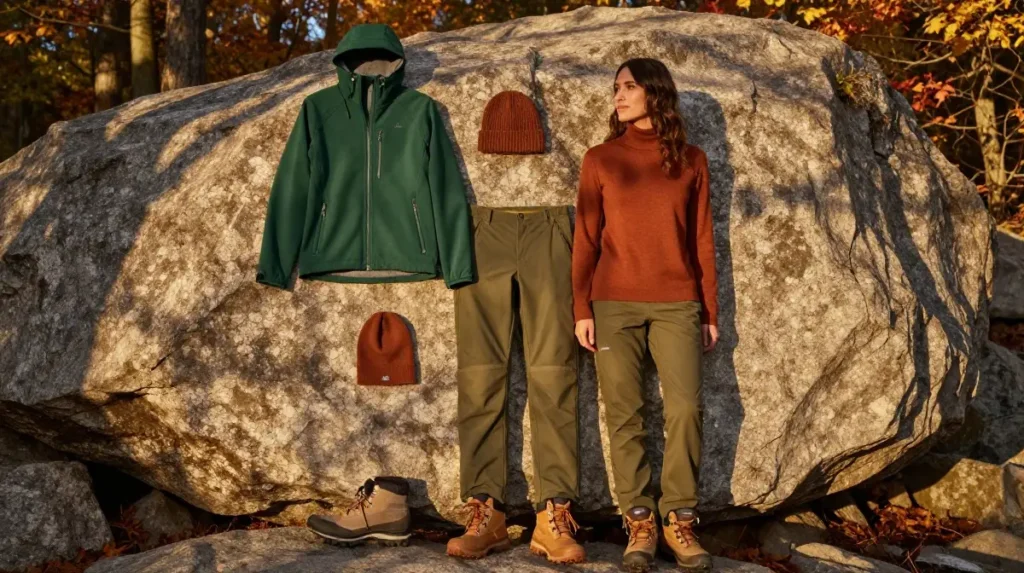
A complete, genuinely functional fall mountain outfit does not require a four-figure investment despite what premium outdoor brand pricing might suggest. The investment principle that separates smart budget outdoor shopping from false economy: spend on the items that touch your foot and your base layer first, because those two categories most directly affect comfort and safety. Compromise on midlayers and outer shells before compromising on boots and base layers.
REI fall hiking gear Co-op house brand offerings represent the budget hiking category’s best value proposition — technical construction at prices 40 to 60 percent below comparable performance from Arc’teryx or Patagonia. Budget fall mountain outfit casual day trip ideas that consistently look expensive use color strategy rather than brand recognition to achieve an elevated aesthetic — a single-color or two-color outfit in rich autumn tones photographs as aspirational regardless of the brand labels inside the garments. Autumn hiking clothes women from budget-accessible brands like Columbia, REI Co-op, and Eddie Bauer’s outlet line deliver moisture wicking base layer and wind resistant outer shell performance at price points that make the complete three-layer system accessible to hikers who can’t justify premium brand pricing for occasional mountain trips.
Sustainable Outdoor Brands Redefining Fall Mountain Fashion Right Now
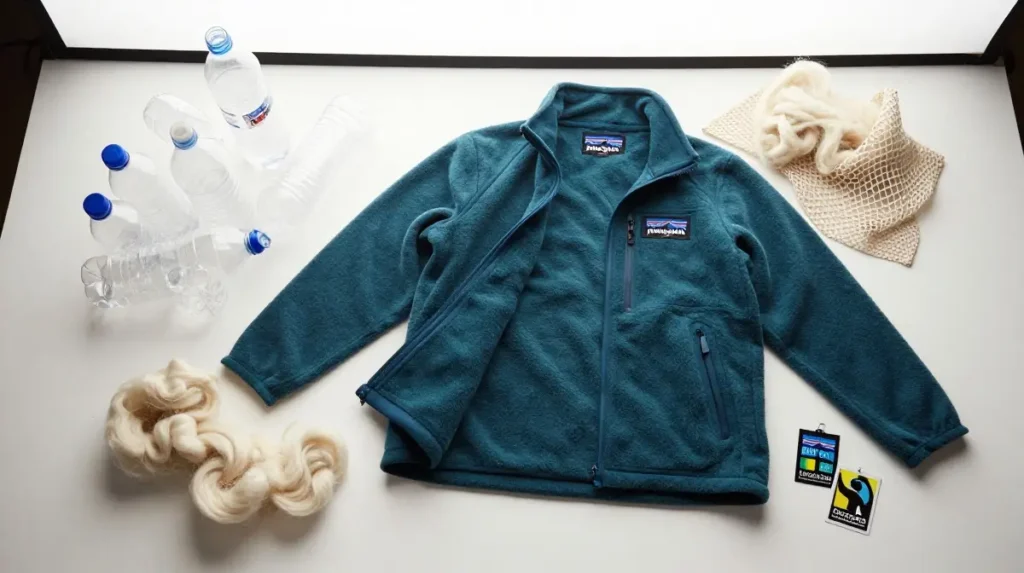
The outdoor apparel industry’s sustainability conversation has moved beyond marketing language into genuine material innovation and supply chain accountability — and the brands leading this shift are producing some of the most technically compelling fall mountain apparel currently available. Understanding which brands are making meaningful environmental commitments versus surface-level greenwashing requires looking at specific certifications and material sourcing rather than brand messaging.
Patagonia fleece jacket products built from recycled polyester demonstrate that performance fiber and recycled material sourcing are entirely compatible — their R1 and R2 fleece lines use 100 percent recycled polyester without compromising the thermal performance specifications that make them industry benchmarks. Icebreaker merino wool layer products operate on a certified responsible wool standard that verifies animal welfare and land management practices across their New Zealand merino supply chain. Wilderness style fall women who prioritize sustainability in purchasing decisions without sacrificing performance now have genuinely excellent options that compete technically with non-certified alternatives — a convergence that was not available five years ago. The sustainable outdoor apparel category has matured from compromise to competitive excellence.
Frequently Asked Questions
What to wear in the mountains in fall for a first-time hiker?
What to wear in the mountains in fall as a first-time hiker requires the three-layer system as a non-negotiable foundation: a moisture wicking base layer in merino or synthetic, a fleece or insulated midlayer, and a wind and rain resistant outer shell. Add waterproof hiking boots, merino hiking socks, and a light beanie and you have a genuinely functional kit for most fall mountain conditions. Avoid cotton in any layer and you’ve already solved the most common beginner mistake before it becomes a problem.
How many layers do you need for a fall mountain hike?
The best layering system for fall mountain hike scenarios uses three layers as a baseline: base, mid, and outer shell. However the practical application is more dynamic than three static layers suggest. You’ll likely start the morning with all three active, strip the shell as you warm up on the ascent, remove the midlayer by mid-morning on sunny days, and reverse the process on the descent or at rest breaks. Packability of each layer determines how smoothly this dynamic adjustment process operates throughout the day.
What shoes to wear for fall mountain hiking?
What shoes to wear for fall mountain hiking depends primarily on trail type and terrain difficulty. Maintained trails with a day pack under 20 pounds suit a waterproof trail runner or lightweight hiking shoe with quality lug traction. Technical terrain, off-trail scrambling, or heavy packs over 25 pounds require the ankle support and sole stiffness of a full hiking boot. Danner hiking boots and Merrell hiking shoes both offer waterproof membrane options that handle fall precipitation effectively across both categories.
How do I stay warm on a fall mountain hike without overheating?
How to stay warm in mountains during fall without overheating is fundamentally a ventilation management question. The Arc’teryx softshell jacket category addresses this most elegantly through fabrics that breathe actively during exertion while blocking wind during rest. The practical habit that matters most is pre-emptive layering adjustment — remove the outer shell before you start sweating on an uphill rather than after you’re already damp. Sweat-saturated layers lose thermal efficiency rapidly so staying slightly cool rather than warm during ascents is the counterintuitive temperature management strategy that experienced mountain hikers use consistently.
What is the best fabric for fall mountain hiking?
Merino wool temperature regulation makes merino the best single fabric choice for fall mountain hiking when comparing odor resistance, moisture management, temperature range, and comfort against skin simultaneously. However the practical answer for most hikers is merino base layer plus synthetic midlayer plus technical softshell or hardshell outer — using each fiber’s specific strengths in the layer position where those strengths matter most. No single fabric wins across all three layer positions so a mixed-fiber approach consistently outperforms single-fabric commitment.
How do I pack a fall mountain outfit for a weekend trip?
What to pack for a fall mountain trip outfit for a weekend requires a strict versatility test for every piece: if it works in only one context, leave it home. Build around two base layer sets, one fleece or insulated midlayer, one outer shell, one flannel or versatile overshirt for camp use, two pairs of hiking pants or one pant and one legging, three pairs of merino hiking socks, and the key accessories — beanie, neck gaiter, glove liners. Wear your heaviest pieces during travel and the full kit fits in a 40-liter pack with room for a hydration system and emergency layer.
What colors look best for fall mountain photography?
Fall foliage photography outfit color choices that photograph best against autumn landscapes use earth tones that complement rather than compete with the foliage. Deep burgundy, forest green, rust, camel, and charcoal all integrate naturally with fall mountain environments while maintaining subject visibility. Avoid bright orange as it disappears into foliage from mid-distance. Avoid pure white as it overexposes in direct sunlight against bright sky backgrounds. The fall nature photography outfit sweet spot is a two or three tone outfit where at least one color creates deliberate contrast against the dominant background tone of your specific shooting location.
Conclusion
A fall mountain outfit that genuinely works is an engineering achievement as much as an aesthetic one. The mountains in autumn are simultaneously the most beautiful and the most technically demanding environment most American hikers will encounter — and the gap between an underprepared kit and a genuinely functional one is measured in degrees of discomfort, miles of compromise, and photographs where the subject looks cold rather than confident. Build the three-layer system first. Solve for your feet second. Then make the aesthetic decisions that turn a functional kit into a fall mountain outfit worth photographing. The mountains offer the backdrop. Your layering system provides the capability. Your color story and styling choices provide the visual narrative. Get all three right and the fall mountain experience delivers everything it promises.