
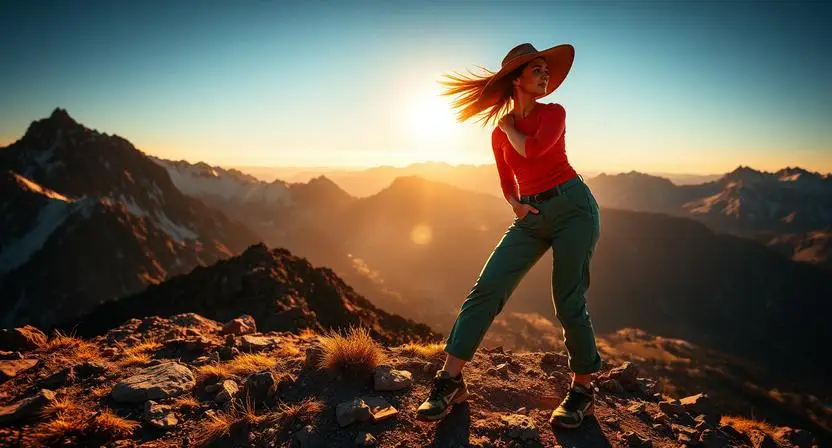
Standing at a trailhead with the wrong clothes on is a feeling every hiker knows intimately. Your legs are too hot. Your shoulders are sunburned through a cotton tee. Your feet are already complaining before mile two. A mountain outfit summer strategy built on actual performance knowledge changes every single one of those outcomes before you ever leave the parking lot.
Dressed for Altitude: The Summer Mountain Wardrobe Nobody Talks About
Most hiking content focuses on gear — backpacks, poles, water filters. The clothing conversation gets a paragraph at the end if you’re lucky. Yet your mountain travel wardrobe is the single system that touches your body continuously for eight to twelve hours and influences your temperature regulation, sun protection, moisture management and physical comfort simultaneously throughout every minute of that experience.
Alpine summer outfit ideas require thinking in systems rather than individual pieces. A summer mountain wardrobe isn’t three separate items — it’s an integrated layering architecture where each piece performs a specific physiological function while working harmoniously with every other piece in the kit. Outdoor lifestyle clothing built around this systems thinking approach produces hikers who remain comfortable across the enormous temperature and weather variability that defines American mountain environments from the Rockies to the Cascades to the Appalachians every single summer season.
The Fabric Rule That Separates Comfortable Hikers from Miserable Ones
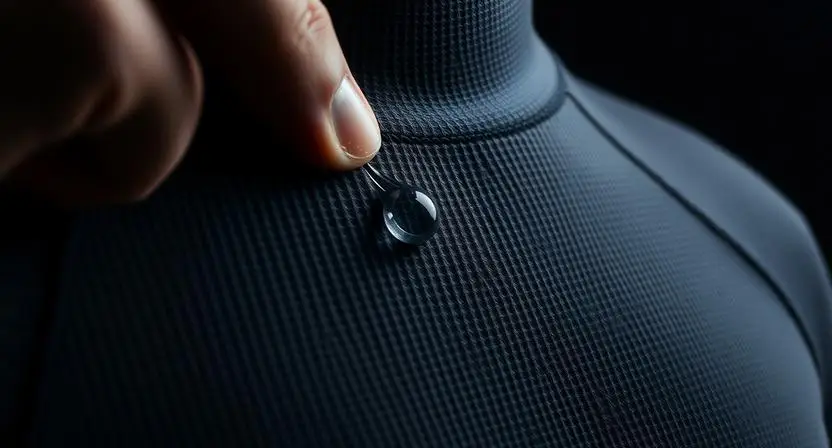
Cotton kills. That’s not hyperbole — it’s the most important sentence in mountain dressing. Cotton absorbs moisture and holds it against your skin creating a wet cold layer that accelerates hypothermia in temperature drops and chafes aggressively during high-output climbing. A single cotton t-shirt on a summer alpine hike can transform a beautiful day into a genuinely dangerous situation when afternoon thunderstorms arrive and temperatures drop 30 degrees in 20 minutes.
What fabrics are best for summer mountain hiking comes down to three categories: synthetic performance fabrics like polyester and nylon that wick moisture rapidly, merino wool that regulates temperature across extremes and resists odor naturally and hybrid fabrics that combine both properties for specific applications. Moisture wicking summer clothes built from 100 percent polyester dry four times faster than cotton equivalents and weigh 40 percent less for equivalent coverage. Performance fabric summer wear from brands like Patagonia summer hiking outfit lines and Arc’teryx summer mountain wear collections use proprietary fabric technologies that represent the current ceiling of textile performance for outdoor applications.
Mountain Outfit Summer Looks That Move Seamlessly from Trail to Town
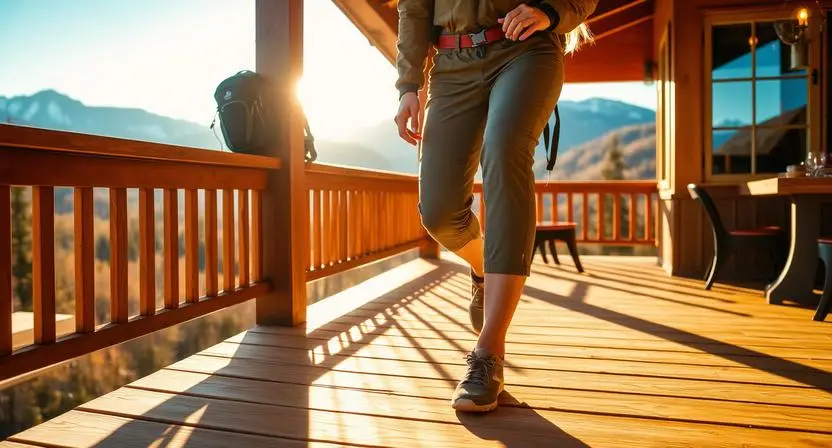
The trailhead parking lot at a popular Colorado or Washington destination tells a fascinating story about American hiking fashion evolution. Ten years ago everyone arrived in purely functional gear that announced outdoor activity from fifty feet away. Today the most prepared hikers are also some of the most stylishly dressed because the best summer trail to town outfit pieces have finally crossed the gap between genuine performance and genuine aesthetic appeal.
Trail to town summer outfit transition works when your foundation pieces carry dual identities — a Vuori summer outdoor outfit item reads as athleisure in a mountain town restaurant but performs as legitimate trail wear on a 14-mile ridge hike. Lululemon summer trail outfit pieces follow the same principle from the opposite direction — designed for aesthetic appeal but engineered with performance fabrics and thoughtful construction that handle real outdoor demands. Mountain resort outfit summer dressing benefits most from this approach since resort towns like Aspen, Telluride and Jackson Hole demand outfits that look intentional at dinner without requiring a full clothing change after the afternoon trail.
Layering at Altitude: The Three Piece System That Handles Any Summit
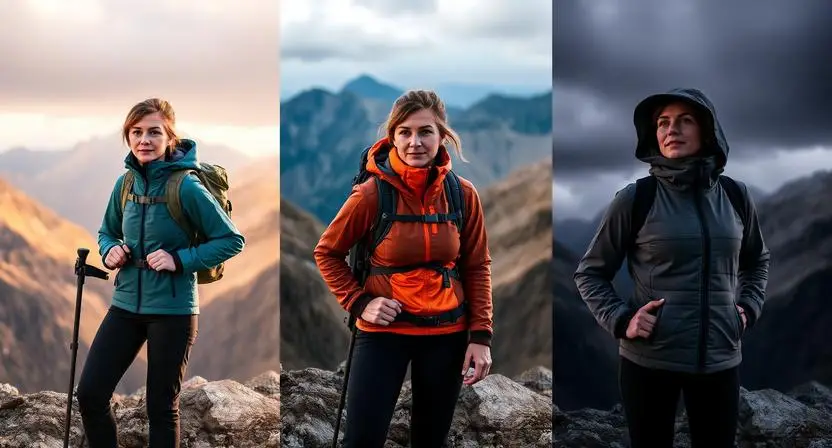
How to layer clothes for summer mountain hike correctly means understanding that the three-layer system isn’t about wearing three things simultaneously — it’s about having three functional options that you add and remove as conditions demand throughout the day. Base layer manages moisture. Mid layer manages warmth. Shell layer manages wind and precipitation. The art is choosing pieces within each category that earn their weight in your pack on every single outing.
Summer outdoor layering system for mountain environments operates differently than layering for urban cold weather precisely because of the activity-generated heat that hiking produces. Your base layer must move perspiration away from your skin actively — not just absorb it. Your mid layer needs to compress into a fist-sized package so it transitions from pack to body the moment temperature drops. Your breathable membrane summer mountain jacket needs to block wind and light rain while allowing the vapor pressure from your body heat to escape outward. Mountain layering outfit summer built on this three-piece architecture from The North Face summer hiking wear or Columbia hiking clothes summer systems delivers reliable performance across the 40-degree temperature swings that characterize a single summer mountain day.
| Layer | Function | Weight Target | Pack Size |
|---|---|---|---|
| Base layer | Moisture wicking | 3–6 oz | Fist sized |
| Mid layer | Insulation | 6–12 oz | Baseball sized |
| Shell layer | Wind and rain protection | 8–14 oz | Grapefruit sized |
Sun at 10000 Feet Hits Differently and Your Outfit Needs to Reflect That
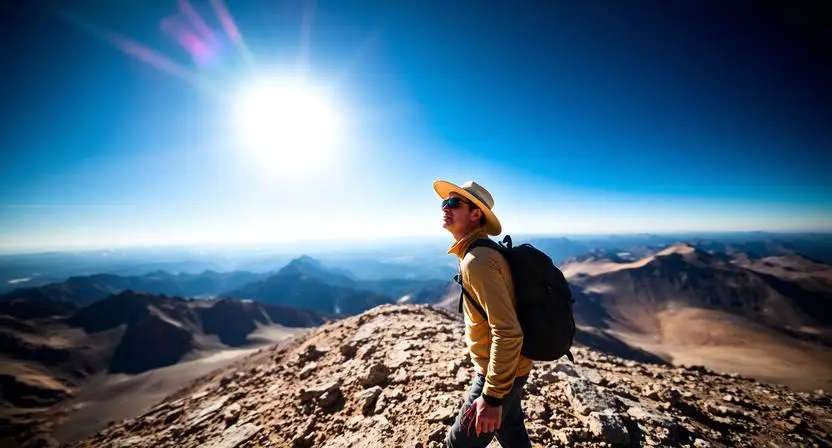
UV radiation increases approximately 4 percent for every 1000 feet of elevation gain. At 10000 feet above sea level — a modest altitude for Rocky Mountain summer hiking — you’re receiving roughly 40 percent more UV radiation than you would at sea level standing in the same sunlight intensity. That mathematical reality means your sun protection summer outfit at altitude requires deliberate engineering rather than casual consideration.
UPF sun protection summer mountain clothing rated at UPF 50 blocks 98 percent of UV radiation compared to a standard white cotton t-shirt that provides approximately UPF 5 protection — a staggering difference when you’re spending eight hours under elevated UV exposure. Outdoor Research summer sun hat designs with at least a 3-inch brim provide meaningful facial protection that baseball caps simply cannot replicate. High UV index summer mountain eye protection requires sunglasses rated for category 3 or 4 lens protection — the kind that wrap around slightly to prevent UV entry from the side where standard fashion frames consistently fail during long trail days.
The Footwear Decision That Makes or Breaks Every Summer Mountain Day
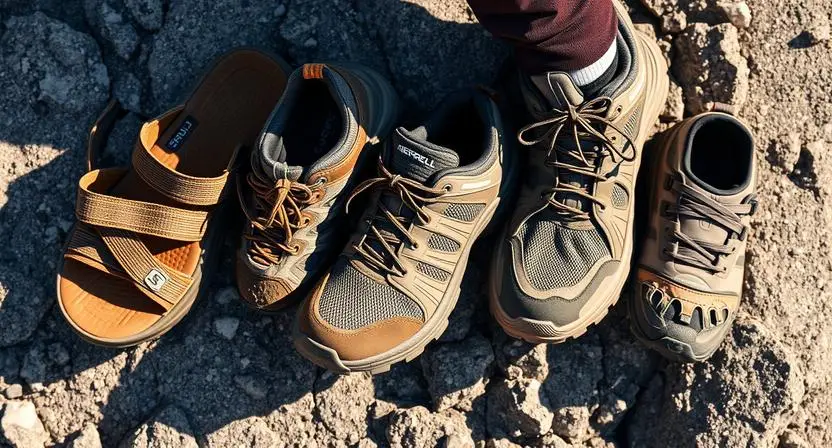
No single item in your mountain outfit summer kit affects your experience more profoundly than your footwear choice. Bad boots or sandals at mile eight aren’t an inconvenience — they’re a trail emergency that can end a trip, cause lasting injury and make every step of the descent actively painful. The footwear decision needs to happen first and shape every other clothing choice around it rather than being treated as an afterthought.
Trekking sandal versus boot summer mountains is the most debated footwear question in American hiking communities and the honest answer depends entirely on terrain type and personal biomechanics. Chaco summer hiking sandals outfit configurations work genuinely well on established trails with firm surfaces and water crossings but offer zero ankle support and minimal protection on technical rocky terrain. Merrell summer hiking shoes outfit low-cut hiking shoes represent the middle ground that most summer mountain hikers ultimately prefer — lighter than boots, more protective than sandals and compatible with the range of terrain that summer trails in the US typically deliver. Summer mountain blister prevention footwear requires the right sock system — Smartwool summer hiking socks or Darn Tough summer trail socks in a medium cushion weight prevent the friction accumulation that causes blisters during long descents.
Convertible Pants and Quick Dry Shorts: The Great Summer Trail Debate Settled
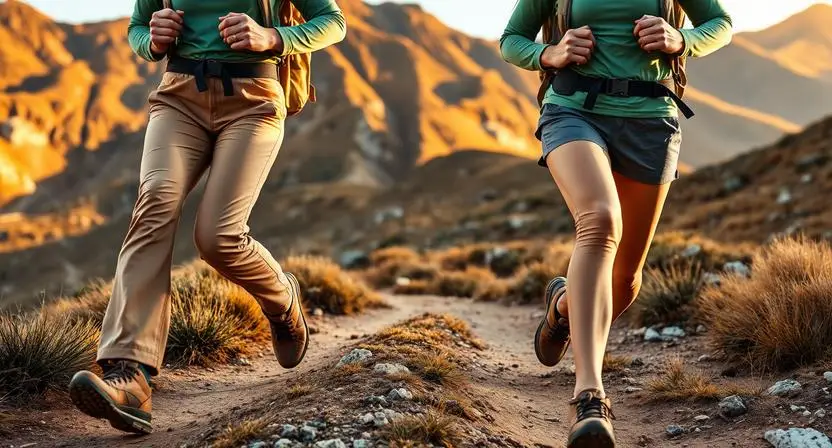
The convertible pants versus dedicated shorts debate has consumed hiking forums for two decades without resolution because both camps are partially right and the correct answer depends on your specific trail conditions. Convertible pants summer mountain outfit provide extraordinary versatility — full leg coverage for cold mornings, sun protection on exposed ridges and the option to convert to shorts when heat builds mid-morning without carrying two separate garments.
you may also like this:22 Hawaii Aesthetic Wallpaper Ideas for Tropical Vibes
Best pants for summer mountain hiking in dedicated short form from Kühl summer hiking pants outfit or prAna summer hiking clothes lines offer a freedom of movement and ventilation that convertible versions structurally cannot match because the zip-off construction introduces bulk and reduced fabric performance at the conversion point. Quick dry fabric summer mountain wear in dedicated trail shorts dries in 15 to 20 minutes after water crossings versus 40 to 60 minutes for heavier convertible fabric — a meaningful advantage on multi-day routes with frequent stream crossings. The resolution: use convertibles for shoulder season mountain trips and early morning starts and choose dedicated lightweight trail shorts for mid-summer peak heat conditions above 7000 feet.
Mountain Outfit Summer Essentials Every Woman Should Pack Without Compromise
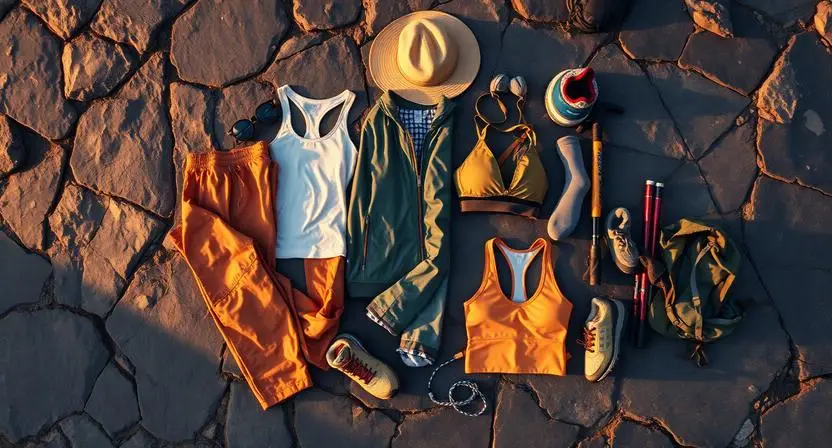
What to wear on a mountain hike woman requires addressing the specific physiological and functional considerations that make women’s hiking clothing a genuinely distinct category rather than simply a smaller version of men’s gear. Women’s thermoregulation patterns differ meaningfully from men’s — women typically run colder at rest but experience similar heat output during high-effort climbing which means layering systems need more rapid transition capability between cold and warm states.
Mountain hiking clothes women built specifically for female anatomy deliver better performance than adapted men’s versions in several critical areas: shoulder strap placement on integrated pack systems, hip belt positioning and comfort on loaded carrying days and inseam geometry in pants that eliminates the inner-thigh chafing that affects women disproportionately on long descents. REI summer hiking outfit women collections and Athleta summer outdoor outfit lines invest significant research into these anatomical differences and the resulting garments perform demonstrably better for women on long-distance mountain terrain. Summer adventure outfit women from Cotopaxi summer adventure outfit and Eddie Bauer summer mountain wear women’s lines now combine genuine performance engineering with aesthetic intentionality that makes these pieces as appealing to wear as they are effective to hike in.
The Color Theory of Summer Mountain Dressing Nobody Ever Told You About
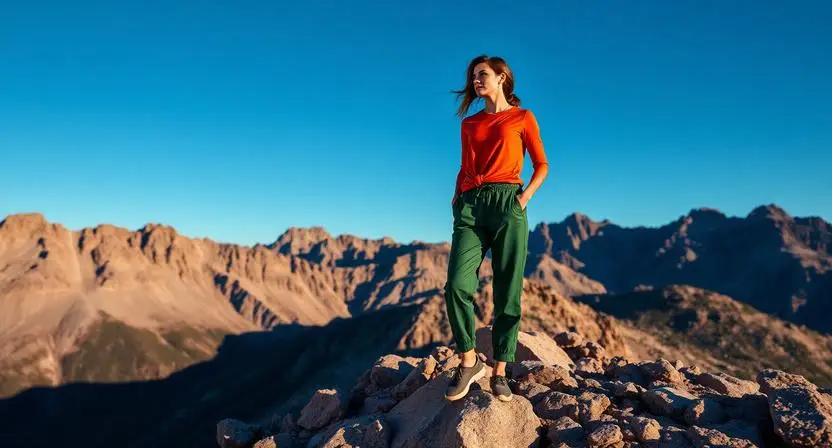
Summer mountain outfit photography color theory reveals something that outdoor clothing brands have understood for years but rarely communicate to consumers directly: color choice in mountain clothing affects your photography results, your visibility to other trail users and in bear country situations your safety profile simultaneously. It isn’t purely aesthetic — it’s a functional decision with real-world consequences on the trail.
What colors to wear hiking in summer mountains for photography purposes favor earth tones — ochre, terracotta, forest green, slate blue — that complement the natural color palette of mountain environments rather than competing with it. Neon colors photograph better in overcast conditions but read as visually jarring against neutral mountain backgrounds in direct sunlight. Summer mountain outfit bear country color considerations recommend avoiding black at close range in grizzly territory since black coloration can trigger defensive responses in some bear encounters — earth tones and muted greens provide safer visual profiles in bear-active wilderness areas throughout the American West.
Cold Mornings Hot Afternoons: Mastering Summer Mountain Temperature Swings
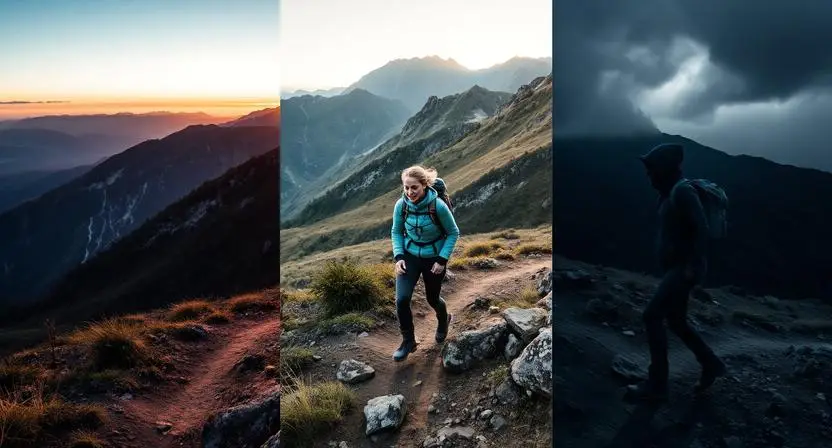
Summer mountain temperature drop preparation is the most consistently underestimated challenge facing American summer hikers. A July morning at a Colorado trailhead at 6am can register 38 degrees Fahrenheit while the same location at noon reaches 75 degrees and by 3pm an afternoon thunderstorm drops temperatures back to 45 degrees with wind and rain. Your clothing system needs to handle all three of those conditions from a single pack without carrying so much weight that the pack itself becomes the problem.
Summer mountain altitude cold morning layer management starts the night before — lay out your starting layers in order of removal so the transition from cold-morning configuration to warm-afternoon configuration happens smoothly on the trail without extended stops or pack excavation. Summer mountain outfit for cold mornings typically requires a lightweight fleece or summer mountain wind shirt layering piece over your base layer at start — both of which compress to near-nothing and live in the top of your pack for instant accessibility throughout the day. Lightweight packable jacket summer hiking options from Fjallraven summer mountain outfit and Black Diamond summer alpine outfit lines weigh under 8 ounces and pack into their own pockets making them the most cost-effective insurance against unexpected alpine temperature drops available to summer mountain hikers.
Performance Meets Style: Summer Mountain Looks That Actually Look Good
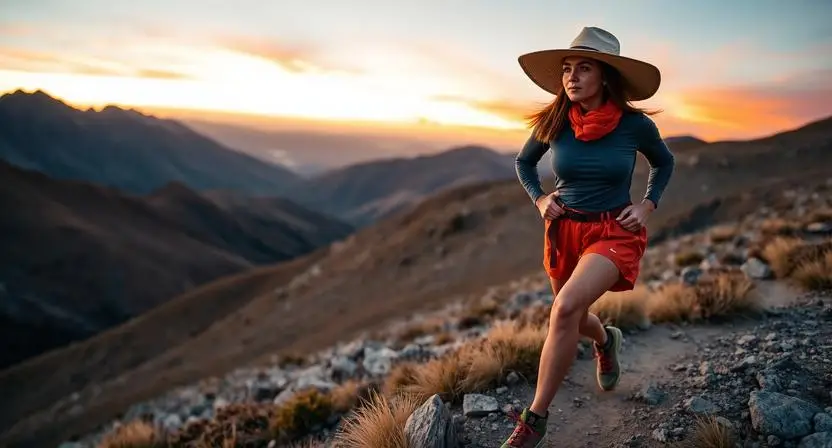
The era of choosing between looking good and performing well on the mountain ended approximately five years ago when premium outdoor brands began hiring fashion designers alongside performance engineers. Hiking fashion summer looks at the intersection of function and aesthetics now produce garments that work as hard as dedicated technical pieces while looking genuinely intentional rather than purely utilitarian.
Outdoor chic summer fashion has developed its own distinct visual vocabulary — clean technical lines, purposeful color blocking, thoughtful pocket placement that reads as design detail rather than functional afterthought and fabrics that drape and move in ways that previous generations of hiking clothing never achieved. Summer activewear styling from Lululemon summer trail outfit and Vuori summer outdoor outfit collections exemplifies this evolution most clearly — both brands produce mountain-ready pieces that photograph beautifully, perform credibly on technical terrain and transition naturally into social contexts at mountain towns. Nature inspired outfit ideas drawn from the color palettes of specific mountain environments — the slate and sage of the Rockies, the deep greens and greys of the Cascades — create a visual harmony between wearer and landscape that elevates summit photography from record shot to genuine portrait.
The Minimalist Summer Mountain Pack That Covers Every Weather Scenario
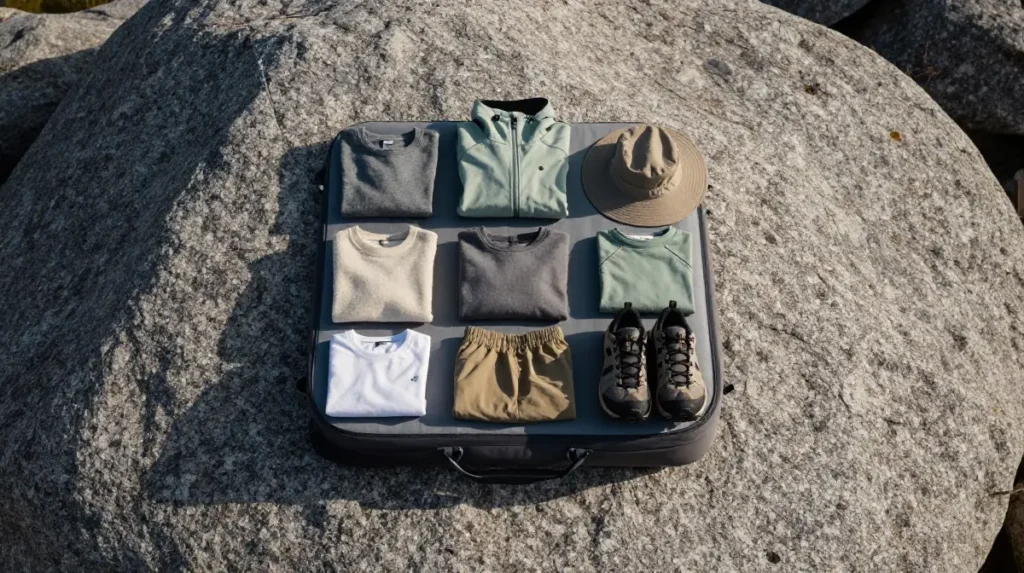
What to pack for a summer mountain adventure with a minimalist philosophy means eliminating redundancy ruthlessly while ensuring that every weather scenario that mountain environments realistically present remains covered by something in your pack. The minimalist mountain pack isn’t about packing less — it’s about packing more intelligently so that seven carefully chosen pieces cover more scenarios than fourteen poorly chosen ones.
Outdoor capsule wardrobe summer for a three to five day summer mountain trip covers five distinct functional categories from a single curated selection: moisture management, sun protection, insulation, precipitation defense and social presentation for trail-town evenings. Summer travel outfit packing at its most efficient uses pieces that serve multiple functional categories simultaneously — a Buff summer mountain headwear piece functions as sun protection, wind buffer, sweat management and neck coverage from a single 2-ounce item. Packable summer outdoor clothing discipline means rejecting any item that serves only one function when a multi-function alternative of equivalent performance weight exists in the current market.
Trail to Town Transitions: One Bag Summer Mountain Outfit Strategies
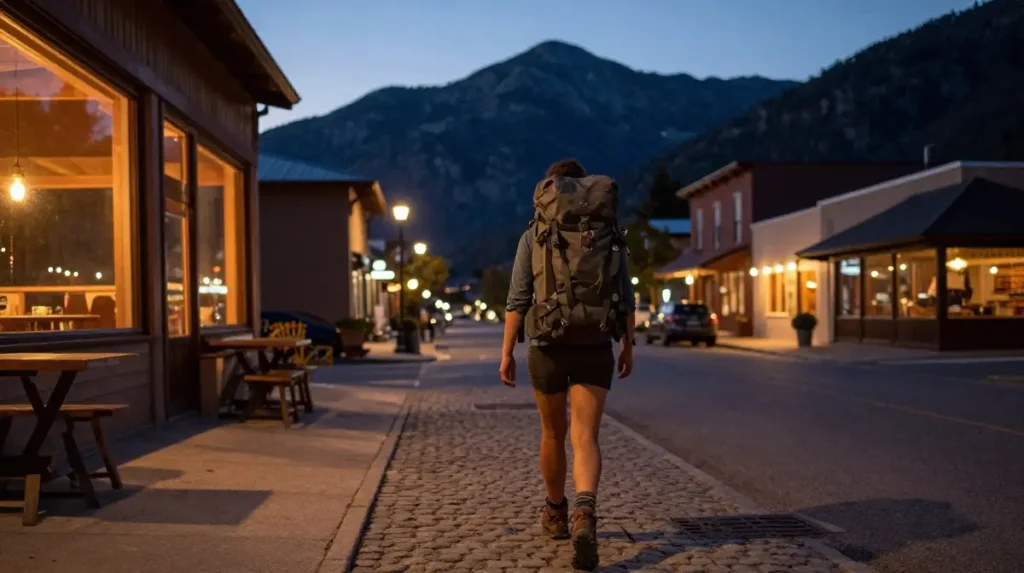
Trail to town summer outfit transition with a single bag requires advance wardrobe engineering rather than spontaneous outfit decisions at the trailhead. The strategy is building your trail outfit from pieces that require only one swap — typically footwear or a single top layer — to read as casual evening wear in a mountain town context. Everything else stays identical and nobody at the restaurant can tell you hiked 12 miles to get there.
What to wear at mountain resort in summer on a trail-to-town day works most elegantly when your foundation pieces — base layer and trail shorts or pants — carry enough aesthetic credibility to anchor an evening look. A Patagonia summer hiking outfit capilene base layer in a solid muted tone pairs naturally with trail pants and clean trail runners for an evening look that reads as intentional outdoor lifestyle dressing rather than someone who forgot to change. Summer elevation clothing choices that compress small allow you to pack a single lightweight button shirt in your Osprey backpack summer hiking outfit configuration that transforms any technical trail look into a presentable evening outfit within 60 seconds of reaching your accommodation.
Summer Mountain Outfit Ideas Designed Specifically for Women on Long Treks
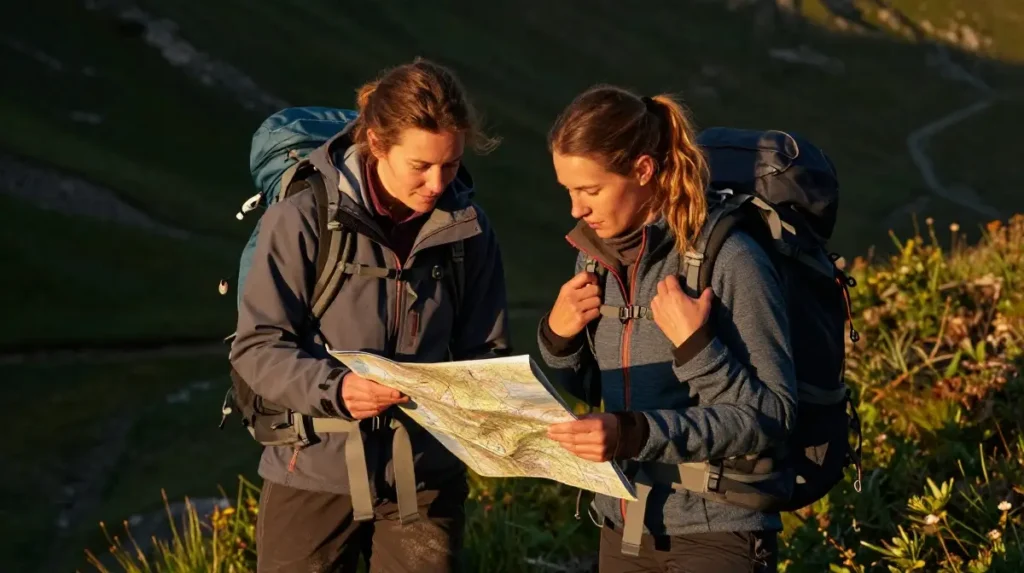
Summer backpacking outfit ideas for women on multi-day routes require addressing the specific challenges that single-day hiking fashion content consistently glosses over — repeated wear performance, odor management across multiple days without laundry access, pack-carry comfort over 8 to 10 hours daily and the psychological importance of feeling good about your appearance even on day four of a wilderness route.
Cute hiking outfit ideas for summer mountains for multi-day women’s trips balance these practical demands with genuine aesthetic consideration. Icebreaker merino summer mountain wear women’s pieces address the odor management challenge most effectively — merino wool’s natural antimicrobial properties allow three to four days of continuous wear without the aggressive body odor that synthetic fabrics accumulate after day two in hot conditions. Comfortable outfits for mountain hiking summer across multiple days benefit from a two-base-layer rotation system — carrying two merino tops that alternate daily while the non-worn piece airs on the outside of your pack — a technique that manages hygiene across a full week in the backcountry from a 35-liter pack without sacrificing performance or comfort on any single day.
The Hat Sunglasses and Accessory Formula That Completes Any Mountain Look
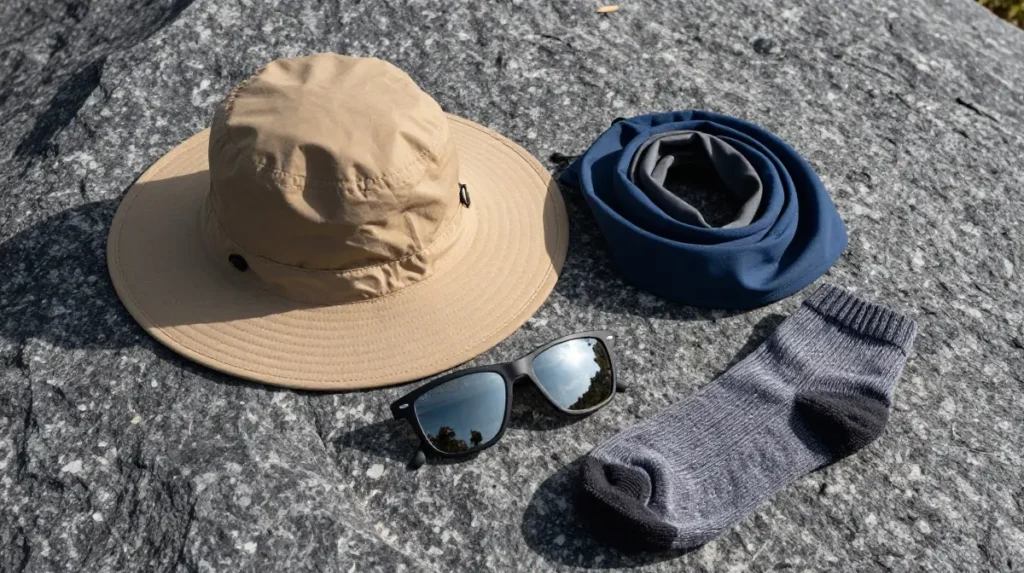
Accessories in a mountain context aren’t decorative additions — they’re functional components that complete your sun protection system, manage peripheral temperature regulation and in some cases determine the difference between a comfortable summit and an emergency descent. What hat to wear hiking summer mountains requires understanding the specific protection geometry that different hat styles deliver versus what marketing images suggest.
Summer mountain outfit sun hat selection criteria for genuine effectiveness require a minimum 3-inch brim on all sides — not just the front — UPF 50 rating in the fabric itself rather than relying on color alone for UV blocking and a ventilated crown design that prevents the heat accumulation that causes hikers to remove their hat precisely when sun exposure is highest. Outdoor Research summer sun hat designs meet all three criteria while remaining packable enough to live in your pack top pocket for instant deployment. High UV index summer mountain eye protection from polarized category 3 lenses reduces glare-induced eye fatigue dramatically on snow, water and exposed granite surfaces — all three of which appear regularly on American summer mountain routes and all three of which reflect UV radiation upward under your hat brim toward your eyes.
Merino Wool in Summer: The Counterintuitive Fabric Choice That Actually Works
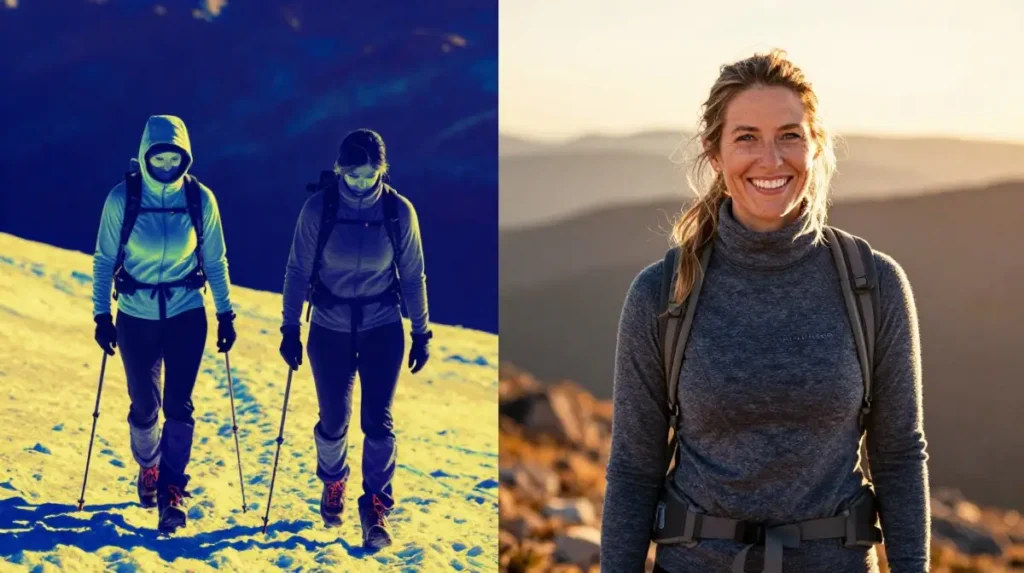
Every summer hiker’s instinct pushes toward the lightest, most synthetic fabric available — and for many applications that instinct is correct. But merino wool occupies a specific performance niche in summer mountain dressing that synthetic alternatives genuinely cannot match and understanding when to deploy it changes your comfort equation on long mountain days significantly.
Icebreaker merino summer mountain wear and Smartwool summer hiking socks demonstrate the core merino advantage in summer conditions: temperature regulation across a wider range than any synthetic equivalent. Merino’s natural crimp structure traps air for insulation when cold and releases moisture vapor effectively when hot creating a single fabric that performs credibly across 30-degree temperature swings. What fabrics are best for summer mountain hiking in the specific context of multi-day backcountry travel consistently points to merino for base layers and sock systems because its natural odor resistance means a single merino base layer worn for four consecutive days produces less perceptible odor than a synthetic base layer worn for two. Moisture wicking base layer summer hiking in merino performs slightly slower than premium synthetics in pure moisture transfer speed but compensates with superior comfort against skin in long continuous wear situations.
Rocky Terrain Wet Crossings and Scree: Dressing for Specific Mountain Hazards
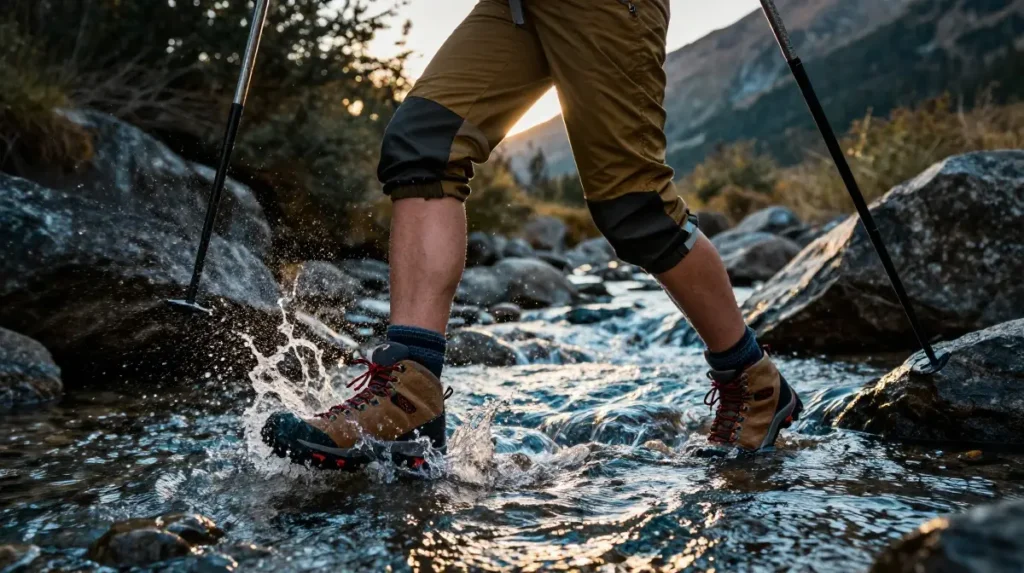
Terrain type should directly influence garment selection in ways that generic hiking fashion content never addresses. Rocky talus fields, wet creek crossings and scree slopes each impose specific mechanical and moisture demands on your clothing system that a one-size-fits-all mountain outfit cannot optimally address. How to dress for mountain weather in summer expands to include terrain weather — the microclimate conditions that specific terrain types create regardless of the ambient forecast.
Gaiters summer mountain outfit compatibility matters significantly on scree slopes and sandy talus where small debris migrates into footwear and causes blisters with extraordinary efficiency. Low gaiters that attach to your lace loops and cover the boot-sock junction eliminate this problem entirely without adding meaningful weight or heat. Summer mountain outfit rain poncho integration for wet terrain requires choosing a poncho length that covers your pack while allowing natural leg movement on uneven footing — a poncho cut too long creates a genuine tripping hazard on technical boulder terrain. Trekking pole outfit coordination summer affects your sleeve choice meaningfully — short sleeves combined with poles on rocky terrain expose your forearms to scrape hazards during route-finding falls that arm gaiters or lightweight sun sleeves eliminate at a weight penalty of under one ounce.
Summer Mountain Outfit Ideas That Work at 5000 and 12000 Feet Equally Well
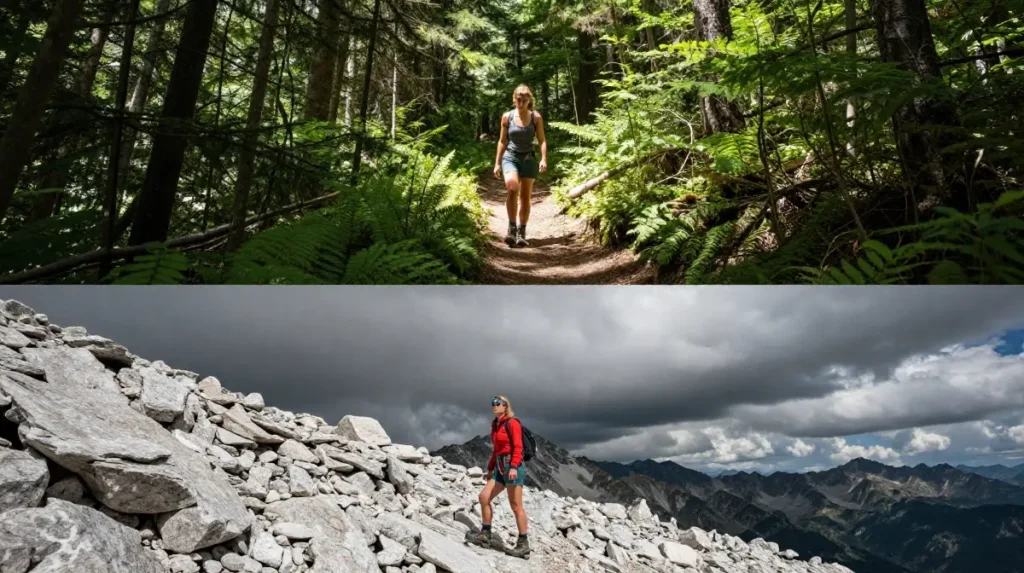
Elevation range creates one of the most complex clothing challenges in summer mountain dressing because the atmospheric conditions at 5000 feet and 12000 feet differ so substantially that garments optimized purely for one elevation perform poorly at the other. A summer elevation outfit ideas approach that covers both altitudes requires understanding where those performance differences actually live.
How to dress for high altitude in summer at 12000 feet means addressing UV radiation intensity, reduced oxygen density affecting thermoregulation efficiency, dramatically lower humidity and wind speeds that frequently exceed 25 miles per hour on exposed ridges even on clear summer days. Mountain climbing outfit summer for technical high-altitude routes in the US — routes in the Wind Rivers, the Sierra Nevada above 11000 feet or Colorado’s 14er routes — requires the full three-layer system even in July because summit conditions routinely drop to near freezing within 20 minutes of weather change. At 5000 feet the same summer day may allow trail shorts and a single technical tee for the full day without any additional layers — the clothing strategy that works brilliantly at low elevation creates genuine cold exposure risk if deployed without modification at high elevation.
The Base Layer Secret That Keeps Serious Hikers Fresh for Eight Hour Days
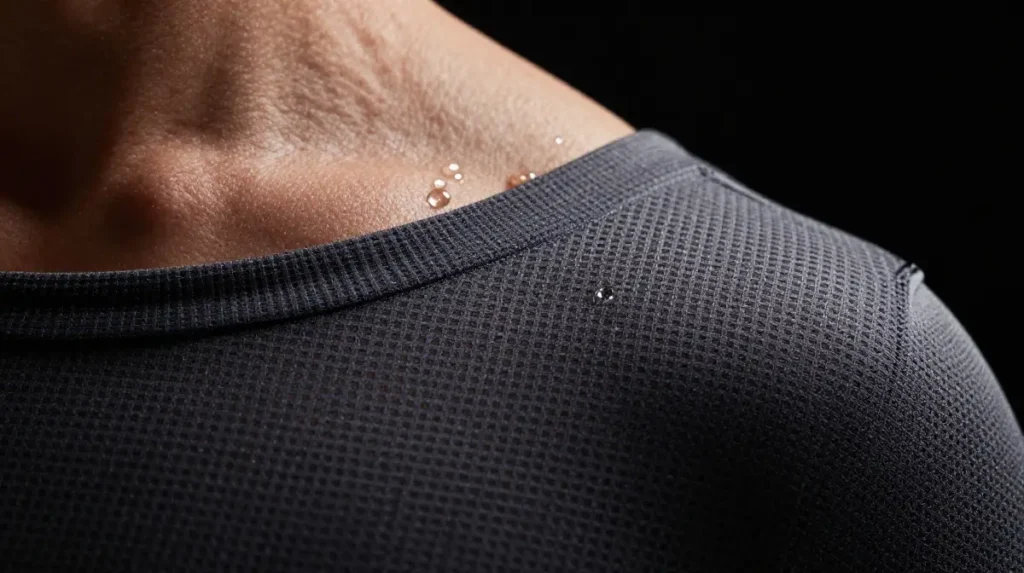
Moisture wicking base layer summer hiking selection is the decision that determines your comfort ceiling for every hour of your mountain day and yet most hikers spend more time choosing their outer shell than their base layer — the exact inverse of the decision priority that performance data supports. Your base layer contacts your skin for the full duration of your activity and its moisture management performance determines everything from your body temperature regulation to your chafe risk to your odor profile at the end of the day.
How to stay cool while hiking in summer mountains through base layer selection centers on the concept of next-to-skin moisture management rather than moisture absorption. The critical distinction: a fabric that wicks moisture away from your skin and moves it to the outer surface for evaporation keeps you continuously dry. A fabric that absorbs moisture — cotton being the extreme example — keeps that moisture pooled against your skin where it cools you dangerously during rest stops and creates friction during movement. Patagonia summer hiking outfit base layer systems and Nike summer hiking look performance base layers use grid-pattern construction that creates air channels between fabric and skin — a structural innovation that improves vapor transmission by 30 percent compared to flat-woven equivalents of identical fabric weight.
Photography Ready Mountain Outfits That Look Stunning on Any Summit
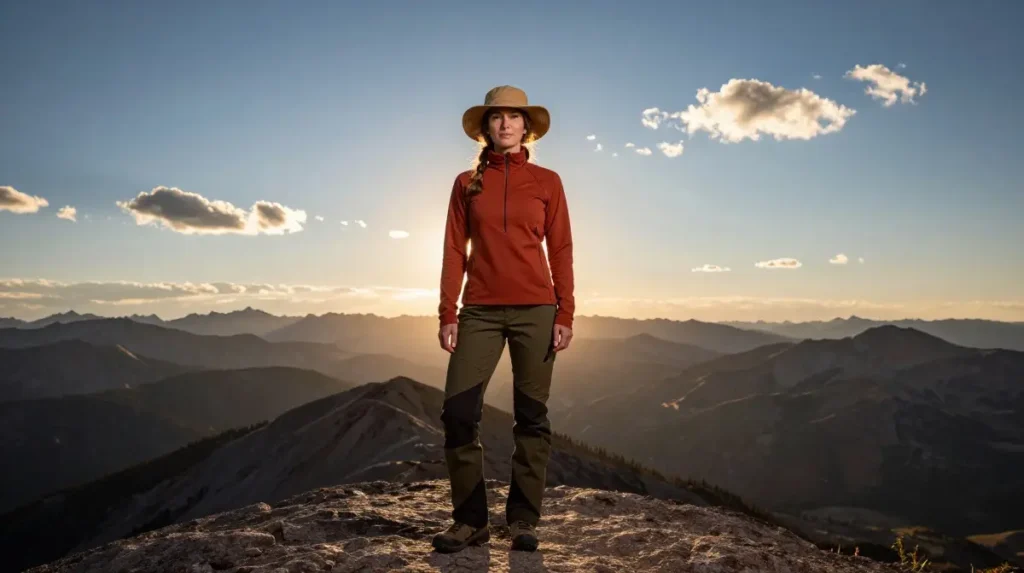
Summit photography has become a primary motivation for millions of American hikers — a social reality that influences outfit decisions in ways the outdoor industry has only recently begun addressing directly. Summer mountain outfit photography color theory matters enormously because the difference between a summit photo that looks like a casual record shot and one that looks like a premium outdoor editorial often comes down entirely to color palette choices made at the trailhead that morning.
Wilderness style summer looks that photograph beautifully in mountain environments follow specific principles: earth tones and deep saturated colors photograph more richly than pastels under bright alpine light, solid colors read more powerfully than busy patterns against complex natural backgrounds and single accent colors used deliberately create the visual hierarchy that pulls the viewer’s eye to the subject within the landscape. Mountain weekend outfit ideas planned with photography intentionality don’t require any sacrifice of performance — a rich terracotta base layer from Cotopaxi summer adventure outfit or a deep forest green fleece from Patagonia summer hiking outfit performs identically to any other technical equivalent while creating summit photographs that stop social media scrolling instantly.
Budget Summer Mountain Wardrobe Builds That Perform Like Premium Gear
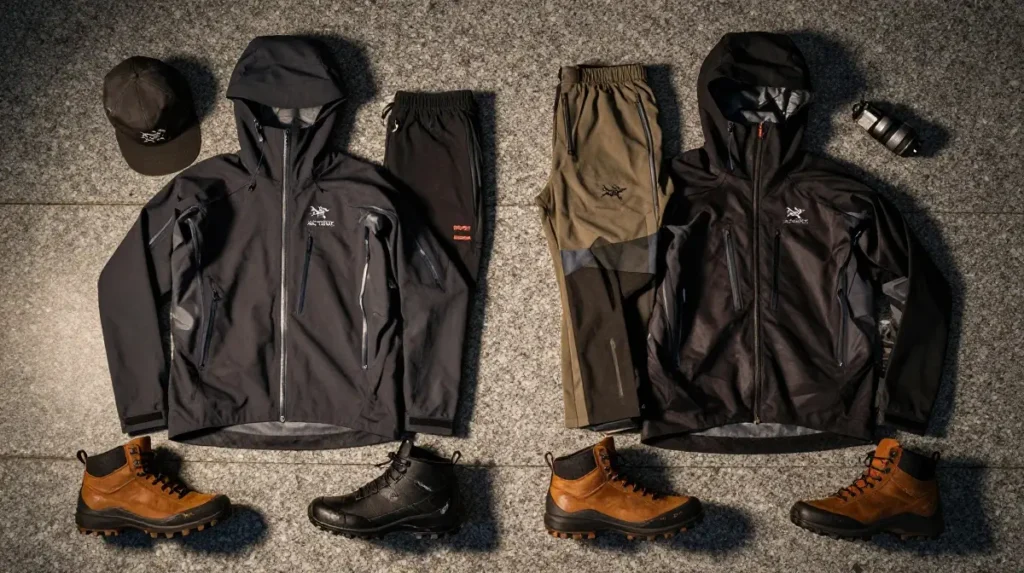
Premium outdoor gear pricing creates a genuine barrier to entry that prevents many Americans from accessing the performance clothing they need for safe and comfortable mountain experiences. A full kit from Arc’teryx, Patagonia and Salomon can exceed $800 before you’ve left the parking lot. The good news: the performance gap between premium gear and intelligently chosen mid-market alternatives has narrowed dramatically in the past five years.
Budget friendly easter staircase decorating ideas — wait, that’s the wrong article. What to pack for a summer mountain adventure on a constrained budget starts with identifying the two non-negotiable premium investments: footwear and base layers. These two categories deliver the highest performance return per dollar invested and the widest gap between good and poor quality. Columbia hiking clothes summer delivers excellent moisture management performance at 40 to 60 percent of Arc’teryx summer mountain wear pricing — the performance difference exists but it’s meaningful only on technical expeditions rather than recreational summer hiking. REI summer hiking outfit women house brand Co-op gear consistently benchmarks above its price point in independent reviews and provides a complete entry-level mountain wardrobe from a single trusted retailer with a comprehensive return policy.
| Gear Category | Budget Option | Price | Premium Option | Price |
|---|---|---|---|---|
| Base layer | REI Co-op | $35–$55 | Icebreaker merino | $80–$120 |
| Hiking pants | Columbia | $55–$75 | Kühl | $95–$130 |
| Trail shoes | Keen | $90–$120 | Salomon | $130–$180 |
| Shell jacket | Columbia | $80–$120 | Arc’teryx | $250–$400 |
| Sun hat | Outdoor Research | $30–$45 | Tilley | $75–$100 |
The Capsule Mountain Wardrobe: Seven Pieces That Cover a Full Summer Season
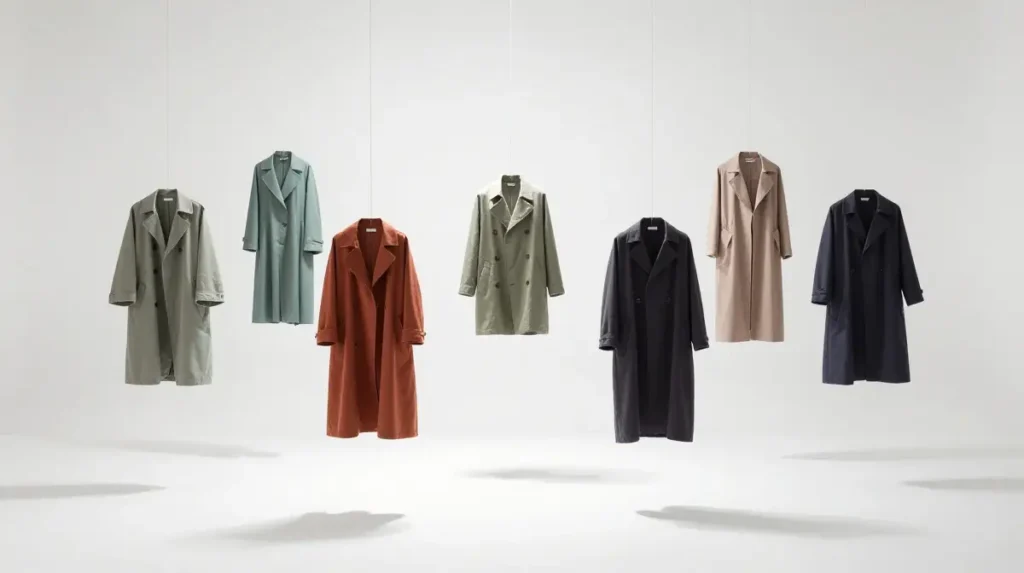
How to build a summer mountain capsule wardrobe that genuinely performs across the full range of American summer mountain conditions — from June snowfields in the Sierra to August heat in the Appalachians — requires ruthless piece selection that eliminates single-purpose items in favor of true multi-role performers. Seven pieces sounds impossibly minimal but the right seven cover more scenarios than most hikers manage with twenty.
Outdoor capsule wardrobe summer built around seven core mountain pieces: one merino base layer top, one lightweight technical shorts or convertible pant, one packable fleece mid layer, one breathable rain shell, one sun hat with full brim, one pair of trail shoes appropriate for your terrain type and one Buff summer mountain headwear piece. These seven items address every weather scenario that US summer mountain environments realistically present while packing into a 25-liter daypack with room for food, water and safety essentials. Summer adventure wardrobe essentials in this seven-piece framework work for a single day hike and scale directly to a five-day backpacking route — the same pieces simply rotate across a multi-day trip with the merino base layer’s odor resistance making the absence of clothing redundancy manageable across the full duration.
FAQ Section
Q1. What should a woman wear hiking in the mountains in summer?
A woman hiking in summer mountains should build her outfit from a moisture-wicking base layer in merino wool or synthetic performance fabric, trail-specific shorts or lightweight convertible pants, a packable mid layer for temperature drops, a lightweight rain shell and supportive trail shoes appropriate for her terrain. Sun protection through a wide brim hat and UPF 50 clothing completes the essential kit. Brands like REI Co-op, Athleta and Patagonia offer women-specific designs that address anatomical considerations male-adapted gear ignores.
Q2. Do I need a jacket for summer mountain hiking?
Yes — always carry a packable jacket regardless of the forecast. Summer mountain weather changes in minutes and a lightweight packable jacket weighing 6 to 10 ounces provides genuine hypothermia protection at a negligible pack weight penalty. The rule that experienced mountain hikers follow without exception: if the jacket is in your pack you might not need it but if you need it and it’s not in your pack you have a genuine emergency.
Q3. Are leggings or hiking pants better for summer mountain trails?
Leggings work well on established trails in moderate conditions and offer excellent freedom of movement and comfort during sustained climbing. Dedicated hiking pants provide superior abrasion resistance on rocky terrain, better sun protection across the full leg and more functional pocket storage. For serious technical mountain terrain hiking pants win clearly. For well-maintained trails in mild conditions high-quality performance leggings from Lululemon or Athleta perform credibly.
Q4. What shoes are best for summer mountain hiking?
The best summer mountain hiking shoe depends on your terrain type. Technical rocky trails above 9000 feet benefit from mid-cut hiking boots from Merrell or Salomon that provide ankle support and sole stiffness. Well-maintained trails at lower elevations work well with lightweight trail runners. Water-heavy routes with frequent crossings suit Chaco sandals or waterproof trail shoes from Keen. Never wear road running shoes on technical mountain terrain regardless of summer conditions.
Q5. How do I stay cool while hiking in summer mountain heat?
Start hiking before 7am to complete the most exposed sections before peak heat. Choose UPF 50 lightweight clothing that covers your arms and neck rather than bare skin which absorbs more solar radiation than light-colored technical fabric. Drink 16 to 20 ounces of water per hour in heat above 80 degrees. Take shade breaks during the hottest two hours of the day typically between 11am and 1pm. Wet a Buff headwear piece and wear it around your neck for evaporative cooling during exposed ridge sections.
Conclusion
Your mountain outfit summer decisions compound across every mile of every trail you walk this season. Get the fabric right and you stay comfortable through conditions that defeat unprepared hikers. Get the layering system right and temperature swings that send others retreating to the trailhead become nothing more than a mid-trail wardrobe adjustment. Get the footwear right and eight-hour days feel manageable rather than punishing.
Start with your base layer and footwear — the two highest-impact decisions in your mountain wardrobe. Build the rest of your kit around those two anchors using the seven-piece capsule framework as your guide. Every American mountain range is waiting and the only thing standing between you and the summit is the right gear on your body when you start climbing.