
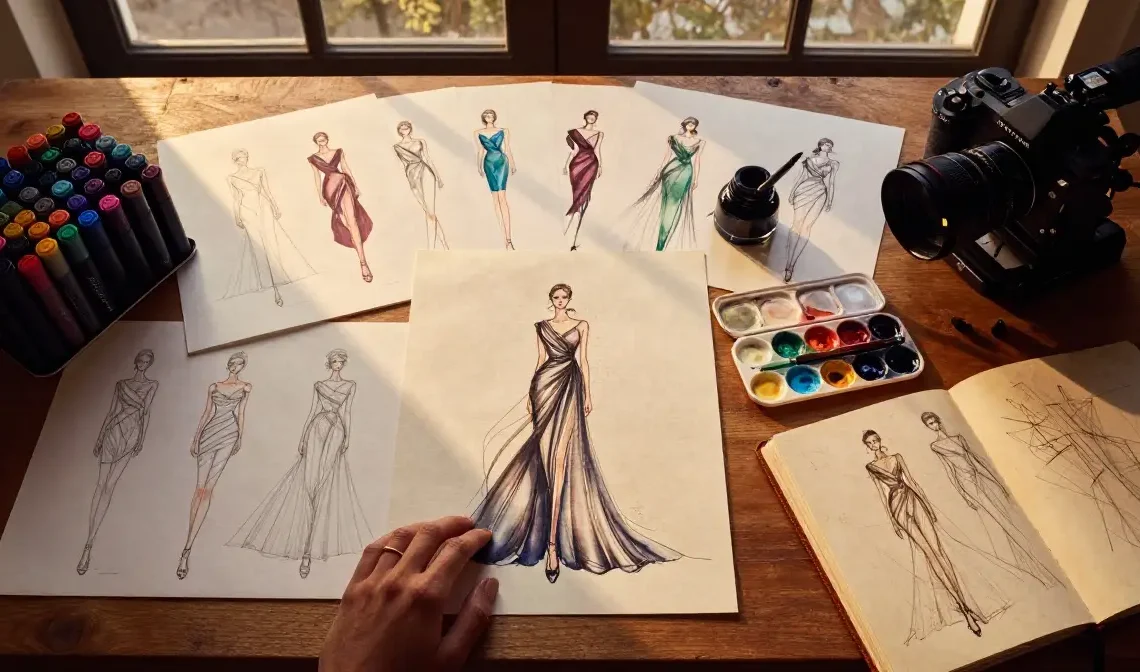
Before a single thread is cut, before a pattern is pinned, before any fabric ever meets a needle — the croquis de moda exists. It is the first breath of a garment. The drawn figure that holds a designer’s vision before the physical world can catch up to it. In the American fashion industry, from the studios of Parsons School of Design croquis programs to the sketchbooks of independent designers in Brooklyn lofts, the fashion croquis functions as the universal language between imagination and execution. This guide gives you everything you need to understand, create, and master it.
La Figura que Habla Antes de que el Tejido Exista
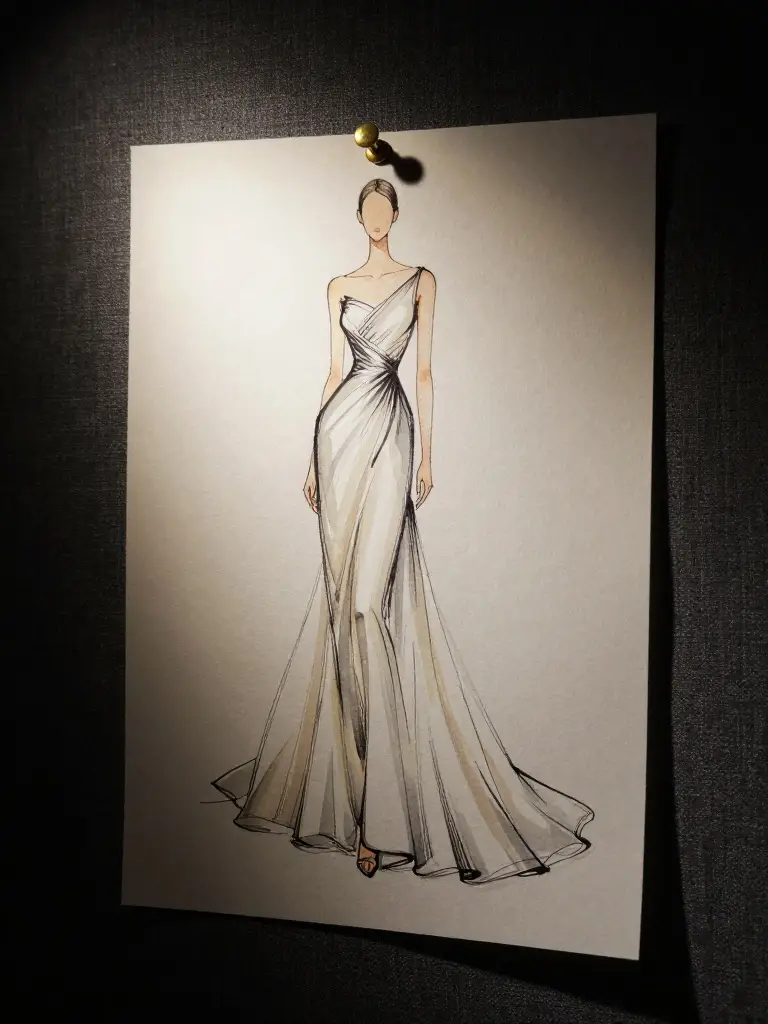
Every great collection begins not on a cutting table but on paper. The figura de moda dibujo is the designer’s first argument — a visual claim that says “this silhouette is possible, this proportion is intentional, this garment deserves to exist.” Before fabric costs are calculated and before pattern makers are briefed, the croquis communicates the entire emotional and structural proposition of a design in a single drawn figure. It is simultaneously a technical tool and an artistic declaration.
The lenguaje visual de la moda lives inside the croquis more than anywhere else in the design process. A skilled designer reads a fashion figure the way a musician reads a score — not just as information but as intent. The lean of a shoulder, the weight of a hem line, the way a draped sleeve falls from a raised arm — these drawn decisions communicate fabric behavior, construction logic, and aesthetic vision all at once. Representación visual de colecciones through the croquis is not supplementary to design. It is design, in its most essential and unmediated form.
Croquis De Moda y el Secreto de la Proporción de Nueve Cabezas
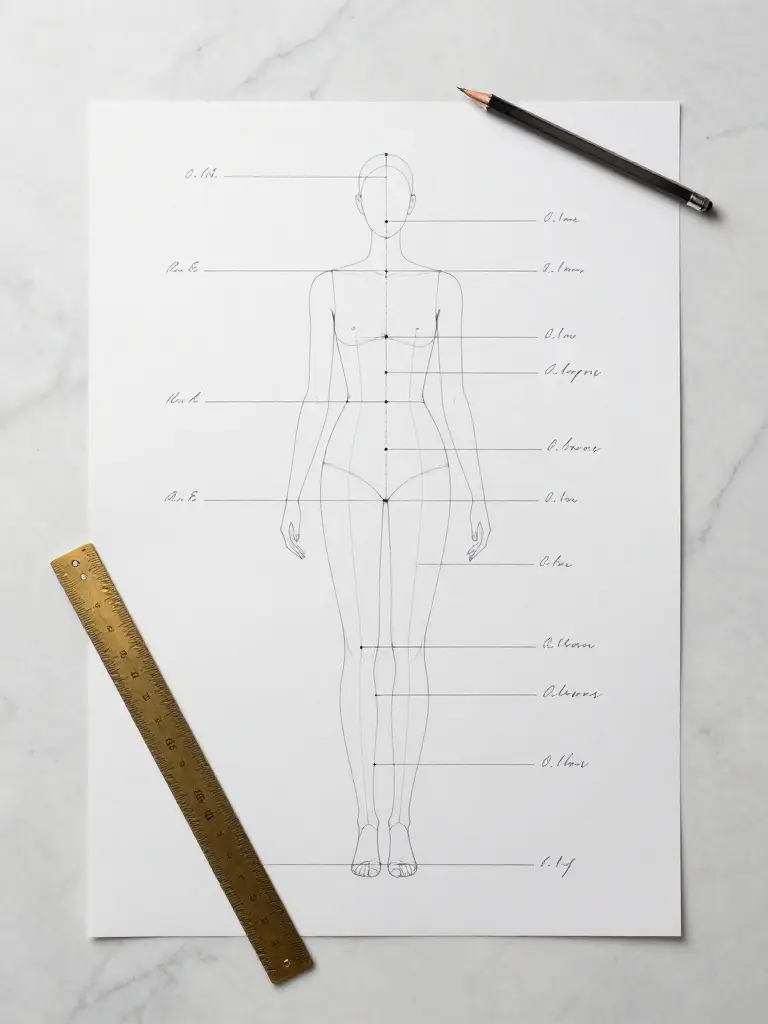
The proporción nueve cabezas croquis de moda system is the foundational grammar of fashion illustration and it deliberately departs from human anatomical reality. A real human body measures approximately 7.5 head-lengths in total height. The fashion figure — the figura de nueve cabezas en diseño de moda — extends that to nine, sometimes ten. This elongation isn’t artistic indulgence. It’s functional design language. Longer limbs create more visual space for garment detail. Extended proportions let the eye travel the full length of a silhouette without obstruction.
Proporciones correctas del croquis de moda begin with the cabeza ovalada croquis de moda proporción as the unit of measurement for the entire figure. The shoulders fall at the two-head mark. The waist at three and a half. The hips at four. The knees at six. The ankles at eight and a half. Piernas largas en croquis de moda constitute the most exaggerated element of this system — they account for nearly half the figure’s total height. Proporciones idealizadas en ilustración like these don’t misrepresent the human body so much as they create an idealized stage on which clothing performs at its most expressive.
| Body Landmark | Head-Length Position | Notes |
|---|---|---|
| Top of head | 0 | Unit of measurement |
| Chin | 1 | Base of head |
| Shoulders | 2 | Croquis de moda con hombros equilibrados |
| Bust | 2.5 | Chest line placement |
| Waist | 3.5 | Cadera y cintura en croquis de moda |
| Hips | 4 | Widest point of lower body |
| Crotch | 4.5 | Division point for legs |
| Knees | 6 | Mid-leg landmark |
| Ankles | 8.5 | Piernas largas en croquis de moda |
| Ground | 9 | Full figure height |
Línea de Acción: El Alma Invisible que Mueve Cada Figura
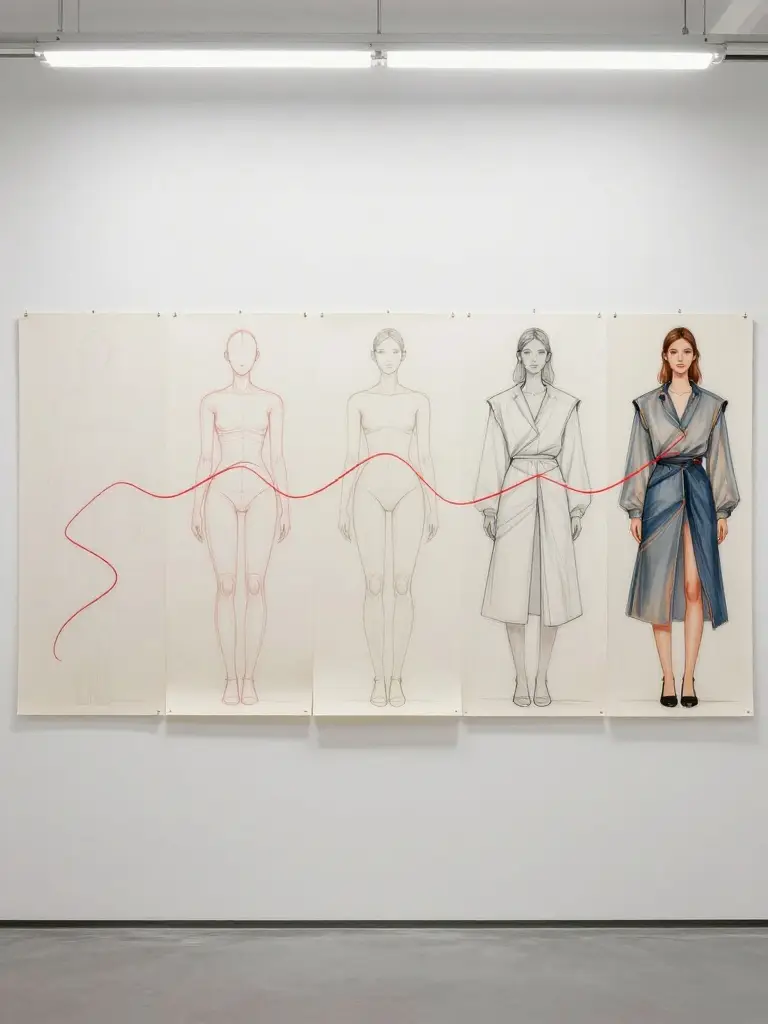
The línea de acción croquis de moda is the invisible spine of every compelling fashion figure — a single curved or diagonal line that runs through the entire body and determines its sense of movement, weight, and personality before a single garment detail is drawn. Think of it as the body’s gesture condensed to its most essential curve. Without it, figures look stiff. They look posed rather than alive. Figura de moda en movimiento always originates from a strong, deliberate action line drawn before any other element.
Dinamismo de la figura en moda depends entirely on this foundational gesture. A straight vertical action line produces a static, frontally symmetric figure — useful for technical flat-front views but lifeless as illustration. A slight S-curve creates natural weight shift. A diagonal line suggests motion. Movimiento y flujo en figura de moda emerge from the action line’s relationship to gravity — the body leans into or away from its center of mass and the garments respond accordingly. Expresión artística en moda at the highest level begins here, at this single preliminary mark, before any anatomical detail or fabric description begins.
De Yves Saint Laurent a Karl Lagerfeld: Los Bocetos que Cambiaron la Moda
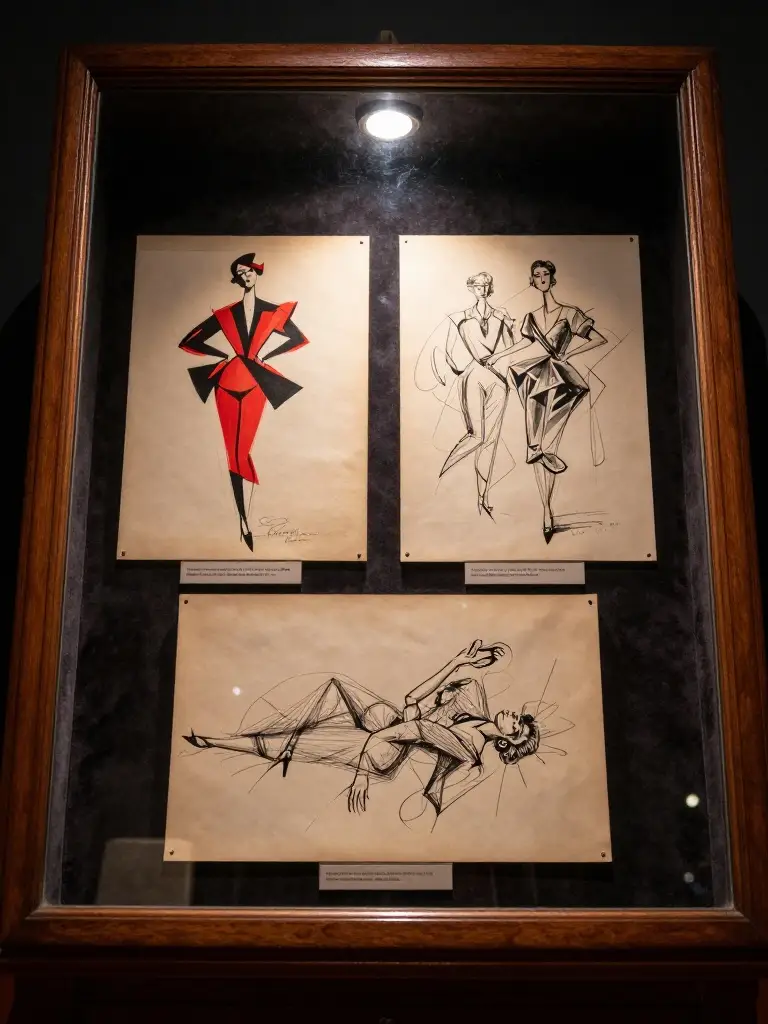
Yves Saint Laurent croquis históricos represent some of the most studied fashion drawings in history. Saint Laurent drew with an instinctive authority that communicated the entire emotional register of his collections in a few decisive strokes — a raised collar, a squared shoulder, a gathered waist. His boceto de moda profesional work wasn’t preparatory documentation. It was vision made visible, often more eloquent than the finished garment itself. Fashion historians at Central Saint Martins ilustración de moda programs teach his drawings as primary documents of 20th-century design philosophy.
Karl Lagerfeld bocetos de moda icónicos operated differently — prolific, fast, almost compulsively productive. Lagerfeld famously sketched dozens of looks each day, using his croquis as a thinking tool rather than a presentation instrument. The cronología visual del diseño de colecciones he maintained through his sketchbooks gave Chanel and Fendi teams a visual briefing system of extraordinary efficiency. Narrativa visual de colección de moda for both designers lived in their hand-drawn figures with an intimacy and immediacy that no digital rendering has yet replicated. Their drawings remind the world that the croquis de moda is as much a record of a designer’s mind as it is a plan for a garment.
Papel Lápiz y Visión: Los Materiales que Todo Diseñador Debe Dominar
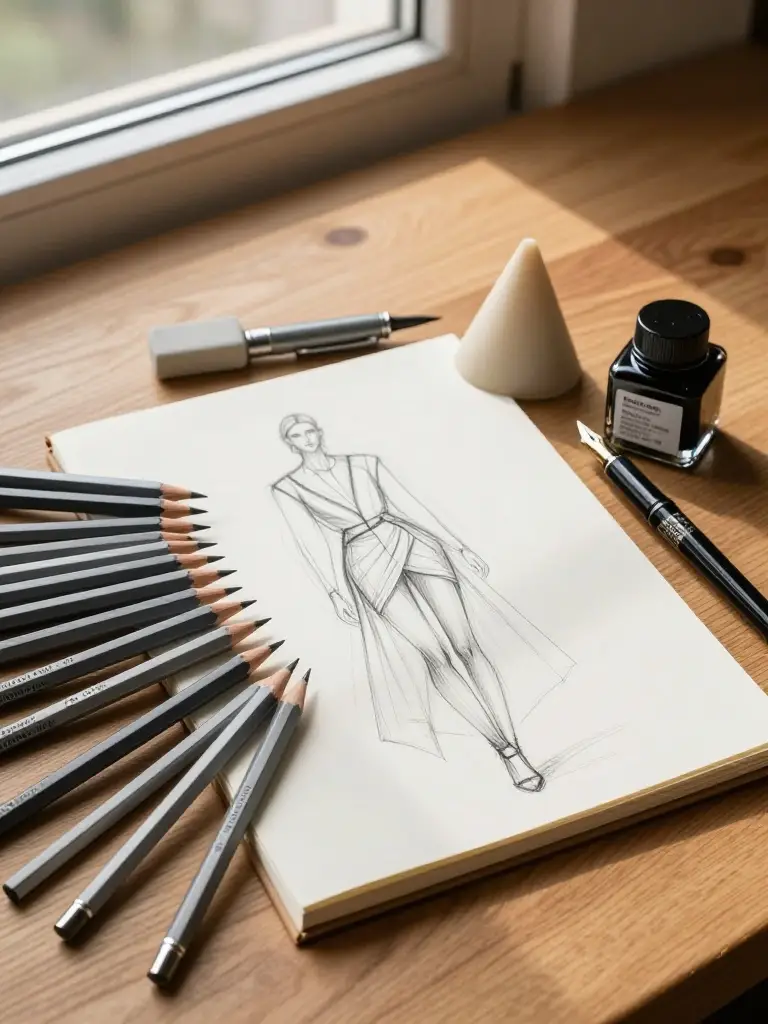
Aprender a dibujar croquis de moda begins with understanding your tools before a single figure is attempted. The paper choice alone shapes the quality and character of your work. Smooth Bristol board in 80 to 100 lb weight accepts both pencil and ink without bleed and provides the clean surface that técnica de línea limpia croquis de moda demands. Croquis de moda en papel Kraft produces a warm, editorial aesthetic particularly suited to conceptual sketchbooks and portfolio presentations with a deliberately artisanal quality.
Pencils for fashion figure work should range from 2H for initial structural guidelines to HB and 2B for definitive line work and shadow building. A mechanical pencil at 0.5mm allows the precision that dibujo técnico de moda requires without the inconsistency of a dulling wooden pencil point. Boceto de moda profesional artists keep a full range of erasers — a kneaded eraser for lifting without surface damage and a precision pointer eraser for correcting specific line details. Amazon libros de croquis de moda reference libraries and Etsy plantillas de croquis de moda starter packs give beginners a structured entry point into material selection before any money is wasted on incompatible tools.
El Contrapposto y las Poses que Convierten un Dibujo en Arte Editorial
Pose contrapposto croquis de moda is borrowed directly from classical sculpture — it describes the body position in which the weight rests on one leg while the other is relaxed, causing the hips and shoulders to shift into opposing tilts. This counter-balance creates the natural, asymmetric tension that makes a figure look inhabited rather than constructed. Every croquis de moda con diferentes poses worth studying in professional portfolios uses some version of this weight-shift principle even when the pose itself is extreme or unconventional.
Pose dinámica croquis de moda femenino extends contrapposto into more active configurations — the walking figure, the turned figure, the figure caught mid-movement. Vogue ilustración de moda editorial and Harper’s Bazaar dibujo de moda consistently feature fashion illustrations where the pose is the primary design statement, with the garment serving the movement rather than overriding it. Composición de figura en moda at a professional level means choosing poses that serve the specific garment being presented — a structured tailored jacket reads best on a strong upright pose while a fluid draped gown demands movement and diagonal energy. The pose isn’t decoration. It’s part of the design argument.
Croquis De Moda Femenino y Masculino: Las Diferencias que Definen el Diseño
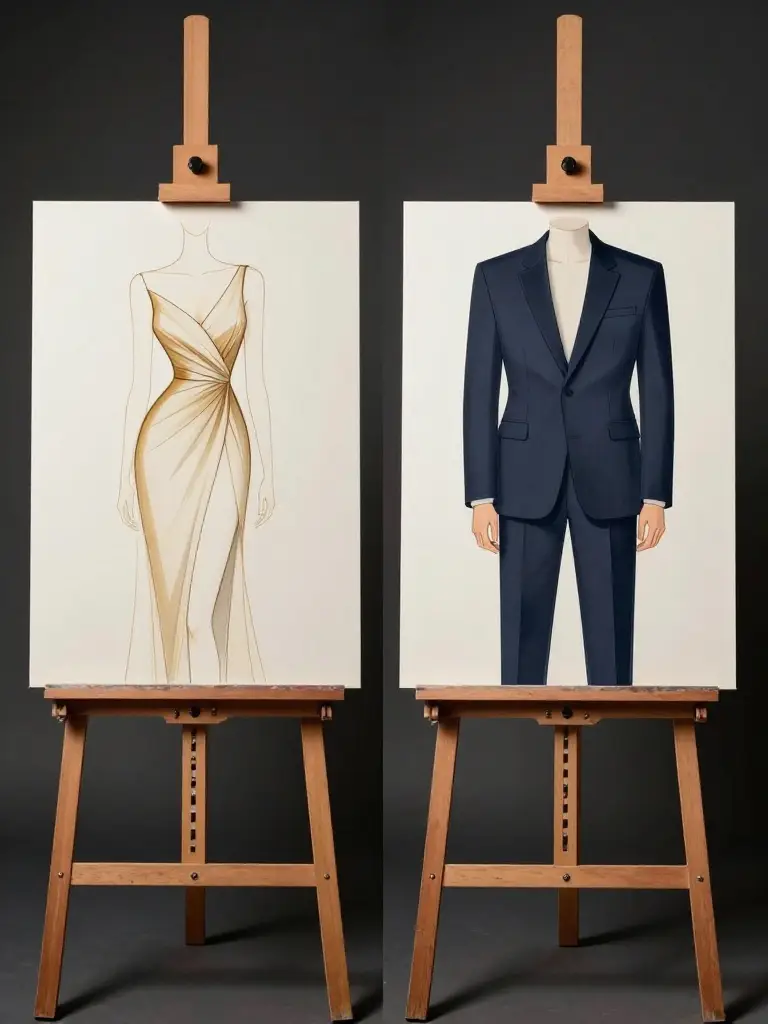
Croquis de moda femenino and croquis de moda masculino figures operate from fundamentally different structural frameworks and confusing them produces anatomically unconvincing results regardless of the garment drawn over them. The female fashion figure carries wider hips relative to the waist, a more pronounced S-curve in the spine, a narrower shoulder-to-hip ratio, and a higher waistline position relative to total height. The male fashion figure carries broader shoulders relative to the hips, a straighter spinal line, a lower waist position, and a fundamentally different weight distribution across the torso.
you may also like this:22 Sporty Street Style Ideas for Trendy Casual Looks
Figura femenina de moda proportions in the nine-head system place the widest hip point at head four while the male figure’s widest point — the shoulders — sits at head two. This single structural difference changes every subsequent decision about how garments are drawn over the figure. Silueta de moda para dibujar in male fashion illustration tends toward geometric clarity — the jacket’s shoulder line, the trouser break, the collar geometry — while female fashion illustration emphasizes silhouette flow, fabric behavior at the waist and hip, and the relationship between structure and drape. Both require mastery of their specific anatomical conventions before any garment complexity is layered onto the figure.
Telas en Movimiento: Cómo Dibujar Pliegues Volumen y Fluidez con Maestría
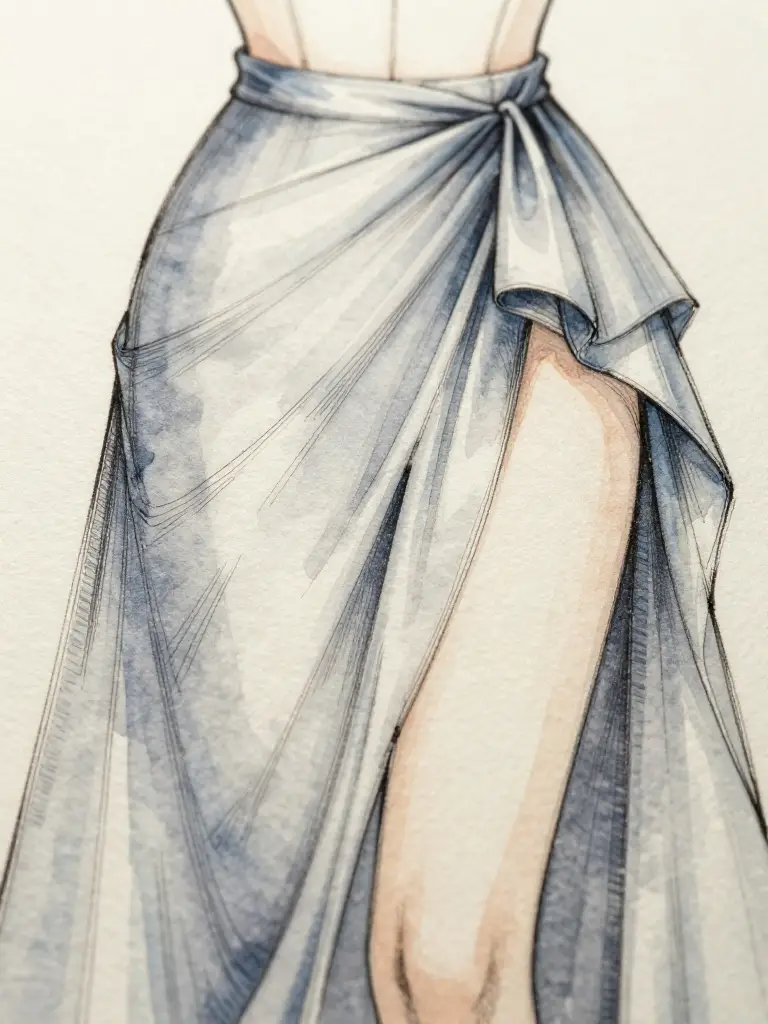
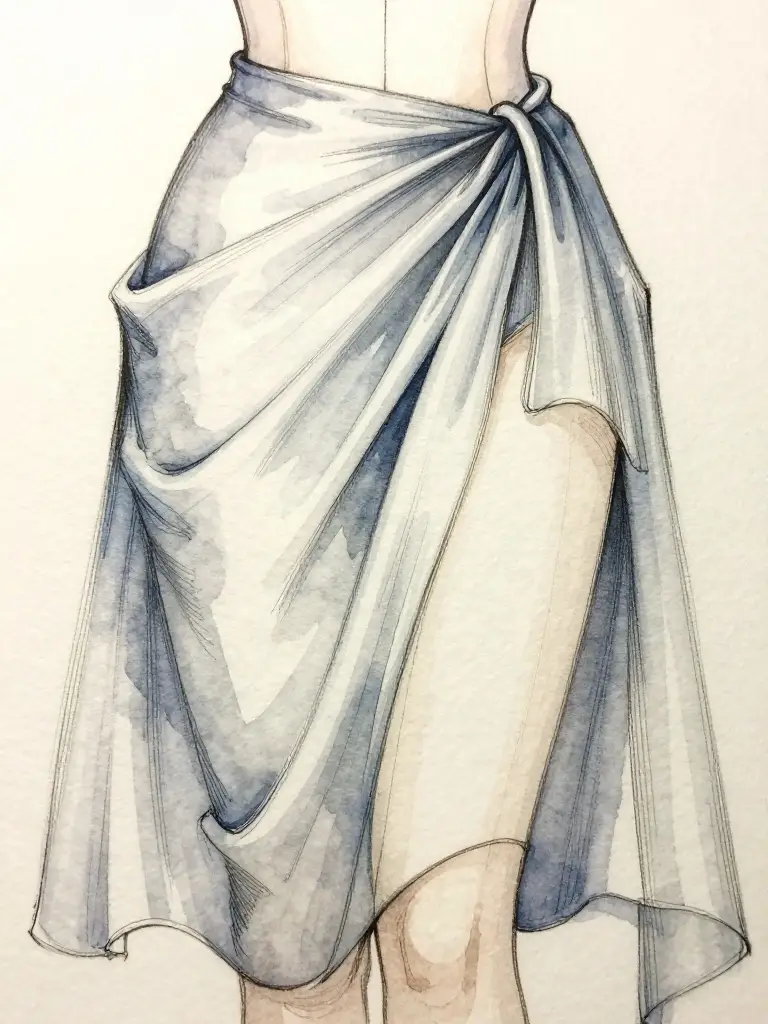
Croquis de moda con pliegues de tela is where most beginner fashion illustrators stall because fabric behavior is governed by physics that the eye must be trained to observe and the hand trained to translate. Fabric folds originate from points of tension — where the body presses against or pulls away from the material. A sleeve fold radiates from the elbow bend. A trouser fold originates at the hip crease. A draped bodice fold falls from the point of attachment. Representación de telas en dibujo requires that you understand these origination points before you attempt to render their visual results.
Croquis de moda con tejido fluido demands a completely different drawing vocabulary than stiff or structured fabric work. A silk charmeuse gown falls in long, sinuous curves with minimal crease depth and smooth tonal gradients. A heavy brocade holds angular folds with sharp shadow edges and high contrast between lit and shadow surfaces. Croquis de moda con texturas de tela representation in professional work uses line weight variation as the primary differentiator — heavier lines for structure and shadow depth, hairline strokes for highlight edges and delicate surface detail. Técnica mixta en boceto de moda combining pencil underdrawing with ink linework and watercolor wash produces the most nuanced fabric texture results available in traditional media.
Del Sketchbook al Desfile: El Rol del Croquis en Alta Costura
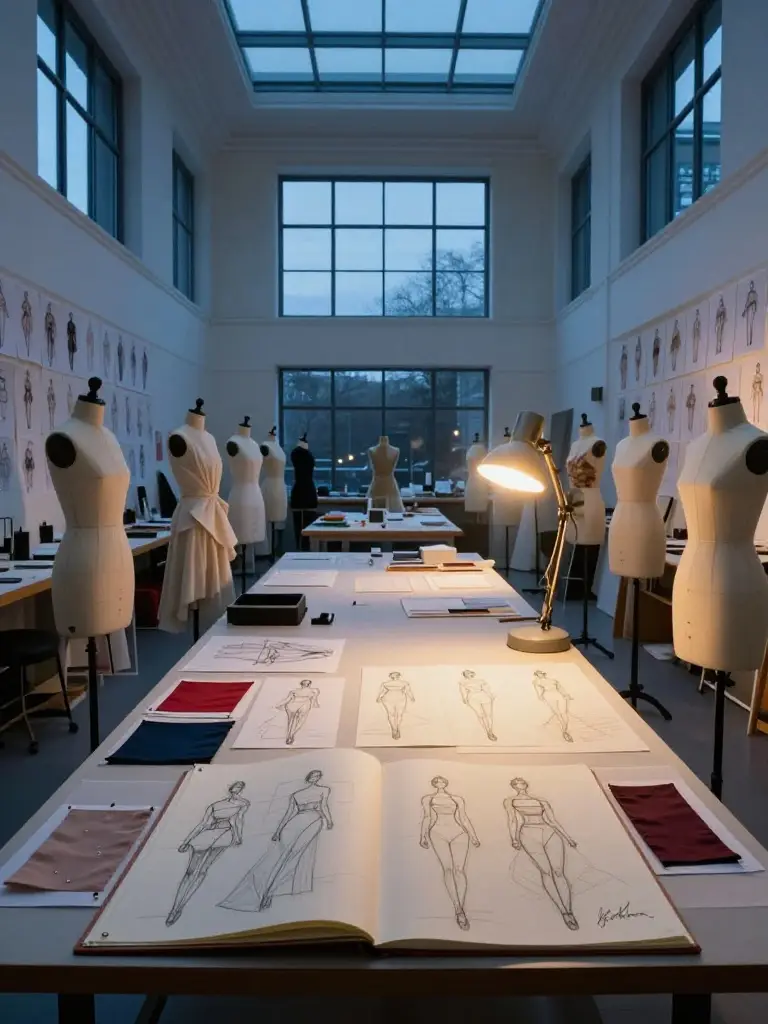
Croquis de moda para Alta Costura serves a function categorically different from ready-to-wear sketching. In the atelier tradition, the croquis de moda para desfile de Alta Costura is a communication document between the head designer and the première — the senior atelier technician who translates the sketch into a toile. It must communicate construction intent with enough precision that the première understands not just what the garment looks like but how it is built. Dibujo de moda con detalles in the couture context includes seam placements, boning indications, internal structure notations, and fabric grain directions — information invisible in the finished garment but essential to its creation.
Esmod croquis de moda técnica programs and Fashion Institute of Technology dibujo de moda curricula both teach the couture croquis as a distinct discipline separate from illustration or portfolio presentation. The croquis de moda para presentar colecciones at couture level often shows both front and back views, with detail callouts for specific construction elements. Boceto de colección de moda presentation books at houses like Chanel or Dior contain dozens of these working drawings alongside fabric swatches, color references, and embellishment samples — a complete visual and material brief for every garment in the collection. The sketchbook is the collection’s first physical form.
Acuarela Copic y Tinta: Las Técnicas de Color que Elevan el Boceto
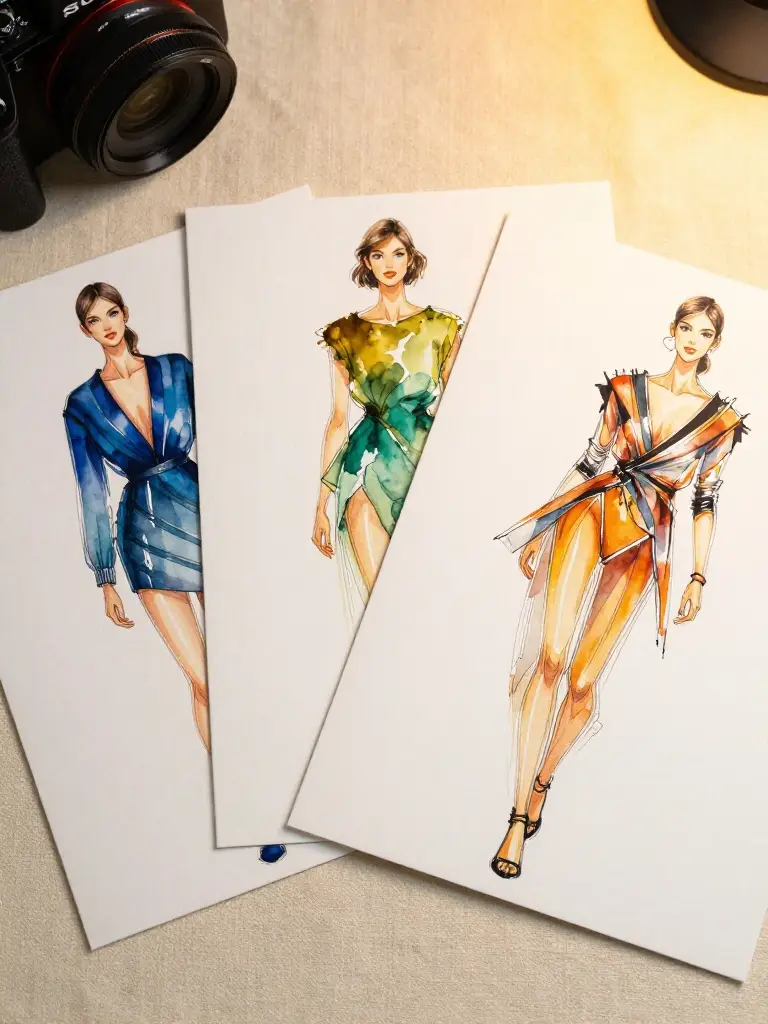
Croquis de moda con marcadores Copic is the most widely adopted professional coloring technique in American and Japanese fashion illustration education. Copic Markers boceto de moda profesional offer 358 colors with refillable ink and replaceable nibs — the alcohol-based ink blends seamlessly between shades, dries instantly without bleeding through most illustration papers, and produces the smooth, luminous tonal gradients that fabric surfaces demand. The technique involves layering lighter tones first and building toward darker shadows progressively, leaving strategic white paper areas as highlights.
Croquis de moda con acuarela produces a fundamentally different aesthetic — looser, more expressive, with the organic unpredictability of water-based pigment creating happy accidents that no marker can replicate. Stina Persson acuarela de moda work demonstrates how watercolor’s natural bleeding and pooling behavior can suggest fabric transparency, color saturation, and surface sheen simultaneously. Croquis de moda en tinta y acuarela combined technique — ink linework laid over dried watercolor washes — is a classic ilustración editorial de moda approach that René Gruau ilustración de moda clásica and Antonio Lopez ilustración de moda both employed in their most celebrated editorial work for Vogue ilustración de moda editorial and Harper’s Bazaar dibujo de moda.
Croquis Digital en Procreate e Illustrator: El Nuevo Lenguaje del Diseñador
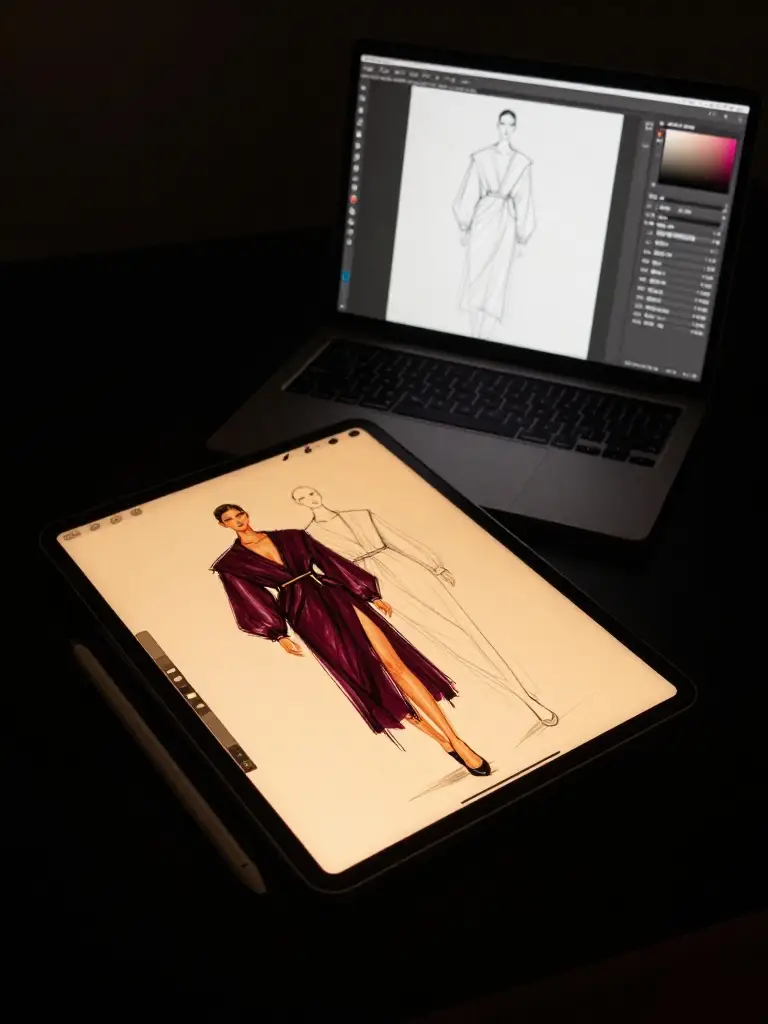
Croquis de moda digital en tablet has transformed fashion illustration practice in the past decade in ways that parallel what Adobe Illustrator croquis digital de moda did for technical flat drawing in the decade before it. Procreate croquis de moda digital on the iPad Pro with Apple Pencil now replicates the pressure sensitivity, line variation, and textural range of traditional media with the added advantages of infinite undo, non-destructive layering, and the ability to work at any scale without paper size constraints. YouTube tutoriales de croquis de moda channels documenting Procreate fashion illustration workflows have accumulated millions of views precisely because the tool democratized professional-quality digital illustration.
Adobe Illustrator croquis digital de moda operates differently from Procreate — it’s vector-based rather than raster-based, which means figures scale to any size without quality loss and line weights remain mathematically precise. Croquis de moda digital in Illustrator suits technical and flat drawing work particularly well but requires a more structured and less gestural approach than Procreate’s brush-based environment. Skillshare curso de croquis de moda and Domestika curso de ilustración de moda both offer comprehensive digital fashion illustration programs taught by working professionals who navigate both platforms. Croquis de moda con fondo editorial digital compositions — figure plus environmental context plus typography — are almost exclusively assembled in Illustrator or Photoshop even when the figure itself was drawn in Procreate.
Cuerpos Diversos en el Croquis de Moda: Una Revolución que Llegó para Quedarse
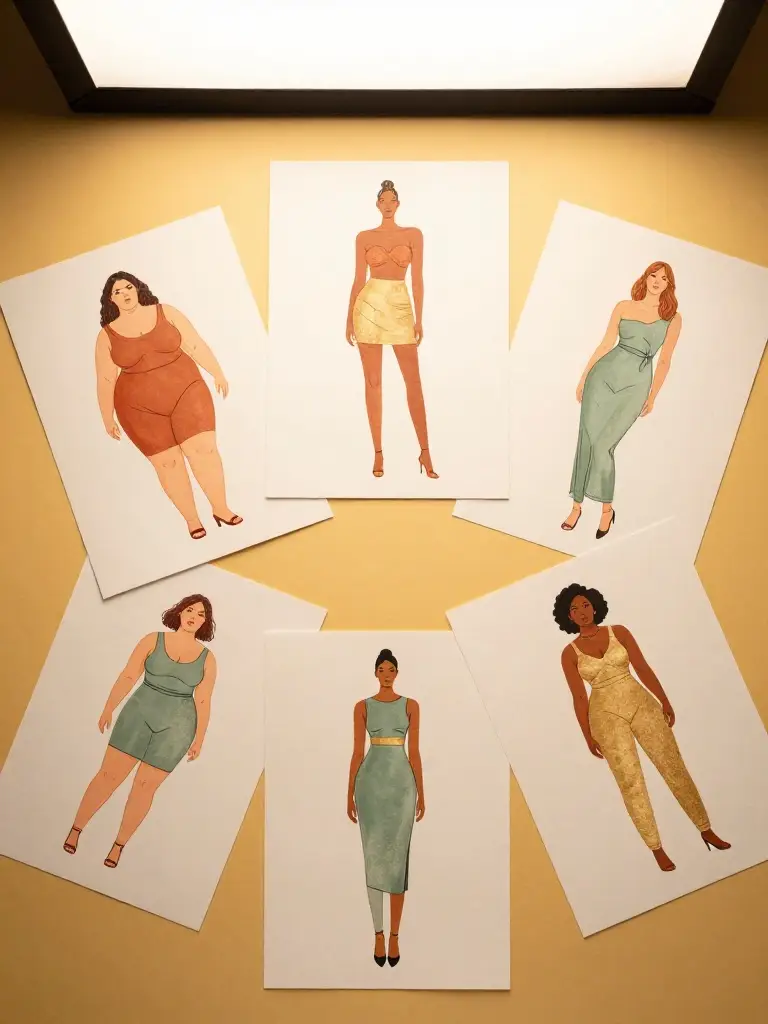
Croquis de moda con diferentes tipos de cuerpo representation has shifted from niche concern to industry imperative across American fashion education and professional practice. The standard nine-head figure was developed in a specific cultural and historical context that centered one narrow body type as the universal design template. Brands and educators at Parsons School of Design croquis programs and Fashion Institute of Technology dibujo de moda departments now actively teach plus-size, petite, and non-binary figure templates alongside the traditional template — not as alternative or supplementary material but as core curriculum.
Abstracción corporal en diseño de moda in the context of size diversity requires rethinking how proportion systems work. A plus-size fashion figure isn’t a scaled-up standard figure — it has different relative proportions, different weight distribution patterns, and different fabric behavior at seams and stress points. Plantilla de figura de moda development for diverse body types requires the same anatomical attention to landmark placement and proportion relationship that the original nine-head system demanded. Plantillas gratuitas de croquis de moda for diverse bodies are increasingly available on Pinterest croquis de moda inspiración boards and through Etsy plantillas de croquis de moda independent sellers who recognized the market gap years before most major publishers did.
La Cabeza el Rostro y el Cabello: Los Detalles que Distinguen al Profesional
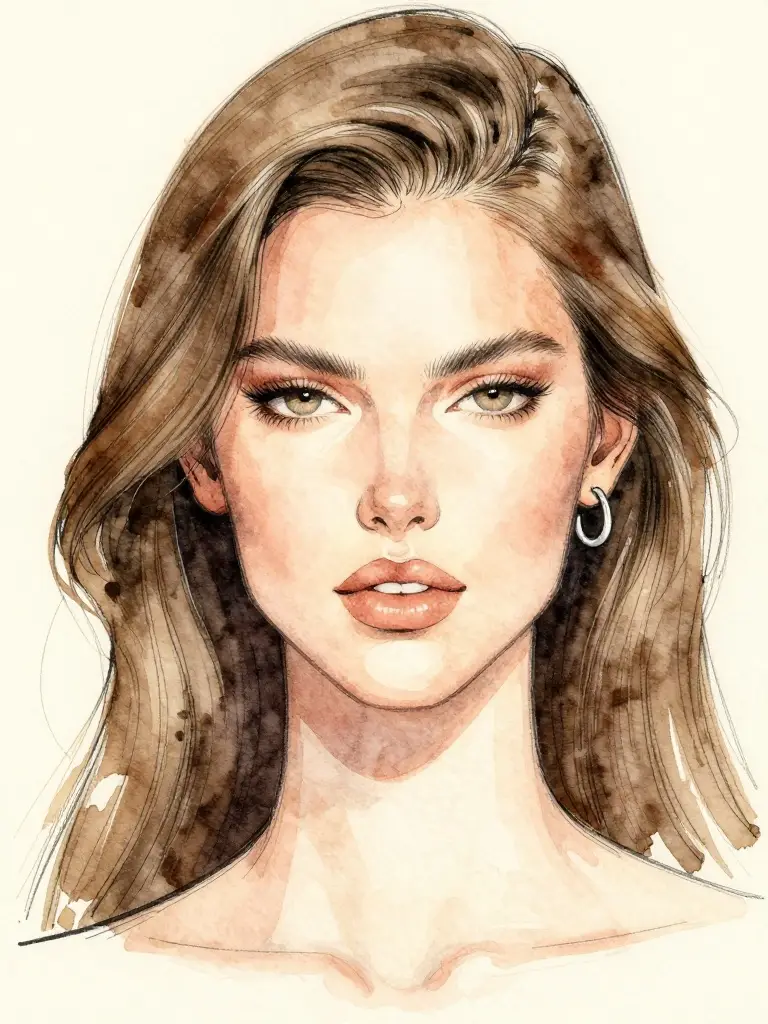
Croquis de moda con cabeza y cara work separates the accomplished fashion illustrator from the merely competent draftsperson. The head in fashion illustration is stylized rather than realistically proportioned — the eyes sit lower on the face than anatomical reality places them, the nose is minimized or abstracted, and the lips are drawn with elegant economy rather than detailed muscle mapping. This stylization isn’t incompetence. It’s a deliberate aesthetic choice that keeps the viewer’s attention on the garment rather than the face.
Croquis de moda con pelo y accesorios adds the final layer of personality and context to any figure. Hair in fashion illustration functions as a compositional element as much as a representational one — it frames the figure’s silhouette, adds movement at the top of the composition, and contributes to the editorial mood of the overall drawing. Identidad visual del diseñador de moda often lives in their figure’s distinctive face and hair treatment more than anywhere else — Megan Hess ilustración de moda elegante figures are identifiable from across a room by their specific facial vocabulary and hair rendering style. David Downton ilustrador de moda achieves extraordinary facial character with minimal line work — a lesson in how editorial restraint amplifies rather than diminishes expressive power.
Manos Pies y Accesorios: El Lenguaje Silencioso que Completa la Figura
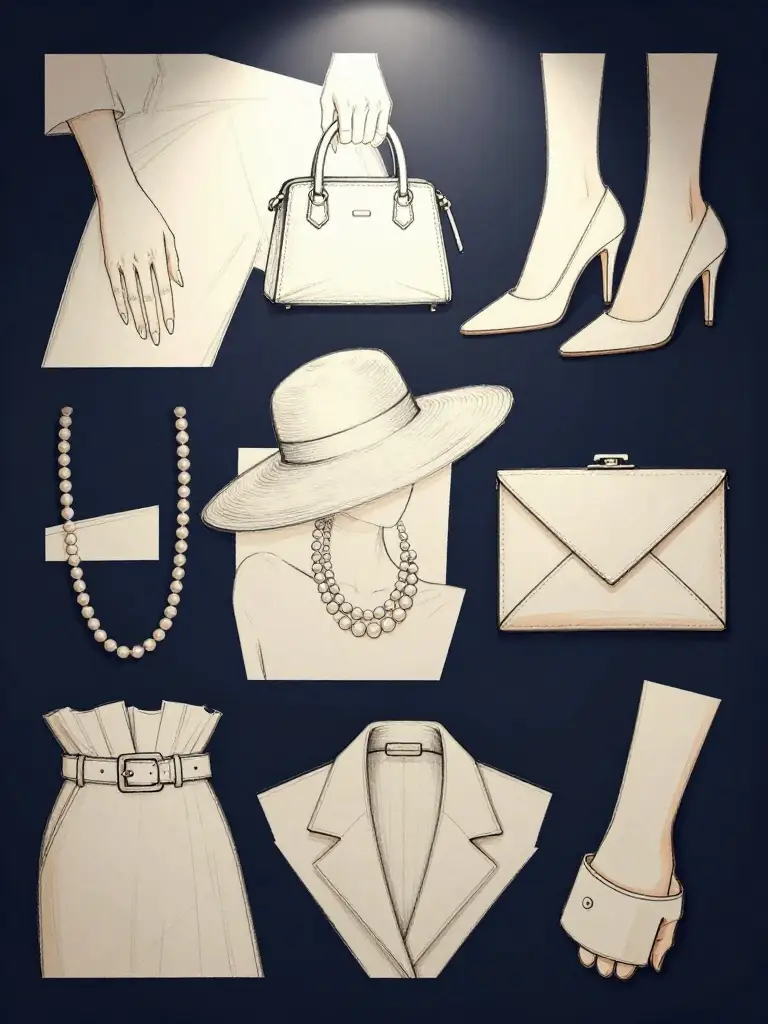
Mano y pie en croquis de moda are the most technically demanding elements of the fashion figure and the most commonly avoided. Many illustrators develop signature hand and foot abstractions — elegant simplifications that suggest rather than fully render these complex anatomical structures. A hand in fashion illustration might be reduced to four elongated finger shapes and a thumb gesture. A foot might be a clean pointed wedge. These abstractions work precisely because the viewer’s eye fills in the anatomical detail that the drawing deliberately withholds. Gesto artístico en ilustración de moda lives in exactly this kind of knowing omission.
Accessories in the croquis de diseño de ropa context carry narrative and commercial information that the garment alone can’t communicate. A handbag defines a price point. Shoe style determines the formality register of the entire look. Jewelry signals the collection’s cultural reference points. Vocabulario gráfico del diseño de moda includes accessories as full participants in the design story — not afterthoughts but co-signatories of the look’s total message. Croquis de moda clásico illustration traditions from René Gruau ilustración de moda clásica consistently show how a single accessory — a glove, a hat, a strand of pearls — can reframe the entire emotional reading of a fashion drawing.
Croquis De Moda para Principiantes: El Camino Correcto desde el Primer Trazo
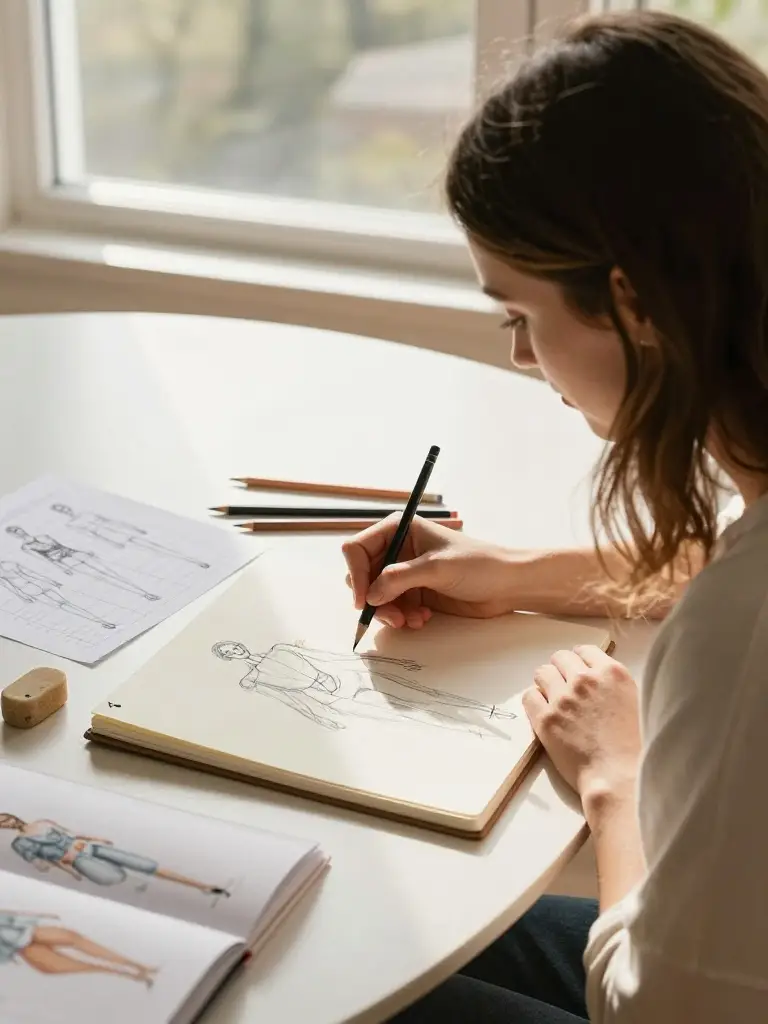
Croquis de moda para principiantes who approach the practice without prior drawing experience need a structured entry sequence that builds foundational skills before attempting complete figures. Start with gesture drawing — 30-second to 2-minute timed sketches of real human poses that train the eye and hand to work together under time pressure. Croquis de moda fácil para principiantes programs on Domestika curso de ilustración de moda and Udemy aprende croquis de moda online begin with exactly this gesture-training phase before introducing fashion-specific proportion systems.
Croquis de moda paso a paso progression for beginners follows a reliable sequence: action line first, then nine-head proportion marks, then basic body shapes — ovals and cylinders rather than detailed anatomy — then body contour lines, then garment silhouette, then garment detail, then color and texture. Técnicas profesionales de croquis de moda don’t bypass this sequence — they execute it faster and with more confidence. Instagram ilustradores de moda croquis feeds are invaluable for beginners because they show the work of professionals at different stages — finished pieces alongside process sketches — making the path from first mark to final illustration visible and learnable.
El Portafolio de Moda: Cómo Presentar Croquis que Conquistan Cualquier Industria
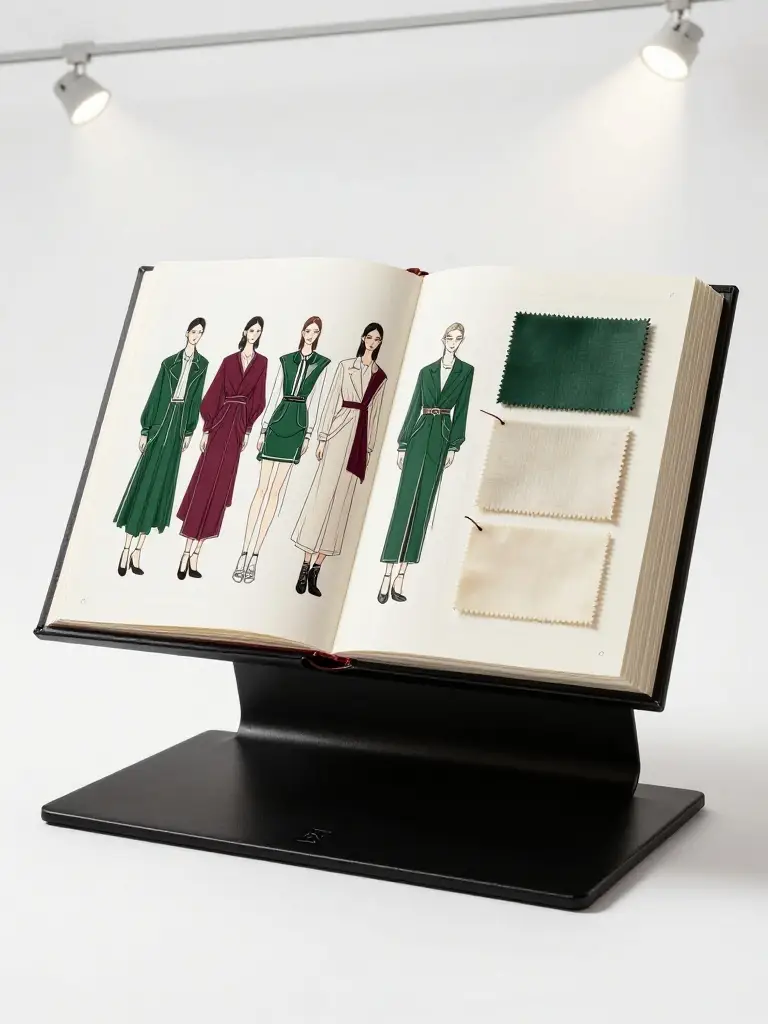
Croquis de moda para portafolio profesional selection is a curatorial act as much as a technical one. Your portfolio doesn’t need to show everything you can do — it needs to show the best version of what you do consistently. Eight to twelve complete looks in a cohesive visual style communicate more design maturity than thirty drawings in four different styles. Síntesis visual en ilustración de indumentaria at the portfolio level means making deliberate choices about what to include, what to omit, and how to sequence the work so that each drawing sets up the next.
Comunicación gráfica en diseño textil in a professional portfolio context extends beyond individual croquis to collection presentation. Group your drawings into coherent collection stories — a minimum of six looks per collection, presented with consistent color palette, figure proportion, and illustration style across the group. Recursos visuales para diseñadores de moda like mood boards, fabric swatches, and color palette reference cards integrated alongside the croquis pages transform a drawing portfolio into a complete design presentation. Central Saint Martins ilustración de moda portfolio review standards and Parsons School of Design croquis submission guidelines both emphasize this collection-level coherence over individual drawing technical skill.
Sombras Luces y Volumen: La Dimensión que Transforma un Trazo Plano
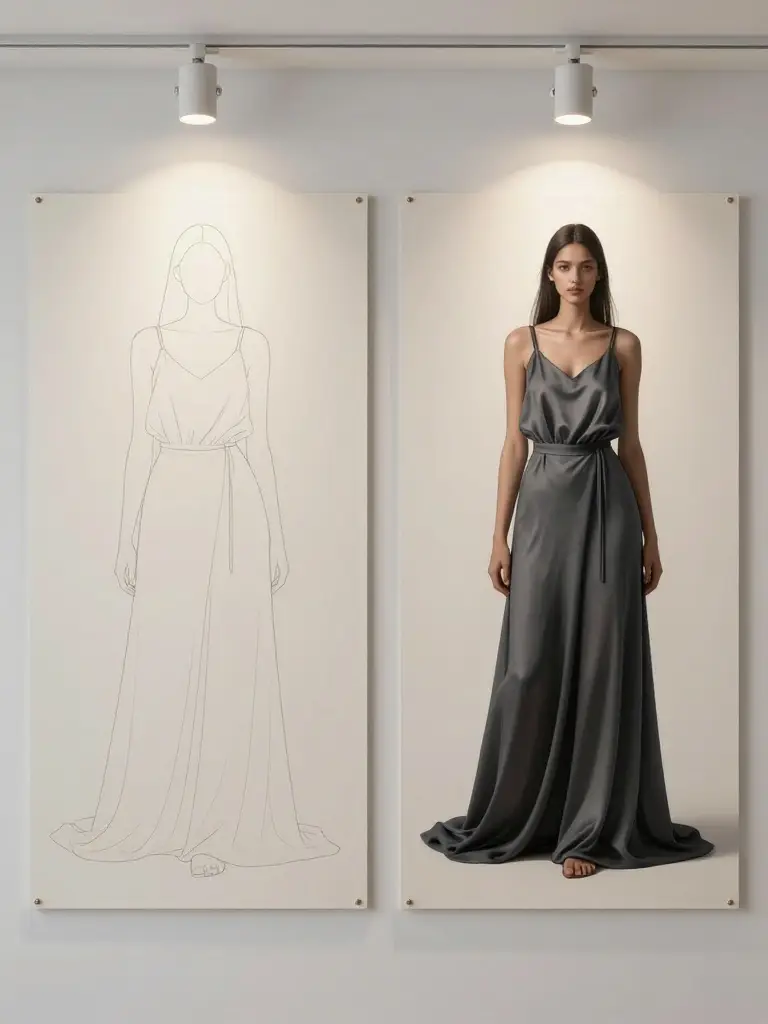
Volumen y sombra en croquis de moda application is the skill that elevates a competent line drawing into a fully realized fashion illustration. Shadow in fashion drawing doesn’t follow photographic lighting logic — it follows design logic. You place shadows where they best reveal the garment’s three-dimensional structure, clarify its silhouette against the background, and suggest the fabric’s surface texture. Croquis de moda con sombras y volumen begins with identifying the garment’s primary shadow zones: under the bust, at the inner leg, beneath collar and sleeve edges, at all fabric fold depth points.
Croquis de moda en escala de grises work before adding color trains the eye to understand value relationships — how light and dark areas relate spatially — without the complicating variable of color temperature. Many professionals recommend completing a full grayscale version of any complex design before adding color so that the tonal structure is established independently. Coquis de moda con paleta de color then layers chromatic information onto an already sound value foundation rather than attempting to solve both problems simultaneously. Copic Markers boceto de moda profesional colorists use the same logic — building value structure with cool greys first before introducing the design’s actual color palette.
Fichas Técnicas y Croquis: El Vínculo que Convierte Ideas en Prendas Reales
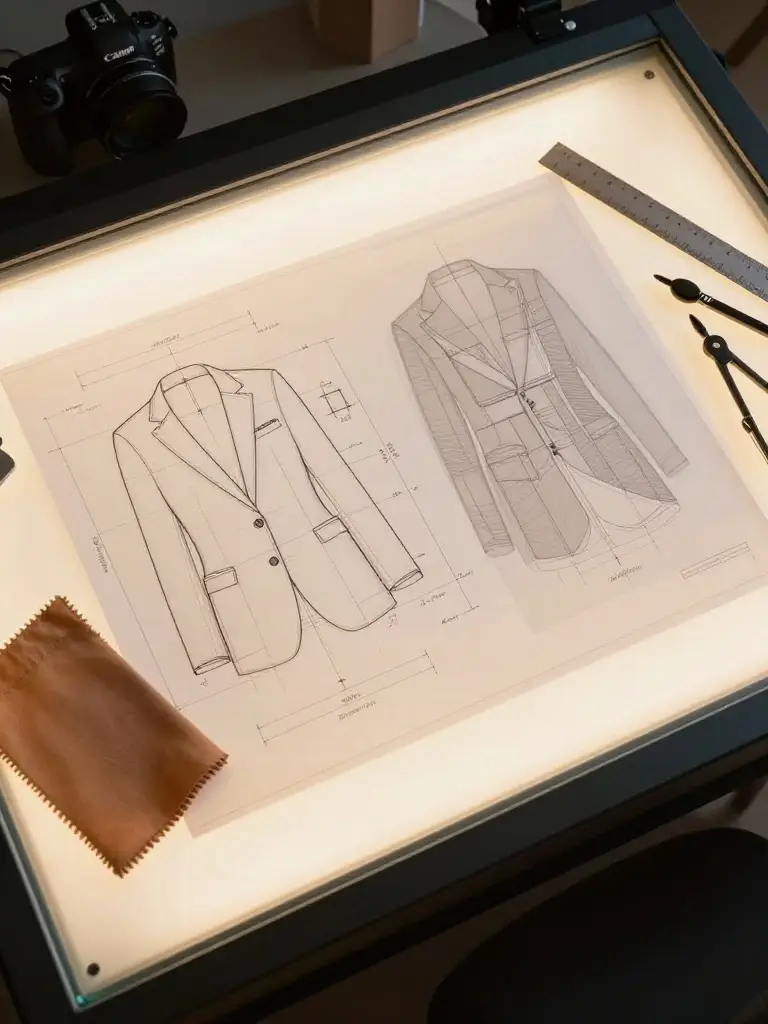
Croquis de moda para ficha técnica is a distinct document type from illustration or portfolio presentation — it’s a technical communication tool designed for production rather than inspiration. The diferencia entre croquis y boceto de moda in the technical context lies in specificity: a technical flat or spec sheet croquis shows front and back views in precise proportion, annotates construction details with measurement callouts, specifies stitch types at key seam points, and includes a detailed materials list. Dibujo técnico de moda for production must be legible by pattern makers, sample sewers, and factory technicians who may not share the designer’s cultural or aesthetic context.
Croquis de moda con superposición de capas technique in technical drawing uses multiple transparent layers — in both traditional tracing paper overlays and digital layer stacks — to show garment components in sequence. The base layer shows the figure. The second layer shows the garment silhouette. The third layer shows construction details. The fourth layer shows embellishment and surface treatment. Croquis de moda con detalle de bordado and croquis de moda para ficha técnica both benefit enormously from this layered approach because it allows each level of design information to be read independently without visual interference from other layers. Adobe Illustrator croquis digital de moda is the dominant platform for professional technical flat production in the American fashion industry.
Ilustradores Icónicos René Gruau a Megan Hess y su Impacto Duradero
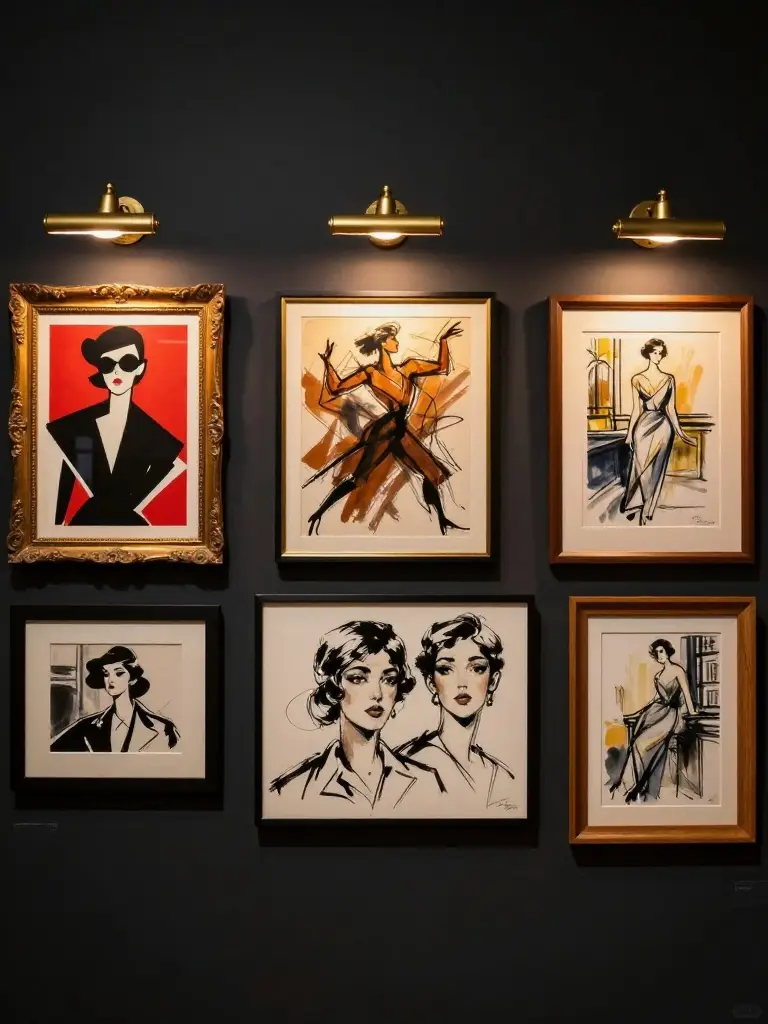
René Gruau ilustración de moda clásica defined the golden age of fashion editorial illustration with a graphic economy that feels contemporary even today. His work for Christian Dior in the 1940s and 50s used bold black line against flat color areas with a confidence that anticipated graphic design principles by decades. Antonio Lopez ilustración de moda brought a kinetic energy and cultural pluralism to fashion drawing in the 1970s and 80s that transformed the field — his figures moved, breathed, and carried the cultural specificity of the moment in a way that fashion illustration had rarely achieved before him.
David Downton ilustrador de moda and Megan Hess ilustración de moda elegante represent the contemporary standard of fashion illustration excellence that students and professionals study today. Downton’s editorial work for Vogue ilustración de moda editorial achieves its extraordinary sophistication through radical line economy — entire faces rendered in four or five marks with perfect expressive result. Hess built an international brand on a specific illustration vocabulary — elongated figures, loose ink washes, architectural backgrounds — that made her immediately recognizable across Instagram ilustradores de moda croquis and editorial publishing simultaneously. Stina Persson acuarela de moda rounds out the contemporary canon with watercolor work of such fluid spontaneity that it reads as captured gesture rather than constructed illustration.
Croquis para Alta Costura Prêt-à-Porter y Moda Urbana: Estilos que Divergen
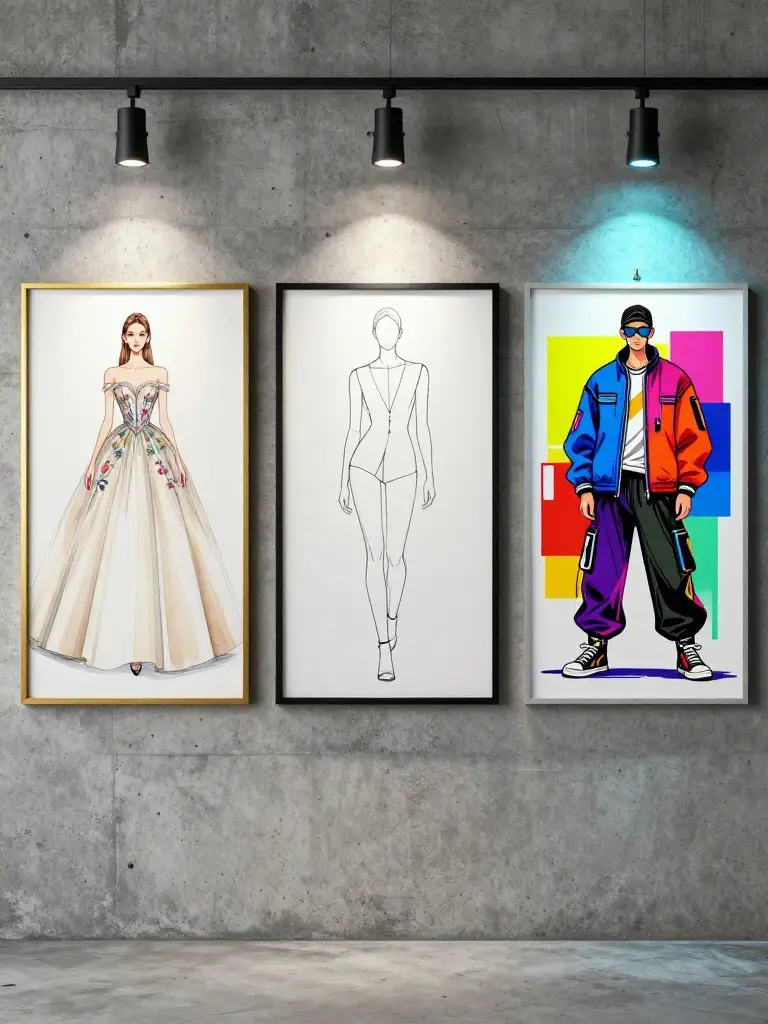
Croquis de moda para Alta Costura demands maximum detail, extreme elegance of line, and the capacity to suggest extraordinary craft through drawn marks. Embroidery placement must be indicated. Structural undergarment shapes must be implied. The figure’s pose and proportion must communicate the ceremonial register of a garment that will be worn once and preserved for generations. Arte de diseño de indumentaria at the couture level produces drawings that function as artworks in their own right — Yves Saint Laurent croquis históricos are displayed in museum exhibitions not as documentation but as primary creative works.
Boceto de ropa diseño for ready-to-wear and urban fashion operates in a completely different register — faster, more graphic, more focused on silhouette relationships across a range of looks than on the detailed execution of any single garment. Estética visual del diseño de ropa in streetwear and contemporary fashion illustration favors bold proportions, strong color blocking, and cultural reference integration that couture illustration rarely employs. Croquis de moda clásico versus urban contemporary croquis aren’t better or worse than each other — they’re different communication tools for different design conversations. Pinterest croquis de moda inspiración boards devoted to each category demonstrate how dramatically the visual language diverges between fashion contexts.
Texturas Bordados y Estampados: Cómo Representarlos con Precisión Artística
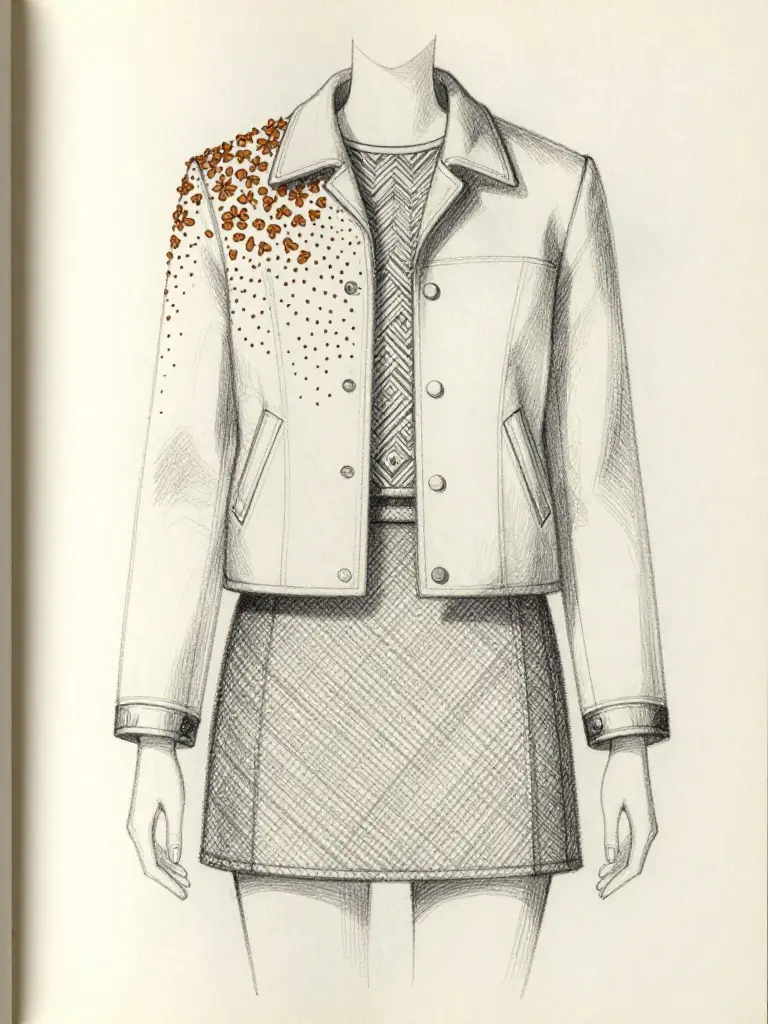
Croquis de moda con detalle de bordado requires a specific technical approach that most drawing instruction doesn’t adequately address. Embroidery in fashion illustration is never fully rendered — doing so would take more time than the garment itself requires to produce. Instead, professional illustrators develop shorthand vocabularies: a cluster of small curved marks for satin stitch, a repeated geometric pattern for counted cross-stitch, a scattered floral suggestion for elaborate needlework. Técnica de línea limpia croquis de moda applies here too — the suggestion of embellishment reads more elegantly than its exhaustive documentation.
Croquis de moda con superposición de capas in print and pattern representation uses a different strategy. A repeating print pattern is shown in full detail on one section of the garment — typically the largest flat area — and suggested with looser marks elsewhere to prevent the pattern from overwhelming the garment’s structural lines. Vocabulario gráfico del diseño de moda for print illustration includes the ability to show pattern scale relative to body proportion — a critical communication to fabric development teams. Croquis de moda en sketchbook profesional pages showing textile development alongside garment sketches are standard practice at Esmod croquis de moda técnica and Fashion Institute of Technology dibujo de moda programs precisely because print and garment design cannot be developed in isolation from each other.
El Cuaderno de Diseño: El Espacio Sagrado donde Nacen las Colecciones
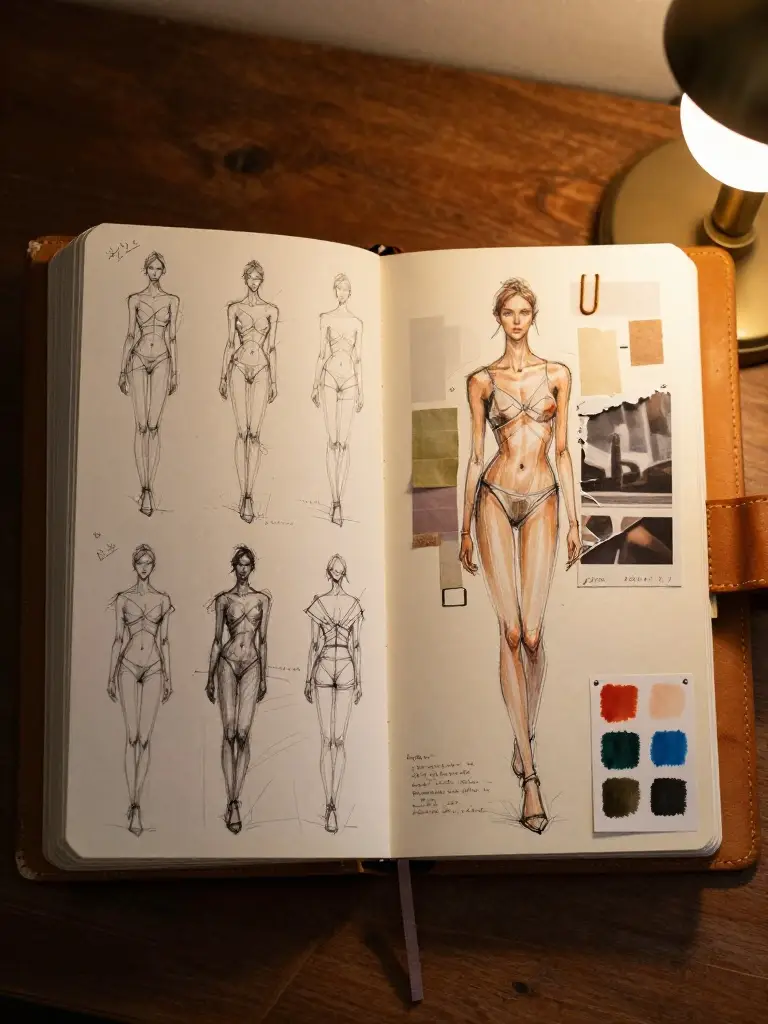
Croquis de moda para cuaderno de diseño accumulation is how collections are actually built. Not through singular finished illustrations but through the hundreds of exploratory sketches, material experiments, color tests, and figure studies that fill a working sketchbook before any design is considered final. Karl Lagerfeld bocetos de moda icónicos sketchbooks — now preserved in archives — contain thousands of drawings across decades, showing a mind working visually with compulsive productivity. The sketchbook wasn’t his output. It was his thinking process.
Croquis de moda digital sketchbook practice on Procreate croquis de moda digital has created new possibilities for collection development — the ability to duplicate, transform, overlay, and compare figures and garment variations at any stage without committing permanently to any single decision. However many designers maintain parallel traditional sketchbooks precisely because the physical act of drawing on paper engages a different quality of attention than digital work. Figura humana estilizada para diseño study in traditional sketchbooks builds the muscle memory and intuitive proportion sense that digital tools can support but can’t independently develop. The most complete designers maintain both — sketchbook and screen, tradition and innovation, hand and algorithm working in productive conversation.
Frequently Asked Questions
Q1. Qué es exactamente un croquis de moda y para qué sirve en el diseño?
A croquis de moda is a stylized fashion figure used by designers to sketch garment designs directly onto a pre-proportioned human template. It serves as the primary visual communication tool between a designer’s imagination and the technical teams who bring garments to physical reality. Unlike a boceto de moda general sketch, the croquis uses specific nine-head proportions that create the idealized fashion silhouette standard across the global design industry.
Q2. Cuántas cabezas debe medir la figura en un croquis de moda profesional?
The proporción nueve cabezas croquis de moda system is the professional standard — the figure’s total height equals nine times the height of its head. Some illustrators use ten heads for even more extreme elongation. The figura de nueve cabezas en diseño de moda creates proportions that emphasize garment silhouette and detail visibility rather than anatomical realism. Proporciones correctas del croquis de moda place the waist at 3.5 heads and the ground at 9 heads.
Q3. Qué materiales necesito para empezar a hacer croquis de moda desde cero?
Croquis de moda para principiantes requires a minimum material set: smooth Bristol paper or layout bond in A3 size, pencils ranging from 2H to 2B, a fine-point ink liner at 0.1mm and 0.3mm, a kneaded eraser, and either Copic Markers boceto de moda profesional or basic watercolors for color work. Plantillas gratuitas de croquis de moda downloaded from Pinterest croquis de moda inspiración give complete beginners a starting figure to trace while building proportion intuition.
Q4. Cuál es la diferencia entre un croquis de moda y un boceto técnico de moda?
The diferencia entre croquis y boceto de moda is fundamentally a question of audience and purpose. A croquis is an expressive fashion illustration designed to communicate a garment’s aesthetic vision — its proportion, silhouette, and mood. A dibujo técnico de moda technical flat is a precise front-and-back view drawing without stylization, designed to communicate construction specifications to pattern makers and production teams. Professional designers produce both — the croquis for inspiration and presentation, the technical flat for manufacturing.
Q5. Puedo aprender a hacer croquis de moda sin saber dibujar de base?
Absolutely. Croquis de moda fácil para principiantes courses on Domestika curso de ilustración de moda, Skillshare curso de croquis de moda, and Udemy aprende croquis de moda online are specifically designed for students with no prior drawing experience. Croquis de moda paso a paso instruction builds skills sequentially — gesture, proportion, anatomy, garment, color — in a structured progression that doesn’t assume previous artistic training. Starting with plantillas gratuitas de croquis de moda as tracing foundations accelerates early progress significantly.
Conclusion
The croquis de moda is where fashion begins its physical existence. Before the fabric, before the pattern, before the fitting — the drawn figure holds the designer’s vision in a form that can be shared, refined, and ultimately realized. From the Yves Saint Laurent croquis históricos that defined 20th-century couture to the Procreate croquis de moda digital files filling contemporary designers’ tablets, the essential act remains unchanged: a human figure, a designer’s eye, and the extraordinary conversation between them.
Whether you’re learning cómo hacer un croquis de moda for the first time through Domestika curso de ilustración de moda or refining a professional portfolio for Parsons School of Design croquis review, the principles are consistent. Master proportion. Command the action line. Understand your materials. Study the masters. And above all, fill sketchbooks without judgment — because the croquis de moda that changes your career won’t announce itself in advance. It will emerge from the hundredth page of a sketchbook you started without certainty, drawn with a hand that had been practicing long enough to let the vision through.