
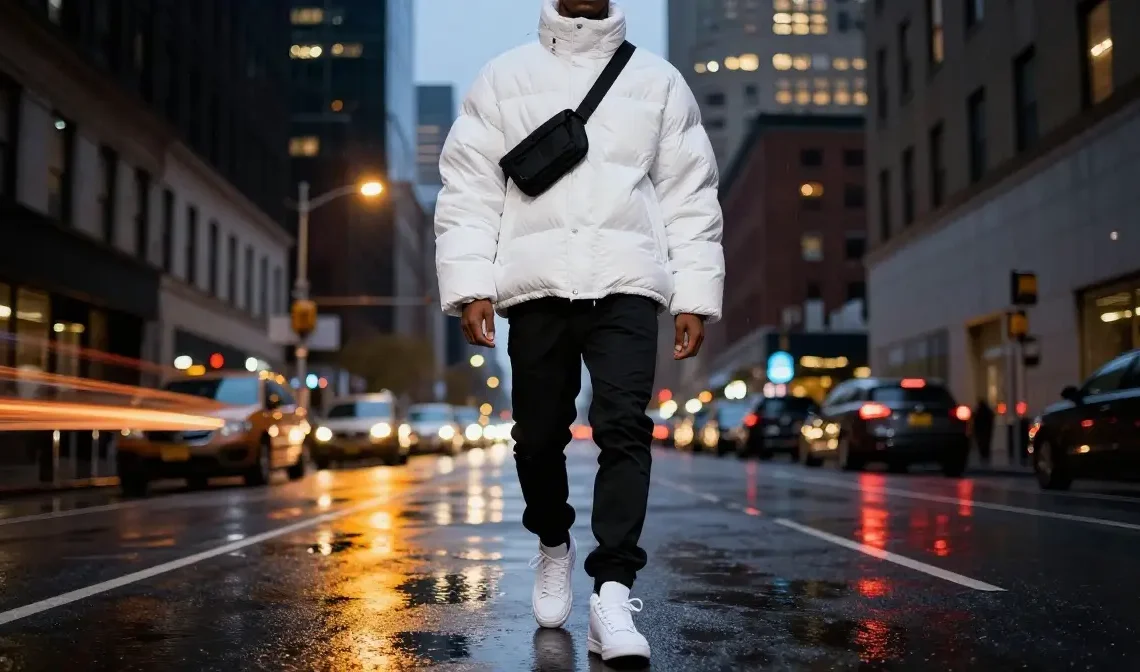
The sidewalk has always been a stage. But somewhere between the gym and the city block, athletic clothing stopped being functional and became a full cultural language. Sporty street style didn’t arrive through a single designer’s runway moment — it erupted from the streets themselves, from basketball courts and skate parks, from subway platforms and bodega corners, from the precise intersection where athletic performance met urban self-expression. Today it sits at the center of global fashion conversation and shows absolutely no sign of leaving. This guide gives you the full picture — history, technique, wardrobe architecture, and the cultural intelligence to dress this aesthetic with genuine authority.
The Decade by Decade Evolution of Athletic Clothes Conquering City Streets
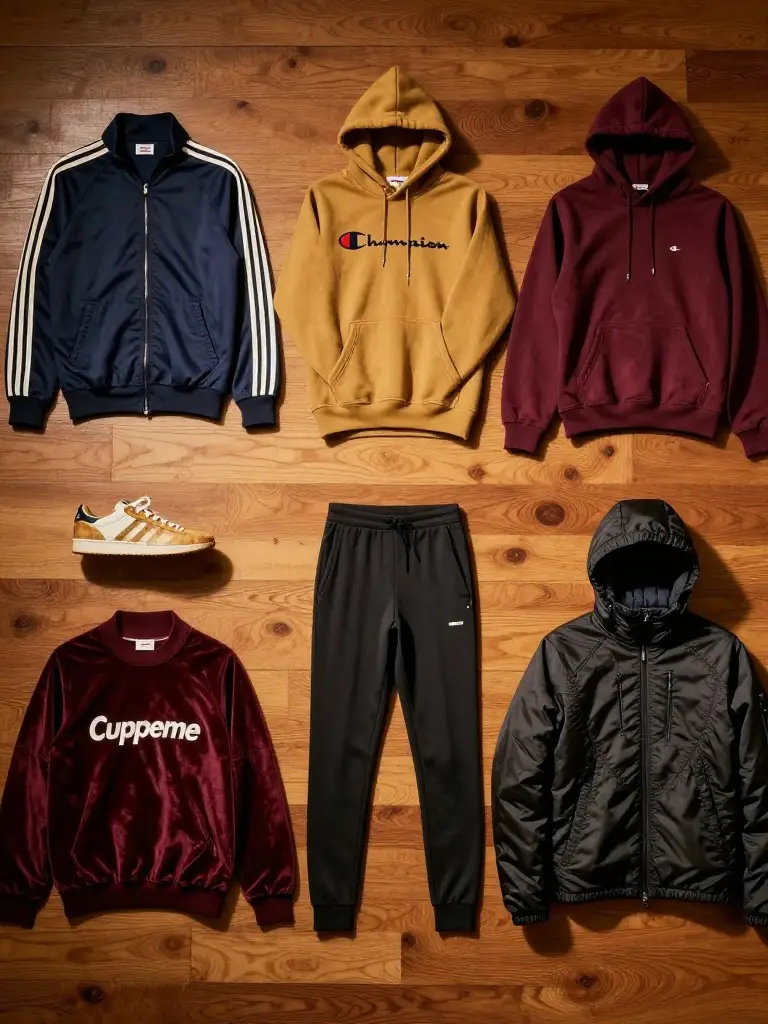
The 1970s started it quietly. Track suits and running shoes were designed for athletic function but young people in New York, Los Angeles, and Chicago started wearing them everywhere — not because they were training but because the silhouette felt free, comfortable, and distinctly their own. Retro sporty street fashion draws a direct line back to these early years when Adidas tracksuits and Nike running shoes first stepped off the track and onto city blocks. That migration wasn’t a fashion statement yet. It was a demographic statement — young, urban, athletic-coded people claiming a visual identity that mainstream fashion hadn’t offered them.
The 1980s and 1990s transformed that grassroots adoption into full cultural explosion. Hip-hop culture embraced street style sportswear with complete conviction — Run-DMC wearing Adidas without laces, Michael Jordan making basketball shoes into objects of genuine desire, the emergence of Jordan Brand street culture as something that transcended sport entirely. By the 2000s, sporty urban fashion trends had penetrated luxury fashion. By the 2010s, the lines between athletic wear and ready-to-wear had blurred so completely that the distinction barely existed. Today in 2025, the evolution continues — technical, elevated, culturally complex, and more dominant than ever.
| Decade | Key Development | Defining Brands | Signature Pieces |
|---|---|---|---|
| 1970s | Athletic wear adopted as street clothing | Adidas, Nike | Tracksuits, running shoes |
| 1980s | Hip-hop claims athletic identity | Adidas, Puma, Nike | Shell toes, bombers, caps |
| 1990s | Skateboarding merges with sportswear | Supreme, Stussy, Vans | Hoodies, cargo pants |
| 2000s | Luxury brands enter sporty territory | Gucci, Dior, Louis Vuitton | Sport luxe hybrids |
| 2010s | Athleisure becomes mainstream | Lululemon, Nike, Under Armour | Leggings, joggers, trainers |
| 2020s | Technical and elevated sport dominates | A-Cold-Wall, Acronym, Y-3 | Tech shells, precision silhouettes |
Sporty Street Style Decoded — the Fashion Language Athletes Accidentally Created
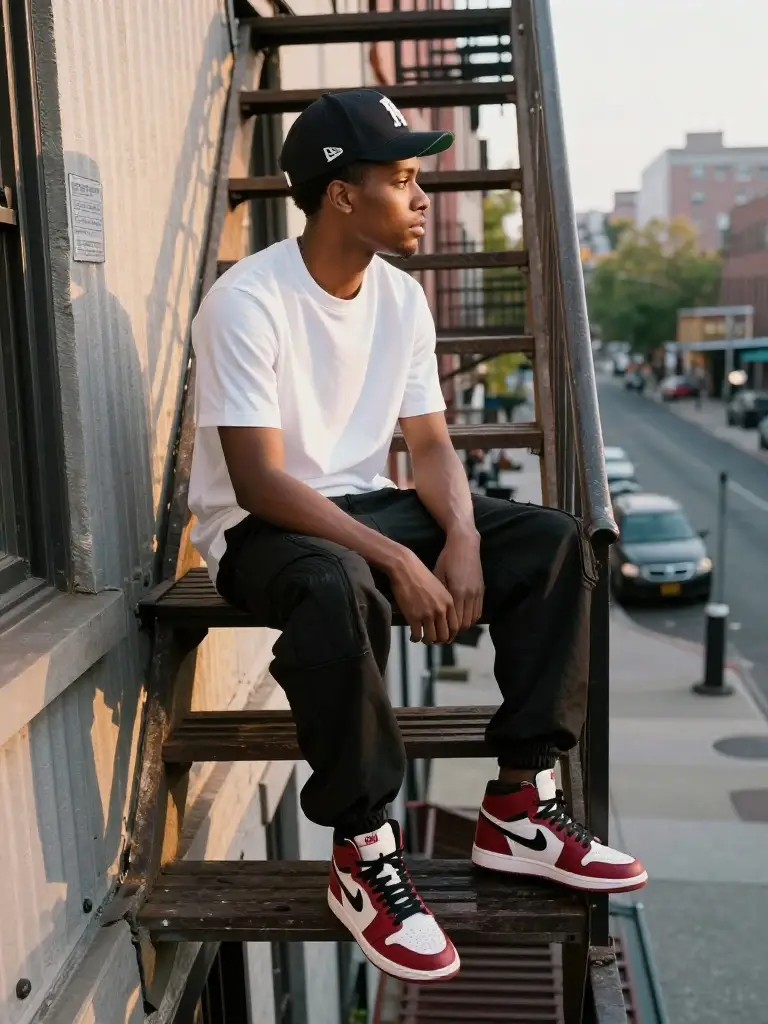
What is sporty street style fashion at its structural core? It’s the application of athletic garment logic — function, movement range, material performance, and body-conscious silhouette — to the contexts and occasions of everyday urban life. Athletes didn’t design this aesthetic deliberately. They wore what they trained in because it was comfortable and because it worked. The fashion world watched, recognized the visual authority of those choices, and eventually codified them into one of the most influential dressing philosophies of the modern era.
Sporty streetwear trend explained requires understanding the key tension at its heart: performance and appearance in permanent negotiation. A sporty chic street fashion look works because it makes you appear capable of physical movement at any moment while simultaneously appearing deliberately, intentionally dressed. That paradox — readiness and intention coexisting — is what separates genuine sporty street style outfits from simply wearing workout clothes outside. The former communicates a lifestyle. The latter communicates forgetfulness. Understanding that distinction is the entire foundation of dressing this aesthetic well.
Performance Fabrics That Crossed the Gym Door and Never Looked Back
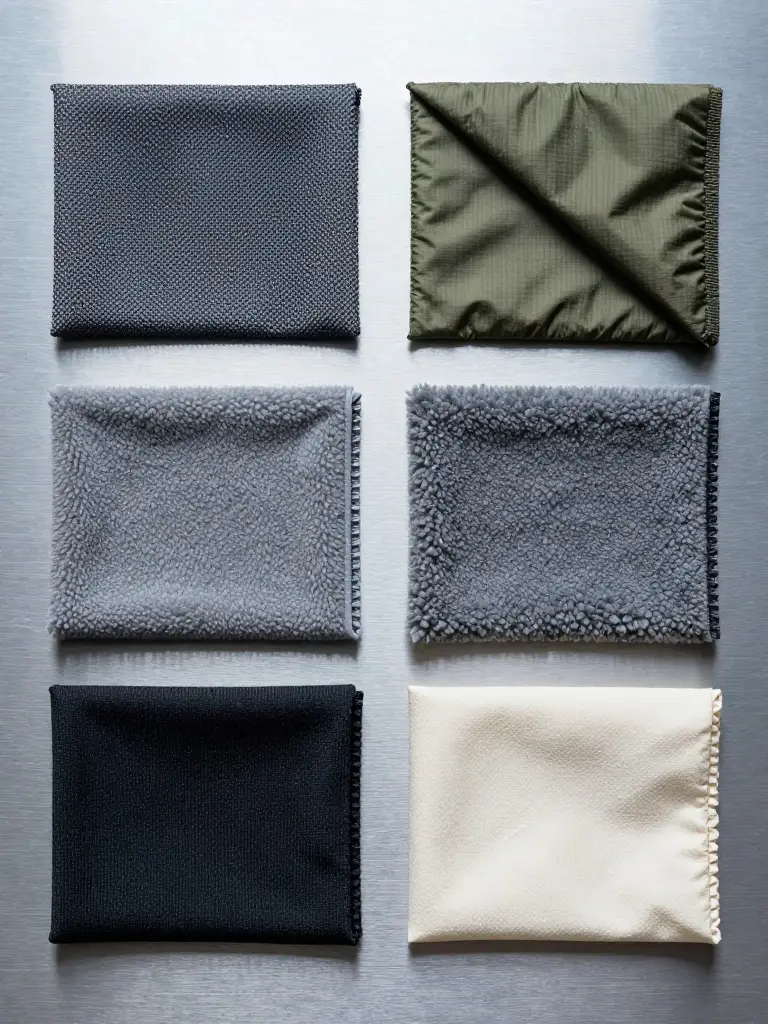
Technical fabric fashion styling is the invisible engine beneath every great sporty street look. Moisture-wicking polyester blends, four-way stretch nylon, brushed fleece, ripstop technical shells, and merino wool performance knits — these materials were engineered for athletic performance but their physical properties translate perfectly to urban dressing demands. They resist wrinkles. They move with the body. They maintain their shape through the full duration of a long city day in ways that traditional fashion fabrics simply don’t.
Performance meets fashion aesthetic reached its most sophisticated expression through brands like Acronym technical streetwear brand and A-Cold-Wall technical streetwear, who took military-grade performance fabrication and applied it to silhouettes with genuine fashion intelligence. Stone Island sport fashion built an entire brand identity around material innovation — fabric treatments, reactive dyes, and construction techniques borrowed from industrial and athletic contexts. Understanding these materials gives you real power as a dresser. When you choose a technical shell over a cotton jacket for your sporty street style outfit with track pants, you’re making a choice that affects how the outfit looks, moves, and ages through the day.
The Sneaker Obsession That Rewrote Every Unwritten Rule of Urban Dressing
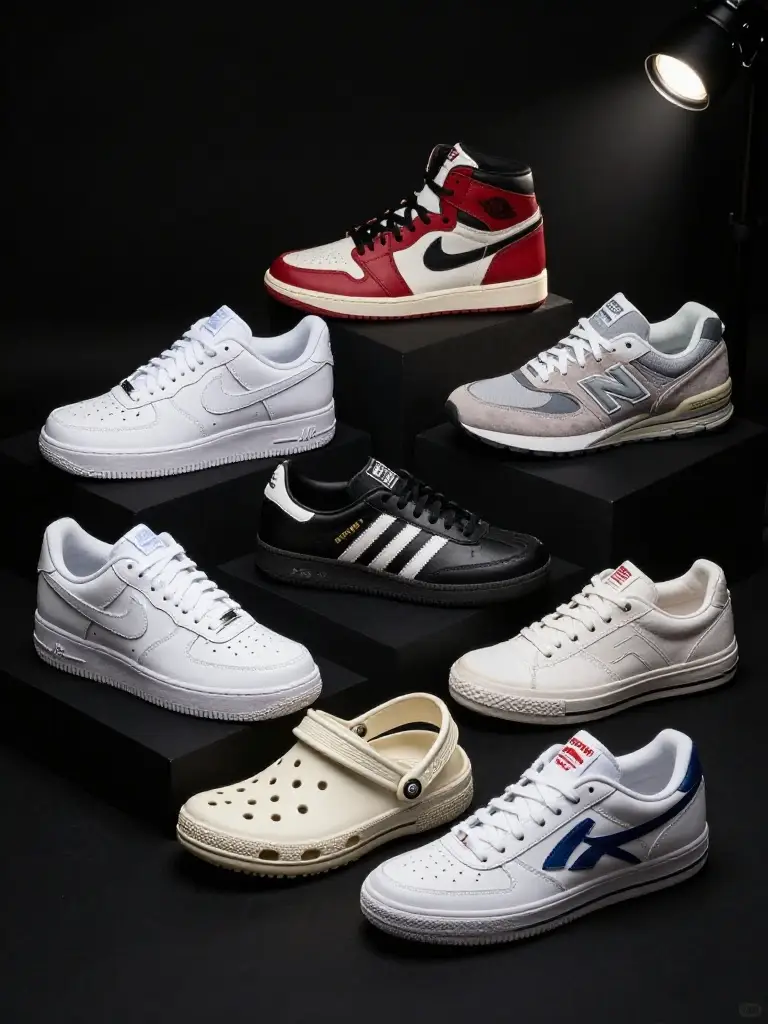
No single object has done more to establish sporty street style as a legitimate fashion language than the athletic sneaker. Before sneakers colonized fashion, footwear operated on a strict formal hierarchy — dress shoes communicated seriousness, casual shoes communicated informality, and athletic shoes communicated you were either exercising or hadn’t bothered to dress properly. The Jordan Brand street culture phenomenon of the mid-1980s shattered that hierarchy with extraordinary force. Suddenly a basketball shoe designed for the sport’s greatest athlete became the most desirable object in urban culture regardless of context.
Sporty street style with sneakers today encompasses an almost incomprehensible range of options — from the clean minimalist profile of New Balance urban fashion silhouettes to the maximalist sculptural forms of contemporary Nike streetwear collection releases, from the heritage simplicity of Converse street style heritage to the boundary-pushing construction of Salehe Bembury design aesthetic collaborations. Statement sneaker sporty street style coordination has become an art form in itself: building an entire outfit around a specific sneaker’s colorway, material story, or cultural reference. Your sneaker doesn’t just finish the outfit. In the sporty street context, it often starts it.
Silhouettes That Move — Mastering the Art of Oversized Athletic Proportion
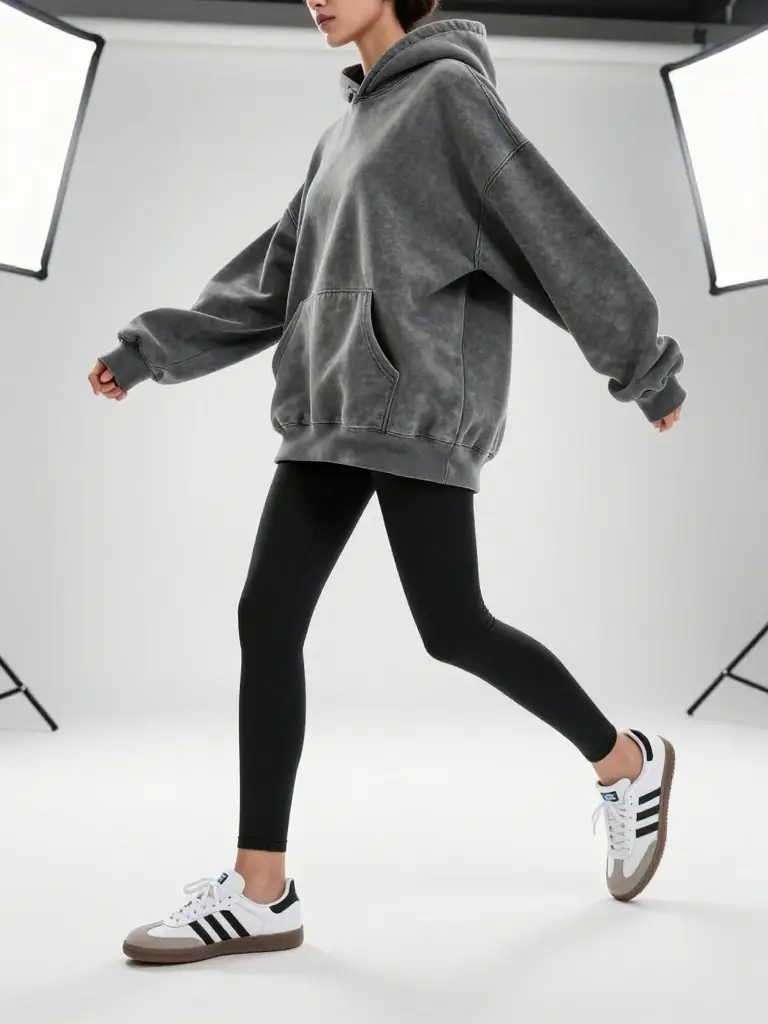
Athletic silhouette urban dressing operates on proportion principles that differ fundamentally from conventional fashion rules. Traditional menswear and womenswear both prioritize the fitted silhouette as the baseline of elegance — the idea that clothing should approximate the body’s natural shape. Sporty street dressing inverts this logic. Volume, ease, and deliberate oversize are the markers of sophistication rather than sloppiness when executed with genuine intentionality. Oversized athletic tee street style outfit ideas work precisely because the volume communicates physical freedom — the garment gives the body space to move and that spatial generosity reads as confidence.
How to style oversized hoodie for street look comes down to one principle: intentional contrast. An oversized hoodie paired with slim-fit technical trousers or high-waist fitted bottoms creates a proportion conversation that feels deliberate. The same oversized hoodie worn with equally oversized bottoms demands more careful management — specifically through the introduction of a structured outer layer or a clean, streamlined shoe that anchors the silhouette at its lowest point. Movement inspired fashion styling understands that oversized garments must always have one anchoring element that tells the eye where the body actually lives within all that fabric. Without that anchor, volume reads as chaos rather than cool.
Monochrome Sport Dressing and the Quiet Power of a Single Color Done Right
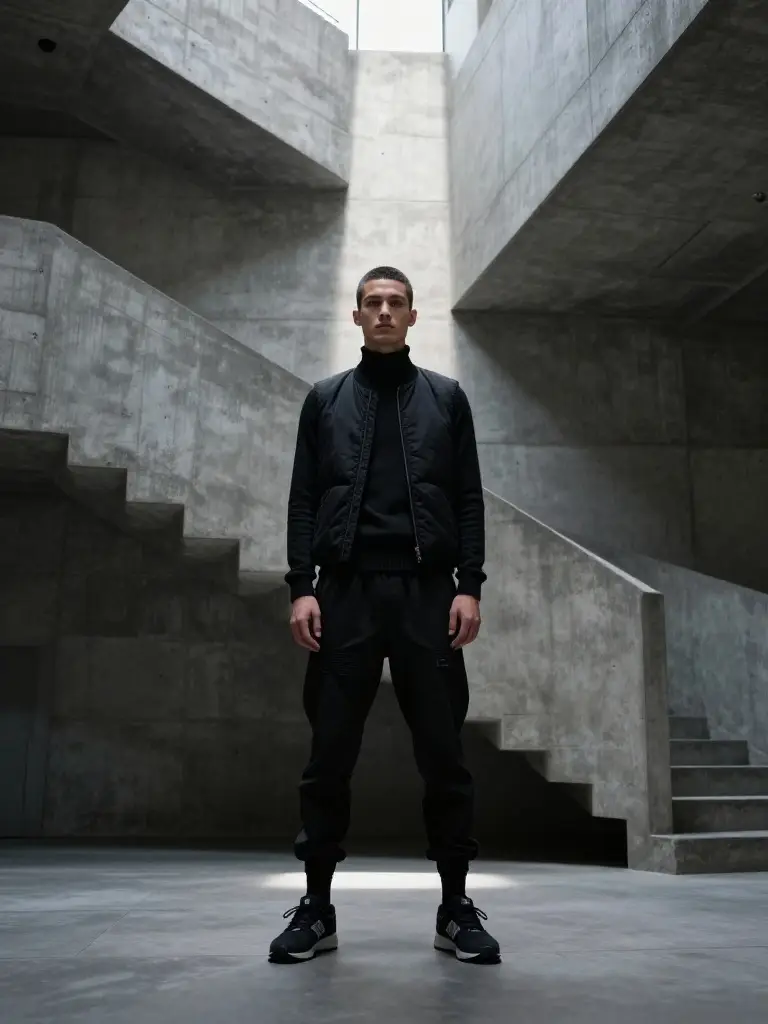
Monochrome sporty outfit for street fashion is one of the most powerful and underutilized tools in the athletic dressing toolkit. Dressing head to toe in a single color — or more precisely, a single color in multiple tones and textures — creates a visual coherence that reads as highly intentional and deeply sophisticated. The sporty minimalist street style tradition has long understood this: a full black outfit in technical jersey, ripstop, and brushed nylon simultaneously communicates minimalist discipline and athletic readiness.
Sporty monochrome outfit ideas gain their greatest power from texture variation within the color story. An all-grey look that combines a heathered jersey tee, a brushed fleece jogger, and a ripstop shell jacket creates three completely different surface textures that catch light differently and create visual interest without introducing any additional color complexity. Minimalist sporty street look with neutral tones in bone, ecru, warm grey, and charcoal allows the silhouette and proportion of each garment to carry the full visual weight of the outfit — which is exactly the discipline that separates elevated sporty casual looks from simply wearing matching sweats.
Color Blocking From Track to Pavement — Bold Palette Strategy That Always Wins
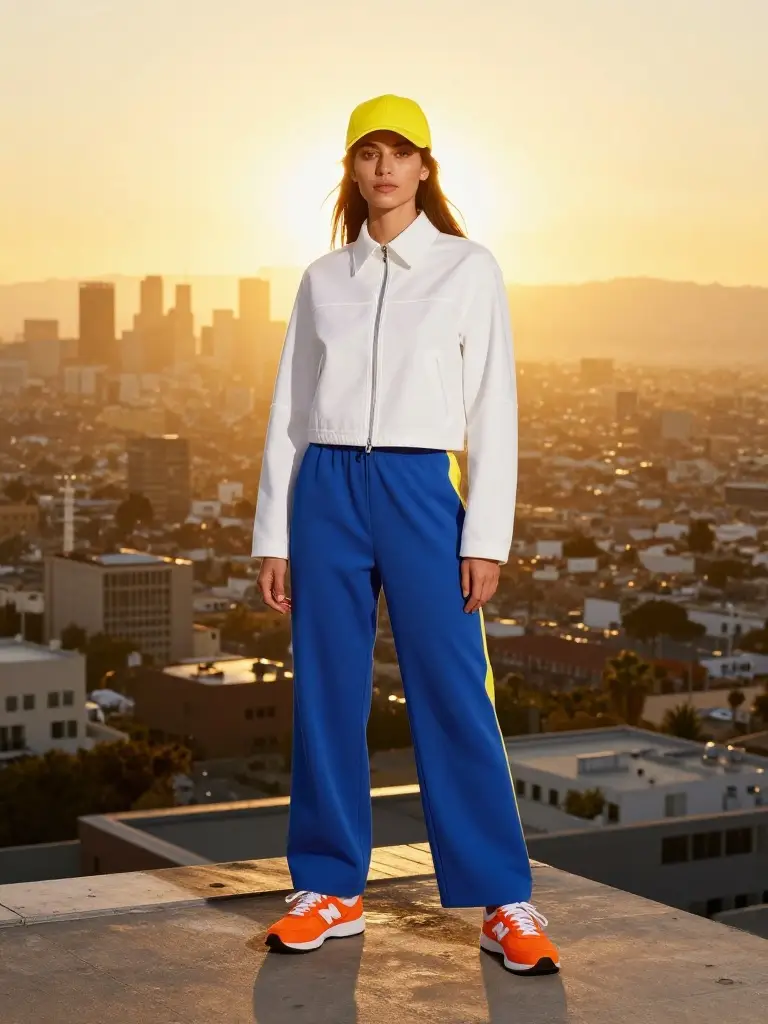
Color blocking sporty street style outfit construction draws direct inspiration from the athletic uniform tradition — the way professional sports teams use high-contrast color combinations to create visual identity at speed and distance. Track and field uniforms, basketball jerseys, soccer kits — these athletic contexts developed a sophisticated color blocking vocabulary that sporty street style outfits absorbed and translated into everyday dressing. Bold sporty streetwear outfits built on color blocking principles use the same logic: high contrast between panels, garments, or accessories creates visual energy and immediate impact.
you may also like this:22 Football Jersey Outfit Ideas for Sporty Street Style
Best sporty street style combinations in the color blocking register follow a clear structural rule: anchor with one dominant neutral — black, white, navy, or grey — then introduce two contrasting accent colors in deliberate, bounded areas. For example: white technical joggers, a cobalt blue bomber, and a bright orange New Era cap creates a three-color blocking composition that feels athletic, intentional, and visually dynamic without veering into visual chaos. PUMA city fashion line and Adidas Originals street style have both built entire seasonal collections around this color blocking principle, understanding that the track’s visual language translates directly and powerfully to street contexts.
The Layering Code That Separates Intentional Sport Style From Gym Overflow
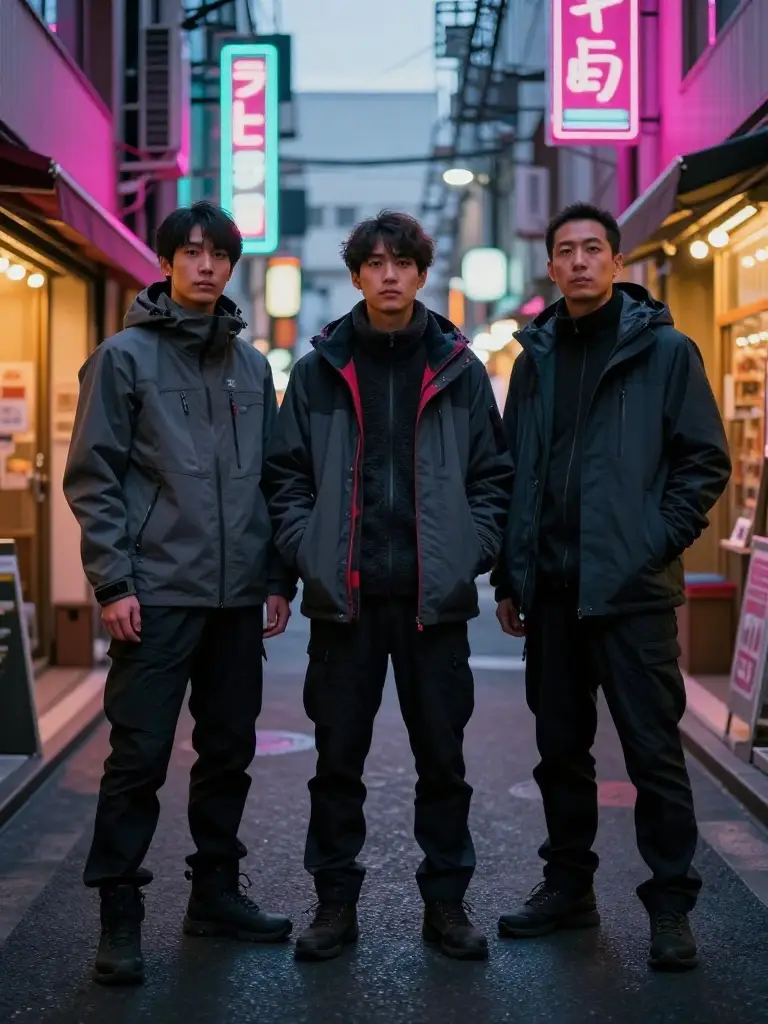
Layered sporty street style look for winter is where the genuine craft of athletic dressing reveals itself most clearly. Layering in the sporty context isn’t about piling garments on for warmth — though that function matters. It’s about creating a visible system of athletic logic where each layer has a discernible purpose and the combination of those purposes produces a complete visual narrative. Sporty layered street looks work when each layer’s function is legible: base layer for warmth, mid layer for insulation, outer shell for protection, with each layer’s character visible rather than completely buried beneath the next.
How to mix sportswear with casual clothes through layering means introducing one non-athletic layer into an otherwise sport-coded outfit to create what stylists call a “grounding” element. A raw-denim overshirt worn open over a technical base layer and technical joggers creates a hybrid layering story that borrows from both athletic and casual wardrobes without fully committing to either. Sporty street style with utility vest and joggers takes a different approach — the vest adds a tactical, functional layer that visually suggests purposefulness and readiness rather than relaxation. That distinction in what the layer implies is as important as what it actually does thermally.
Bomber Jackets, Track Tops, and Windbreakers — the Holy Trinity of the Sporty Look
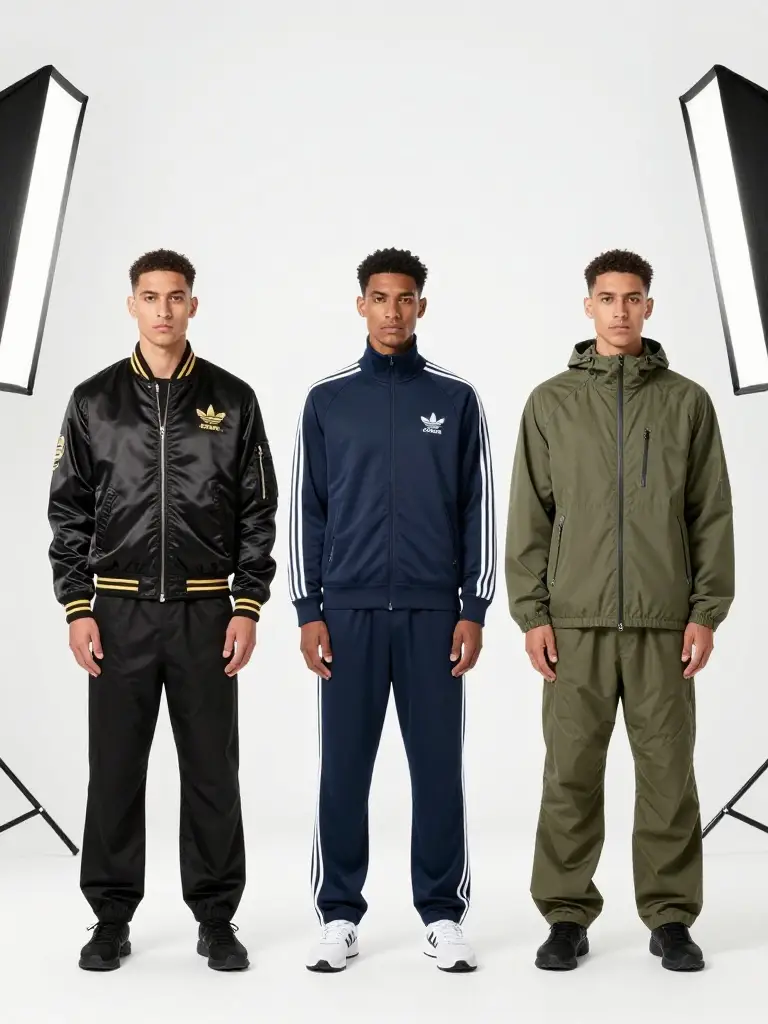
The sporty street style with bomber jacket and sneakers combination has proven itself as one of the most consistently excellent outfit formulas in urban dressing history. The bomber jacket’s origins in military aviation give it an inherent utilitarian authority. Its adoption by subcultural groups — from 1960s British mods to 1980s hip-hop communities to contemporary Supreme athletic streetwear brand devotees — layered on decades of cultural meaning. A quality bomber in nylon, satin, or technical shell finishes any sporty street style outfit with a completeness that few other outer layers can match.
Track tops and windbreakers occupy slightly different positions in the athletic inspired street looks hierarchy. The track top — ribbed collar, zip front, contrast stripe detailing — is the most explicitly athletic of the three and works best when paired with deliberately non-athletic bottoms to create contrast. Stussy surf sport street culture helped establish the windbreaker as a legitimately cool street garment rather than just functional rain protection. Sporty street style with puffer jacket and boots represents a winter evolution of this outer layer logic — the puffer’s athletic heritage combining with boot footwear to create a cold-weather sporty everyday outfits formula that’s comfortable, warm, and visually powerful simultaneously.
Sneakers as the Sentence — Choosing Footwear That Finishes Every Street Outfit
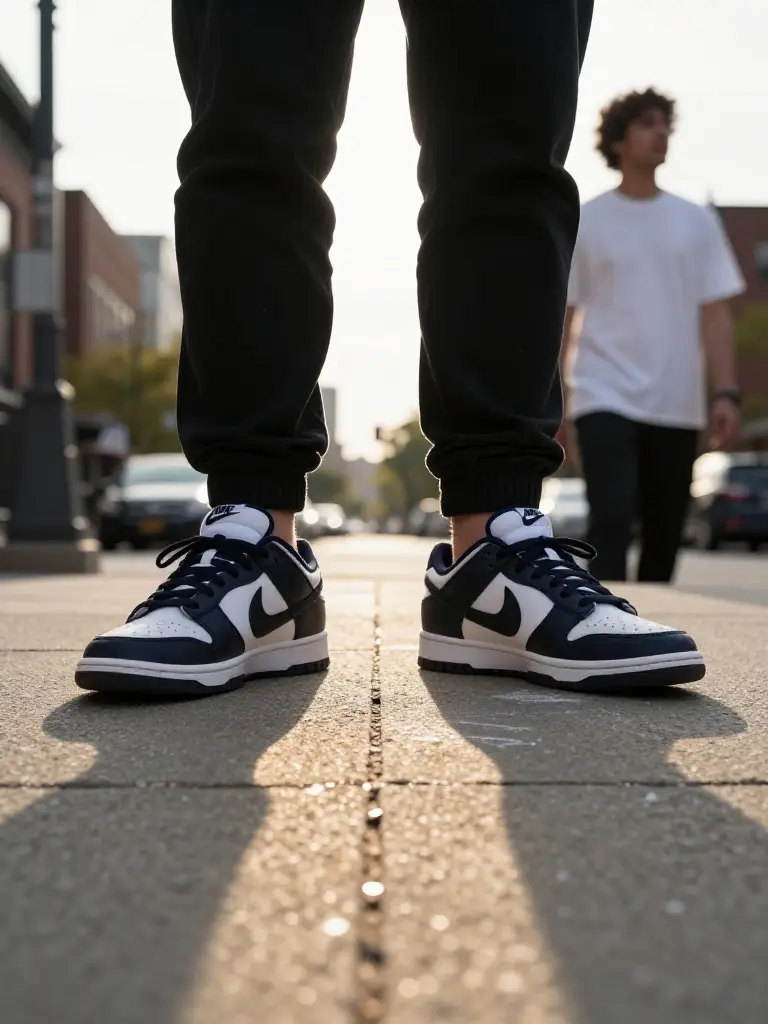
Sporty street style accessories sneakers and cap is the most discussed footwear-headwear pairing in contemporary urban fashion and rightfully so — these two accessories together do more to establish the tonal register of an entire outfit than any other combination of elements. A sneaker choice signals which sub-culture within the broad sporty street universe you’re speaking to. Reebok classic street looks speak to 1980s and 1990s nostalgia. New Balance urban fashion signals considered minimalism and a departure from hype culture. A limited Nike streetwear collection release signals connection to the current release calendar and the social currency of sneaker knowledge.
How to achieve a sporty aesthetic through footwear specifically means understanding the shoe as the outfit’s final punctuation rather than an afterthought. A comma-shoe is forgettable and functional. A period-shoe closes the outfit with authority and completeness. An exclamation-shoe — a bold colorway, an unexpected collaboration, a technically extraordinary design — makes the entire outfit read backward from the foot upward. Statement sneaker sporty street style coordination works when everything above the shoe creates a calm, curated platform for the footwear to perform. Busy outfit plus busy sneaker equals visual competition. Let one element win.
Caps, Bags, and Socks — the Small Accessories That Make the Biggest Statement
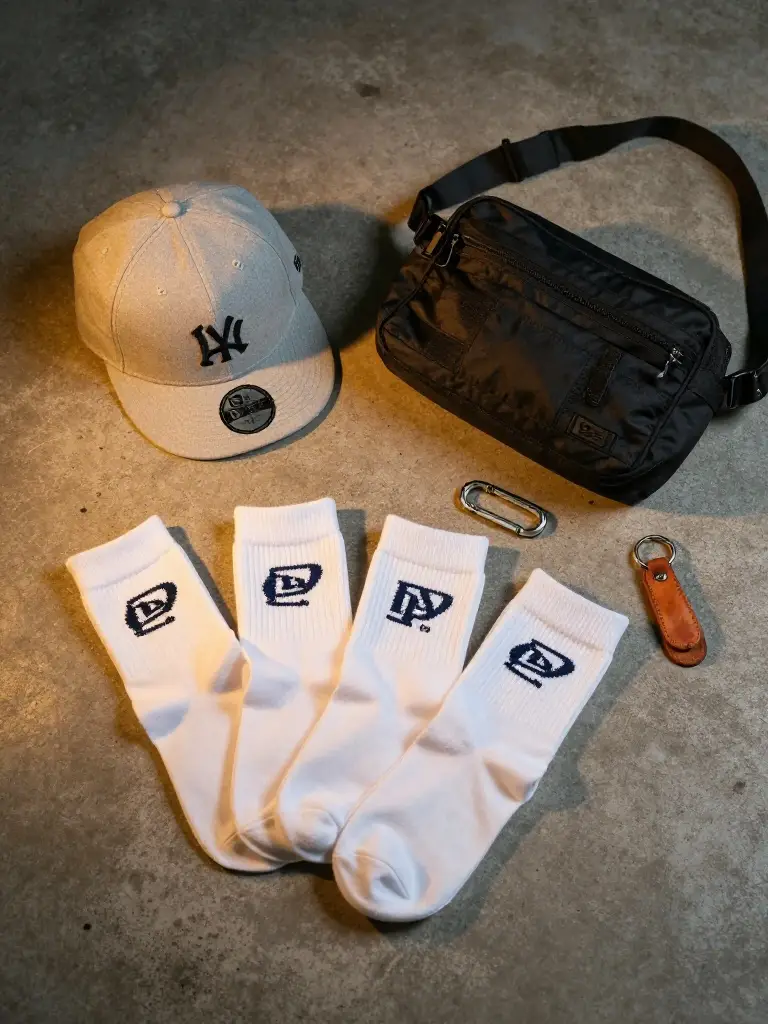
Sporty street style accessories at the level of caps, bags, and socks carry disproportionate visual weight relative to their physical size. The New Era cap street culture contribution to urban fashion is genuinely immeasurable — that structured six-panel silhouette has appeared on the heads of athletes, musicians, politicians, and fashion icons for decades and retains its visual authority precisely because of that cross-cultural ubiquity. Sporty street style with baseball cap and joggers is an outfit formula so established and so reliable it functions almost as a uniform — a shorthand for a specific kind of effortless urban cool that never reads as overdone.
Sporty street style with joggers and hoodie gains significant elevation from bag choice. A technical crossbody in ballistic nylon, a sleek waist pack, or a structured athletic tote instantly signals that the wearer understands sporty dressing as a considered aesthetic rather than default comfort wear. Socks — visible above the sneaker cuff, deliberate in their color and branding — function as the outfit’s finest point of detail. The Champion reverse weave street style tradition of visible logo socks folded to show the arch logo has been refined and elevated by contemporary Kith sport fashion collaborations into something genuinely editorial. Don’t underestimate the ankle. It’s the detail that other informed dressers notice first.
Sporty Street Style for Women — Commanding Attention Without Losing Comfort
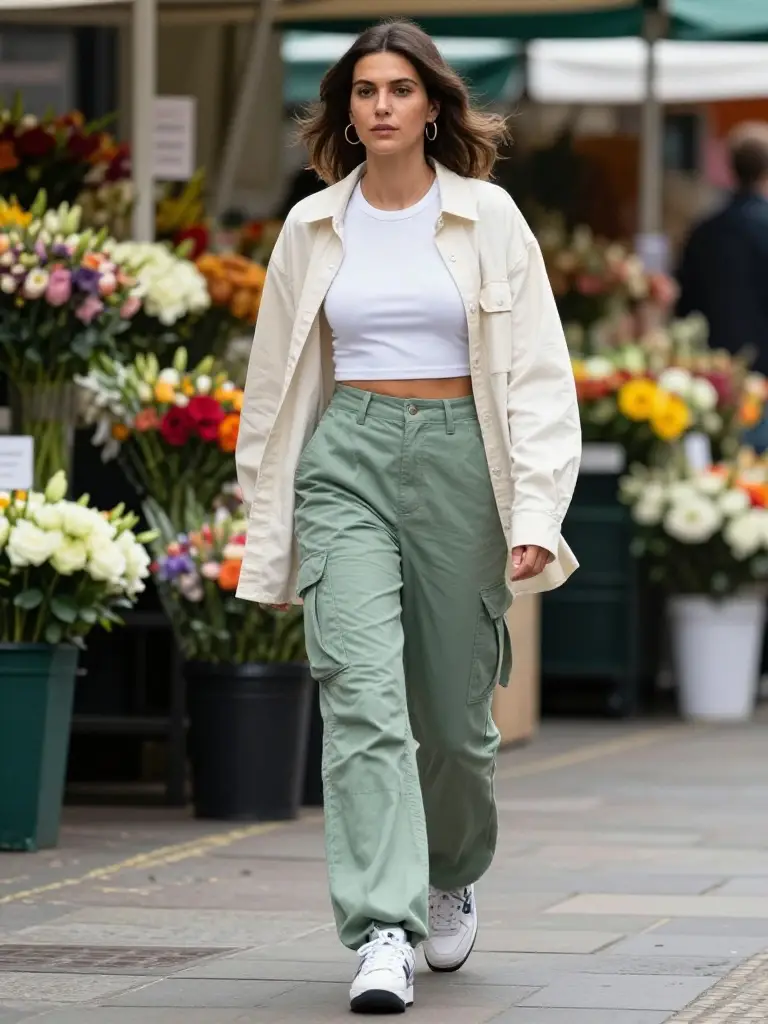
Sporty street style for women has undergone a genuine revolution over the past decade. The category moved from a niche dominated by tomboy-coded dressing into a broad, inclusive aesthetic that accommodates and celebrates an enormous range of femininity expressions simultaneously. Sporty street style outfit ideas for women now span from the ultra-streamlined — high waist leggings sporty street style outfit with a cropped technical jacket and clean white sneakers — to the dramatically oversized, the colorblocked, and the technically ambitious. The single connecting thread is confidence through physical ease rather than physical constraint.
Sporty street style for petite women styling tips center on proportion management: choosing crops and high-waist bottoms to elongate the leg line, using monochrome to create an unbroken vertical visual, and avoiding overwhelming volume at both top and bottom simultaneously. Sport luxe dress code sporty street style women represents the most elevated expression of this aesthetic — pairing tailored athletic silhouettes with luxury accessories, quality footwear, and restrained color palettes to create looks that function in genuinely sophisticated contexts. Sporty and Rich brand aesthetic has built an entire brand identity around exactly this elevated feminine sporty register — proof that this space has genuine market depth and cultural longevity.
Sporty Street Style for Men — Precision Dressing in the Athletic Wardrobe
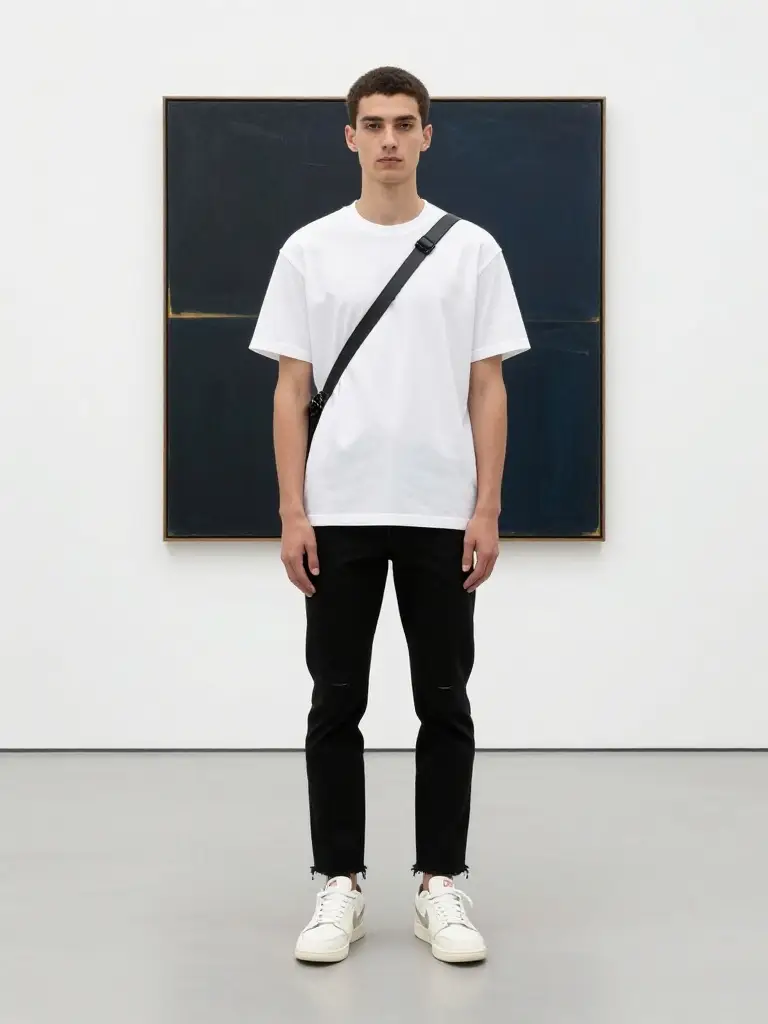
Sporty street style for men rewards precision above volume — the discipline of choosing fewer pieces and ensuring each one is exactly right rather than layering complexity upon complexity. Sporty street style looks for men at their most powerful are often deceptively simple: a single perfect graphic tee, technical trousers with an impeccable fit, and one extraordinary sneaker. The restraint communicates confidence. It says you don’t need visual noise to make your presence felt. Casual sporty fashion ideas for men work best when the proportions are genuinely considered rather than accidental.
How to dress sporty street style for men specifically means understanding the outfit’s tonal hierarchy. Every strong sporty street style outfit for men has one element that commands primary visual attention — the sneaker, the outer layer, or a specific graphic. Everything else serves that primary element rather than competing with it. Bold logo sporty streetwear outfit street styling follows this hierarchy precisely: when a logo-heavy piece like a Supreme athletic streetwear brand or Fear of God Athletics brand item is the statement, the supporting pieces should be clean, logo-free, and tonally quiet. Competing logos produce visual chaos. One strong voice, clearly supported.
Sport Luxe — the Elevated Hybrid That Took Sporty Dressing Into Fine Dining
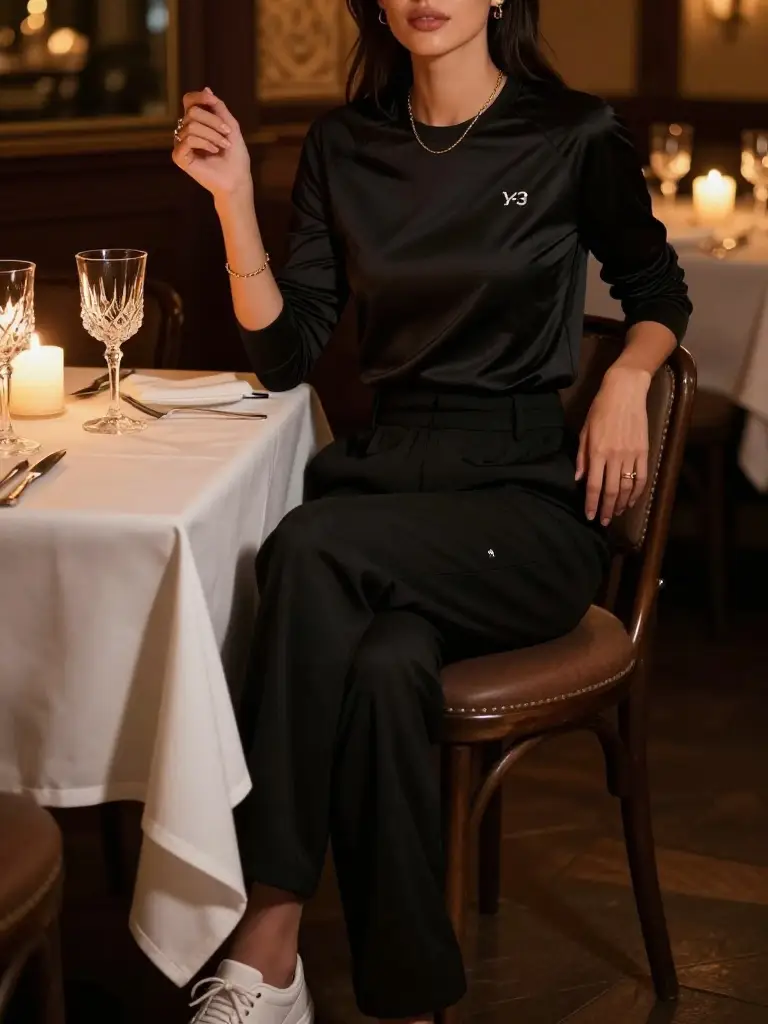
Sport luxe fashion styling concept represents the moment athletic dressing achieved genuine social mobility — the ability to enter contexts previously closed to sportswear without apology or modification. Sport luxe dress code sporty street style women specifically emerged as a recognition that quality athletic silhouettes in luxury materials can satisfy dress codes that would have rejected traditional sportswear entirely. A Y-3 Yohji Yamamoto sport fashion piece — technically a sneaker or a technical trouser — carries the same material and constructional quality as traditional luxury goods. The context becomes irrelevant. The quality speaks loudly enough.
Off-White sporty luxury fashion under Virgil Abloh streetwear legacy arguably did more to legitimize sport luxe as a credible fashion category than any other creative force of the 2010s. By placing quotation marks — literal deconstructive punctuation — around athletic signifiers and presenting them in luxury fashion contexts, Abloh argued that the boundaries between athletic and luxury were always artificial constructions rather than genuine quality distinctions. Gym to street fashion transition at the sport luxe level doesn’t require a wardrobe change. It requires a different grade of athletic garment — one where the material, construction, and design intelligence operate at the same level as any luxury fashion house’s best work.
The Retro Sport Revival That Has Everyone Raiding Their Parents Wardrobe
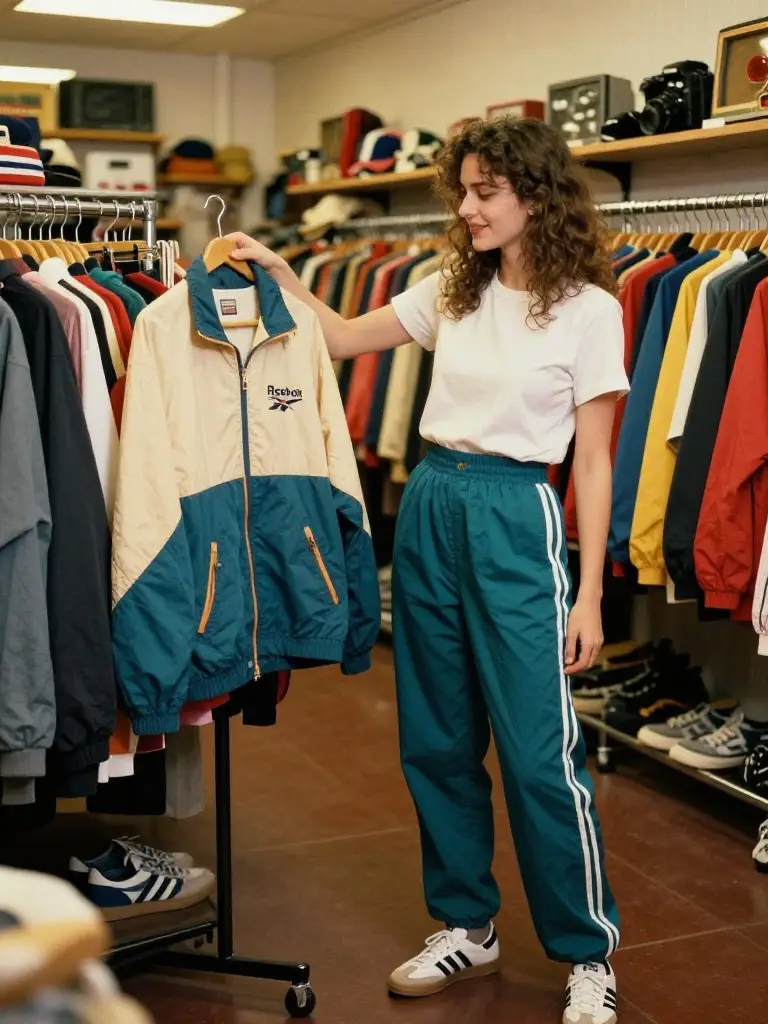
Retro sportswear street style outfit combination has driven some of the most commercially successful fashion moments of the past five years. The appetite for vintage athletic aesthetics — the colorblocked nylon of 1980s track suits, the clean profile of 1990s running shoes, the college-athletic graphics of classic Champion reverse weave street style sweatshirts — reflects a broader cultural nostalgia for periods when sportswear felt more innocent, more locally rooted, and less algorithmically optimized. Retro sporty street fashion taps a genuine emotional register that purely contemporary design sometimes struggles to access.
Represent Clothing athletic style and Madhappy streetwear brand identity represent two contemporary brands that have built significant audiences by understanding how nostalgia functions in sporty dressing — not by producing literal reproductions of vintage pieces but by channeling the emotional register of past athletic eras into contemporary design vocabulary. Reebok classic street looks have experienced a consistent commercial revival precisely because the clean, unfussy design language of their classic silhouettes reads as a deliberate rejection of contemporary sneaker maximalism. In a marketplace saturated with complex, technology-laden athletic footwear, a clean white leather runner from 1985 communicates a specific kind of knowing restraint.
Technical Streetwear and the Future Athletes Are Already Wearing Today
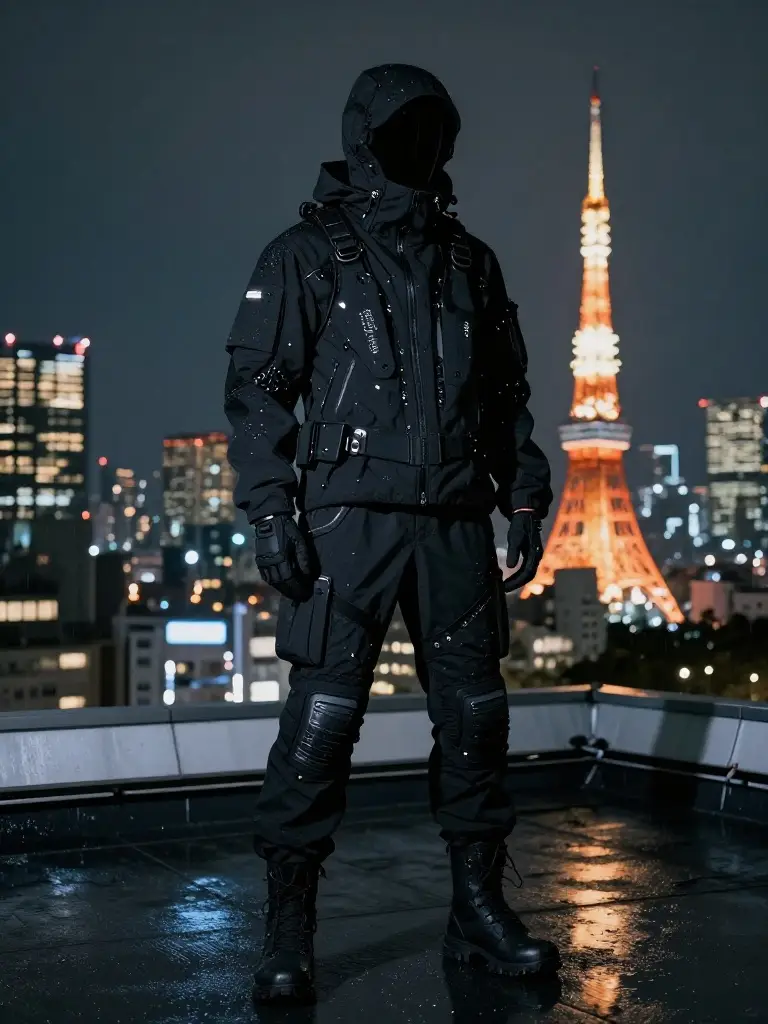
Technical fabric fashion styling at its most advanced frontier looks less like fashion and more like engineering. Acronym technical streetwear brand — founded by Errolson Hugh — produces garments with articulated joint construction, modular attachment systems, and weatherproofing technologies borrowed from military and mountaineering contexts. These aren’t performance claims made for marketing purposes. The construction genuinely delivers functional advantages that conventional fashion garments cannot match. Progressive athletic fashion styling in this technical register treats the human body as a system to be optimized through thoughtful garment architecture.
A-Cold-Wall technical streetwear approaches technical dressing from a more conceptually artistic angle — founder Samuel Ross treats material science and garment construction as vehicles for exploring questions about race, class, and the body in urban space. Technical jacket styling for sporty street look within this tradition means choosing garments whose technical details — seam taping, articulated elbows, modular pocket systems — are visible as design elements rather than hidden as functional engineering. The technique is the aesthetic. The function is the statement. Urban performance fashion aesthetic at this level operates as genuinely forward-thinking design philosophy rather than trend-responsive market positioning.
Logo Culture and Brand Energy — When a Print Becomes a Personality Statement
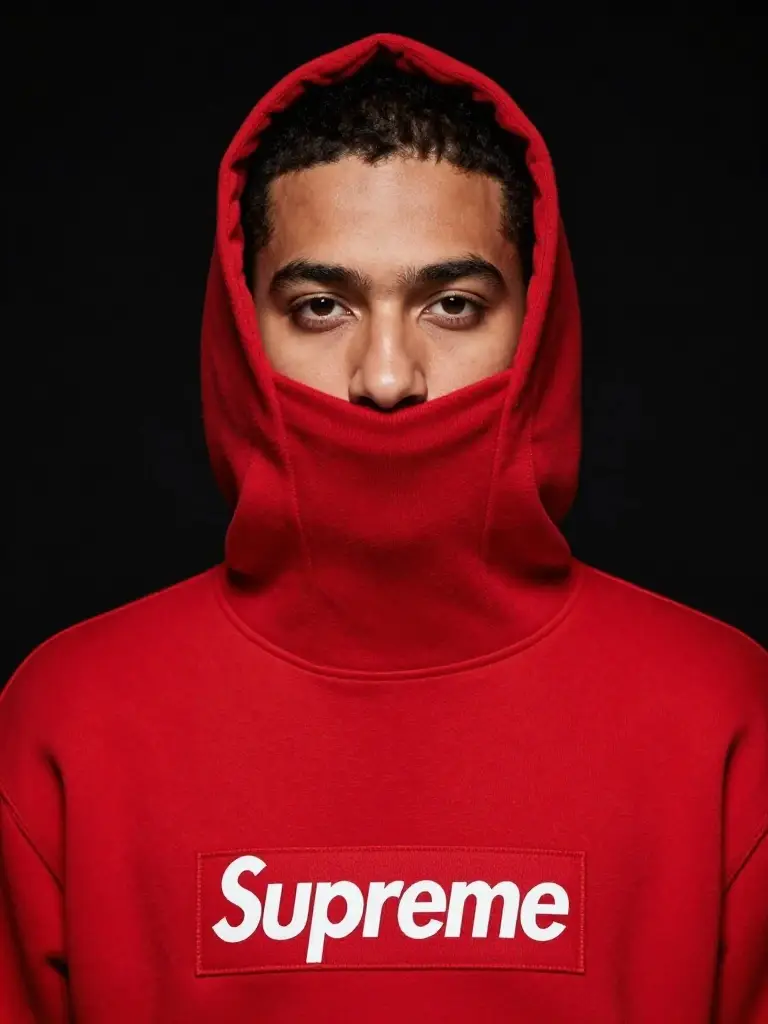
Bold logo sporty streetwear outfit street styling carries a cultural weight that transcends simple brand identification. When you wear a Supreme athletic streetwear brand box logo or a Palace Skateboards street culture tri-ferg, you’re not just identifying a commercial preference. You’re signaling membership in a specific cultural community with specific values, references, and social codes. How to look stylish in sporty clothes with logo-heavy pieces requires understanding this communicative dimension — wearing a logo without understanding its cultural context produces a hollow result that informed observers read immediately.
Brand energy in sporty casual fashion operates on a spectrum from quiet to loud. Carhartt WIP urban workwear logos communicate understated working-class authenticity repurposed for urban cool — a very different message from the same-sized logo on a Supreme athletic streetwear brand piece. New Balance urban fashion branding in its contemporary elevated positioning speaks to considered, slightly anti-hype sensibility. Understanding what each brand communicates in the current cultural moment gives you the ability to use logos as precise communicative tools rather than random decoration. Logo literacy is one of the most underrated skills in sporty everyday outfits construction.
The Budget Blueprint for Building a Sporty Street Wardrobe That Looks Expensive
Sporty street style look on a budget rewards strategic thinking over impulsive spending. The foundation principle is this: invest the majority of your budget in the two elements that other knowledgeable people inspect first — footwear and outer layers. A quality sneaker from New Balance urban fashion or a classic Adidas Originals street style silhouette will elevate even basic supporting pieces. A well-constructed bomber or technical shell from a mid-tier brand like PUMA city fashion line adds structural completeness to even simple base layer choices.
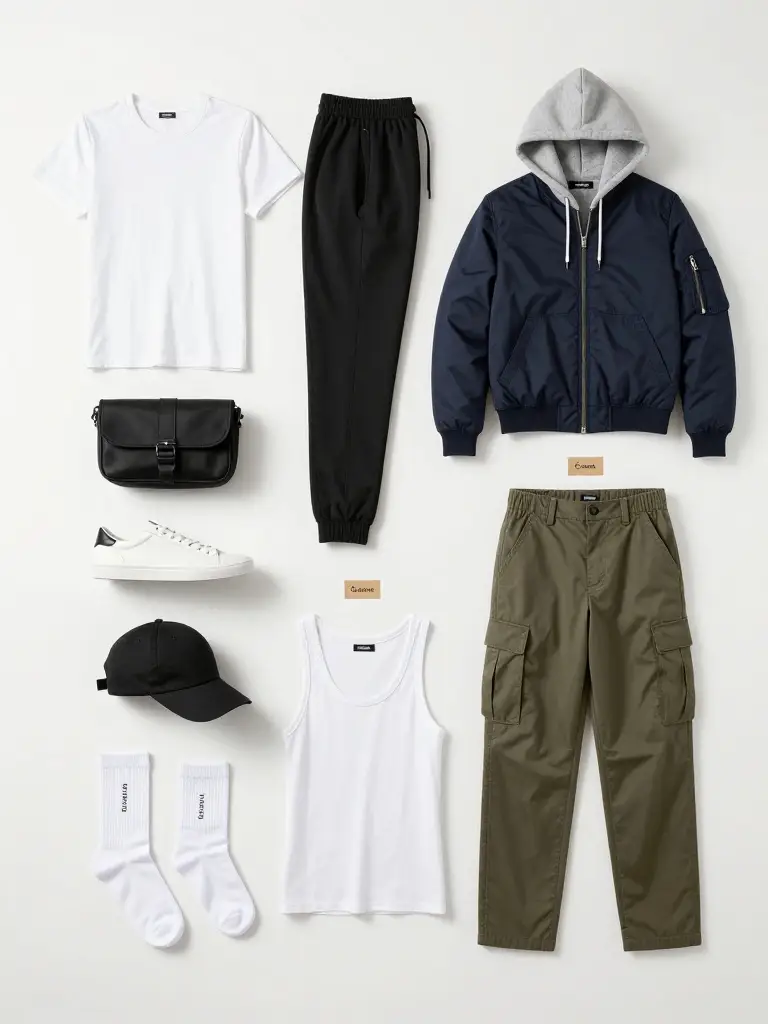
How to build a hiking aesthetic wardrobe that looks expensive on a limited budget means avoiding the common mistake of spreading budget thinly across many mediocre pieces and instead concentrating resources on fewer, better items. Sporty street style outfit for work built on a budget works best when the base pieces are genuinely simple — a clean white tee, black technical joggers, white socks — allowing one investment piece to provide all the visual elevation the look needs. Sporty street style accessories sneakers and cap at the accessory level can be sourced through outlets, sample sales, and secondary markets where quality pieces from premium brands are available at significant discounts without sacrificing the design intelligence that makes them work.
Seasonal Strategy — Adapting the Athletic Street Look Across All Four Climates
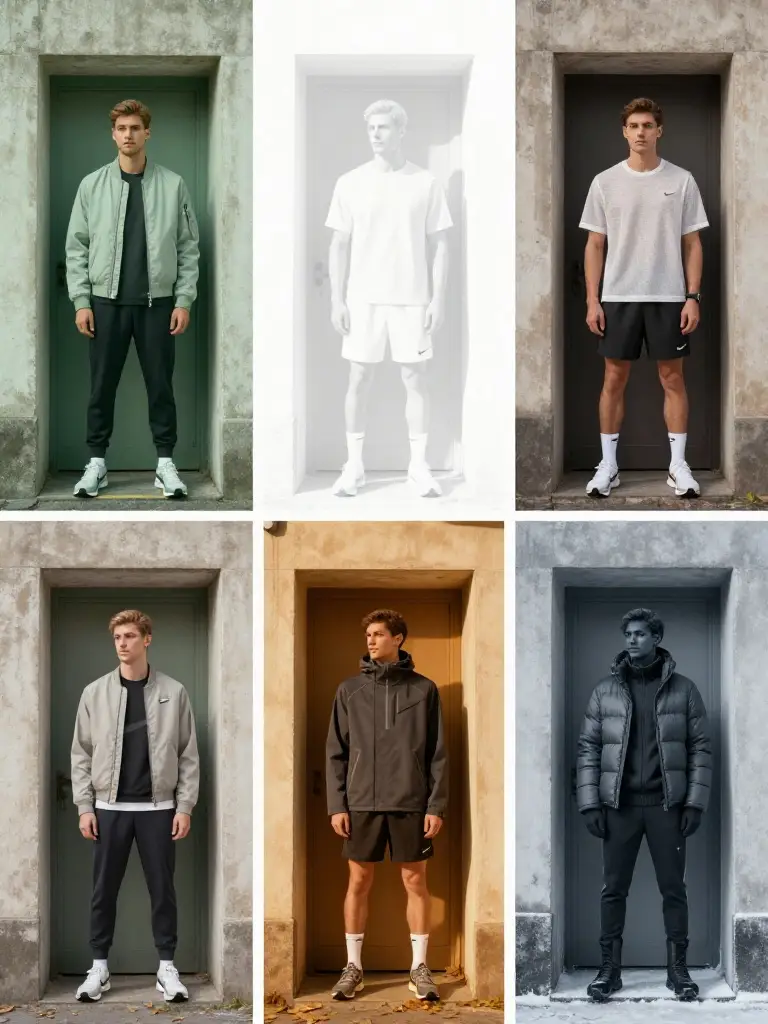
Sporty street style summer outfit ideas center on the principle of maximum breathability within minimum visual complexity. Summer in the sporty street style context means performance-knit shorts, technical mesh tops, clean lightweight sneakers, and a single structured accessory — a cap, a bag, or a pair of quality sunglasses — to provide the intentional finishing that prevents the look from reading as purely functional. Sporty chic outfit ideas for everyday wear in summer work best in light, breathable technical fabrics that maintain their visual crispness through the physical demands of a warm-weather city day.
Sporty street style winter layering ideas require the most technical thinking of any season. The layering system needs to function both thermally and visually — each layer must serve a warming purpose while also contributing to the overall composition’s aesthetic coherence. Sporty street style with puffer jacket and boots is the winter formula with the strongest established visual language: the puffer’s quilted volume contrasting with a cleaner, more streamlined base layer and the boot’s structured, grounded silhouette providing a visual anchor at the outfit’s lowest point. Sporty street style look across all four seasons maintains its identity through consistent attention to proportion, material intelligence, and the specific accessories that signal seasonal awareness.
Building a Capsule Sporty Wardrobe With Ten Pieces That Do Fifty Jobs
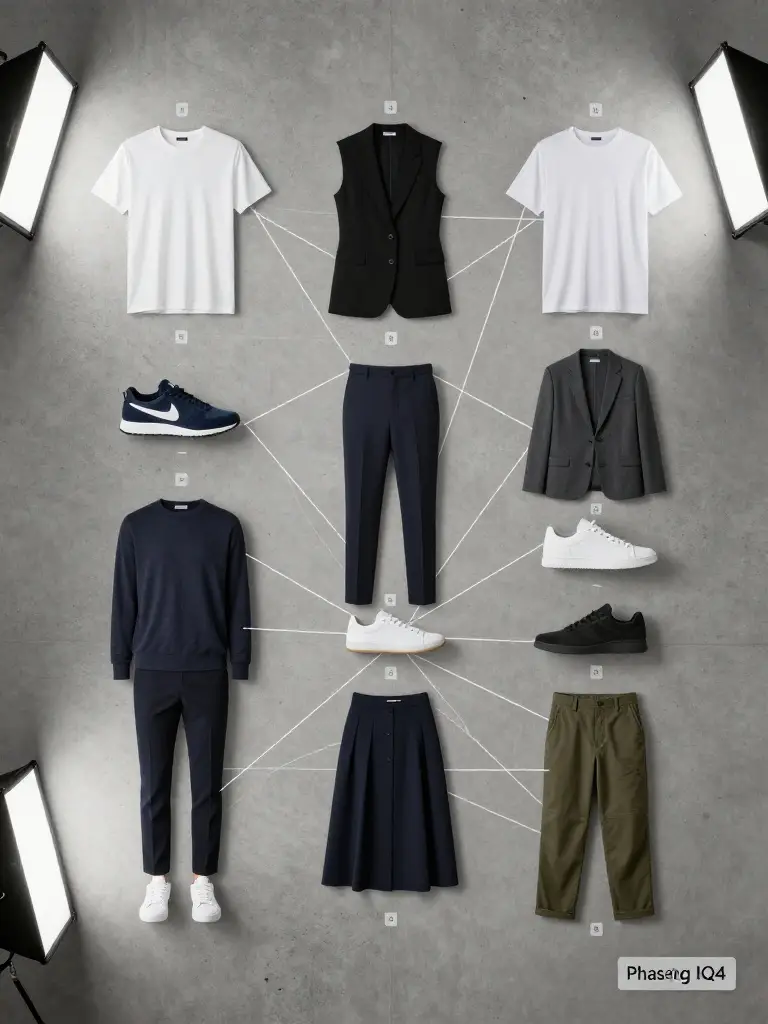
Athletic inspired wardrobe building at its most efficient produces a system where every piece multiplies into multiple outfit configurations rather than occupying a single fixed position in a single fixed look. Ten pieces producing fifty distinct outfits isn’t hyperbole — it’s the mathematical result of genuinely versatile selection. Dynamic urban wardrobe essentials in the sporty register include: one white technical tee, one black technical tee, one grey hoodie, one bomber jacket, one technical jogger in black, one technical jogger in neutral, one pair of straight-leg cargo trousers, one pair of clean white sneakers, one versatile cap, and one quality crossbody bag. These ten pieces combine into an almost unlimited range of sporty outfit ideas 2025 configurations.
Outfit ideas combining sport and street fashion from this ten-piece capsule: the white tee tucked into the cargo trousers with the white sneakers and cap creates a crisp, intentional day look. The grey hoodie layered under the bomber with the black jogger and white sneaker creates a layered evening look. The black tee with the grey hoodie worn open as an overshirt layer creates a different proportion story entirely. Wearable performance fashion daily from a tightly edited capsule requires only the initial discipline of choosing genuinely versatile pieces — after that, the system does the work. Every morning becomes faster, every outfit more considered, every dollar of investment more efficient.
The New Feminine Sporty Aesthetic Redefining What Athletic Dressing Looks Like
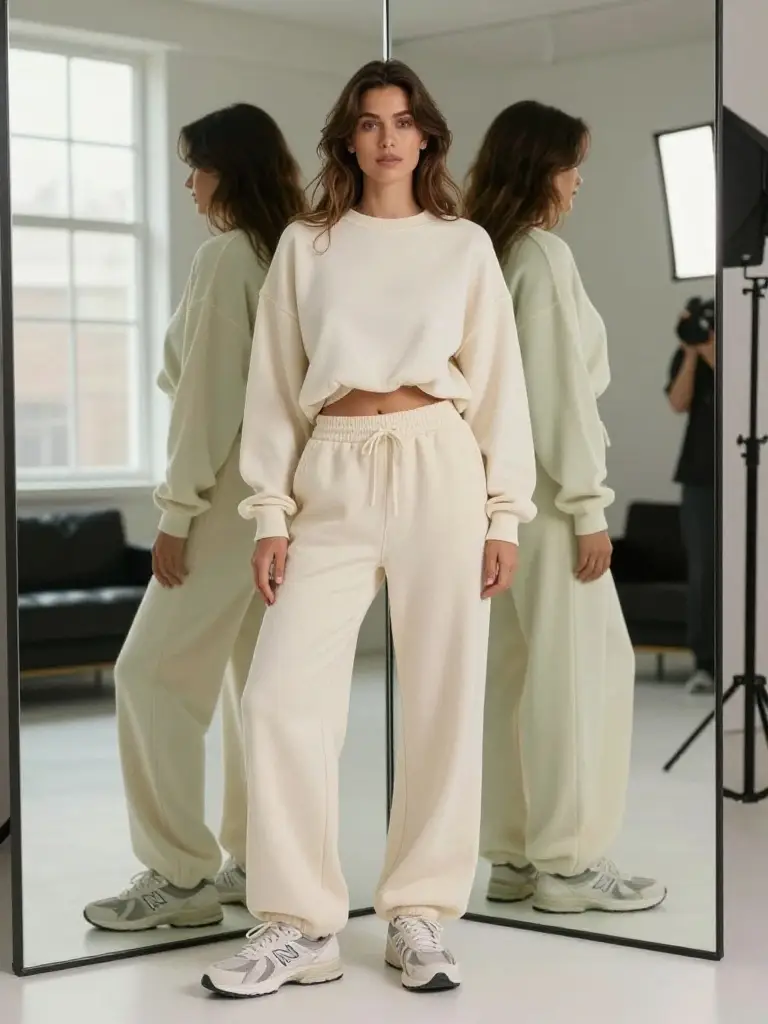
The new feminine sporty aesthetic operating in contemporary fashion rejects the binary between athletic function and feminine expression that previously forced women to choose one or the other. Sporty and Rich brand aesthetic — founded by Emily Oberg — demonstrated with remarkable commercial success that feminine sensibility and athletic garment logic aren’t opposing forces. They’re complementary dimensions of a single, coherent aesthetic identity. Sporty street style for women at its most sophisticated in 2025 encompasses everything from ultra-minimal technical precision to maximally expressive colorblocked volume.
Athleisure street style looks in the feminine register have evolved beyond the legging-and-sneaker formula that defined the early athleisure moment into something far more architecturally ambitious. High waist leggings sporty street style outfit combined with an oversized technical jacket and a structured bag creates a look that reads as genuinely fashion-forward rather than workout-adjacent. Sporty street style women cargo pants styling — particularly wide-leg cargo trousers in technical fabrics paired with fitted ribbed tops and clean athletic footwear — represents one of the most photographed and imitated contemporary sporty fashion combinations of the current moment. The feminine sporty aesthetic doesn’t dress down. It dresses differently — and in doing so, it expands what dressing up can mean.
Celebrity Influence and the Superstar Moments That Shaped Sporty Street Culture
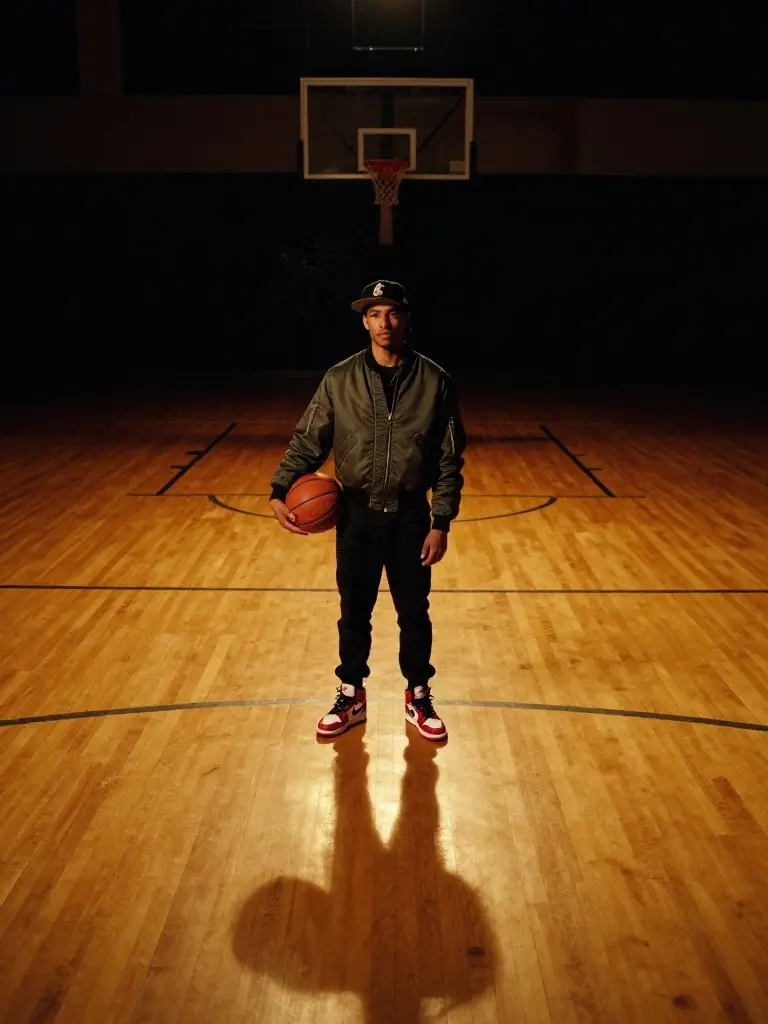
Celebrity influence on sporty street style has always operated through specific iconic moments rather than sustained sartorial philosophy. Run-DMC wearing Adidas shell toes without laces on the 1986 album cover. Michael Jordan wearing his Nike Air Jordans despite an NBA fine. Aaliyah in baggy Tommy Hilfiger. Rihanna transforming Adidas Originals street style through her Fenty collaboration. Each of these moments crystallized an entire aesthetic direction that thousands of people immediately adopted and that fashion historians continue to reference decades later.
Virgil Abloh streetwear legacy represents perhaps the most intellectually ambitious celebrity-adjacent influence on sporty street style — not through personal style but through design philosophy that made sporty dressing legible in fine art and fashion contexts simultaneously. Madhappy streetwear brand identity has cultivated a more contemporary celebrity influence model — partnerships with athletes, musicians, and cultural figures who authentically embody the brand’s optimistic, community-minded ethos rather than simply wearing it for commercial visibility. Effortless athletic fashion identity at the celebrity level communicates something genuinely aspirational: that athletic dressing can be simultaneously casual and intentional, physically comfortable and visually commanding, accessible and genuinely cool.
Frequently Asked Questions
What exactly is sporty street style fashion?
What is sporty street style fashion at its most precise definition: it’s the integration of athletic garment design — performance fabrics, athletic silhouettes, sport-coded accessories — into the contexts and occasions of everyday urban life. It differs from pure athleisure in its deliberate aesthetic intentionality and from conventional streetwear in its consistent athletic reference. Sporty streetwear trend explained simply means athletic clothing worn with fashion intelligence rather than purely functional motivation.
Can sporty street style work for professional settings?
Yes — through the sport luxe fashion styling concept. Sporty street style outfit for work works in progressive professional environments when athletic pieces are chosen at a quality level that matches the workplace’s dress expectations, when the silhouette is appropriately structured, and when the overall composition communicates intention and polish. A technical trouser, a quality knit, and a clean sneaker in a design-forward industry reads as professional. In a conservative legal environment, the same combination may not. Know your context.
What are the essential pieces for a sporty street style wardrobe?
What to wear for sporty street style look requires these foundational pieces: one or two quality sneaker silhouettes, a bomber or technical outer layer, two to three technical or athletic-fabric bottoms in versatile cuts, three to four tops ranging from basic tees to quality hoodies, and two to three accessories — cap, crossbody bag, quality socks. Best sporty street style combinations emerge from these pieces when they share a coherent color palette and are chosen to work in combination rather than as isolated individual items.
Which sneaker brands define the sporty street style aesthetic?
Best brands for sporty street style fashion in footwear include Nike streetwear collection, Adidas Originals street style, New Balance urban fashion, Jordan Brand street culture, Reebok classic street looks, and Converse street style heritage at the accessible-premium level. At the luxury and limited-release level, Salehe Bembury design aesthetic collaborations and Kith sport fashion collaborations represent the highest expression of sneaker-as-fashion. Each brand speaks a slightly different cultural dialect within the broad sporty street vocabulary.
Can sporty street style work for all body types?
Absolutely. How to dress sporty street style for any body type comes down to proportion management rather than body modification. Sporty street style for petite women styling tips include high-waist bottoms, monochrome dressing, and cropped top layers to elongate the silhouette. For broader frames, oversized tops with streamlined bottoms create balanced proportion. For taller frames, the full oversized proportion play — oversized top, wide-leg bottom — works with extraordinary impact. Sporty chic street fashion has no body prerequisites. Proportion intelligence is the only requirement.
Conclusion
Own the Pavement — Sporty Street Style Is Not a Trend It Is a Permanent Takeover
Sporty street style arrived on the streets without permission and it has absolutely no intention of leaving. What started as athletes wearing their training clothes beyond the gym boundary has become the defining aesthetic philosophy of contemporary urban fashion — a complete visual language spoken fluently by designers, athletes, musicians, and ordinary people across every demographic category and every corner of the globe. The sneaker replaced the dress shoe. The technical trouser replaced the formal trouser. The bomber replaced the blazer. These aren’t temporary substitutions. They’re permanent shifts in the grammar of how human beings dress themselves in cities.
The toolkit this guide has given you — the historical context, the proportion principles, the fabric intelligence, the brand literacy, the seasonal strategy, the capsule architecture — represents a genuine education in one of the most culturally rich and endlessly generative fashion philosophies available to you. How to achieve a sporty aesthetic that feels authentic rather than borrowed comes down to one final principle: wear what genuinely reflects your relationship with movement, with urban life, and with the specific cultural communities within this broad world that speak to you. The sporty street style universe is large enough to contain contradictions, nuances, and personal signatures. Find yours. Then own the pavement.
1 Comment