
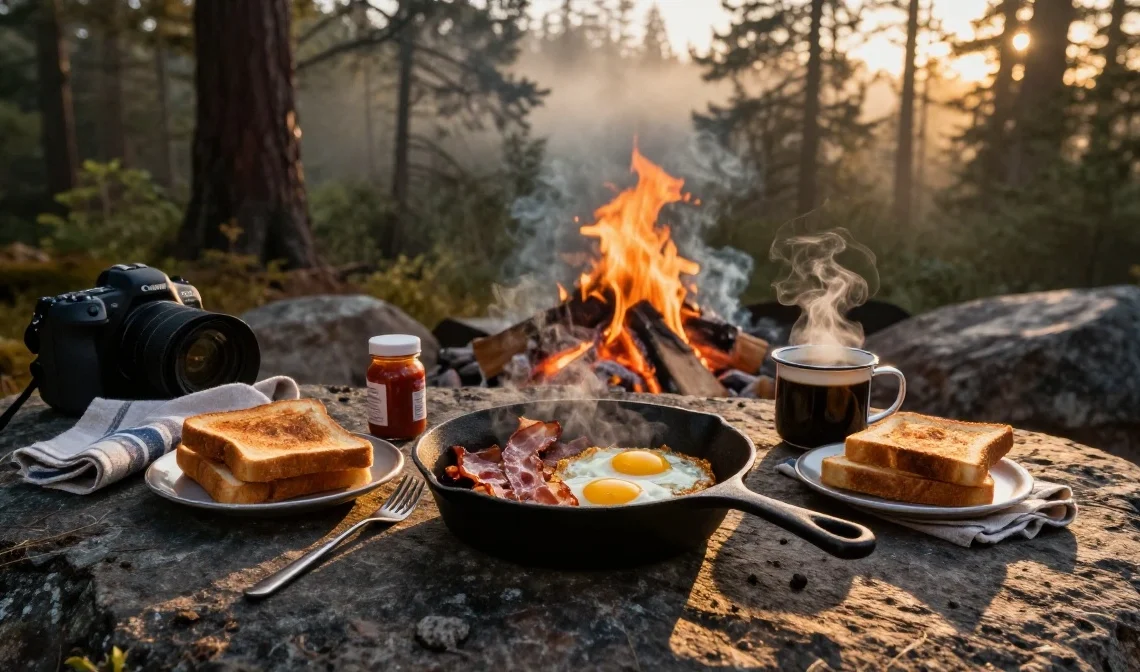
There’s a reason food tastes better outdoors. Science actually backs this up — research from the University of Sussex found that multisensory environments enhance flavor perception, and few environments are more multisensory than a campsite at dawn. The smell of woodsmoke, the sound of water moving nearby, the cold air on your face while something hot sizzles in a pan — these elements don’t just set the scene. They are the meal. A great camp breakfast isn’t just nutrition. It’s the defining memory of any camping trip worth remembering.
Morning Fire Magic: The Ritual That Makes Camp Breakfast Unforgettable
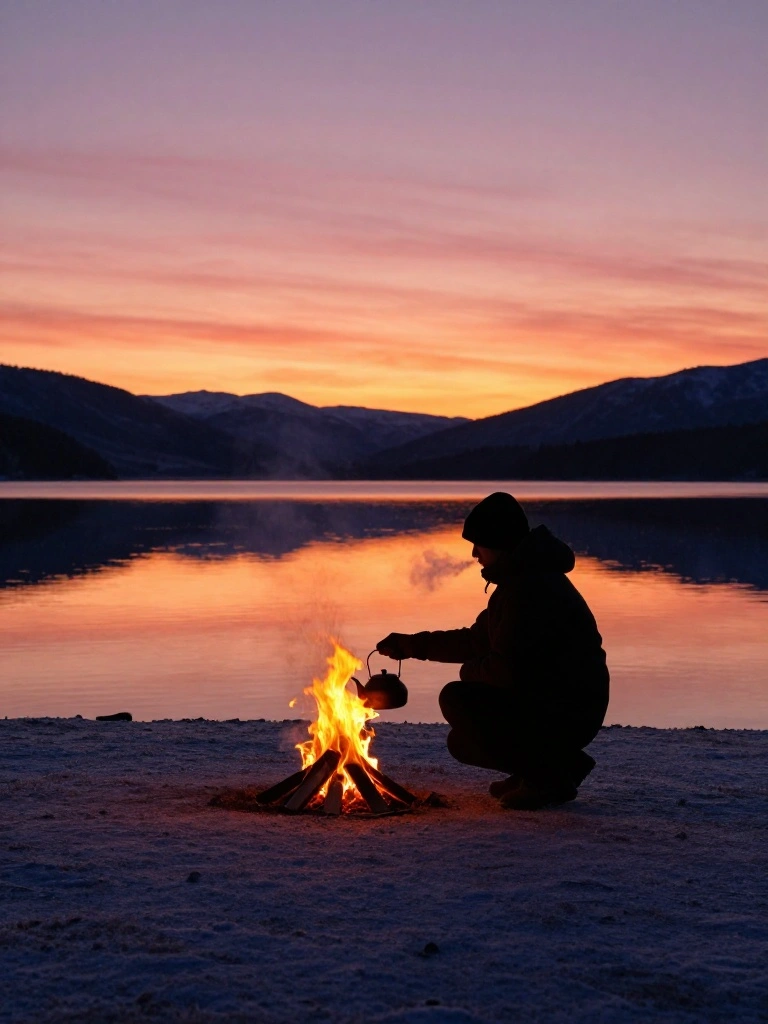
The outdoor morning cooking ritual begins before the first flame catches. It starts when you crawl out of your sleeping bag and feel the cold morning air hit your face. You’re not just making food — you’re performing one of humanity’s oldest acts. Building a fire, heating water, smelling coffee before the sun fully rises. This is campfire cooking culture at its most primal and most satisfying.
Sunrise cooking outdoors rewards those who show up for it. The light at 6AM in a forest or mountain clearing has a quality that photographers travel for and most people sleep through. Your camp breakfast eaten in that light — even if it’s just scrambled eggs on toast — carries an experiential weight that no restaurant meal can replicate. Forest dining atmosphere transforms ordinary ingredients into extraordinary meals. That’s the honest truth about outdoor morning cooking and it’s why people keep coming back to it.
Cast Iron Is King: Mastering the Skillet That Rules Every Campsite
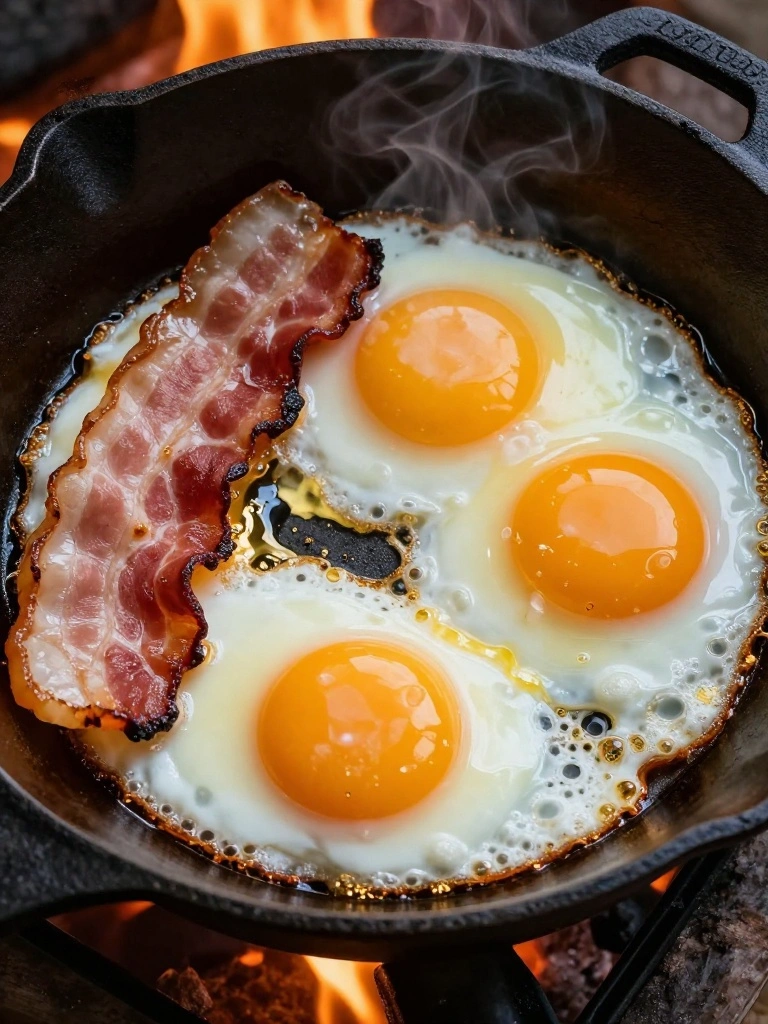
The Lodge Cast Iron camp skillet is arguably the most versatile piece of camp cooking equipment ever made. It handles direct flame, coal beds, and camp stove breakfast setups with equal competence. It distributes heat evenly across its surface — critical for cooking eggs and pancakes without hotspots that burn one section while leaving another underdone. Cast iron cooking outdoors requires some knowledge but rewards that knowledge generously over decades of reliable use.
Traditional campfire breakfast with cast iron means seasoning your skillet before you leave home. A well-seasoned pan releases eggs cleanly and adds a subtle depth of flavor that no nonstick pan can approach. The cast iron skillet camp breakfast routine is simple: preheat the pan over medium flame for three minutes before adding fat, let the fat shimmer before adding food, and never rinse the pan with soap after use. REI camp cooking gear sections stock cast iron accessories — lid lifters, trivets, and leather handle covers — that make the full cast iron camp kitchen genuinely manageable in the field.
Camp Breakfast Classics That Taste 10x Better Under an Open Sky
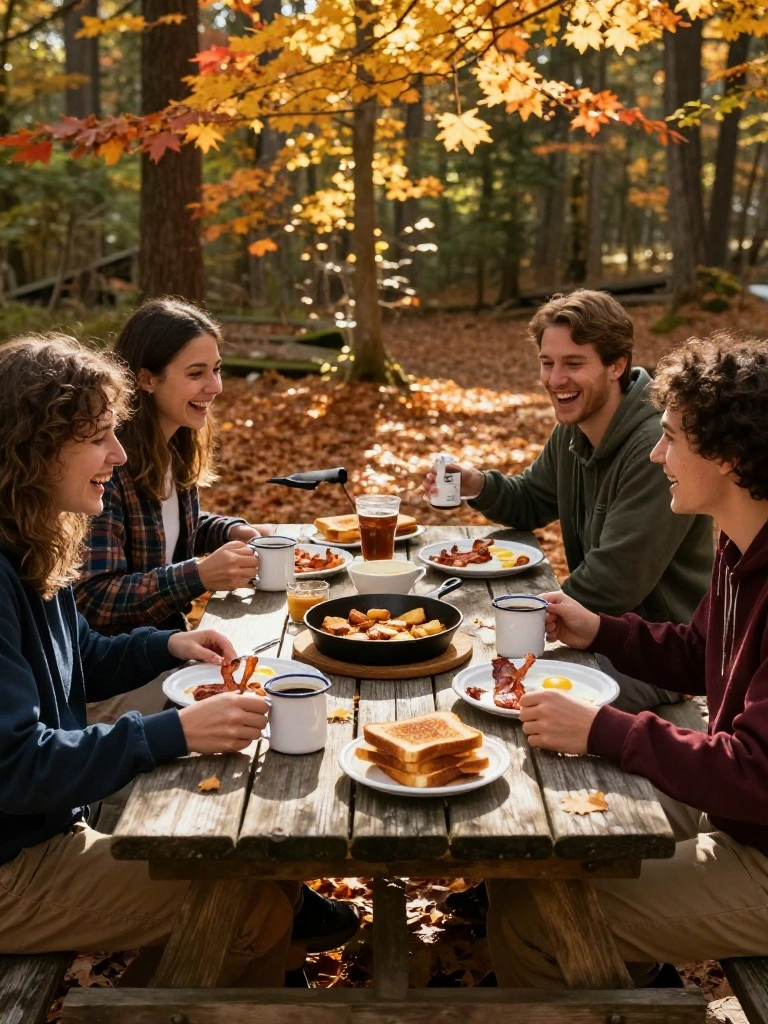
Campfire eggs and bacon is the archetype. It’s simple, fast, and produces a smell that gets everyone out of their sleeping bags without being called twice. The fat from the bacon seasons the pan. The eggs go in after the bacon comes out. You deglaze with nothing because the pan drippings are the sauce. Full camp breakfast with bacon eggs and toast — bread held on a stick over coals until golden — is a complete meal that takes twelve minutes and produces zero regret.
Campfire hash brown potatoes elevate the classic breakfast into something genuinely special. Shred or thinly slice potatoes at home, par-cook them in boiling water for five minutes, drain and dry them completely, then pack in a sealed bag. At camp, they hit the hot cast iron with butter and cook to a deep golden crust in eight minutes. A camp breakfast egg scramble goes on top with cheese melted over everything just before serving. This is easy camp cooking at its most satisfying — maximum flavor, minimal technique, universal appeal.
| Classic Camp Breakfast | Cook Time | Equipment | Difficulty |
|---|---|---|---|
| Bacon and eggs | 12 min | Cast iron skillet | Easy |
| Hash browns | 10 min | Cast iron skillet | Easy |
| Campfire toast | 5 min | Long fork or stick | Very Easy |
| Breakfast burrito | 15 min | Skillet + foil | Easy |
| Camp oatmeal | 8 min | Pot | Very Easy |
| French toast | 12 min | Skillet | Easy |
Dutch Oven Sorcery: The One Pot That Feeds a Whole Campsite Family
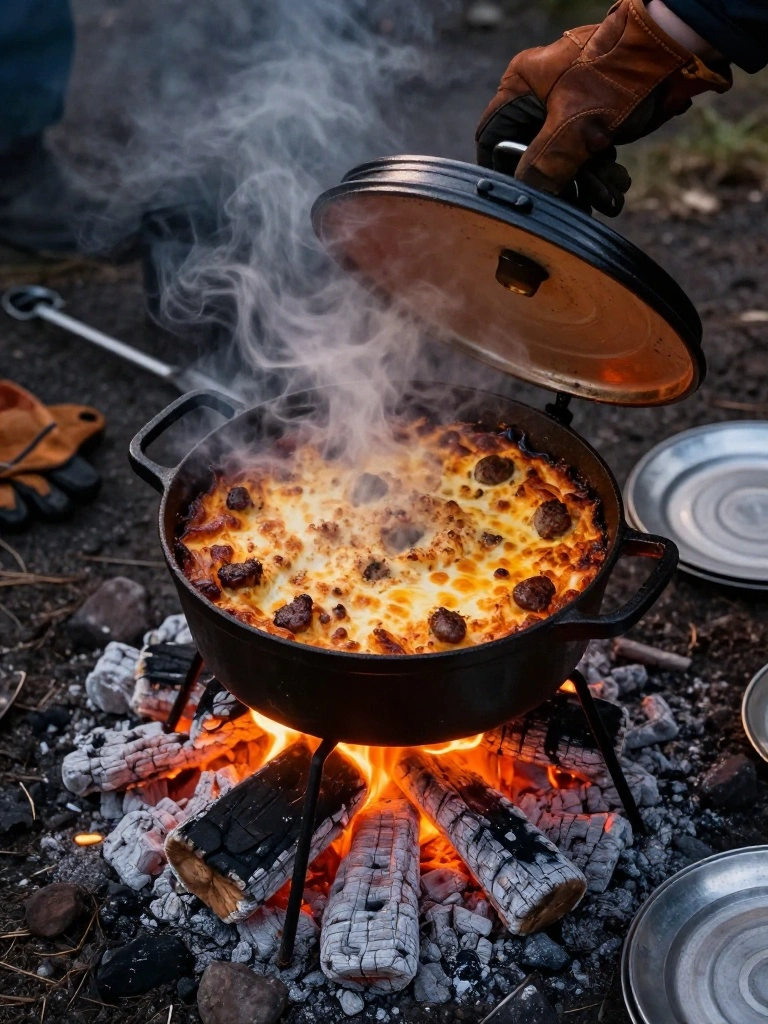
Dutch oven breakfast camping operates on a different scale than skillet cooking. A 12-inch Lodge Dutch oven holds enough food to feed eight to ten people in a single cook cycle — which makes it the non-negotiable centerpiece of camping breakfast for large groups. The magic comes from the lid’s ability to trap steam and create an oven environment over open coals. You place coals both beneath the pot and on top of the lid and the food inside cooks from all directions simultaneously.
One pot camping breakfast in a Dutch oven ranges from simple egg scrambles to elaborate casseroles. A breakfast casserole built the night before — layers of bread, sausage, egg mixture, and cheese assembled cold and refrigerated in the Dutch oven insert — goes straight onto coals in the morning and emerges thirty minutes later as a fully set, golden-topped centerpiece. Biscuits and gravy camping recipe in a Dutch oven produces biscuits with a genuine rise and a golden crust that no camp stove can replicate. The communal outdoor dining experience around a Dutch oven feels like a meal designed by the campfire itself.
The Foil Packet Revolution: No Pan No Mess No Compromise on Flavor
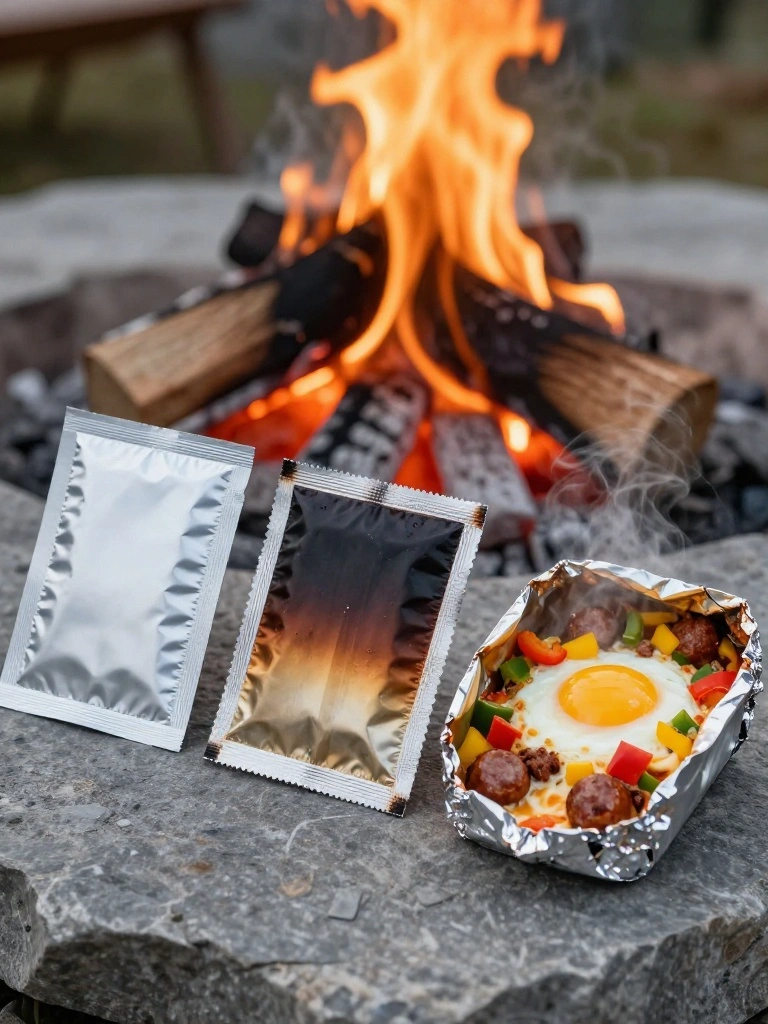
Foil packet breakfast camping solves the camp cooking cleanup problem so completely that it feels like cheating. You build each packet at home — eggs cracked into the foil packet, diced bell pepper, breakfast sausage crumbles, cheddar, salt, pepper — seal it tight, pack it cold, and cook it directly on coals for twelve to fifteen minutes in the morning. No pan to wash. No spatula to lose. No scramble timing to stress over. Tinfoil packet egg breakfast delivers a complete hot meal with the kind of efficiency that experienced campers appreciate deeply.
Campfire stuffed pepper breakfast is the foil packet method elevated to a centerpiece dish. Halve a bell pepper lengthwise, remove the seeds, crack one egg into each half, add breakfast sausage and cheese, wrap in double-layer heavy-duty foil, and cook on the grill grate over medium coals for 18 to 20 minutes. The pepper softens into a edible vessel and the egg sets perfectly inside. Camp breakfast ideas with minimal cleanup don’t get more practical than this — the foil is your cooking vessel, your serving container, and your only dish. Fold it up and pack it out per Leave No Trace cooking guidelines.
Freeze Dried and Dehydrated Breakfast: The Truth Backcountry Hikers Know
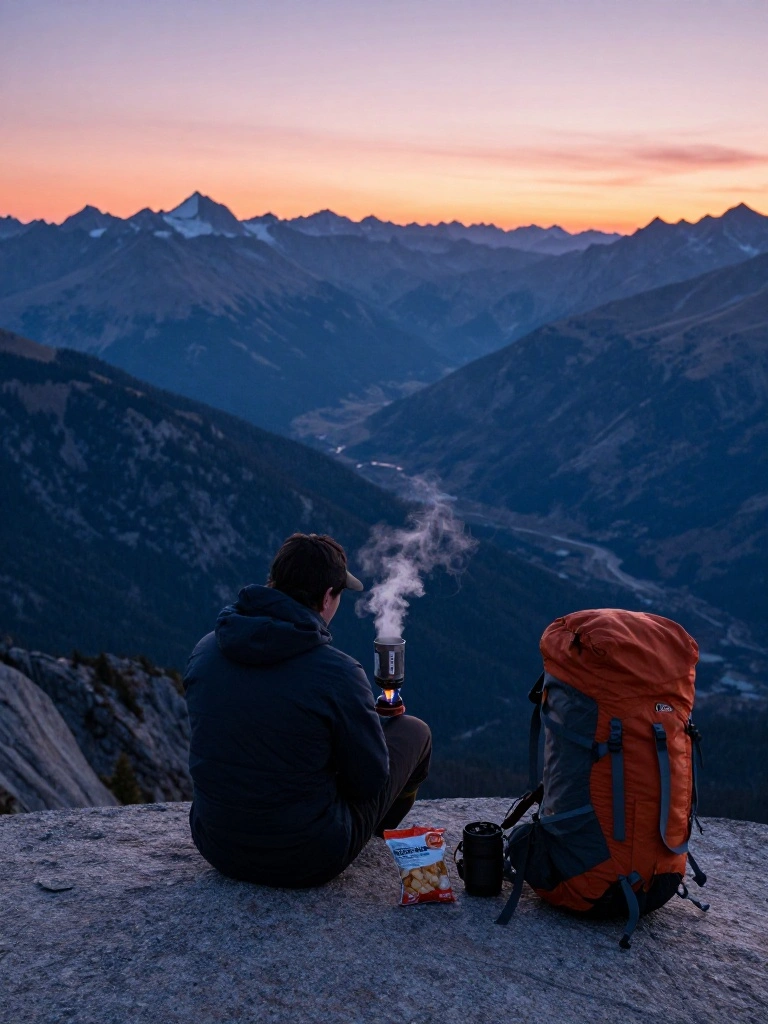
Freeze dried breakfast camping and dehydrated camping breakfast meals carry a reputation problem they’ve mostly outgrown. The Mountain House, Backpacker’s Pantry, and Good To-Go products of today bear almost no resemblance to the chalky, bland emergency rations of twenty years ago. Backpacking breakfast recipes in the modern freeze-dried category include granola with milk and blueberries, huevos rancheros, and even chilaquiles — all reconstituted with boiling water in under ten minutes with genuinely respectable flavor and real nutritional density.
Wilderness nutrition and fueling for multi-day backcountry trips demands caloric efficiency above all else. A freeze-dried breakfast at 400 to 600 calories weighing under three ounces is a logistical miracle for anyone carrying a full week’s worth of food on their back. Granola and powdered milk camping is the classic lightweight alternative — high calorie, zero cooking required, infinitely customizable with nuts, dried fruit, and protein powder additions. Jetboil camp cooking system handles the boiling water requirement for freeze-dried meals in under two minutes which makes the entire morning routine — wake, boil, eat, pack — achievable in fifteen minutes from sleeping bag to trail.
Camp Breakfast Meal Prep: Pack Smart or Suffer Hungry Every Morning
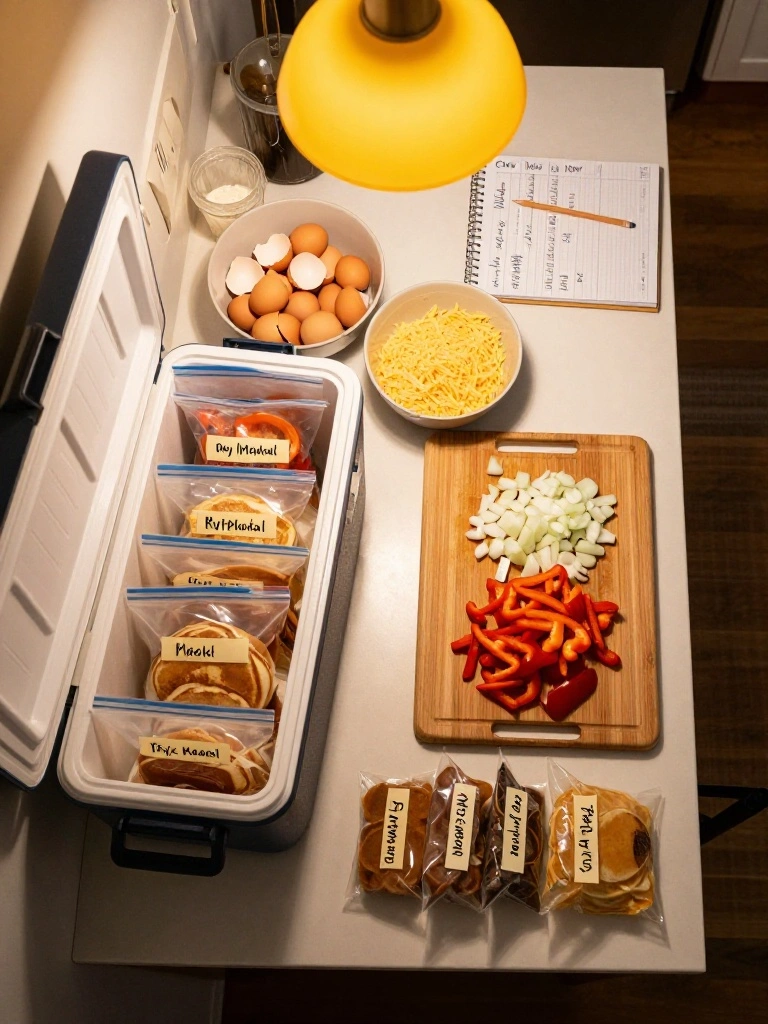
Camp breakfast meal prep ideas begin at home, not at the campsite. The most common mistake new campers make is arriving at the site with unprocessed ingredients and no plan — loose eggs that break, unpotted potatoes that take forty minutes to cook, blocks of cheese that require a cutting board. Make ahead breakfast for camping weekend preparation means cracking eggs into a sealed container, pre-shredding cheese, pre-chopping vegetables, and pre-measuring dry ingredients into labeled bags before a single item goes into the cooler.
you may also like this:22 Hawaii Vacation Ideas for Your Dream Island Getaway
Campsite meal organization runs on a system. Label every ingredient bag with the meal it belongs to and the day it’s scheduled for. Organize your Yeti camp cooler food storage so that day-one ingredients sit on top and day-three ingredients sit at the bottom under ice. Make ahead camping breakfast items like overnight oats for camping trips — assembled the evening before in sealed mason jars and stored cold overnight — eliminate all morning cooking for days when an early start matters. Adventure meal planning done thoroughly at home transforms camp mornings from stressful scrambles into relaxed, enjoyable rituals.
Eggs Over a Campfire: Techniques Every Outdoor Cook Needs to Know
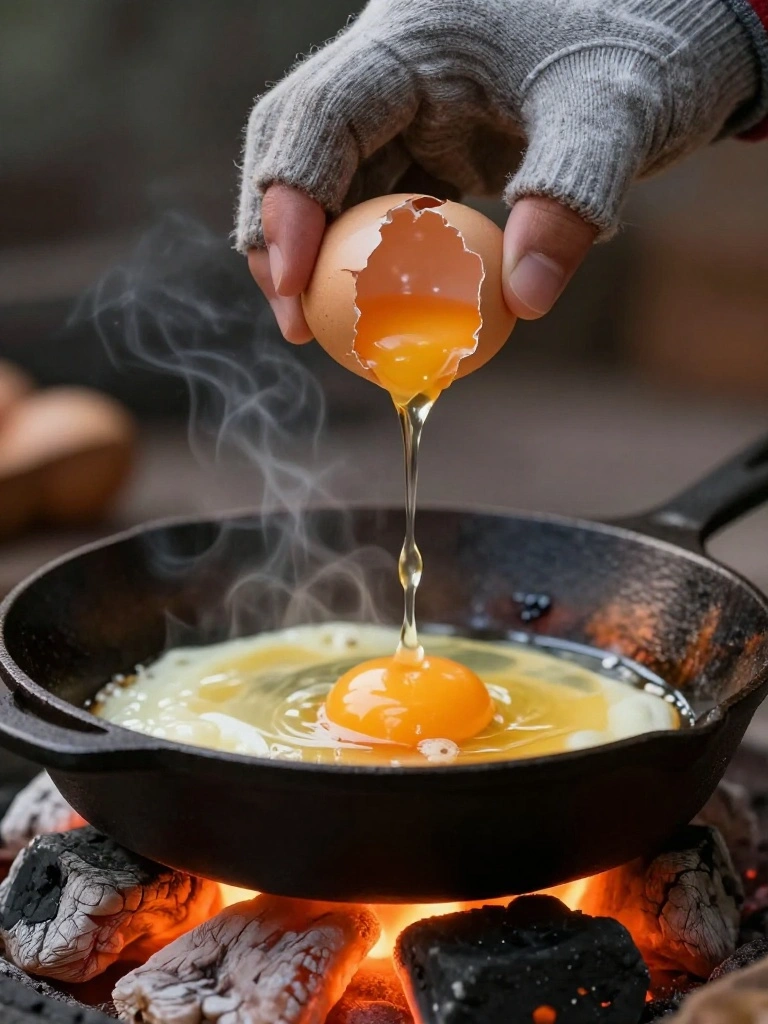
Camp breakfast cooked over open fire produces eggs that taste categorically different from stovetop versions. The subtle smokiness that the campfire imparts to anything cooked over it adds a flavor dimension that no kitchen can replicate. Fire cooking fundamentals for eggs begin with heat management — eggs hate high heat. They need a medium-low flame or a coal bed that’s past its most intense phase. A bed of glowing orange coals with no visible flame is the ideal egg-cooking environment.
Eggs in a bag camping method is the technique that changed everything for campers who love eggs but hate the washing up. Crack two to three eggs into a heavy-duty zip-lock freezer bag, add your additions — cheese, peppers, ham, hot sauce — seal the bag removing all air, and lower it into a pot of simmering water for twelve to thirteen minutes. The eggs cook in the bag and you eat directly from it. Camp breakfast quesadilla recipe uses pre-scrambled eggs brought from home in a sealed container — cooked in a skillet with black beans, cheese, and salsa, then folded in a tortilla and pressed flat for two minutes per side. Both techniques demonstrate that easy breakfast ideas for camping trips don’t require sacrifice.
Pancakes and French Toast at 6AM: Sweet Morning Gold Without the Kitchen
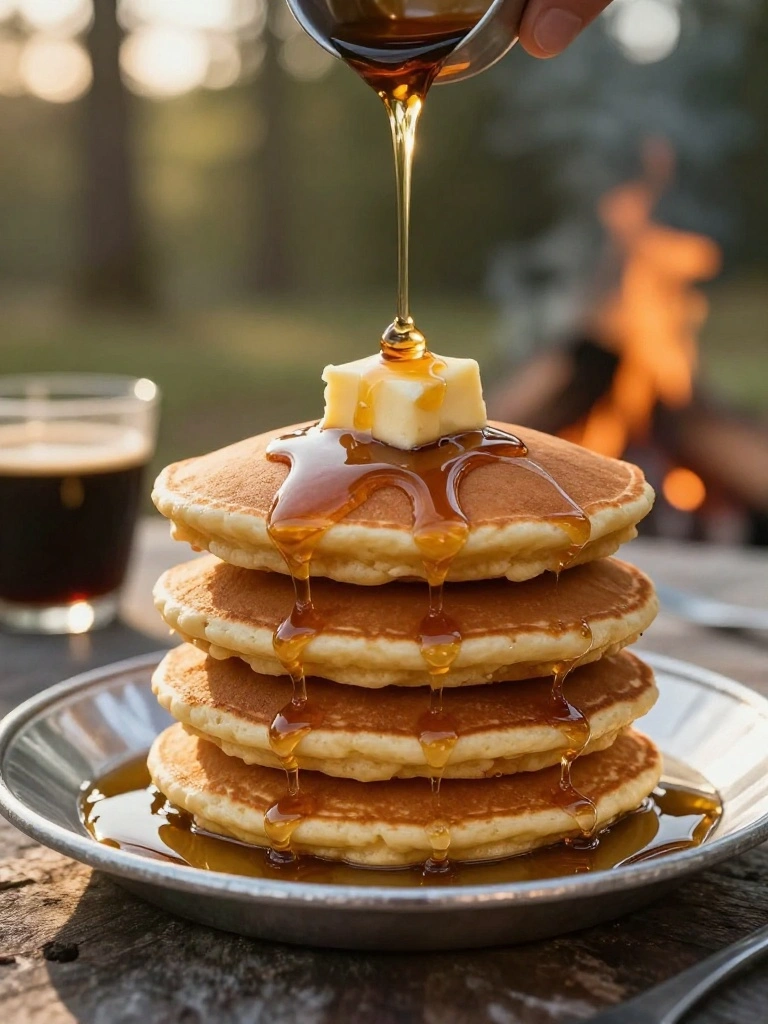
Camping pancakes recipe success depends almost entirely on your batter preparation. Mix all dry ingredients — flour, baking powder, salt, sugar — at home and store them in a sealed zip-lock bag. At camp, add powdered egg and powdered milk to the bag, shake, add water until the consistency is slightly thicker than heavy cream, and cook on a medium-heat greased skillet. Camp pancake mix recipe made this way produces pancakes indistinguishable from home versions in texture and flavor. Add wild blueberries picked near the campsite if the season allows.
Camp french toast recipe requires slightly more preparation but delivers results that justify every extra minute. Beat eggs and milk together at home and store the mixture sealed and cold. At camp, dip thick bread slices — sourdough or brioche — in the egg mixture and cook on buttered cast iron over medium-low flame for three to four minutes per side until deep golden. Dust with cinnamon sugar before serving. Campfire cinnamon sugar toast is the ten-second simpler version — butter bread heavily, dust generously with cinnamon sugar, and hold over flame or coals on a long fork until the sugar caramelizes and bubbles. Both are quick camping breakfast ideas that feel genuinely indulgent in an outdoor setting.
Protein First: Fueling Big Hiking Days Starts with Breakfast Not a Bar
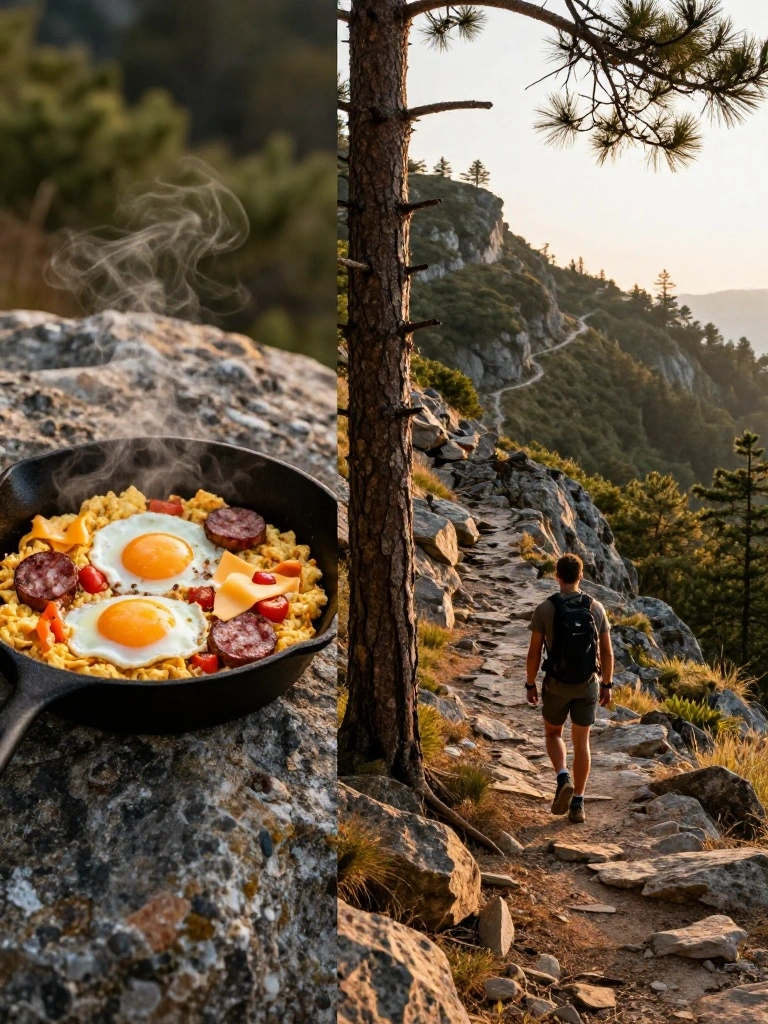
High energy breakfast for hiking day needs to deliver between 400 and 700 calories with a protein content of at least 25 grams to sustain a four-to-six-hour trail effort without bonking. Wilderness nutrition and fueling research consistently shows that protein at breakfast extends satiety significantly longer than carbohydrate-heavy starts — critical when your next meal opportunity might be four miles and three hours away on an exposed ridgeline. Protein packed camping breakfast for hikers prioritizes eggs, sausage, nuts, and nut butters over pancakes and pastry as the primary morning fuel source.
High protein camping breakfast configurations that deliver real trail performance include a three-egg scramble with sausage and cheese at approximately 45 grams of protein, a nut butter packet on whole grain tortilla with protein granola at approximately 28 grams, and a pre-made egg and cheese breakfast burrito stored cold and reheated in foil at approximately 35 grams. Trail food and fuel philosophy treats breakfast as performance nutrition rather than comfort food — a distinction that separates campers who feel strong at mile eight from those who start fading at mile four. Backpacker Magazine breakfast recipes regularly publishes calorie and protein density analyses for camp breakfast configurations worth studying before any serious backcountry trip.
One Pan Camp Breakfast Ideas That Minimize Cleanup and Maximize Flavor
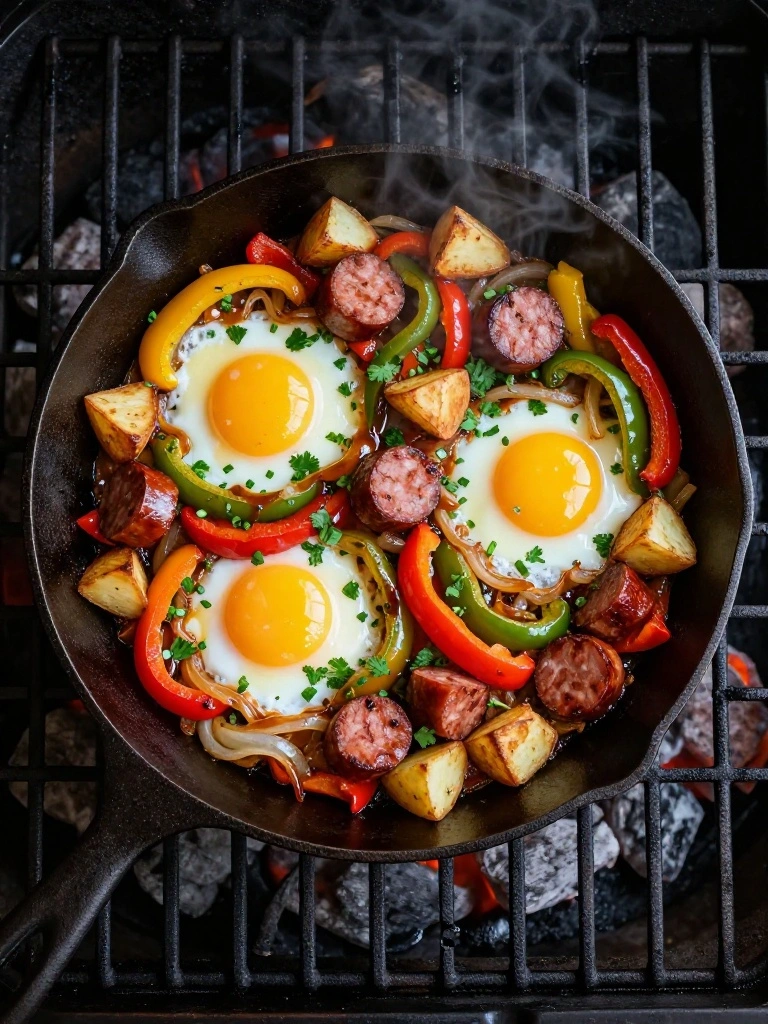
One pan camp breakfast ideas are the backbone of smart camp cooking. Everything goes into a single skillet in sequence — fat first, protein second, vegetables third, eggs last — and each ingredient benefits from the flavors left behind by the one before it. Skillet breakfast camping with this build-your-own approach means you never start with a clean-tasting ingredient because everything picks up the accumulated flavor of the whole cook. That’s not a compromise. That’s a technique.
Camp breakfast sausage and pepper is the one-pan formula at its most efficient. Brown sliced sausage first. Remove and rest on a plate. Add diced bell peppers and onions to the sausage fat. Cook until soft and beginning to caramelize. Add pre-cooked diced potatoes and let them brown in the same fat. Return the sausage. Crack four eggs over the whole assembly, cover with a lid for three minutes until eggs are just set. Camp breakfast pizza on skillet uses the same logic in an entirely different direction — pre-made pizza dough pressed flat in the oiled skillet, topped with sauce, cheese, and breakfast sausage, covered with a lid and cooked over medium-low heat for twelve minutes until the crust is crisp and the cheese is bubbling. One pan. Maximum flavor. Minimum regret.
The No Cook Camping Breakfast That Serious Minimalists Swear By
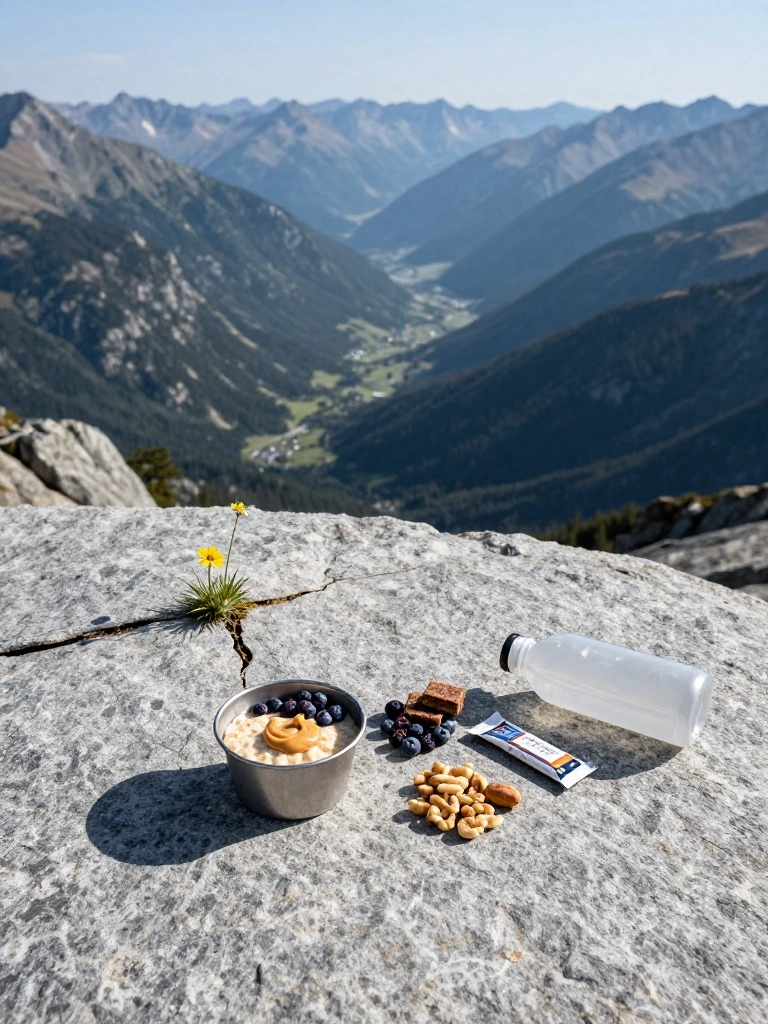
No cook camping breakfast is not a concession — it’s a philosophy. Ultralight backpackers, experienced thru-hikers, and early-start summiteers all embrace the no-cook morning as a deliberate efficiency choice. Camping breakfast ideas without stove center on foods that are calorie-dense, nutritionally complete, and require zero preparation beyond opening a package. Granola and powdered milk camping mixed cold in a cup delivers 400 calories and 15 grams of protein in under sixty seconds of preparation. Add a handful of nuts and some dried fruit and the calorie and nutrient count climbs significantly.
Camp breakfast trail mix bowl is the no-cook approach evolved into something genuinely satisfying. Combine rolled oats with chia seeds, dried blueberries, chopped walnuts, sunflower seeds, honey packets, and coconut flakes in a bowl with cold water or cold powdered milk and let it sit for five minutes while you pack your camp. The oats soften enough to eat without cooking and the whole assembly provides sustained energy that carries you well past the morning’s first climb. Camping avocado toast — a ripe avocado brought from home and eaten on day one or two, mashed onto dense crackers with salt, chili flakes, and a lemon packet — is the minimalist camp breakfast that Outside Magazine camp cooking readers have made something of a cliché but that works beautifully for exactly what it is.
Dutch Oven Cinnamon Rolls at Dawn: The Camp Breakfast Nobody Expects
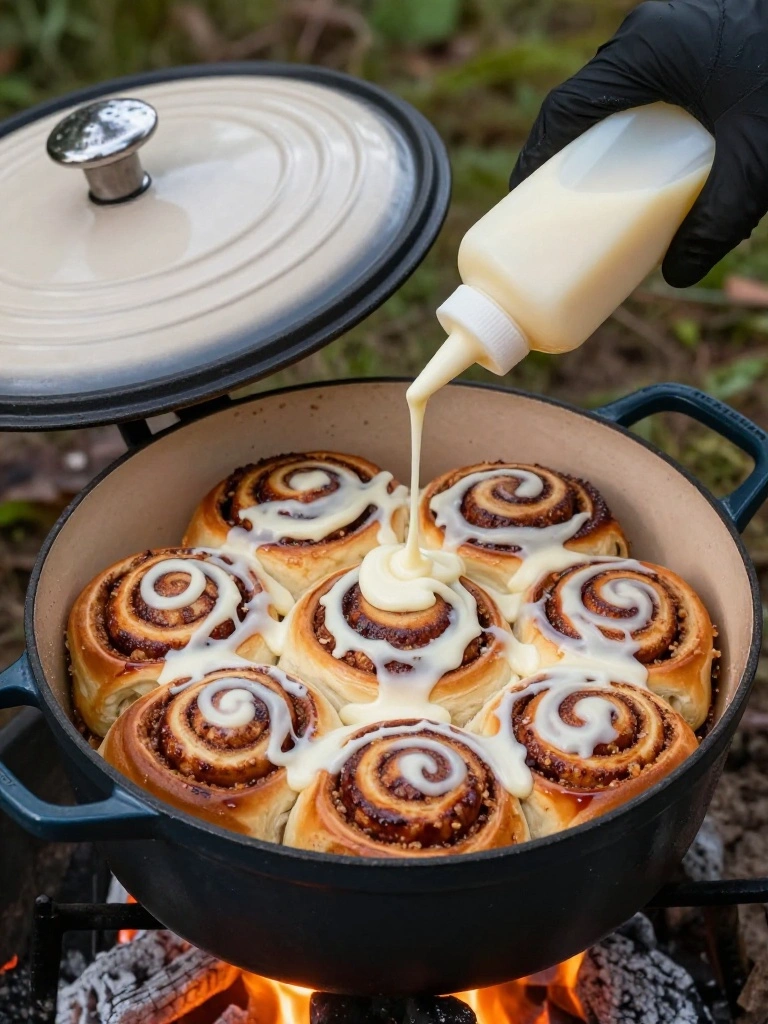
Campfire cinnamon rolls dutch oven is the single most impressive camp breakfast you can produce and it costs almost no extra effort if you prepare the dough at home the night before. Use any standard cinnamon roll recipe, cut and arrange the rolls in a Dutch oven insert lined with parchment paper, cover and refrigerate overnight in the cooler. At camp, set the Dutch oven on twelve coals with eight coals on the lid and bake for twenty-five to thirty minutes. The rolls emerge golden, fragrant, and fully risen — with cream cheese frosting drizzled over them at the campsite.
The campfire banana foster breakfast operates on a similar principle of unexpected luxury. Halve bananas lengthwise, place cut-side down in a buttered cast iron skillet over medium coals, add brown sugar, butter, cinnamon, and a splash of bourbon if the occasion calls for it, and cook for five minutes until the sugar caramelizes into a deep amber sauce. Spoon over instant oatmeal or camp pancakes. Campfire cooking culture at its finest is exactly this — taking a restaurant-quality concept and executing it with camp equipment in a way that produces something genuinely better than its indoor counterpart because the setting transforms the experience. Nobody expects a bananas foster at a campsite and that’s exactly why it works.
Cold Morning Fuel: Warm Camp Breakfasts That Fight the Chill Brilliantly
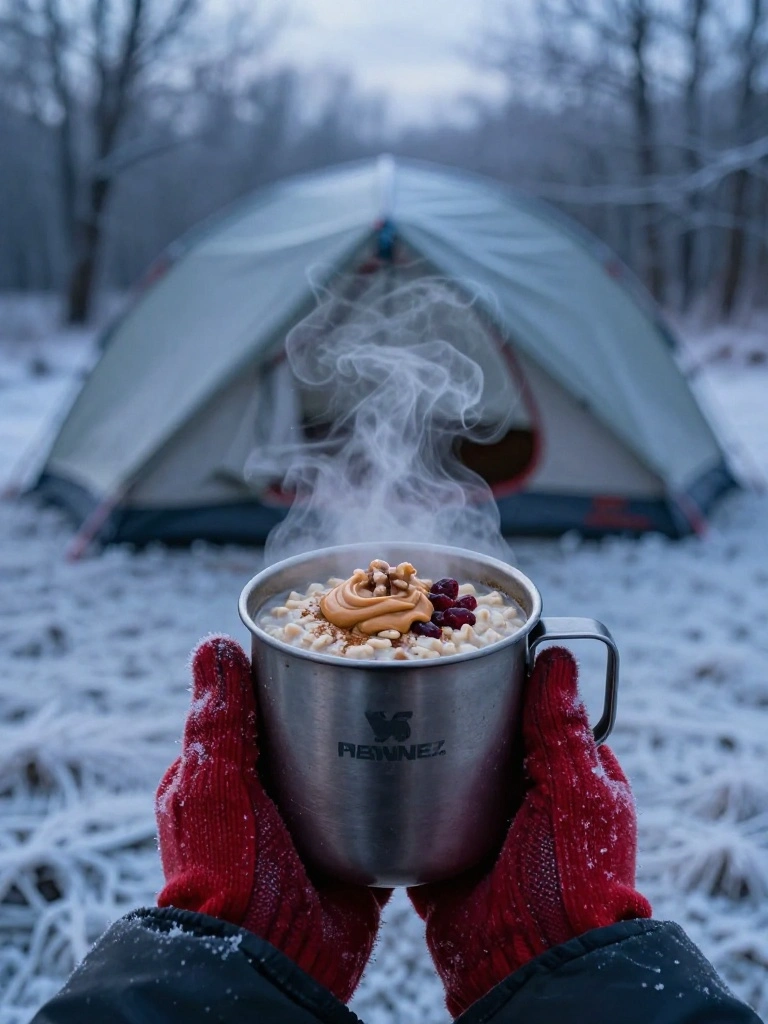
Warm breakfast ideas for cold mornings camping serve a function beyond nutrition — they regulate core body temperature at the moment when the body most needs support transitioning from sleep-warm to active-warm. A cold morning at elevation — 35°F at 5AM at a mountain campsite — demands food that heats from the inside out. Morning warmth through food is a physiological reality that experienced mountain campers plan for specifically rather than treating as a bonus.
Camping oatmeal ideas for cold mornings go beyond the standard instant packet when you approach them thoughtfully. Steel-cut oats cooked slowly in a covered pot over low flame for fifteen minutes produce a texture and heartiness that instant oats can’t match. Add peanut butter for fat and protein, dried cranberries for quick sugar, and cinnamon for warmth. Instant oatmeal camping packets are the compromise option — faster and easier but nutritionally lighter. Fortify them with powdered peanut butter, chia seeds, and a handful of walnuts from your trail mix supply. Coleman camp stove breakfast cooking in cold conditions benefits from a windscreen around the burner — cold air robs heat from the flame and extends cook times significantly.
Camp Breakfast for Groups: Feeding Ten People Before the Trails Open
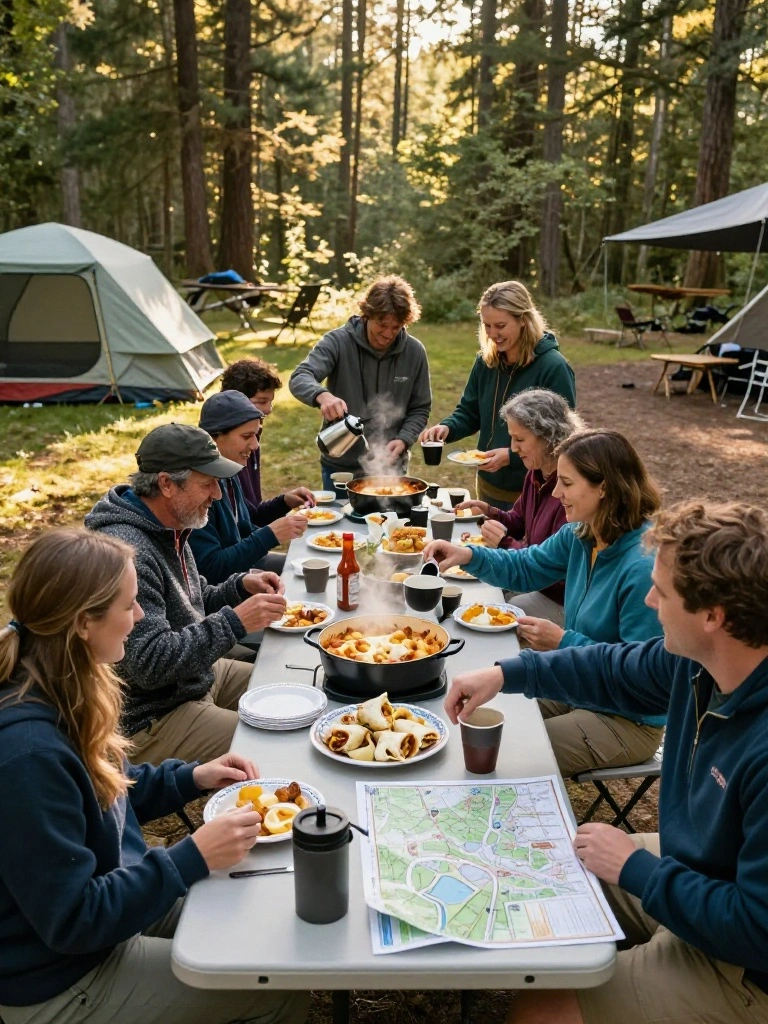
Camping breakfast for large groups requires a fundamentally different planning approach than individual or couples camp cooking. You’re managing multiple appetites, dietary preferences, and hunger levels simultaneously while working with limited equipment over a single heat source. Campsite meal organization for groups starts with a designated breakfast coordinator — someone who knows the menu, the prep sequence, and the timing so that everything arrives hot at the same time rather than in a staggered, lukewarm parade.
Camp breakfast meal prep ideas for groups lean heavily toward batch cooking — large quantities of a single recipe rather than multiple different dishes cooked to order. A double-batch campfire frittata recipe in a 12-inch Dutch oven feeds eight adults: twelve eggs, diced bell peppers, onions, sausage crumbles, two cups shredded cheese, salt, and pepper, all assembled and baked over coals for twenty-five minutes. Camping breakfast burritos pre-assembled at home — scrambled eggs, black beans, cheese, salsa, wrapped in foil — are reheated directly on the grill grate for ten minutes and handed out assembly-line style. KOA campground breakfast ideas for large family sites often suggest this burrito approach specifically because it scales effortlessly from four people to fourteen without changing the preparation method.
Vegetarian and Vegan Camp Breakfasts That Don’t Feel Like a Compromise
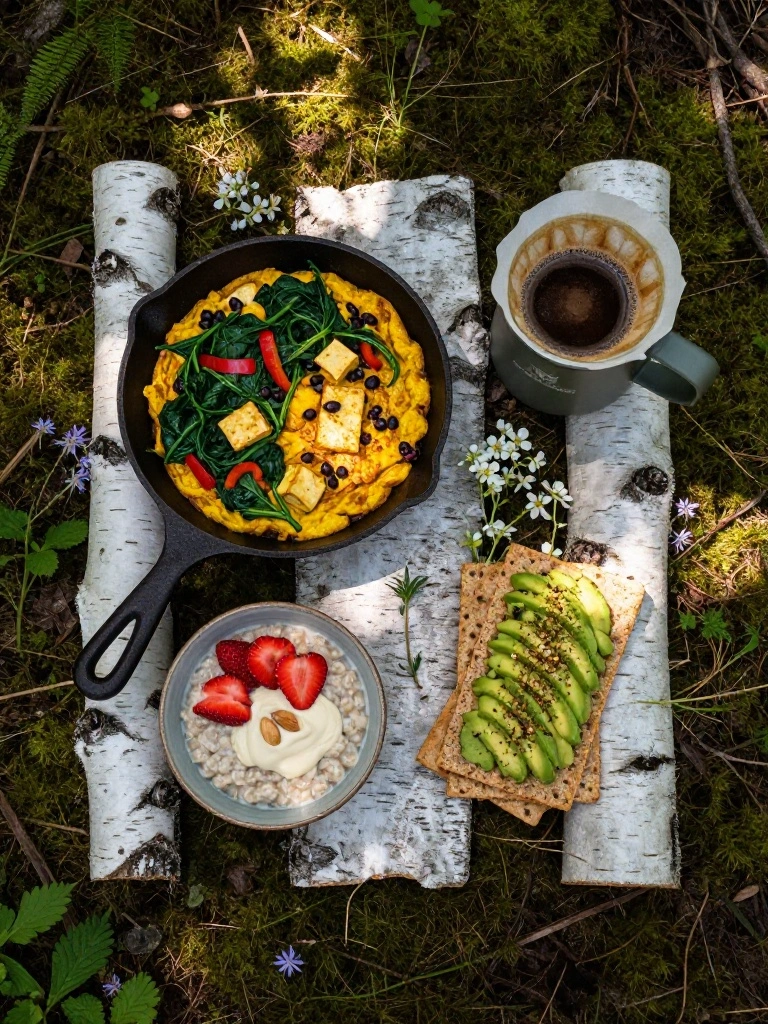
Vegetarian camp breakfast ideas have expanded dramatically beyond the egg-heavy default that dominated camp cooking for decades. Plant-based proteins — canned chickpeas, black beans, firm tofu sealed for travel, tempeh — perform beautifully over a campfire when seasoned aggressively and cooked with high heat for a proper sear. A camp breakfast egg scramble built with crumbled firm tofu instead of eggs — seasoned with turmeric for color, nutritional yeast for umami, and black salt for a sulfurous egg-like depth — is genuinely satisfying as a standalone breakfast protein.
Healthy camping breakfast options for vegan campers include overnight oats for camping trips made with plant-based milk powder, chia seeds, and freeze-dried fruit — assembled the night before and eaten cold in the morning with zero cooking required. Camping avocado toast on dense seeded crackers with everything bagel seasoning delivers healthy fats and complex carbohydrates in a no-cook format that works for day one and day two before the avocados soften past their prime. Gluten free camping breakfast options overlap significantly with vegan options — rice-based granola, certified GF oats, and grain-free trail mix bowls serve both dietary needs simultaneously. The Spruce Eats camping recipes and Epicurious camping food ideas both maintain dedicated vegetarian and vegan camp cooking sections worth bookmarking before your trip.
Campfire Coffee Rituals: The Morning Brew That Completes Every Breakfast
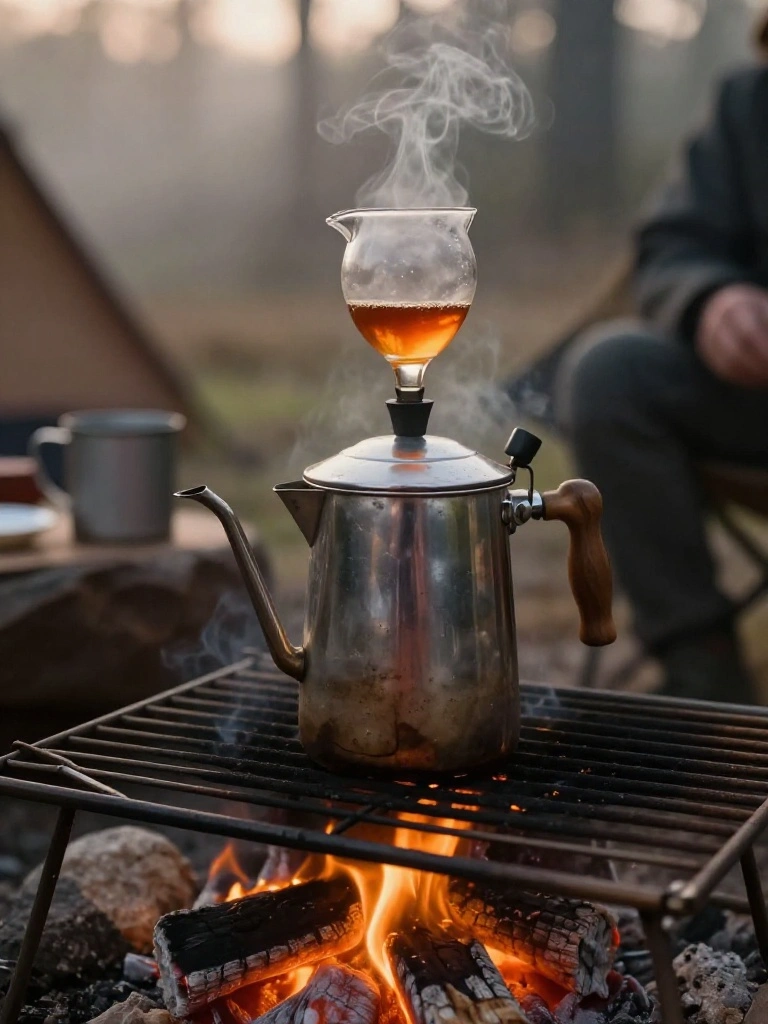
Camp coffee morning routine is a deeply personal ritual for most campers and getting it right matters more than most people admit openly. The coffee is not supplementary to the camp breakfast — for many campers it is the breakfast, arriving first while the food cooks and setting the entire emotional tone of the morning. Camp kitchen essentials lists almost universally put the coffee system before any food-cooking equipment because the priority order is simply that clear.
Camp coffee percolator morning produces a brew with more body and temperature than most other camp coffee methods — the percolator’s boiling cycle extracts aggressively and keeps the pot hot over the fire without requiring a separate warming setup. The MSR camp stove breakfast coffee routine uses a compact lightweight pour-over dripper and a hand grinder for fresh-ground beans — a thirty-second grind and a three-minute pour produces coffee that rivals most specialty café output. Stanley camp cookware insulated mugs keep that coffee at drinking temperature for ninety minutes in cold weather — a detail that seems small until you’re sitting at a cold campsite watching the sunrise with a coffee that’s still genuinely hot. That’s the difference between a good morning and a perfect one.
Kid Friendly Camp Breakfasts That Make Young Campers Obsessed with Mornings
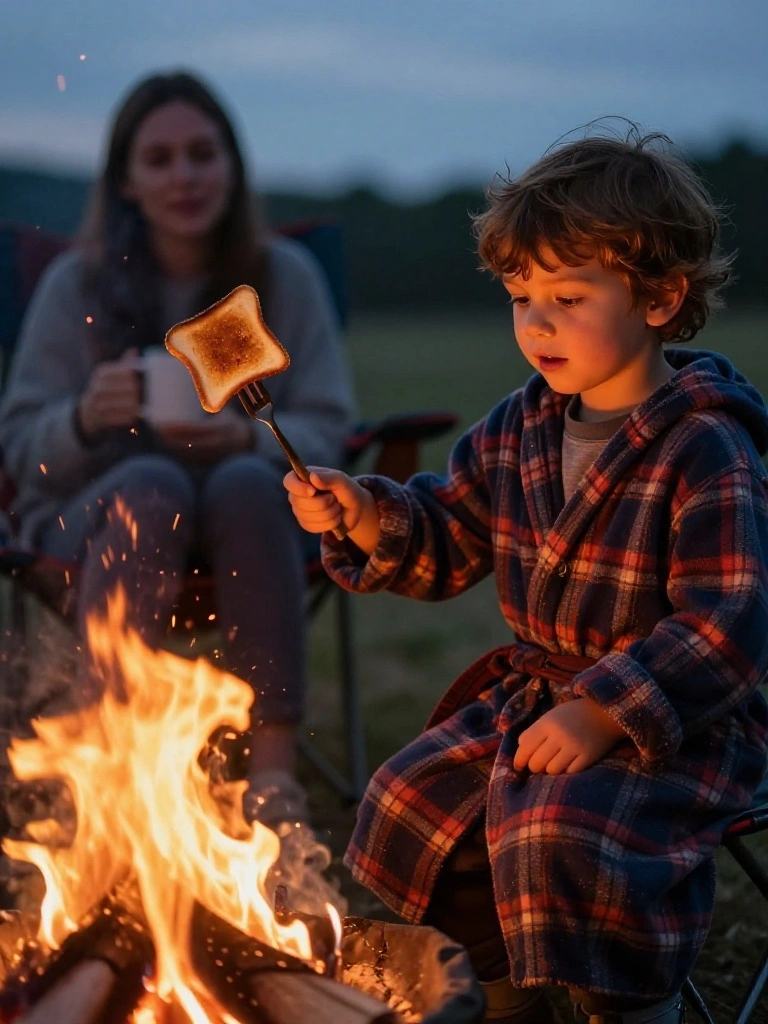
Camp breakfast ideas for families with kids succeed when the children feel involved in the cooking rather than just waiting for food to appear. Even young children can help pour ingredients into a Dutch oven, shake a zip-lock pancake batter bag, or hold a long-handled fork over the fire under supervised guidance. That participation transforms eating into an experience and the food tastes better to them because they made it. Campfire cooking culture for families is fundamentally about building memory as much as building meals.
Campfire cinnamon sugar toast on a stick is the perfect gateway camp cooking activity for kids — simple enough that they can do it independently after one demonstration, forgiving enough that an imperfect result still tastes good, and exciting enough that the firelight component makes it feel like magic. Camp pancake mix recipe cooked on a camp griddle lets kids pour their own batter and watch their pancakes bubble and set. Camping breakfast burritos assembled by the kids themselves from a station of pre-cooked fillings give even picky eaters agency over what goes into their food. Food Network camping recipes for families and KOA campground breakfast ideas for kids consistently emphasize this participation principle as the single most effective tool for creating young campers who genuinely love the camping experience.
The Romantic Campfire Breakfast for Two That Feels Like a Five Star Morning
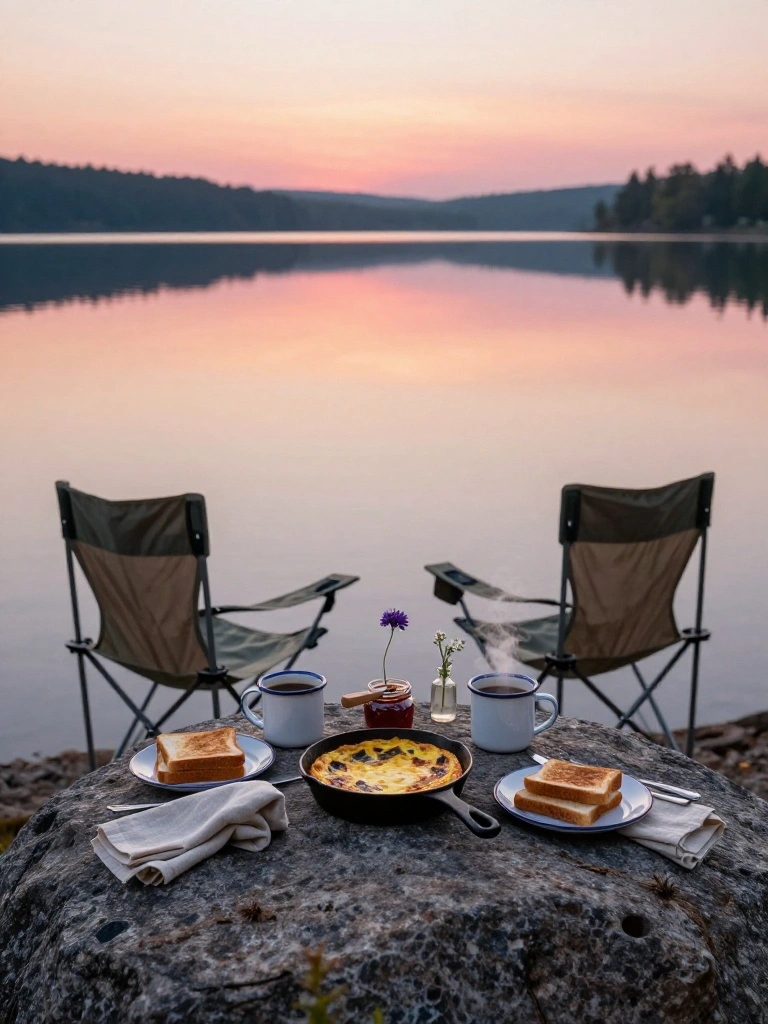
Campfire breakfast for two romantic requires one thing above all others: unhurried time. The romantic camp breakfast isn’t distinguished from the ordinary one by the ingredients. It’s distinguished by the pace. You wake up slightly before your partner. You build the fire slowly. You have the coffee ready when they emerge from the tent. The smell of the coffee is the alarm clock. This is outdoor breakfast aesthetics at its most intentional — the staging matters as much as the food.
Easy camp breakfast for solo campers scaled up to a romantic two-person version might look like a campfire frittata recipe made in a small cast iron skillet with fresh herbs, goat cheese, and sun-dried tomatoes — ingredients brought specifically for this purpose rather than defaulting to the group-camp standard of eggs and cheese. A campfire banana foster breakfast drizzled over good quality camp granola. Camp coffee percolator morning with pre-ground specialty beans measured and packed in a small jar at home. A linen napkin — one each — folded and packed deliberately. These small choices signal that the morning was planned for rather than defaulted into and the person sharing it with you will notice every single one.
High Altitude Breakfast Adjustments Every Mountain Camper Must Understand
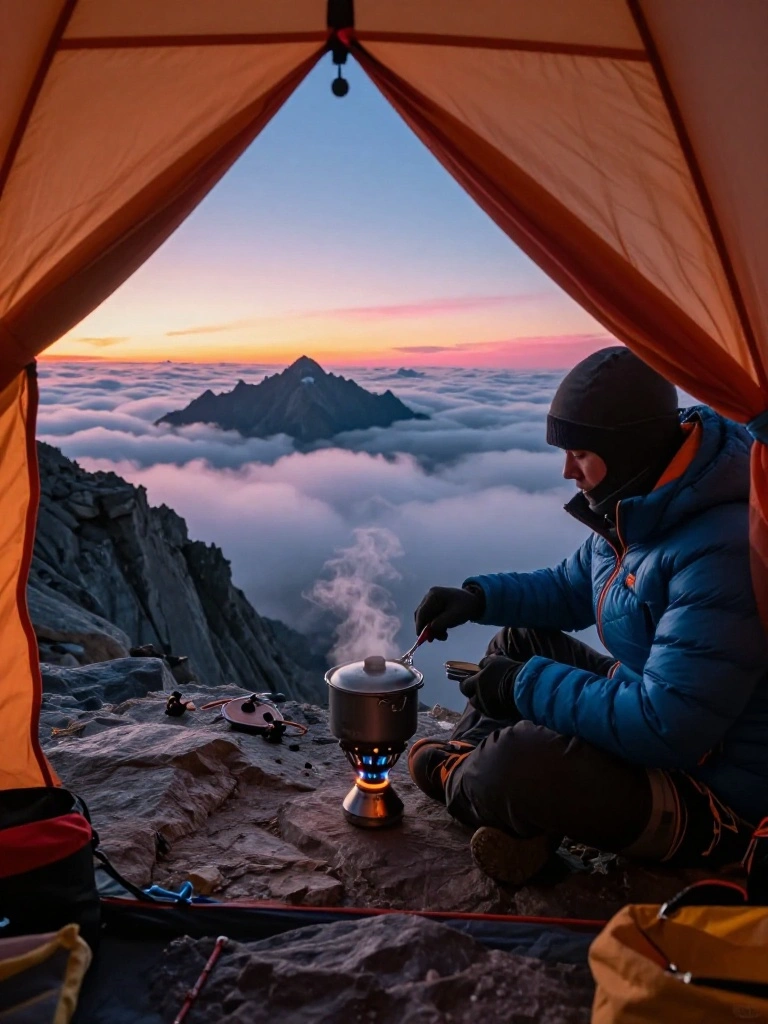
Backcountry cooking techniques change meaningfully above 8,000 feet and most campers discover this the hard way — with runny pancakes, underdone potatoes, and coffee that’s never quite hot enough. The science is simple: water boils at a lower temperature at altitude because atmospheric pressure decreases as elevation increases. At 10,000 feet, water boils at approximately 194°F rather than 212°F. Food that relies on boiling water for doneness — oatmeal, rice, pasta, freeze-dried meals — takes significantly longer to cook.
Camp breakfast egg scramble at altitude takes two to three additional minutes over the times listed in any recipe written for sea-level cooking. Camp pancake mix recipe at altitude needs baking powder reduced by about 25% or the pancakes will rise dramatically and then collapse into gummy centers. Increase liquid slightly to compensate for faster evaporation. Freeze dried breakfast camping meals designed for backcountry use already account for altitude in their rehydration instructions — follow the high-altitude instructions rather than the standard ones. The Primus camp stove cooking windscreen becomes even more important at altitude where thinner air reduces combustion efficiency by 15 to 20 percent and wind carries heat away from the burner faster.
Leave No Trace Cooking: Clean Conscience Camp Breakfast Every Single Time
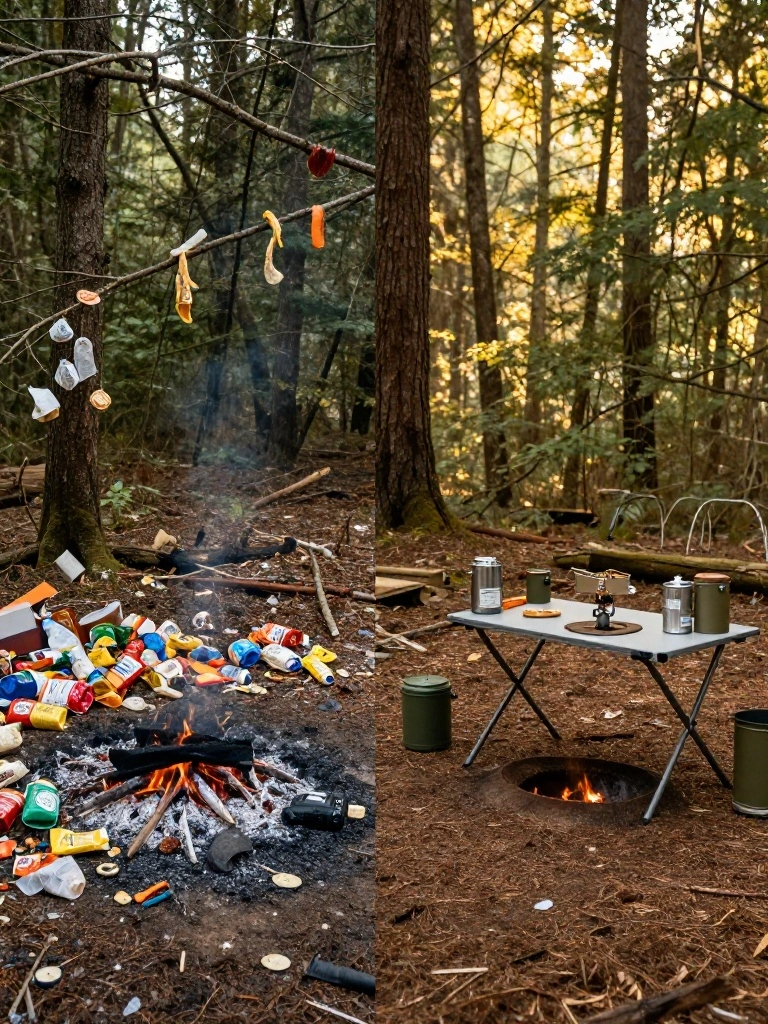
Leave No Trace cooking guidelines for camp breakfast center on four principles: minimize packaging waste before leaving home, cook only what you’ll eat, manage food scraps and cooking water responsibly, and leave the campsite looking undisturbed. National Park Service camp cooking rules in many backcountry zones additionally require bear canisters for food storage and prohibit campfires entirely in fire-risk conditions — making camp stove breakfast cooking the only legal option in those areas.
Off grid cooking solutions that comply with Leave No Trace principles begin with pre-trip repackaging — removing all excess packaging at home and storing ingredients in reusable silicone bags or lightweight containers rather than bringing commercial packaging into the backcountry. Food scraps cannot be buried, burned incompletely, or scattered — they must be packed out. Cooking water with food residue must be strained and the solids packed out, with the grey water scattered widely 200 feet from water sources, camp, and trails. GSI Outdoors camp cookset collapsible strainer lids make this grey water management genuinely easy. Bear Grylls outdoor cooking emergency cooking techniques aside, following Leave No Trace principles protects the ecosystems that make these camping experiences worth having in the first place.
Camp Breakfast Gear That Separates Serious Campers From Weekend Warriors
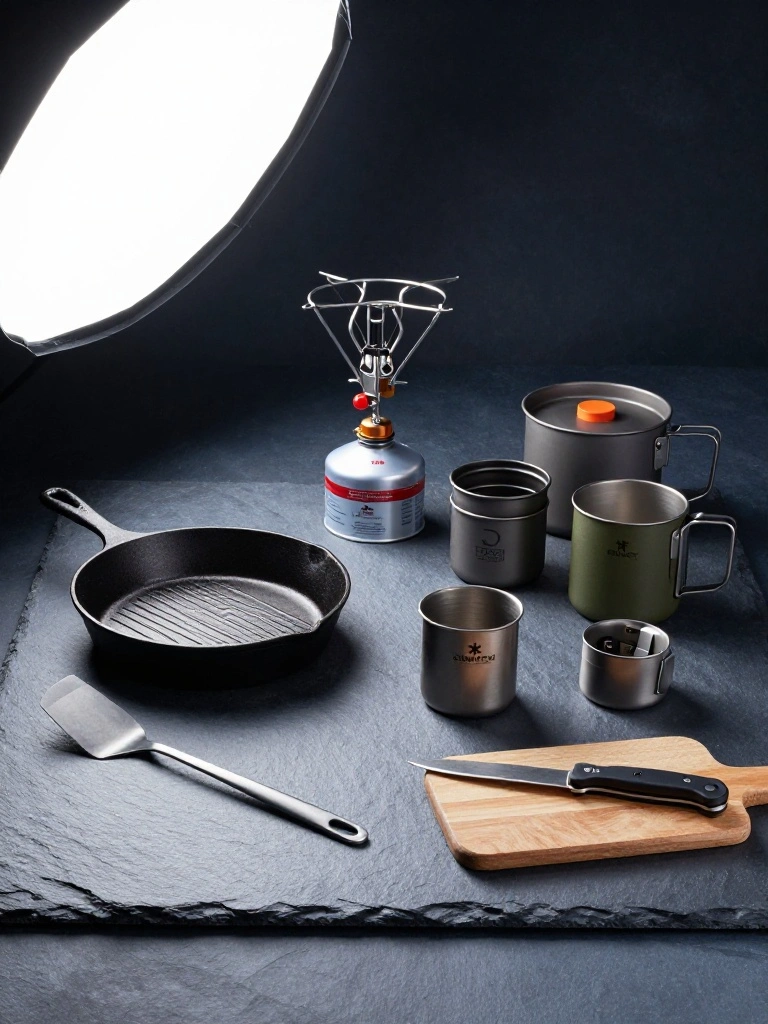
Camp kitchen essentials for breakfast cooking divide cleanly into must-haves and upgrades. The must-haves: a quality Lodge Cast Iron camp skillet or lightweight alternative, a reliable fuel stove like the MSR camp stove breakfast system or Primus camp stove cooking unit, a heat-resistant spatula, a pot with a lid for boiling water and making oatmeal, and a coffee-making system that matches your quality standards. These five items handle 80% of all camp breakfast scenarios.
REI camp cooking gear upgrades that make serious camp cooks’ lives measurably better include the Snow Peak titanium camp cookware set — lighter than stainless, indestructible, and with none of cast iron’s maintenance demands — the Jetboil camp cooking system for ultra-fast water boiling at altitude, and a small folding cutting board with pre-sharpened folding knife for camp food prep. GSI Outdoors camp cookset nesting designs pack multiple items into a single footprint — plates, mugs, and cookpots stacking inside each other. Stanley camp cookware insulated cooking pots keep food at serving temperature in cold conditions for up to an hour after leaving the heat source. Gear won’t make a bad cook good but it will make a good cook faster, cleaner, and more confident.
Frequently Asked Questions
Q1. What is the easiest camp breakfast to make over a campfire?
Campfire eggs and bacon remains the easiest and most reliable campfire breakfast. It requires a single Lodge Cast Iron camp skillet, two ingredients, and twelve minutes. Bacon goes in first over medium flame. The rendered fat handles the eggs when the bacon comes out. Quick camp breakfast under 10 minutes alternatives include instant oatmeal camping packets with boiling water and campfire cinnamon sugar toast on a stick — both achievable in under five minutes with zero equipment beyond a pot or a long fork.
Q2. Can I prepare camp breakfast ingredients at home before the trip?
Absolutely — and you should. Make ahead camping breakfast preparation at home is the single most impactful upgrade most campers can make to their morning routine. Crack eggs into sealed containers. Pre-shred cheese. Pre-chop vegetables. Measure dry ingredients into labeled bags. Overnight oats for camping trips assembled the night before the trip and stored cold eliminate all morning cooking on day one. Make ahead breakfast for camping weekend burritos — fully assembled, wrapped in foil, and frozen — reheat directly on the grill grate in ten minutes.
Q3. What camp breakfast foods do not require refrigeration?
Camp breakfast recipes that require no refrigeration include instant oatmeal camping packets, granola and powdered milk camping mixed with water, nut butters on tortillas or crackers, camp breakfast trail mix bowl, and fully sealed freeze dried breakfast camping pouches. Hard cured sausages like salami and summer sausage are shelf-stable for several days and provide significant protein without refrigeration. Dehydrated camping breakfast meals from brands like Mountain House and Good To-Go require only boiling water and keep indefinitely at room temperature.
Q4. How do I cook eggs safely at a campsite without making a mess?
Eggs in a bag camping method is the cleanest egg cooking technique available in a camp setting — crack eggs into a sealed zip-lock freezer bag with your additions, lower into simmering water for twelve minutes, eat directly from the bag, and throw away the bag. Tinfoil packet egg breakfast is equally clean — eggs cooked sealed in foil directly on coals leave no pan to wash. For skillet eggs, traditional campfire breakfast with cast iron in a well-seasoned pan releases eggs with minimal sticking when the pan is properly preheated and adequately greased before adding eggs.
Q5. What is the best high protein camp breakfast for a long hiking day?
Protein packed camping breakfast for hikers targeting 30 or more grams of protein should build around eggs as the primary source. A three-egg scramble with two ounces of breakfast sausage and one ounce of cheddar delivers approximately 40 grams of protein. High energy breakfast for hiking day alternatives for those avoiding eggs include camp breakfast burritos with black beans, cheese, and hemp seeds at approximately 28 grams. Add a tablespoon of peanut butter on the side and the total climbs to 35 grams. Wilderness nutrition and fueling research consistently identifies 30 to 40 grams of breakfast protein as the threshold for sustained four-plus-hour backcountry performance.
Conclusion
A great camp breakfast doesn’t happen by accident. It happens because someone thought about it before the trip, packed deliberately, and showed up to the campfire with a plan and enough enthusiasm to execute it. The campfire is forgiving — it rewards attention and patience and punishes distraction and haste, exactly like cooking over any live flame has always done. The outdoor morning amplifies every flavor, every smell, every shared moment around the fire into something larger than the sum of its parts.
Start simple. Master the cast iron skillet camp breakfast before you attempt the Dutch oven cinnamon rolls. Get the campfire eggs and bacon right before you scale to feeding ten people. Build your camp breakfast meal prep ideas system at home before you test it in the dark at a remote campsite. The progression from beginner camp cook to confident outdoor culinarian follows the same path as any other skill — intentional practice, honest assessment, and willingness to eat the occasional bad batch of camp pancakes with the same good humor that the outdoors seems to naturally produce. The forest, the fire, and the food together make something extraordinary. Show up for it properly and it’ll show up for you every single morning.
1 Comment