
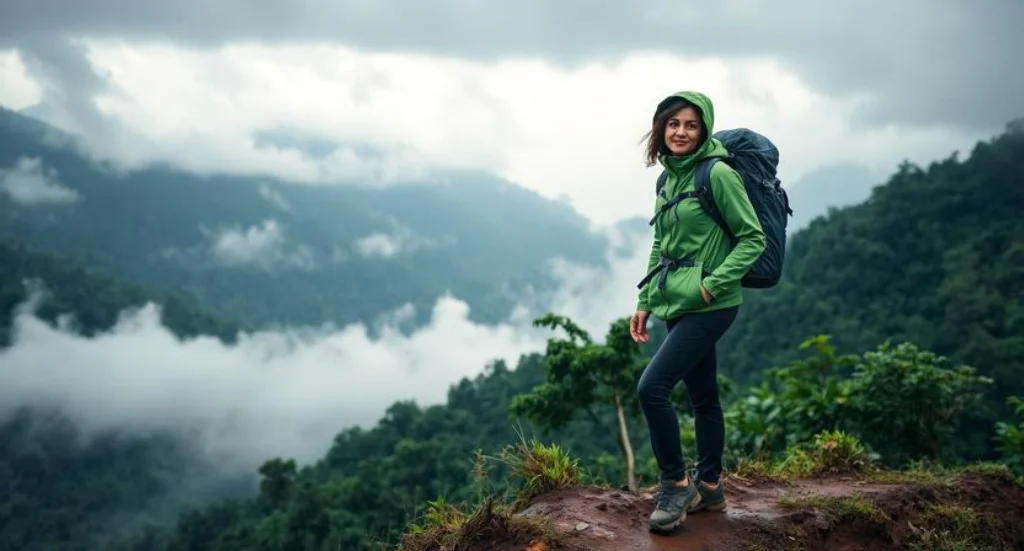
The monsoon doesn’t care about your Instagram-ready hiking outfit. It doesn’t respect cotton base layers, denim-adjacent fabric choices, or trail shoes purchased for aesthetics over grip. What it does respect — the only thing it respects — is preparation. The women who stride through Kerala’s leech-laden jungle trails or summit Himalayan passes in July’s relentless downpours aren’t tougher than other hikers. They’re better equipped. Monsoon trek outfit women strategies separate effortless performance from genuine suffering across every mile of wet terrain. This guide covers everything from base layer fabric science to anti-leech gaiter technique, from the rain jacket decision matrix to the post-trek dry-down protocol that protects both your gear and your skin. Read it before you pack. Your trail experience depends on it.
The Brutal Reality of Trekking in Monsoon and Why Most Women Pack Wrong
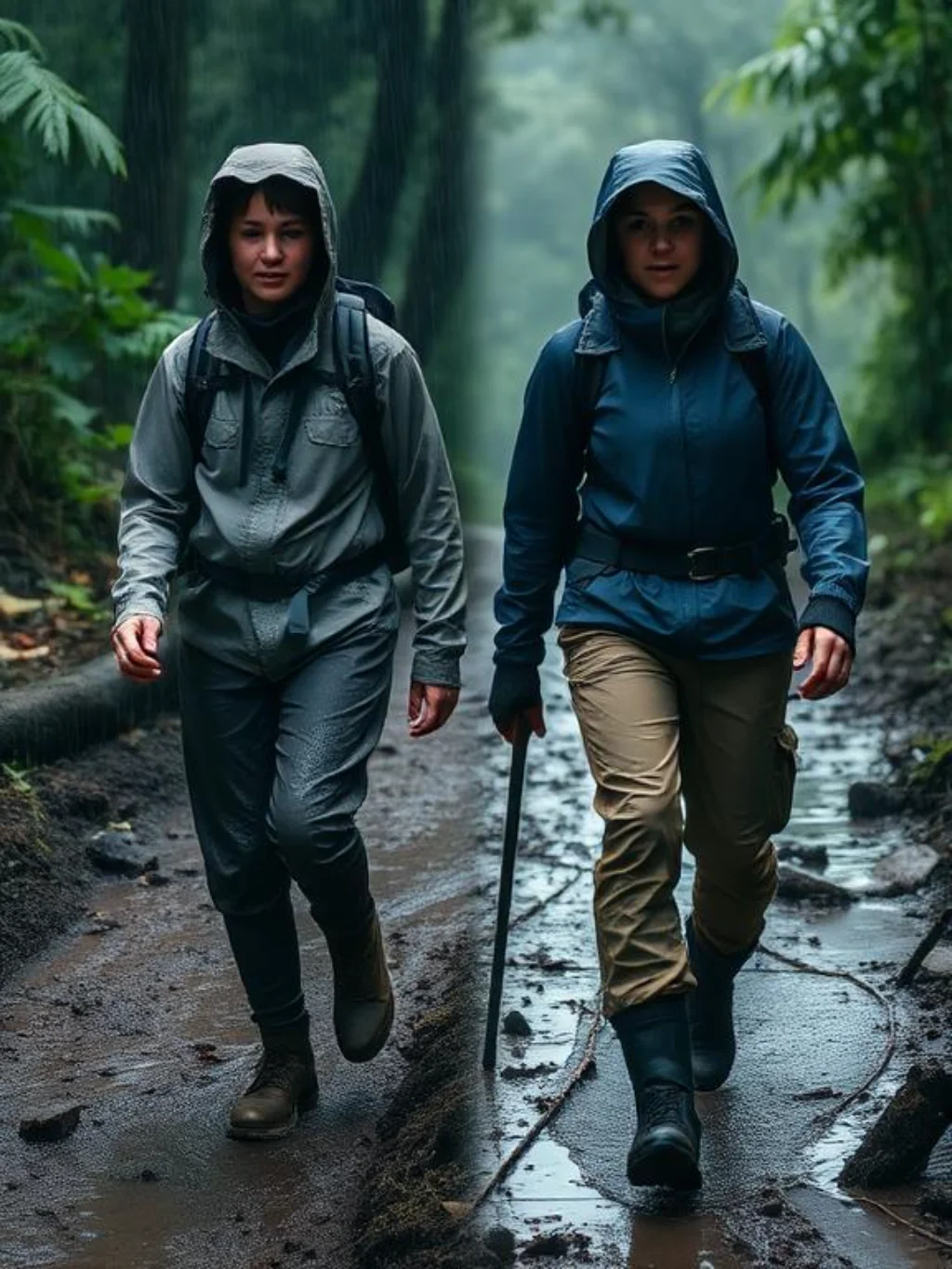
What to wear trekking in monsoon women is the most under-researched question in the entire female hiking preparation space. The reason most women pack wrong for monsoon treks isn’t ignorance — it’s wrong-category knowledge. Monsoon trekking demands a completely different gear philosophy from dry-season hiking. In dry conditions, breathability and lightweight minimalism dominate the calculus. In monsoon conditions, moisture management, anti-leech protection, grip performance, and thermal regulation through sustained wetness become the governing priorities.
The commonest mistake? Overpacking dry-condition gear and underpacking wet weather trail performance wear. Women arrive with beautiful merino hiking shirts, trail runners purchased for summer use, and a rain poncho they’ve never actually worn in sustained rain. The first hour of monsoon trail — the mud, the sudden temperature drop beneath the canopy, the leeches that locate warm-blooded bodies within minutes — exposes every packing error with brutal efficiency. How to dress for a monsoon trek women correctly means understanding the trail’s specific physics: there is no dry. There is only less wet and better managed wet.
Monsoon Trek Outfit Women Need — The Complete Layer by Layer System
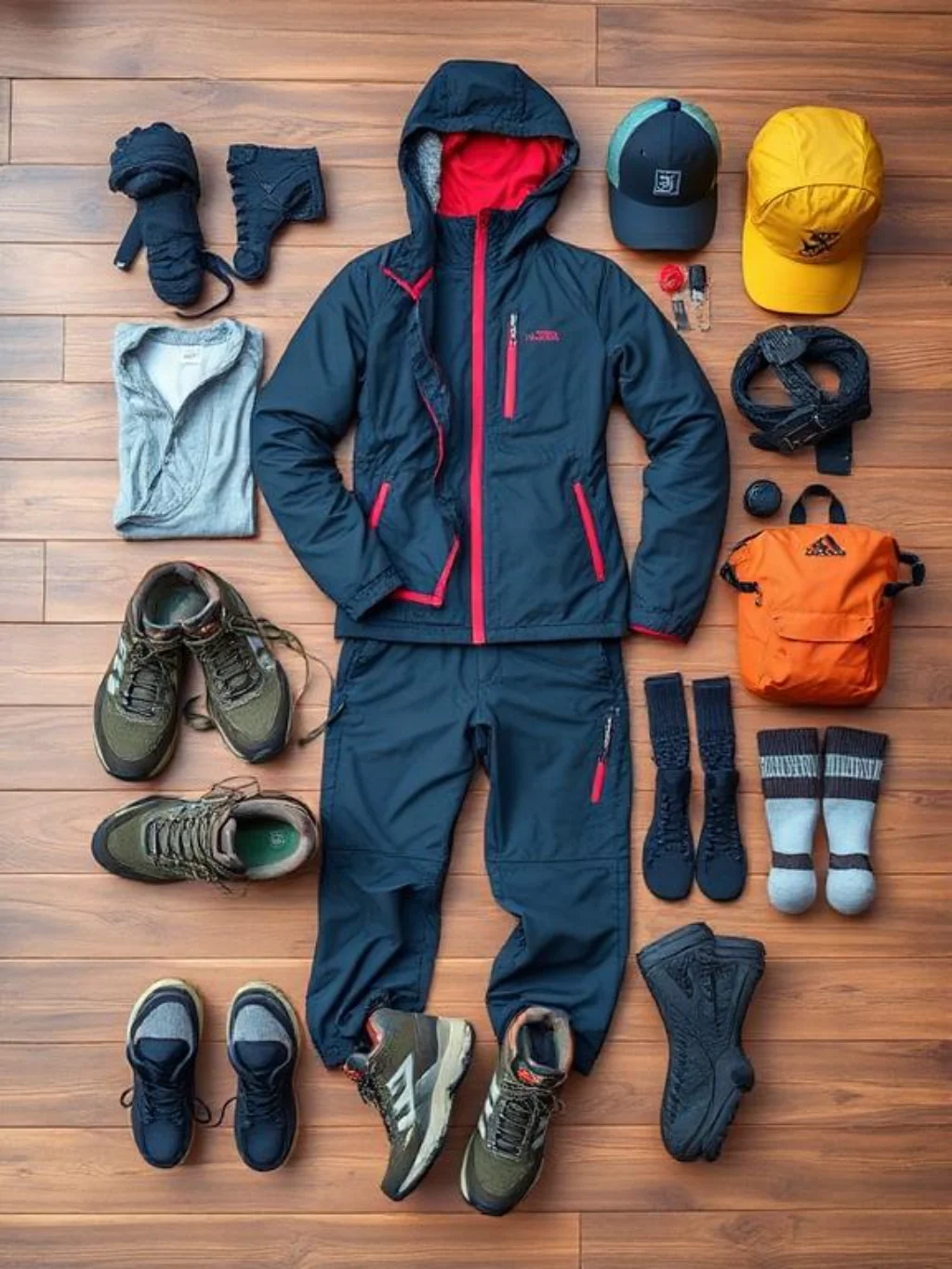
Layering strategy for monsoon trekking women differs fundamentally from cold-weather layering logic. In cold-dry conditions, the layer system traps warmth. In monsoon conditions, the layer system manages moisture movement — wicking it away from skin, preventing accumulation at any single layer, and maintaining a microclimate of relative dryness against the body even when every outer layer is saturated. The three-layer system — base, mid, outer — remains the architecture but the specific fabric choices within each layer are completely different from their dry-weather equivalents.
Best monsoon trek outfit for women built on the complete layer system looks like this: a synthetic moisture-wicking base layer directly against skin, a lightweight technical mid-layer for temperature regulation during rest stops and high-altitude exposure, and a Gore-Tex waterproof membrane hiking outer shell that is both waterproof and breathable. Below the waist: quick-dry technical trekking pants, wool or synthetic-blend trekking socks, anti blister wet terrain footwear women strategy, and gaiter coverage for leech and mud protection. This system creates redundancy — if any single layer fails, the adjacent layers compensate.
| Layer | Purpose | Fabric | Avoid |
|---|---|---|---|
| Base layer | Moisture wicking from skin | Synthetic polyester, merino wool | Cotton entirely |
| Mid layer | Temperature regulation | Lightweight fleece, synthetic insulation | Heavy down |
| Outer shell | Waterproof, breathable protection | Gore-Tex, eVent, H2No | Non-breathable vinyl ponchos |
| Trekking pants | Quick dry, mud resistance | Ripstop nylon, polyester blend | Denim, cotton, linen |
| Socks | Moisture management, blister prevention | Merino wool, synthetic blend | Pure cotton |
The Rain Jacket Decision That Separates a Good Monsoon Trek From a Miserable One
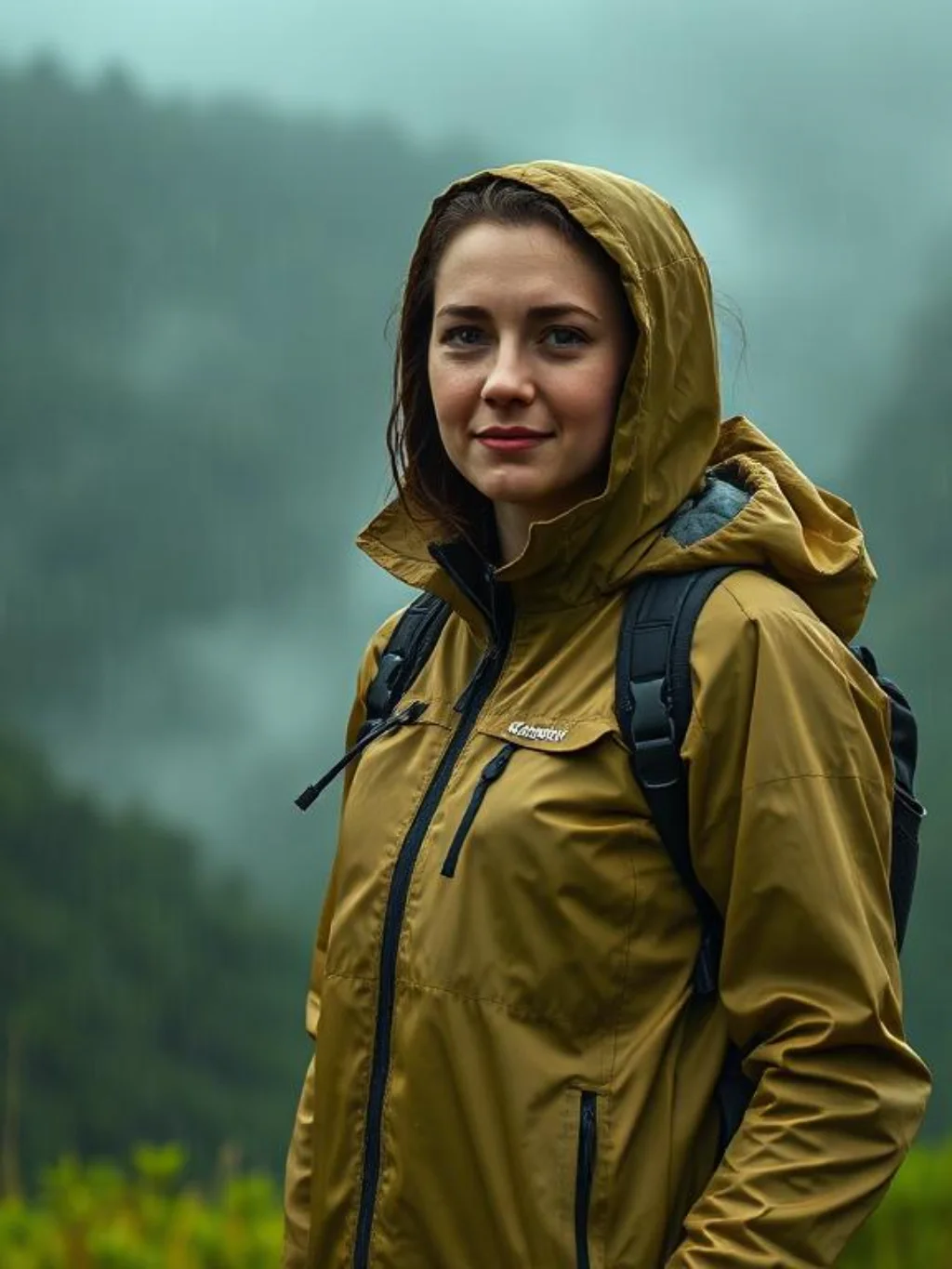
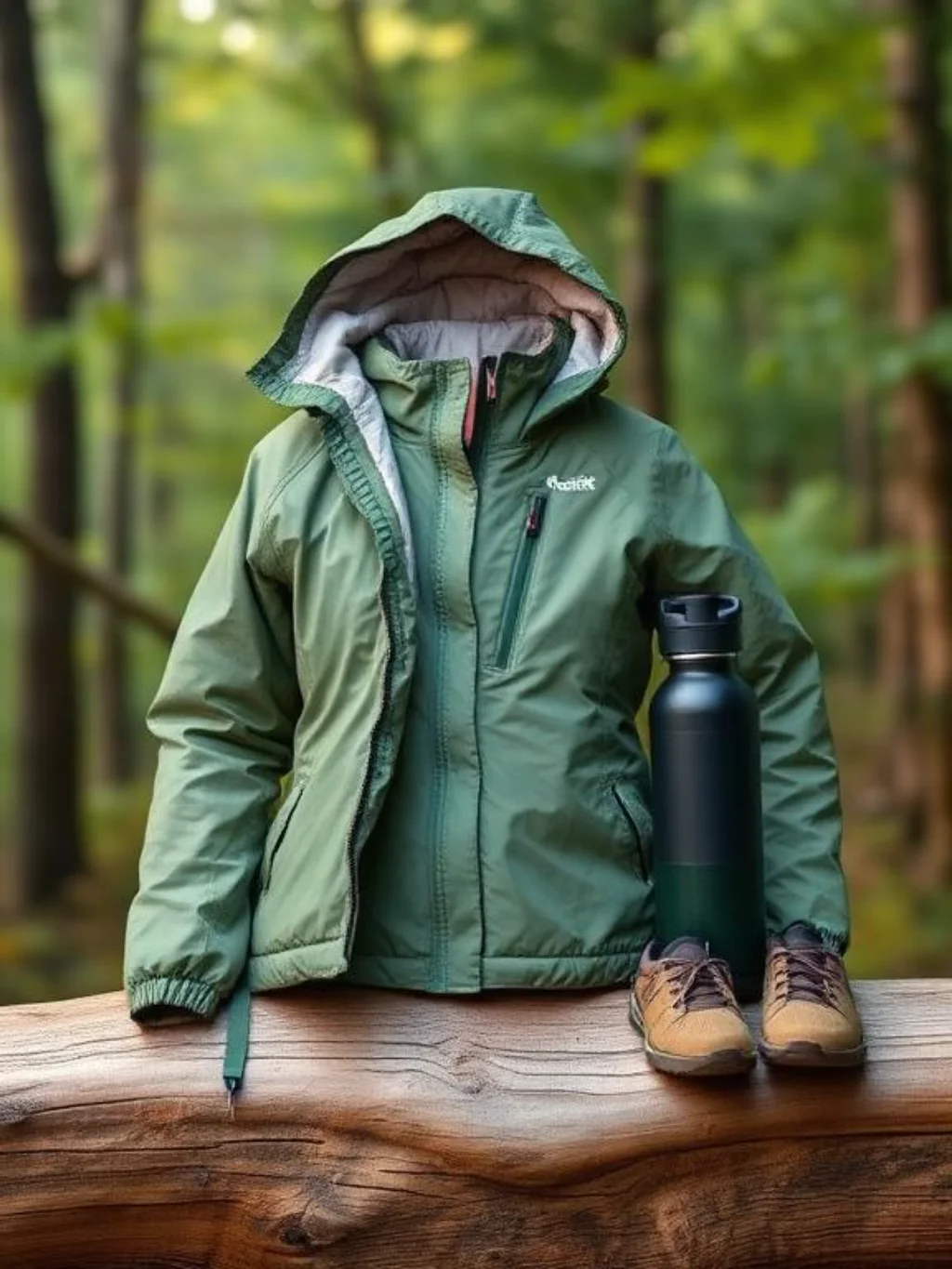
Best rain jacket for monsoon trek women selection is the single most consequential gear decision in the entire monsoon trek preparation process. A failed rain jacket doesn’t just make you uncomfortable — it drops your core temperature in tropical humidity at a rate that creates genuine hypothermia risk at altitude, destroys your energy reserves as your body works overtime to maintain warmth, and makes every subsequent trail hour a test of willpower rather than physical capacity. The jacket is load-bearing equipment, not aesthetic accessory.
Columbia women’s rain hiking jacket, The North Face waterproof women trekking shells, Arc’teryx women Gore-Tex rain jacket, and Outdoor Research women rain jacket all represent the category’s legitimate performance tier. The key technical specifications to prioritize: a hydrostatic head rating of at least 10,000mm for sustained monsoon rain exposure, a breathability rating of at least 10,000g/m²/24h to prevent interior moisture accumulation during aerobic hiking effort, fully taped seams rather than critically taped seams, and a hood with genuine adjustment capability to keep driving rain off the face. Quechua SH100 rain hiking jacket women from Decathlon provides a substantially more affordable entry point that satisfies most of these requirements for lighter monsoon trail use.
Quick Dry Trekking Pants That Handle Mud Leech Country and Downpours
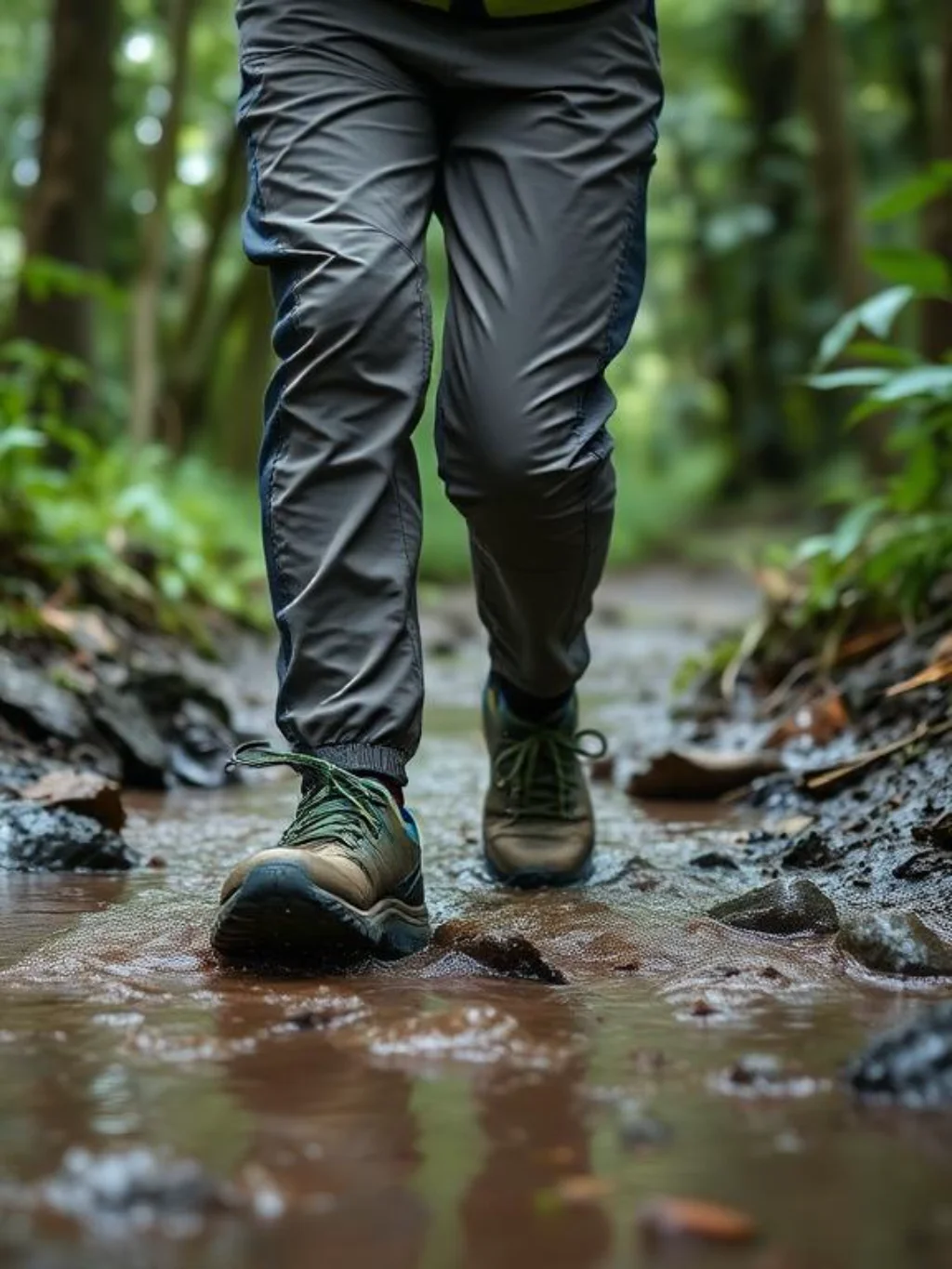
Quick dry hiking outfit women below the waist centers on the trekking pant as the load-bearing piece. In monsoon conditions, trekking pants will be wet for the majority of the day — the question is whether they dry between rain bursts or remain saturated and heavy for the entire trail duration. Nylon and polyester ripstop blends in the 80-150 gsm weight range dry in fifteen to twenty minutes of modest exertion even after complete saturation — which means by the next rain burst, you’re working from a relatively dry baseline rather than accumulating wet load continuously throughout the day.
Quick dry trekking pants for women monsoon hiking with articulated knee panels are specifically worth prioritizing in monsoon conditions because muddy trail surfaces demand high-step movements and scrambling postures that flat-panel pants restrict. Decathlon women monsoon trekking gear Quechua trail pants represent exceptional value for the performance they provide — ripstop nylon construction, articulated knees, and multiple zipped security pockets that keep phones and documents protected during rain bursts. Leech proof trekking clothing monsoon in the trouser category also means choosing pants with tight-fitting ankle cuffs rather than wide-hem options — the ankle is a primary leech entry point and cuff-tuck-into-gaiter technique requires a reasonably fitted lower leg.
Base Layers That Regulate Body Temperature When Humidity Hits Ninety Percent
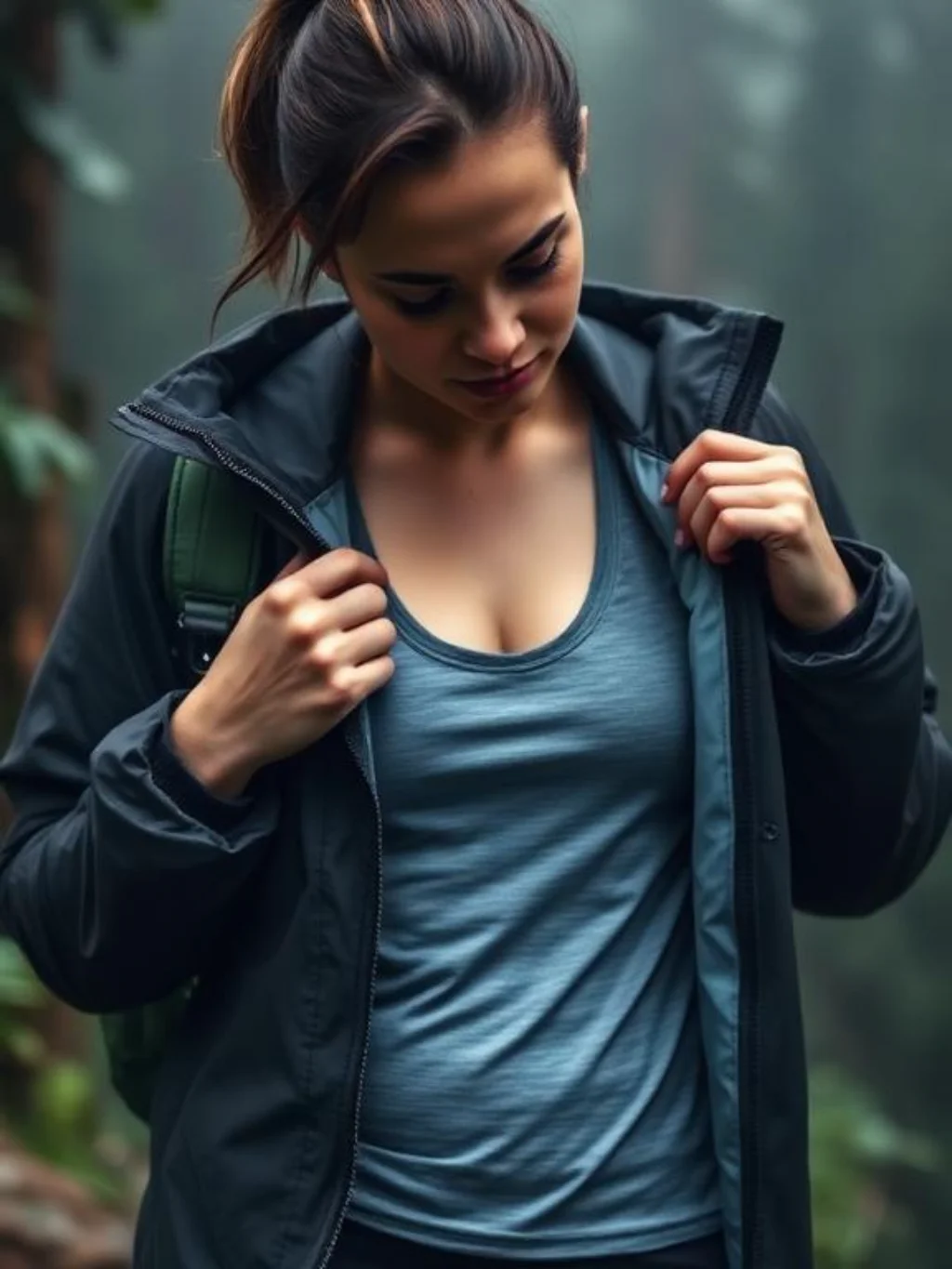
What base layer to wear for monsoon trek women is a question with a specific and non-negotiable answer: synthetic polyester or merino wool, never cotton. This isn’t a preference — it’s physics. Cotton absorbs moisture and holds it against the skin, dramatically increasing evaporative cooling when the body needs to regulate temperature and dramatically increasing cold stress during rest stops in high-altitude monsoon conditions. Cotton kills in the mountains. That phrase sounds dramatic but it reflects genuine documented risk in sustained wet conditions at altitude.
Icebreaker merino base layer women and Smartwool women hiking sock monsoon equivalents for base layers both provide the gold standard of monsoon trek outfit women base layer performance: merino wool wicks moisture away from skin, provides natural odor resistance across multiple wearing days without washing, maintains meaningful insulation even when wet, and regulates body temperature in both warm humid conditions and cold high-altitude exposure through its natural thermostatic fiber properties. Performance moisture wicking trail wear in synthetic form — Patagonia women waterproof hiking layer base layer equivalents, or similar — provides faster drying times than merino at lower cost, making it the practical choice for budget-conscious trekkers.
Footwear Truth — Trail Shoes Versus Waterproof Boots on Wet Slippery Terrain
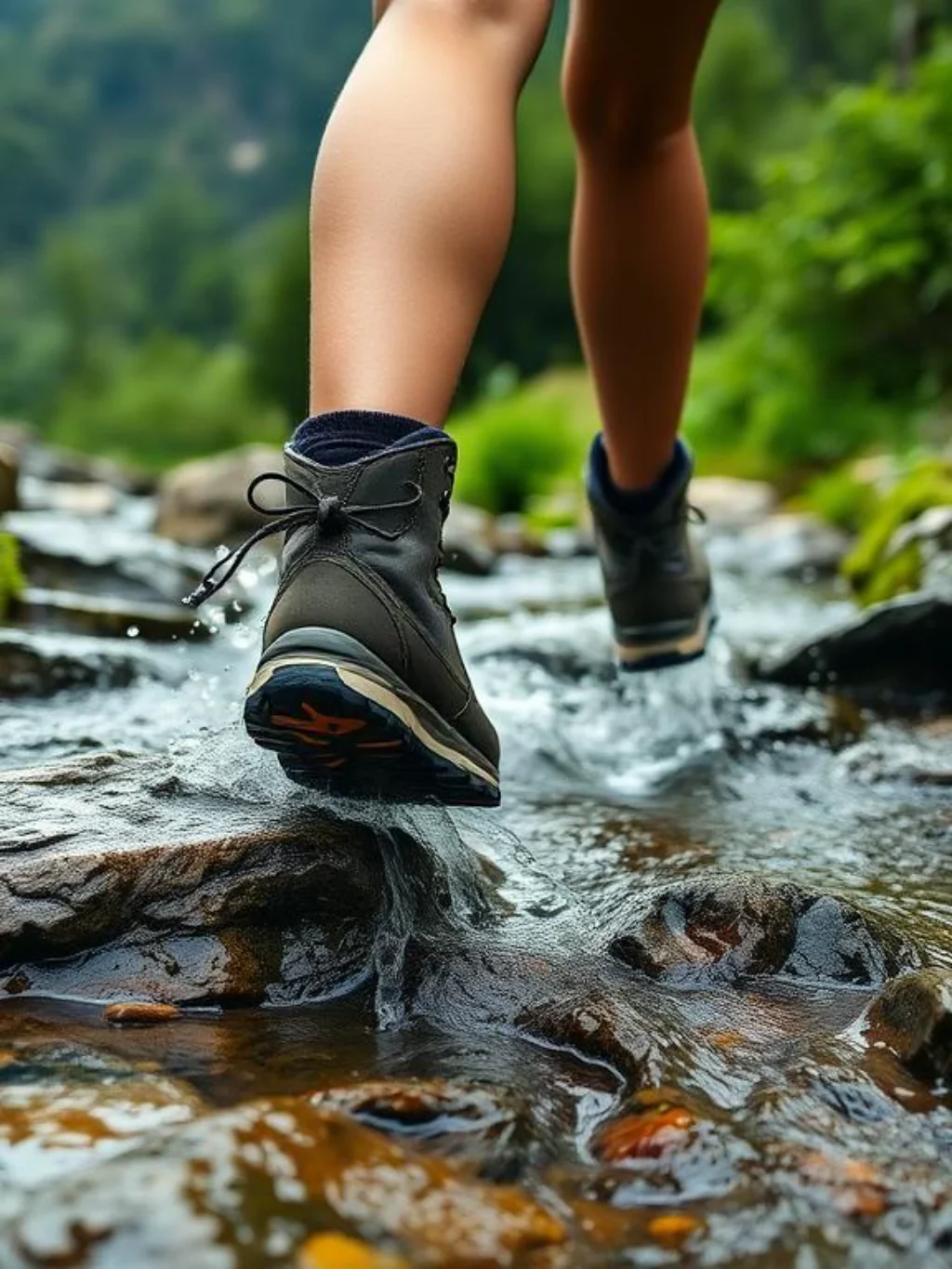
What footwear is best for monsoon trekking women generates the most heated debate in monsoon hiking communities — and the honest answer is nuanced. Waterproof boots keep feet dry in light rain and shallow water crossings. But in sustained monsoon rain, water enters waterproof boots from above the collar within the first hour of wet trail walking — and once inside a waterproof boot, moisture cannot escape because the waterproof membrane works in both directions. The result: a boot that holds water against your foot for the entire trail duration.
Monsoon trek shoes for women what to choose intelligently means accepting that feet will get wet and optimizing for rapid drainage and drying rather than futile waterproofing. Salomon women’s trail running shoes rain and Inov-8 women trail shoes wet terrain both feature aggressive drainage ports that evacuate water immediately after submersion, mesh uppers that dry rapidly between rain bursts, and Vibram outsole grip wet terrain women configurations specifically designed for traction on wet rock and mud. Merrell women’s waterproof hiking boots remain the right choice for short-duration trail days in light monsoon rain, for trekkers who specifically need ankle support, or for high-altitude monsoon conditions where waterproofing protects against cold rather than purely against wet.
Anti Leech Gaiters — the Underrated Piece Every Woman Should Never Leave Behind
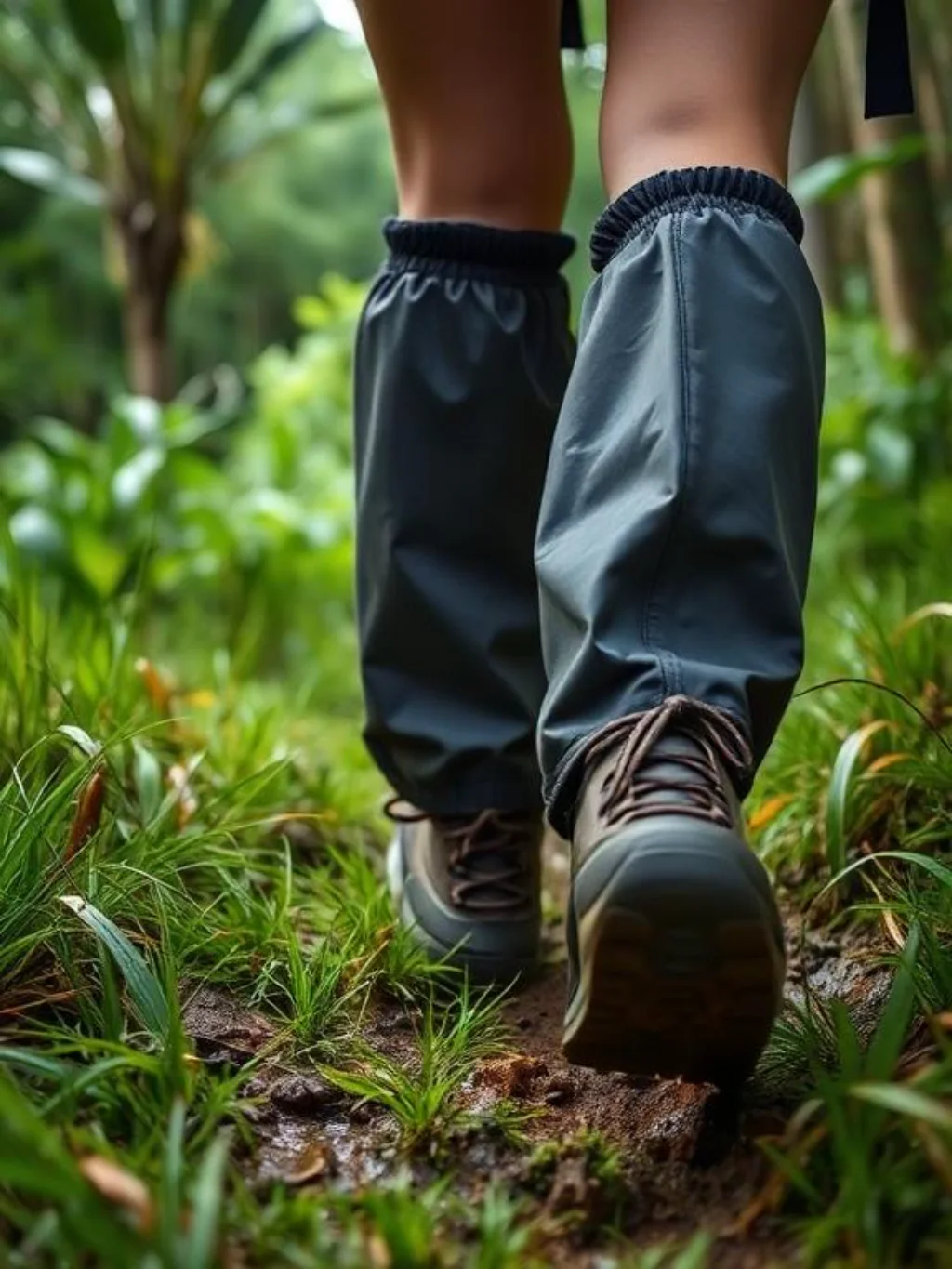
Women’s anti leech gaiters for monsoon trekking outfit are the most overlooked piece in virtually every monsoon trek preparation guide — and the oversight is inexplicable. A single leech that successfully reaches skin above the shoe creates a wound that bleeds for hours due to the anticoagulant compounds in leech saliva, attracts other leeches to the wound site through chemical signaling, and creates genuine infection risk if not properly treated in the field. Prevention through gaiter coverage is categorically more effective than any removal technique.
you may also like this:22 Hiking Outfit Ideas for Women That Are Practical and Chic
Best gaiters for women monsoon trek muddy trail coverage extends from the boot collar to the mid-calf — the full zone through which leeches access skin in grassland and forest monsoon environments. Low gaiters that simply seal the boot collar are insufficient in leech-dense terrain. Gaiters to prevent mud entry for women monsoon trekking also serve a mechanical protection function — keeping fine trail grit and mud out of the shoe reduces blister risk dramatically on long trail days. Decathlon women monsoon trekking gear includes budget gaiter options that perform adequately for most monsoon trail contexts. For serious leech-country trekking in the women trekking outfit for Western Ghats monsoon season, investing in purpose-designed anti-leech socks worn under gaiters provides the most comprehensive protection strategy.
Sock Strategy That Prevents Blisters When Your Feet Stay Wet for Six Hours
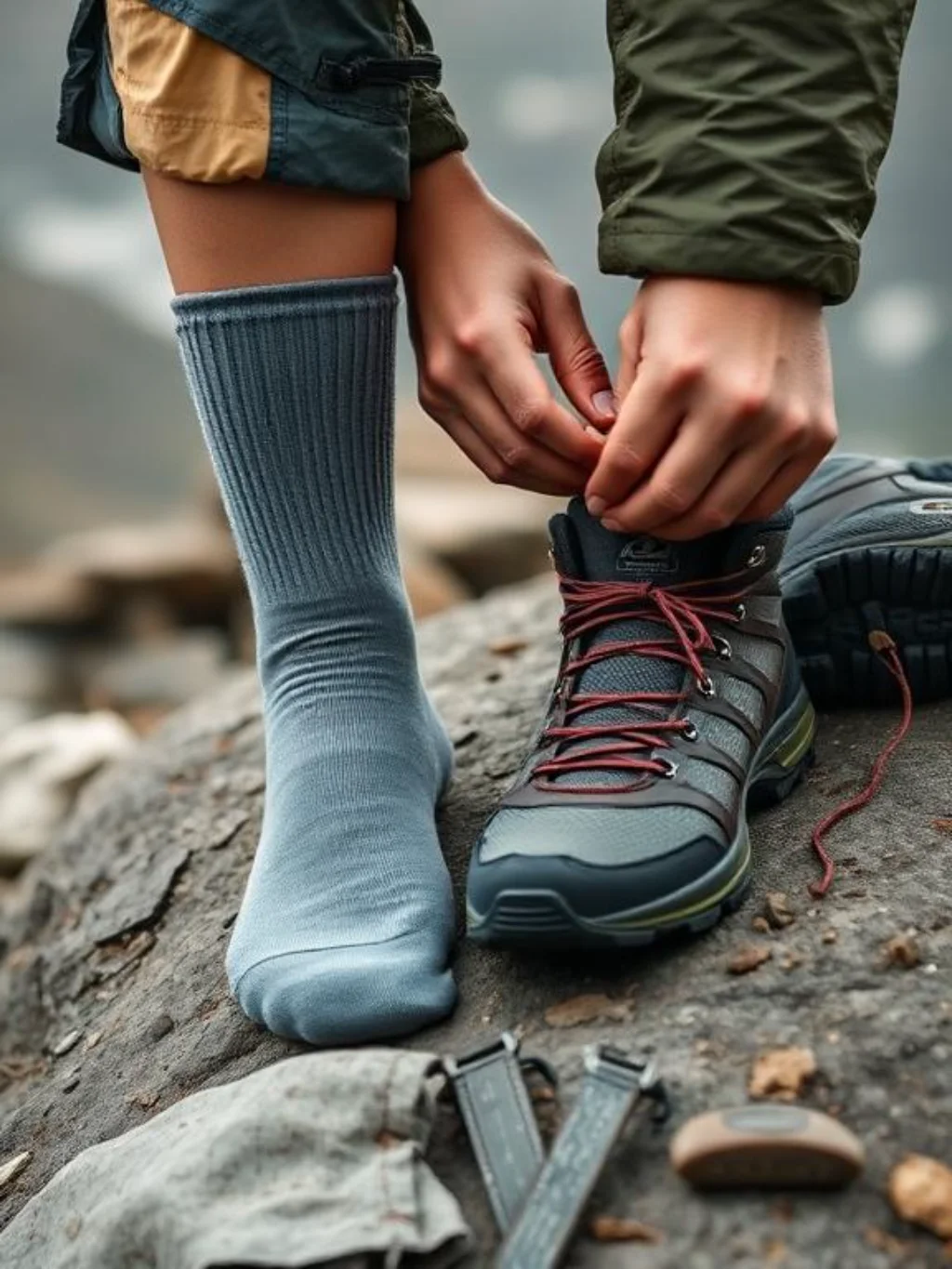
What socks to wear for monsoon trek women determines blister outcome more directly than almost any other single gear decision. The mechanism of wet-condition blisters differs from dry-condition blisters: in dry hiking, blisters form from friction between sock and skin during repeated stride motion. In wet hiking, maceration — the softening and breakdown of water-saturated skin — dramatically increases friction susceptibility, reduces the skin’s mechanical resistance to shearing forces, and creates blister formation at friction loads that dry skin would manage without consequence.
Darn Tough women merino hiking socks and Smartwool women hiking sock monsoon alternatives both address wet-condition blister risk through fiber properties that maintain friction-reducing loft even when wet — unlike cotton, which collapses when saturated and creates direct skin-to-shoe contact. Anti blister wet socks strategy for women monsoon trekking also includes the double-sock method: a thin synthetic liner sock against the skin beneath a merino outer sock transfers friction between the two sock layers rather than between sock and skin — the blister forms in the sock-to-sock interface rather than the sock-to-skin interface. Carry minimum two sock pairs per trail day. Sock changes at midday, when conditions permit, reset the friction baseline and dramatically reduce blister probability.
The Backpack Rain Cover System That Keeps Dry Gear Actually Dry
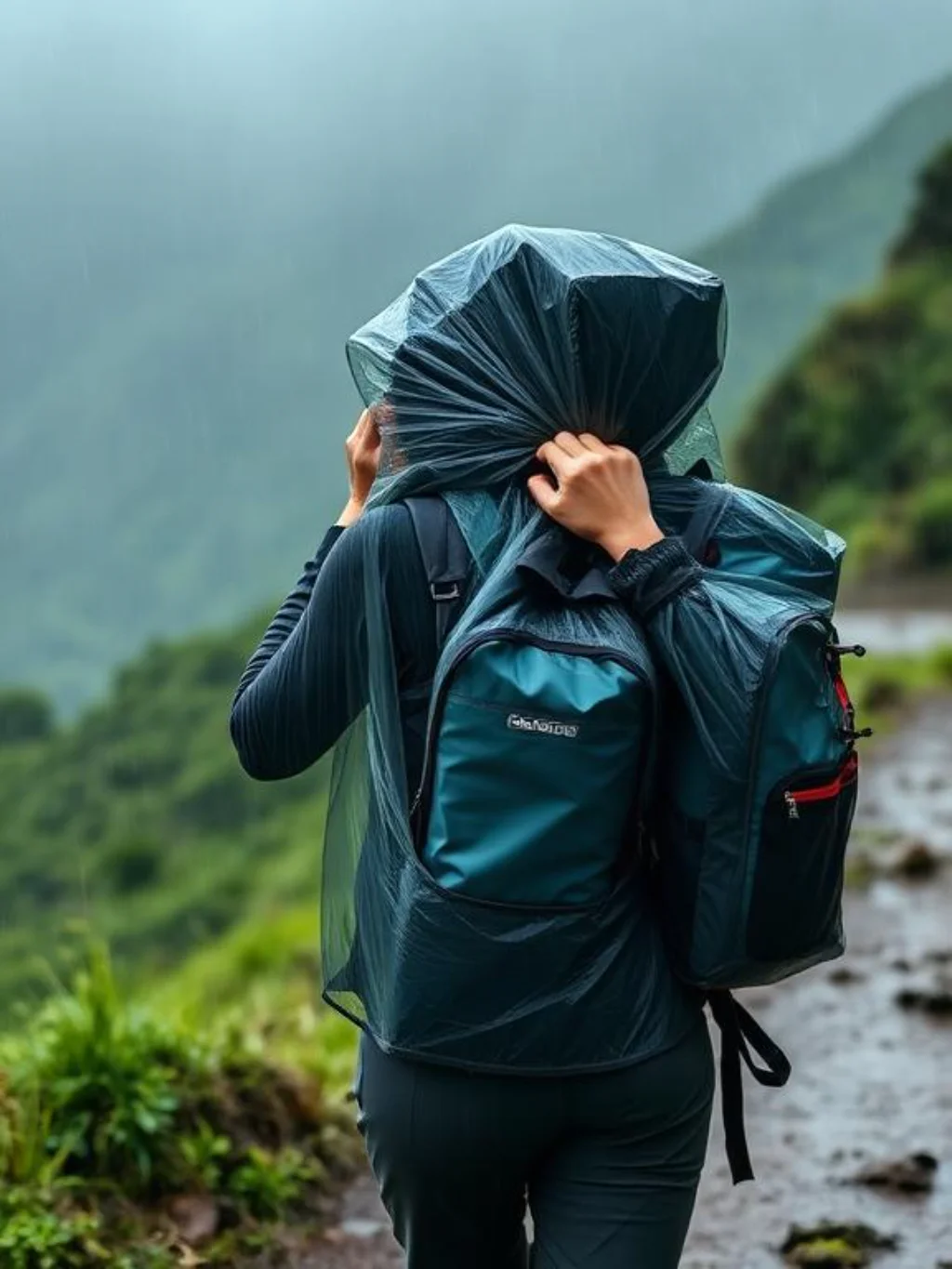
Best backpack cover for monsoon trekking women isn’t a single item but a redundant protection system — because any single layer of backpack rain protection has failure modes that a two-layer system addresses. The standard external rain cover — a form-fitting waterproof cover that slides over the exterior of the pack — protects against direct rainfall and light rain exposure effectively. However, external rain covers fail at sustained stream crossings, when blown off by wind at exposed ridge sections, and in sustained heavy downpour that accumulates in the rain cover’s lower channels and potentially seeps through.
Women’s backpack rain cover essential monsoon trek gear at its most reliable incorporates both an external cover and internal waterproof bag liners within the main compartment. Ergonomic backpack rain hiking women packs from Wildcraft monsoon trek backpack women and similar brands increasingly incorporate internal waterproof sleeves for electronics specifically — recognizing that the phone, the camera, and the power bank are the items most catastrophically damaged by water ingress. Your pack should be organized on the assumption that the external rain cover will eventually be compromised — every item inside should be in its own waterproof bag or dry sack rated for the specific level of water exposure the trail will generate.
Full Sleeve Shirts and Sun Protection Logic in Heavy Monsoon Humidity

Full sleeve quick dry shirt women monsoon trek sun protection is a piece of monsoon logic that surprises many hikers planning their first wet-season expedition. The intuition says: it’s tropical, it’s humid, it’s raining — surely short sleeves are appropriate? The reality is more complex. Monsoon cloud cover creates unpredictable UV exposure — cloud layers scatter rather than block UV radiation, often producing skin-damaging UV exposure even when direct sunlight isn’t visible. Additionally, vegetation in monsoon forest and jungle environments scrapes exposed arms throughout a trail day, creating superficial wounds that are infection vectors in high-humidity environments.
UV protective rain hiking outfit women through full sleeve coverage also serves a secondary thermal regulation function that becomes important after the first rain burst of the day. When rain-saturated trail conditions persist, exposed arms in wind create significant evaporative cooling that a thin synthetic sleeve prevents. High humidity trekking apparel women in full-sleeve configuration from brands like Columbia women’s rain hiking jacket liner shirts provides genuine UV protection (UPF 50+ ratings in most technical hiking fabrics) while managing moisture as effectively as short-sleeve equivalents. The sleeve is not a concession to modesty — it’s a technical performance decision that protects skin, prevents infection risk, and manages body temperature more effectively than exposed arms.
The Neck Buff That Does Five Jobs on a Single Monsoon Trail Day
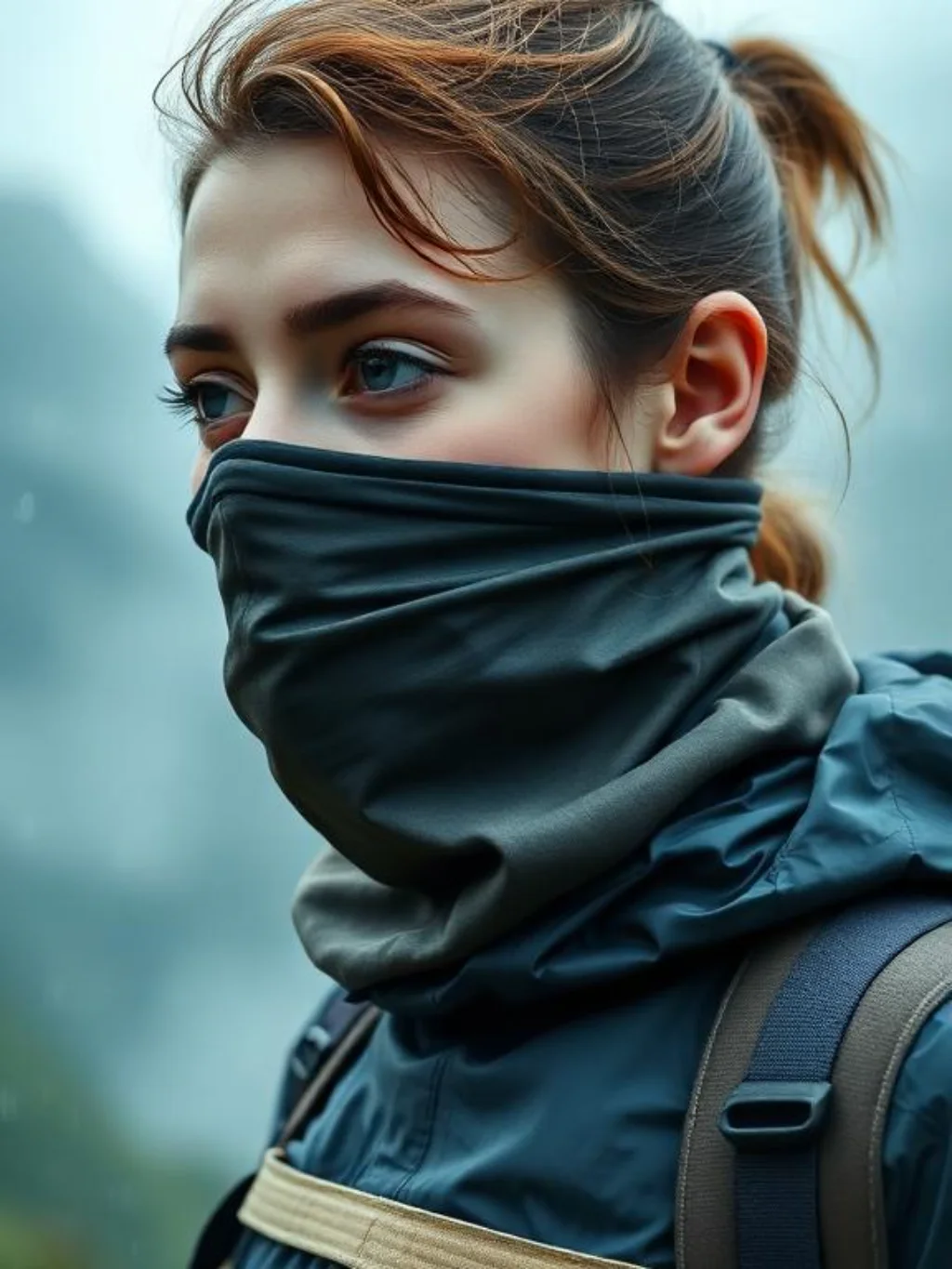
Cooling neck buff for women trekking in humid monsoon conditions is one of the most functionally dense single items in the entire monsoon hiking outfit for women system. In a single trail day, a quality technical neck buff will serve as: sun protection for the neck and lower face during exposed ridge sections; moisture management for sweat accumulation at the neck during high-effort ascents; warmth retention at the neck during rain-induced temperature drops; rain deflection that bridges the gap between rain jacket collar and the face; and a makeshift dust and allergen filter during descents through dry section of mixed-condition trails.
Buff neckwear women trekking in the original brand’s tubular multi-use design remains the category benchmark — the seamless tube construction eliminates pressure points, the UPF-50 rated polyester provides sun protection, and the moisture-wicking properties keep the neck zone drier than a conventional scarf equivalent. Damp condition hiking apparel accessories that function as the buff does — multiple jobs from a single lightweight item — represent the highest expression of packing light without compromising protection philosophy. Carry two buffs: one for neck and face use during the trail day and one in a dry bag that remains clean for post-trek hygiene when trail conditions are particularly muddy.
Poncho Versus Rain Jacket — the Debate That Actually Has a Clear Answer
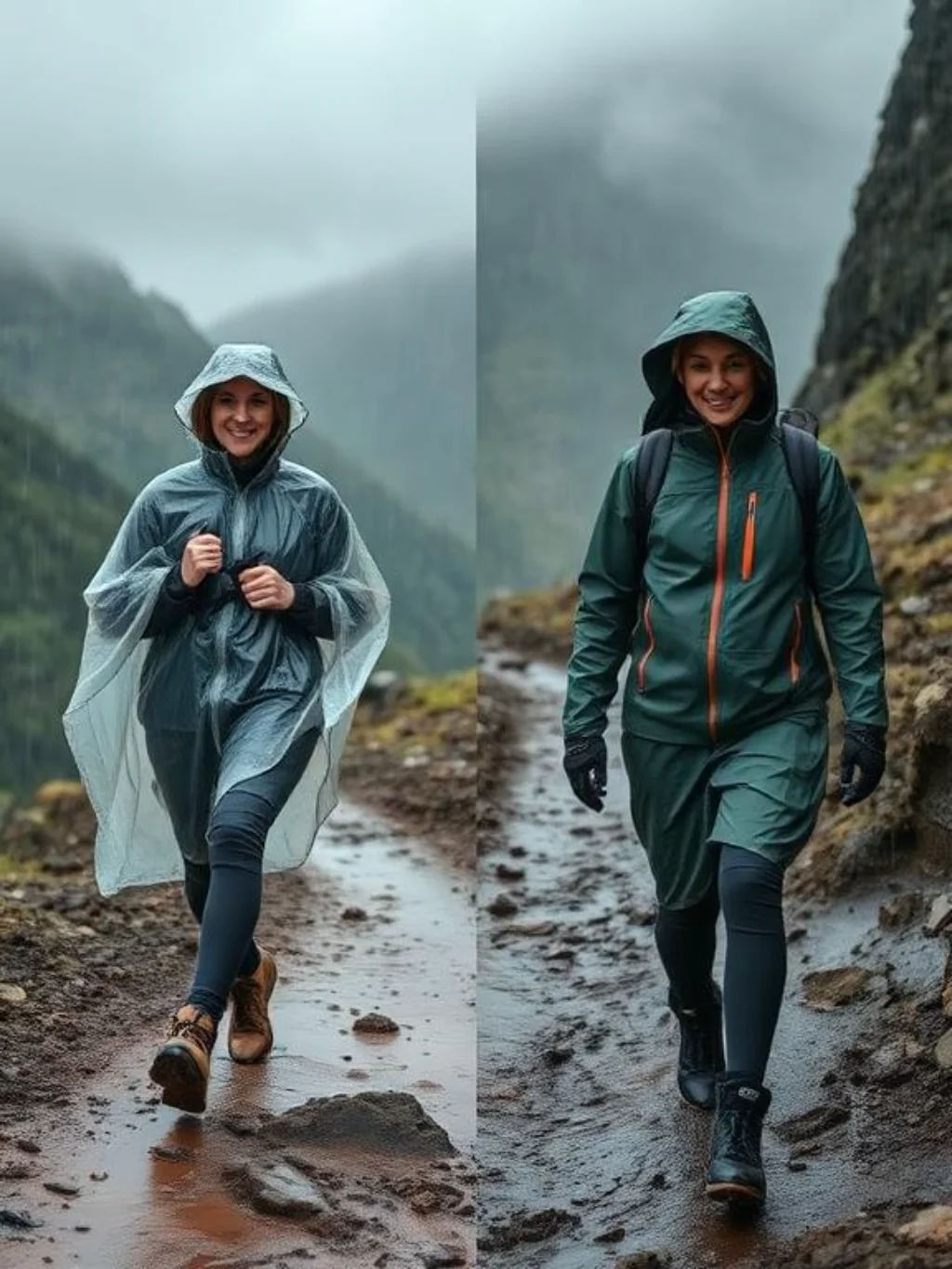
Compact poncho versus rain jacket for monsoon trek women — the debate sounds genuinely open but the answer, for serious trail use, isn’t actually ambiguous. Ponchos solve one real problem and introduce several larger ones. They’re fast to deploy, they cover the pack as well as the body in a single movement, and they’re significantly cheaper than technical rain jackets. However, on active hiking terrain — switchbacks, scrambling sections, windy ridge traversals, stream crossings — a poncho creates genuine safety risk: it catches wind like a sail on exposed ridges, it obscures footwear and footing on technical sections, and it prevents effective arm movement during scrambling.
Best waterproof hiking outfit for women monsoon in sustained technical terrain categorically means a technical rain jacket rather than a poncho. The poncho’s appropriate use cases are specific: camp cooking during rain, light trail use on flat terrain, or as a backup emergency layer for the rare occasion when the primary jacket fails. Compact packable rain gear for hiking in the jacket category from Quechua women rain trekking jacket (Decathlon’s B’TWIN and Quechua lines) provides excellent packable technical rain jacket options at price points that eliminate the poncho’s cost advantage. If you’re choosing between a quality technical rain jacket and a poncho, the choice is made before you even reach the trailhead.
Trekking Poles and Why the Right Outfit Makes Them Work Better in Rain
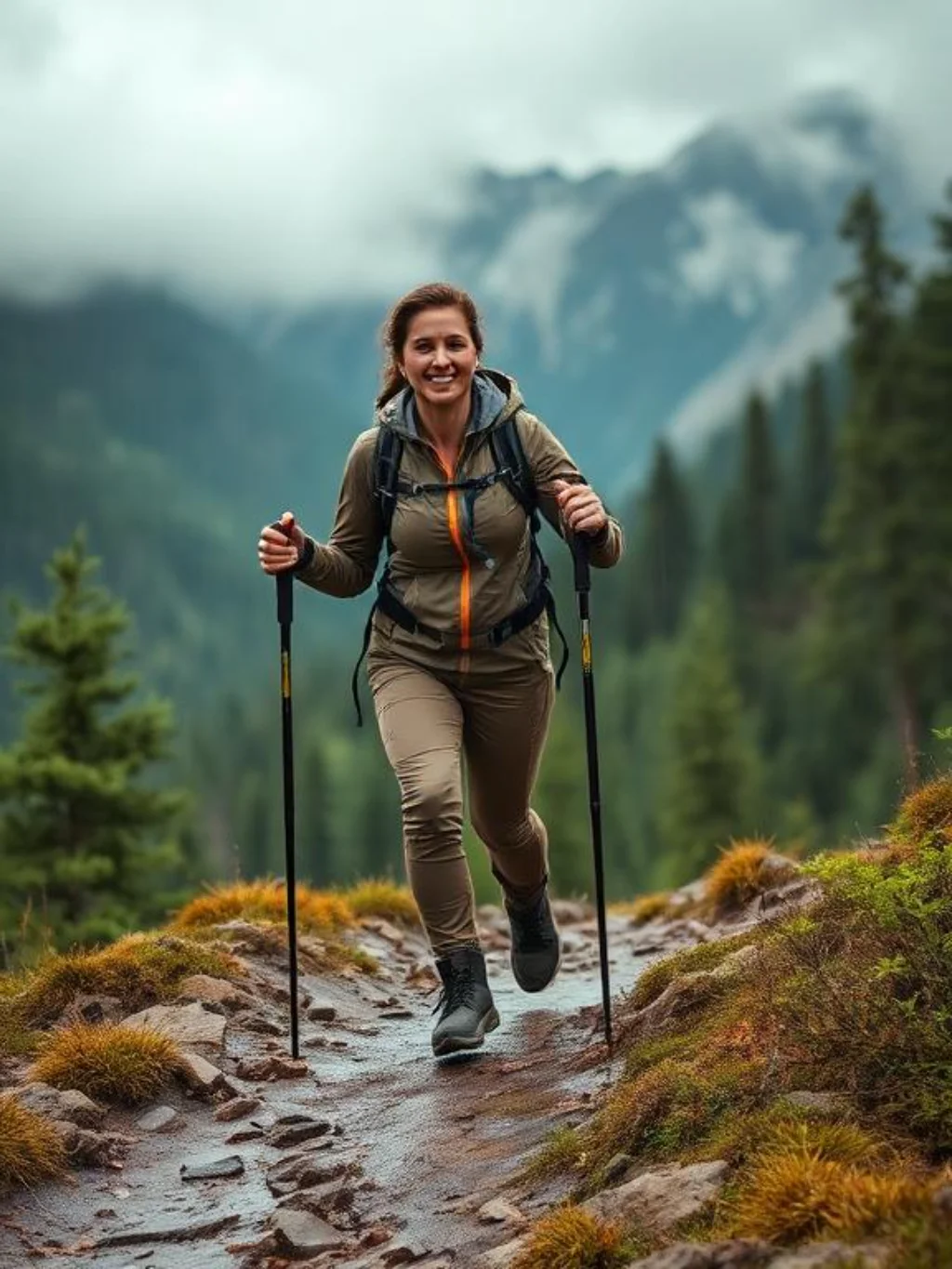
Trekking poles in monsoon conditions aren’t optional comfort items — they’re functional safety equipment on wet, muddy trail surfaces where unassisted balance on slippery terrain creates genuine fall risk. But the relationship between trekking poles and your outfit deserves more attention than most guides give it. Specifically: your rain jacket’s sleeve construction determines how effectively trekking poles function. A jacket with tight, non-articulated sleeves restricts the shoulder rotation required for proper pole planting during ascent — creating fatigue and reducing the poles’ effectiveness at exactly the moments they’re most needed.
Technical outdoor clothing for women rain with articulated sleeve construction — pre-bent elbows and shoulder gussets that allow full range of motion — allows trekking poles to function as intended without fighting the jacket’s sleeve geometry. Black Diamond women rain trekking gear and Arc’teryx women Gore-Tex rain jacket both incorporate this articulated sleeve design as standard. The second outfit-pole interaction point: gloves. In sustained cold monsoon rain at altitude, bare hands on trekking poles create cold stress that compromises grip strength and fine motor control. Light synthetic waterproof gloves that maintain tactile sensitivity while preventing temperature drop at the hands represent the right balance for most monsoon trekking contexts.
Women’s Thermal Layers for High Altitude Monsoon Treks Where Cold Hits Fast
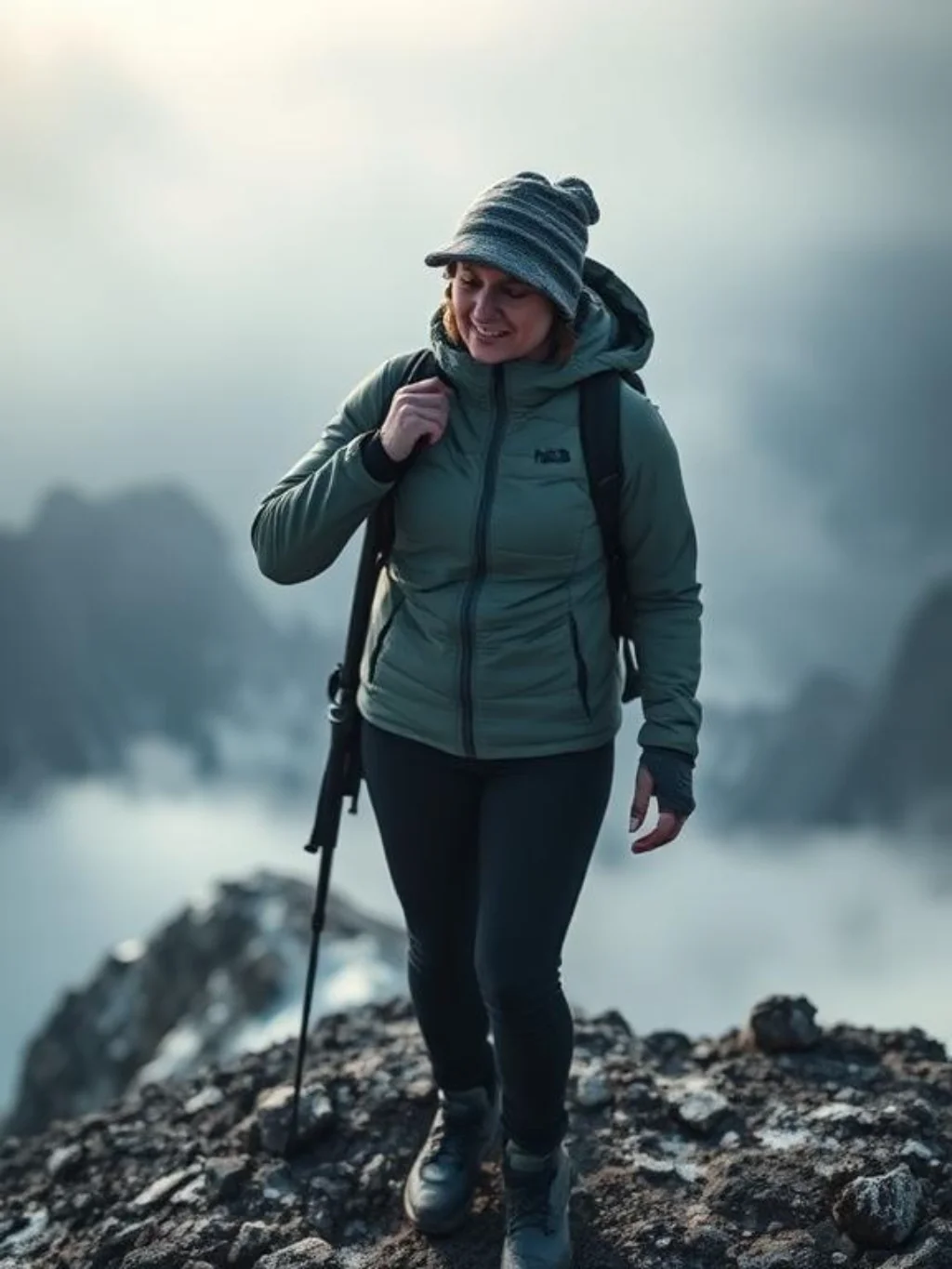
Women’s thermal base layer for high altitude monsoon trek requirements differ dramatically from lowland jungle and forest monsoon trek clothing needs. At elevations above 3,000 meters during monsoon season, temperature can drop from 15°C to 5°C or below in minutes when cloud cover arrives and wind picks up on exposed sections. A trekker who is both wet from rain and cold from altitude drop without adequate thermal layering enters a physiological spiral that is genuinely dangerous: shivering increases energy expenditure, energy depletion reduces thermoregulatory capacity, and falling core temperature generates increasingly compromised decision-making.
Body temperature regulation hiking rain at altitude requires a mid-layer specifically designed for wet insulation performance. Down insulation fails completely when wet — wet down collapses and provides effectively zero insulation. Synthetic insulation — Patagonia women waterproof hiking layer nano-puff style pieces, or The North Face waterproof women trekking ThermoBall equivalents — maintains meaningful insulation when damp because the synthetic fibers don’t collapse under moisture loading. All weather hiking outfit women at Himalayan monsoon altitudes always includes a packable synthetic insulation mid-layer as a non-negotiable piece — not an optional addition based on forecast, but a permanent component of the system that deploys immediately at any sign of temperature drop.
Color Visibility and Safety Logic for Monsoon Trail Conditions
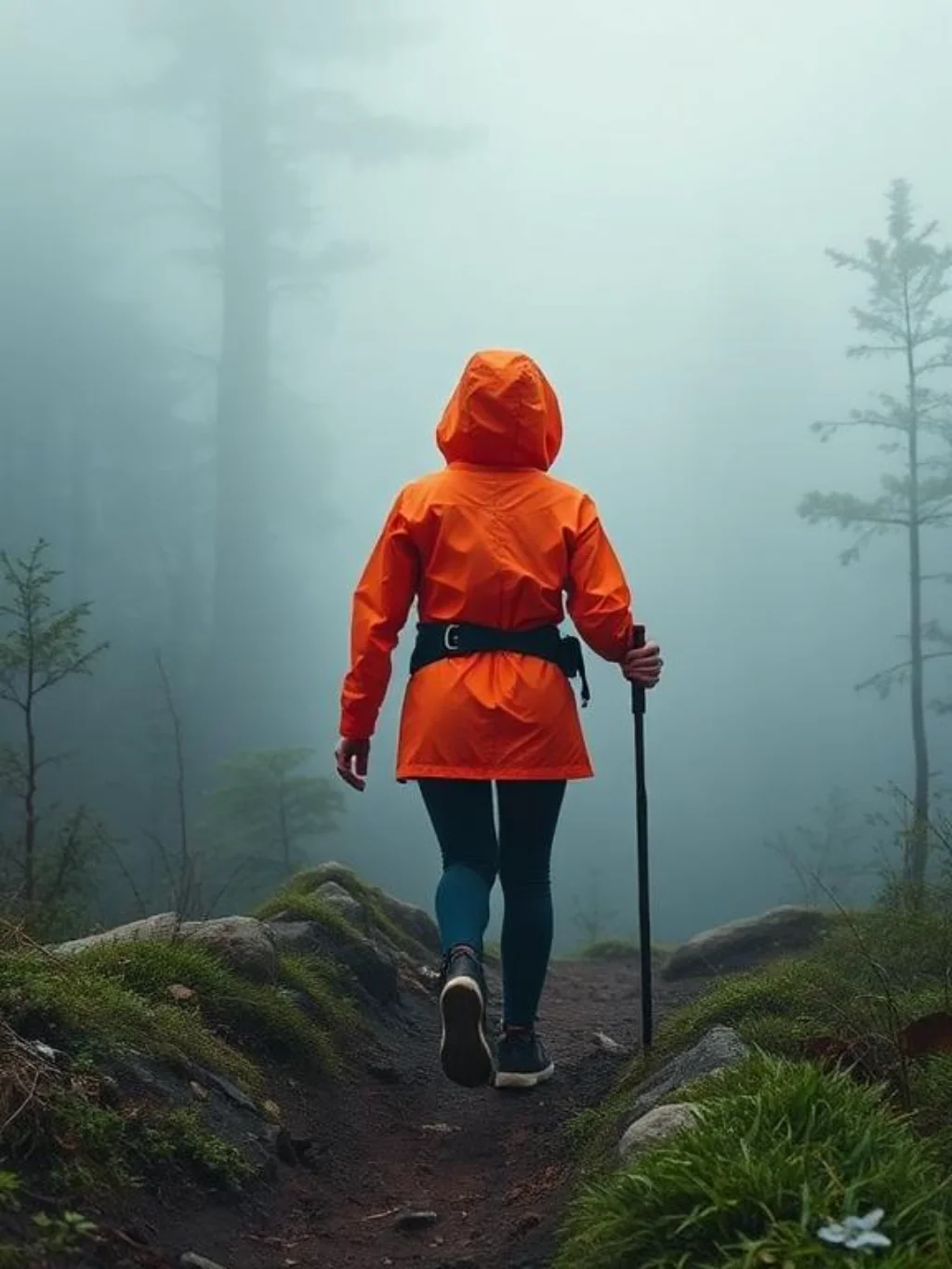
Trekking outfit color visibility safety monsoon trail women is a genuine safety consideration that gear marketing almost never addresses. Monsoon trail visibility conditions are dramatically worse than dry-season equivalents: dense fog on mountain sections can reduce visibility to ten to fifteen meters, cloud cover at altitude creates flat light that makes trail surfaces difficult to read, and forest canopy in heavy rain reduces ambient light to twilight levels by early afternoon. In these conditions, a trekker in earth-toned or dark-colored gear becomes essentially invisible to fellow trekkers, guide teams, and any search-and-rescue personnel who might need to locate them.
High-visibility color choices — specifically, bright orange, acid yellow, and true red — in at least one outer layer element (rain jacket, backpack cover, or bright colored base layer visible through open jacket) provide measurable visibility improvement in all of these conditions. Trail ready wet weather clothing from brands like Salomon women’s trail running shoes rain (whose gear tends toward visible color palettes) and Columbia women’s rain hiking jacket (which produces high-visibility colorways in most rain jacket lines) makes this a genuine gear selection criterion rather than a purely aesthetic one. You don’t need to look like a safety cone — but your rain jacket should be visible from fifty meters in flat light.
Packing Light Without Compromising Protection — the Monsoon Minimalist Method
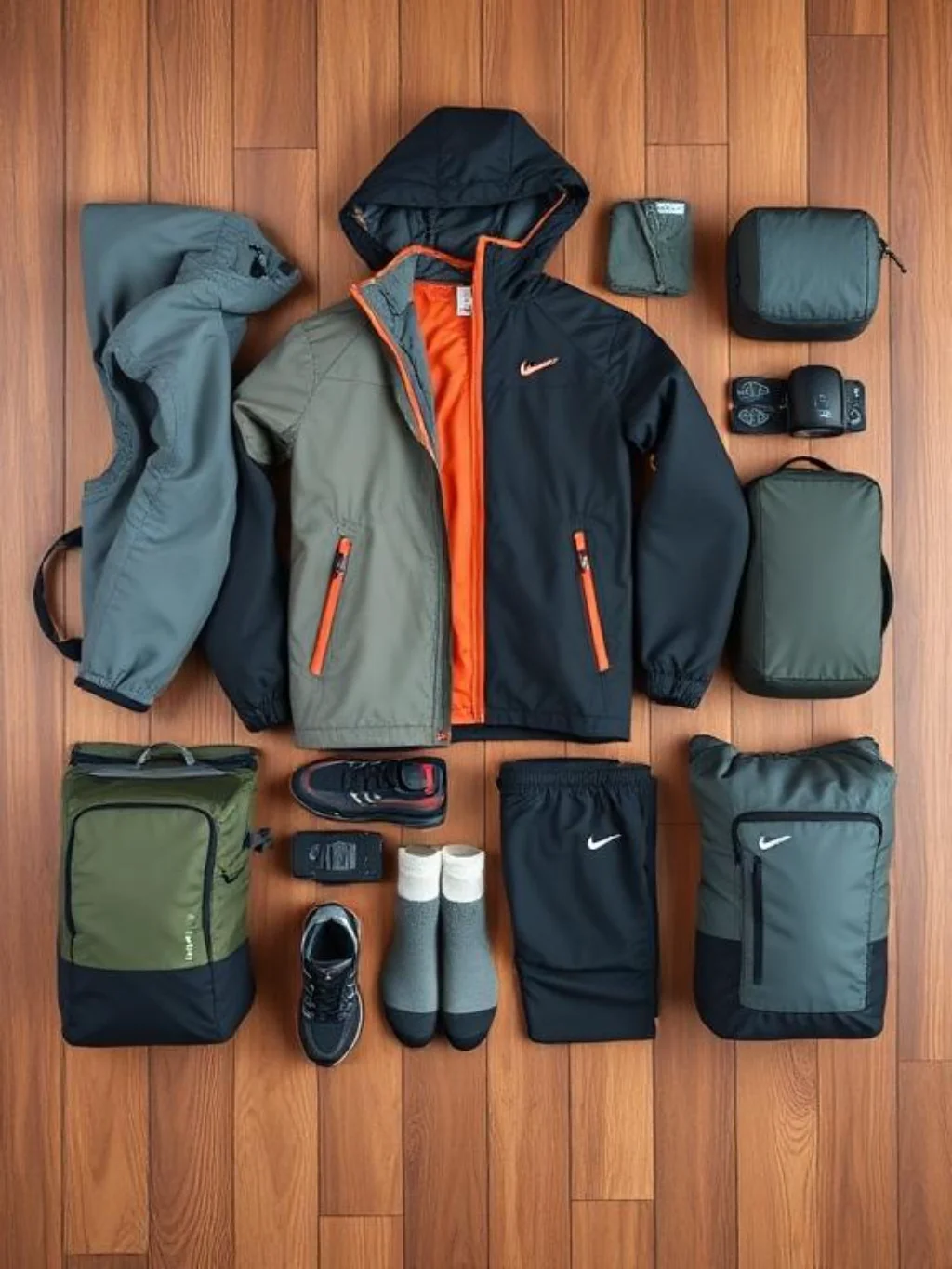
Packing light without compromising protection in the monsoon context requires ruthless prioritization of functional-to-weight ratio across every gear decision. The monsoon trek packing list women clothing for a five-day trek doesn’t need five sets of trail clothes. It needs two sets of trail clothes — one in use, one drying. In monsoon conditions with daily rain exposure, the drying cycle between trail days (usually partially accomplished by body heat and camp airflow overnight) means that two functional sets cover extended trek durations more efficiently than packing for daily outfit changes.
Lightweight rain hiking clothes women that achieve minimum-weight protection without sacrificing the core functions — waterproofing, moisture management, leech protection, thermal regulation — represent the technical gear industry’s current highest achievement. Monsoon trek outfit women light packable rain layer from Quechua SH100 rain hiking jacket women packs to approximately the size of a sandwich and weighs under 400 grams. Compact packable rain gear for hiking from similar ultralight technical categories means your rain jacket, mid-layer, and base layer system together weigh under 800 grams — leaving significant pack weight budget for safety equipment, navigation, and nutrition that actually determines whether you complete the trail successfully.
Western Ghats Monsoon Trek Outfit Strategy Versus Himalayan Monsoon Conditions
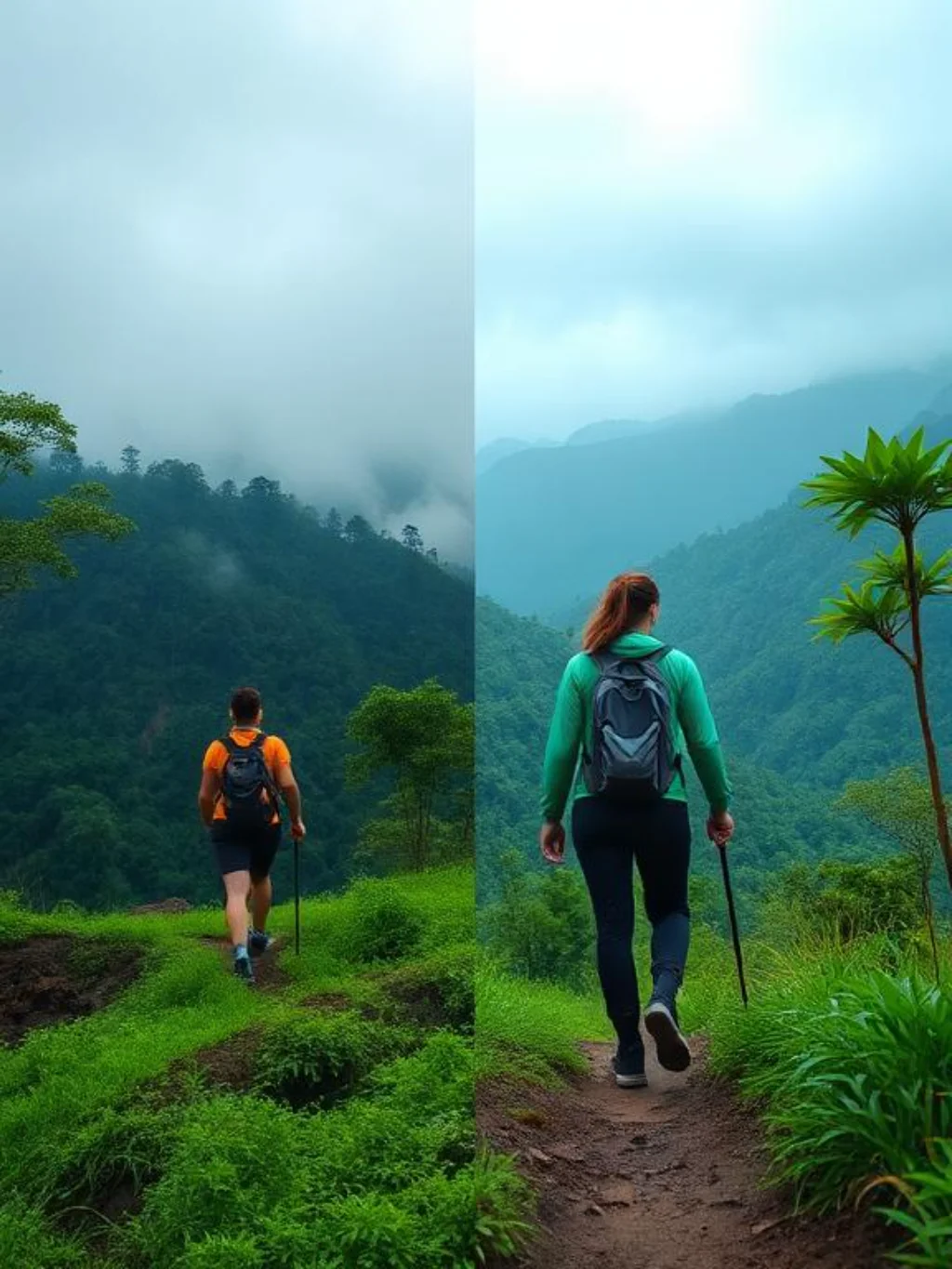
Women trekking outfit for Western Ghats monsoon season and Himalayan monsoon outfit strategies share a foundation but diverge significantly in critical gear choices. The Western Ghats monsoon environment — lowland forest and hill terrain below 2,500 meters — presents primarily tropical challenges: sustained high humidity (85-95%), heavy leech population density, warm temperatures (22-28°C at trail level), and brief but extremely intense rain bursts multiple times daily. The outfit priority hierarchy here is: moisture management first, leech protection second, waterproofing third.
Women monsoon trek outfit ideas India for Himalayan monsoon conditions — specifically popular trails in Himachal Pradesh, Uttarakhand, and Sikkim during July-September — face entirely different priority hierarchies. Temperature at altitude is the primary risk factor rather than humidity. Layered monsoon trek outfit women moisture management system for Himalayan use must incorporate thermal protection that Western Ghats trekking simply doesn’t require: a synthetic insulation mid-layer, thermal base layer capability for summit sections, and rain jacket warmth ratings appropriate for sub-5°C wind chill at exposed sections. The leech threat is present but lower priority than in lowland tropical monsoon terrain. The rain intensity is often less sustained but the altitude amplifies every wet-cold risk.
The Post Trek Dry Down Plan That Saves Gear and Prevents Infection
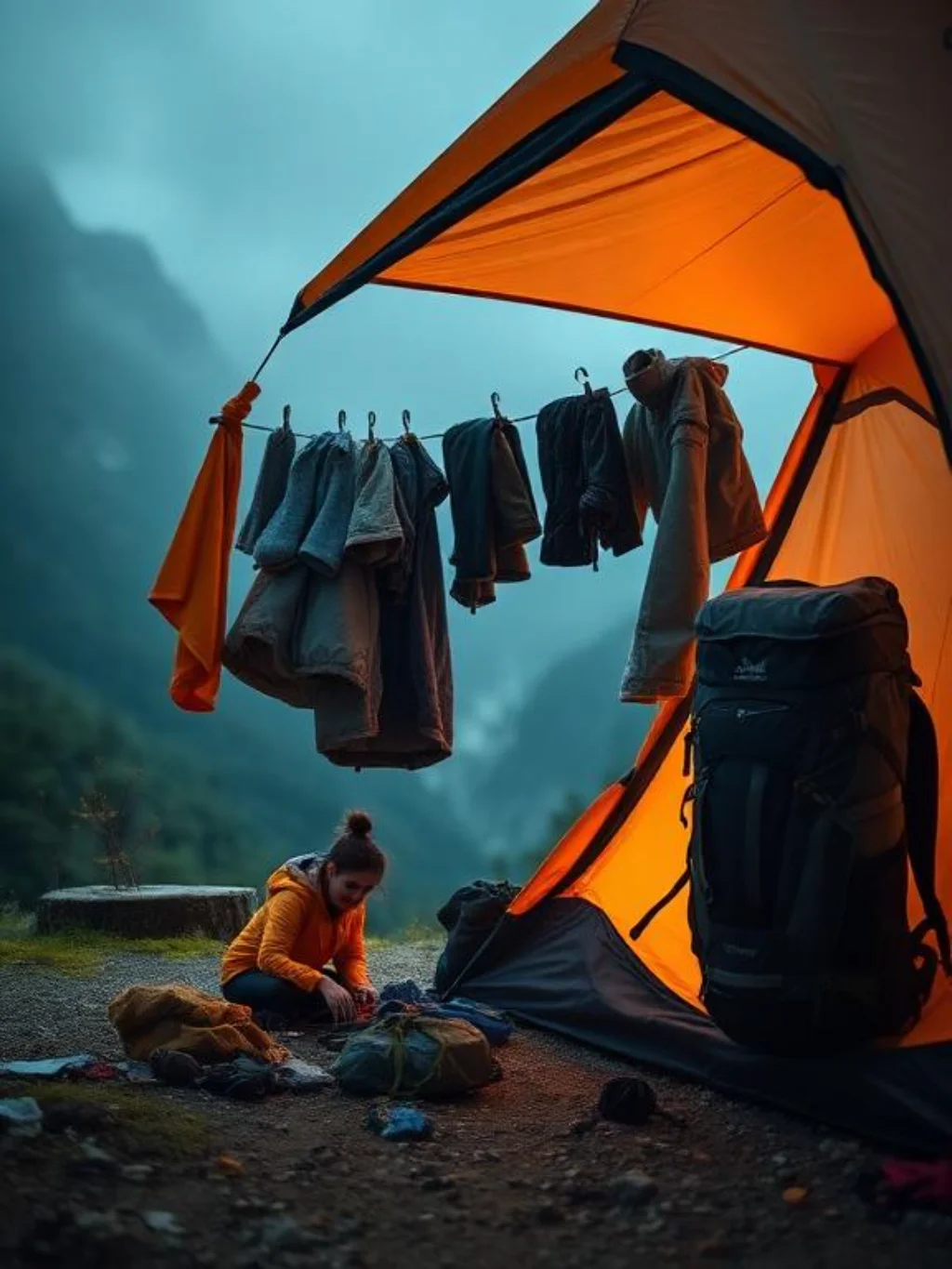
The trail day ends when you reach camp. The gear management day begins immediately. Rainy season outdoor adventure clothing left wet overnight in monsoon conditions will not dry — it will begin degrading. Synthetic fabrics develop mildew within twelve to eighteen hours in sustained high-humidity environments. Wool resists mildew better but still accumulates bacterial load in sustained wet conditions. Your post-trek dry-down routine is as important to the following day’s performance as sleep.
Sustainable trekking gear for rain longevity depends heavily on post-use care discipline in field conditions. Priority order for camp dry-down: first, remove boots and pack them with newspaper or dry grass to absorb interior moisture (critical for the waterproof membrane to maintain function); second, hang the rain jacket at the tent’s highest ventilation point with the DWR (durable water repellent) finish outermost; third, invert the trekking socks and hang them in any available airflow; fourth, change into dry camp clothes immediately to reset core body temperature and prevent the sustained damp-cold exposure that generates muscle tightness and immune suppression overnight. The pack itself should be opened fully and allowed to ventilate rather than closed around residual moisture.
Anti Blister Strategy Built Into the Outfit Before the First Step
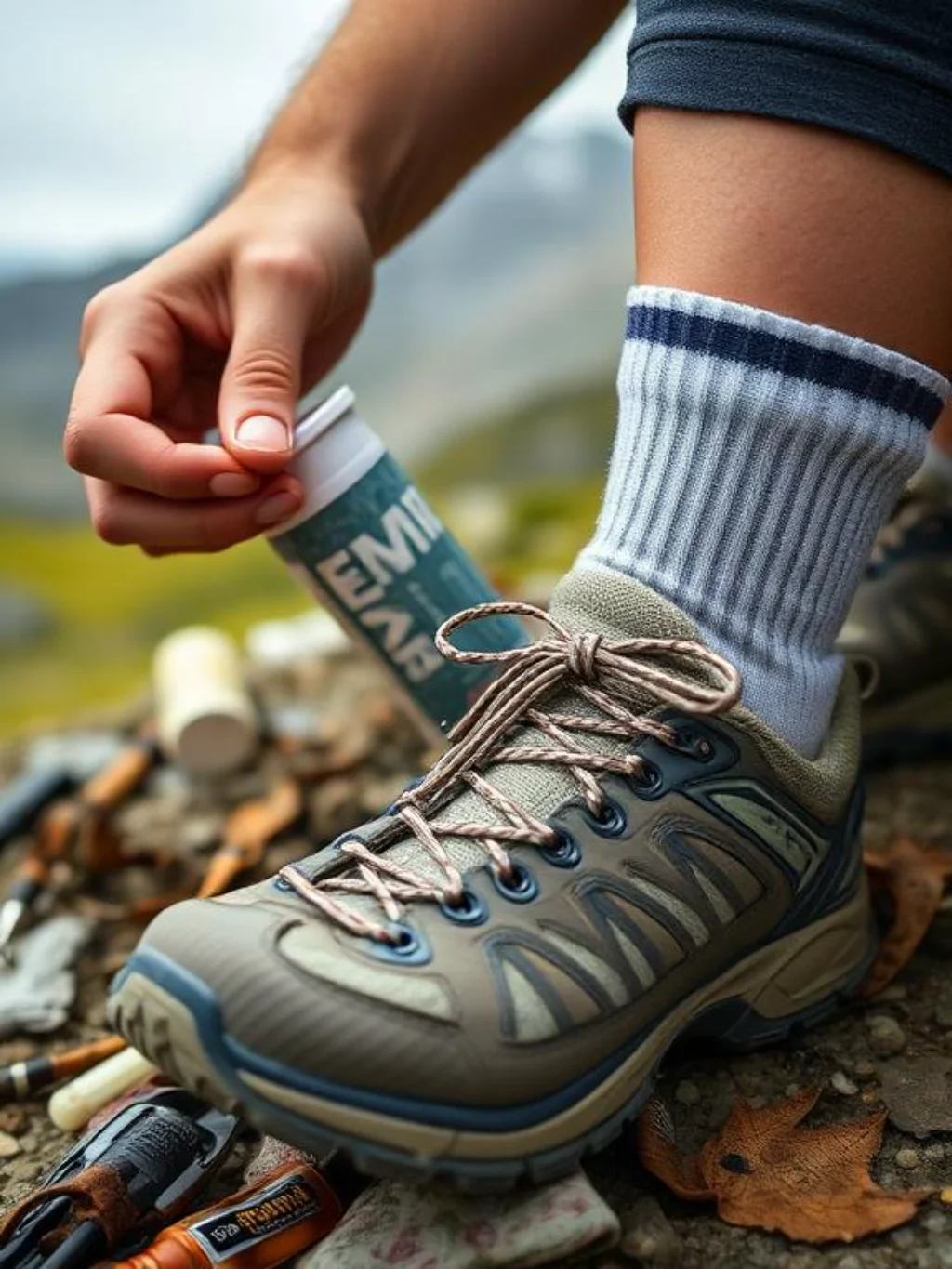
Anti blister strategy for monsoon trekking begins before the first trail step and operates through multiple redundant outfit-level interventions rather than through reactive treatment after blisters form. Anti blister wet terrain footwear women strategy starts with shoe fit: in monsoon conditions, feet swell due to sustained hydration and increased circulation from continuous movement. A shoe that fits correctly in a dry-weather store fitting will feel tight on a monsoon trail after two hours — this tightness increases friction at every high-pressure point and dramatically accelerates blister formation.
Monsoon trek shoes for women what to choose with a half-size of additional room for in-trail foot swelling, combined with the double-sock method (Darn Tough women merino hiking socks outer layer, thin synthetic liner inner layer), and pre-applied body glide or similar friction-reducing compound at known high-friction zones (heel, small toe, ball of foot) creates a three-layer anti-blister system that addresses the problem structurally rather than reactively. Anti blister wet terrain footwear women additionally benefits from lacing technique adjustment in wet conditions: a heel-lock lacing pattern (routing the lace through the highest eyelet before final lacing) prevents heel slippage that generates the most severe form of monsoon-condition blister at the posterior heel.
What Not to Wear — The Monsoon Trek Clothing Mistakes That Ruin Expeditions
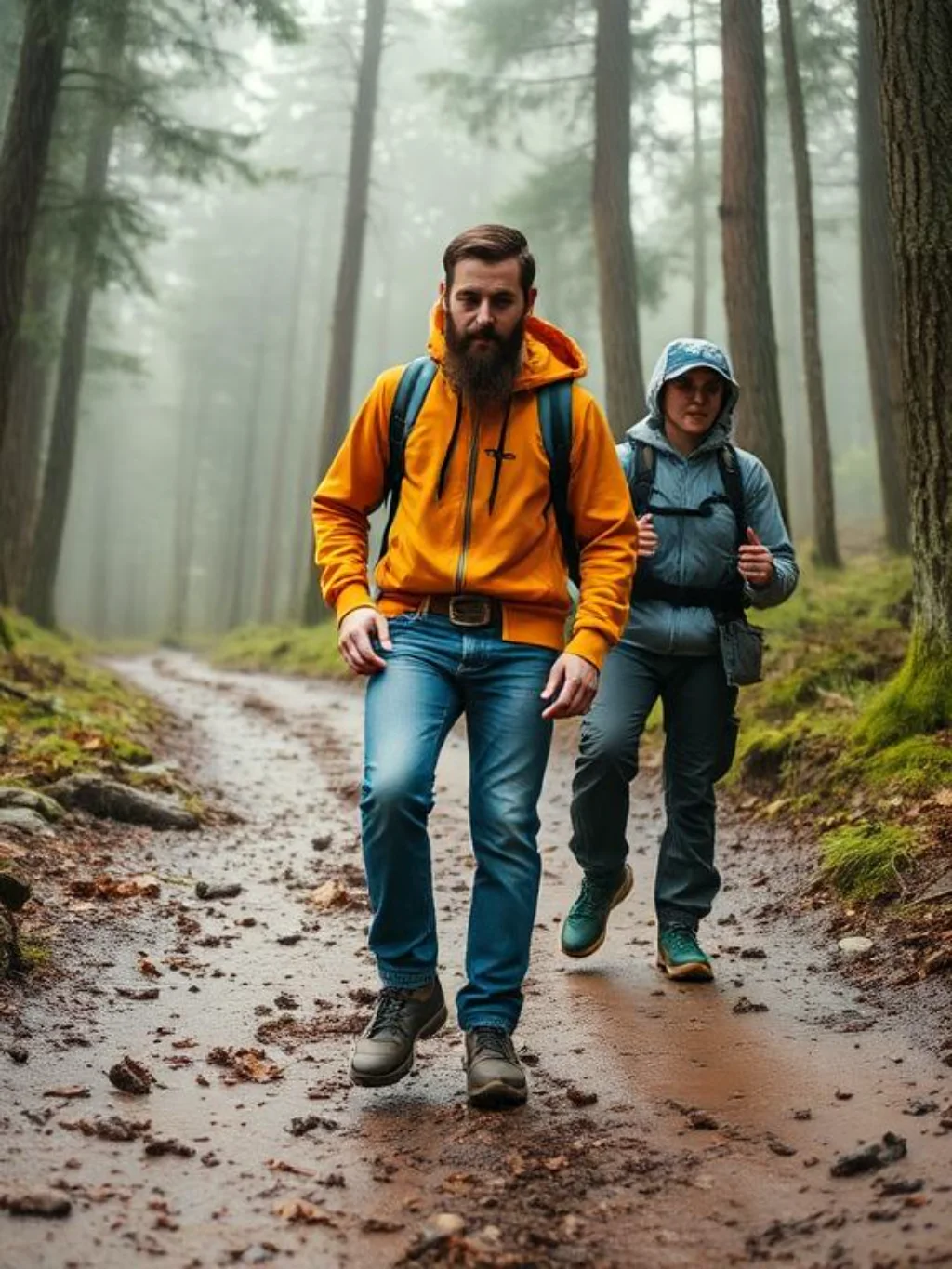
What clothes to pack for monsoon trekking women — and just as importantly, what to exclude — reflects the same logical framework. Cotton in any form and at any layer is the cardinal error. Cotton jeans, cotton t-shirts used as base layers, cotton sports socks, and cotton underwear all create sustained wet-against-skin conditions that range from acutely uncomfortable to genuinely dangerous at altitude. Women hiking in monsoon clothes made from cotton represent the most common equipment failure in monsoon trekking — and it’s entirely preventable.
Monsoon trek outfit women errors beyond cotton include: non-waterproof leather footwear that absorbs water and never dries; heavy down jackets that collapse when wet and add pack weight without thermal function in damp conditions; open-toe sandals or Crocs used as camp shoes (genuine leech and injury risk in monsoon camp environments); fashion-oriented windbreakers that provide zero waterproofing in sustained rain; and compression tights with insufficient moisture management for full-day trail use in humid conditions. Jungle trek outfit women monsoon specific errors include inappropriately short clothing that leaves arms and legs exposed to both UV damage and the dense insect population of tropical forest monsoon environments. Every one of these errors is correctable before departure — none requires field management.
Sustainable and Ethical Gear Choices for the Conscious Monsoon Trekker
Sustainable trekking gear for rain has moved from a niche concern to a mainstream consideration within the outdoor industry over the past decade — and several brands now offer genuine performance at equivalent or superior technical specifications to conventional gear while addressing environmental impact across the manufacturing supply chain. Patagonia women waterproof hiking layer products incorporate recycled polyester face fabrics and bluesign-certified production processes. Icebreaker merino base layer women sources from ZQ-certified New Zealand merino farms with audited animal welfare standards.
Sustainable trekking gear for rain choices also include durability as a sustainability criterion — a rain jacket that performs for ten seasons represents a significantly lower per-use environmental impact than a cheaper jacket that requires replacement after two. Outdoor Research women rain jacket and Arc’teryx women Gore-Tex rain jacket both carry lifetime repair commitments that extend product life beyond what cheaper alternatives support. Quechua women rain trekking jacket from Decathlon’s Ecodesign-labeled range incorporates recycled materials in specific product lines. Making conscious gear choices doesn’t require compromising performance — it requires applying performance criteria to the full product lifecycle rather than only to in-field use metrics.
Budget Monsoon Trek Outfit Builds That Perform Like Premium Gear
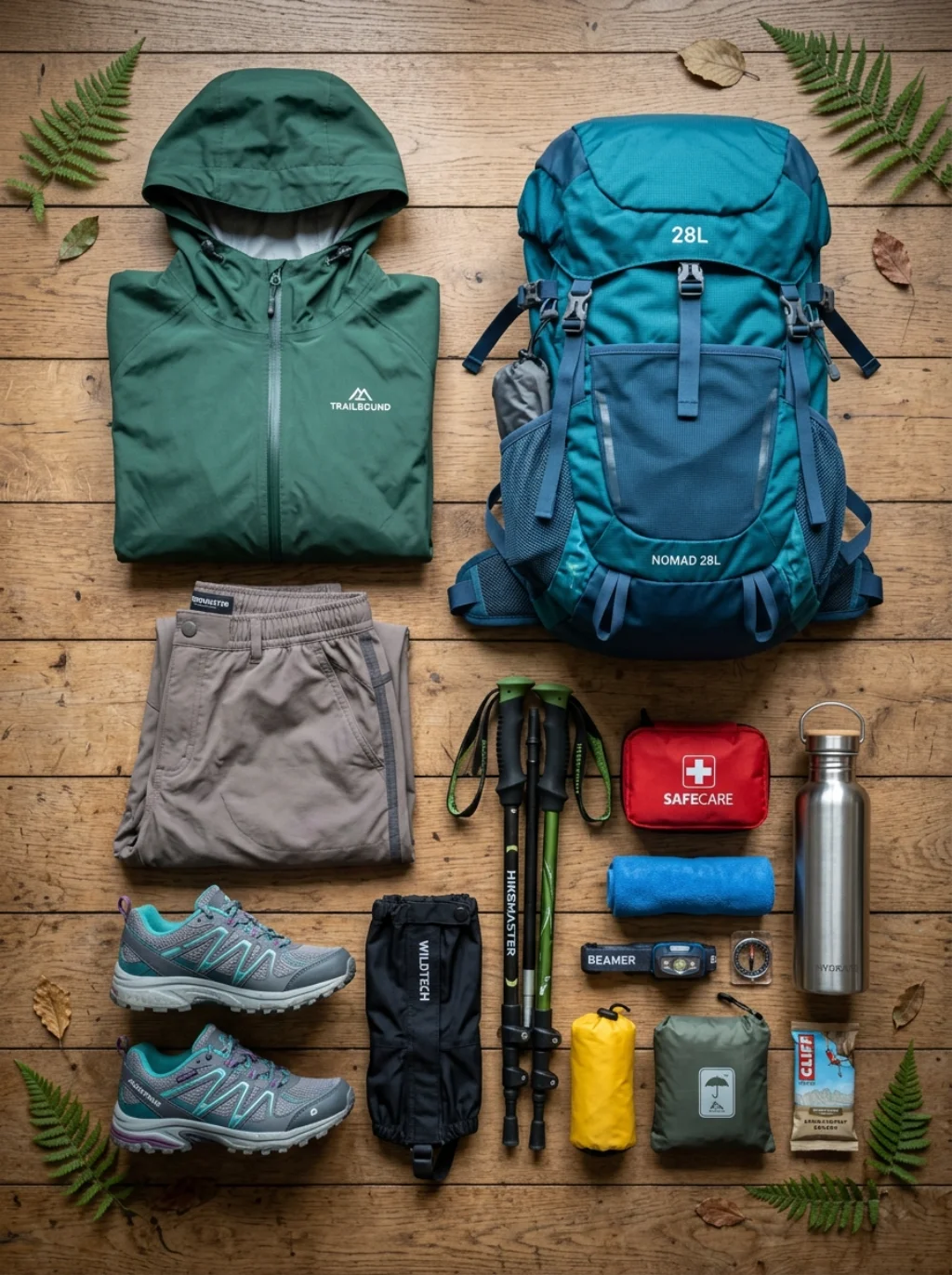
Monsoon trek outfit women at premium price points is genuinely excellent — but premium prices aren’t a prerequisite for functional performance in monsoon conditions. Women’s rain hiking clothes that satisfy the core technical requirements of monsoon trekking are available at accessible price points across multiple retail channels if you understand which specifications matter and which are marketing premium rather than functional premium.
Budget monsoon trek outfit builds that perform center on strategic investment: spend on the two items with highest functional impact — rain jacket and footwear — and source base layers, mid-layers, and accessories from accessible channels. Decathlon women monsoon trekking gear (Quechua brand) provides the strongest budget performance proposition in the monsoon trekking category: the Quechua SH100 rain hiking jacket women at approximately $30-40 outperforms rain jackets at three times the price for casual to moderate monsoon trail use. Nathan James home furniture — referencing the principle that furniture brand-level design intelligence entering adjacent markets can disrupt premium pricing — applies to outdoor gear too: Wildcraft India women trekking gear provides India-market pricing on gear specifically designed for Indian monsoon trekking conditions that outperforms premium Western imports for the specific terrain they’re designed for.
Frequently Asked Questions
Can women wear leggings for monsoon trekking?
Can you wear leggings for monsoon trekking women — technically yes, but with significant caveats. Athletic leggings in recycled polyester or nylon blends do provide quick-drying performance and moisture wicking that makes them preferable to cotton tights. However, leggings lack the mechanical durability of dedicated trekking pants for scrambling sections, provide inadequate UV protection for exposed trail sections, offer no wind or abrasion resistance, and create gaiter integration challenges for leech protection. Women’s outfit for hiking in heavy rain with leggings as the primary leg layer works acceptably for short, gentle trail days in lowland monsoon terrain but is insufficient for technical or extended trekking. Upgrade to dedicated quick-dry trekking pants for any trail longer than a half-day or involving technical terrain.
What is the best rain jacket for women monsoon trekking?
Best rain jacket for monsoon trek women at premium performance: Arc’teryx women Gore-Tex rain jacket Beta SL or equivalent, with fully taped seams, 20,000mm waterproofing, and 20,000g breathability. At mid-range: Columbia women’s rain hiking jacket Watertight or OutDry Extreme series, providing genuine waterproofing performance at approximately half the premium price point. At budget performance: Quechua SH100 rain hiking jacket women from Decathlon, which satisfies the basic waterproofing and packability requirements for casual monsoon trail use at a fraction of premium pricing. All three outperform any poncho for active trail use.
Are waterproof boots better than trail shoes for monsoon treks?
The honest answer: not usually, for full-day monsoon trekking. Trail shoes versus waterproof boots women monsoon trekking comes down to submersion frequency and altitude. Waterproof boots maintain footwear dryness in light rain and occasional shallow water crossings. Once water enters from above the collar — which happens consistently in sustained monsoon rain and any stream crossing above ankle depth — the boot holds water against the foot. Grip footwear for wet trail surfaces with drainage ports, like Salomon women’s trail running shoes rain Speedcross or Inov-8 women trail shoes wet terrain equivalents, drain immediately and dry between rain bursts. The exception: high-altitude sections where thermal protection matters more than drainage.
How do women prevent leeches during monsoon trekking?
Women monsoon trek outfit ideas India for leech prevention requires a multi-element outfit strategy rather than any single intervention. The most effective system: gaiters extending to mid-calf secured over trouser lower-leg, trekking socks worn tucked over the gaiter’s lower edge, trouser ankle cuffs tucked into gaiter upper edge, and salt or tobacco-based leech repellent applied to gaiter and lower trouser fabric. Leech proof trekking clothing monsoon through this complete barrier approach prevents approximately 90 percent of leech attachment attempts. Chemical repellents applied directly to skin as the primary defense rather than physical barrier defense are significantly less effective and require repeated application throughout the trail day.
What base layer is best for women in monsoon conditions?
What base layer to wear for monsoon trek women follows a clear priority hierarchy. For lowland and mid-altitude monsoon trekking where temperature remains above 15°C throughout: a synthetic polyester moisture-wicking base layer in the 100-150 gsm weight range provides optimal moisture management at lowest cost. For high-altitude monsoon trekking where temperature drops below 10°C at exposed sections: Icebreaker merino base layer women in the 150-200 gsm weight range provides both moisture management and meaningful thermal regulation that synthetic alternatives in the same weight range don’t match. Never wear cotton at any layer in any monsoon trekking context — the moisture retention creates both comfort failure and genuine cold-stress risk.
Conclusion
Monsoon trek outfit women strategies only work when they’re matched to the specific trail, the specific altitude, the specific duration, and the specific threat profile — leech density, rain intensity, temperature range, terrain technicality — rather than to a generic outdoor hiking aesthetic. The mountain you imagined, with its Instagrammable mist and romantic rain, doesn’t care what you’re wearing. The mountain you’re actually climbing — with its six-hour sustained downpour, its leech-dense grassland, its muddy scrambling sections, and its sudden temperature drop at the ridge — cares about every outfit decision you made before departure.
Pack with honesty about the conditions. Invest where performance matters — rain jacket, footwear, base layers. Implement the redundant systems — two sock pairs, internal dry bags, double-layer gaiter coverage — that provide margin when individual components are stressed. Build the post-trek dry-down habits that protect both your gear and your health across a multi-day expedition. And most importantly, test your outfit before the trailhead rather than discovering its failure modes six kilometers from the nearest shelter. The best monsoon trek outfit women deploy is the one that was tested, adjusted, and understood before the first monsoon cloud appeared on the horizon. Build it deliberately. The mountain will test it thoroughly.
1 Comment