
Introduction
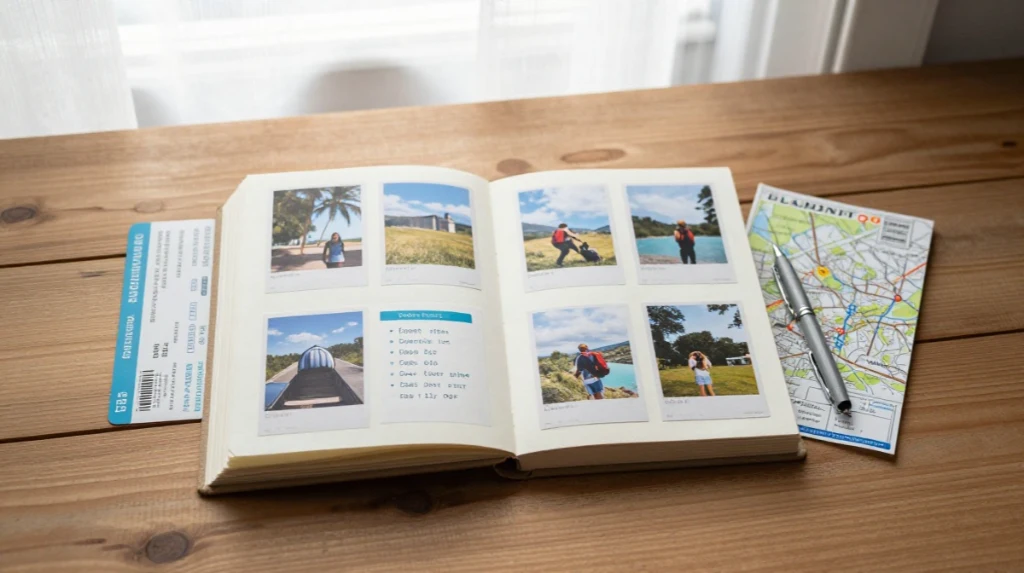
There is something about coming home from a trip and realizing your camera roll has three thousand photos you will probably never look at again. A travel memory book solves that problem in the best possible way. It takes the mess of ticket stubs, blurry sunset shots, and half-remembered restaurant names and turns them into something you can actually hold, flip through, and share with people you love.
Whether you just got back from a weekend getaway or you are still riding the high of a month-long backpacking trip, putting your memories into a book gives them a second life. It is not about being a professional crafter or having perfect handwriting. It is about preserving travel memories in a way that feels personal and honest, even if your pages are a little messy or your captions are short.
This guide walks through 22 ideas to help you document vacation experiences in a way that actually lasts. From choosing your first layout to picking the right materials, pairing photos with journaling, and avoiding the mistakes most beginners make, you will find something here no matter your budget, skill level, or travel style.
What Is a Travel Memory Book
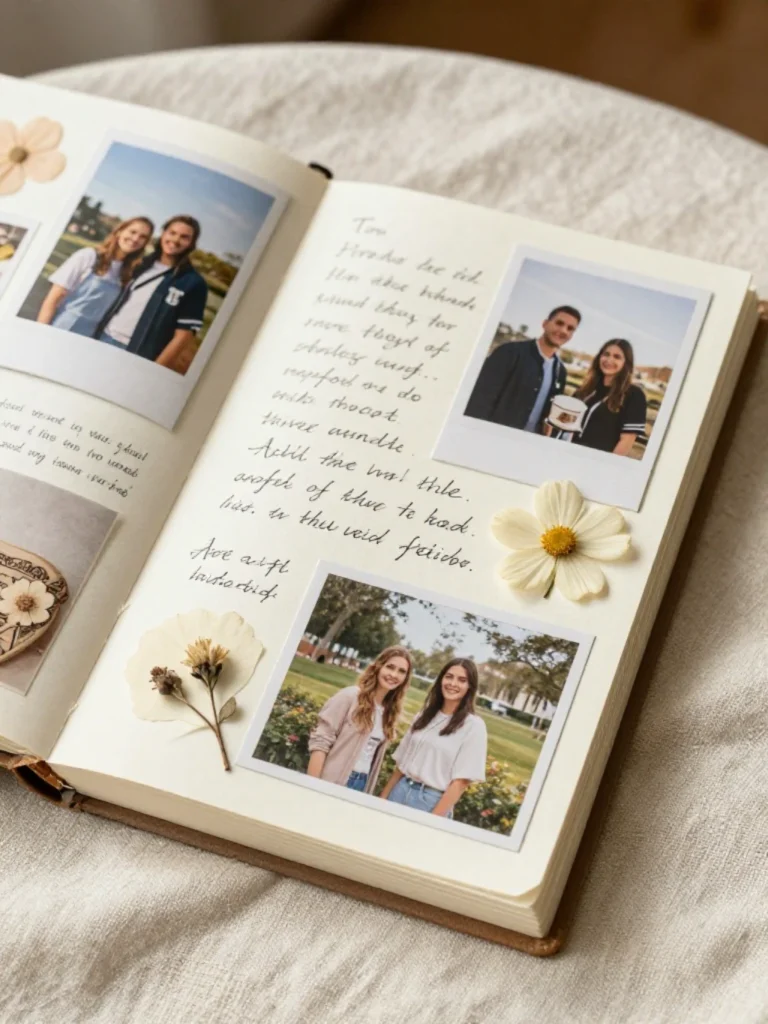
A travel memory book is exactly what it sounds like — a physical or digital collection of photos, notes, and small keepsakes from your trip, arranged in a way that tells the story of where you went and what it felt like to be there. Unlike a regular photo album, it usually includes handwriting, small mementos, and personal touches that make it feel one of a kind. Some people call it a travel scrapbook, others prefer travel journal ideas mixed with photography, but the goal is the same.
The beauty of this project is that there is no single right way to do it. Some books lean heavily on photos with short captions, while others read more like a diary with photos tucked between the pages. If you are new to this, start simple. A basic memory book ideas structure with a photo, a date, and one sentence about the day is more than enough to begin with.
Choosing the Right Travel Memory Book Style
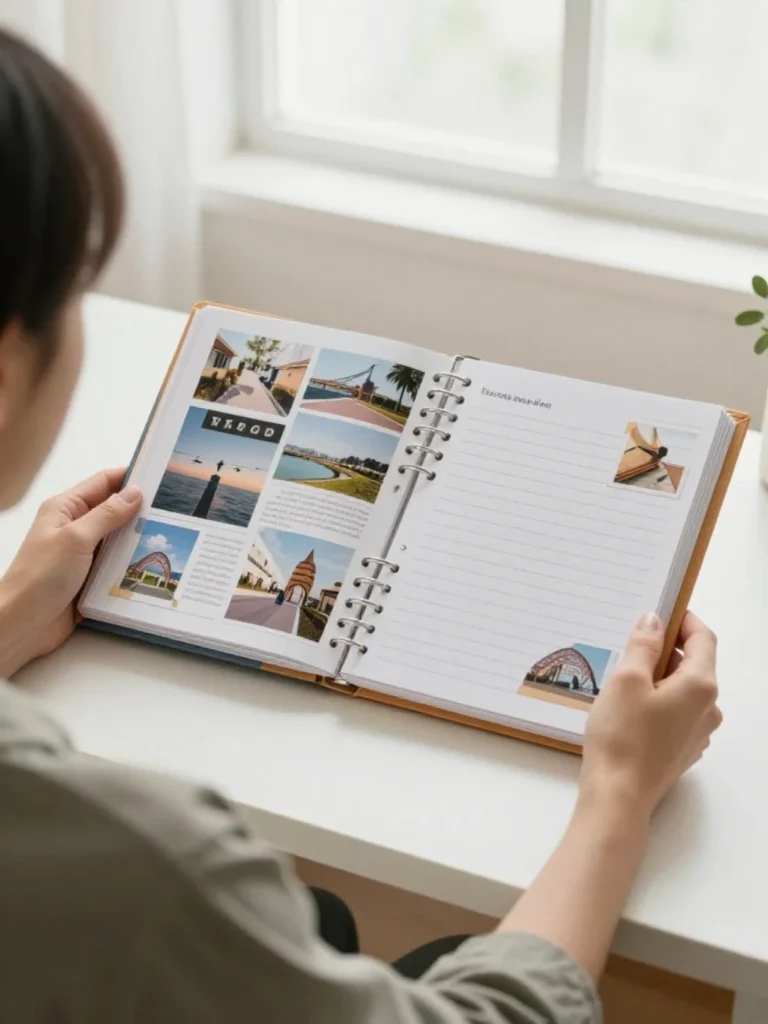
Before you buy a single supply, think about how you actually want to use this book later. Do you want something you can flip through quickly with guests, or something more private that reads like a story? A personalized travel book built around quick photo spreads works well for casual sharing, while a travel diary ideas format with longer entries suits people who enjoy writing.
Your style also depends on how much time you realistically have. A busy parent documenting a family vacation scrapbook will likely want a faster, more visual format than a solo traveler with quiet evenings to fill pages. Neither approach is better than the other. Pick the one that matches your actual habits, not the one that looks best on Pinterest.
Travel Scrapbook Ideas for Beginners
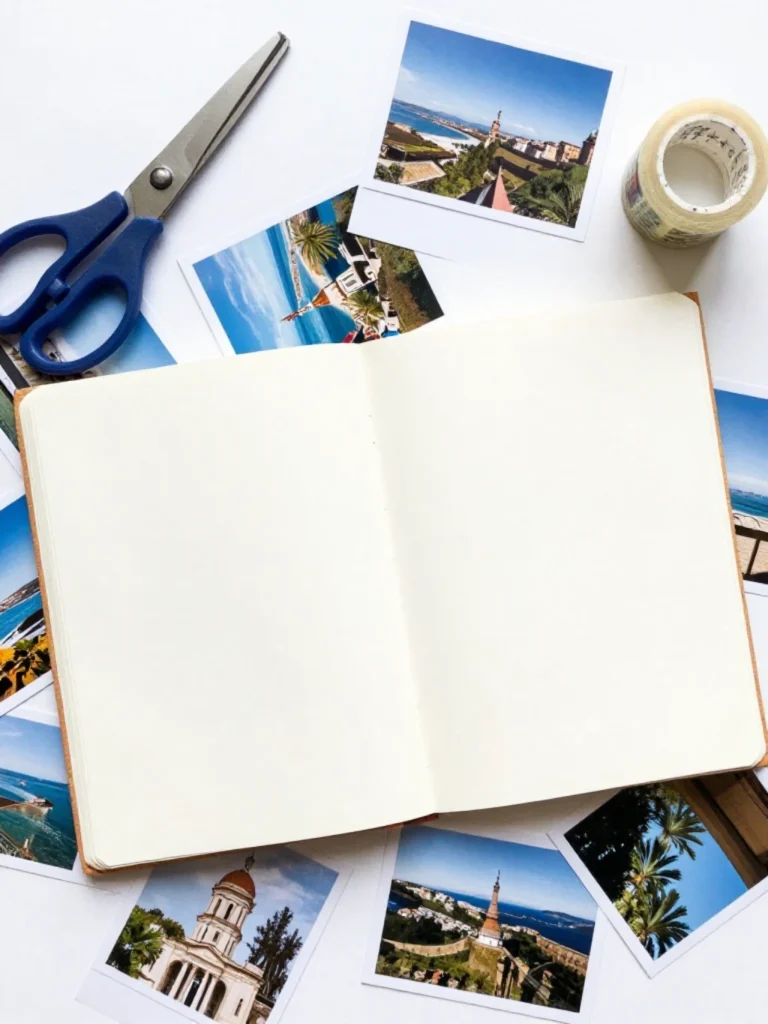
Starting your first travel scrapbook can feel overwhelming when you are staring at a blank page and a pile of photos. The easiest fix is to work chronologically. Lay your photos out in the order the trip happened, pick your favorites for each day, and build your pages around those instead of trying to include everything.
A good beginner trick is to limit yourself to three to five photos per page. This keeps the layout clean and stops the project from feeling like a huge task. Add one small handwritten note per page — a funny moment, a smell, a taste, anything sensory — and you will be surprised how much that single sentence brings the memory back years later.
DIY Travel Book Materials You Will Need
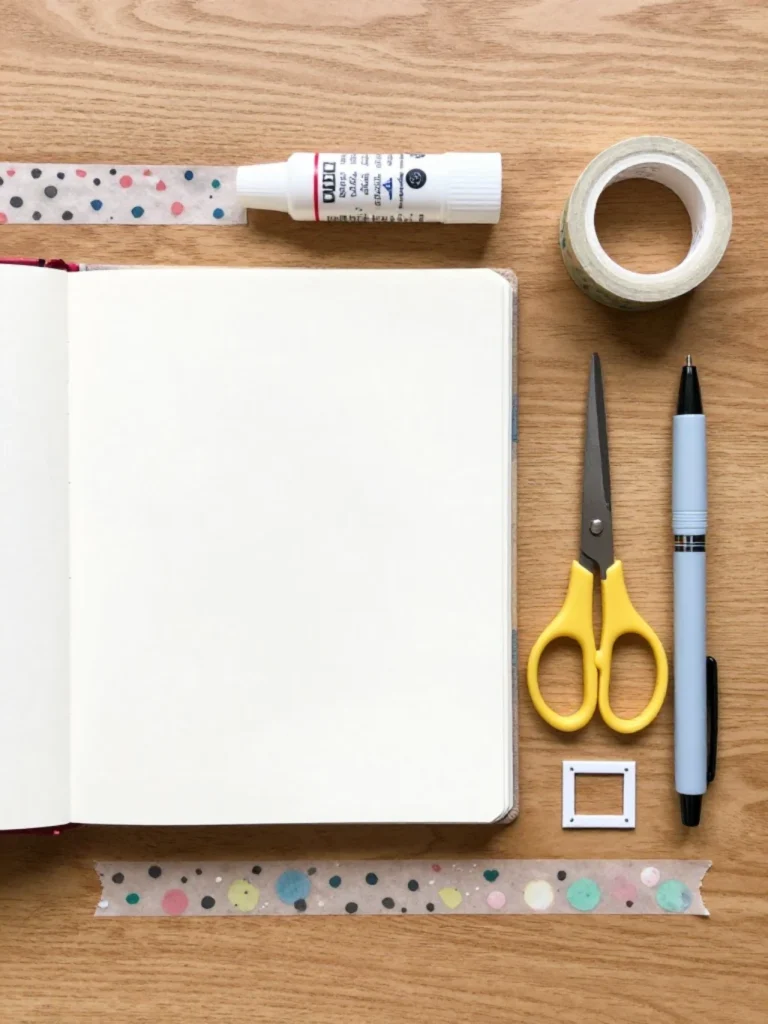
You do not need a craft store’s worth of supplies to make a beautiful DIY travel book. At minimum, you will want a blank album or scrapbook, double-sided tape or photo corners, a good pair of scissors, and a pen you actually enjoy writing with. Printed photos are essential, so budget time for printing before you start assembling pages.
Beyond the basics, a few extras go a long way: washi tape for borders, small envelopes for loose tickets, and stickers or stamps if you like a decorative touch. Keep your travel memory book supplies list short at first. It is easier to add more later than to feel pressured to use everything you bought on page one.
Creative Travel Photo Book Layout Ideas
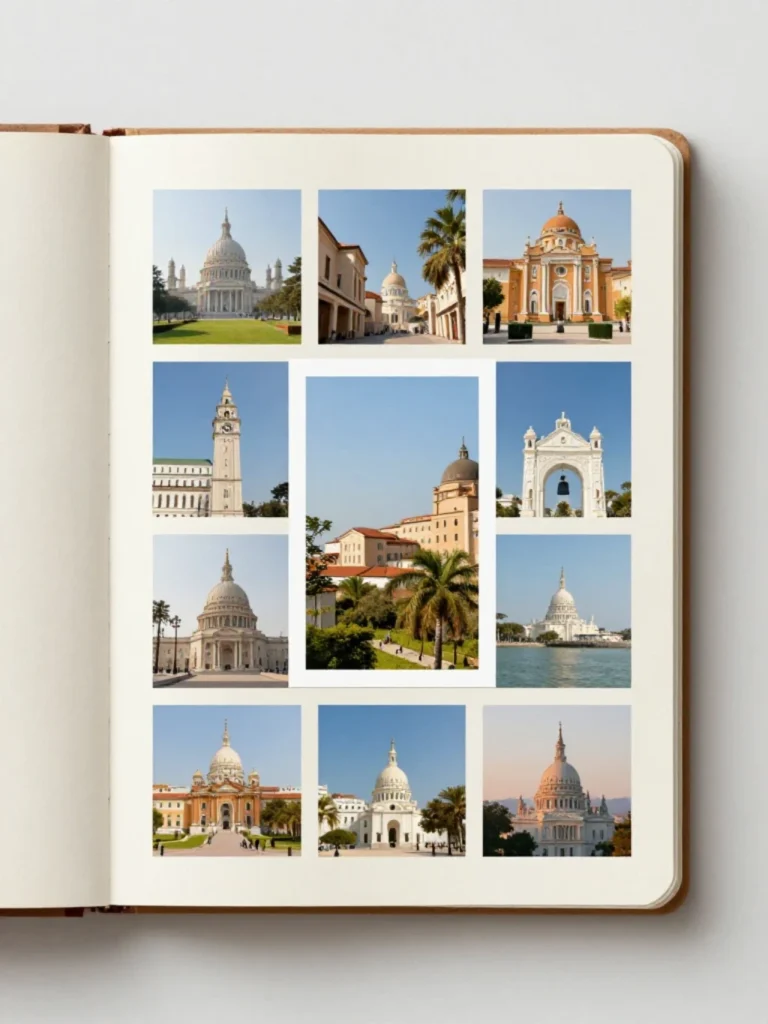
Layout is where a travel memory book really comes to life. A simple grid layout works well for busy travel days with lots of photos, while a single large photo with plenty of white space suits a quiet, meaningful moment. Mixing both styles throughout the book keeps the pages feeling fresh instead of repetitive.
One layout worth trying is the “before and after” spread, where you place a photo of a place next to a photo of yourself there. Another popular option is grouping photos by color rather than by time, which creates a striking visual page even if the pictures were taken days apart. Do not be afraid to leave blank space. A cluttered page is harder to enjoy than one with room to breathe.
Travel Memory Book Cover Ideas
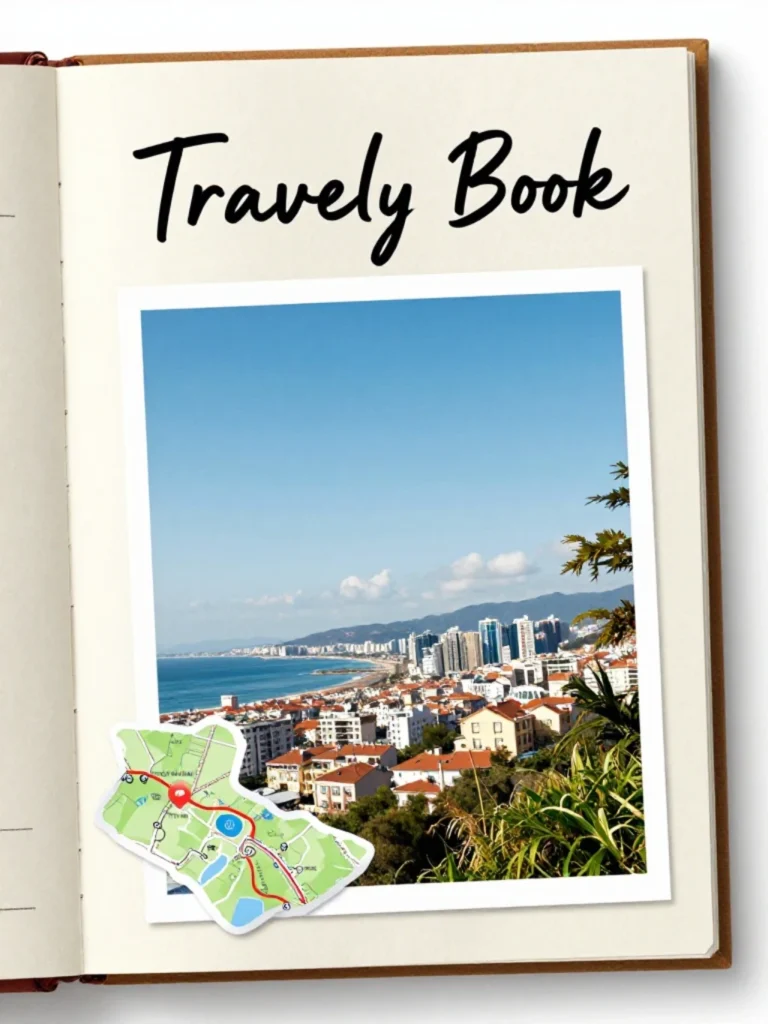
The cover sets the tone for everything inside, so it is worth a little extra thought. Some people keep it simple with just the destination name and travel dates, while others go all out with a favorite photo, a map cutout, or a pressed flower from the trip. Your travel memory book cover ideas should reflect the mood of the trip itself.
If you plan on making more than one book, a consistent cover style across your collection looks great lined up on a shelf. Consider using the same font for titles or a matching color palette. It is a small detail, but it turns individual books into a proper set you will be proud to display.
Adding Tickets and Souvenirs to Your Book
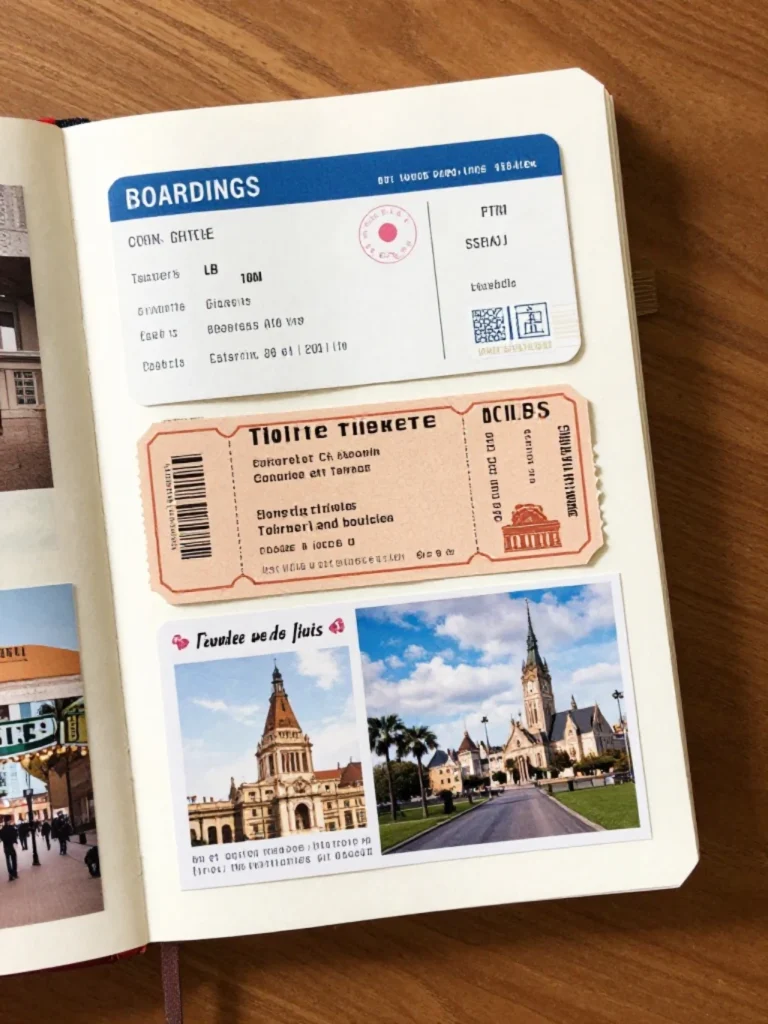
Nothing brings a page to life quite like a real boarding pass, museum ticket, or coffee shop receipt tucked next to your photos. A travel memory book with tickets feels far more authentic than photos alone because these small paper items carry real texture and detail from the actual day.
The trick is storing these items safely while you travel so they survive the trip. Keep a small envelope or zip pouch in your bag specifically for paper keepsakes. When you get home, flatten anything crumpled under a heavy book overnight before gluing it in, so your pages stay neat instead of lumpy.
Travel Journal Ideas to Pair with Photos

Photos capture what a place looked like, but words capture what it felt like. Pairing simple travel journal ideas with your photos gives future-you much more to remember than images alone. You do not need to write paragraphs — even a few honest lines about how you felt that day add real depth.
Try answering a different quick prompt on each page instead of writing a full diary entry. Questions like “what surprised me today” or “what I want to remember” work well because they are specific enough to spark a real memory instead of a generic summary.
Vacation Photo Book Organization Tips
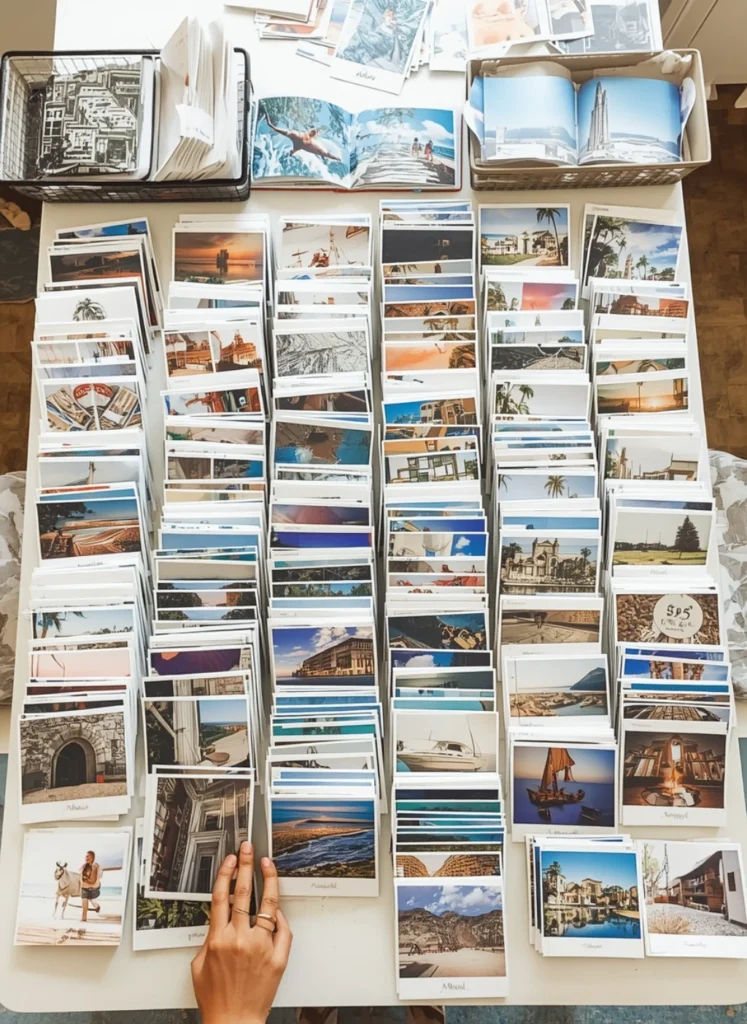
A vacation photo book falls apart fast without some kind of system, especially if you traveled to more than one place. Sorting photos by day or by location before you start gluing anything down saves a huge amount of frustration later. Give yourself an evening just for sorting before you touch any glue or tape.
Once sorted, pick a rough page count per location so the book stays balanced. If one city gets fifteen pages and another gets two, the imbalance will bother you every time you flip through it. A little planning upfront makes the whole project feel far more manageable.
Travel Memory Book Themes to Try
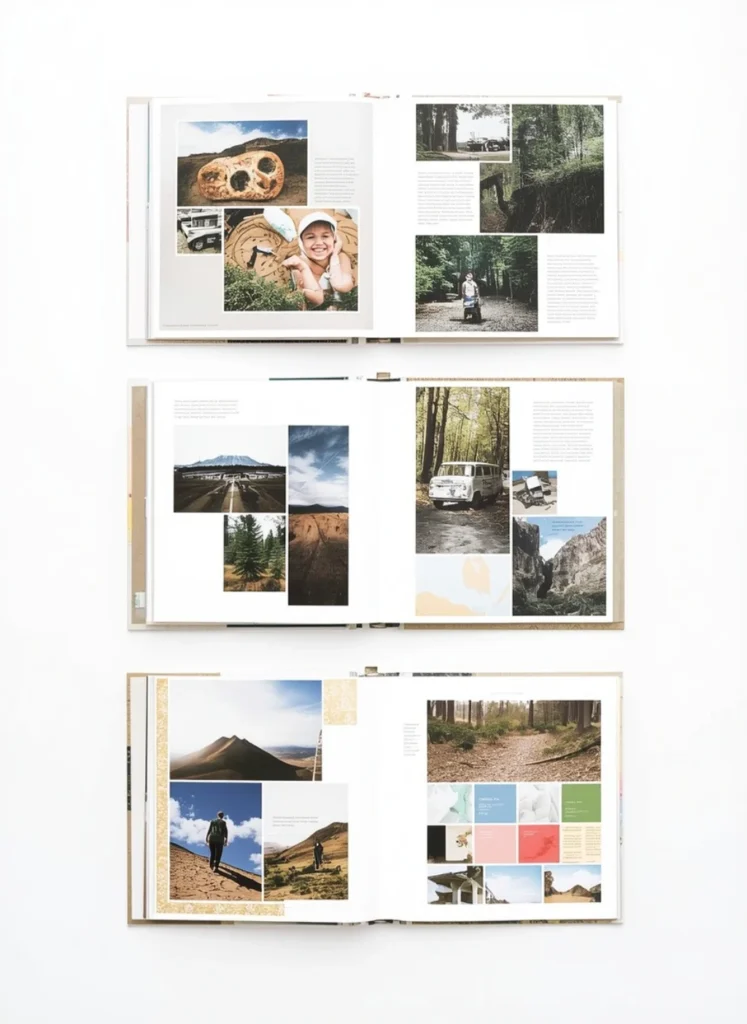
Choosing a theme gives your book a stronger sense of identity beyond just being a pile of vacation photos. A food-focused theme built around every meal you tried is a fun option for foodies, while a nature theme works well for hiking or beach trips. Travel memory book themes ideas can also be built around color, a specific activity, or even the people you met along the way.
Themes are especially useful if you find yourself with photos from many different trips and want to combine them into one book instead of making a separate one for each. A “sunsets around the world” or “street food I tried” theme pulls unrelated trips together into one cohesive, satisfying story.
Honeymoon Scrapbook Ideas for Couples
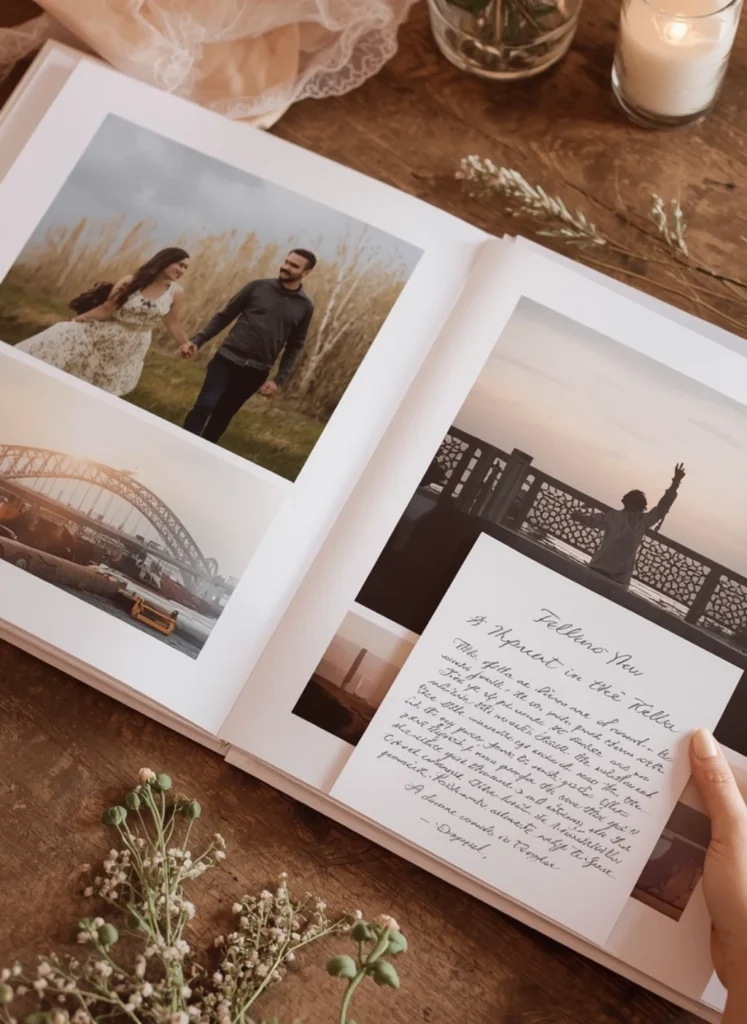
A honeymoon deserves a book that feels a little more special than your average trip. Honeymoon scrapbook ideas often include handwritten letters to each other, a copy of the wedding invitation, or a joint list of favorite moments written separately and compared later. These personal touches turn the book into a keepsake for years to come.
Consider leaving a few blank pages at the back for future anniversary trips. Many couples turn their honeymoon book into an ongoing project, adding a page each year to mark the relationship’s continuing story rather than starting a brand new book every time.
Family Vacation Scrapbook Ideas
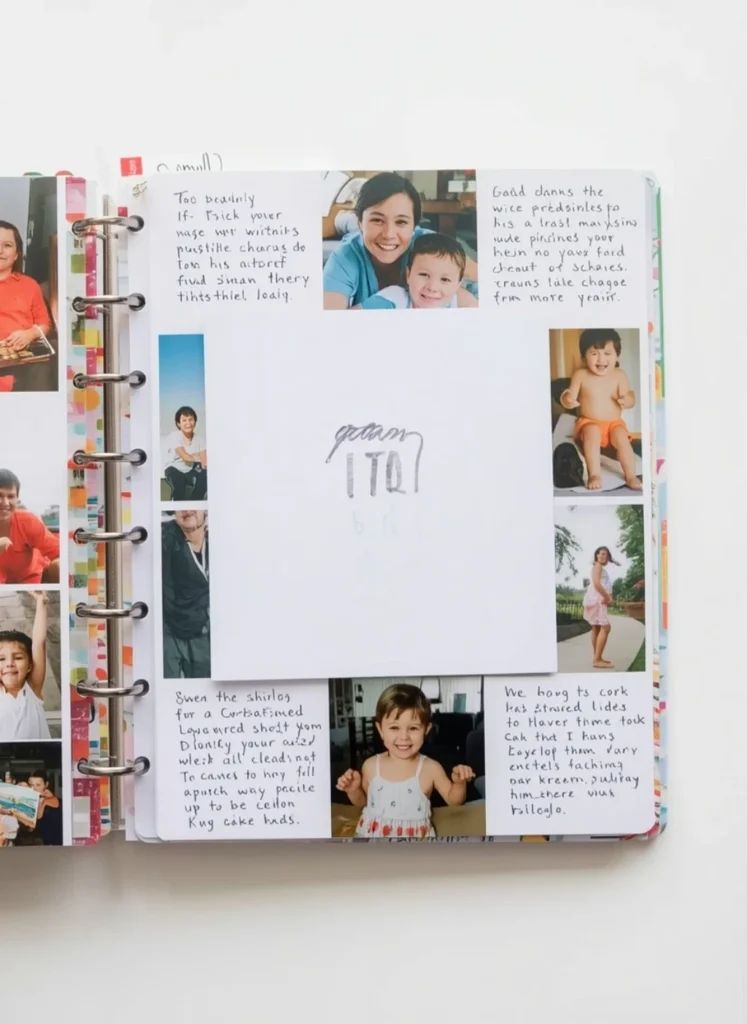
Documenting a trip with kids comes with its own charm and its own chaos. A family vacation scrapbook works best when everyone contributes something, even young children who can only draw a quick picture of their favorite part of the day. This turns the book into a shared project rather than one person’s solo task.
Keep expectations realistic. You will not capture every single moment, and that is fine. Focus on a handful of standout memories per family member instead of trying to document the entire trip in equal detail. The imperfect, honest version usually means more than a picture-perfect one anyway.
Road Trip Memory Book Ideas
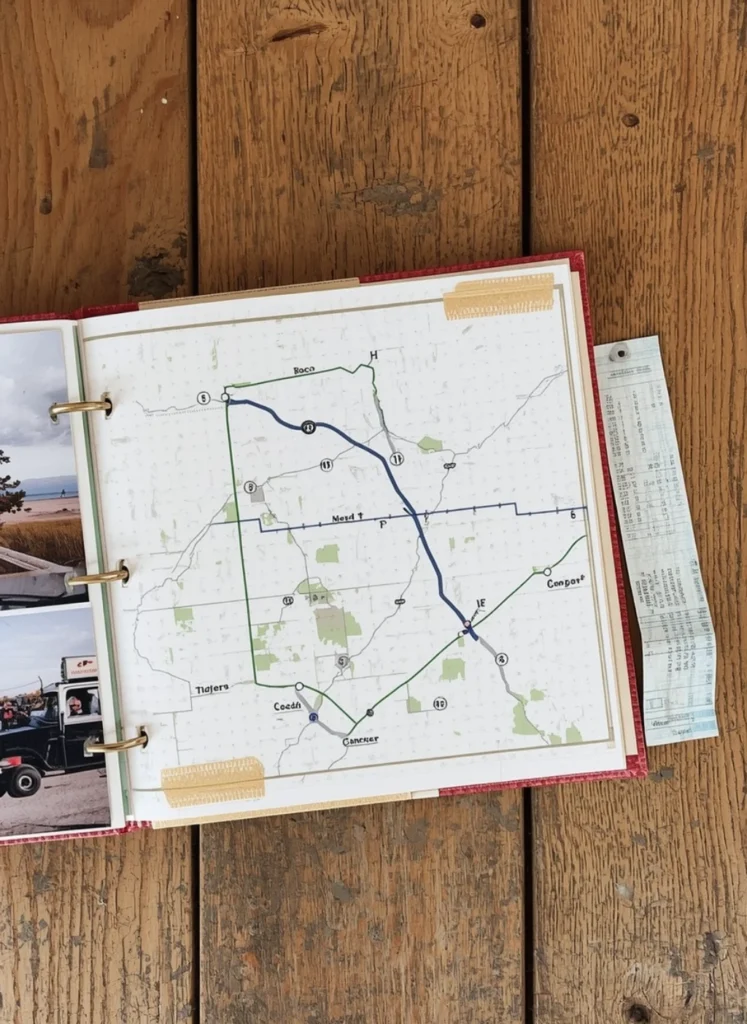
Road trips come with a built-in structure that makes them easy to document — mile by mile, stop by stop. A road trip memory book works well organized by location, with a small map sketch showing your route through the pages. Gas station receipts, diner menus, and roadside photos all add authentic character.
Since road trips often involve long stretches of driving, use that downtime to jot quick notes on your phone that you can transfer into the book later. Waiting until the whole trip is over to remember every stop is much harder than capturing small details along the way.
Backpacking and Solo Travel Memory Books
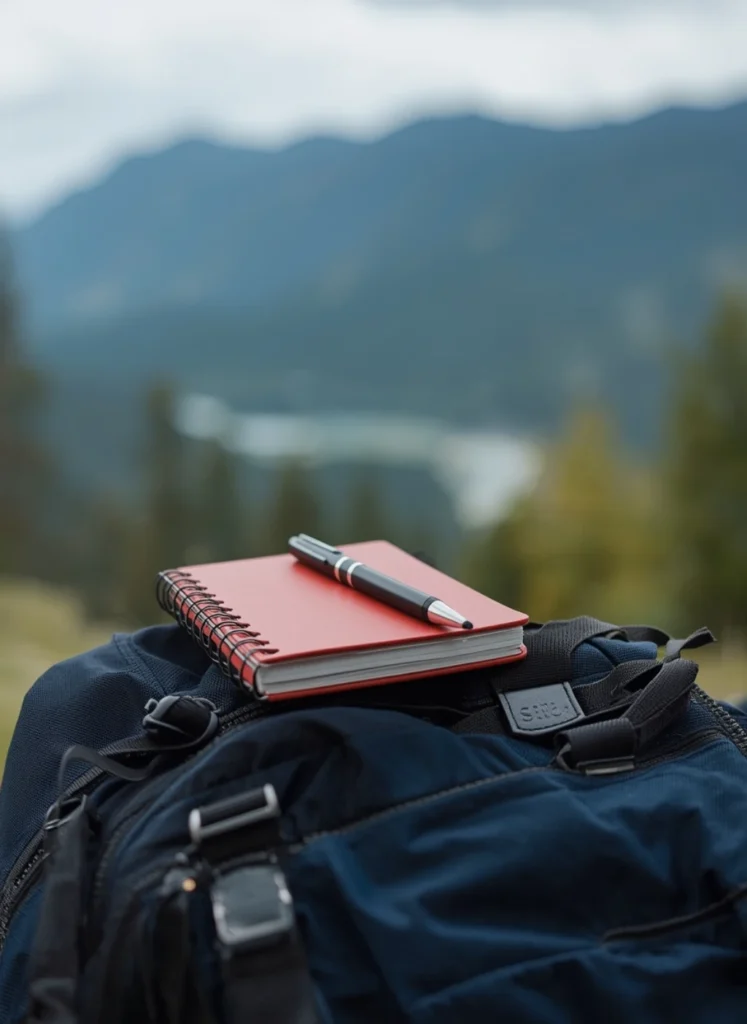
Traveling alone gives you plenty of quiet time to reflect, which makes for a naturally rich travel memory book for solo travelers. Journaling tends to play a bigger role here since there is no one else to talk through the day’s events with afterward. Writing things down becomes both a memory tool and a way to process the experience.
Lightweight materials matter most for backpackers since bulky scrapbook supplies are hard to carry. A small notebook for daily notes, with photos printed and assembled once you are home, is often the most practical approach for long trips on the move.
Cruise Memory Book Ideas
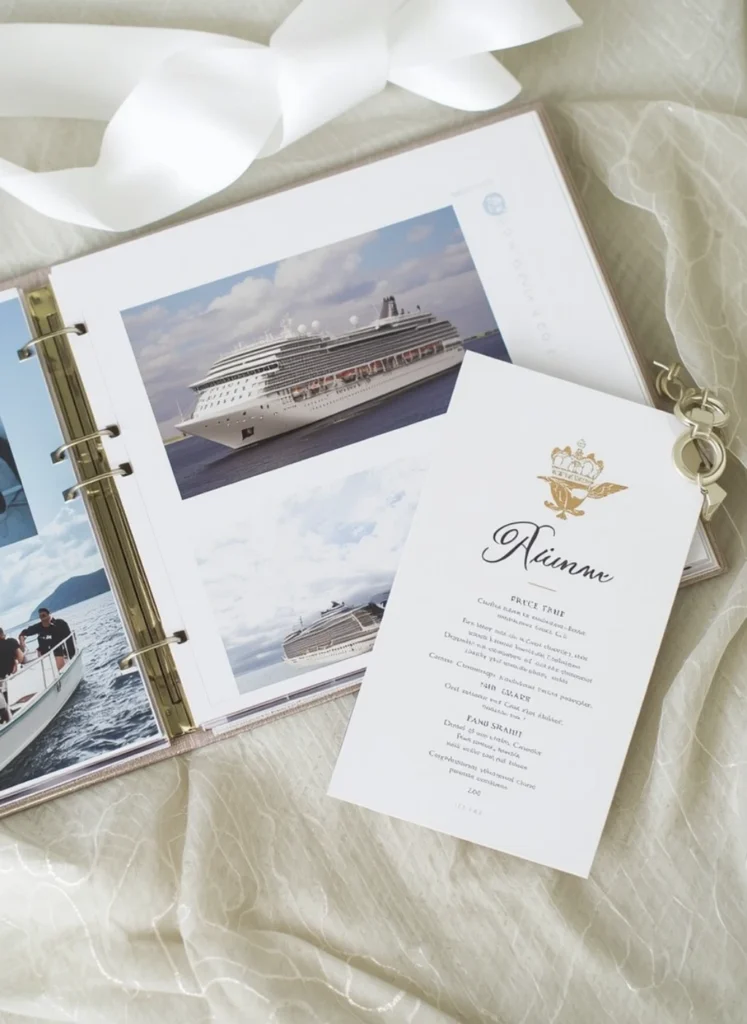
Cruises offer a unique documentation challenge since you visit several destinations in a short window of time. A cruise memory book benefits from a page dedicated to each port of call, along with a section for onboard activities and dining that many travelers forget to capture. Daily itineraries or dinner menus from the ship also make great keepsake additions.
Since cruise days move fast, take a quick photo of your daily schedule on your phone as a memory prompt. It makes recalling the details of each port much easier once you sit down to build your pages weeks later.
Travel Memory Book with Maps
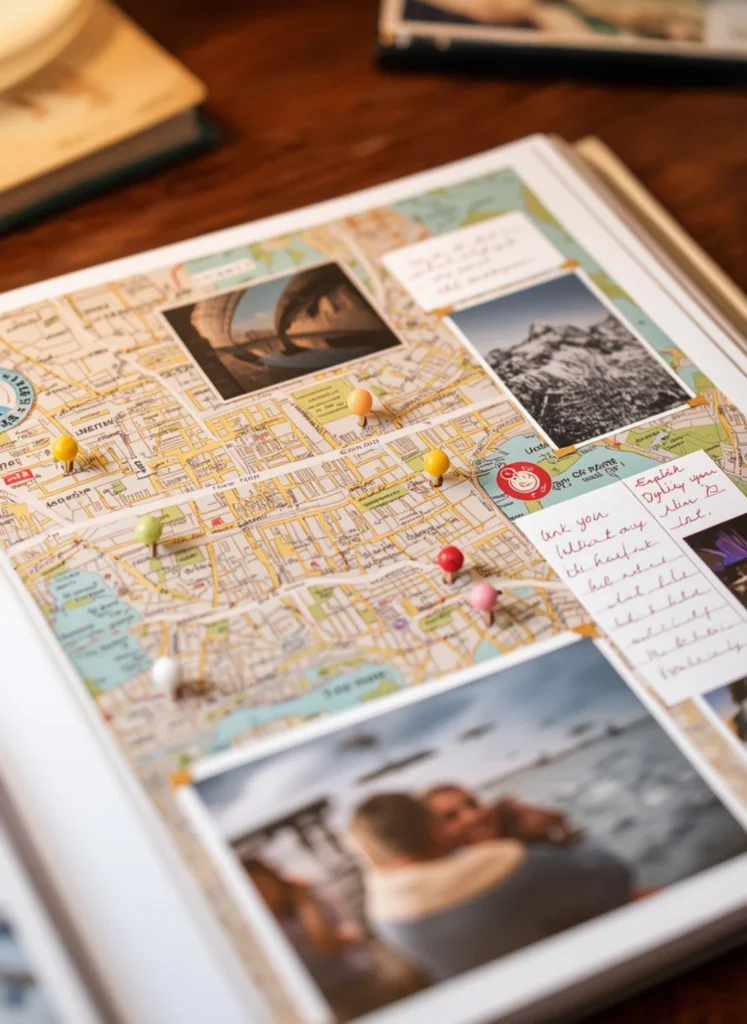
Adding a small map is one of the simplest ways to give your book visual context. A travel memory book with maps helps readers, including future you, understand the geography of the trip at a glance. You can print a basic map, hand-draw one, or mark a physical map with pins or stickers before scanning it into your pages.
For multi-stop trips, a single overview map at the front paired with smaller zoomed-in maps for each city creates a nice sense of scale. This small addition often becomes one of the most looked-at pages in the entire book.
Budget-Friendly Travel Scrapbook Ideas
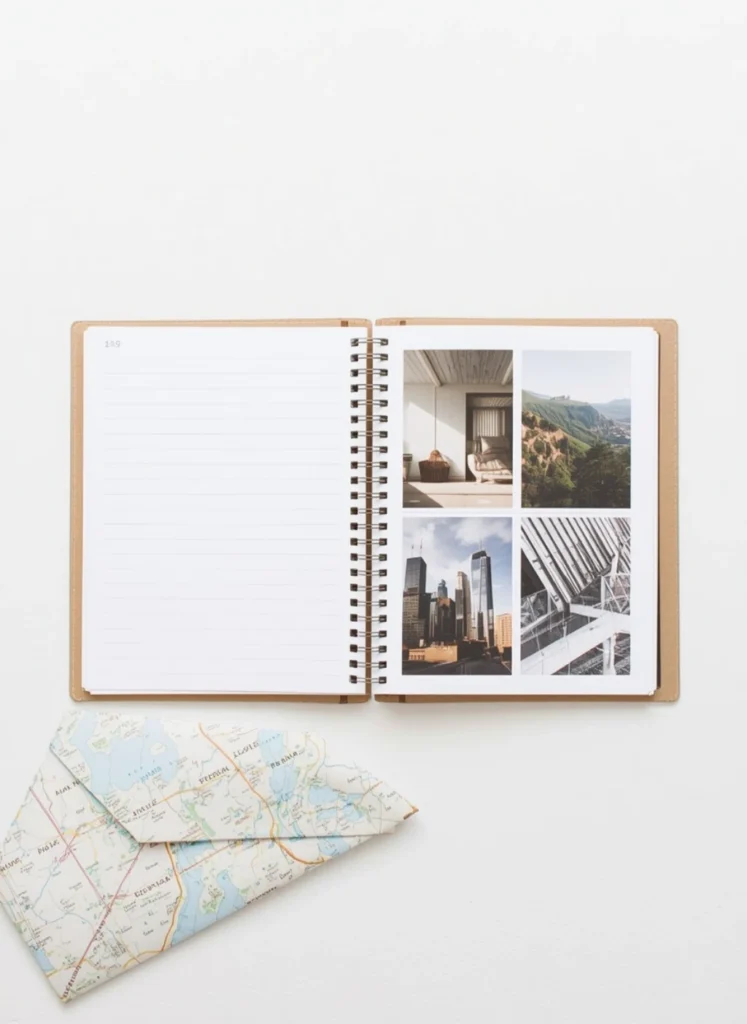
You do not need expensive supplies to make something meaningful. Budget travel scrapbook ideas can be as simple as a plain notebook, printed photos from a home printer, and glue you already own. Free printable templates found online are another easy way to add structure without spending anything extra.
Reusing packaging from the trip itself, like a hotel key card sleeve or a folded map, adds character for free. Some of the most charming pages in a memory book come from items that cost nothing at all, just a little creativity in how they are placed.
Travel Memory Book Decoration Tips
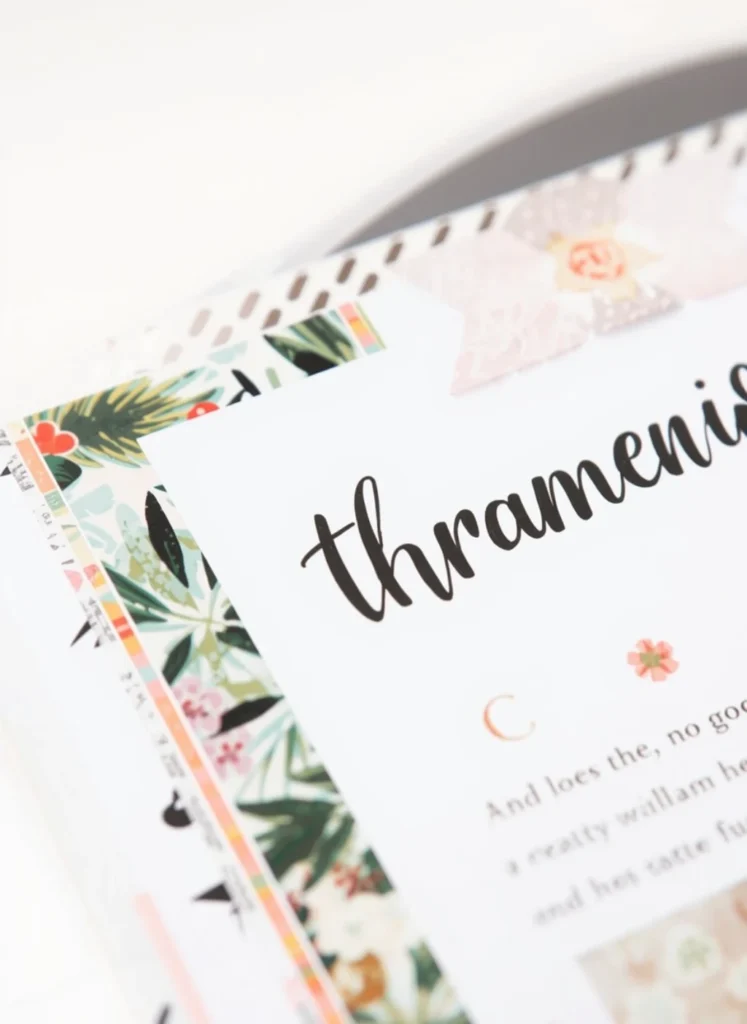
Decoration should support your photos, not compete with them. Simple travel memory book decoration tips include sticking to two or three colors per spread and using stickers or washi tape sparingly around the edges of a page rather than covering it entirely. This keeps the focus on your memories instead of the craft supplies.
Handwritten titles or dates in a consistent style across the book also create a polished, cohesive look without much extra effort. If you are not confident in your handwriting, printed labels or simple stencils work just as well.
Storytelling Through Travel Photos
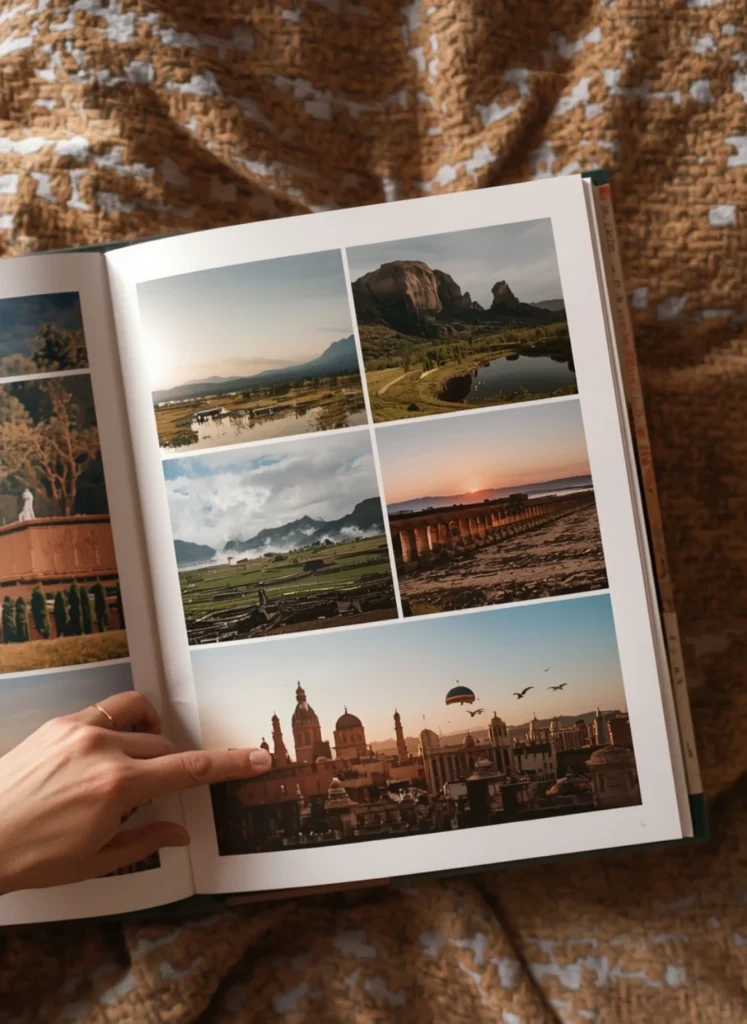
Great memory books read like a story with a beginning, middle, and end, rather than a random collection of images. Storytelling through travel photos means arranging your pages so they follow a natural arc — arrival, exploration, a highlight moment, and departure — instead of scattering photos with no order.
Try choosing one “hero photo” per page that best represents that moment, then supporting it with smaller images around it. This mirrors how magazines and books are laid out and instantly makes your pages feel more intentional and easy to follow.
Digital vs Handmade Travel Memory Books
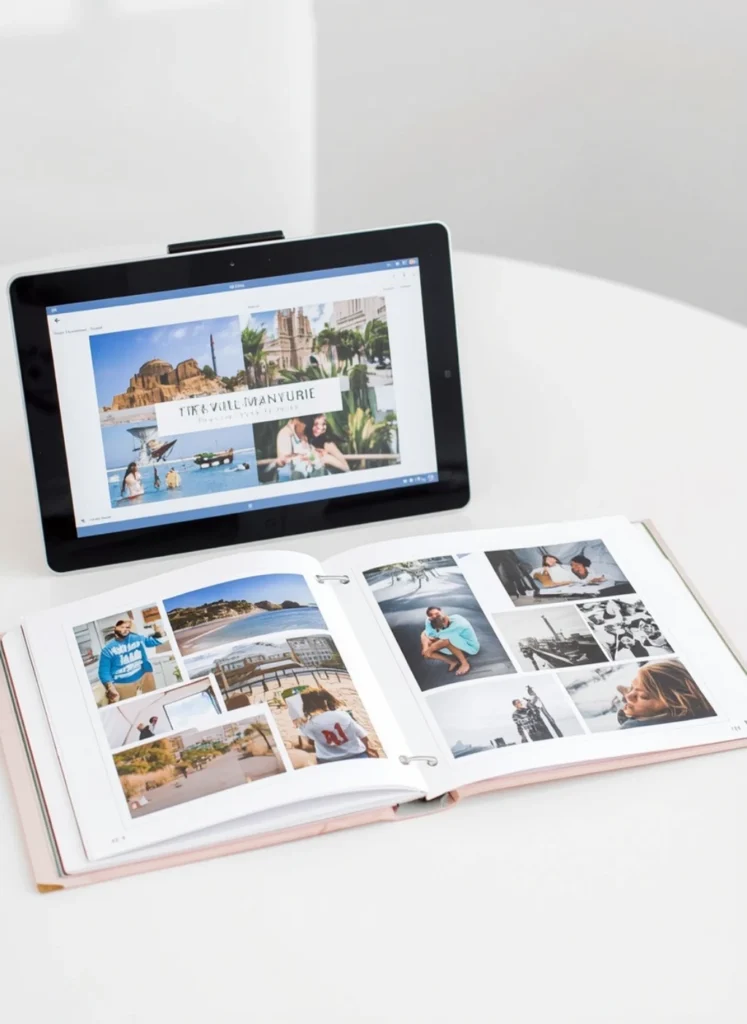
Both digital and physical options have real advantages, and the right choice depends on your lifestyle. A digital travel photo memory book is faster to make, easy to reorder if you make more than one copy, and simple to share with family online. A handmade version, on the other hand, feels more personal and gives you room for actual handwriting and physical keepsakes.
Some travelers use both. A quick digital photo book captures the trip shortly after returning, while a slower handmade version is built later as a more reflective project. There is no wrong answer here, only what fits your time and preference.
Travel Memory Book Gift Ideas

A finished memory book makes a genuinely thoughtful gift, especially for a trip shared with someone else. Travel memory book gift ideas work well for anniversaries, graduations, or as a surprise after a group trip with friends. Collecting photos and short notes from everyone who went adds a collaborative feel that a solo project cannot match.
If you are making one as a gift, leave a few blank pages at the end with a note encouraging the recipient to keep adding to it. This turns a finished present into an ongoing project they can continue on their own.
Common Mistakes to Avoid When Making a Travel Memory Book
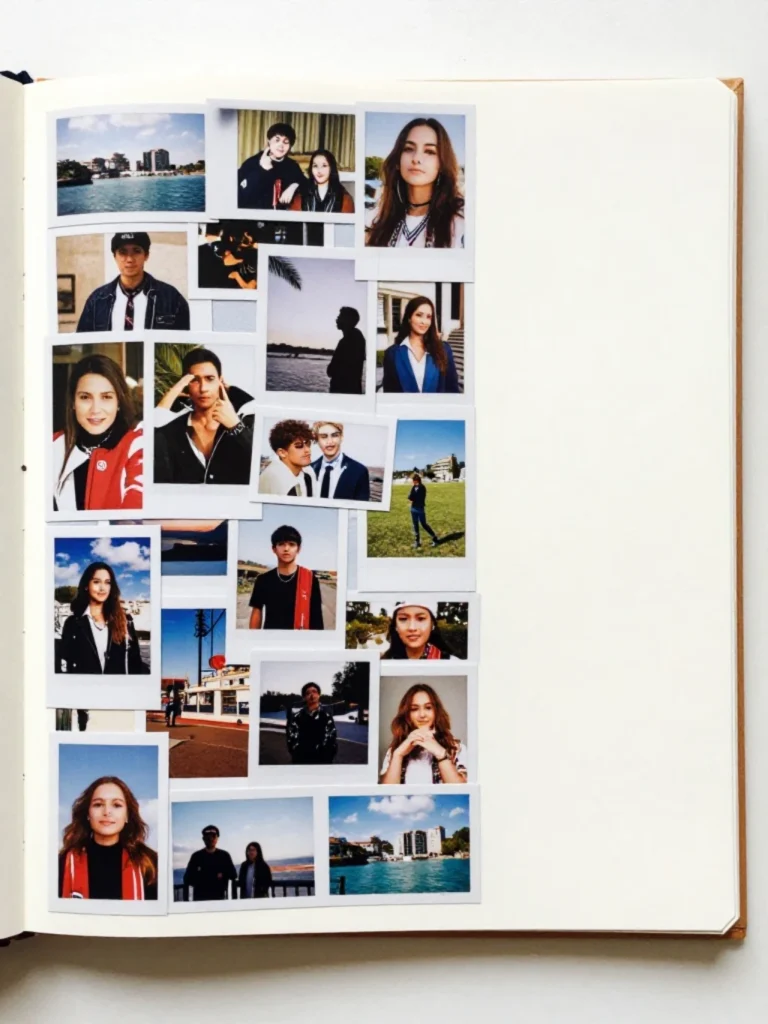
The biggest mistake beginners make is waiting too long to start. Memories fade fast, and details that feel obvious the week you get home are much harder to recall six months later. Try to at least sort your photos and jot rough notes within the first few weeks of returning.
Another common issue is trying to include every single photo instead of choosing favorites. This leads to cluttered, overwhelming pages and an unfinished project sitting in a drawer. Pick quality over quantity, keep your layouts simple, and remember that a finished imperfect book beats an unfinished perfect one every time.
Quick Comparison Table
| Book Type | Best For | Time Needed | Approximate Cost | Key Materials |
|---|---|---|---|---|
| Photo Grid Scrapbook | Busy trips, lots of photos | Medium | Low | Printed photos, tape, album |
| Journal-Style Book | Solo travelers, reflective writers | High | Low | Notebook, pen |
| Digital Photo Book | Quick projects, easy sharing | Low | Medium | Online printing service |
| Themed Memory Book | Multiple trips combined | Medium | Low to medium | Photos, stickers, labels |
| Map-Based Book | Multi-city or road trips | Medium | Low | Printed maps, photos |
| Couples Keepsake Book | Honeymoons, anniversaries | High | Medium | Letters, invitations, photos |
| Family Collaborative Book | Trips with kids | Medium | Low | Photos, drawings, stickers |
Conclusion
A travel memory book is one of the few souvenirs that actually gets better with time. Ticket stubs fade, photos scattered across your phone get forgotten, but a book you built with your own hands stays exactly where you can find it, ready to bring a whole trip rushing back with just a few pages. Whatever style you choose, the real value comes from the act of sitting down and putting the pieces together.
You do not need expensive supplies, perfect handwriting, or a background in scrapbooking to make something worth keeping. Start small, pick the ideas from this list that genuinely fit your travel style, and build from there. Years from now, flipping through a book filled with real photos, handwritten notes, and small keepsakes will mean far more than scrolling through an old camera roll ever could.
You may also like this: 22 Portugal and Spain Travel Ideas for the Perfect European Escape
Frequently Asked Questions
1. What is the easiest way to start a travel memory book for beginners?
Start with a simple blank album, sort your favorite photos by day, and add just one short handwritten note per page. Keeping it simple in the beginning makes the whole project feel manageable.
2. What materials do I need for a DIY travel book?
At minimum, you need printed photos, a blank album or notebook, tape or photo corners, and a pen. Extras like washi tape, stickers, and small envelopes for tickets are optional but nice additions.
3. How can I make a travel memory book on a budget?
Use a plain notebook, print photos at home, and reuse trip packaging like maps or hotel key sleeves as decoration. Free printable templates online can also add structure without extra cost.
4. Should I make a digital or handmade travel photo book?
It depends on your time and preference. Digital books are faster and easier to share, while handmade books feel more personal and allow for handwriting and physical keepsakes.
5. How do I organize photos from a multi-city trip?
Sort your photos by location or by day before you start assembling pages, and set a rough page limit per stop so the book stays balanced. A small map for each city also helps keep things organized.
1 Comment