
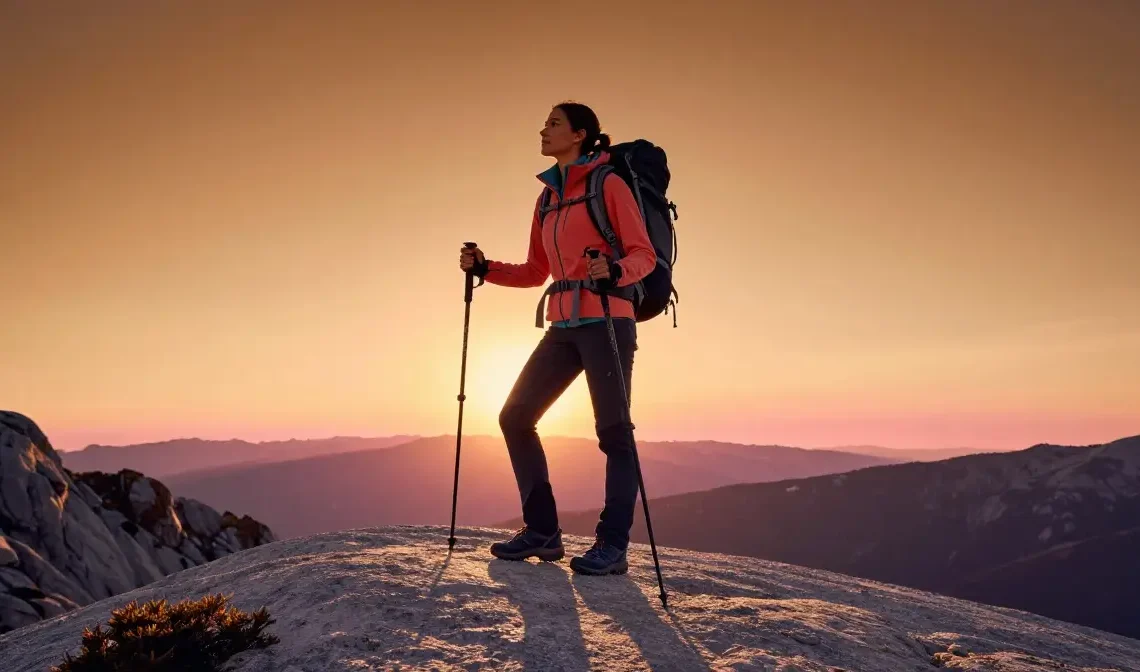
The difference between a hike you remember with joy and one you endure with suffering often comes down to what you’re wearing and carrying. That’s not an exaggeration — it’s trail physics. The wrong base layer soaks you in your own sweat. The wrong boots destroy your feet by mile three. The wrong backpack turns a beautiful mountain into a miserable endurance test. Hiking outfits and gear decisions made before you leave the trailhead determine the quality of everything that follows. This guide covers every layer, every piece of footwear, every pack and every accessory worth understanding before your next trail.
The Layering System That Separates Comfortable Hikers From Miserable Ones
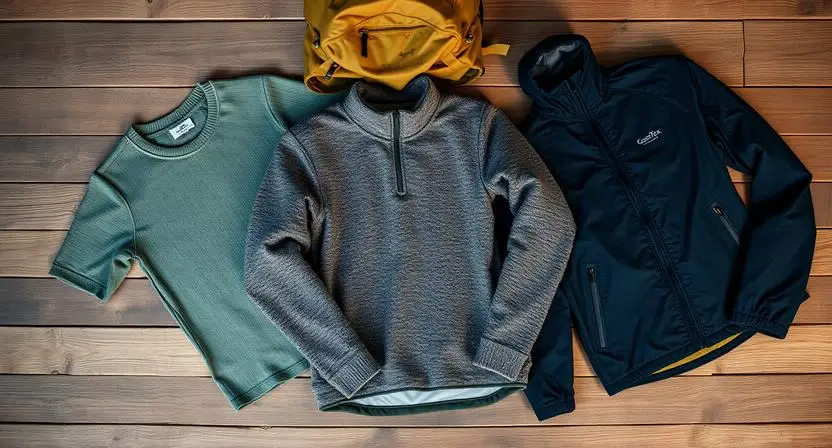
The outdoor layering system concept isn’t complicated but most beginners treat it as optional and pay for that choice within the first hour. Three layers — base, mid and outer — each serve a specific function that the others cannot replace. Strip one out and the system fails. Layering for hiking works because it creates a managed microclimate between your skin and the outside world rather than trying to fight the weather with a single heavy garment.
Trail performance clothing system thinking treats your outfit as an integrated weather management system rather than a collection of individual clothing choices. The base layer moves sweat away. The mid layer traps warm air. The outer layer blocks wind and rain. Best hiking clothing layers executed correctly mean you’re always warm enough, never soaked in your own moisture and capable of regulating temperature through addition and removal as conditions shift. Learn this system once and it serves you across every season and every terrain.
Hiking Outfits And Gear Decisions That Beginners Almost Always Get Wrong
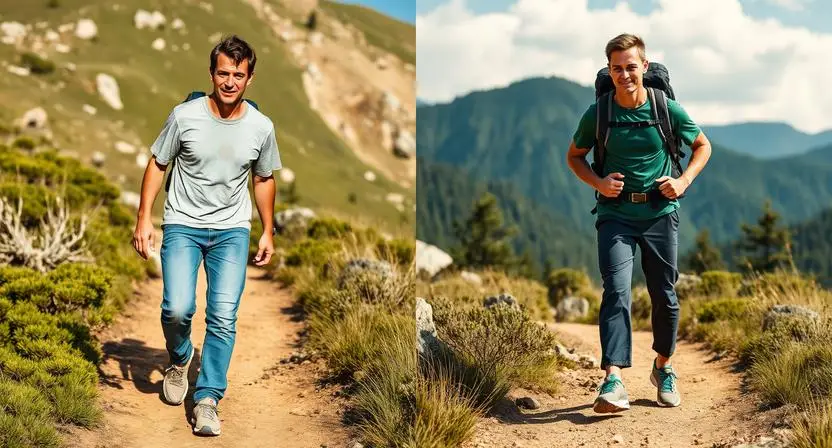
Hiking outfits for beginners go wrong in predictable ways — cotton clothing, fashion sneakers, borrowed packs that don’t fit, no rain layer because the forecast looked clear. These aren’t random mistakes. They’re the natural result of applying everyday clothing logic to a technical activity that has different physics. What to wear hiking for beginners starts with understanding that comfort on a hiking trail requires specific material and construction choices that casual clothing doesn’t make.
The second category of common mistakes is over-packing heavy gear when lightweight alternatives exist and under-packing essential protection items because they feel unnecessary at the trailhead. Hiking gear essentials list thinking should be ruthlessly functional — every item earns its weight through a specific purpose it serves that nothing else in the pack replaces. Trekking essentials for beginners build over time through experience but the foundational decisions — footwear, layering system, pack fit — should be correct from the very first trail.
Base Layers — the Closest Thing to Your Skin Must Earn Its Place Completely
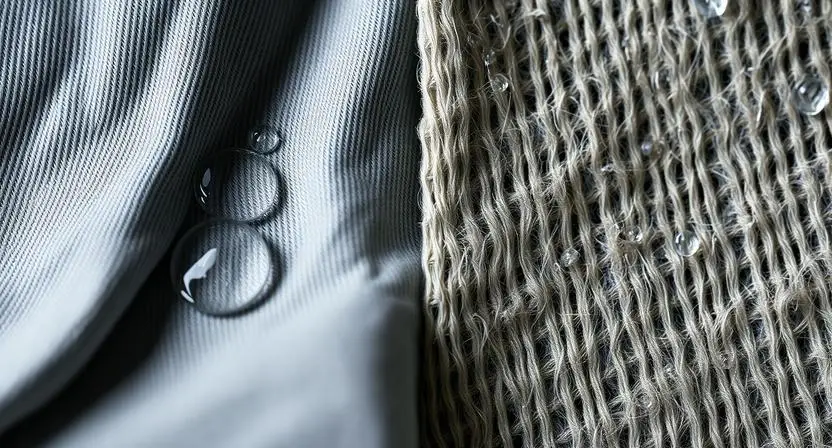
Best base layer for hiking selection comes down to one primary function: moving moisture away from your skin before it chills you or overheats you. Cotton fails this test completely because it absorbs moisture and holds it against your skin indefinitely. A merino wool base layer or synthetic moisture wicking shirt moves sweat outward through the fabric to the next layer where it can evaporate, keeping your skin dry and your temperature regulated regardless of exertion level.
Merino wool base layer specifically offers advantages beyond moisture management — it resists odor accumulation through multi-day wear, regulates temperature across a wider range than synthetics and feels remarkably soft against skin during extended contact. Moisture wicking hiking gear in synthetic materials — polyester and nylon blends specifically — dries faster than merino and costs less but requires more frequent washing on multi-day trips. Best base layer for hiking selection ultimately depends on trip length, climate and personal skin sensitivity — but either merino or quality synthetic always outperforms cotton by an enormous practical margin.
Mid Layers That Trap Heat Without Trapping You Inside an Oven on the Trail

Best mid layer for hiking selection requires understanding the difference between insulation types and their specific performance characteristics under hiking conditions. A fleece midlayer breathes well during high-exertion uphill sections and dries quickly when wet — making it the most versatile mid layer for active hiking. A down jacket compresses smaller, weighs less and provides more warmth per gram but loses virtually all insulating capability when wet — a serious liability in unpredictable mountain weather.
Mid layers that trap heat effectively while remaining packable suit the reality of hiking where exertion levels vary dramatically between uphill climbs and wind-exposed ridgelines. The best mid layer strategy involves a fleece midlayer for active hiking and a packable down jacket added at rest stops, summit viewpoints or camp when exertion drops and temperature sensitivity rises. Packable adventure clothing set thinking means your mid layer compresses to near-nothing in your pack when conditions don’t require it and deploys in seconds when they do.
Hardshell and Rain Gear That Keeps You Dry When the Mountain Has Other Plans
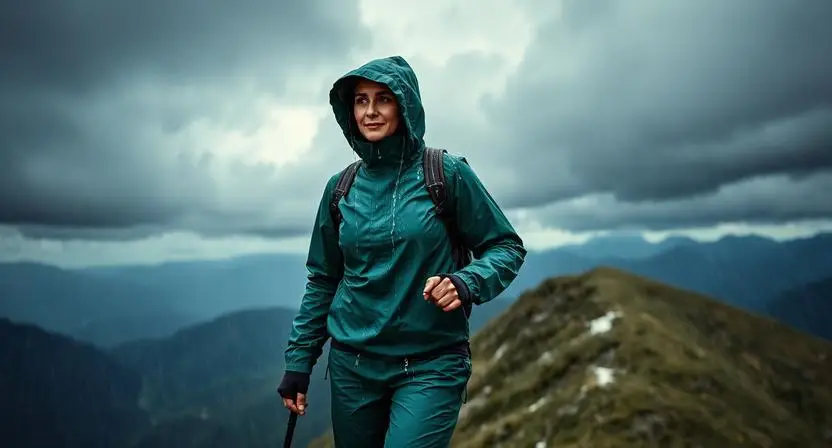
A hardshell rain jacket is the piece of waterproof hiking gear that earns its cost most dramatically on the worst weather days — the days when a three-season hike turns into a cold rain event that drops your core temperature faster than you’d believe possible. Best waterproof jacket for hiking selection requires understanding the difference between waterproof-breathable membranes (Gore-Tex, eVent, Pertex Shield) and simple waterproofing treatments that stop rain but trap perspiration heat inside the garment.
Rain gear for hiking must accomplish two contradictory things simultaneously — keep rain out and let sweat vapor escape outward. The best hardshell rain jacket designs use microporous membrane technology that blocks liquid water molecules (too large to pass through the membrane pores) while allowing water vapor molecules (small enough to escape) to move outward. What to wear hiking in rain includes rain pants paired with your hardshell jacket — waterproof jacket without waterproof pants leaves your lower half soaked and cold within twenty minutes of any serious rainfall.
Hiking Boots vs Trail Runners — the Great Footwear Debate Finally Settled
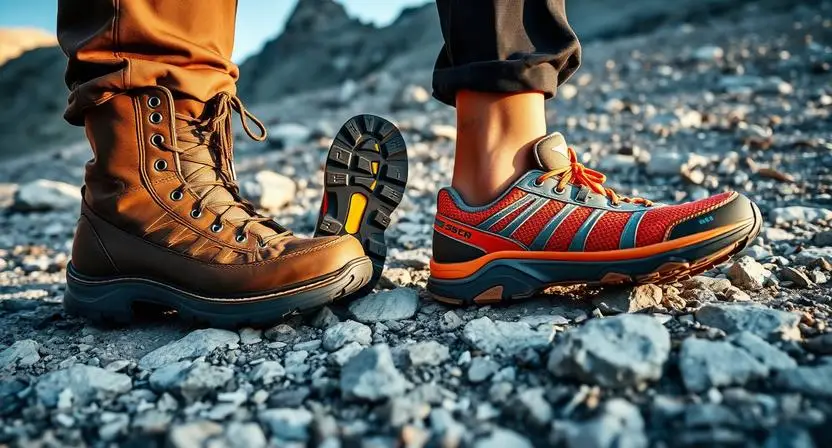
Hiking boot selection guide decisions have been complicated by the genuine revolution that trail running shoes brought to long-distance hiking over the past decade. Traditional hiking boots offer ankle support, toe protection and sole stiffness for technical terrain and heavy pack loads. Trail running shoes offer lower weight, faster drying, more natural foot movement and a ground-feel that many experienced hikers strongly prefer on non-technical terrain.
Performance footwear for trails selection depends on terrain, pack weight, ankle stability history and personal preference rather than any universal rule. Heavy packs on technical terrain favor hiking boots. Light packs on well-maintained trails favor trail running shoes. What boots to wear hiking is genuinely a personal question but the research consistently shows that lighter footwear reduces fatigue on long distances — every pound on your feet costs approximately five times more energy than the same pound in your pack.
| Footwear Type | Best For | Weight | Drying Time | Ankle Support |
|---|---|---|---|---|
| Hiking Boots | Technical terrain, heavy packs | Heavy | Slow | High |
| Trail Runners | Well-maintained trails, light packs | Light | Fast | Low-Medium |
| Hiking Sandals | Camp, water crossings | Very Light | Instant | None |
| Approach Shoes | Rocky scrambles, technical hikes | Medium | Medium | Medium |
Hiking Socks Are Boring Until Your Feet Start Bleeding at Mile Seven
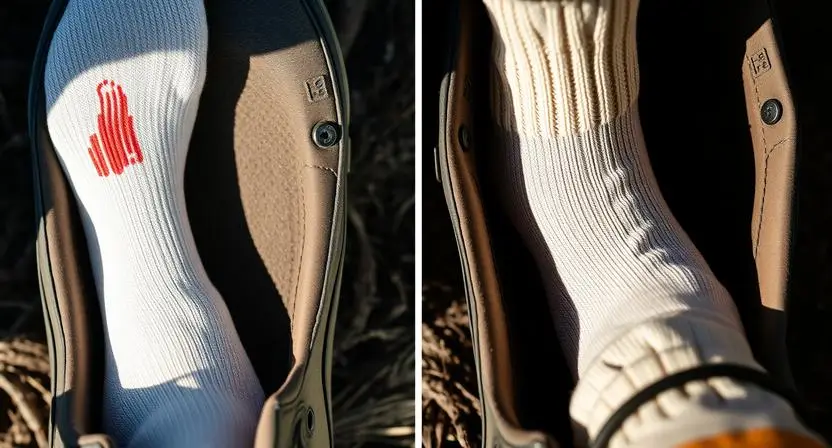
Hiking sock selection guide deserves more attention than it typically receives because socks are the primary interface between your foot and your footwear and blister prevention depends on this interface functioning correctly. Wool hiking socks — merino specifically — provide cushioning, moisture management, temperature regulation and natural odor resistance in a single garment. What socks to wear hiking is not an aesthetic question — it’s a blister prevention question and the answer is always a quality merino or merino-synthetic blend hiking sock.
you may also like this:22 Hawaii Vacation Ideas for Your Dream Island Getaway
Trail blister prevention gear built around proper sock selection also includes sock thickness matching your footwear. High-cut hiking boots pair with crew-height socks that extend above the boot collar to prevent the collar edge from rubbing bare skin. Trail running shoes pair with lower-cut socks that match the shoe’s collar height. Compression socks suit long descents and multi-day trips where lower leg fatigue accumulates — the graduated compression reduces swelling and supports calf muscles through sustained downhill impact loading.
Hiking Pants and Leggings — the Fabric Battle That Affects Every Single Step
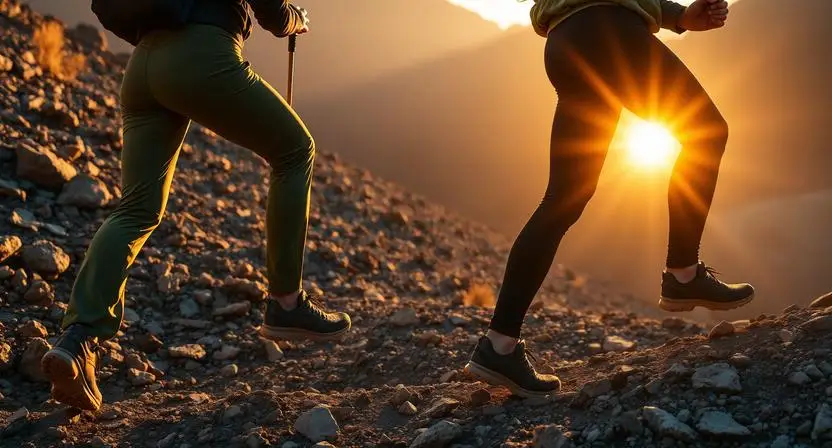
Hiking pants vs leggings guide is one of the most genuinely contested debates in trail clothing because both options have legitimate performance advantages that the other lacks. Convertible hiking pants — zip-off versions that convert to shorts — offer versatility across temperature swings but have bulkier zippers that can chafe and a less athletic fit. Hiking leggings offer unrestricted movement, compression benefits and a lighter weight but provide less abrasion resistance on brushy terrain.
How to choose hiking pants correctly requires honest assessment of your typical hiking terrain. Dense brush and rocky scrambles favor pants for abrasion protection. Well-maintained trail hiking favors hiking leggings for their movement freedom and lighter weight. Hiking pants and leggings in technical synthetic fabrics — nylon-spandex blends specifically — outperform cotton and denim in every performance category including moisture management, quick drying and stretch. Hiking outfit women ideas frequently favor leggings for their combination of performance and comfort while hiking outfit men ideas trend toward convertible pants but both options serve either gender equally well.
The Hiking Backpack That Fits You Perfectly Changes Everything About the Trail
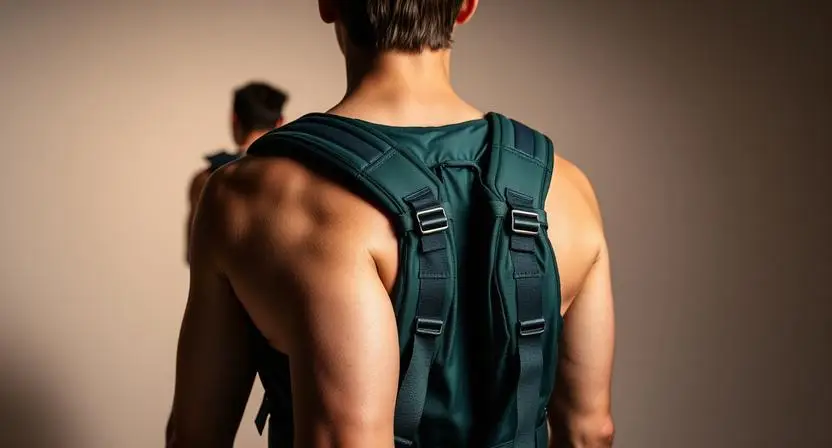
Hiking backpack selection tips start with one principle that overrides every other consideration — fit matters more than features. A technically inferior pack that fits your torso length, hip belt circumference and shoulder width correctly will always outperform a feature-rich pack with poor fit. Best hiking backpack for beginners selection should involve trying multiple packs loaded with weight at a specialty outdoor retailer rather than purchasing based on online reviews alone.
Hiking backpack essentials in terms of volume capacity follow a straightforward guide — day hikes need 20 to 35 liters, overnight trips need 40 to 55 liters and multi-day backpacking needs 55 to 75 liters. The hydration pack feature — an internal reservoir with a drink tube — suits fast-moving day hikers who want hands-free hydration access. Backcountry gear essentials for longer trips require pack volume adequate for shelter, sleeping system, food and clothing without compression compromising the pack’s load distribution and your spine’s vertical alignment.
Trekking Poles Are Not for Old People — They Are for Smart People Who Last Longer
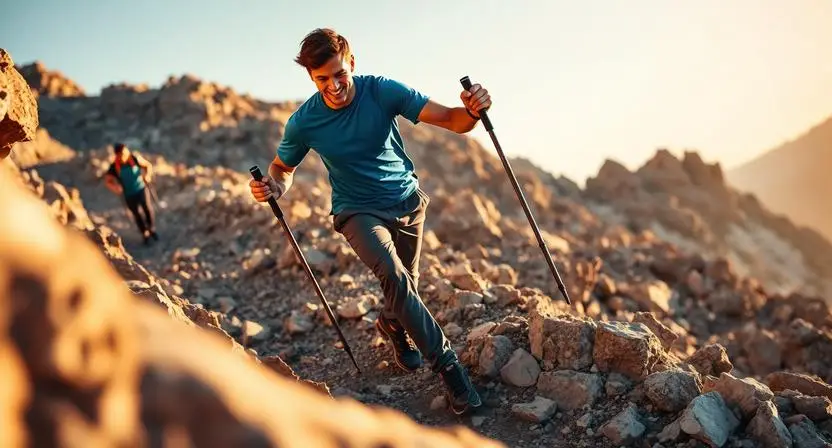
Trekking pole benefits guide data is unambiguous — poles reduce knee impact forces on descents by up to 25 percent, improve balance on uneven terrain, engage upper body musculature to distribute exertion load and provide genuine psychological confidence on exposed or technical sections. Trekking pole recommendations for most hikers point toward collapsible carbon fiber or aluminum poles with adjustable length and comfortable cork or foam grip materials that don’t transfer sweat-slick to palm surfaces.
Trekking poles earn their carry weight most dramatically on long descents where the knee-impact reduction compounds across thousands of steps. A 10-mile descent with poles produces measurably less next-day muscle soreness than the same descent without them according to multiple controlled exercise science studies. Lightweight hiking gear for long trails thinking includes poles because the modest weight addition delivers disproportionate energy savings and injury prevention value across full trail days. Use them from the start of your hiking journey rather than waiting for knee problems to appear.
Sun Protection Hiking Gear That Stops Damage Before the Damage Starts
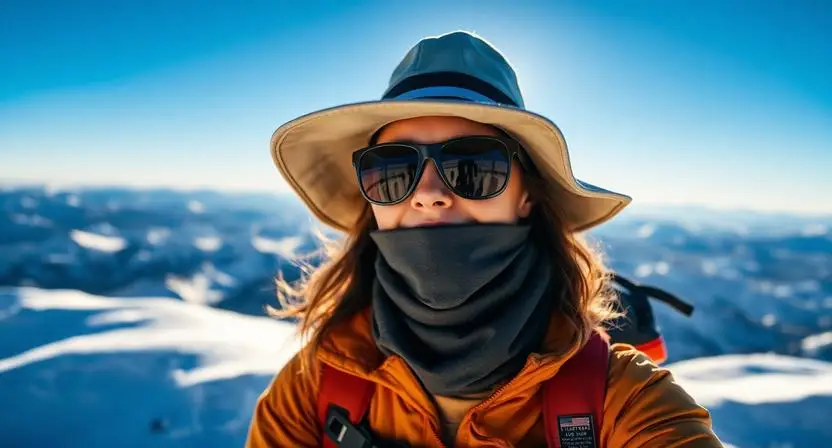
Hiking sunprotection gear matters more on trails than in everyday environments because elevation increases UV intensity — roughly 4 percent per 1000 feet of elevation gain — and reflective surfaces like snow, water and pale rock amplify UV exposure dramatically beyond what simple cloud cover would suggest. A sun hat with a full brim provides the most effective face and neck protection available and weighs almost nothing in a pack. Sunglasses with UV400 rating protect your eyes from both UV-A and UV-B radiation and reduce snow-blindness risk on high-altitude or winter trails significantly.
Sun protective trail clothing — shirts and pants with UPF 50+ ratings built into the fabric — provide reliable all-day protection without the reapplication demands of sunscreen. A buff neck gaiter serves dual purpose as sun protection for the neck and lower face on exposed ridgelines and as wind protection when temperatures drop unexpectedly. Hiking headwear and sun protection selection should account for the full duration of planned sun exposure and the reflective multiplier effect of the specific terrain type you’re crossing — snow environments demand the highest protection level available.
Hiking Outfits And Gear Built for Summer Heat That Actually Keep You Cool
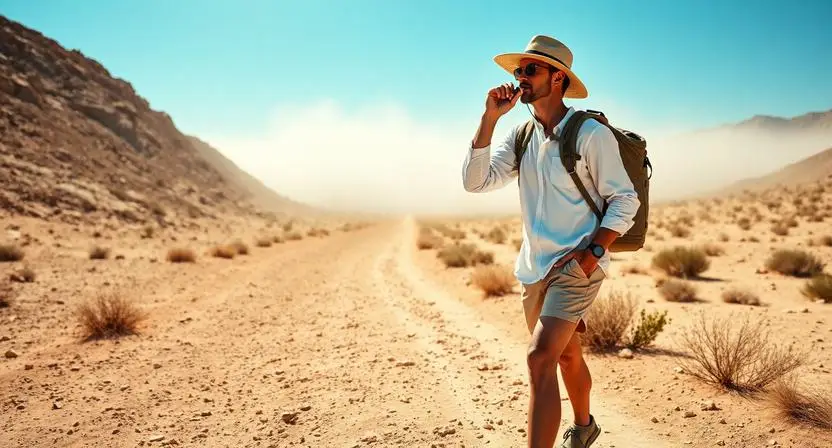
Summer hiking outfit ideas built for genuine heat management require counterintuitive thinking — more coverage in breathable UPF fabric often keeps you cooler than minimal coverage because it blocks both UV radiation and convective heat gain from direct sun contact on skin. What to wear hiking in summer effectively means loose-fitting, light-colored, UPF-rated shirts and pants in highly breathable synthetic or merino fabrics that move sweat efficiently outward to the fabric surface where evaporation cools you.
Hiking outfit hot weather performance also depends critically on hydration system choice. A hydration pack with minimum 2-liter reservoir capacity suits summer day hikes where water consumption accelerates dramatically with both heat and exertion. Insulated water bottle options keep cold water cool for extended periods in summer heat — a meaningful comfort and performance advantage when ambient temperatures push above 90 degrees on exposed terrain. Hot weather trail cooling system discipline means pre-hydrating before the trail, drinking before thirst appears and planning route timing to avoid the peak heat hours between 11am and 3pm on summer days.
Cold Weather and Winter Trail Clothing That Goes Beyond Just Adding Layers
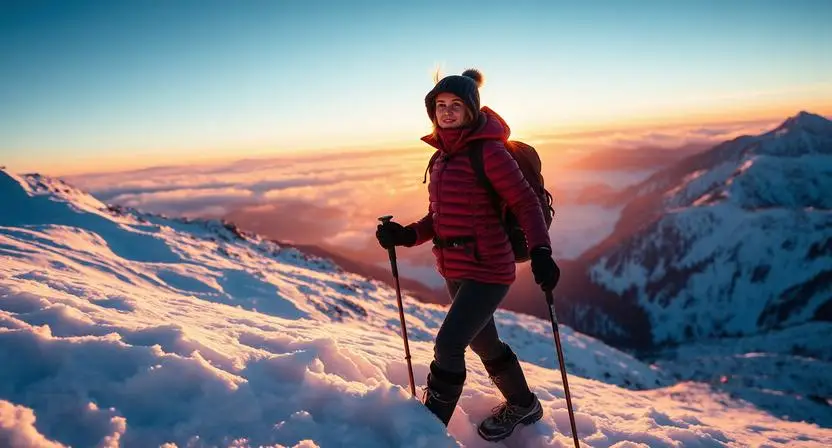
Winter hiking outfit layers require a fundamentally different approach than simply adding bulk to a three-season system. Cold weather creates specific hazards — hypothermia, frostbite, decreased dexterity in extremities — that demand deliberate material choices at every layer. What to wear hiking in winter starts with a merino wool base layer as the non-negotiable foundation since merino retains a meaningful portion of its insulating capability when damp in a way that synthetics cannot match.
Cold weather trail clothing layers for winter conditions specifically need to address the hands and head which lose heat disproportionately fast compared to the core. Hiking gloves and accessories should include a liner glove worn beneath a waterproof shell mitten for versatility between camp tasks requiring dexterity and exposed movement sections requiring maximum warmth protection. Winter hiking apparel planning must account for the dramatic temperature swings between sheltered valley approaches and wind-exposed summit ridgelines where effective temperature can drop 30 to 40 degrees below ambient conditions in strong wind.
Rain Ready Hiking Outfits That Perform When Every Instinct Says Turn Back
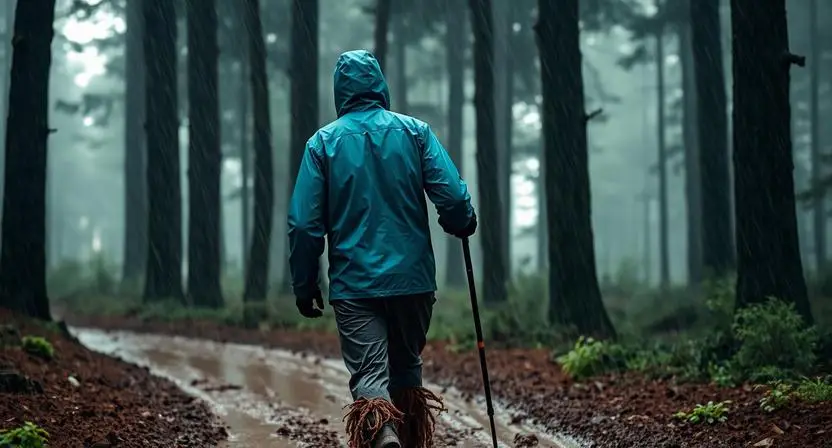
What to wear hiking in rain requires a complete system rather than just a jacket — jacket, rain pants, waterproof footwear or gaiters and pack cover working together to keep your critical warmth and dryness systems functional. Rain ready trail clothing fails most commonly when hikers invest in a quality jacket but ignore the lower body — soaked trail pants wick heat from the legs continuously and create hypothermia risk on cold rain days at an alarming speed.
Rain gear for hiking also requires active ventilation management because the same weather-sealing properties that block rain block sweat vapor unless the jacket’s venting systems are used deliberately. Pit zips, front zipper micromanagement and pace reduction during heavy rain sections all help manage internal moisture build-up. Hiking outfit ideas for cold weather in wet conditions should include a fleece midlayer beneath the hardshell rather than a down jacket — wet down collapses its loft and loses insulating capability while wet fleece retains meaningful warmth and dries quickly when conditions improve.
Overnight and Multi Day Hiking Gear That Earns Its Weight Every Single Mile
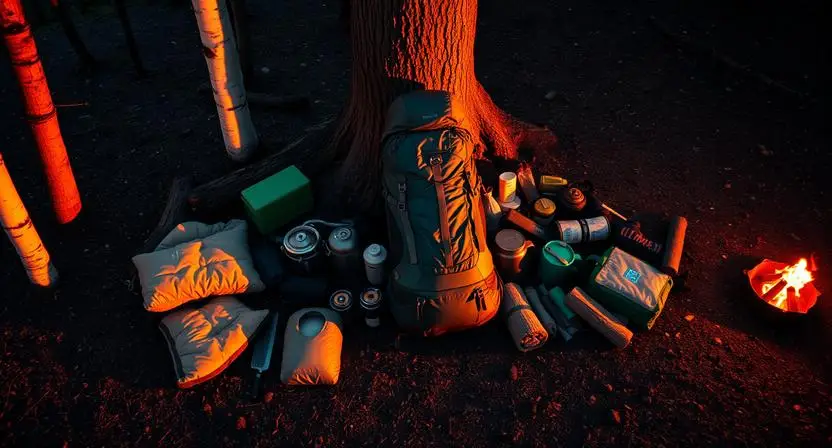
Gear needed for overnight hiking trips follows a fundamentally different selection logic than day hiking gear because every ounce carries over miles that accumulate into real physical cost. Multi day hiking clothing system discipline means choosing items that serve multiple purposes — a down jacket that functions as both trail insulation and sleeping bag liner, hiking leggings that work as both trail pants and camp loungewear, a buff neck gaiter that serves as sun protection, wind protection and ear warmth in a single garment.
Overnight hiking gear packing priorities follow a clear hierarchy — shelter and sleep system protect your life, water treatment and insulated water bottle protect your hydration, the first aid kit manages injury response and everything else serves comfort. GPS device and headlamp both qualify as safety essentials for overnight travel — navigating in fading light or complete darkness without either creates serious risk that no amount of athletic ability resolves. Backcountry gear essentials selection for multi-day trips rewards ruthless weight discipline applied every single item at a time.
Budget Hiking Gear That Performs Like Premium Without Punishing Your Wallet
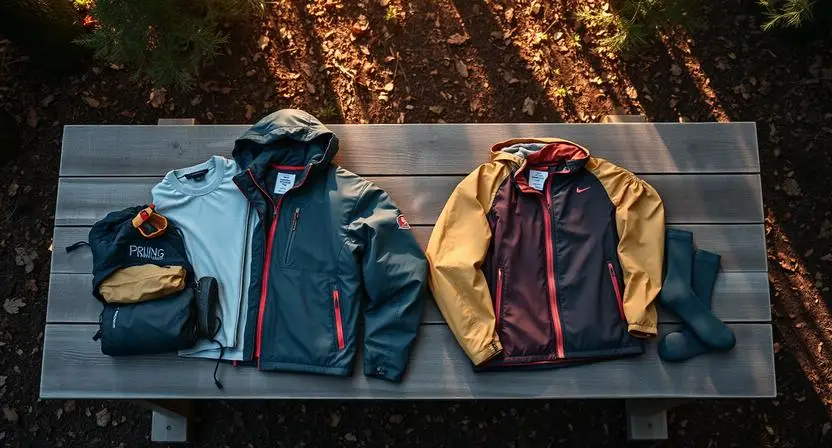
Budget friendly hiking gear options have improved dramatically over the past decade as manufacturing quality across price tiers has converged toward functional adequacy. Budget hiking gear guide thinking separates the items worth spending full price on — footwear, a primary rain jacket and a properly fitted backpack — from the items where mid-tier or even entry-level options perform adequately — hiking pants, base layers and accessories. Hiking gear brand comparison between premium and budget options consistently shows the biggest performance gap at the footwear and rain protection level and the smallest gap at the accessory level.
Budget hiking outfit tips also include the legitimate option of starting with what you have and upgrading selectively based on what your actual trail experience reveals as a deficiency. Most people own athletic clothing that functions adequately for beginner hiking. A waterproof hiking jacket and a quality pair of hiking boots or trail running shoes are the first meaningful upgrades that deliver immediate performance returns worth prioritizing on any budget. Trail tested outdoor apparel from brands like REI Co-op, Columbia and Marmot’s sale lines consistently deliver near-premium performance at genuinely accessible price points.
Ultralight Hiking Setups That Prove Less Weight Changes the Entire Experience

Ultralight hiking gear setup philosophy starts from the principle that base pack weight below 10 pounds transforms the physical experience of hiking — specifically the accumulation of fatigue across miles and the energy available for everything beyond simple locomotion. Lightweight hiking outfits in the ultralight register use frameless or minimally-framed packs, cuben fiber or Dyneema shelters, quilt-style sleeping systems and clothing systems where each garment serves multiple functional roles simultaneously.
Low weight high performance gear in the ultralight category carries real cost — premium ultralight materials like Dyneema composite fabric and carbon fiber components price ultralight setups significantly above conventional gear. However lightweight hiking gear for long trails thinking doesn’t require full ultralight commitment to deliver meaningful weight savings. Replacing a heavy conventional tent with a trekking-pole-supported shelter, choosing a trail running shoe over hiking boots and selecting a fleece midlayer over a heavy insulated jacket delivers meaningful weight reduction at modest cost premium. Every pound removed from your back adds miles to your comfortable daily range.
Women Specific Hiking Gear Built for Bodies That Generic Sizing Always Ignores
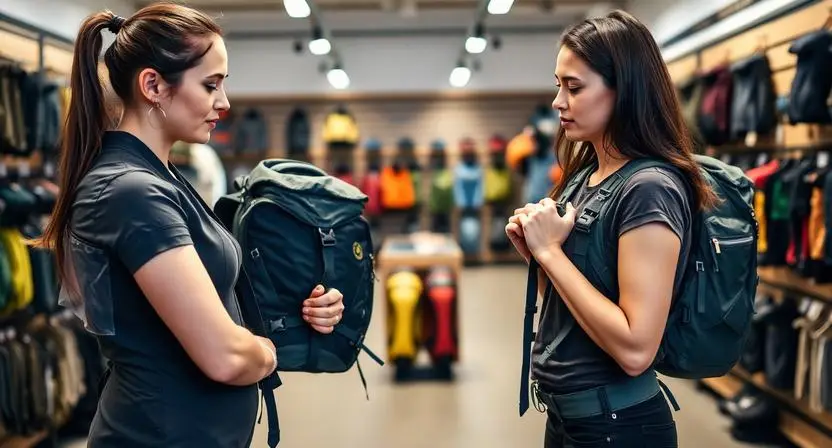
Best hiking clothes for women in women-specific cuts address anatomical differences that generic sizing consistently mismanages — narrower shoulder width, shorter torso length, wider hip-to-waist ratio and different hip belt geometry. A hiking backpack designed for a generic medium torso length sits incorrectly on most women’s bodies — the hip belt sits too high or too low and the shoulder straps pull inward in a way that restricts arm swing. Women-specific packs address all of these issues through different frame geometry rather than simply scaling down a men’s design.
Hiking outfit women ideas in women-specific technical apparel also address fit at the hip and thigh where women’s bodies differ most dramatically from the proportions generic sizing assumes. Best hiking outfit ideas for women from brands like Athleta, Patagonia women’s line, REI Co-op and Arc’teryx women’s collection consistently deliver both anatomical fit precision and performance capability. Feminine floral body art plays no role here — what matters is that seams fall in places that don’t create friction points, waistbands sit at natural waist rather than generic hip and length proportions match actual inseam measurements rather than averaged assumptions.
Stylish Hiking Outfits That Prove Function and Aesthetic Were Never Enemies
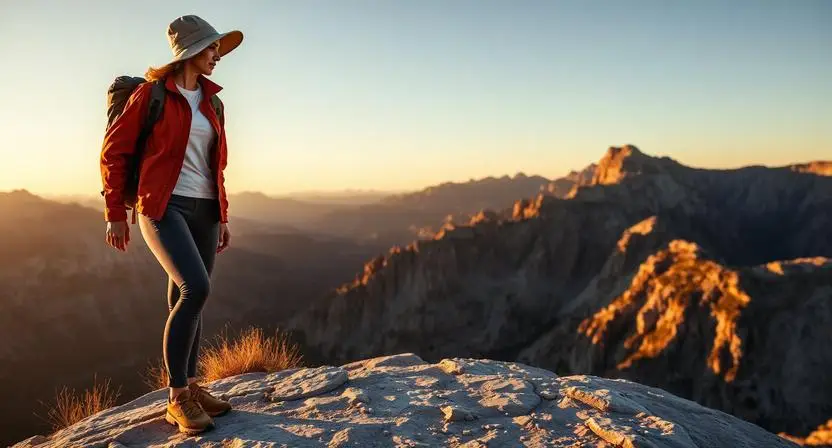
Hiking outfit style inspiration has genuinely flourished as technical outdoor apparel has integrated fashion design sensibility over the past decade. Hiking outfit ideas that are stylish don’t sacrifice performance for appearance — the best current technical trail apparel delivers both simultaneously through thoughtful color work, refined silhouettes and design details that read as intentional rather than utilitarian. Technical hiking apparel brands including Cotopaxi, Vuori, Outdoor Voices and Patagonia’s lifestyle lines make trail clothing that transitions naturally from trailhead to post-hike social environments.
Hiking outfit inspiration built around a coherent color palette — matching or complementary base layer, mid layer and outer layer — creates a cohesive look that photographs well and communicates outdoor competence through visual intention rather than accident. Day hike outfit ideas that blend performance and style typically anchor around a neutral base — slate grey leggings or olive convertible pants — and build upward with a color accent in the mid or outer layer. Functional athletic outdoor wear that looks good keeps you motivated to use it consistently which ultimately improves your fitness and trail experience more than any single gear upgrade.
Sustainable and Ethical Outdoor Gear That Protects the Trails You Love
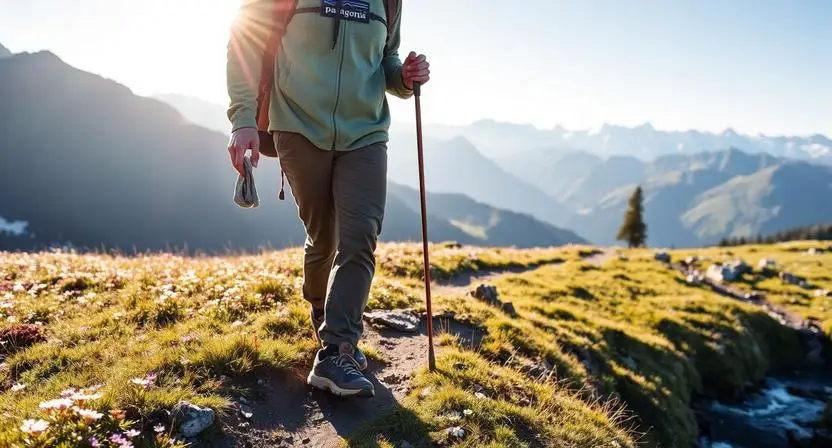
Sustainable outdoor gear choices matter to the outdoor community disproportionately because hikers witness environmental degradation directly and personally in ways that most consumers never experience. Technical fabric outdoor apparel from brands with genuine environmental commitments — Patagonia’s Worn Wear program, Arc’teryx ReBird repair service, Cotopaxi’s Gear For Good initiative — deliver performance while supporting manufacturing practices and supply chain accountability that conventional brands don’t match.
Sustainable outdoor gear choices also include buying quality once rather than replacing cheap gear repeatedly — a calculation that almost always favors the higher initial investment. A hardshell rain jacket from a reputable brand using recycled materials with a 5-year warranty costs more upfront and generates less total waste over a decade than two or three budget jackets replacing each other. Durable outdoor gear investment thinking recognizes that the most sustainable garment is one you use intensively for many years rather than one made from recycled materials but worn rarely and replaced frequently.
The Gear Mistakes That Ruin Good Hikes and How to Never Repeat Them
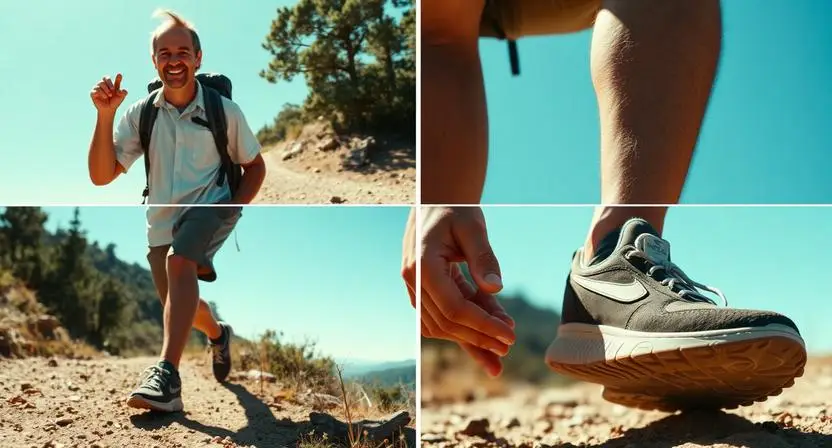
Smart outdoor gear selection learns from documented failure patterns rather than discovering them personally on exposed terrain. Cotton clothing remains the single most common gear mistake — a cotton t-shirt soaked in sweat on a cold day creates genuine hypothermia risk that synthetic or merino equivalents simply don’t produce. New footwear on a long trail without prior break-in is the second most common mistake — hiking boots require 10 to 20 miles of break-in walking before they’re ready for a full trail day.
Hiking gear mistakes also include underestimating weather changes at elevation and leaving rain gear in the car because the morning looked clear. Mountain weather generates afternoon thunderstorms on predictable summer schedules throughout the American West and storms that produce lightning, wind and rapid temperature drops develop faster than most hikers realize when they’re absorbed in the experience of the climb. Hiking comfort and protection balance requires always carrying your hardshell rain jacket in your pack regardless of departure conditions — the weight is negligible and the protection is non-negotiable.
Building Your Hiking Kit From Nothing — a Honest Priority Order for New Hikers
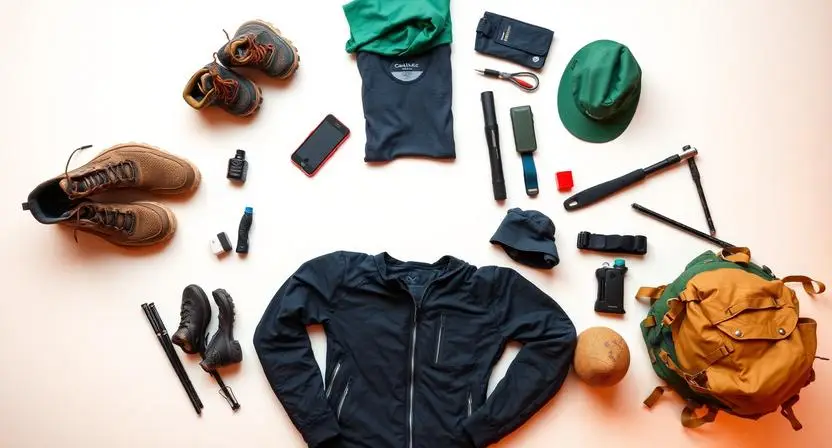
How to build a hiking outfit from scratch follows a priority sequence that most beginners reverse — they buy accessories before investing in the foundational items that determine actual performance and safety. Priority one is footwear — properly fitting hiking boots or trail running shoes broken in before your first significant trail. Priority two is a moisture-wicking base layer that eliminates cotton from your hiking outfit entirely. Priority three is a waterproof hiking jacket that keeps you dry regardless of weather forecast.
Hiking outfit ideas for beginners should avoid the overwhelming experience of trying to acquire everything at once. A three-item starting kit — quality footwear, merino or synthetic base layer, packable rain jacket — handles the majority of day hiking conditions adequately. Everything else builds from that foundation through actual trail experience that reveals your specific gaps. Building your hiking kit from nothing is a gradual process that hiking itself guides — each trail teaches you specifically what you wish you’d had and those experiential lessons produce far better gear decisions than any purchase made from speculation before you’ve felt what the trail actually demands.
Frequently Asked Questions
What should a beginner wear on their first hike?
What to wear hiking for beginners on a first hike should prioritize avoiding cotton in any layer touching skin, wearing athletic synthetic or merino wool clothing, using proper athletic shoes with ankle support if dedicated hiking boots aren’t available and carrying a packable rain jacket regardless of the forecast. Hiking outfits for beginners don’t need to be expensive or technical on day one — they need to avoid the specific materials and fits that create blisters, chafing and cold-weather risk on beginner trails.
Do I need special boots for hiking or will regular sneakers work?
What boots to wear hiking depends on terrain difficulty and trail length. Regular athletic sneakers handle well-maintained flat trails of 3 to 5 miles adequately but lack the ankle support, sole stiffness and grip that technical terrain requires. Hiking boot selection guide advice for beginners recommends a low-cut trail running shoe with a lugged sole as the minimum footwear standard for most trails — it delivers meaningfully better grip and foot protection than a running sneaker without the weight or cost of a full hiking boot.
What is the most important piece of hiking gear to invest in first?
Footwear is the unambiguous answer. Poorly fitting or inadequate footwear ruins a hike faster than any other single gear failure and creates blister, injury and fatigue outcomes that no amount of good clothing or accessories compensates for. Best hiking gear brands in 2025 for footwear include Salomon, Hoka, Merrell, La Sportiva and Brooks Cascadia for trail running shoes and Salomon, Vasque, Keen and Danner for hiking boots — all brands with proven construction quality and adequate sizing options across wide foot widths.
How do I choose the right hiking pants or leggings?
How to choose hiking pants starts with terrain assessment — technical rocky or brushy terrain favors pants for abrasion protection while well-maintained trail hiking favors hiking leggings for movement freedom. Fabric matters: nylon-spandex blends outperform polyester for durability and cotton fails in every hiking scenario. Convertible hiking pants suit hikers who want temperature management versatility. Compression socks paired with hiking leggings improve circulation on long descents. Try both options on a shorter trail before committing to a preference for multi-day use.
What clothing layers do I need for cold weather hiking?
How to layer clothes for hiking in cold conditions requires all three layers functioning together — a merino wool base layer against the skin, a fleece midlayer for active insulation and a hardshell rain jacket as the wind and precipitation barrier. Add a down jacket for stationary warmth at rest stops and summits. Winter hiking outfit layers for extreme cold additionally need insulated hiking boots or waterproof trail shoes, hiking gloves and accessories including liner and shell options and a sun hat or insulated beanie for head warmth management.
Conclusion
Every trail you walk is a negotiation between your body and the environment and your hiking outfits and gear are the terms you bring to that negotiation. Get them right and the trail rewards you with the full experience it offers — the views, the physical satisfaction, the mental clarity that moving through natural terrain at human pace consistently delivers. Get them wrong and the trail becomes an endurance test that ends with blisters, wet clothing and the kind of exhaustion that makes you question why you started. The information in this guide gives you everything needed to start that negotiation from a position of genuine preparation. The trails are waiting and they’re extraordinary when you arrive dressed for them properly.