
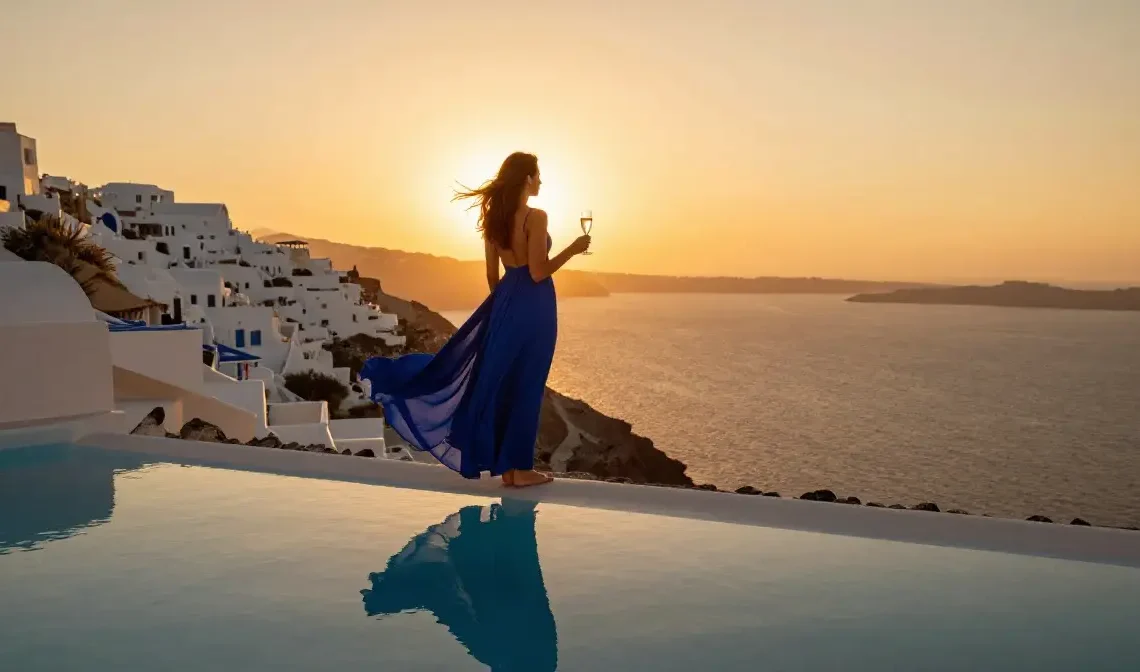
Every scroll through Instagram confirms the same uncomfortable truth — most vacation photos are forgettable. Not because the destinations were wrong or the memories weren’t real, but because the photography decisions were made by accident rather than intention. The difference between a photo that gets 12 likes from family members and one that stops strangers mid-scroll and earns thousands of saves is rarely the location. It’s the light. The composition. The timing. The outfit. The edit. The story the image tells in the two seconds before the thumb moves on. This guide covers every dimension of that difference — from the lighting science that makes images look expensive to the caption psychology that transforms good photos into posts people actually read. Your next trip deserves to be documented at the level of quality it genuinely represents.
The One Lighting Window That Makes Every Vacation Photo Look Expensive
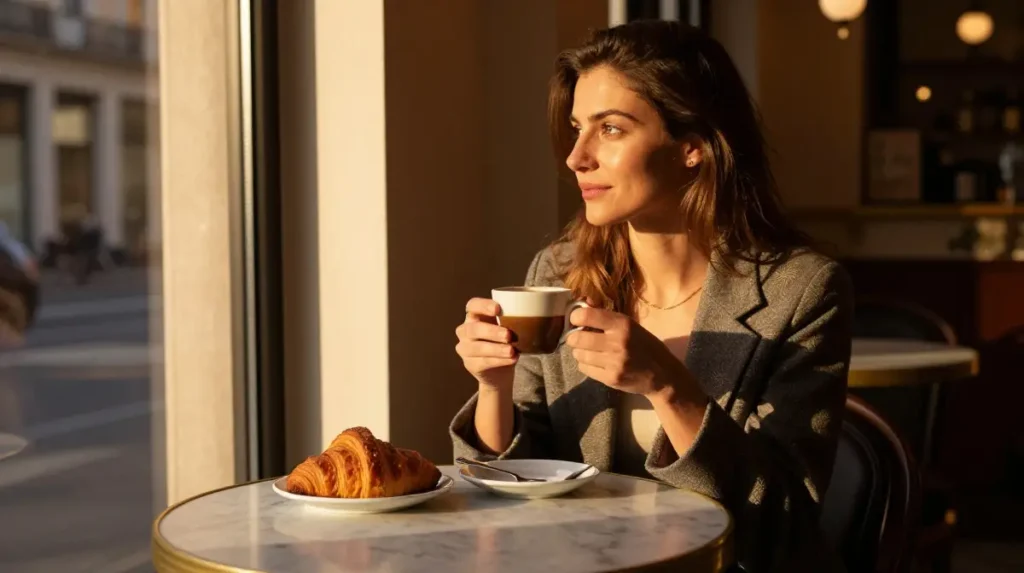
Natural light is the single most powerful variable in travel photography and most travelers completely ignore its timing. The human eye perceives certain light qualities as luxurious and others as ordinary — and that perception gap has nothing to do with camera quality or editing skill. It’s about when you shoot. Best time of day to take vacation photos consistently produces the same answer from every professional travel photographer: the two hours after sunrise and the two hours before sunset, full stop.
Midday sun — the default shooting window for most vacationers because that’s when activities happen — creates harsh overhead shadows, blown-out highlights on skin and architectural surfaces, and a flat, washed-out quality that no filter can fully rescue. Overcast soft light works beautifully for certain subjects but lacks the drama that makes vacation photos for Instagram stop the scroll. The light quality that makes images look expensive is directional, warm-toned, and low-angle — qualities that only exist in that specific morning and evening window. Travel portrait natural light from a low sun position wraps around subjects rather than hammering down from above, creating the dimensional warmth that gives magazine quality travel pictures their characteristic glow.
Insta Vacation Pics Poses That Feel Natural Instead of Painfully Staged
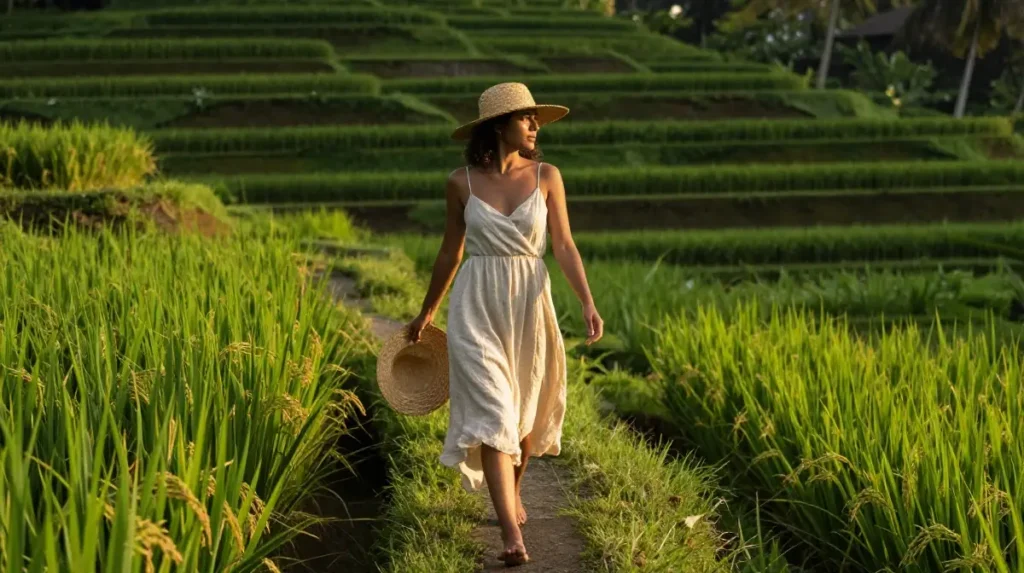
Posed vacation photography has a specific failure mode that most people recognize immediately upon seeing it in others but don’t catch in their own images: the effort shows. Locked joints, rigid shoulders, forced smiles, the slight asymmetrical lean that reads as self-consciousness rather than ease — all visible signals that the person in the frame is acutely aware of being photographed. Best poses for vacation Instagram pictures that look natural share one consistent characteristic: they involve doing something rather than simply standing somewhere.
How to take aesthetic vacation photos alone or with others requires building a motion vocabulary rather than a pose library. Walking directly toward or away from the camera, looking at something specific off-frame, adjusting an item of clothing or accessory, leaning against a surface while genuinely looking at the view rather than the lens, holding a coffee cup in both hands while looking downward — these micro-actions create the relaxed, unguarded body language that makes posed photos read as candid. Vacation selfie ideas Instagram beyond the standard arm-extended shot include mirror reflections, shadow self-portraits, and the phone-at-table composition where the device is visible in the lower frame suggesting casual documentation rather than deliberate posing.
Golden Hour Is Your Most Powerful Travel Photography Weapon — Use It
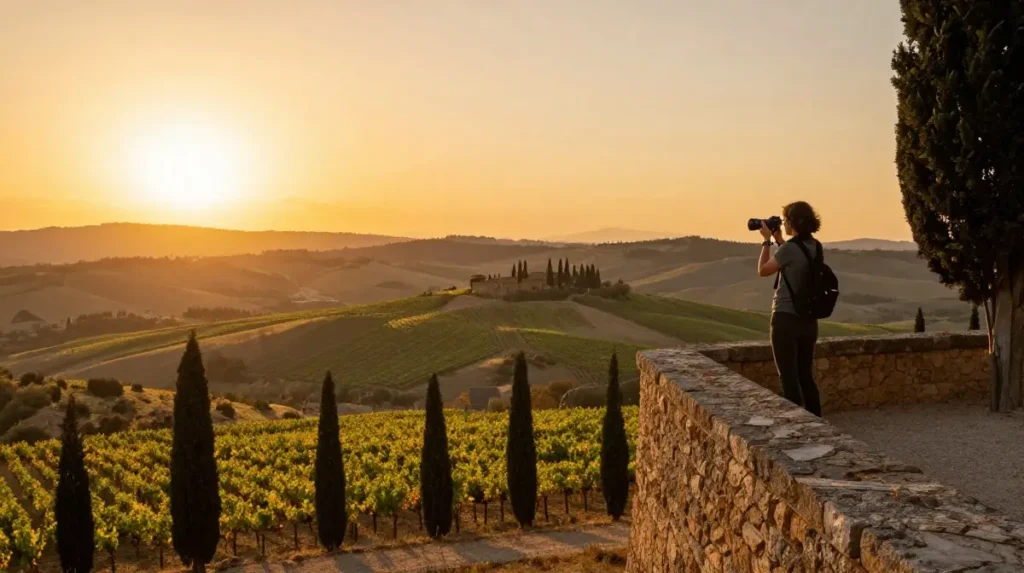
Golden hour vacation photography produces a quality of light that no artificial source, no filter, and no editing technique can authentically replicate. The warm horizontal light of the hour following sunrise and preceding sunset travels through significantly more atmosphere than midday light, filtering out blue wavelengths and leaving predominantly warm amber and rose tones that hit every surface — skin, architecture, water, foliage — with a flattering directional warmth that reads as cinematic rather than merely documentary.
Professional travel content creators plan their entire day’s itinerary around golden hour access to key locations. The Santorini sunset, the Bali rice terrace sunrise, the Moab desert golden hour rock formations — these aren’t accidental Instagram moments. They’re the result of researching exact sun angle timing using apps like PhotoPills or The Photographer’s Ephemeris, arriving at the location 30 minutes early to set up composition, and shooting within the narrow 20 to 40-minute window before the light shifts. Golden hour vacation photography on a Caribbean beach at 6:30 PM produces a completely different image than the same beach at 1:00 PM using identical camera settings. The location hasn’t changed. The light has changed everything.
Composition Secrets Stolen From Professional Travel Photographers
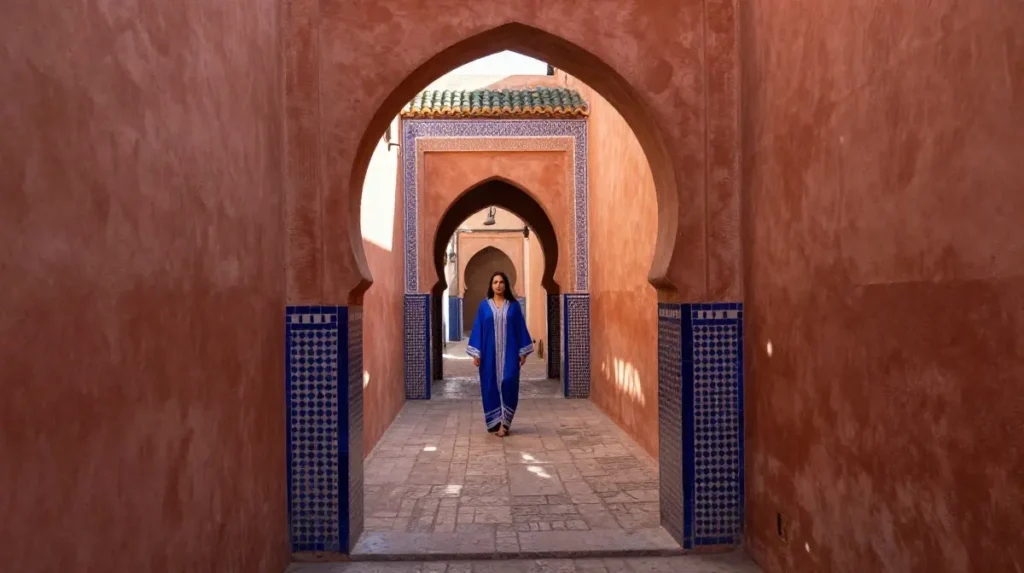
The compositional gap between a forgettable travel snapshot and a visually stunning travel shot is almost always explainable by the same handful of structural principles that professional photographers internalize to the point of reflex. These principles don’t require expensive equipment or formal training — they require deliberate attention to where the frame’s edges fall, where the subject sits within the frame, and what visual elements guide the viewer’s eye through the image.
Rule of thirds travel composition positions the primary subject at one of the four intersection points created by dividing the frame into a three-by-three grid — a simple adjustment from dead-center subject placement that immediately creates more visual tension and dynamism. Leading lines travel photography uses architectural elements, roads, shorelines, fences, rivers, or any linear feature to create a visual path from the frame’s edge toward the primary subject, giving the viewer’s eye a journey rather than a destination. Negative space vacation photo composition — placing the subject in a corner of the frame with sky, water, or minimal background occupying the majority of the image — creates the clean, editorial quality that distinguishes influencer travel photography style from tourist snapshots. All three principles can be applied with an iPhone camera at zero additional cost.
| Composition Technique | Best Applied To | Common Mistake |
|---|---|---|
| Rule of Thirds | Portraits, landscapes, architectural shots | Placing subject dead center every time |
| Leading Lines | Roads, rivers, corridors, shorelines | Missing the line that’s already in the scene |
| Negative Space | Beach, sky, desert, minimalist settings | Filling every corner with visual information |
| Frame Within Frame | Doorways, arches, windows, tree canopies | Using the same arch framing on every shot |
| Mirror Reflection | Water, glass buildings, wet surfaces | Missing the reflection opportunity entirely |
Destination Dressing — Outfits That Make Your Vacation Photos Sing
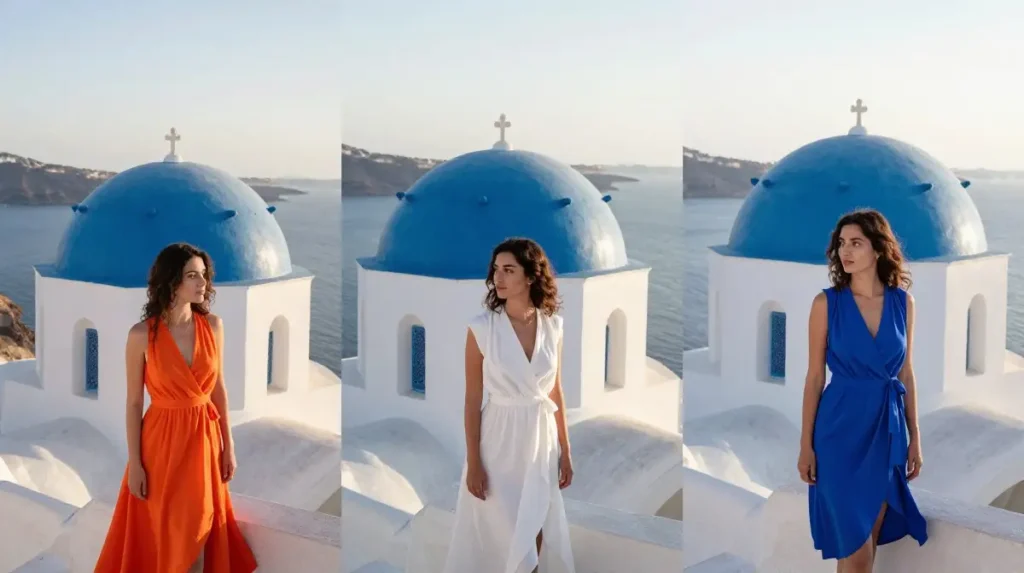
What to wear for Instagram vacation photos is a question most people answer at the last minute in a hotel room and then regret when they see the images. Outfit choice in travel photography operates on a few clear principles that professional content creators treat as non-negotiable: the outfit must contrast meaningfully with the primary background color, it must read clearly at the scale where people appear in the intended shot, and it must carry enough visual interest to function as a compositional element rather than a distraction.
Solid colors in mid to high saturation consistently outperform patterns in travel photography because they read as clean graphic shapes at distance rather than visual noise. A cobalt blue sundress against white-washed Greek architecture, a burnt orange linen set against a Moroccan medina wall, a cream linen shirt against deep green Bali jungle — each combination creates immediate visual contrast that makes the subject pop against the environment. Dreamy vacation photo concepts built around color-coordinated outfits and locations require advance research: screenshot the location’s dominant color palette from reference images, then plan the outfit to either complement or deliberately contrast that palette. Pack three to five versatile pieces in your strategic color range rather than random vacation clothes and your Instagram travel photos will show it.
The Camera Debate — iPhone Versus Mirrorless for Travel Photography
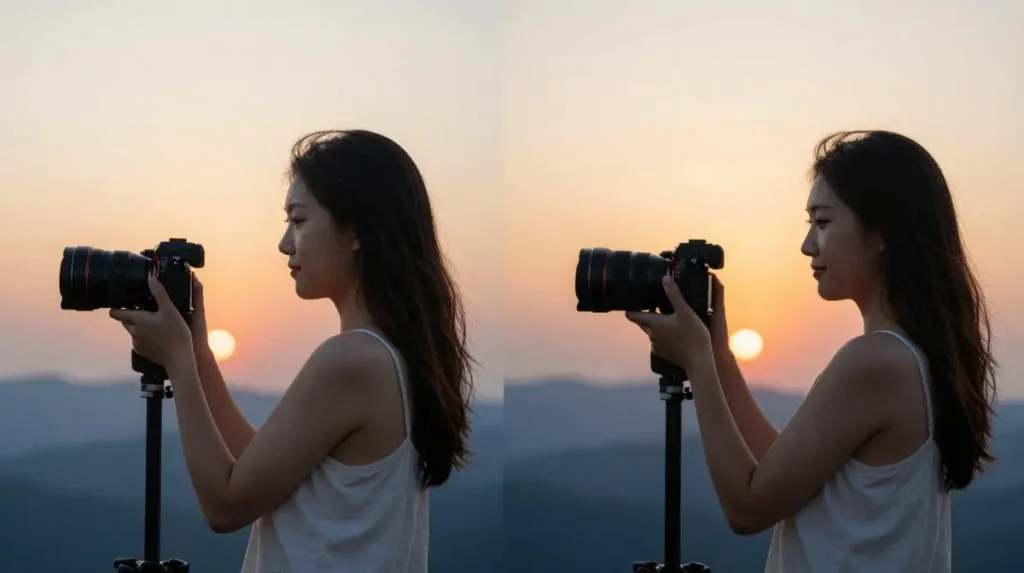
The camera debate in travel photography resolves to a more honest answer than gear enthusiasts typically accept: the best camera for travel Instagram content is the one that gets used consistently and edited competently. An iPhone 15 Pro in the hands of a compositionally skilled photographer with a strong editing workflow produces content that outperforms a Canon mirrorless camera operated by someone who doesn’t understand light or composition. Gear is not the limiting factor for most travel photographers.
That said, genuine differences between smartphone and dedicated camera systems matter for specific content types. Canon mirrorless travel camera and Sony travel photography camera systems deliver superior performance in three scenarios: low-light environments where sensor size matters dramatically, situations requiring optical zoom beyond the 3x-5x digital zoom range, and portrait work where a true wide-aperture lens creates bokeh effect travel portrait separation that computational phone photography approximates but doesn’t fully replicate. iPhone travel photography tips for maximizing smartphone image quality include shooting in ProRAW format for full post-processing latitude, using the 1x lens as your primary compositional lens rather than ultra-wide which distorts proportions, and enabling the histogram exposure guide to prevent blown highlights in bright vacation environments.
Editing Presets and Color Grading That Give Your Feed a Signature Look
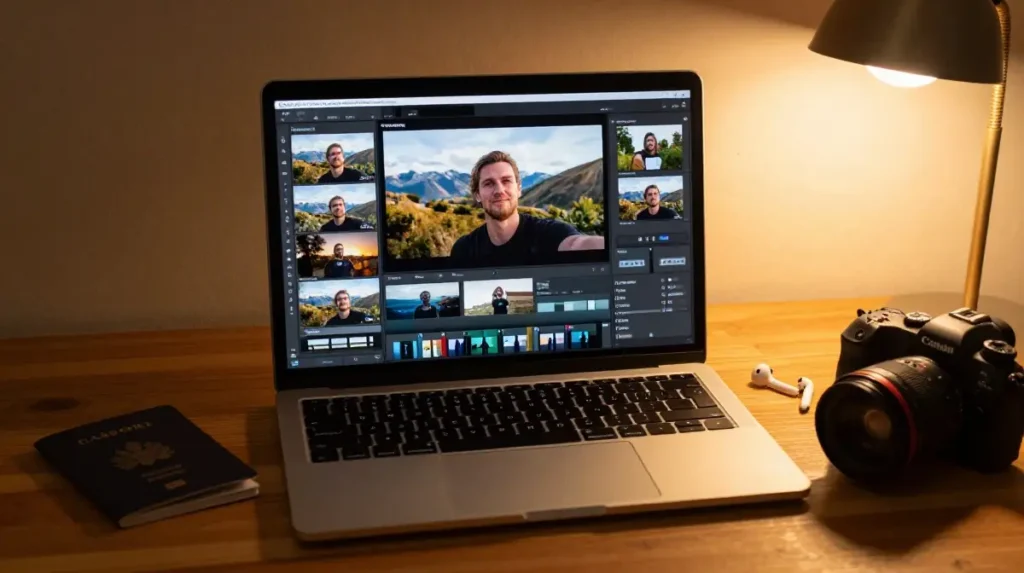
The visual coherence that distinguishes a professional-looking Instagram travel feed from a collection of individually decent photos is almost entirely an editing decision. Travel photo color grading applied consistently across your images through a custom preset creates a signature aesthetic — a recognizable visual identity that makes your grid read as intentional curation rather than a random archive of vacation snapshots. This is the single editing principle that separates content creators with distinctive visual brands from photographers with technically good but visually disconnected feeds.
you may also like this:22 Yellowstone Aesthetic Ideas for Stunning Nature Inspiration
VSCO travel preset filters in the A or M series and Adobe Lightroom travel presets from creators like Tezza, Mastin Labs, or Signature Edits provide starting points but require customization for each shooting environment — a preset calibrated for warm desert light will desaturate and muddy images from overcast Northern European destinations without adjustment. How to edit vacation photos for Instagram with genuine consistency requires identifying three to five editing parameters that define your aesthetic — your preferred highlight tone, your shadow depth preference, your skin tone warmth, your saturation approach, and your sharpening level — and applying those parameters as a baseline to every image before any location-specific adjustments. RAW file travel photo editing gives you the full dynamic range of the sensor to work with, allowing recovery of both blown highlights and crushed shadows in ways that JPEG editing cannot approach.
Insta Vacation Pics That Tell a Story Instead of Just Showing a Place
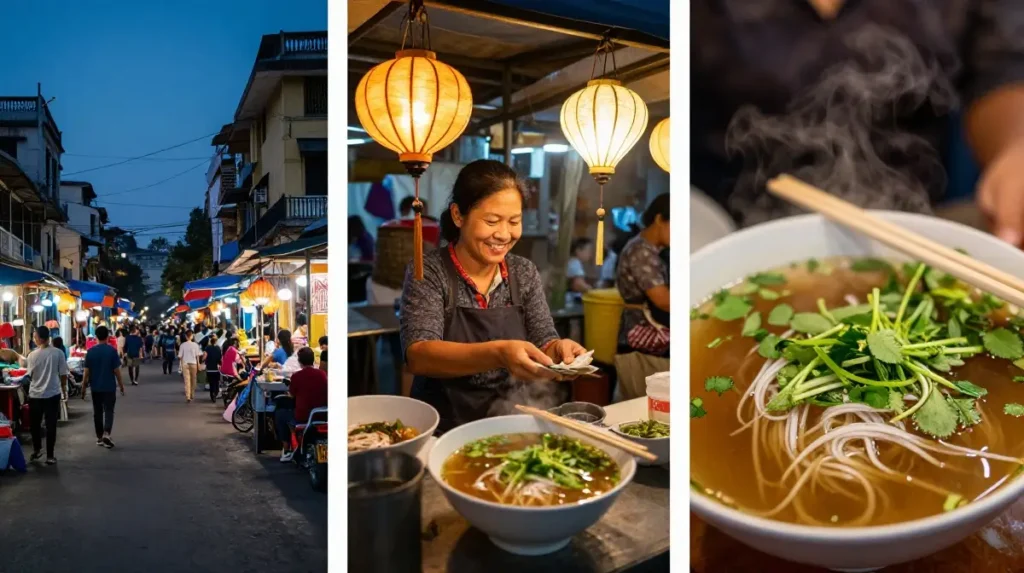
The difference between a travel photograph that generates genuine engagement and one that earns polite acknowledgment from followers is narrative. Travel photo storytelling sequence thinking transforms the vacation photography approach from location documentation — “here is what the place looks like” — into experiential journalism — “here is what it felt like to be here.” That shift in intent produces completely different images even when pointing the camera at identical subjects.
Social media travel content built on narrative sequences uses a three-image minimum structure: an establishing wide shot that places the viewer in the environment, a medium shot showing the human relationship to the space, and a detail or close-up shot revealing the specific texture, color, food, object, or interaction that makes this place genuinely distinctive. Insta vacation pics built on this documentary journalism structure tell stories that single-location snapshots cannot. The detail shot is almost always the most memorable image in the sequence — the condensation on a glass of fresh coconut water at a Thai beach bar, the hand-painted tile detail on an Andalusian doorstep, the exact texture of a wood-fired Neapolitan pizza crust — because it delivers the sensory specificity that makes viewers feel they’ve been there rather than merely seen it.
Candid Versus Posed — the Tension That Produces Your Best Travel Shots
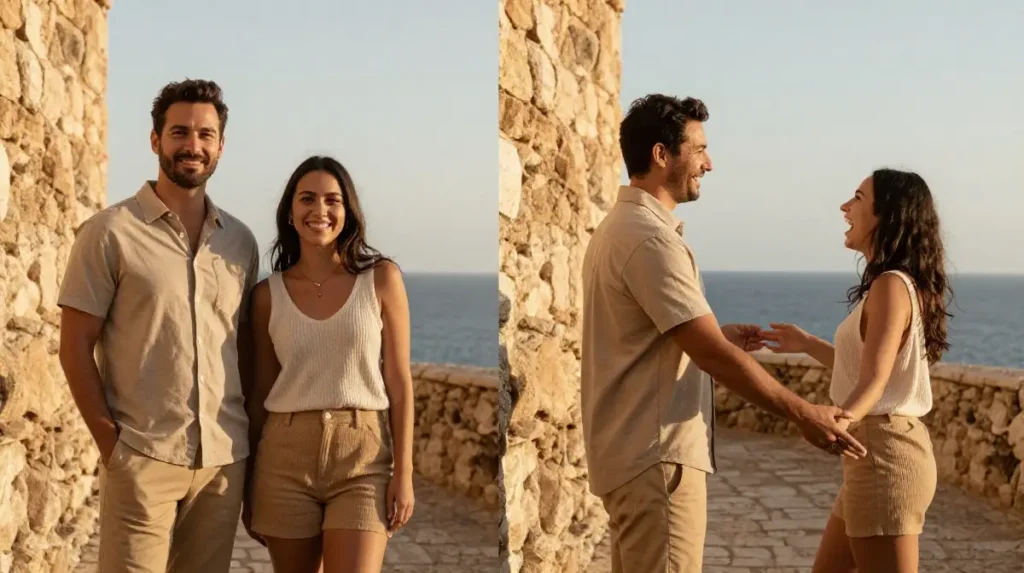
Candid travel photo technique captures authenticity that posed photography structurally cannot achieve — the genuine laugh, the unguarded moment of wonder, the natural interaction with an environment uncomplicated by self-consciousness. But pure candid photography without compositional awareness produces technically authentic but visually chaotic images that lack the structural clarity of well-composed shots. The tension between these two approaches produces the best travel photography when resolved intelligently rather than treated as an either-or choice.
The professional approach to this tension is directed candid — creating conditions for authentic behavior within a pre-planned compositional frame. Set up the composition first: identify the background, the light direction, the frame boundaries. Then ask your subject to interact naturally with the environment rather than pose for the camera. Walk toward that archway. Look at that view and tell me what you see. Reach for that coffee cup. The resulting images carry compositional control and behavioral authenticity simultaneously. Vacation Instagram photo ideas for couples using this directed-candid technique consistently produce the images that read as genuinely intimate rather than performed — the couple walking away together, the spontaneous glance, the shared laughter over food rather than the coordinated look-at-camera smile.
Drone and Aerial Shots That Transform Ordinary Landscapes Into Art
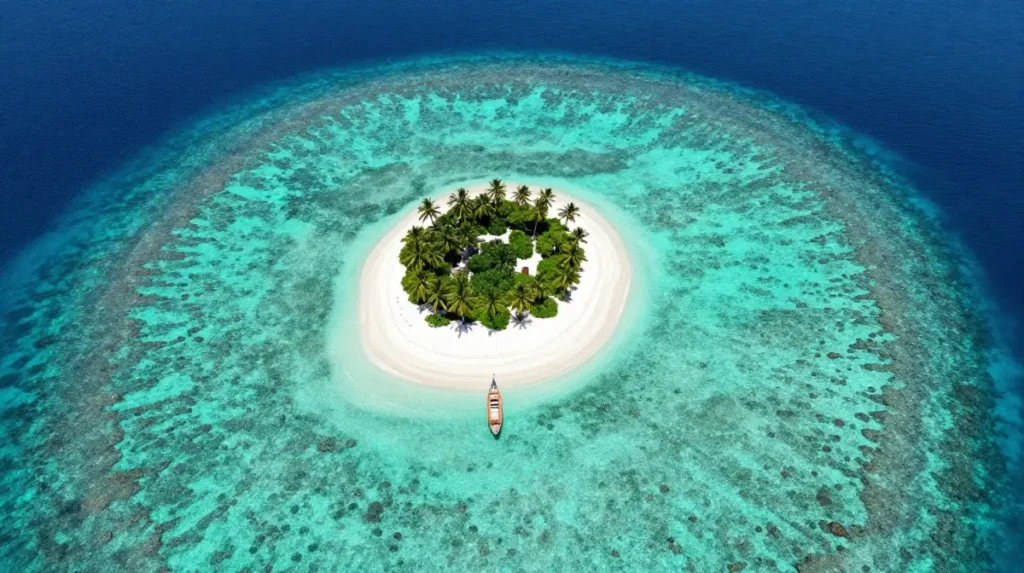
Aerial drone vacation photography reveals the geometry of places that ground-level photography cannot access — the perfect hexagonal salt flat patterns, the circular island reef formation, the winding road switchbacks through mountain terrain, the beach umbrella grid that from above creates a graphic pattern of colored circles against white sand. DJI drone vacation shots at 100 to 200 feet above ground level access a visual perspective that existed in travel photography only through expensive helicopter charters before consumer drones made it accessible to any motivated photographer.
The practical reality of traveling with a drone requires understanding country-specific regulations before every international trip. Many of the world’s most photogenic destinations — national parks in the USA, most of the Maldives’ resort areas, the historic centers of European cities — have significant drone restrictions ranging from designated fly zones to complete prohibition. How to plan an Instagram worthy vacation photo shoot that incorporates drone work requires checking both national and local regulations, registering the drone if your destination requires it, and identifying approved fly zones using apps like AirMap or the DJI Fly app’s built-in geo-fencing system. The wide angle vacation landscape shot from drone altitude transforms even moderately attractive landscapes into the kind of wanderlust photography concepts that generate the highest save rates of any travel content format.
The Hotel Room Flat Lay Formula That Always Gets Saved and Shared
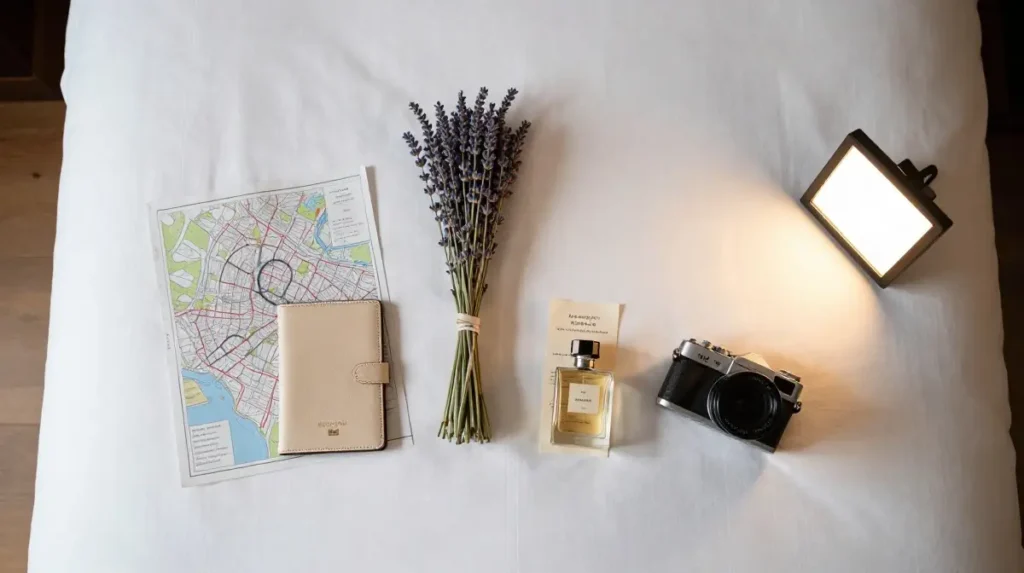
Hotel room photos Instagram content performs consistently well for a counterintuitive reason: hotel rooms provide neutral, often luxurious backgrounds that don’t compete with the arranged subject matter, plus access to controlled artificial lighting that can be augmented with natural window light. The vacation flat lay Instagram format within hotel room photography has developed a specific compositional vocabulary that content creators follow reliably because it reliably produces saved content.
Travel flat lay composition for hotel room content works on a five-element formula: one anchor object that provides context (passport, hotel key, local currency), one aspirational object that communicates lifestyle (luxury skincare, reading glasses and a book, a beautiful coffee), two or three destination-specific objects (local food items, souvenir, flower from the destination), one textile element (scarf, straw hat, linen fabric), and negative space intentionally left open to let the arrangement breathe. How to organize vacation photos for Instagram feed in a way that incorporates hotel flat lay content works best when the flat lay color palette matches the color story of the destination photography — a Tuscany flat lay in warm ochre, cream, and terracotta reads as narratively connected to the golden vineyard photographs it sits between on the grid.
Beach and Pool Photography Mistakes That Ruin Otherwise Perfect Shots
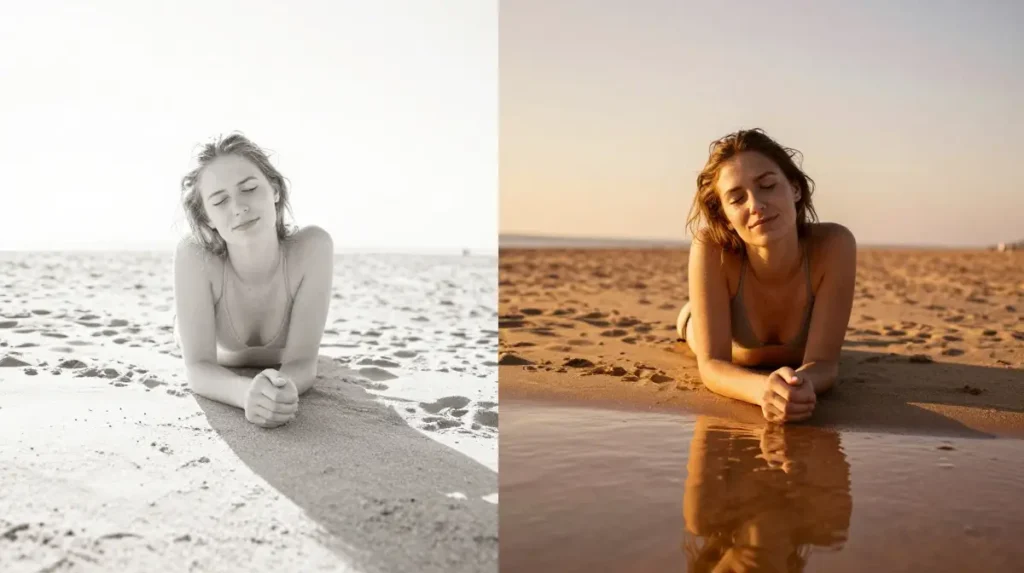
Beach vacation Instagram pictures and pool vacation Instagram photos are among the most posted travel content categories and among the most technically challenging to execute well — which explains why so many of them look mediocre despite the inherently beautiful environments they document. The specific failure modes of beach and pool photography are predictable and preventable once identified.
The most destructive mistake is shooting in midday direct sun near water — the combination of overhead harsh light, highly reflective water surface, and bright sand creates exposure conditions that blow out sky detail, create harsh face shadows, and produce the unflattering squinting expression that direct sunlight at this angle reliably causes. Summer vacation Instagram photos at the beach look extraordinary in the two hours after sunrise when the light is warm, directional, and low enough to create long shadows and dimensional texture in the sand. The second major beach photography error is ignoring the mirror reflection vacation photo potential of wet sand at low tide — a thin film of water on flat sand creates a perfect reflection surface that produces some of the most visually arresting tropical vacation Instagram pictures in any travel photography portfolio.
City and Urban Vacation Photography That Captures Real Atmosphere
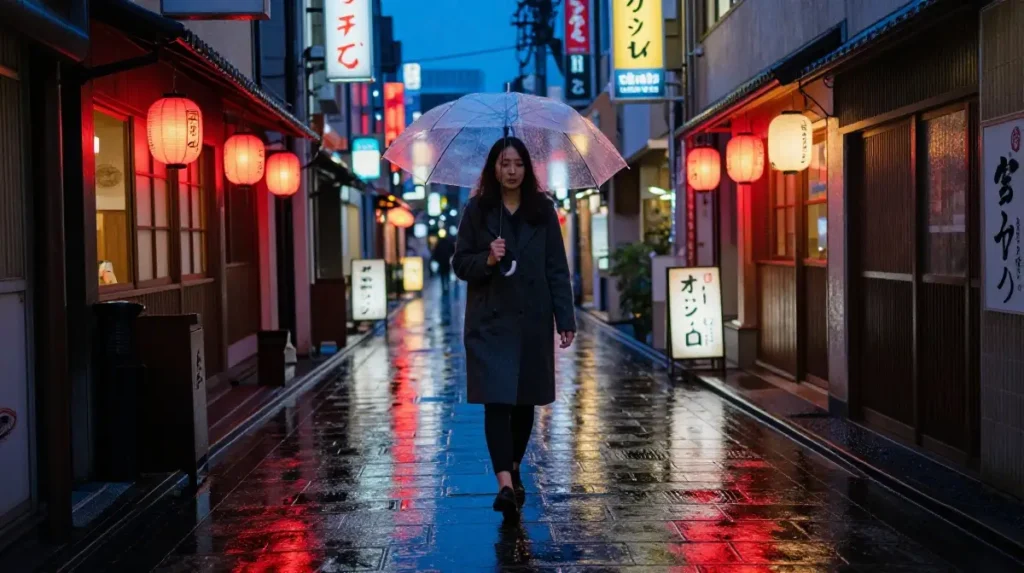
City vacation Instagram photos face a specific creative challenge: cities have been photographed obsessively by millions of visitors and the familiar shots — the Eiffel Tower, the New York skyline, the London telephone box — produce technically adequate images that generate zero engagement because viewers have seen them thousands of times before. Urban vacation photography that captures real atmosphere requires finding the city’s texture rather than its icons.
Photogenic vacation destinations in cities reveal themselves most generously in neighborhoods tourists don’t typically visit: the market district at opening time, the local coffee shop where the light falls in a specific way in the morning, the canal district in the late afternoon when residents walk their dogs rather than tour groups take their photos. Road trip Instagram pictures through American cities benefit from the same principle — the gas station on Route 66 at golden hour, the small-town diner counter with the light falling through the window, the empty main street on a Sunday morning. Google Lens travel photo search is a genuinely underused research tool that allows you to photograph any urban scene and immediately identify similar, more visually compelling locations that photographers have documented nearby.
Solo Travel Photography — Getting Great Shots When You Are Alone
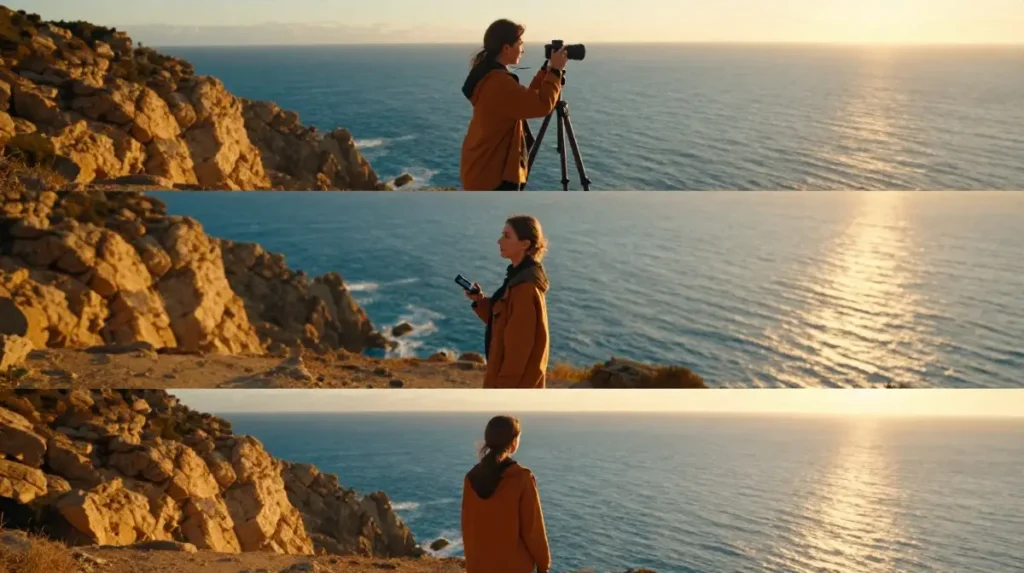
How to take aesthetic vacation photos alone is the most practically challenging question in travel photography — you can’t direct your own expressions, can’t tell yourself to walk more naturally, and can’t rely on a second person to hold the camera at the angle that works. The solution set for solo travel photography is more creative and effective than most people realize before they try it.
A Canon mirrorless travel camera or Sony travel photography camera with a reliable compact tripod and a remote shutter trigger solves 80 percent of the solo travel photography problem. Set up the composition first — identify your exact desired frame using a jacket or bag as a placeholder, adjust the height and angle, set the scene — and then walk into the pre-composed frame and trigger remotely. How to take good vacation photos for Instagram as a solo traveler also benefits from the directed-candid approach: position yourself in the pre-composed frame, then interact genuinely with the environment for 30 seconds while triggering continuous burst mode. Review afterward and select the frames where posture, expression, and movement aligned. Most solo travel photographers find their best self-shot images in burst-mode sequences rather than in deliberately posed single exposures.
Couple Travel Photography That Feels Genuine and Not Manufactured
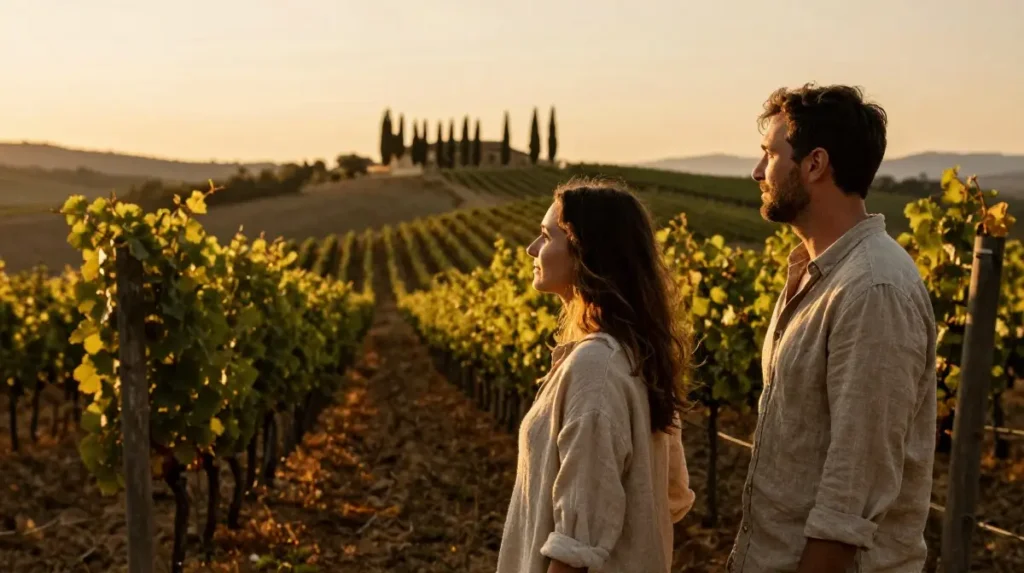
Couple vacation pictures Instagram content occupies a peculiar creative space — the images need to communicate genuine intimacy while being technically well-composed, which requires either a skilled third-party photographer or a disciplined self-shooting system. The specific failure mode of most couple travel photography is the mirror image of good couple photography: both people looking at the camera simultaneously, producing the coordinated-strangers quality that reads as performatively happy rather than genuinely connected.
Vacation Instagram photo ideas for couples that consistently generate authentic emotional response use physical direction rather than expression direction: hold hands and walk toward that view. One of you look at the other while the other looks at the landscape. Both of you look at the menu together. The camera will capture whatever expressions naturally occur during those genuine interactive moments. How to get more likes on vacation Instagram photos as a couple is almost entirely answered by this shift from directed-expression to directed-interaction — research consistently shows that couple travel photography where one or both subjects are looking at something other than the camera generates significantly higher engagement than standard look-at-the-camera couple portraits.
Captions That Turn Good Vacation Photos Into Unforgettable Posts
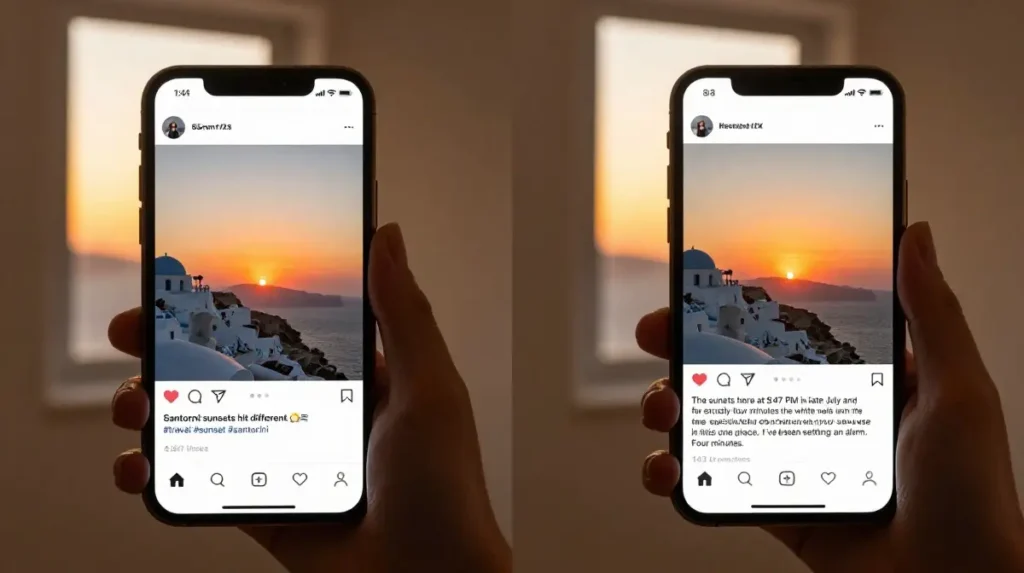
Best Instagram captions for vacation pictures are not the generic location tags, emoji sequences, and hashtag stacks that most people post. Captions that genuinely extend engagement — that make people stop reading after the image makes them stop scrolling — deliver one of three things: specific sensory detail that the image can’t convey (what the coffee tasted like, what the air smelled like, what sound was playing at that moment), a genuine perspective or observation about the place that goes beyond the visual documentation, or a direct conversational question that creates a low-friction reason to comment.
Instagram vacation captions psychology follows the principle that text and image should not simply repeat each other. If the image shows a beautiful sunset over the ocean, a caption that says “beautiful sunset over the ocean” with some wave emojis adds nothing. A caption that says “I’ve been trying to figure out why the light here feels different than anywhere else I’ve been, and I think it’s that the sky and water are exactly the same shade of gold for about four minutes each evening. Four minutes. I set an alarm now.” — that caption transforms a beautiful photograph into a shared experience. How to plan an Instagram worthy vacation photo shoot that accounts for captioning means taking brief notes during the shoot: the sensory details, the specific reactions, the observations that the camera couldn’t capture. Those notes become the captions that make the images memorable.
Feed Curation Strategy That Makes Your Vacation Content Work Together
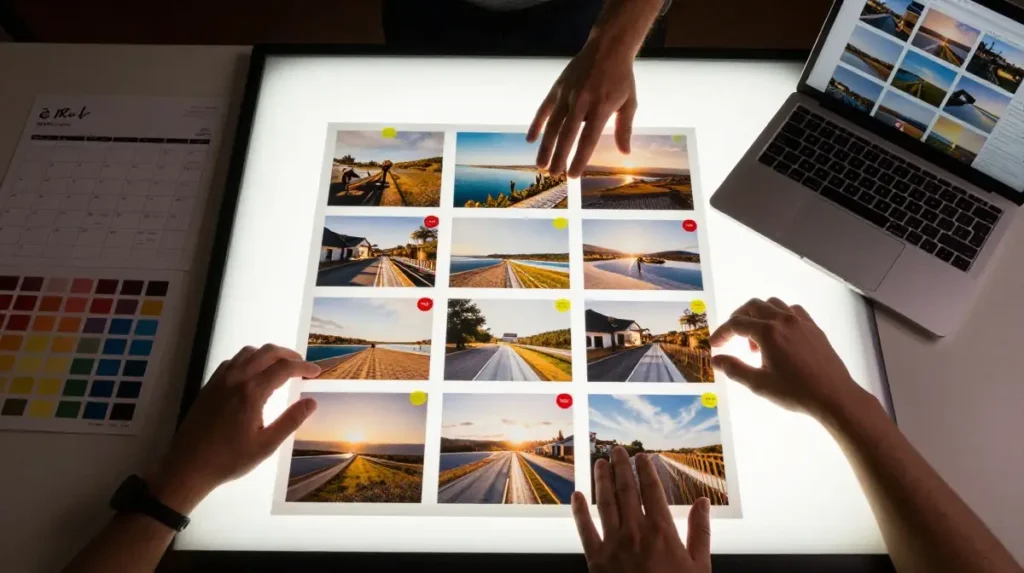
How to organize vacation photos for Instagram feed in a way that creates visual coherence across multiple posts requires thinking about the grid as a designed object rather than a chronological archive. Instagram’s grid displays nine posts at a time in a 3×3 format — and those nine posts should be chosen and sequenced to create a cohesive visual experience rather than nine independently adequate images placed in chronological order.
Travel feed Instagram ideas for maintaining visual consistency across a vacation content sequence include: maintaining a consistent editing preset that creates color story unity across images shot in different lighting conditions, alternating between wide landscape shots and closer portrait or detail shots rather than posting ten consecutive landscapes, and planning the grid sequence by laying out nine upcoming posts simultaneously using Canva travel post templates or a dedicated grid planning app before publishing. Instagram travel content ideas that perform best on the discovery page also maintain aspect ratio consistency — mixing portrait, landscape, and square orientations creates a choppy, incoherent grid that reduces profile visit-to-follow conversion for new visitors discovering the account through a single viral post.
Hidden Photo Spots and Research Tactics Most Tourists Never Use
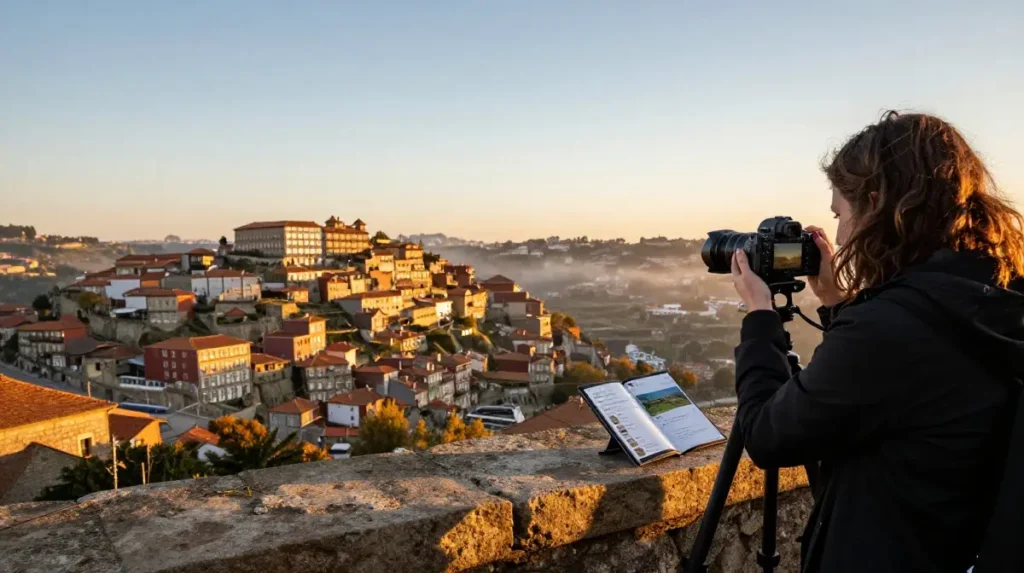
The most photographically compelling vacation images consistently come from locations that appear nowhere in the destination’s official tourism photography — the alley that the morning light hits at a specific angle, the rooftop restaurant that faces the cathedral rather than away from it, the beach accessible only at low tide via a 200-meter rocky scramble. These locations don’t surface through standard tourist research and they’re found through a specific intelligence-gathering process that serious travel photographers use systematically.
Pinterest travel aesthetic boards organized by destination reveal locations that content creators have documented with significant engagement — sort by “most saved” within destination boards and the genuinely photogenic non-tourist locations surface quickly. Instagram Stories travel content from local creators — not travel influencers visiting for a sponsored trip but residents who document their daily environment — reveals the city’s hidden visual gems through the lens of people who actually know where the light falls well. Google Lens travel photo search applied to any particularly beautiful reference image you find will surface the specific location within seconds if it has been publicly photographed. TikTok vacation videos with high view counts in your destination often include location reveals in comments or captions that surface hidden spots that haven’t yet been discovered by the wider travel content community.
Night and Low Light Vacation Photography Without the Grainy Mess
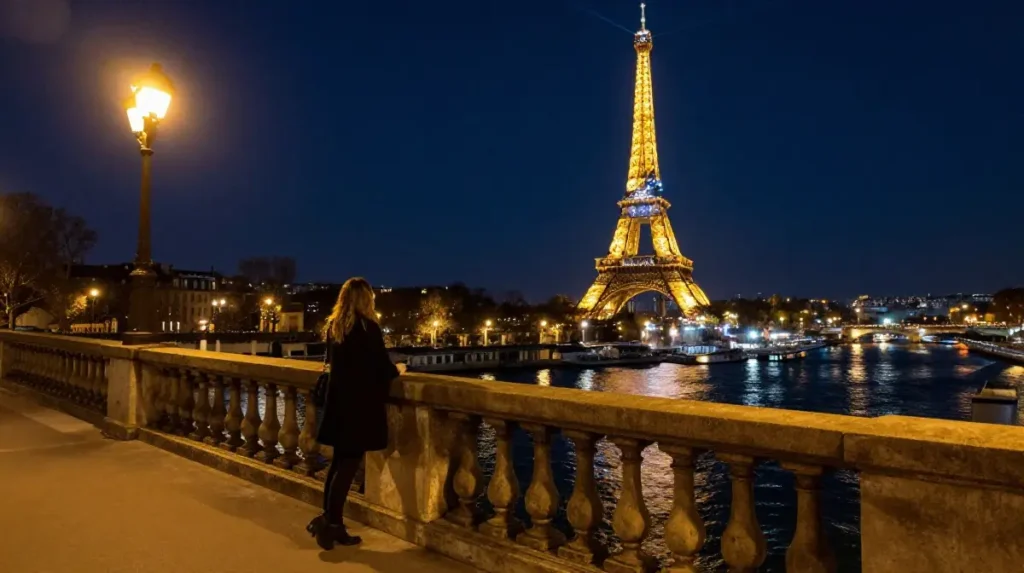
Night vacation photography fails for a predictable technical reason: insufficient light reaching the camera sensor produces digital noise — the grain-like texture that makes low-light images look amateurish regardless of compositional quality. The solution set for night travel photography involves either giving the sensor more light (wider aperture, longer exposure time, higher ISO with noise reduction) or using artificial light sources strategically to supplement the available ambient light.
Best camera settings for vacation Instagram photos at night on a smartphone involve three adjustments: enable Night Mode if available, which uses multi-frame computational processing to stack multiple exposures and reduce noise; use a small flexible tripod or stable surface for anything over 1/30 second to eliminate camera shake; and avoid using the digital zoom range above 1x in low light where noise amplification makes zoom quality unacceptably degraded. Adobe Lightroom travel presets designed specifically for low-light and night photography apply noise reduction and shadow recovery as baseline corrections that address the most common night photography degradation before stylistic adjustments begin. Snapseed travel photo edits noise reduction tool accessed through the Details section provides effective grain reduction for smartphone night images without the subscription cost of Lightroom.
Stories Versus Grid — Building a Complete Instagram Vacation Presence
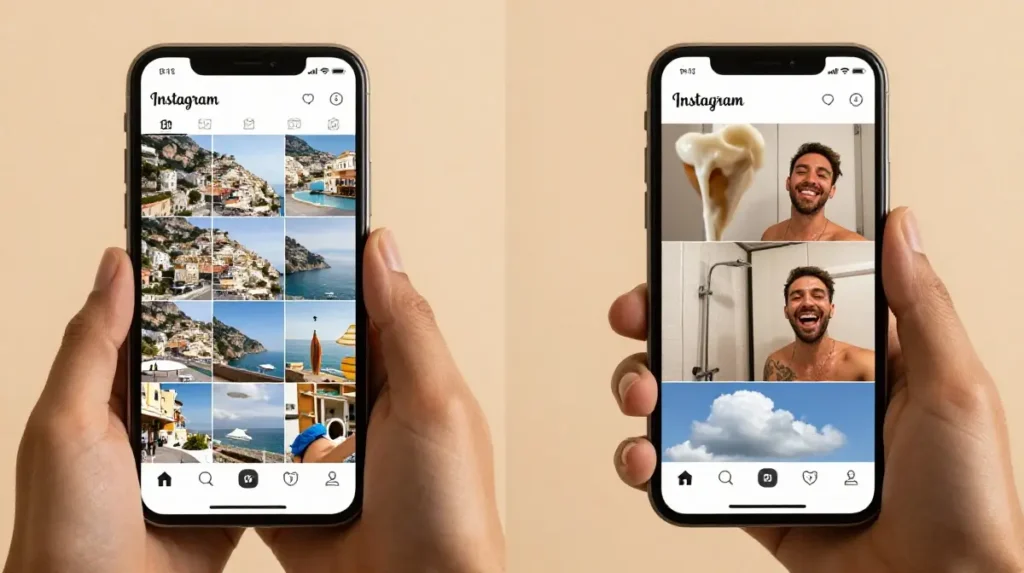
The Instagram grid and Instagram Stories serve fundamentally different content functions and the most effective vacation content strategy uses both intentionally rather than posting the same content to both formats. The grid is a portfolio — curated, edited, sequential, permanent. Stories are a diary — spontaneous, ephemeral, conversational, process-revealing. Conflating the two purposes produces either an over-curated Stories experience that loses authenticity or an under-edited grid that loses visual coherence.
Instagram Stories travel content during a vacation should document the process and the personality behind the grid images — the behind-the-scenes of the photo shoot, the meal eaten at the café visible in the grid post, the conversation with the local vendor, the weather reality behind the perfectly blue-sky grid photograph. This process transparency builds the personal connection that converts casual profile visitors into genuine followers. Instagram Reels travel content occupies a third content tier between grid and Stories — 15 to 60 second video sequences that perform best when edited to music with attention-holding transitions in the first 3 seconds. Reels have the highest discovery potential of the three formats on Instagram and should be prioritized by any travel content creator trying to grow beyond their existing audience.
Family Vacation Photography That Captures Real Emotion Not Forced Smiles
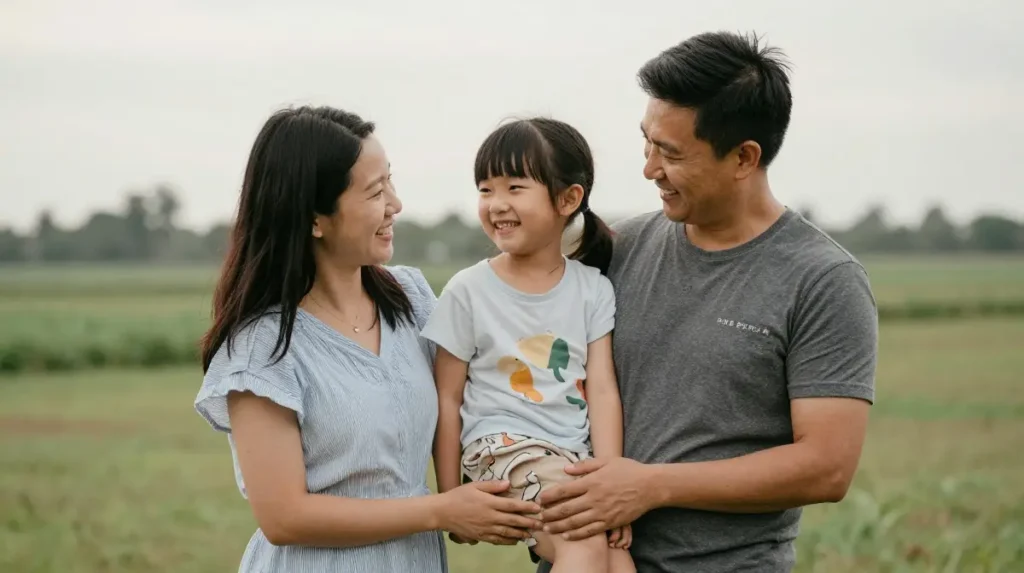
Family vacation Instagram photos suffer from a specific photographic failure mode that affects almost every family travel photo session: the simultaneous look-at-camera directive. “Everyone smile! Look at the camera! Again, one more!” produces the identical result every time — a technically adequate record of a specific group of people standing in a specific place, carrying approximately zero emotional resonance for anyone who wasn’t there. The posed family travel photo is the visual equivalent of a school portrait: technically acceptable, emotionally inert.
Memorable holiday photo moments in family travel photography emerge from documenting interactions rather than manufacturing poses. Children exploring a tide pool, siblings arguing over a map, parents exchanging a private glance at a beautiful view, the youngest child tasting gelato for the first time — these are the images that families actually frame and display because they communicate something true about the people and the experience. GoPro vacation footage worn by children during active vacation experiences captures completely authentic reactions to new environments because children forget the camera is present within approximately 90 seconds of the session beginning — a behavioral truth that produces the most genuine documentation of any family vacation recording method.
Travel Content Batching — Shooting a Week of Posts in One Afternoon
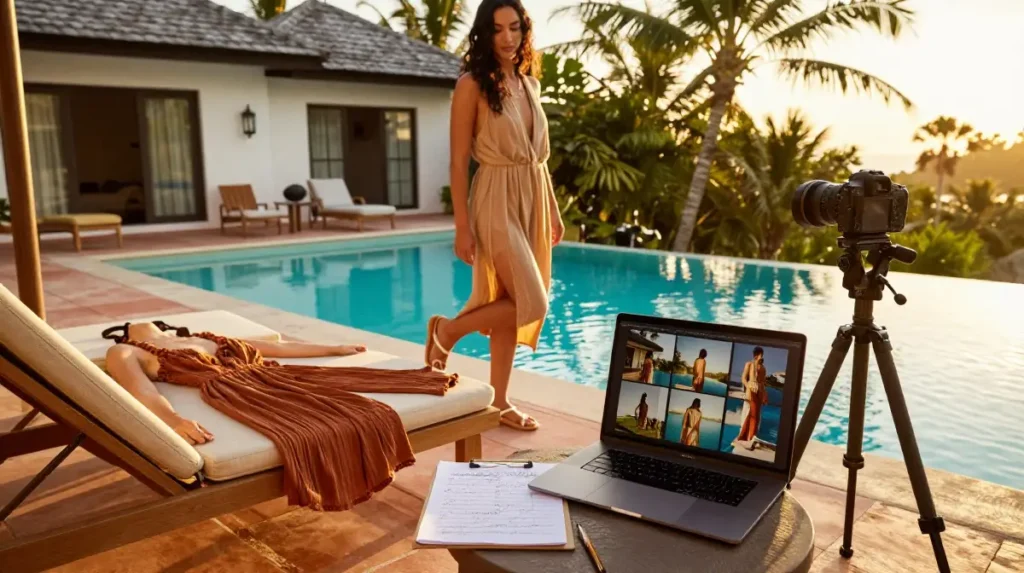
Travel photo batch editing and content batching — the practice of shooting multiple distinct content pieces in a single concentrated session — is the production approach that separates travel content creators who maintain consistent posting schedules from those who post intensely during trips and then disappear for weeks. A single well-planned three-hour afternoon shooting session in the right location at the right time can produce seven to ten distinct grid-quality posts if executed with deliberate diversity of composition, outfit, and subject focus.
How to plan an Instagram worthy vacation photo shoot in batch format requires pre-planning five variables before arriving at the location: outfit variations (at minimum two distinct looks per session), shot list organized from widest establishing shots to tightest detail shots, composition styles (minimum one landscape, one portrait, one detail, one flat lay concept per session), caption concepts noted during shooting rather than invented later, and the editing preset applied during the batch edit session the same evening while visual memory is still fresh. Travel photo batch editing in Adobe Lightroom travel presets format allows you to sync a single editing decision across all images from the same lighting environment simultaneously — adjust the white balance and exposure correction on one image, synchronize to the remaining 47 images from the same session, then make individual fine-tuning adjustments on each. This workflow reduces editing time per image from 10 to 15 minutes individually to under 2 minutes per image in batch format.
Frequently Asked Questions
How do I take good vacation photos for Instagram without a professional camera?
How to take good vacation photos for Instagram with a smartphone requires prioritizing three decisions over equipment: shoot in the golden hour window (the two hours after sunrise and before sunset), compose using the rule of thirds grid available in every smartphone camera app, and edit consistently using a single preset or filter approach across your images. iPhone travel photography tips for maximum image quality include shooting in ProRAW format for editing latitude and using the built-in exposure lock feature to prevent the camera from auto-adjusting when you move slightly between shots.
What is the best time of day for vacation Instagram photos?
Best time of day to take vacation photos for Instagram is the golden hour window — the 60 minutes following sunrise and the 60 minutes preceding sunset. This light window produces warm, directional, low-angle illumination that flatters skin, creates dimensional shadow in architecture and landscape, and eliminates the harsh overhead shadows that midday sunlight creates. Golden hour vacation photography requires planning activity schedules around these windows rather than treating photography as secondary to other vacation activities.
How do I make my vacation photos look professional?
How to make vacation photos look professional involves five consistent practices: shooting in the golden hour light window, using intentional composition techniques (rule of thirds, leading lines, negative space), editing with a consistent preset that creates visual coherence across the feed, choosing outfit colors that contrast with the background environment, and capturing a variety of shot distances (wide, medium, detail) at each location rather than multiple images from the identical position. Adobe Lightroom travel presets provide the editing foundation that most effectively bridges the gap between smartphone capture quality and professional visual output.
What should I wear for Instagram vacation photos?
What to wear for Instagram vacation photos that perform best follows three principles: choose solid colors or simple patterns that photograph cleanly rather than busy patterns that create visual noise at distance, select colors that contrast with the primary background environment rather than matching it and disappearing into the scene, and pack versatile pieces that mix into multiple distinct looks rather than single-use outfits that produce only one visual option per garment. Dreamy vacation photo concepts built around deliberate color coordination between outfit and destination typically outperform randomly chosen vacation clothes by significant engagement margins.
How do I get more likes on vacation Instagram photos?
How to get more likes on vacation Instagram photos involves three evidence-based strategies: post during peak engagement windows (Tuesday through Friday, 7 AM to 9 AM and 6 PM to 9 PM local time for your primary audience), write captions that deliver sensory detail or a genuine observation rather than generic location descriptions, and use the first comment to add 10 to 15 highly specific hashtags rather than placing them in the caption itself where they create visual clutter. Best Instagram captions for vacation pictures that generate comment activity include a direct question at the end — comments extend reach through the algorithm more effectively than likes alone.
What filters should I use for vacation Instagram photos?
What filters to use for vacation Instagram photos depends on the destination’s natural color environment and your desired aesthetic. VSCO travel preset filters in the A2 or A4 range create a warm, slightly desaturated film aesthetic that works across most warm-climate destinations. For cooler climate travel — Scandinavia, Pacific Northwest, European cities in winter — cooler, higher contrast presets in the VSCO C series maintain the destination’s authentic color atmosphere rather than artificially warming images that were naturally cool and moody. Adobe Lightroom travel presets offer greater customization than VSCO and allow preset adjustment by HSL channel for destination-specific color accuracy.
How do I shoot great vacation photos alone without anyone to help?
How to take aesthetic vacation photos alone requires a tripod and remote shutter as the non-negotiable technical foundation. Compose the shot using a bag or jacket as a placeholder, set the frame, then use continuous burst mode triggered remotely for 20 to 30 seconds while you interact naturally with the environment. Vacation selfie ideas Instagram beyond standard arm-extended portraits include shadow self-portraits using the long shadows created by low-angle golden hour light, reflection shots in mirrors, windows, and water surfaces, and the phone-placed-at-table composition where the device’s presence signals casual documentation rather than deliberate posing.
Conclusion
Great insta vacation pics are not accidents of beautiful destinations and expensive cameras. They’re the result of deliberate decisions made before, during, and after the shoot — decisions about light timing, compositional structure, outfit color strategy, editing consistency, caption craft, and feed curation that together produce the visual quality that stops the scroll and earns the save. The destinations most people visit are genuinely beautiful. The difference between a beautiful place documented mediocrely and a beautiful place documented magnificently is entirely in the photographer’s decisions. Every principle in this guide is accessible to any traveler with any camera who’s willing to think before they shoot rather than shoot before they think. Your next trip is an opportunity to document something worth remembering at the level of quality it genuinely deserves. Start with the light. Everything else follows.